-
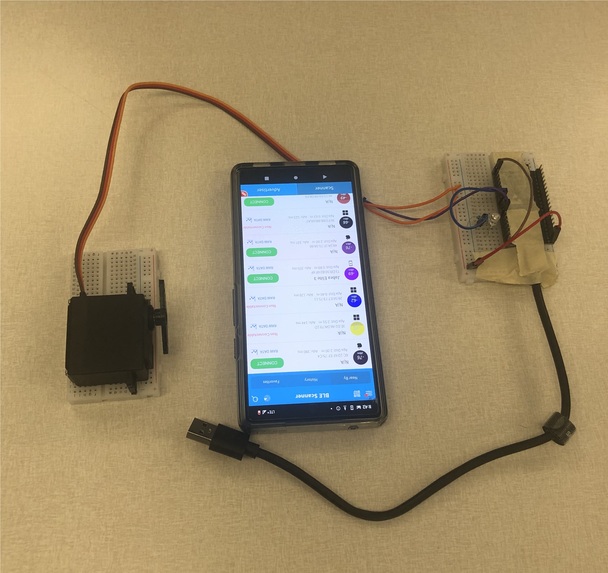
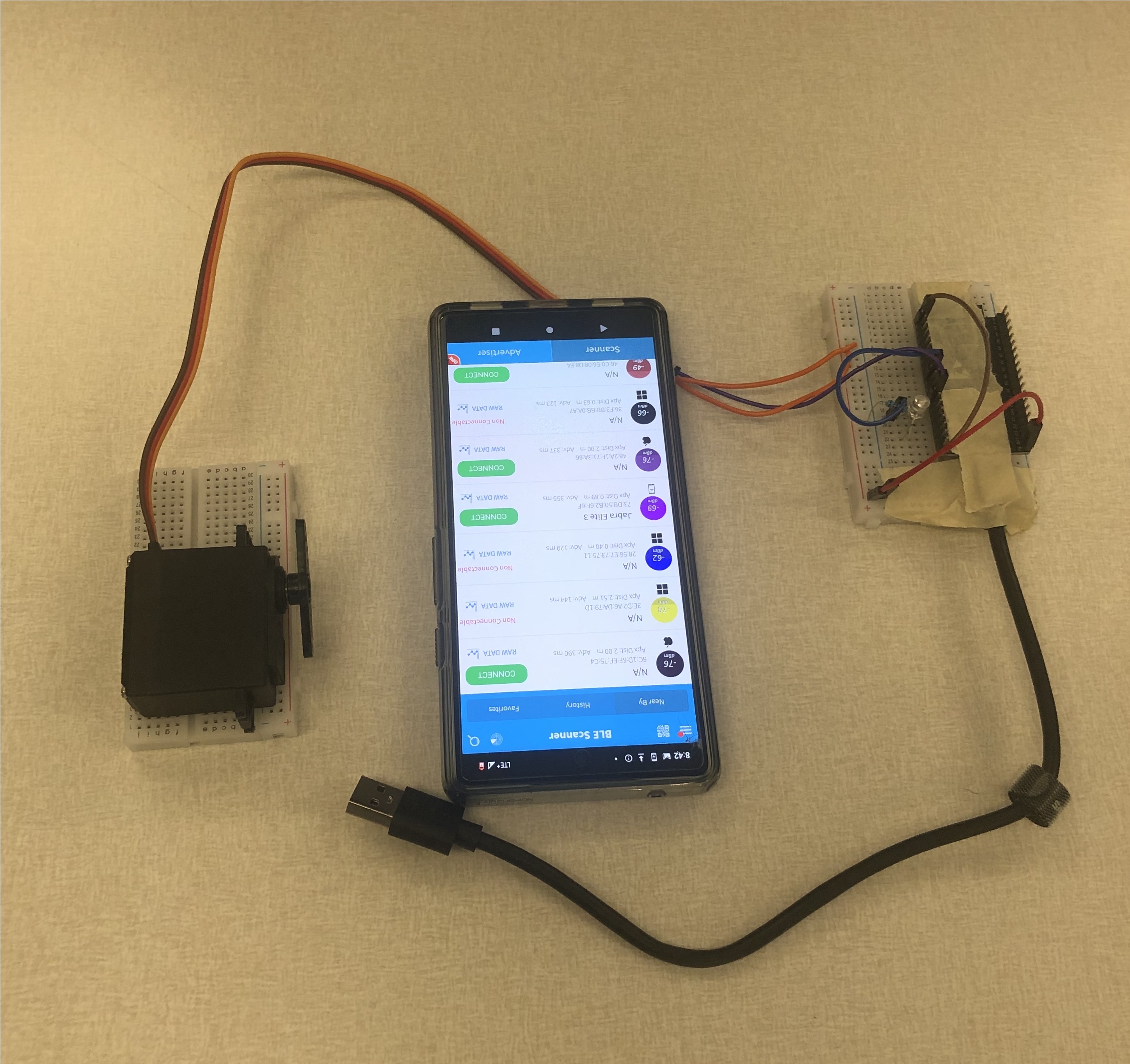
Prototype minus PC
-
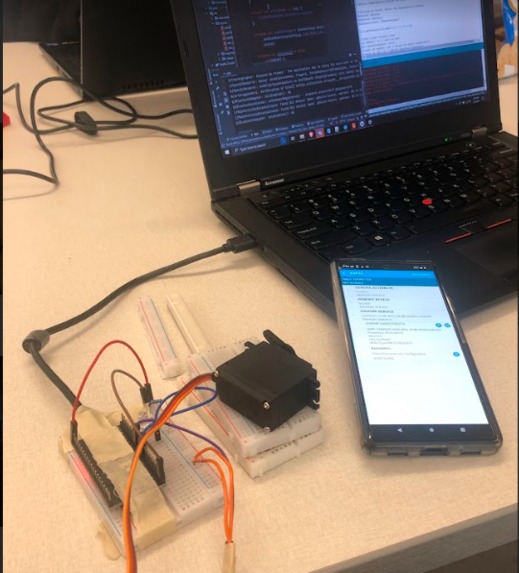
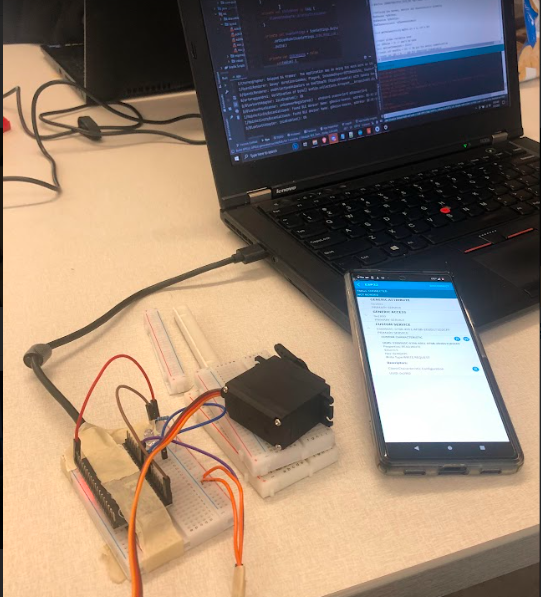
Full system
Inspiration
We were inspired by what we saw as the hidden breadth and scope of this project, which we felt went beyond the noble challenge presented to us, by virtue of the multi-faceted, adaptable nature of the idealized end-product.
What it does
Our project accomplishes the following in the typical use-case. The user prompts a bluetooth-capable smart device to accept voice commands. The device (in our case, an Android phone) uses Speech-to-Text technology to turn the mnemonics into directives that our microcontroller, an Arduino ESP32, can follow. The directive are then received, processed and executed by the microcontroller, using finger-like actuators to physically push the buttons of an otherwise inaccessible hospital chair/bed control panel.
The full scope of our project would also have allowed users to specify and customize the layout of the "fingers", allowing for adaptability across hundreds of panel models (and allowing space for user/maintainer preference).
In the future, it may be possible to increase the amount of motors being powered, as well as encrypt the communications between each of the discrete units in the system. A physically adaptable frame may be created to allow permanent fixture on a variety of surfaces.
How we built it
- We used the Arduino IDE (specifically 1.8.15) to program the ESP32 board. It receives bluetooth and controls the actuators.
- The robotic "fingers" in charge of actuation are made from servo motors. The hardware prototype more generally consists of breadboards, tape and jumper cables.
- Speech-to-text was achieved using Android's built-in speech recognition API.
- The app, in charge of data processing and transmission, was made using Android Studio.
Challenges we ran into
- Implementing low-energy bluetooth in Android is a highly complex task that we were (unfortunately) unable to complete. It is the single aspect of the project which was left unfinished, but its central position means the impact is significant.
- BLE is a complex technology overall. However, we were able to implement it in Arduino thanks to good thinking, generous examples, and competent resource gathering.
- On a minor note, this was our first hackathon. The lack of experience puts us at a slight disadvantage but we're still proud of what we made.
Accomplishments that we're proud of
Overall, we are proud of the fact that, despite our inexperience, we were still able to get together, decide on a project and actually come as close as we did to a complete prototype. Given that this was our first Hackathon, we weren't entirely sure we would even be able to compete properly. Though the difficulties have opened our eyes to the true qualifications needed (some of which we lacked) for problem-solving in the real world, we are still happy with our overall performance.
More specifically, we are especially proud of what we were able to do with speech-to-text, BLE and servo-control on Arduino, as well as our general approach to project planning and organization.
What we learned
- Practice, practice, practice! Actually putting one's skills to the test in real-life situations is just as, if not more important than academics, especially for those of us who like to focus more on their projects than on their grades.
- The industry uses an absolutely massive array of tools and frameworks, many of which we'd never heard of before showing up to this event. It is crucial for career prospects to familiarize ourselves with these frameworks.
- When one's project is primarily a proposition to be made on short-notice, it's often better to forego complexity in features in favor of a more reliable proof of concept.
- Preparing for a hackathon is primarily a mental exercise. Experience brings confidence, which in turn brings success.
What's next for ChairIO (Voice-Automated Chair Controller)
- Thankfully, all the parts used in this project are easily obtainable at home. Thus, we intend to continue our work for a short time, at least until it is complete enough to give a genuine project proposal to our client (Tetra Society), sometime after this event.


Log in or sign up for Devpost to join the conversation.