-
-
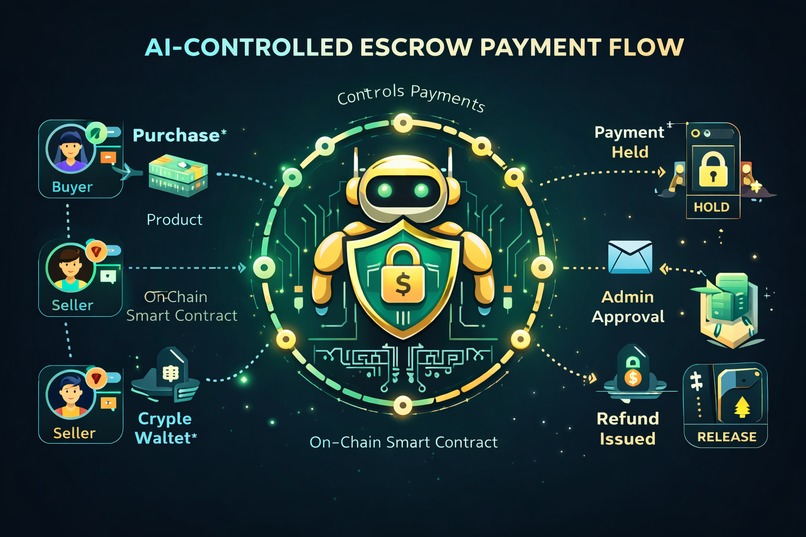
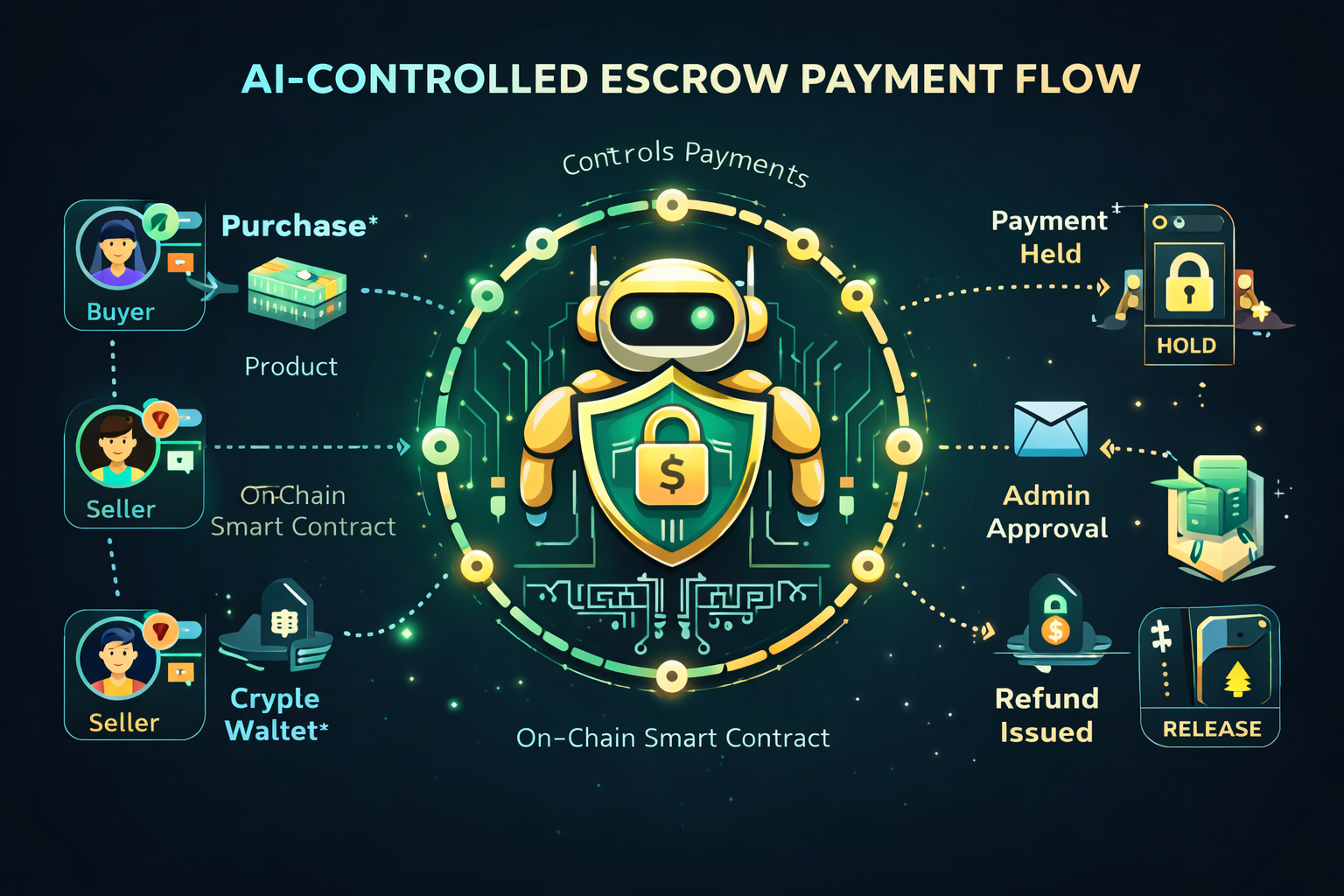
Tx Flow
-
Idea
🚨 Inspiration
This project was inspired by the fundamental flaws in traditional e-commerce platforms.
Modern applications require users to share:
Full name
Email address
Phone number
Banking details
Delivery identity
Despite claiming security, these platforms:
Store data indefinitely
Share information with third parties
Monetize user behavior
Control dispute and refund mechanisms
Trust is centralized.
As a Web3 developer, I wanted to explore:
Can commerce exist without forcing users to sacrifice privacy?
That question became the foundation of this project.
💡 The Core Idea
The goal was to build a privacy-first decentralized commerce system where:
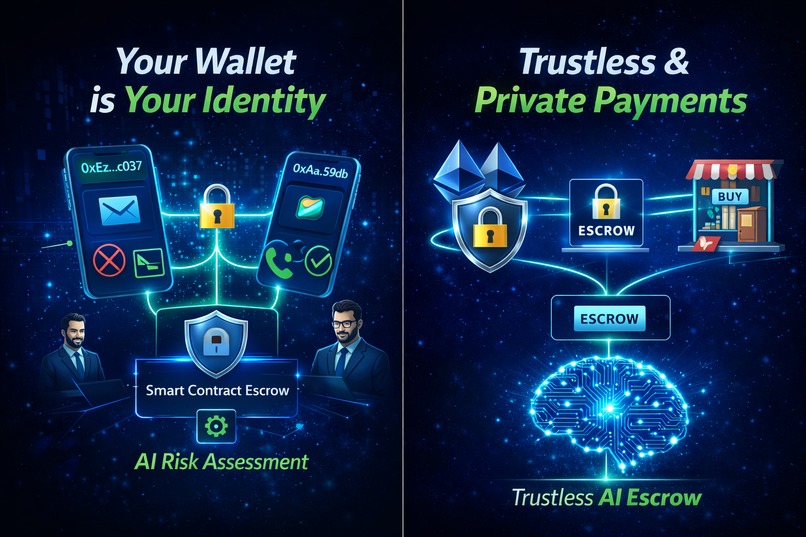
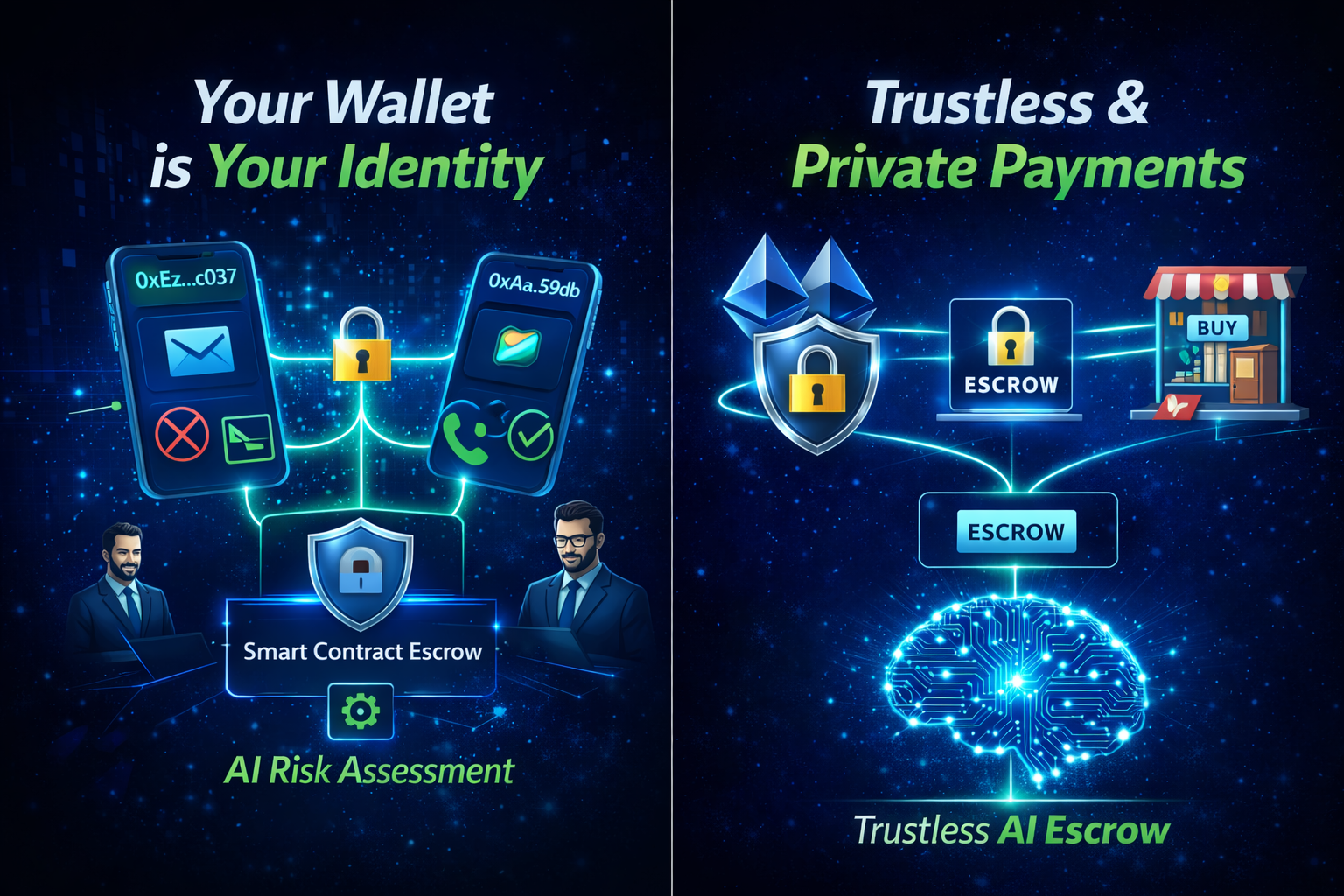
Your wallet address is your identity
No personal data is stored
Smart contracts enforce escrow logic
AI evaluates transaction risk
Trust is cryptographic, not platform-based
This became ChainX Privacy AI Escrow.
🏗️ How I Built It
The system is composed of three tightly integrated layers:
1️⃣ Smart Contract Escrow Layer (Solidity)
I built a custom escrow smart contract that:
Locks buyer funds
Releases funds conditionally
Supports refund logic
Emits on-chain events
Prevents reentrancy attacks
Uses strict require() validation
Security and gas optimization were major priorities.
2️⃣ AI Risk Engine (Python + FastAPI)
The AI model evaluates:
Transaction amount
Behavioral signals
Dispute history
Risk indicators
The output classification:
Safe
Hold
Refund
Reject
This output directly influences escrow behavior.
3️⃣ Backend Orchestration Layer (Node.js)
The backend:
Connects frontend and AI
Sends transaction metadata to AI
Relays AI decisions to the smart contract
Maintains order flow coordination
4️⃣ Frontend (React + Ethers.js)
The frontend allows:
Wallet connection
Order creation
Escrow monitoring
Transaction state updates
All identity is wallet-based.
⚙️ Integration Complexity
One of the biggest technical challenges was synchronizing:
Smart contract logic
AI inference engine
x402 transaction workflow
Backend validation
Ensuring these three systems communicated reliably required careful architectural planning.
In simplified logic form: EscrowDecision= AI_Risk_Score,Buyer_Confirmation,Contract_State
The challenge was not just writing each component — it was making sure all three layers behaved consistently under edge cases.
🧩 Major Challenges I Faced 🔐 1. Writing the Escrow Smart Contract
Designing secure escrow logic was difficult because:
Funds must never get permanently locked
Reentrancy vulnerabilities must be prevented
Refund conditions must be logically sound
State transitions must be predictable
Implementing correct escrow states required multiple redesigns.
🚀 2. Deploying Smart Contracts Correctly
Deployment challenges included:
Network configuration errors
RPC inconsistencies
Gas estimation failures
Incorrect constructor parameter alignment
Understanding how deployment scripts interact with Hardhat networks was a key learning moment.
🧠 3. Integrating AI with Smart Contracts
Smart contracts cannot directly call AI.
So I had to design:
Off-chain inference
Backend relay mechanism
Secure communication between AI and contract
This required building a trust boundary between on-chain and off-chain logic.
🔗 4. x402 Integration
Integrating x402 into the transaction flow was particularly challenging because:
It required proper transaction formatting
Correct sequencing with escrow logic
Ensuring compatibility with AI classification flow
Balancing x402 behavior with escrow state management required multiple debugging iterations.
🧠 5. Synchronizing AI + Escrow + Backend
The most difficult part was:
Aligning AI decisions, escrow logic, and transaction lifecycle without breaking flow.
Edge cases like:
AI returns high risk
Buyer confirms early
Refund requested during hold state
All required careful conditional logic mapping.
📚 What I Learned
This project significantly deepened my understanding of:
Smart contract security design
Escrow state machines
Gas optimization techniques
On-chain vs off-chain architecture
AI integration with Web3 systems
Distributed trust models
Backend orchestration for decentralized apps
I also learned that:
Building decentralized systems is not just about writing contracts — it’s about designing trust boundaries.
🌍 Why This Matters
Traditional commerce forces users to trust centralized entities.
This project explores a future where:
Wallet identity replaces accounts
AI enhances security without harvesting data
Smart contracts enforce fairness
Privacy becomes default
🎯 Final Reflection
This project was technically demanding because it required:
Smart contract engineering
AI model deployment
Cross-system synchronization
Secure architecture planning
Despite the complexity, integrating x402, AI risk classification, and escrow logic into one cohesive system was one of the most rewarding engineering experiences.
This project represents not just a DApp, but an exploration of privacy-first decentralized commerce.
Built With
- ether.js
- ethereum
- hardhat
- solidity

Log in or sign up for Devpost to join the conversation.