-
-
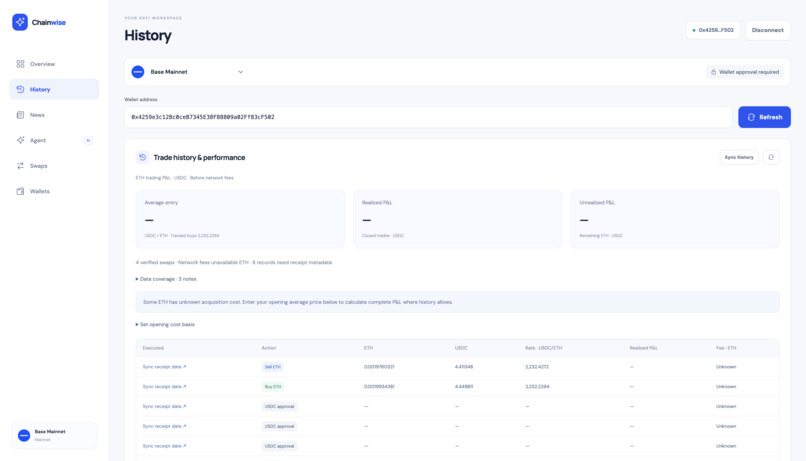
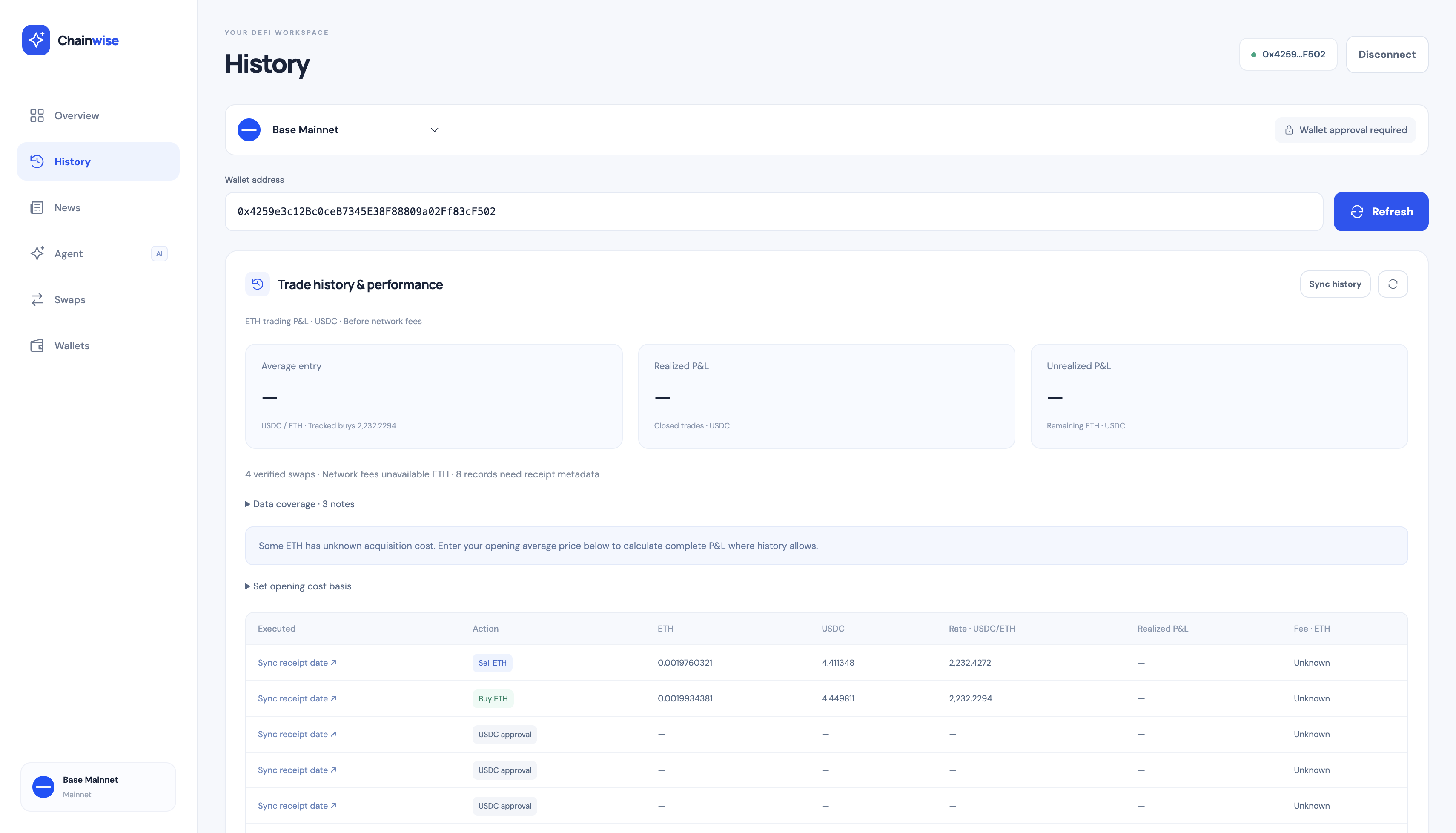
History page with recent trades
-
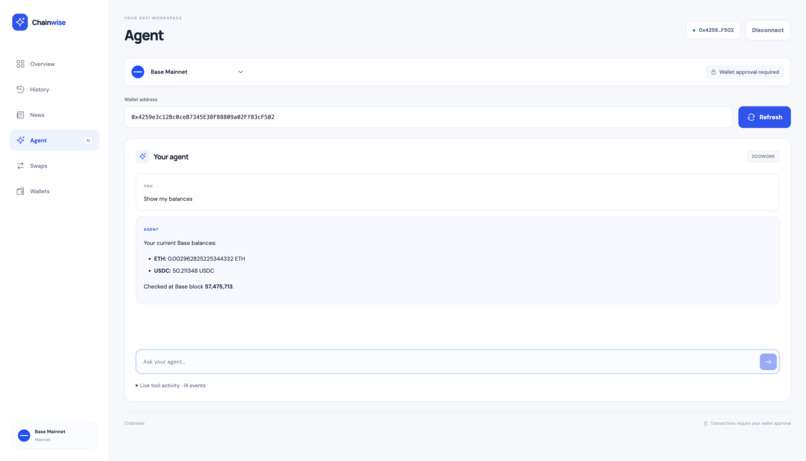
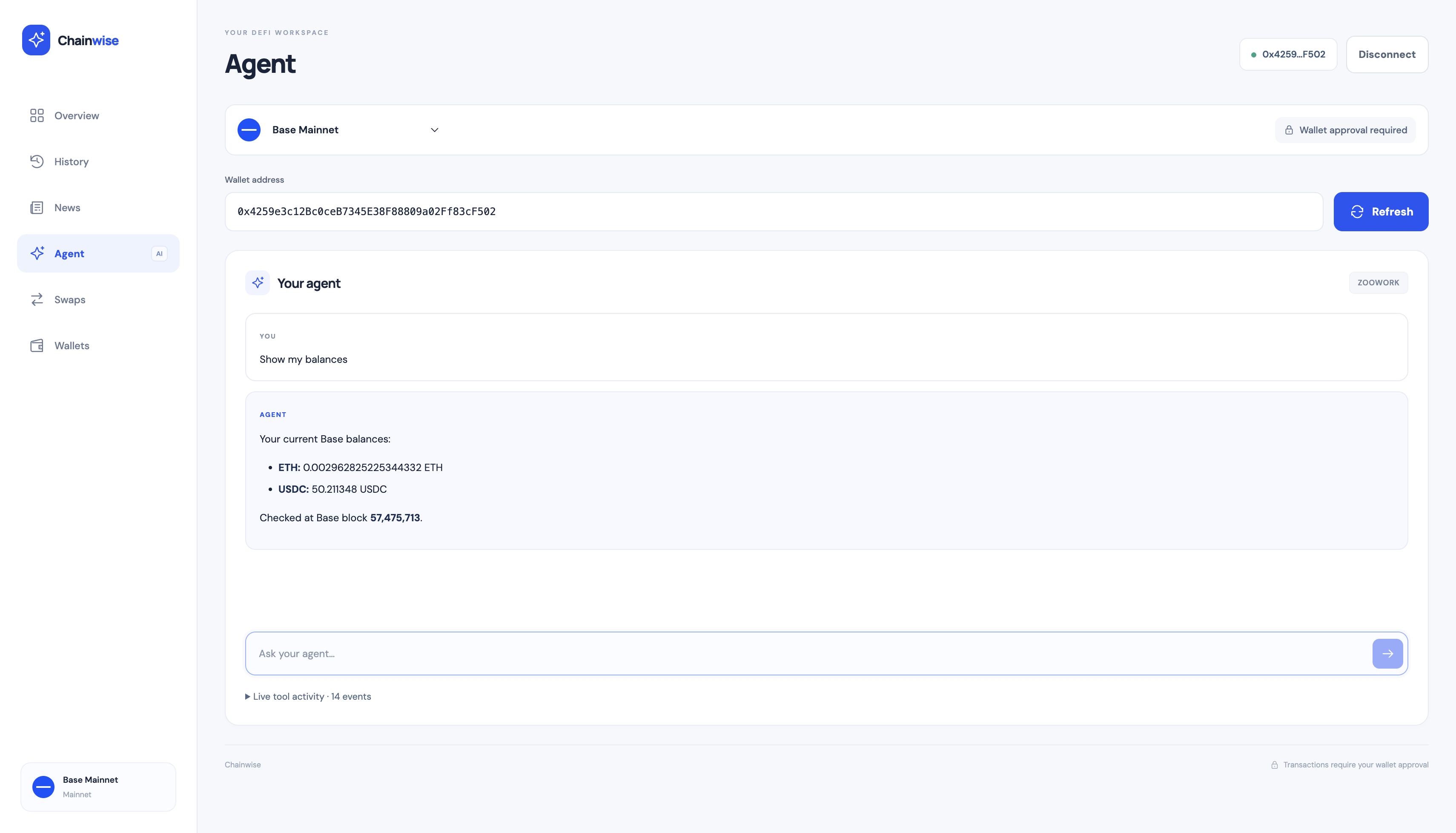
Agent chat page
-
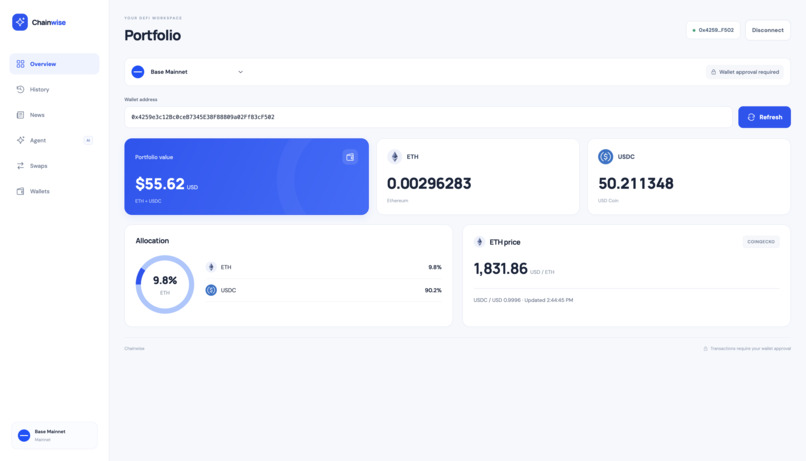
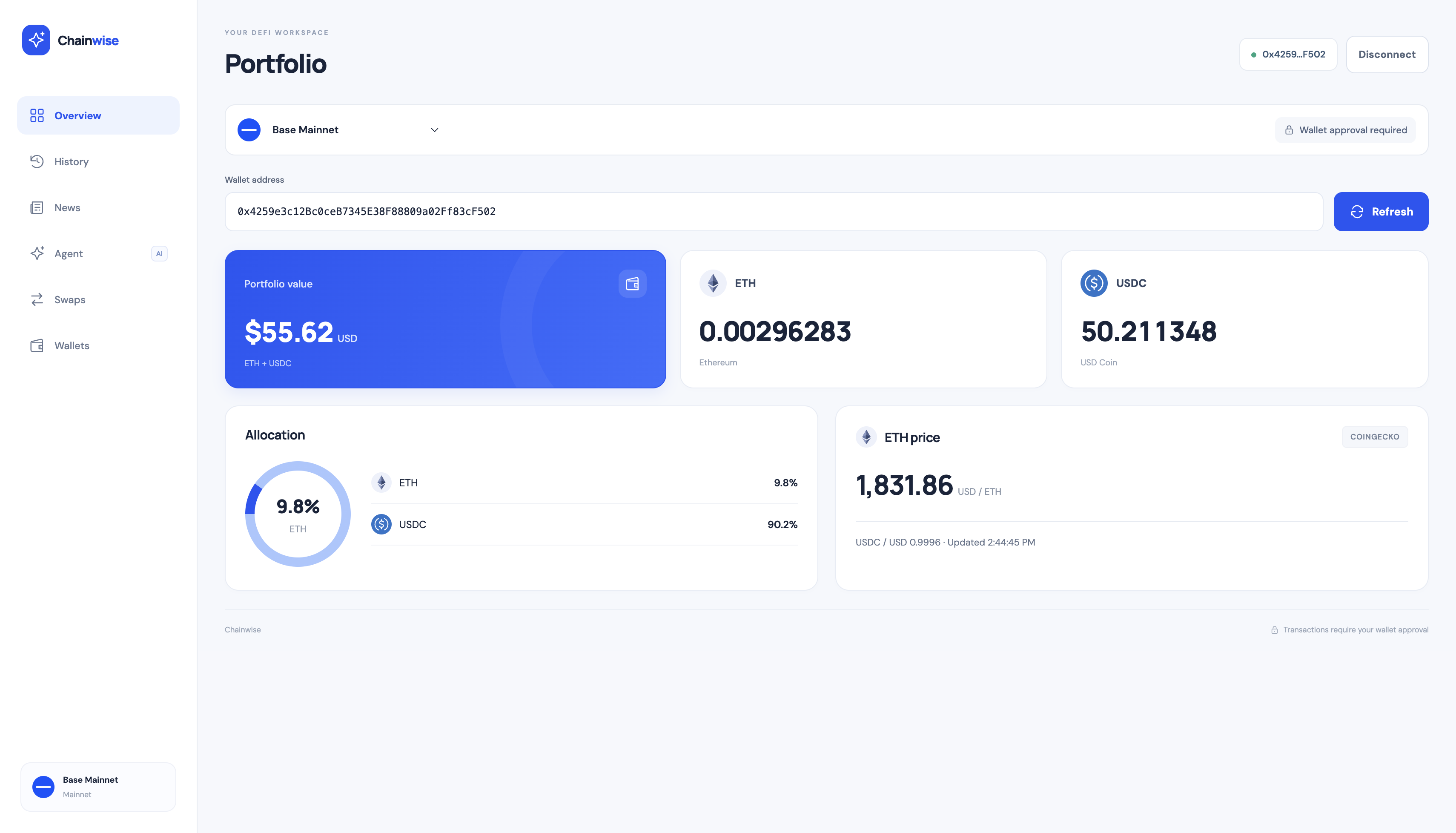
Overview page with Portfolio
-
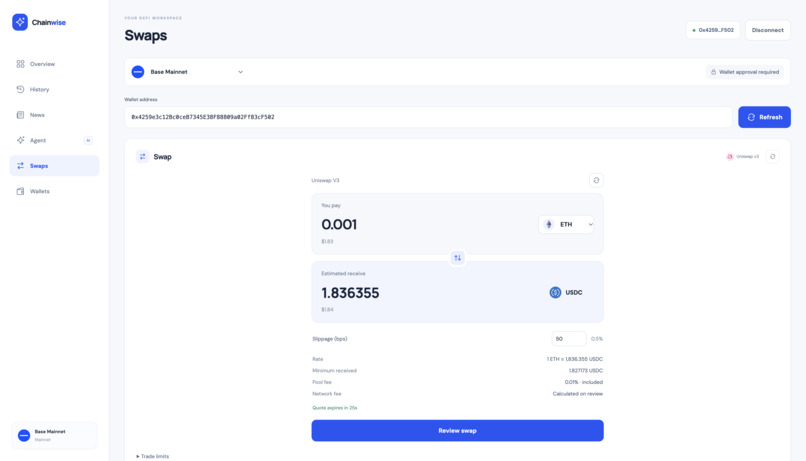
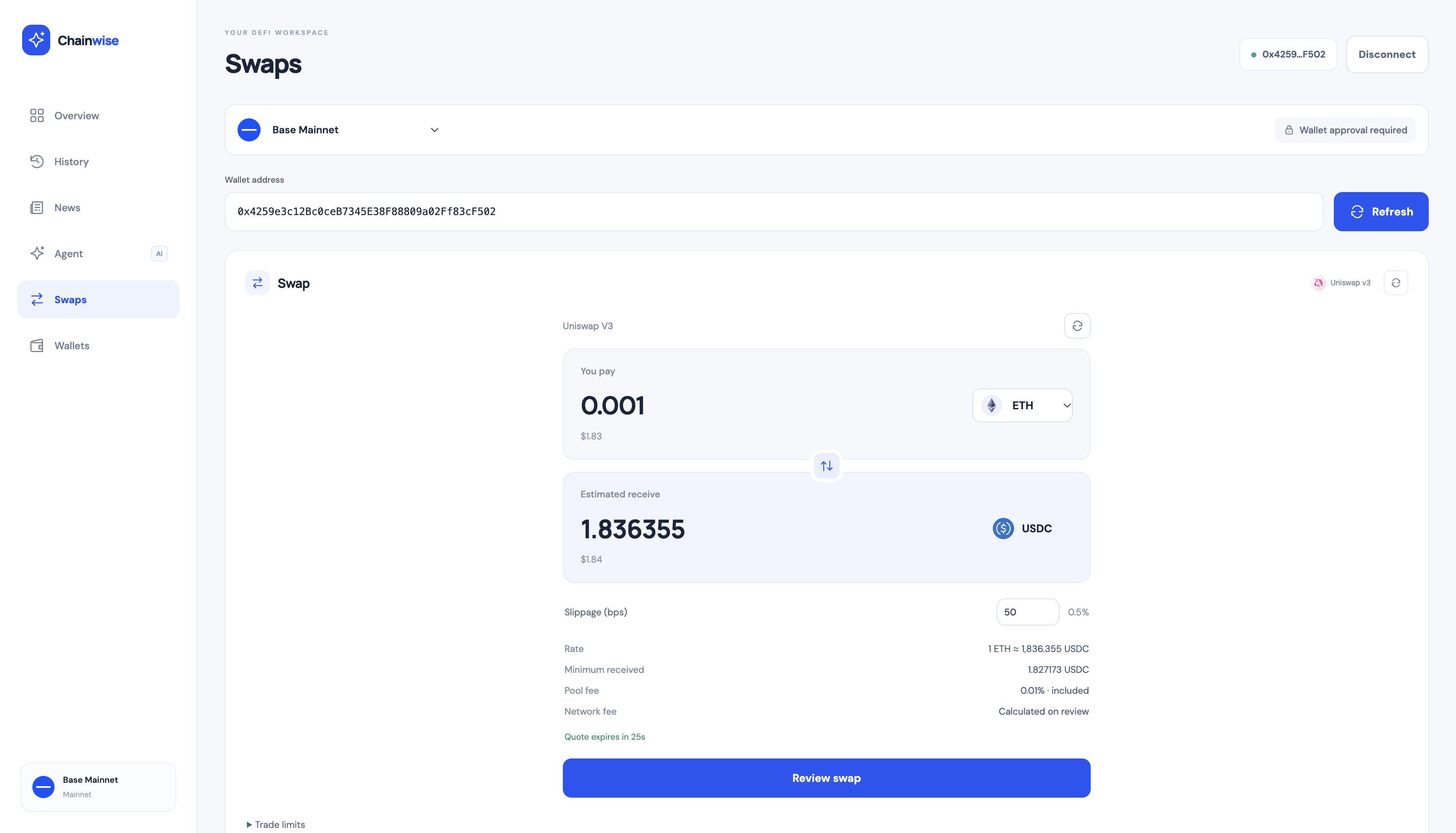
Swap page to make trades
-
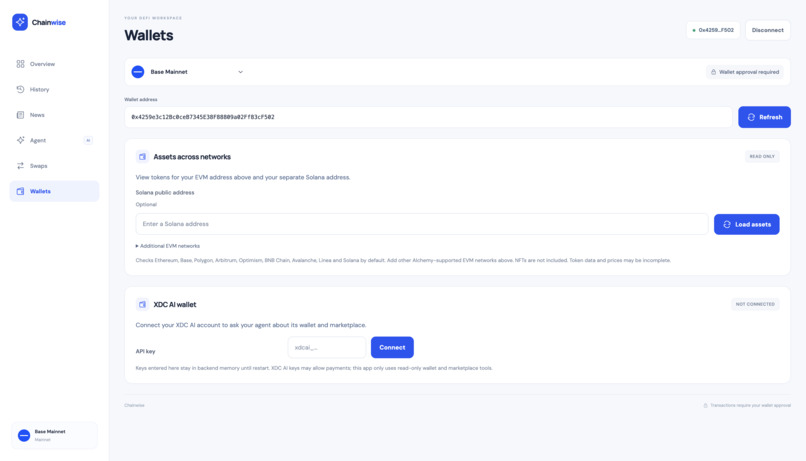
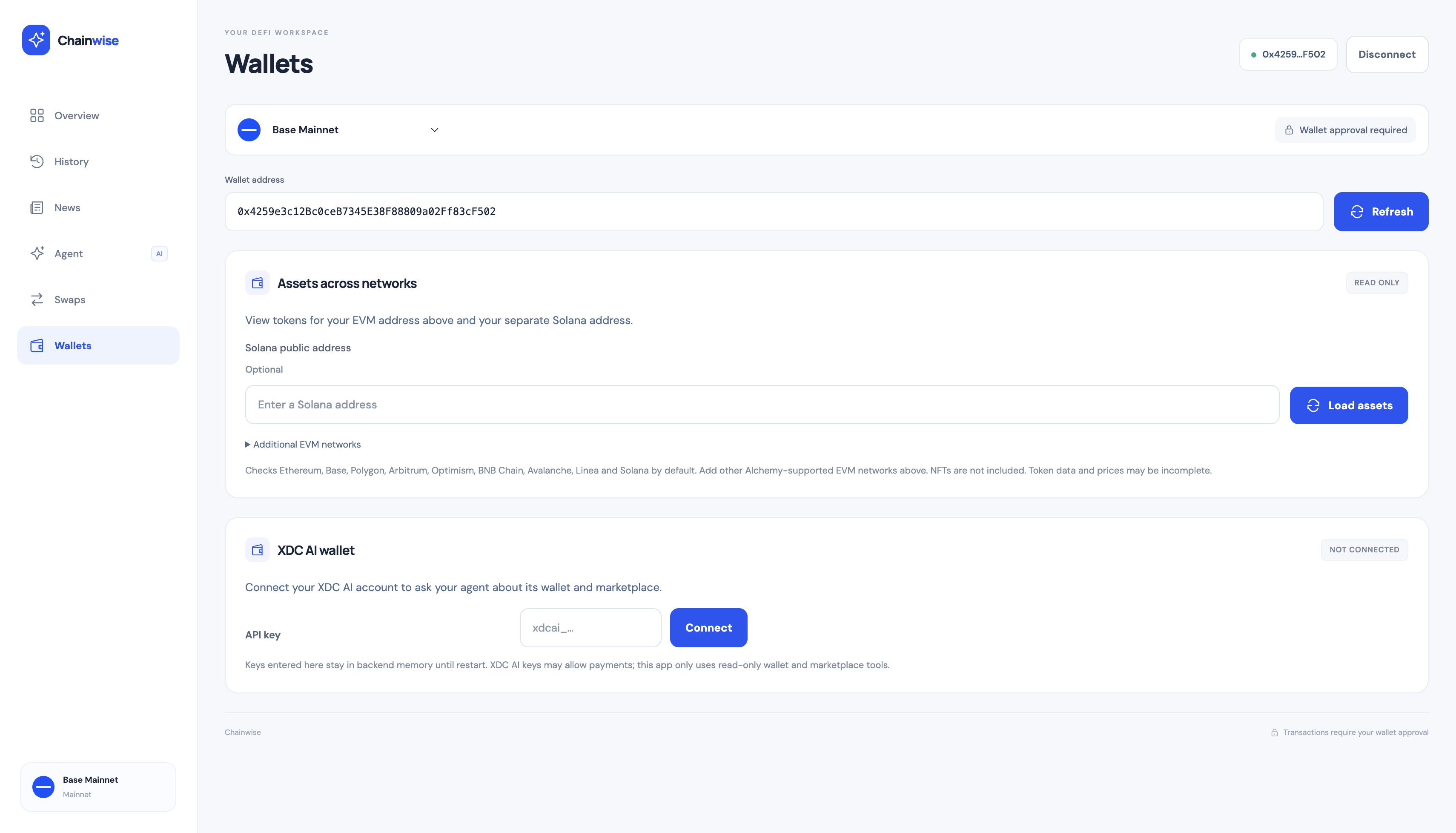
Wallets page for tracking XDC wallet
-
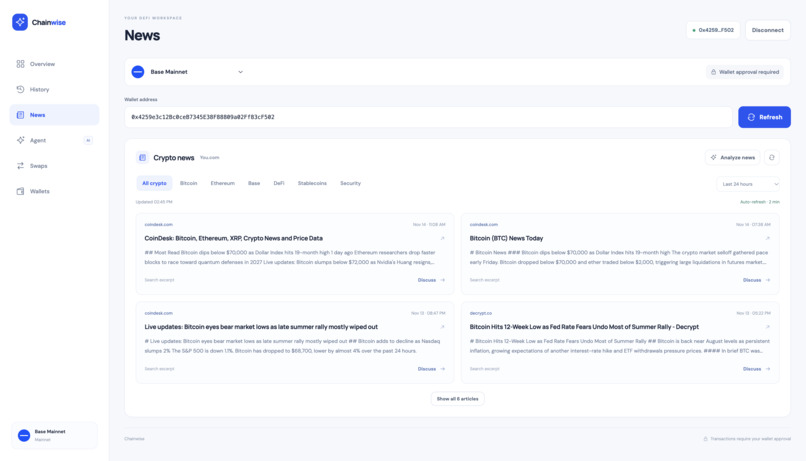
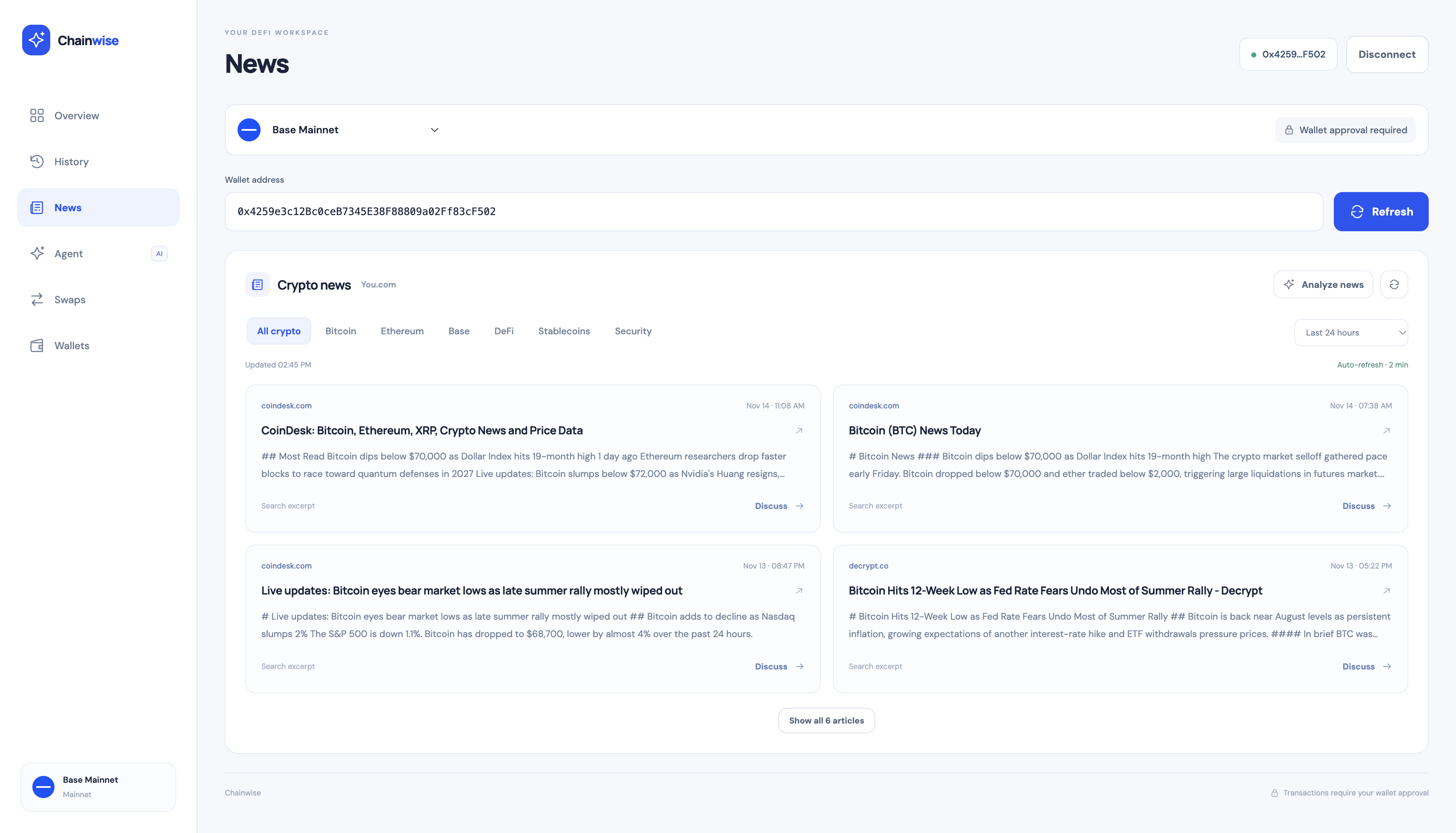
News page using the YOU.com
About the project
Managing crypto across wallets, networks, and applications can be fragmented. We built Chainwise to bring portfolio information, market context, and transaction review into one conversational workspace—while keeping the user in control of every trade.
What inspired us
We wanted an agent that could do more than answer general crypto questions: one that could understand a connected wallet, retrieve current information, and help prepare a specific action. At the same time, an agent working with real assets needs clear boundaries. Chainwise is designed to show users what they’re approving and require their wallet signature before a transaction is sent.
What it does
Chainwise combines a multichain wallet dashboard with a conversational DeFi agent. Users can:
- View ETH and USDC portfolio information and discover fungible tokens across supported EVM networks and Solana.
- Ask questions about balances, trade history, average entry price, and available profit-and-loss information.
- Explore crypto news and discuss its potential relevance to their portfolio.
- Calculate ETH/USDC swaps using live Uniswap quotes, then review validated proposals and approve them through Trust Wallet.
- Connect an XDC AI wallet to check supported balances and discover marketplace services.
How we built it
We used Managed Agents for the conversational agent, its sessions, streaming responses, and custom tools. A TypeScript backend connects the agent to blockchain data and transaction-validation logic.
For blockchain interactions, we used viem and Uniswap V3 on Base, Ethereum, and Ethereum Sepolia. The dashboard is built with React and Vite. WalletConnect supports mobile wallet connections, while Alchemy, CoinGecko, You.com, and XDC AI provide portfolio data, prices, news, and marketplace access respectively.
What we learned and the challenges we faced
The hardest part was connecting a natural-language request to a transaction without blurring the line between a suggestion and authorization. A swap quote is only one part of the process: the app must also check the selected wallet and network, slippage, gas, quote freshness, and transaction simulation before requesting a signature.
We also learned that a connected wallet session doesn’t necessarily grant signing permission on every network. USDC-to-ETH swaps can require two distinct approvals: a token allowance followed by the swap itself. We brought both steps into the agent chat so users can review them in context.
Multichain portfolio discovery introduced another challenge: an Ethereum-style address doesn’t identify a Solana wallet, and token and price data can be incomplete. Chainwise accepts a separate Solana address and reports partial results rather than presenting missing data as zero.
Built With
- agents
- ai
- base
- coingecko
- mcp
- node.js
- react
- typescript
- uniswap
- vite
- xdc
- you.com
