-
-
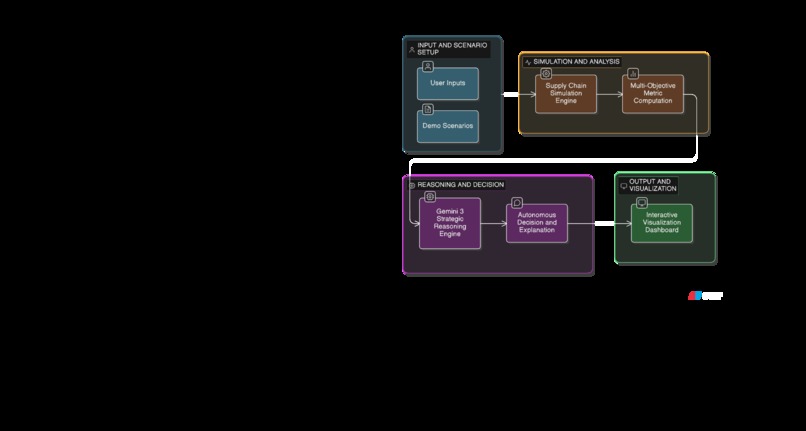
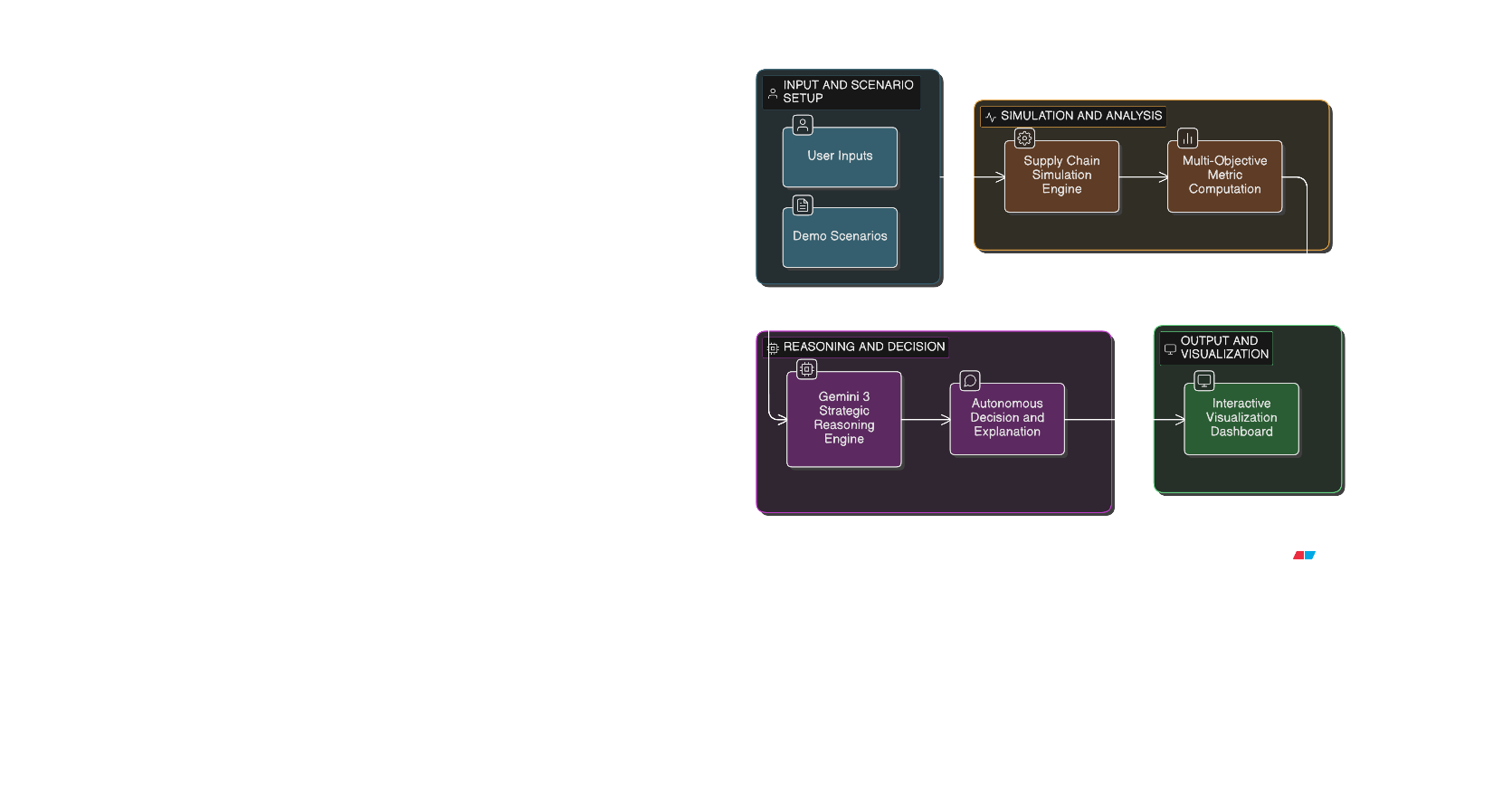
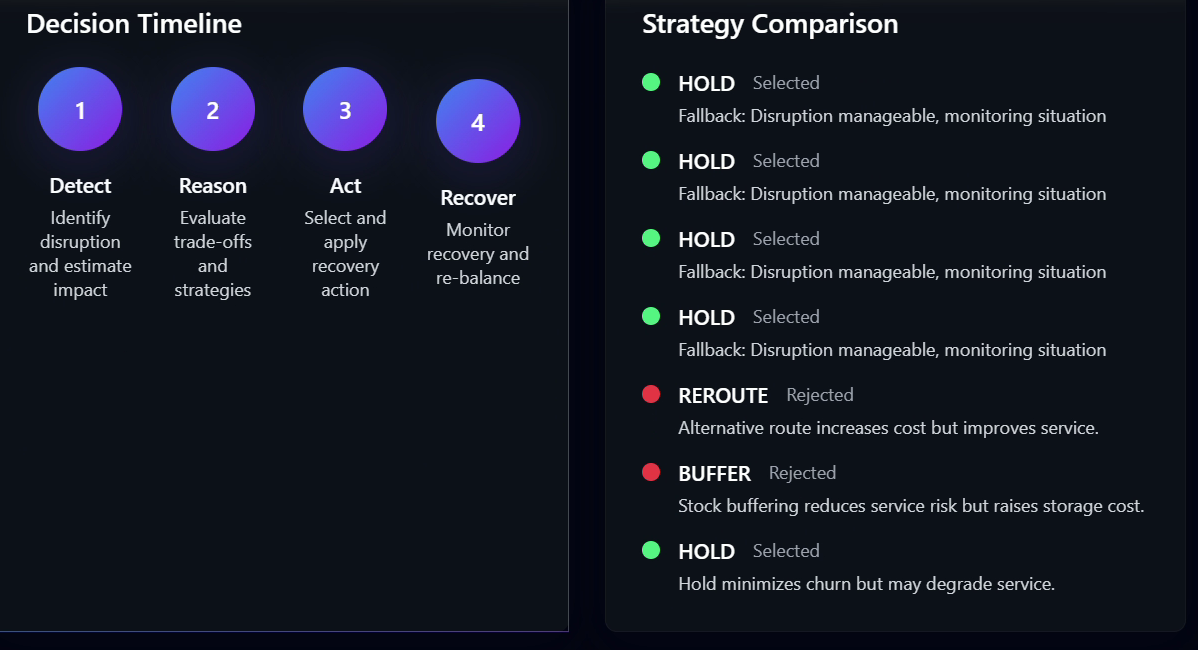
flow diagram
-
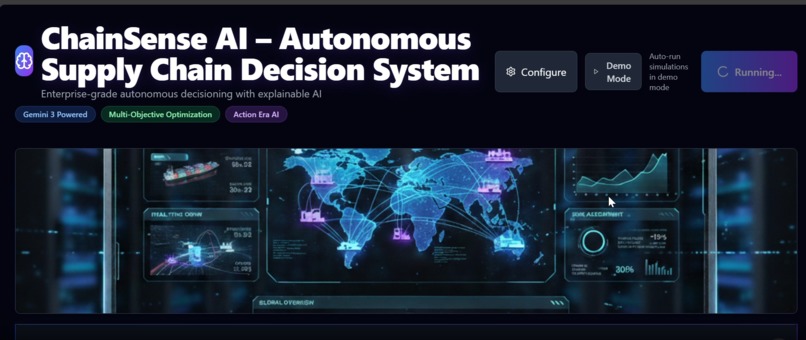
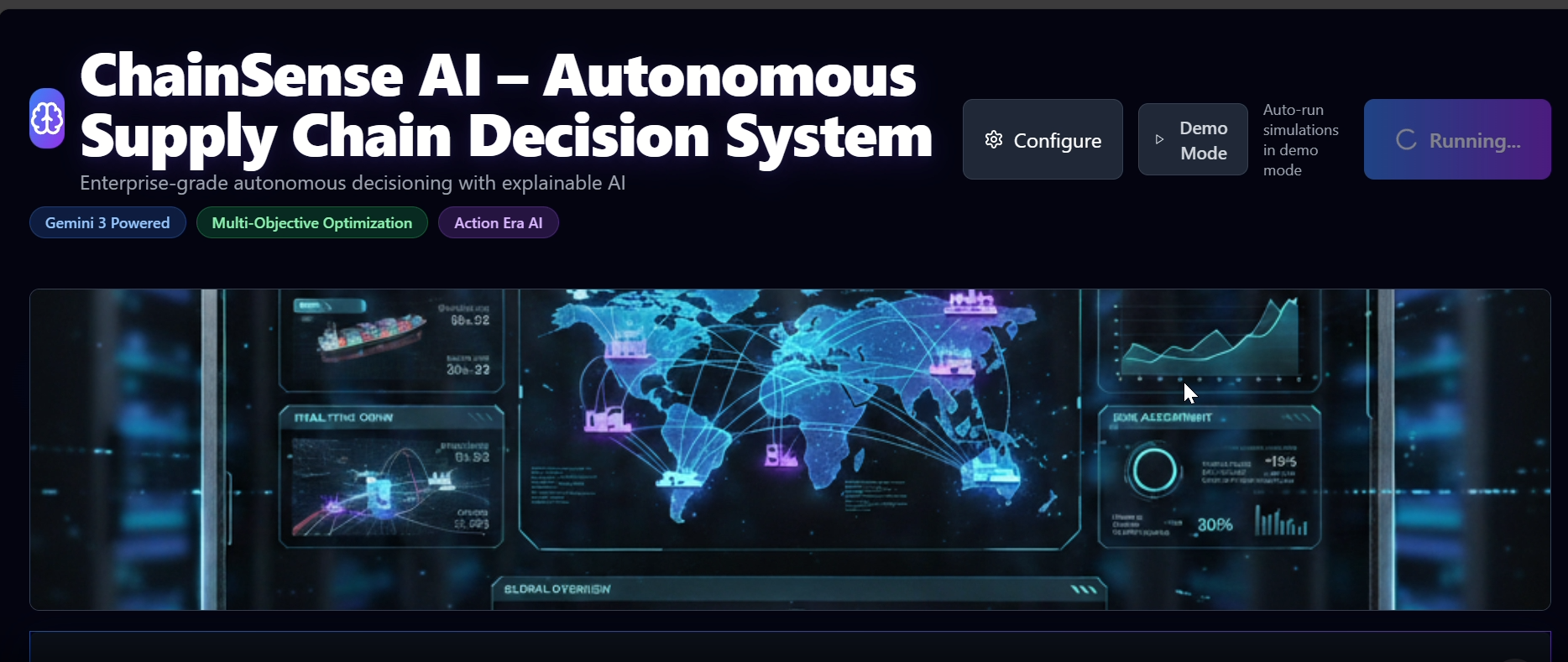
UI
-
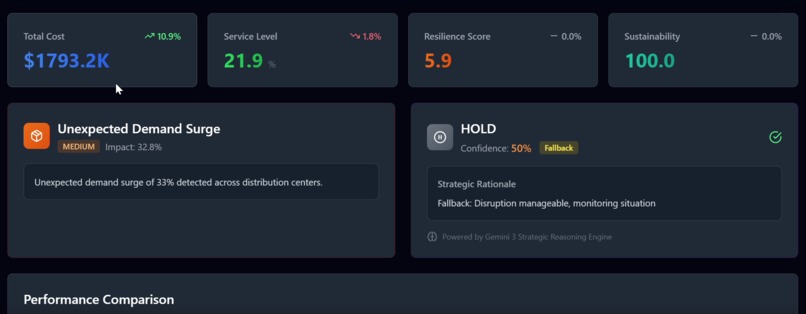
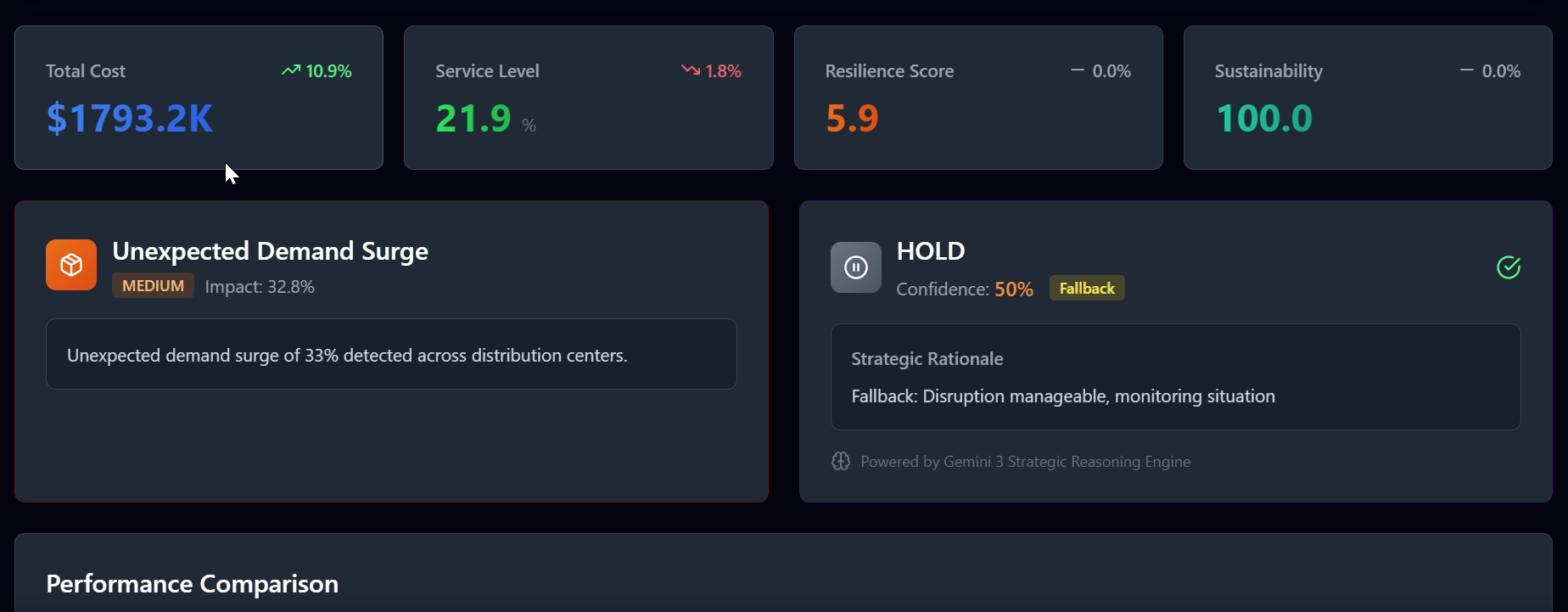
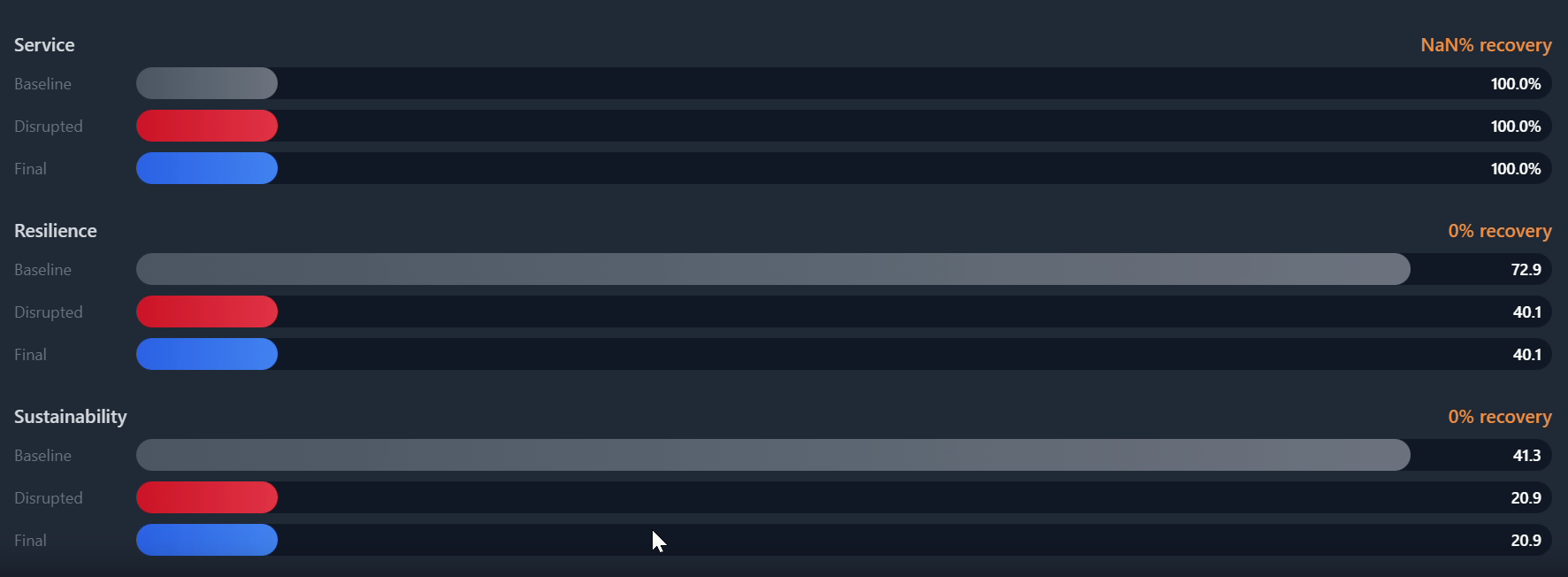
DISTUPTION SCEANARIO 1
-
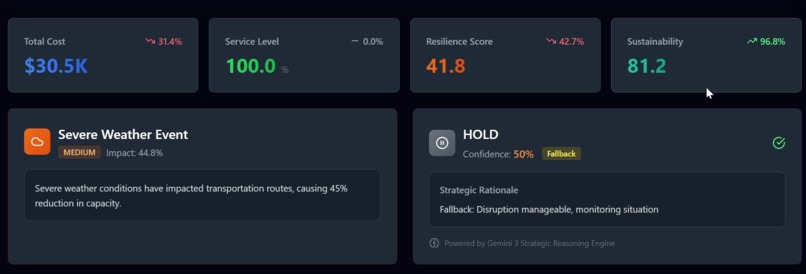
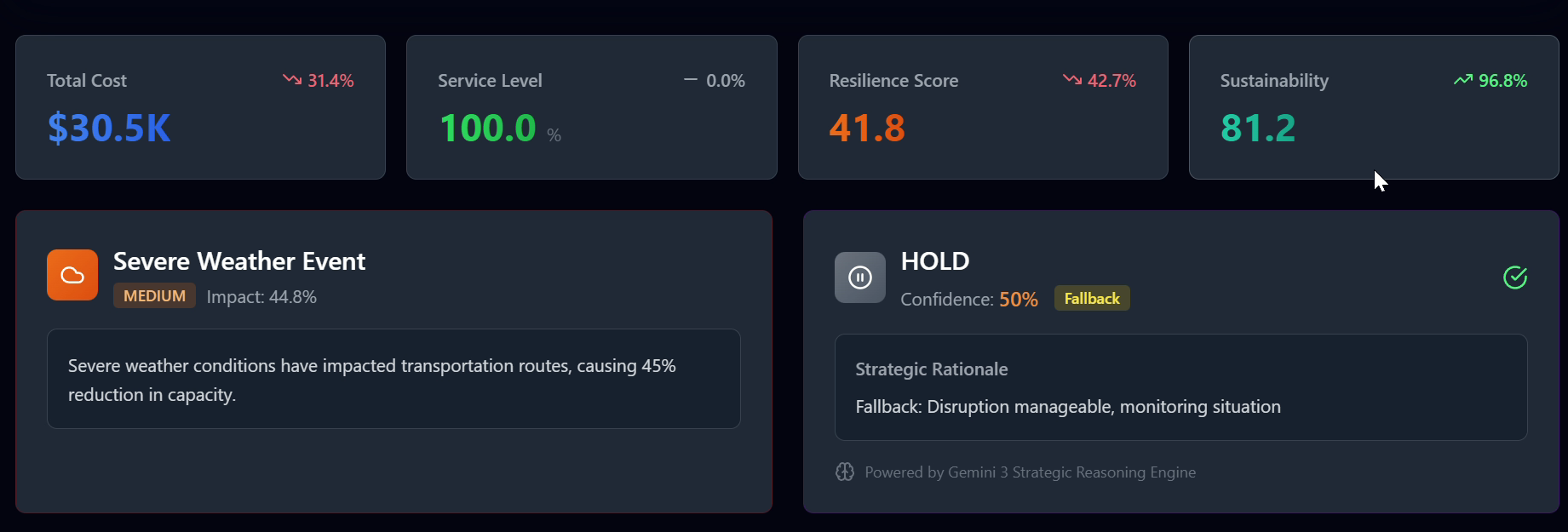
DISRUPTION SCEANARIO 2
-
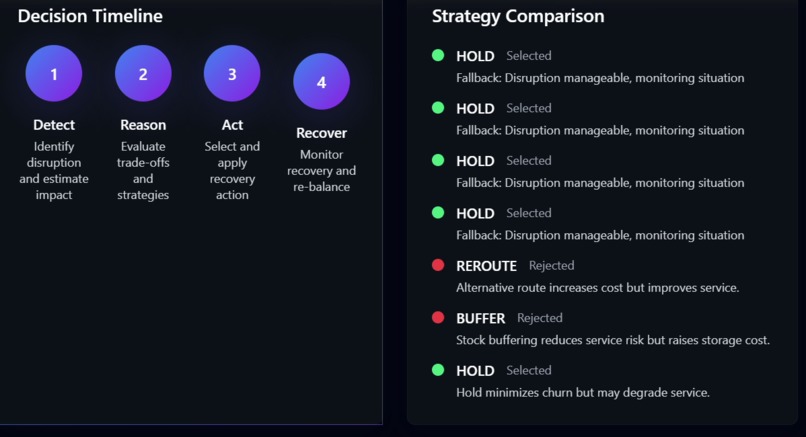
DESICION AND STATERGY
-
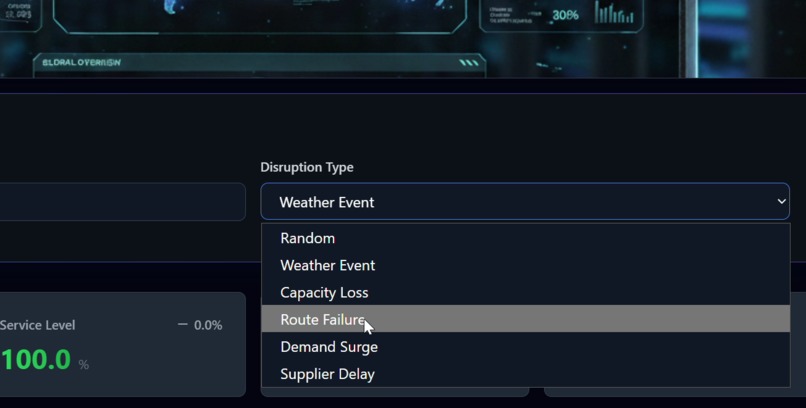
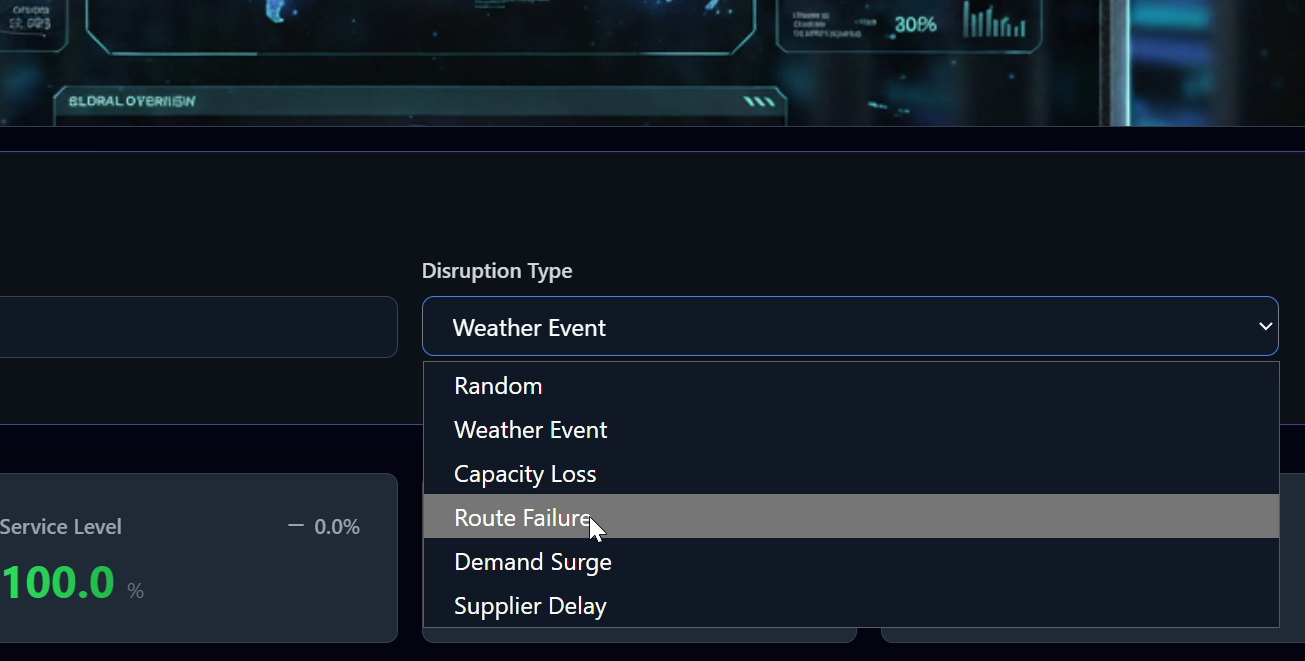
INPUT OF DISRUPTION TYPE
-
Inspiration
Modern supply chains are no longer disrupted by rare events—they are disrupted by continuous uncertainty: extreme weather, supplier failures, transport congestion, fuel cost shocks, and geopolitical risks.
During our research, we observed that most existing supply chain systems are reactive dashboards. They show KPIs, but when disruption occurs, human operators must manually analyze trade-offs between cost, service level, resilience, and sustainability—often under time pressure and incomplete information.
Our system solves some of the real world issues example: [link]https://www.reuters.com/business/aerospace-defense/supply-chain-chaos-becomes-aviations-new-norm-demand-hits-records-2026-02-06/? [link]https://www.weforum.org/stories/2025/06/how-supply-chains-need-to-adapt-to-a-shifting-global-landscape/?utm_source=chatgpt.com
The launch of Gemini 3 and the emergence of the Action Era of AI inspired us to rethink this paradigm. Instead of building another chatbot or analytics tool, we asked:
What if an AI system could autonomously reason about disruptions and decide the best recovery strategy just like an experienced supply chain strategist?
This led to ChainSense AI.
What it does
ChainSense AI is an autonomous supply chain decision system that monitors disruptions and selects optimal recovery strategies using multi-objective reasoning.
The system: 1.Simulates real-world supply chain disruptions (weather events, supplier failures, transport shocks) 2.Quantifies impact across four objectives: cost, service level, resilience, and sustainability 3.Uses Gemini 3 as a strategic reasoning engine to evaluate trade-offs 4.Autonomously selects a recovery action: REROUTE, REALLOCATE, BUFFER, or HOLD 5.Transparently explains why a strategy was chosen and why alternatives were rejected
Rather than generating text responses, Gemini 3 performs high-level decision reasoning, enabling the system to move from analysis to action.
How we built it
ChainSense AI is designed as a multi-layer autonomous agent system. User Inputs / Demo Scenarios ↓ Supply Chain Simulation Engine ↓ Multi-Objective Metric Computation ↓ Gemini 3 Strategic Reasoning Engine ↓ Autonomous Decision + Explanation ↓ Interactive Visualization Dashboard Core Components
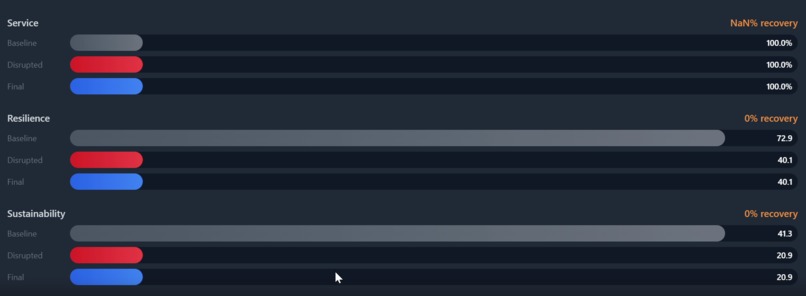
Simulation Engine (Python): Computes baseline and disrupted states, including cost, service level, resilience, and sustainability metrics.
Gemini 3 Integration: Gemini receives summarized system state, disruption context, and objective priorities. It does not perform raw calculations. Instead, it reasons over trade-offs and selects the optimal strategy.
Decision Orchestrator: Converts Gemini’s structured reasoning into executable actions and handles fallback logic when API limits are reached.
Frontend (Dark, Cinematic UI): Presents disruptions, decisions, confidence scores, and strategy comparisons in an enterprise-grade dashboard.
At the core of ChainSense AI, the supply chain state is evaluated using a multi-objective optimization model. Each disruption scenario is first simulated numerically, producing objective values for cost, service level, resilience, and sustainability. We formulate the system objective as a weighted composite score: \( minZ=wc⋅C+ws⋅(1−SL)+wr⋅(1−R)+we⋅E \) (C) = Total operational cost (SL) = Service level (fraction of demand satisfied) (R) = Resilience score (ability to recover from disruptions) (E) = Sustainability impact (e.g., emissions or environmental cost) (w_c, w_s, w_r, w_e) = User-defined priority weights
This formulation explicitly captures the trade-offs inherent in real-world supply chains: improving service or resilience often increases cost or environmental impact.
Challenges we ran into
1.Avoiding chatbot patterns: I deliberately avoided prompt-only or conversational interfaces to ensure Gemini was used as a reasoning engine, not a text generator. 2.Balancing autonomy and control: Designing user inputs that define constraints and priorities without letting users directly control decisions required careful system design. 3.API reliability and quotas: Gemini API rate limits required us to implement fallback strategies to maintain system robustness during failures. 4.Explainability: Ensuring Gemini’s decisions were interpretable and aligned with supply chain logic was critical for trust and realism.
Accomplishments that we're proud of
1.Built a true Action Era AI system that plans and executes decisions autonomously 2.Demonstrated multi-objective reasoning, not single-metric optimization 3.Designed an enterprise-grade UI that clearly communicates AI decisions 4.Created pre-built demo scenarios that simulate real-world supply chain crises 5.Implemented transparent decision explanations rather than opaque AI outputs
What we learned
1.Autonomous AI systems require clear separation between computation and reasoning 2.Gemini 3 excels when used as a strategic decision-maker, not a calculator 3.Explainability is as important as optimization in real-world AI systems 4.The future of AI applications lies in agents that act, not just respond
What's next for CHAINSENSE AI
1.Integrating real-time data sources (weather APIs, port congestion feeds) 2.Supporting long-horizon decision making with memory and self-correction 3.Adding policy-aware constraints for regulated industries 4.Expanding toward multi-agent coordination across global supply networks


Log in or sign up for Devpost to join the conversation.