-
-
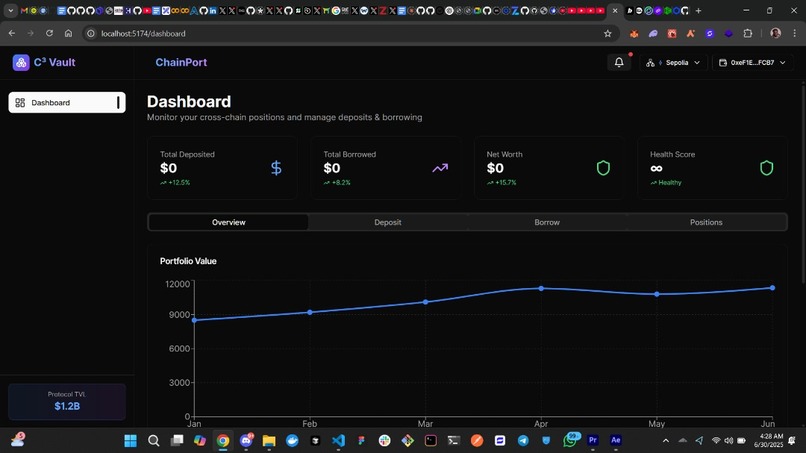
Overview
-
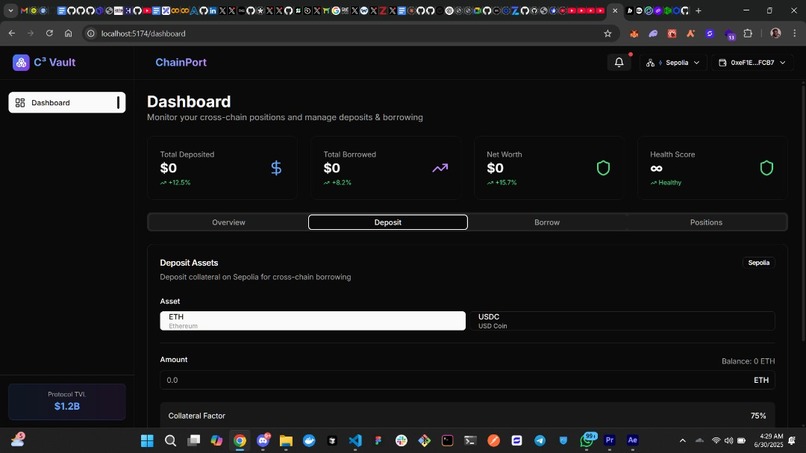
Deposit
-
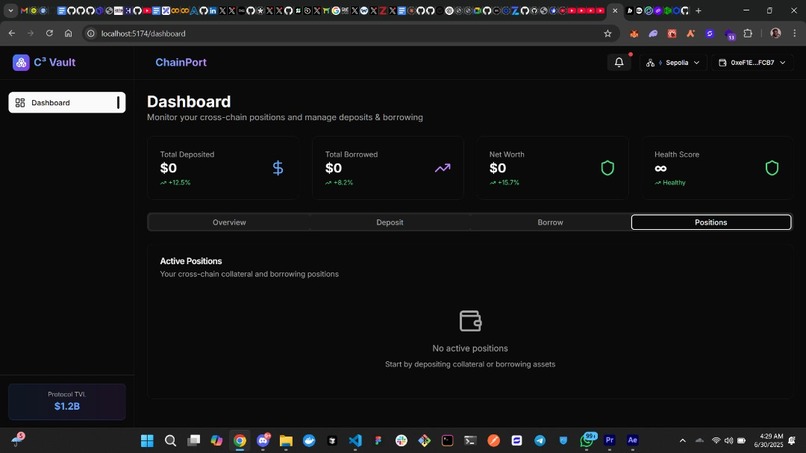
Positions
-
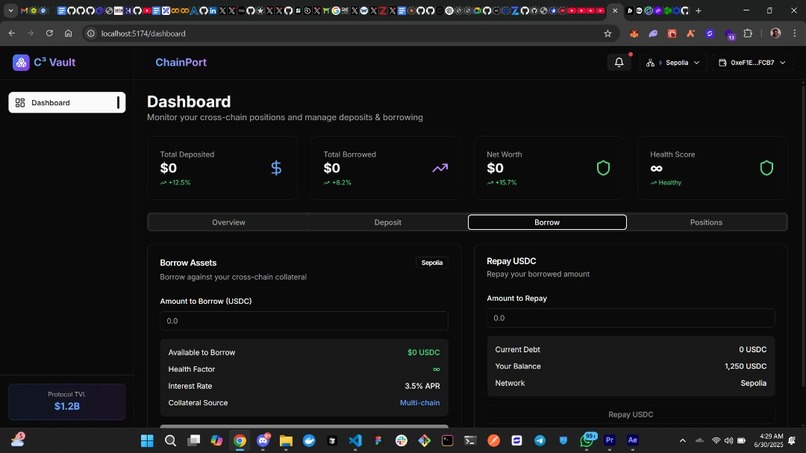
Borrow
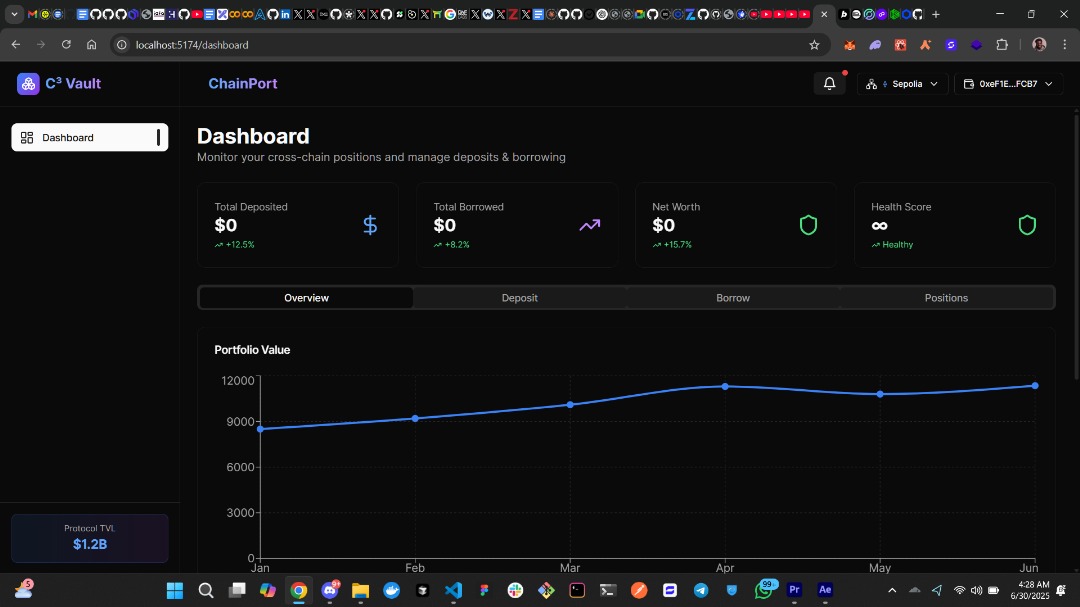
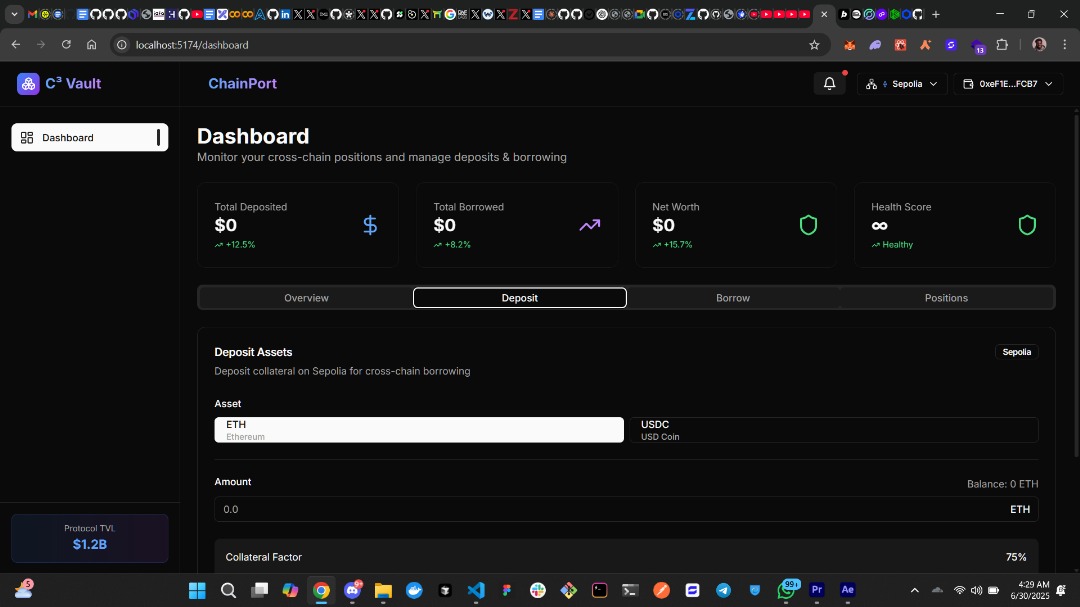
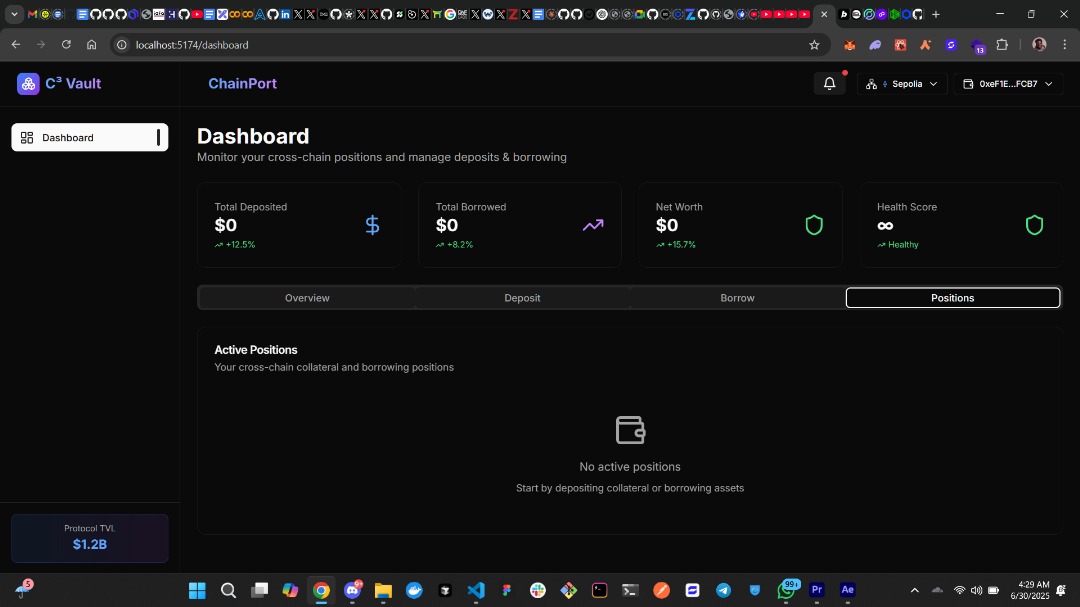
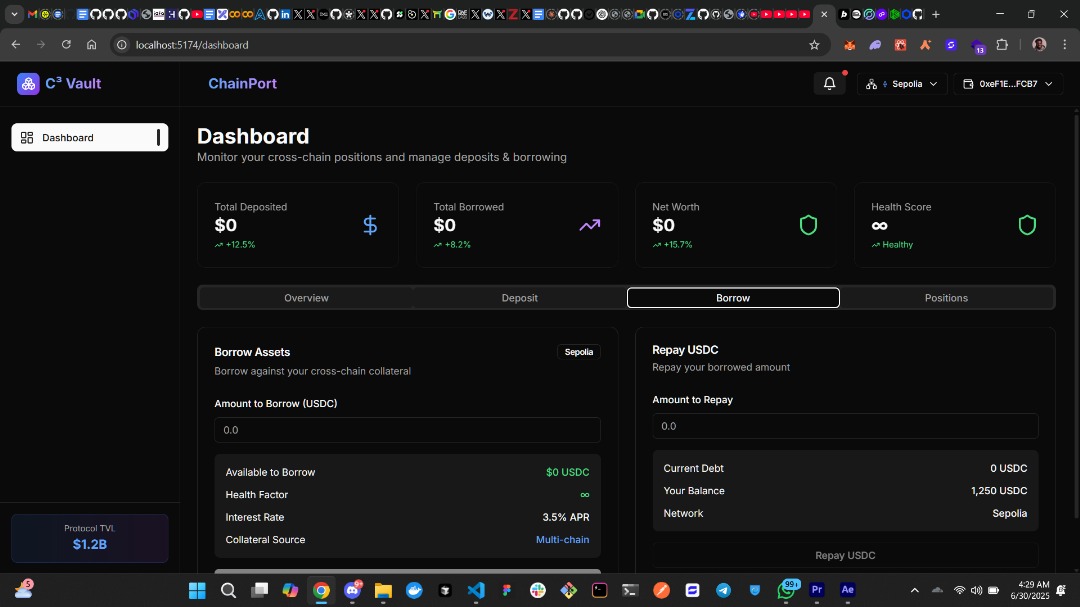
Inspiration
We were inspired by the growing fragmentation of liquidity across chains and the challenges it creates for both DeFi users and institutions. Billions in assets sit idle on different networks, while borrowers struggle to access them efficiently. We wanted to build a solution that unlocks this trapped value, one that’s fast, secure, and ready for real world adoption. Chainlink’s powerful cross chain and data infrastructure and Bolt's powerful AI gave us the tools to turn that vision into ChainPort.
What it does
One of DeFi's biggest problems today is having collateral scattered across different blockchains. Billions in BTC, ETH, stablecoins, and tokenized assets sit locked on Ethereum, Solana, Polygon, and other chains, but you can't actually use them as collateral anywhere else. This creates major problems for institutional investors and serious DeFi users who need immediate liquidity access, real-time monitoring, and reliable liquidation mechanisms. Current bridging solutions are either too slow, too risky, or lack the transparency institutions demand. The technical culprit IS oracle delays. Most protocols rely on price feeds that update too slowly during market volatility, leaving both platforms and users exposed to under collateralization and bad debt. When markets move fast, these delays can wipe out positions and create systemic risks.
How we built it
We built ChainPort using a modular, multi-chain architecture. The smart contracts were written in Solidity and deployed on both Sepolia and Polygon Mumbai to simulate real world cross chain activities. For the frontend, we used Bolt to rapidly create a sleek, dark-themed UI, integrating wallet connections and live contract interactions. Chainlink services like CCIP handled secure cross-chain messaging, Data Streams provided real-time price feeds, and Automation simulated instant liquidation triggers. Together, these components brought our vision of seamless cross-chain collateralization to life.
Challenges we ran into
One of the major challenges I encountered while building ChainPort was the integration of smart contracts with the frontend. Communicating between the deployed contracts and the UI required precise handling of contract ABIs, network configurations, and wallet connections, especially in a cross chain context where more than one chain was involved.
I ran into multiple bugs during this process, such as:
Incorrect contract addresses being used after deployment, ABI mismatches causing function call failures, Network mismatches between the frontend and the wallet, Inconsistent UI behavior due to async Web3 data not syncing properly.
Another hurdle was during the deployment of contracts across two chains (e.g., Sepolia and Polygon Mumbai). Coordinating the right Chainlink configurations, CCIP message validation, and mock setups for things like liquidation triggers led to a number of deployment-time bugs. Some contracts failed silently or reverted due to incorrect constructor parameters or unhandled events.
To overcome these challenges, I:
Added detailed console logging and error handling on both the frontend and contract interaction layers to pinpoint failure points. Created a simple ABI/contract address registry system to avoid confusion during redeployments. Used hardhat scripts and mocks to simulate CCIP and liquidation flows to validate contract behavior without full chain dependency. Leveraged tools like Remix for isolated contract testing, and viem/wagmi for frontend contract interactions, which provided better debugging and network switching support. Refactored frontend components to ensure async data fetching was properly awaited and reactive.
Accomplishments that we're proud of
I built a fully functional cross-chain collateral protocol (ChainPort) that allows users to deposit assets on one chain and borrow on another,all within the hackathon timeline.
Integrated multiple Chainlink services, including: CCIP for secure cross-chain messaging, Data Streams for sub-second price feeds, Automation to simulate real-time liquidation triggers.
Successfully implemented multi-chain smart contract architecture, deploying on both Sepolia and Polygon Mumbai testnets to demonstrate the core cross-chain flow.
Overcame deployment bugs and frontend integration issues to deliver a polished MVP that showcases the vision of institutional-grade DeFi borrowing.
Designed ChainPort with a modular, extensible architecture, making it viable for future development beyond the hackathon — a true launchpad for a real product.
What we learned
Building ChainPort taught us the real challenges and rewards of cross chain development. We deepened our understanding of Chainlink’s tools like CCIP, Data Streams, and Automation, and saw how they bring real-time responsiveness to DeFi. We also learned the importance of seamless integration between smart contracts and the frontend, especially when working under tight deadlines. Most importantly, we gained experience turning a complex technical idea into a working product with a clear user experience.
What's next for ChainPort
We plan to evolve ChainPort from a hackathon product into a production ready protocol. Next steps include hardening the smart contracts, adding support for more chains, integrating real-world assets (RWAs), and onboarding early users for testing. We're also exploring partnerships with lending protocols and institutional DeFi players to bring cross chain collateralization to real world use cases.
Built With
- chainlink
- javascript
- react
- solidity

Log in or sign up for Devpost to join the conversation.