-
-

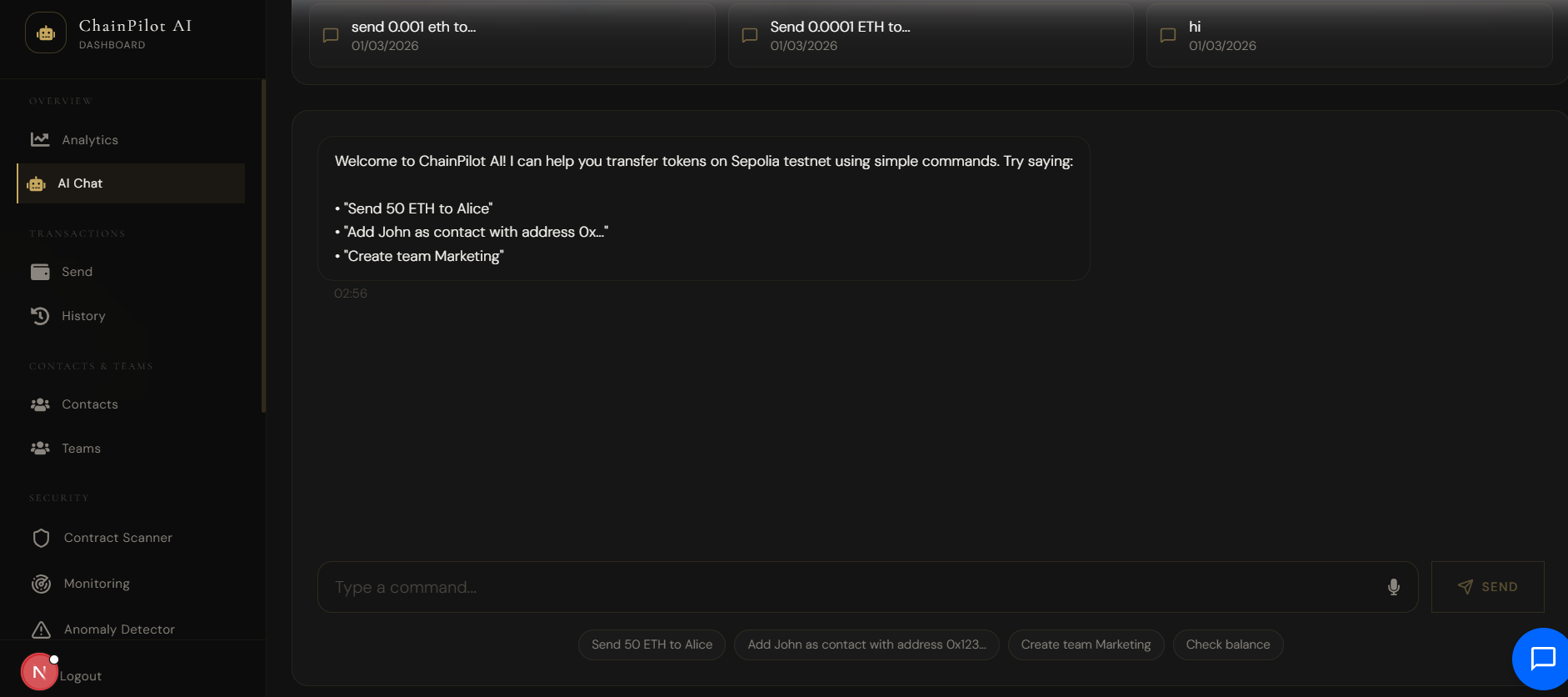
Control your wallet using natural language to send funds, manage contacts, and teams.
-
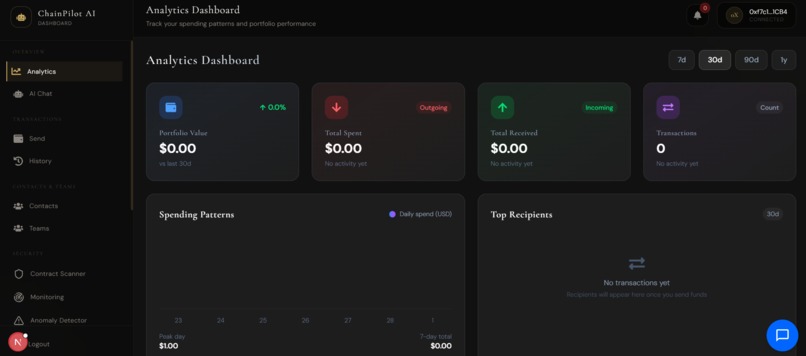
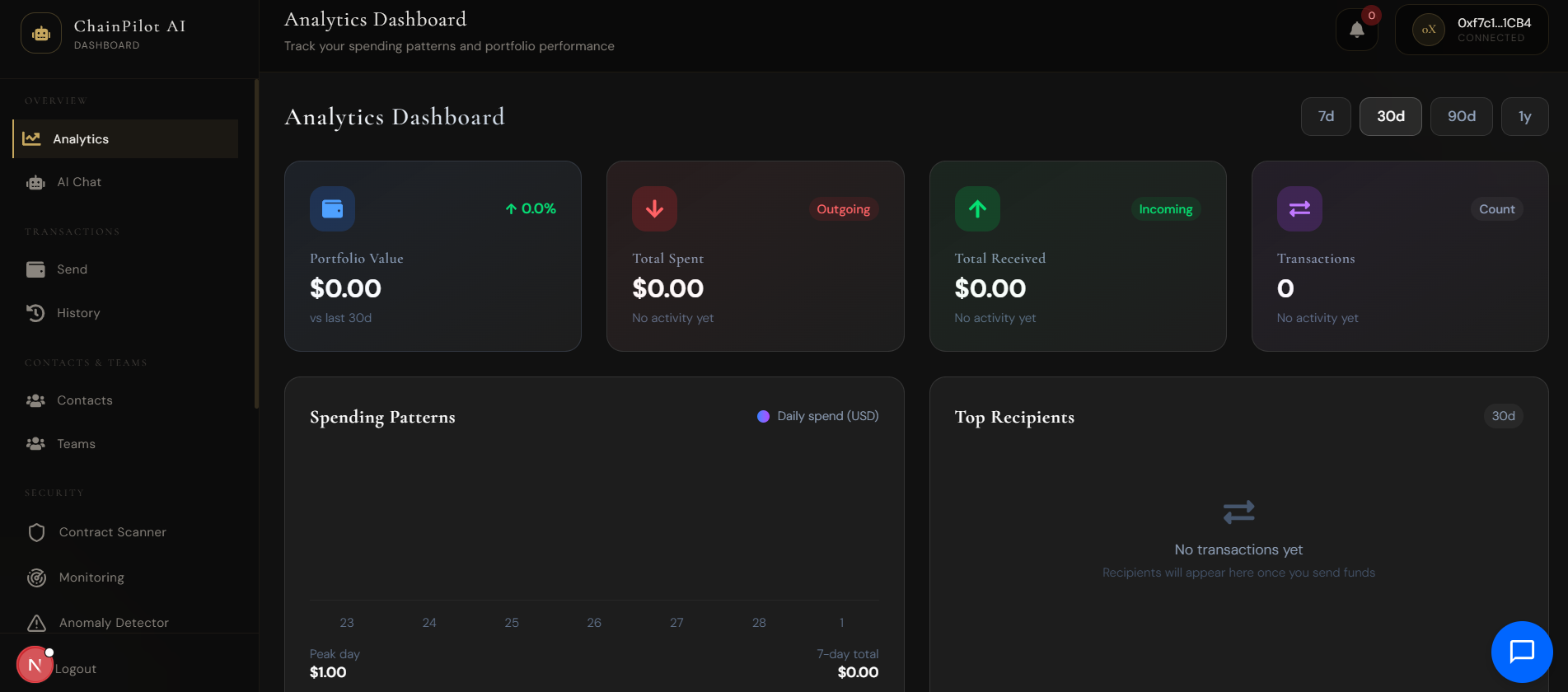
Real-time portfolio insights, spending trends, and blockchain activity tracking.
-
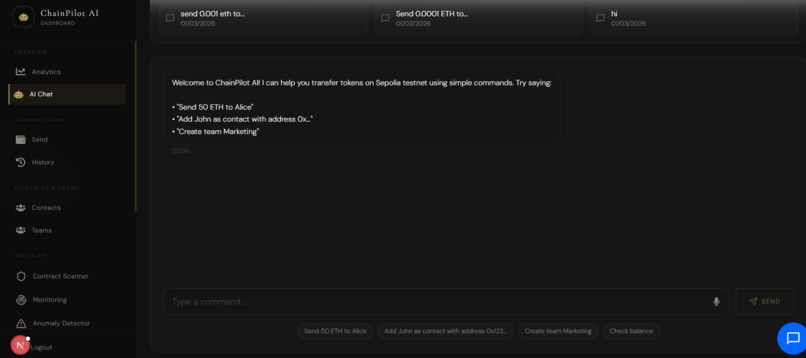
Control your wallet using natural language to send funds, manage contacts, and teams.
-
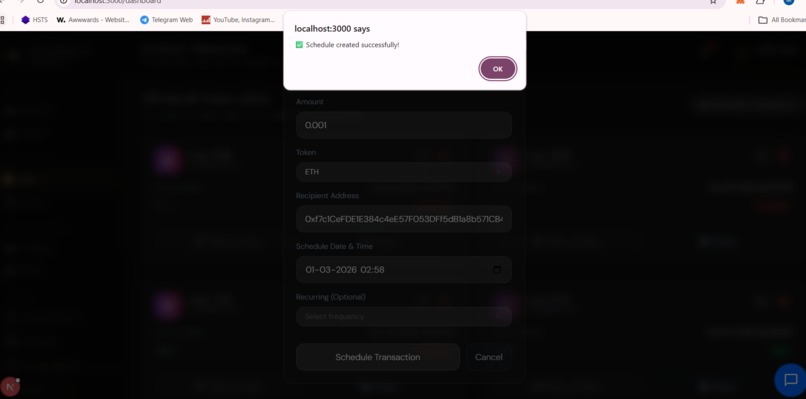
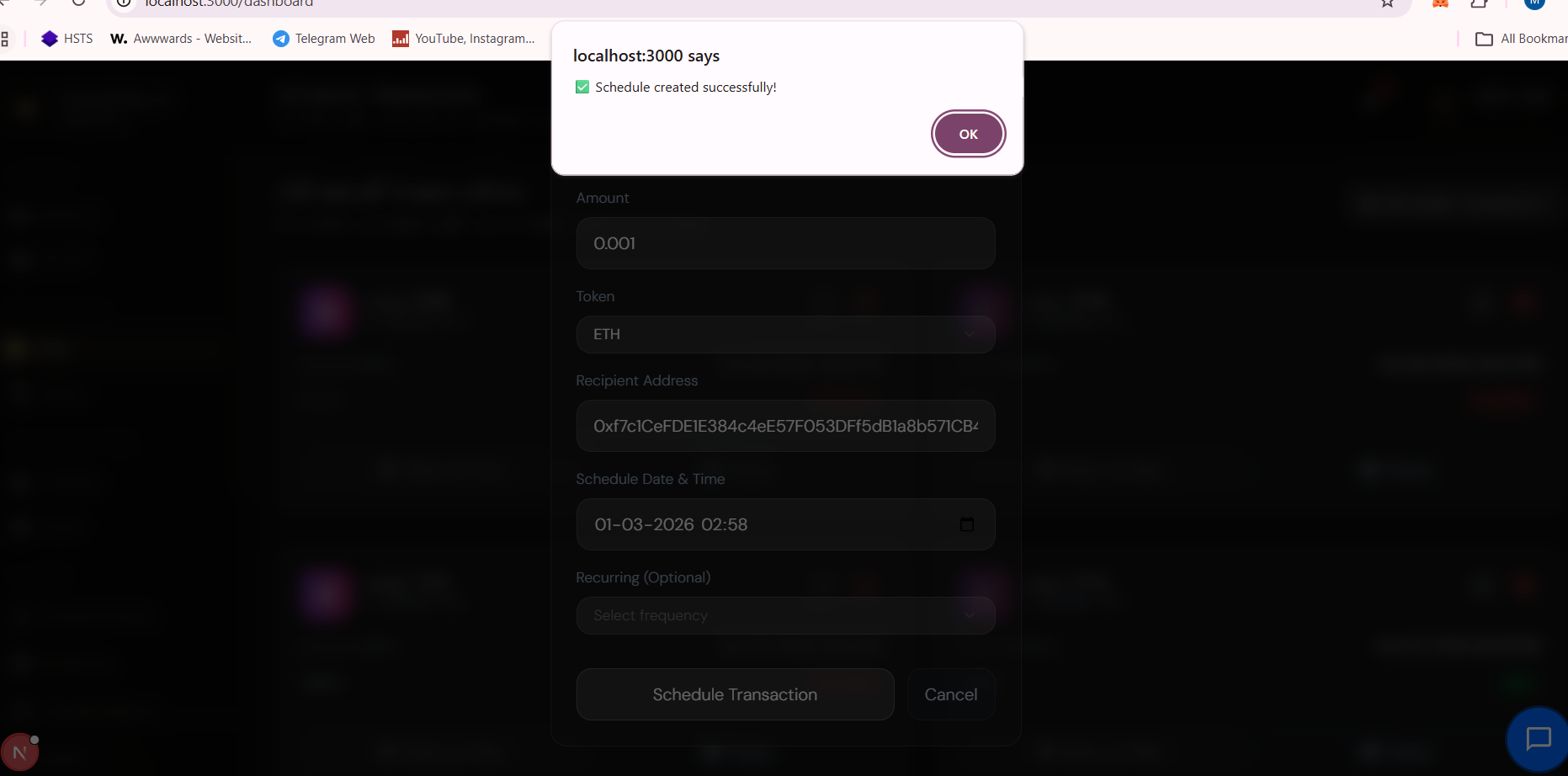
Automate transfers with date, amount, token, and built-in security validation.
-
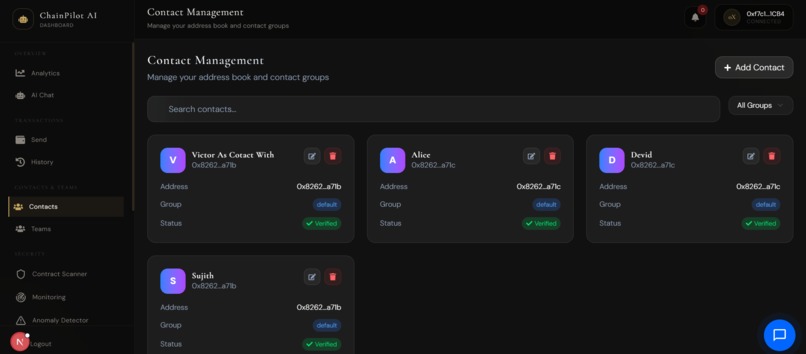
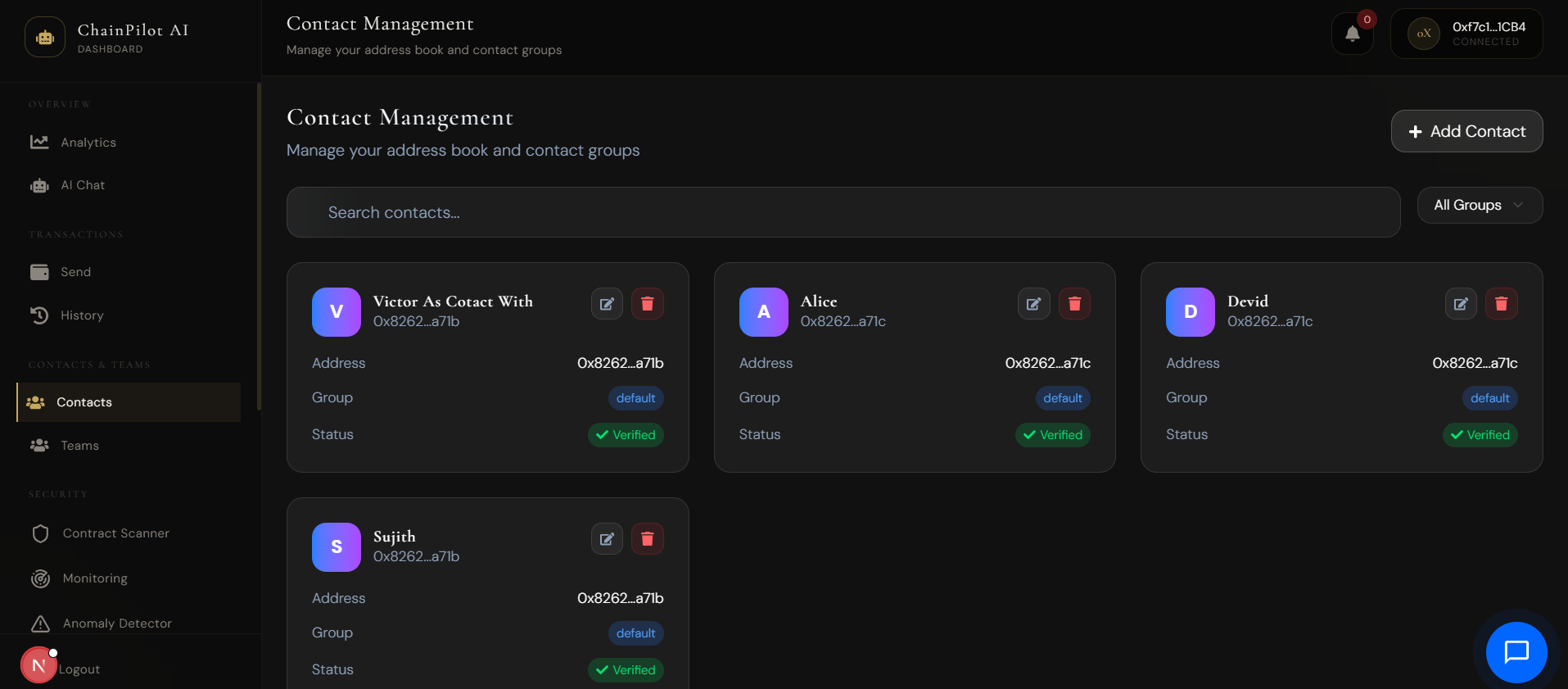
Save and manage wallet addresses manually or through AI chat commands.
-
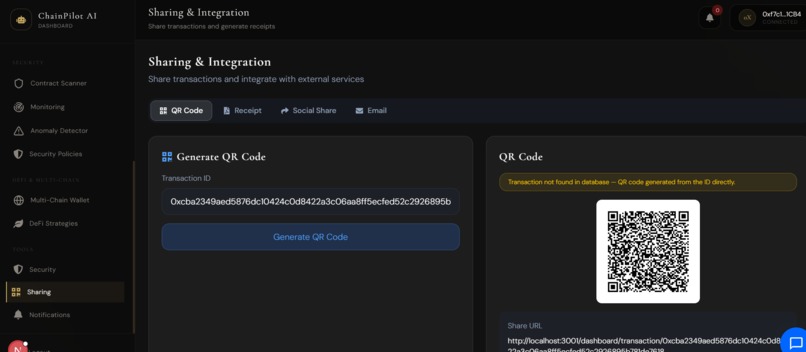
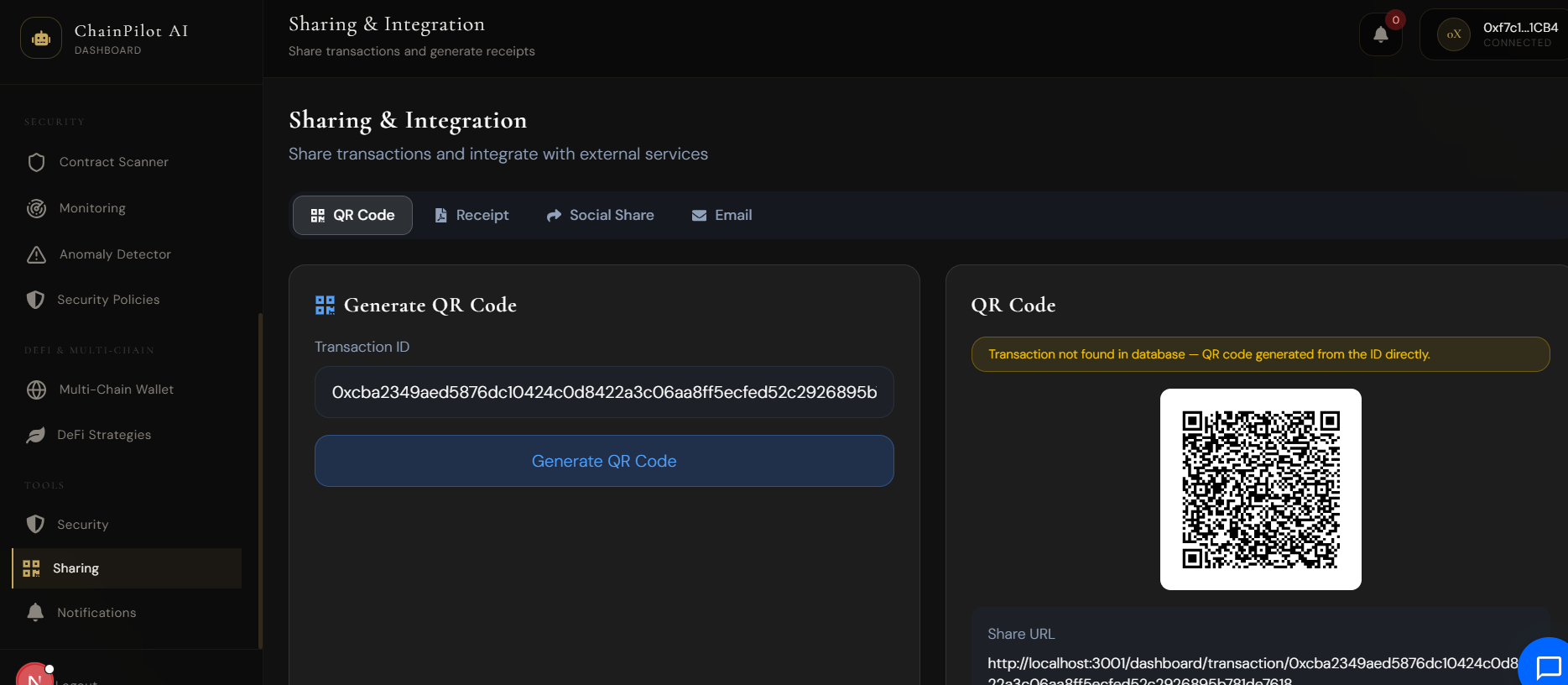
Generate QR codes and shareable links for transaction verification.
-
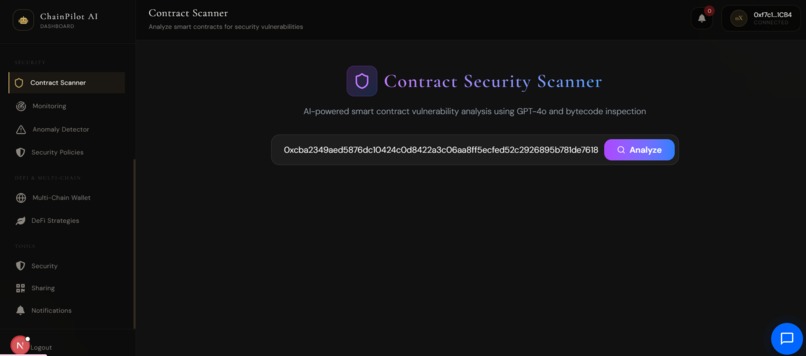
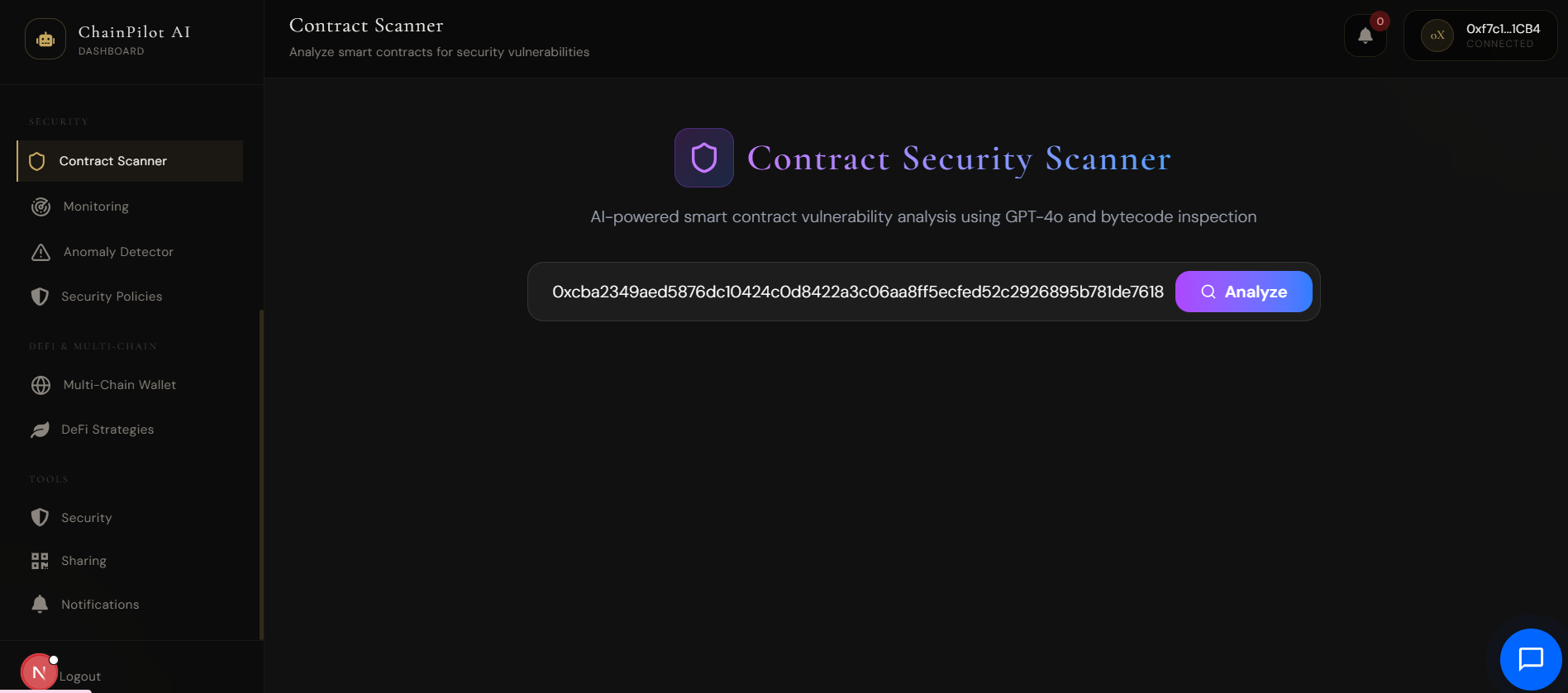
AI-powered smart contract analysis with risk scoring and on-chain audit proof.

ChainPilot AI
Autonomous AI Risk Intelligence for Web3
1) Inspiration
Web3 unlocks financial freedom — but it also exposes users to massive risk.
Every week, we see:
- Smart contract exploits
- Rug pulls
- Malicious token contracts
- DeFi protocol vulnerabilities
Despite billions lost annually, most users still interact with smart contracts blindly.
Even experienced developers struggle to:
- Read raw bytecode
- Interpret proxy patterns
- Evaluate reentrancy risks
- Simulate transactions safely
We asked a simple question:
What if Web3 had an AI co-pilot that thinks before you transact?
ChainPilot AI was built to become that autonomous security layer.
What It Does
ChainPilot AI is an AI-powered Web3 security and transaction intelligence platform that:
- Converts natural language into blockchain actions
- Performs static contract vulnerability analysis
- Generates AI-powered human-readable risk explanations
- Simulates transactions before execution
- Logs audit hashes immutably on-chain
- Monitors contracts continuously every 5 minutes
It’s not just a scanner. It’s an AI security operator.
How We Built It
🔹 Frontend
- Next.js 14 + TypeScript
- Tailwind CSS
- Privy wallet authentication
- AI chat interface powered by Gemini
🔹 Backend (Modular Service Architecture)
Built with Node.js + Express + MongoDB.
Six core services:
- ContractAnalyzer → Static bytecode + source inspection
- RiskEngine → Weighted vulnerability scoring
- AiEngine → GPT-4o security explanations
- TransactionSimulator → Pre-execution risk modeling
- BlockchainLogger → On-chain SHA-256 audit logging
- MonitoringEngine → Cron-based automated surveillance
🔹 Autonomous Agent
Built using ElizaOS framework.
The agent can:
- PREPARE_TRANSFER
- CHECK_RISK
- CREATE_TEAM
- Parse natural language into blockchain workflows
This transforms ChainPilot from a tool into an autonomous AI operator.
Smart Contract Design
We deployed an immutable audit registry (AuditLog.sol) on Sepolia.
Functions include:
- logAudit()
- verifyAudit()
- totalAudits()
- getAuditHashes()
Security Model:
- Only a trusted backend logger can write
- Audit hashes are immutable
- Emits
AuditLoggedevent for indexing
Each security report is hashed using:
H=SHA256(report_data)
This ensures cryptographic integrity and verifiability.
How It Works (Full Flow)
- User connects wallet via Privy
- User types: analyze contract 0x...
- Gemini parses intent
- Backend fetches contract bytecode
- riskEngine evaluates 15 vulnerability patterns
- GPT-4o generates a structured explanation
- Hash of report optionally stored on-chain
- Monitoring engine re-checks contract periodically
Risk Score is computed using a weighted model:
RiskScore=∑(Severityi×Weighti)
Output: 0–100 vulnerability index.
Challenges We Faced
- Designing a scalable modular architecture
- Separating risk scoring logic from AI explanation layer
- Ensuring deterministic scoring before AI interpretation
- Secure private key handling for audit logging
- Building a cron-based monitoring engine without spamming RPC
- Coordinating multi-AI pipelines (Gemini + GPT-4o)
One major design decision: We intentionally separated AI reasoning from scoring logic to prevent hallucinated risk values.
What We Learned
- AI should assist deterministic systems — not replace them
- On-chain logging adds real credibility
- Autonomous agents require strict action validation
- Web3 UX improves drastically with natural language interfaces
Most importantly:
Security intelligence must be explainable.
Why It Matters
ChainPilot AI introduces:
- AI-native Web3 UX
- On-chain verifiable security reports
- Continuous contract surveillance
- Agent-based transaction execution
It’s a programmable AI firewall for decentralized finance.
Built With
Languages
- TypeScript
- Solidity
- JavaScript
Frameworks
- Next.js 14
- Express.js
- Tailwind CSS
- Hardhat
AI APIs
- OpenAI GPT-4o
- Google Gemini API
Blockchain
- ethers.js v6
- Sepolia Testnet
Database
- MongoDB
Auth
- Privy
Agent Framework
- ElizaOS
Built With
- content
- devpost
- documentation
- html5css3
- javascript
- json
- language
- markdown
- mongodb
- query
- shell
- solidity
- typescript
- yaml

Log in or sign up for Devpost to join the conversation.