-
-
-
-
-
Inteligencia Blockchain en Tiempo Real
Inspiration## Inspiration
I've been closely following how blockchain intelligence tools (Chainalysis, Arkham, Nansen) are out of reach for independent developers and users in Latin America — they're expensive, closed, and cloud-only. I wanted to build something anyone could run locally, without sending sensitive data to third-party servers, and that's honest about its limits instead of inventing answers when it doesn't have enough information.
What it does
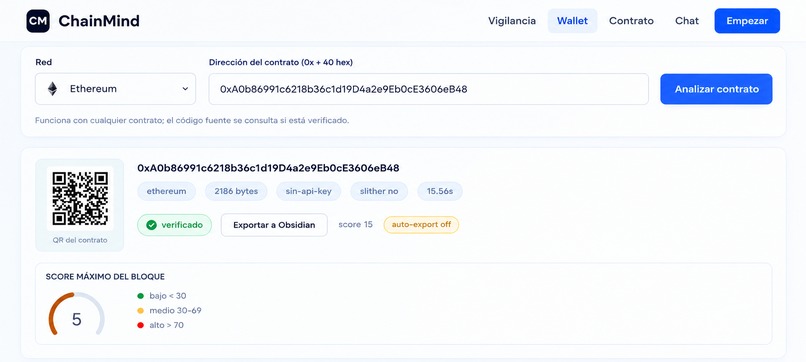
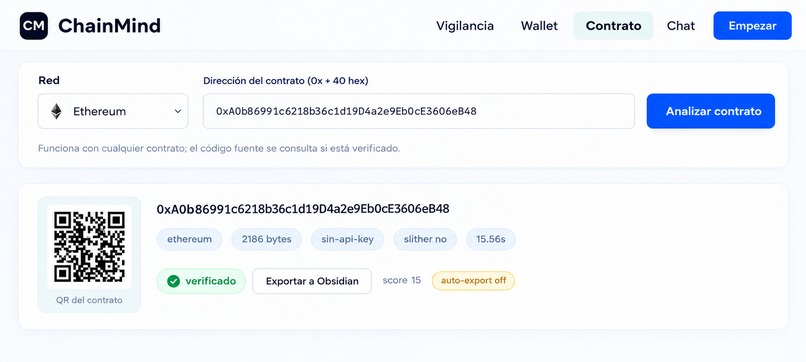
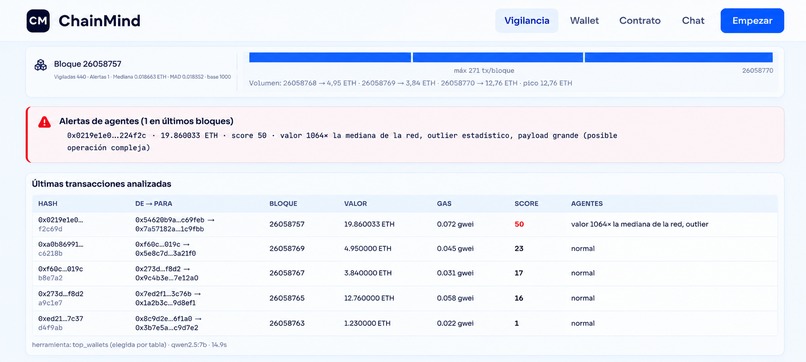
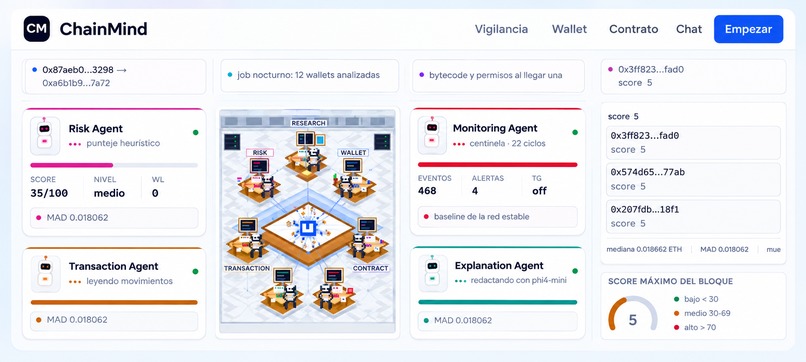
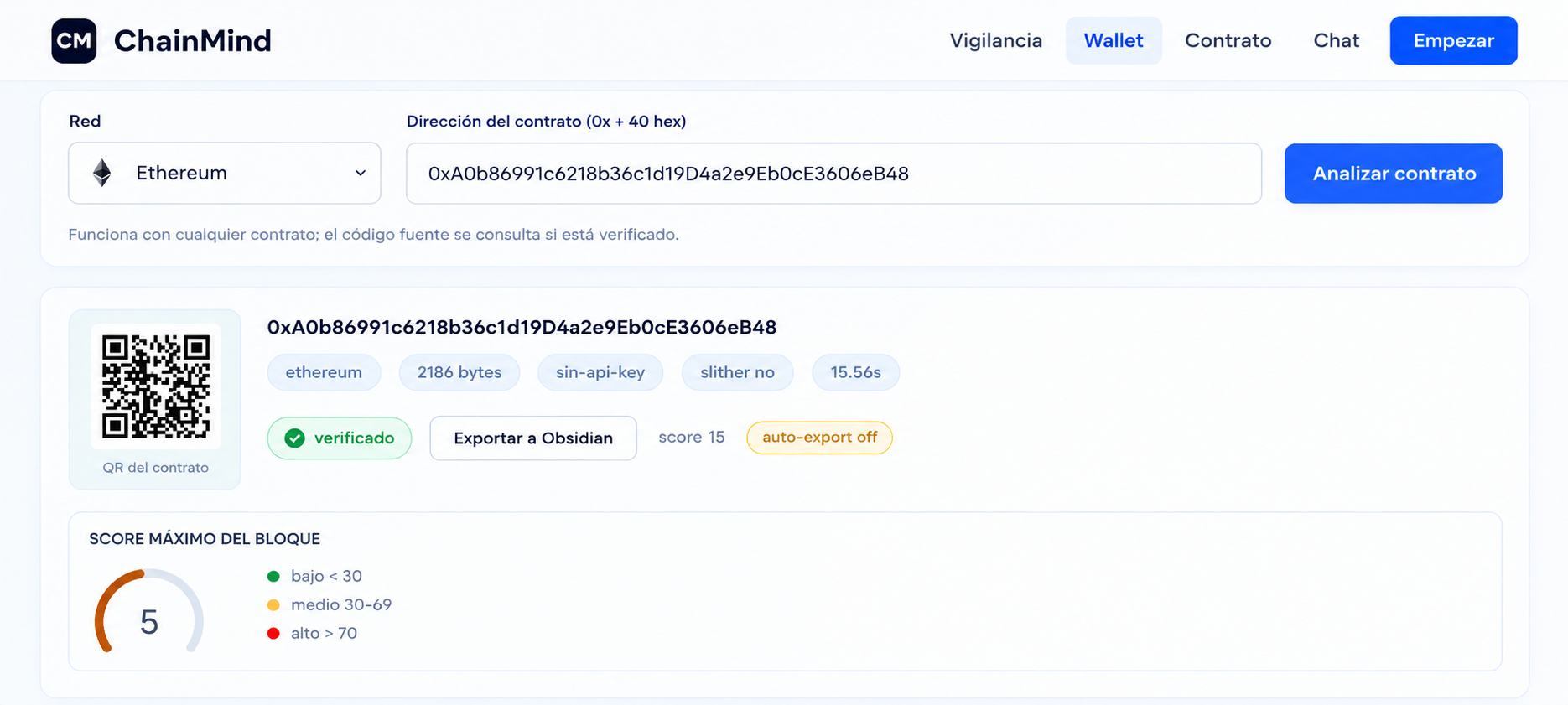
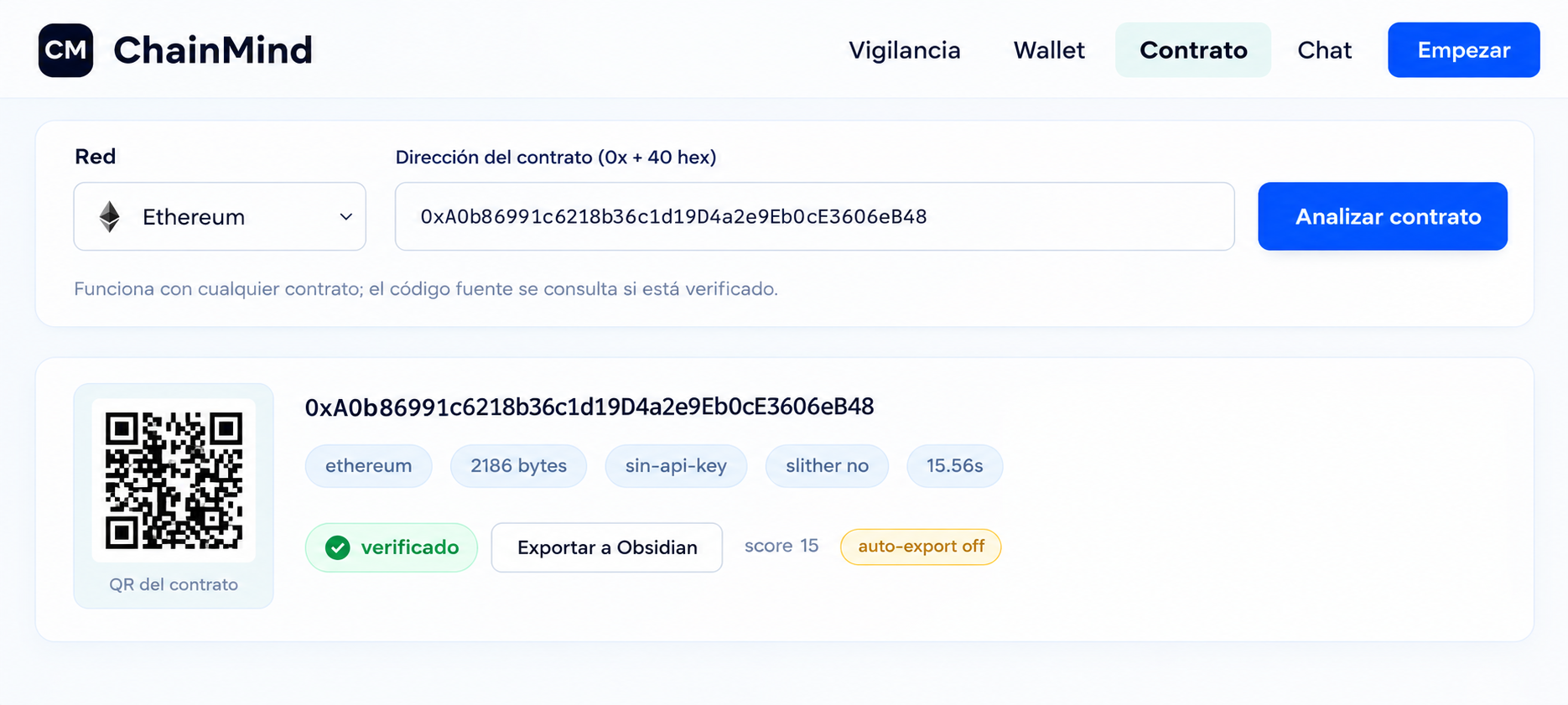
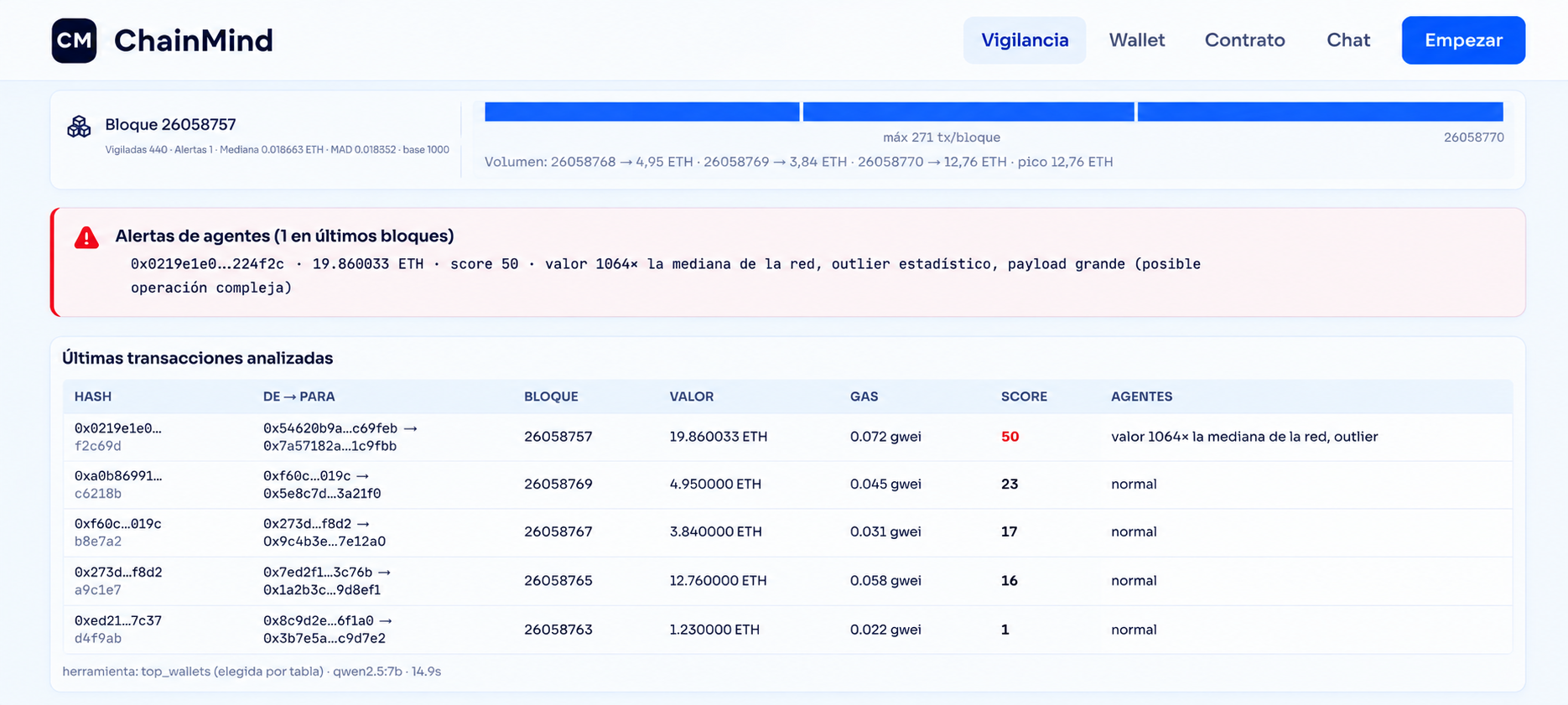
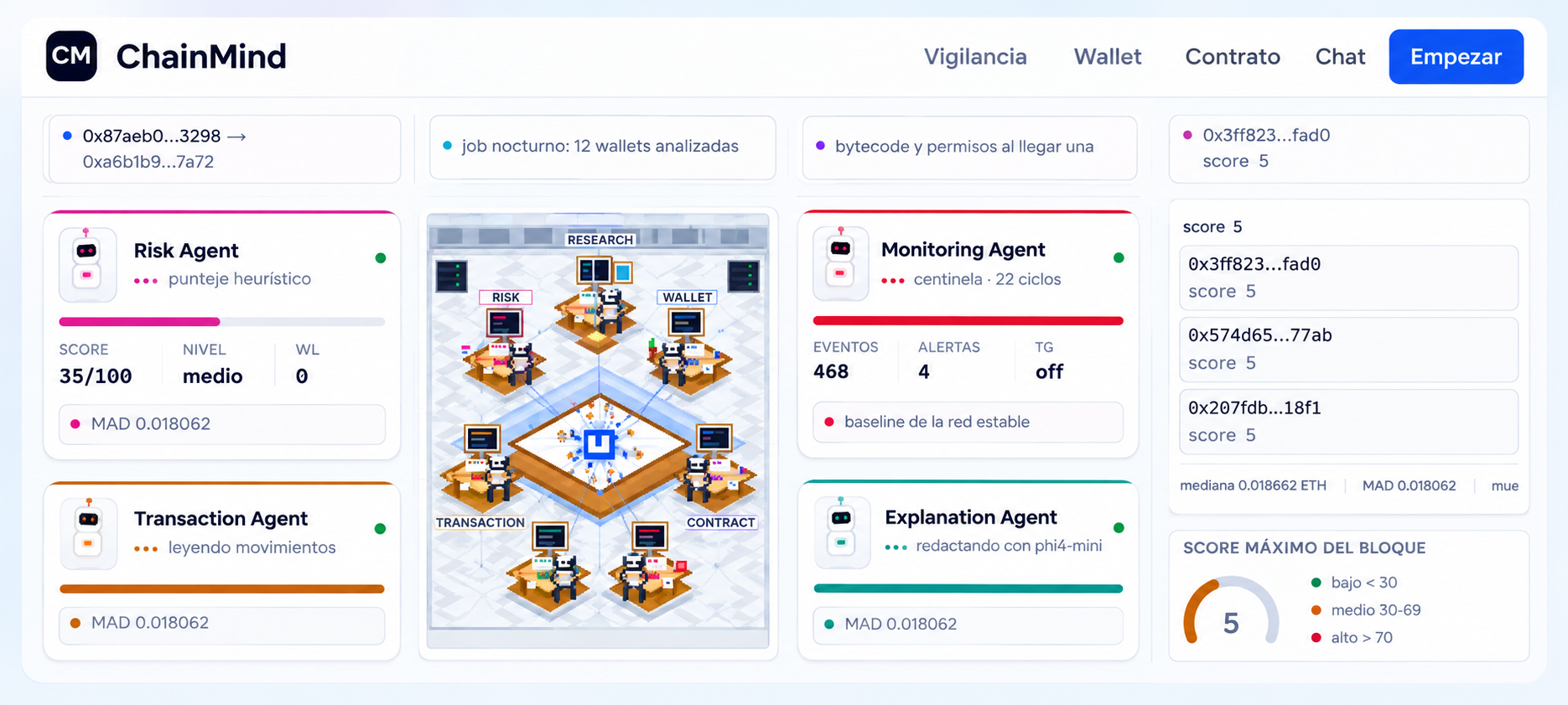
ChainMind analyzes on-chain wallets and contracts in real time using a multi-agent system: seven specialized agents (explanation, risk, contracts, research, anomalies, sentinel, chat), each running its own language model tuned to its specific task, instead of one generic LLM trying to do everything.
It can run 100% locally with Ollama — no API key, no data sent to the cloud — or use cloud providers (Anthropic, OpenAI, Gemini, Groq, OpenRouter) based on server configuration. The system automatically picks the best available provider.
What matters most to me in the design: when the system doesn't have enough data to give a reliable risk score, it doesn't make up a number — it says so explicitly. A risk score that fakes certainty it doesn't have is worse than no score at all.
How I built it
- Backend in FastAPI (Python) with specialized agents in LangGraph
- Frontend in Next.js + React + TypeScript + Tailwind/shadcn
- PostgreSQL for transactional data, Neo4j for the wallet connection graph
- EVM indexer based on Subsquid for Ethereum data ingestion
- Custom API key system with SHA-256 hashing
- Deterministic filter that validates every AI-generated response before it's published
Challenges I ran into
Balancing the quality of small local models (3B-7B) against latency — I ended up assigning different models per agent based on task complexity.
Also designing the system to be honest about its own limitations: instead of letting the LLM "fill in the gaps" when data is missing, each agent has explicit rules to abstain.
What I learned
That the reliability of an AI system in a sensitive domain like finance/blockchain depends more on knowing when NOT to answer than on how well it answers when it does have data.
What's next
Completing the end-to-end indexing pipeline, and expanding anomaly detection with more historical data volume.
What it does
How we built it
Challenges we ran into
Accomplishments that we're proud of
What we learned
What's next for Chainmind
Built With
- anthropic
- coingecko
- css
- ethereum
- fastapi
- langgraph
- neo4j
- next.js
- ollama
- openai
- postgresql
- python
- react
- subsquid
- tailwind
- typescript

Log in or sign up for Devpost to join the conversation.