ChainLink Portfolio - Project Story
Inspiration
As a Web3 learner exploring Polkadot, I faced a frustrating problem: my crypto identity was scattered across multiple parachains. Checking my Astar balance meant opening one explorer, Moonbeam another, Polkadot yet another. I realized this fragmented experience was preventing mainstream adoption—users shouldn't need to be blockchain experts to see their assets. Polkadot's unique multi-chain architecture is powerful, but the user experience needed to catch up. I wanted to build something that made cross-chain interaction as simple as checking your bank account—one dashboard, complete visibility, and actual cross-chain actions.
What it does
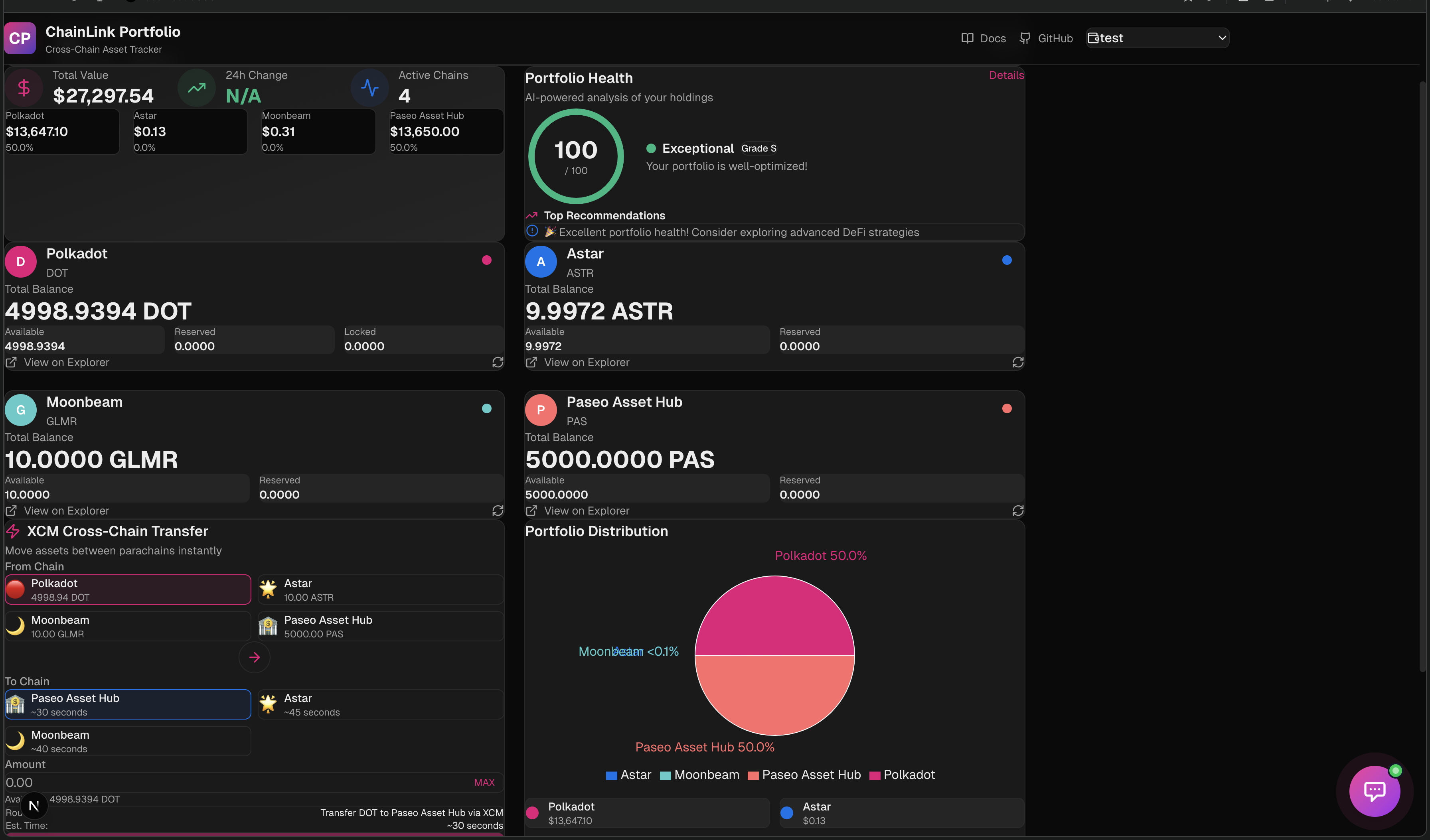
ChainLink Portfolio is an AI-enhanced, privacy-first dashboard that unifies your Polkadot ecosystem presence:
- Multi-Chain Aggregation: Connects to 4 parachains (Polkadot, Astar, Moonbeam, Paseo Asset Hub) and displays all balances in real-time with USD values
- AI Portfolio Advisor: Powered by Groq's Llama 3.1, it analyzes your holdings and provides personalized recommendations on staking, allocation, and cross-chain opportunities
- Portfolio Health Score: Calculates a 0-100 score based on diversification, risk balance, chain activity, and portfolio size
- Real XCM Transfers: Execute actual cross-chain asset transfers using Polkadot's XCM protocol—move tokens between parachains with one click
- Beautiful Visualizations: Interactive pie charts, chain cards, and responsive design that works on any device
- Privacy-First: All data fetched client-side through Polkadot.js—no backend, you control your data
How we built it
Tech Stack: Next.js 14, TypeScript, Tailwind CSS, Polkadot.js API, XCM Protocol, Groq AI, Recharts
Architecture
- Wallet Integration: Built secure connection with Polkadot.js browser extension
- Parallel Chain Queries: Implemented
Promise.allSettledto query all 4 chains simultaneously for fast load times - Price Integration: Connected to CoinGecko API for real-time token prices with mock prices for testnet tokens
- Portfolio Aggregation: Created utility functions to calculate total value, percentages, and format blockchain data into human-readable numbers
- AI Service: Integrated Groq API with carefully crafted prompts that understand Polkadot ecosystem specifics
- Health Score Algorithm: Developed scoring logic that evaluates diversification (entropy-based), risk balance, activity levels, and portfolio size
- XCM Implementation: Built real cross-chain transfer functionality using
limitedTeleportAssetsandlimitedReserveTransferAssets, handling SS58 address encoding and XCM V3 message format - Responsive UI: Designed mobile-first interface with floating AI chat, interactive charts, and smooth animations
- Development Approach: Used Spec-Kit methodology with clear constitution, specifications, and incremental implementation
Challenges we ran into
- SSR vs Browser APIs: Next.js server-side rendering conflicted with Polkadot.js extension (browser-only). Solved with dynamic imports and
typeof windowchecks. - XCM Address Encoding: Spent hours debugging "Expected 32 bytes, found 48 bytes" error. Learned SS58 addresses need
decodeAddress()to convert to raw 32-byte account IDs for XCM messages. - Testnet Token Availability: Getting testnet tokens was harder than expected. Faucets were deprecated, rate-limited, or broken. Had to find alternative faucets and coordinate multi-chain testing.
- AI Data Formatting: Initially, AI recommendations were generic. Had to refine prompts extensively to ensure the AI understood users already own these tokens and should focus on allocation/staking strategies, not purchase recommendations.
- Zero Balance Visualization: Pie chart was hiding chains with zero/small balances, making the portfolio look incomplete. Fixed by ensuring all chains always render with minimum values and (Empty) labels.
- Cross-Testnet XCM Limitations: Discovered that XCM transfers between different testnets (Paseo ↔ Westend) don't always reflect balance changes due to infrastructure incompatibility, though transactions submit successfully on-chain.
- Price API for Testnets: Testnet tokens don't have real market prices. Implemented mock pricing logic that mirrors mainnet token prices for realistic demo values.
Accomplishments that we're proud of
- Real XCM Transfers: Not a mock or demo—actual on-chain cross-chain asset transfers using Polkadot's XCM protocol
- AI That Understands Polkadot: Created an AI advisor that provides genuinely useful, ecosystem-specific recommendations about staking, XCM opportunities, and parachain strategies
- Complete Portfolio Analytics: Built a comprehensive health scoring system that goes beyond simple balance display
- Web2 UX in Web3: Achieved a polished, responsive interface that feels modern and accessible to non-technical users
- Privacy-First Architecture: No backend, no data collection—everything client-side while still being feature-rich
- Performance: Parallel queries load 4 chains simultaneously in ~2-3 seconds with graceful error handling
- Fully Responsive: Works beautifully on desktop, tablet, and mobile with floating AI chat that doesn't obstruct content
- Production-Ready Code: Type-safe TypeScript, clean architecture, comprehensive error handling, and well-documented codebase
What we learned
Technical Learnings
- Deep understanding of XCM protocol, including teleport vs reserve transfers, versioned locations/assets, and proper account encoding
- Polkadot.js API intricacies: chain metadata, runtime calls, transaction signing, and status monitoring
- How to integrate AI effectively in Web3 apps—not just bolt-on features but genuinely useful tools
- Browser-based blockchain architecture without compromising on features or security
- Efficient parallel async operations for multi-chain data fetching
Blockchain Concepts
- Polkadot's multi-chain architecture and how parachains interoperate
- Account balance types: free, reserved, frozen, and how they're calculated
- Token decimals and proper formatting from raw blockchain values
- RPC endpoint reliability and fallback strategies
- Testnet vs mainnet differences and limitations
Design Philosophy
- Privacy doesn't mean sacrificing UX—you can have both
- User-centric design means hiding complexity, not removing features
- Good error handling is part of great UX
- Mobile-first design forces clarity and priority
AI in Web3
- LLMs can provide valuable insights when given properly structured blockchain data
- Context is everything—generic prompts produce generic advice
- Real-time data + AI = powerful user experience multiplier
What's next for ChainLink Portfolio - Polkadot Cross-Chain Activity Tracker
Immediate Post-Hackathon
- Mainnet Support: Switch from testnet to production chains with real assets
- More Parachains: Add Hydration, Bifrost, Phala, Interlay, and other major parachains
- Transaction History: Display recent transfers, staking actions, and XCM movements
- NFT Gallery: Show NFTs across all parachains in unified view
Ultimate Goal
Make ChainLink Portfolio the go-to dashboard for Polkadot ecosystem—the place where users start their day to check their complete cross-chain presence, get actionable insights, and execute multi-chain strategies with confidence. Help bridge Web2 and Web3 by providing an experience that's both powerful for advanced users and accessible for newcomers.
The future is multi-chain. ChainLink Portfolio makes it simple.
Built With
- 3.1
- 8b
- ai:
- api
- apis:
- asset
- astar
- chain
- chains:
- coingecko
- data)
- extension
- frontend:-next.js-14
- groq
- instant
- llama
- moonbeam
- network
- paseo
- polkadot
- polkadot.js
- pricing
- protocol
- recharts
- relay
- tailwind-css-blockchain:-polkadot.js-api
- target
- testnet)
- typescript
- visualization:
- wallet:
- with
- xcm


Log in or sign up for Devpost to join the conversation.