-
-
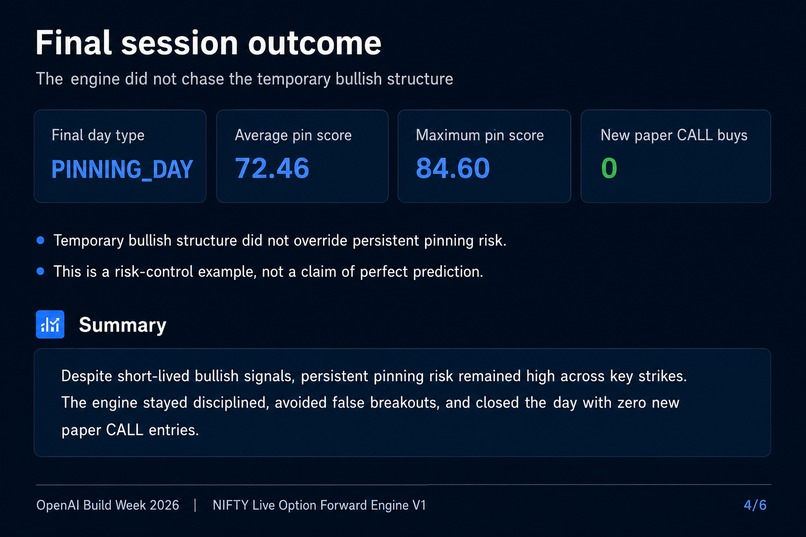
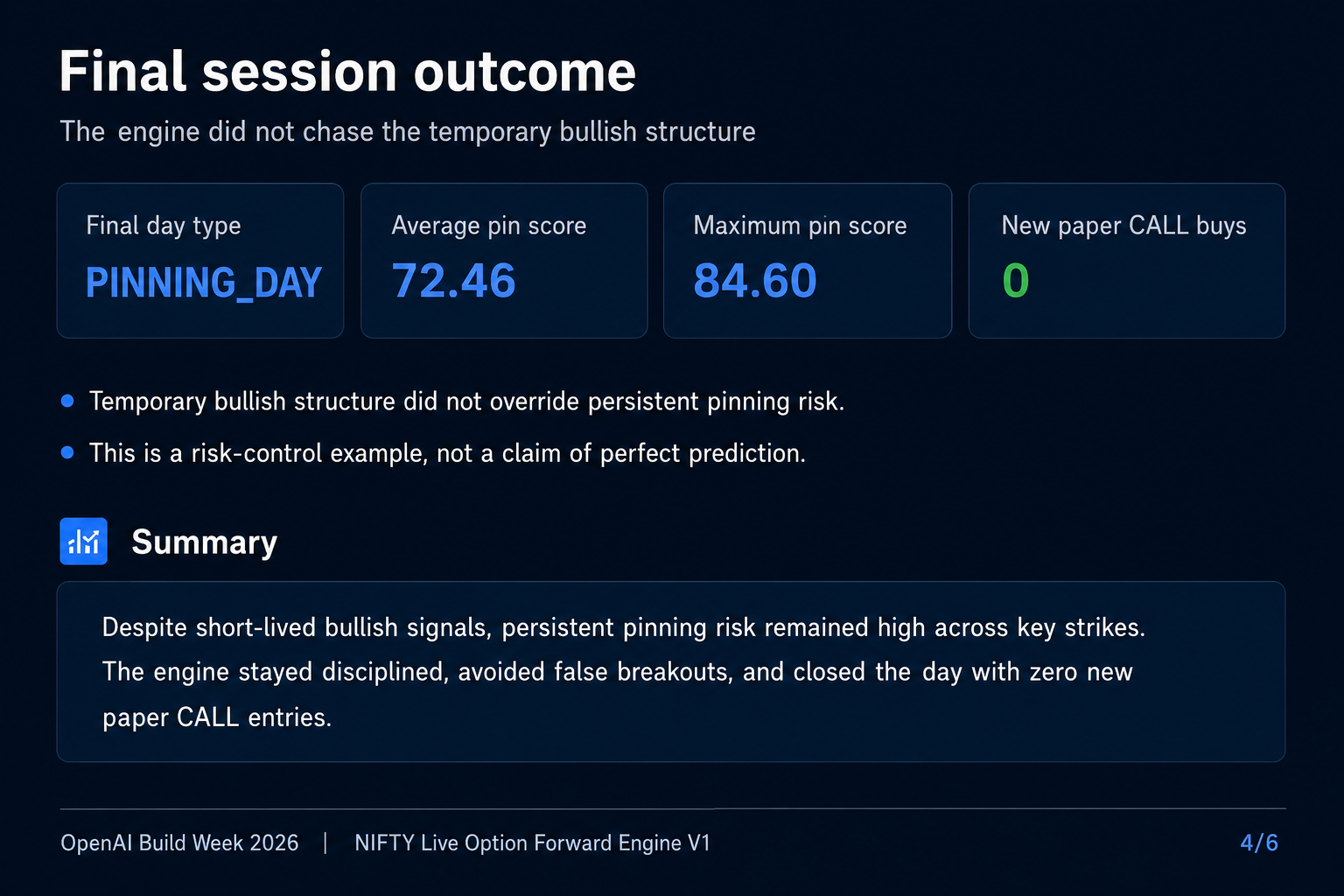
ChainLens final session outcome: persistent pinning risk blocked a temporary bullish setup, resulting in zero new paper CALL entries.
-
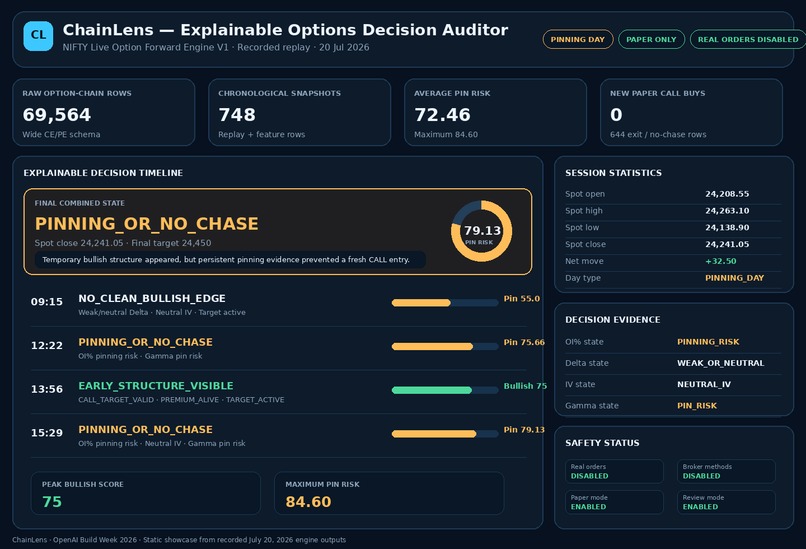
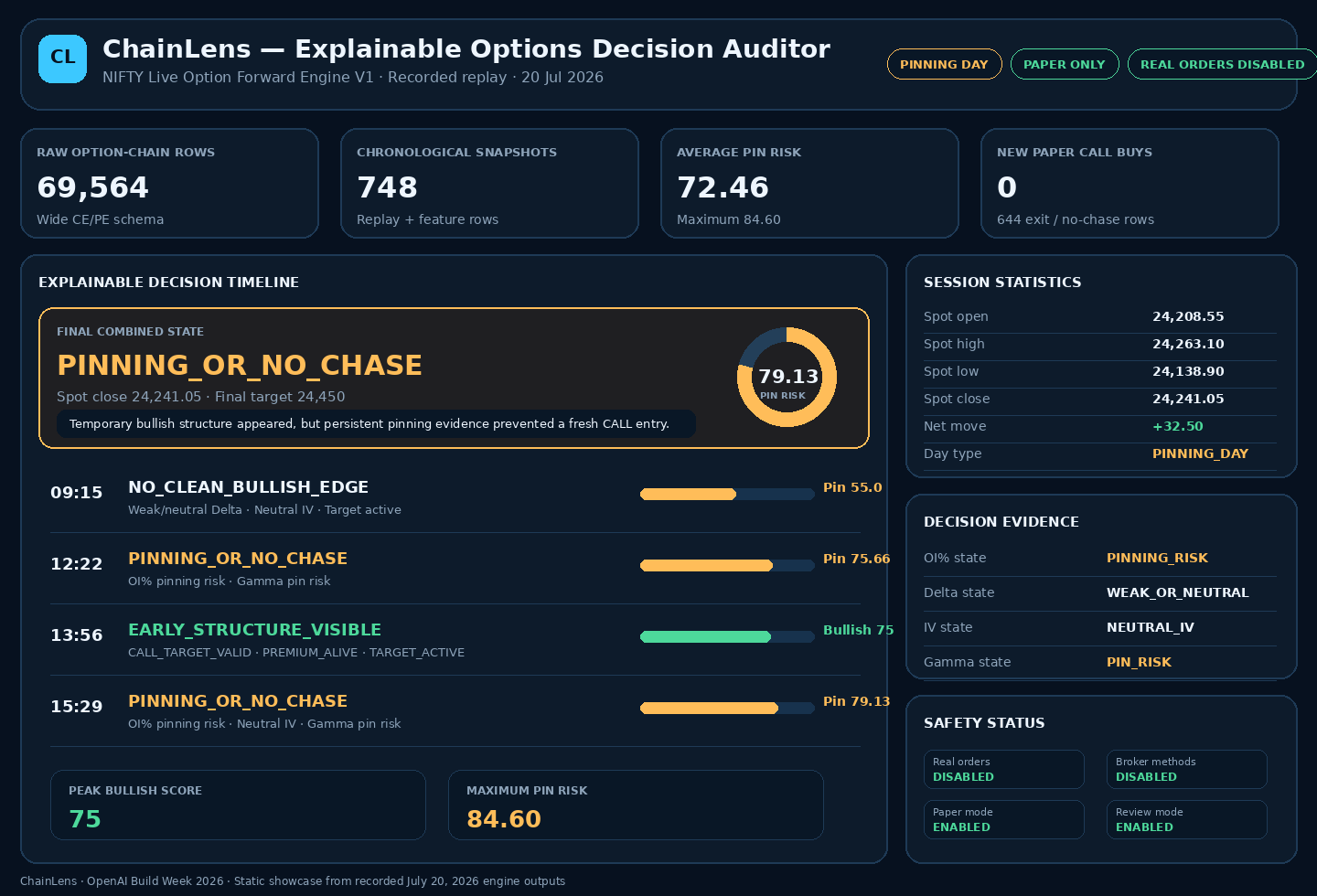
ChainLens dashboard: explainable replay showing temporary bullish structure blocked by persistent pinning risk and zero new CALL entries.
Inspiration
Inspiration
NIFTY option-chain data contains many signals: open interest, OI percentage, OI changes, volume, implied volatility, Greeks, VIX, spot price, and strike positioning. The problem is that looking at any one of these variables in isolation can produce misleading directional signals.
I built ChainLens around a different idea: analyze how multiple option-chain signals evolve together across strikes and across time, and explicitly distinguish directional structure from pinning and no-chase conditions.
What it does
ChainLens is an explainable options decision-auditing system built on my NIFTY Live Option Forward Engine V1.
The engine records and analyzes NIFTY option-chain data and evaluates market structure using combinations of:
- CE and PE open interest
- OI percentage and OI changes
- Volume
- Implied volatility
- Delta
- Gamma
- Theta
- Vega
- India VIX
- Spot price and ATM context
- Forward strikes
- Call and put walls
- Pin-risk and target-path obstruction
The system processes chronological option-chain snapshots and produces interpretable states instead of relying on a single indicator.
Examples include bullish structure, bearish structure, pinning, no-chase conditions, forward-strike activation, and pre-break development.
One recorded session from July 20, 2026 contained 69,564 option-chain rows and 748 chronological snapshots. During the session, temporary bullish structure appeared, but pin risk remained high. The final classification was PINNING_DAY, and the system produced zero new paper CALL buys. This demonstrates the purpose of the decision-auditing layer: a bullish-looking signal should not automatically become a trade when broader evidence remains conflicted.
The engine also contains recorded examples classified as bullish, bearish, and pinning sessions, allowing historical replay and comparison of how option-chain structure evolves across different market regimes.
How I used GPT-5.6
I used GPT-5.6 as the analytical reasoning layer.
It helped me analyze historical NIFTY option-chain sessions, compare combinations of OI, OI percentage, volume, IV, VIX and Greeks, identify weaknesses in existing signals, study failed continuation and pinning behaviour, and translate those observations into candidate decision-layer logic.
How I used Codex
I connected Codex CLI directly to the NIFTY engine codebase on my Ubuntu server for codebase-level interaction and review during Build Week.
The project repository contains the sanitized engine architecture, including data-processing components, forward-strike analysis, decision layers, historical replay, validation, and paper-trading components.
Safety
ChainLens is an experimental research and paper-trading system.
Real order execution is disabled.
The recorded session used in the demo explicitly reports:
- real_orders_allowed: false
- broker_order_methods_allowed: false
- paper_only: true
- review_only: true
The goal is not to claim perfect market prediction. The goal is to build a measurable and explainable framework for understanding when multiple option-chain signals align, when they conflict, and when pinning risk says not to chase.

Log in or sign up for Devpost to join the conversation.