Inspiration
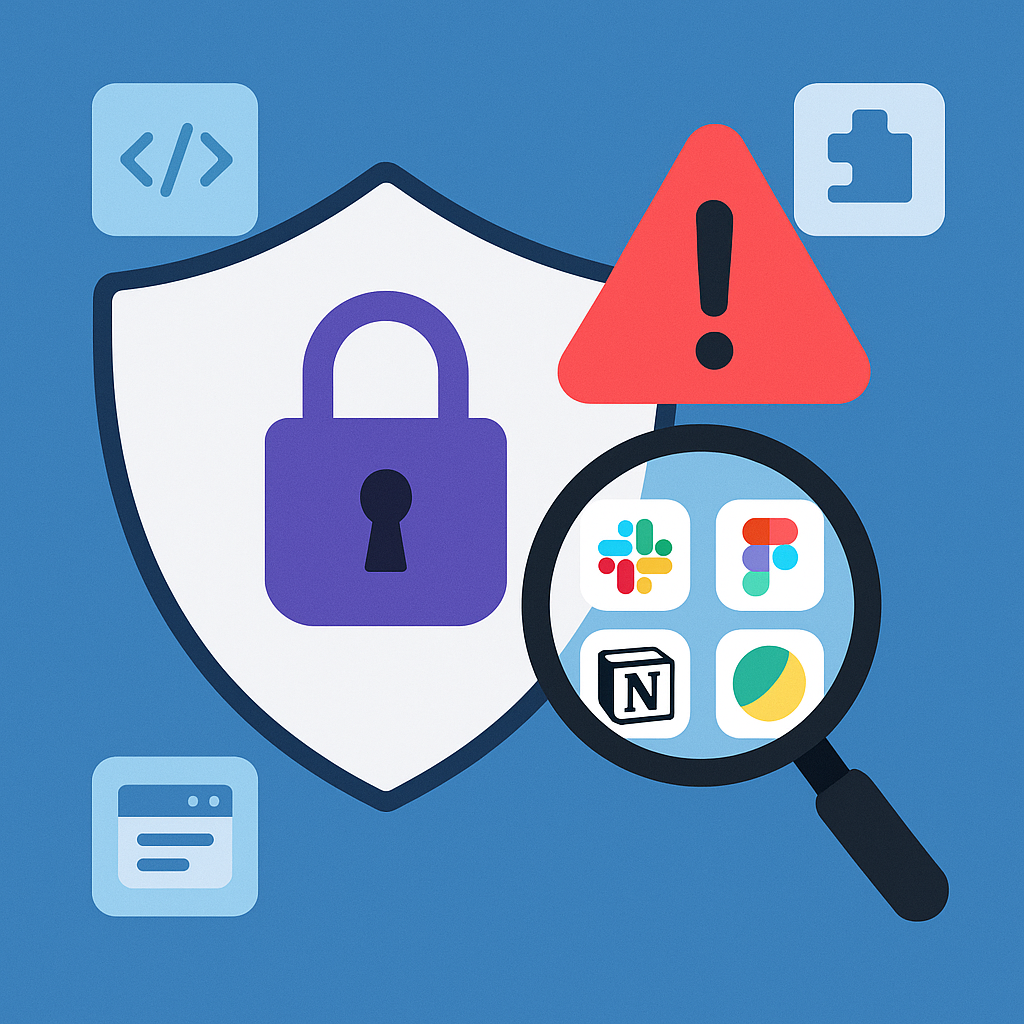
Every employee wants to make a great first impression. They join a company, get their laptop, and install every tool they think they’ll need, Slack, Figma, Notion, even a few browser extensions to “boost productivity.”
It seems harmless, especially in big companies where apps are whitelisted. But whitelists don’t update themselves. A plugin that was safe last month might be compromised today and no one notices until it’s too late.
Startups are even more exposed: smaller teams, no time to monitor every app, and a higher risk of untracked tools slipping through. During this hackathon, we spoke with a cybersecurity expert who confirmed this is one of the fastest-growing problems in the industry, and currently, there’s no reliable fix.
So we built one.
What it does
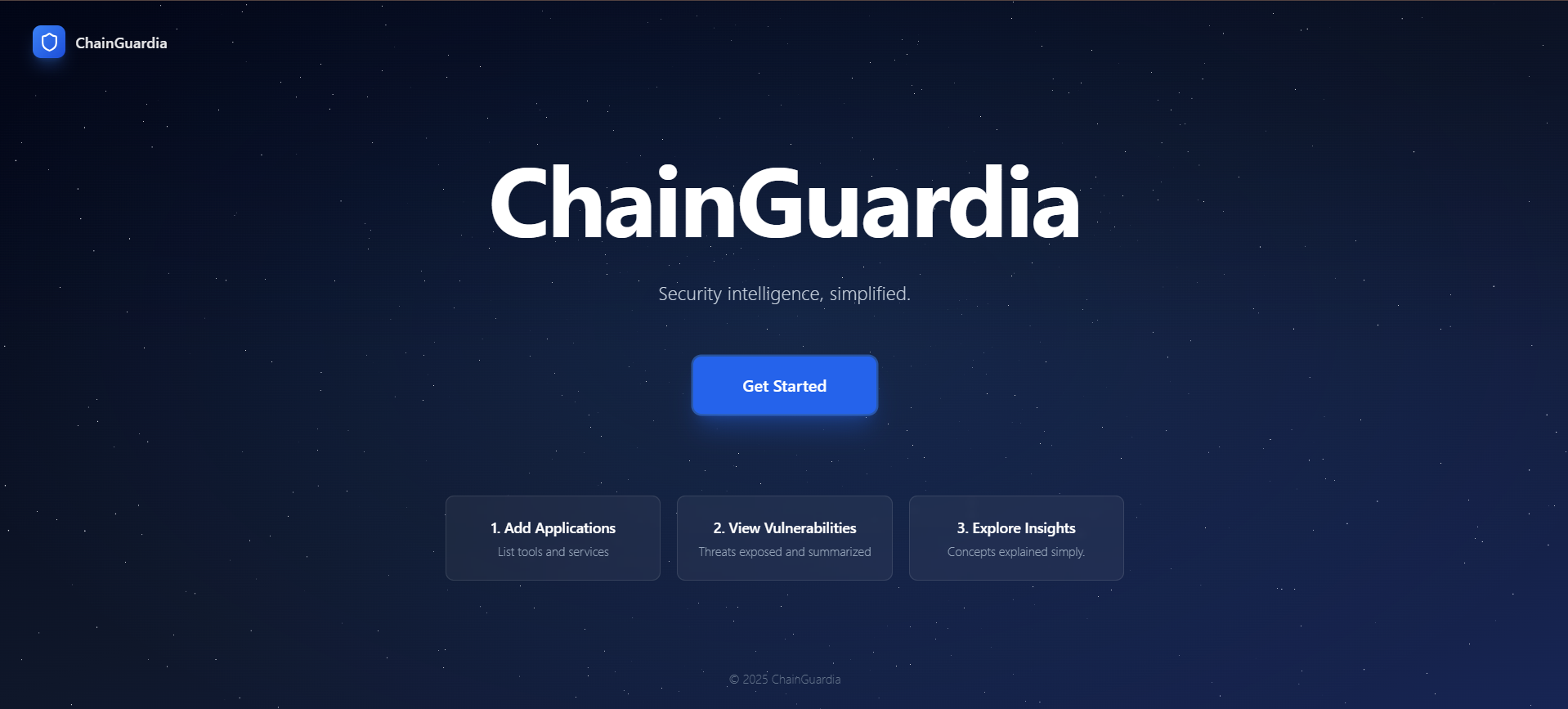
ChainGuardia automatically monitors the tools and apps used inside an organization and continuously cross-references them with real-time cybersecurity intelligence.
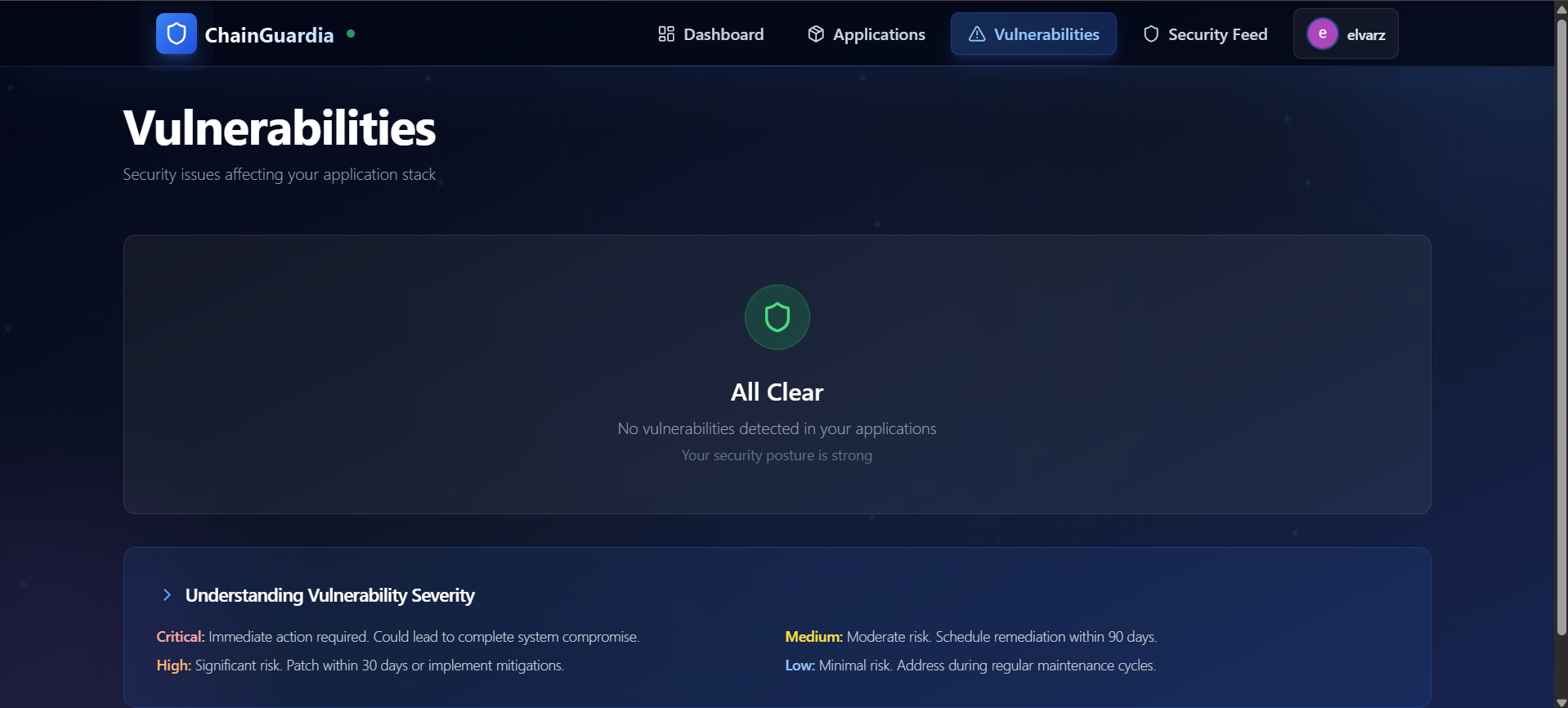
If a vulnerability appears in a tool your team uses, ChainGuardia flags it instantly and alerts IT, all before attackers can exploit it.
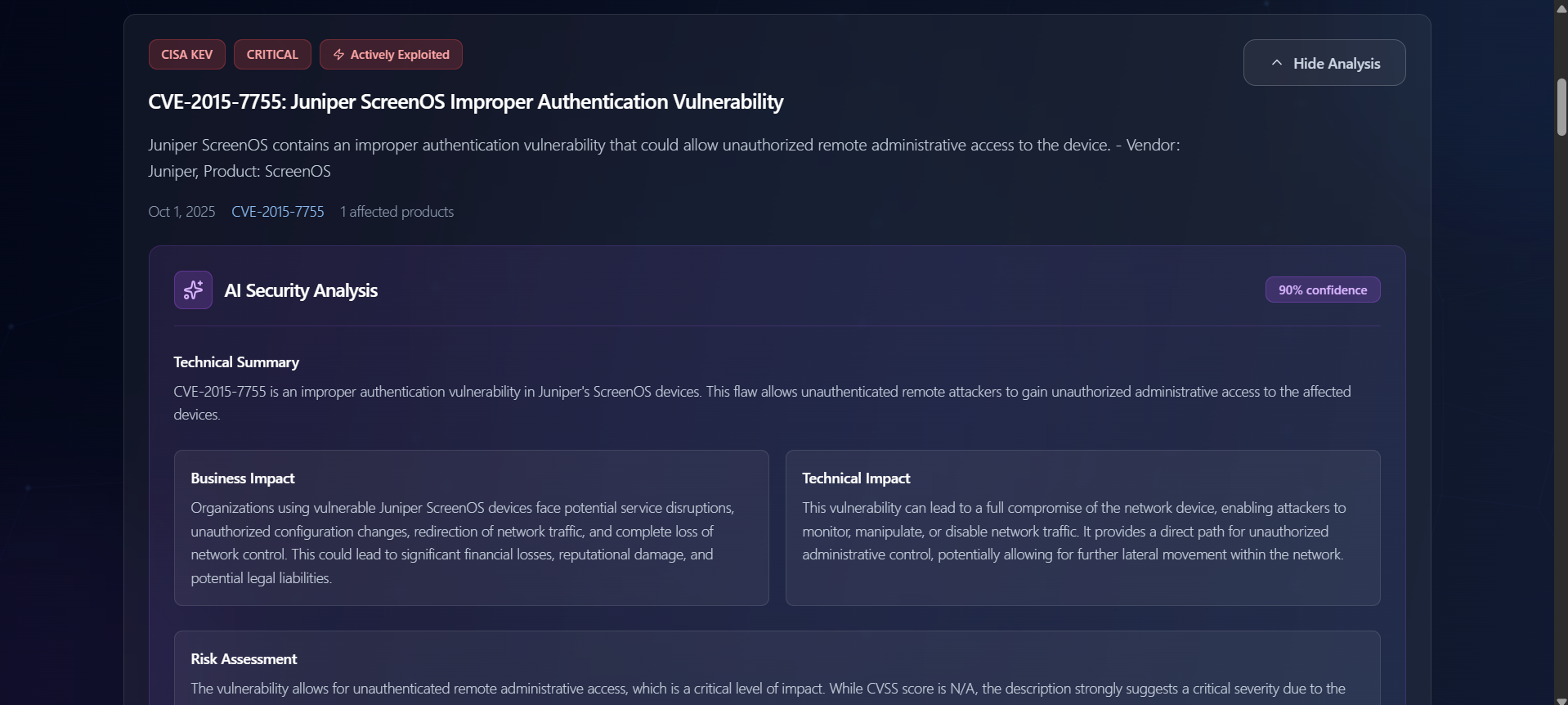
To make the data understandable, we integrated Google Gemini to summarize vulnerabilities, explain their severity, and provide confidence intervals that estimate how likely each threat is to impact your system.
In short: ChainGuardia doesn’t just detect attacks, it predicts them.
How we built it
Frontend: Built with React and TailwindCSS to visualize real-time vulnerabilities and alerts.
Backend: Developed with Serverless Vercel Functions, and REST API.
Database: MongoDB stores app inventories and threat matches dynamically.
Data Feeds: Integrated CVE API, NIST advisories, and NewsAPI for live threat data.
AI Layer: Used Google Gemini for summarization, ranking, and explanation of vulnerabilities.
We designed the system so that the backend constantly pulls new threat intelligence while the frontend updates with live alerts, giving security teams instant insight.
Challenges we ran into
Express and Vercel integration: Getting our backend routes to interact properly with Vercel’s serverless environment turned out to be more difficult than expected. We had to troubleshoot API routing, authentication middleware, and deployment inconsistencies to get a stable connection between the frontend and backend.
Losing a laptop before the hackathon even began: Right at the start, one teammate’s laptop was completely bricked after an energy drink exploded in their bag. We had to adapt quickly, using pair programming and splitting tasks more efficiently for the entire project. It forced us to collaborate more intensively and rely heavily on shared repos, quick commits, and clear communication.
Accomplishments that we're proud of
Tackled a real, validated security problem confirmed by an industry professional.
Built a working product that actively detects and interprets real-time vulnerabilities.
Integrated live feeds from multiple cybersecurity databases successfully.
Created an AI layer that transforms technical threat data into clear, actionable insights.
Designed a production-ready UX that feels like an internal tool real companies could deploy.
What we learned
We learned that cybersecurity isn’t just about firewalls and malware, it’s about visibility and trust. Even approved tools can become attack vectors if they’re not continuously monitored.
We also discovered the value of combining AI reasoning with real data sources. Gemini’s contextual analysis transformed complex security logs into digestible summaries that even non-technical users can understand.
And perhaps most importantly, we learned how a small team can move fast to address an unsolved, industry-level problem in under two days.
Built With
- express.js
- gemini
- mongodb
- react
- tailwindcss
- typescript
- vercel
- vite


Log in or sign up for Devpost to join the conversation.