-
-

Logo
-
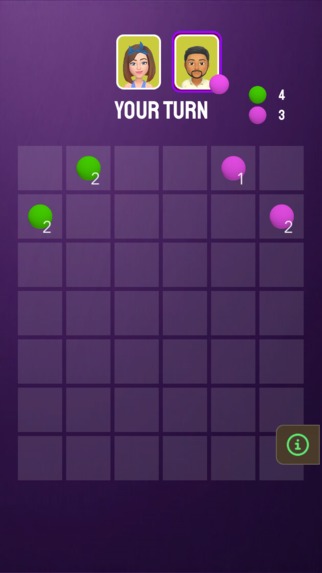
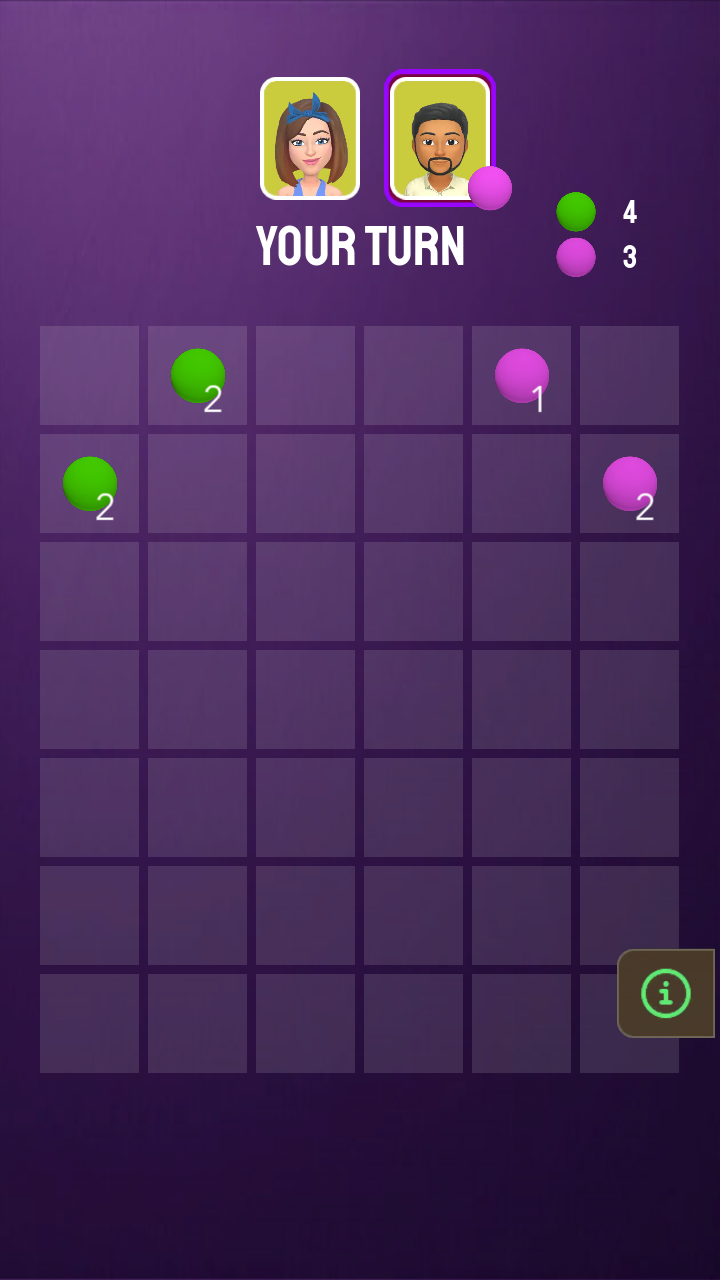
User 2 turn
-
start game
-
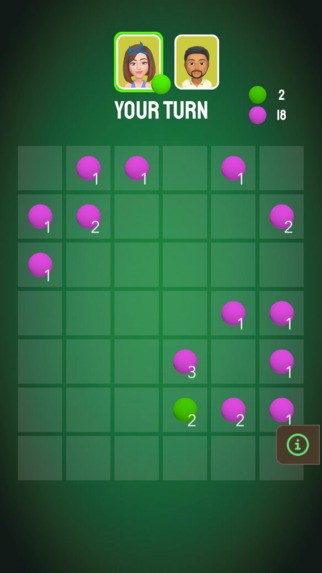
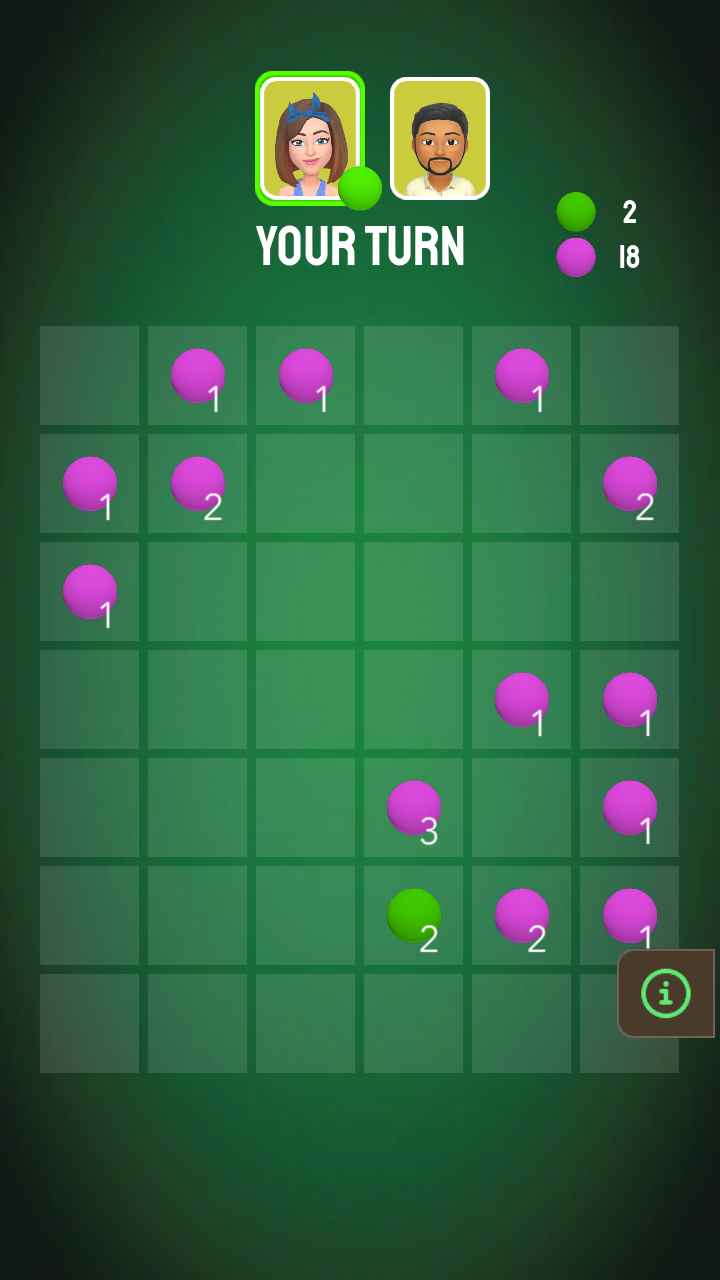
player 1 turn
-
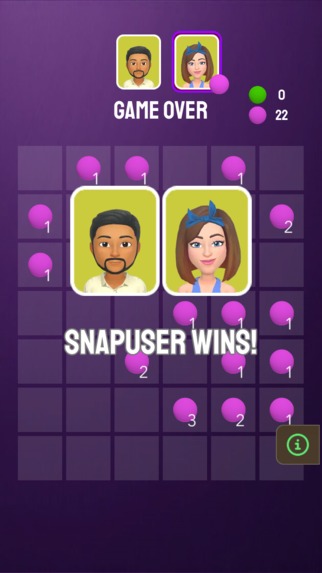
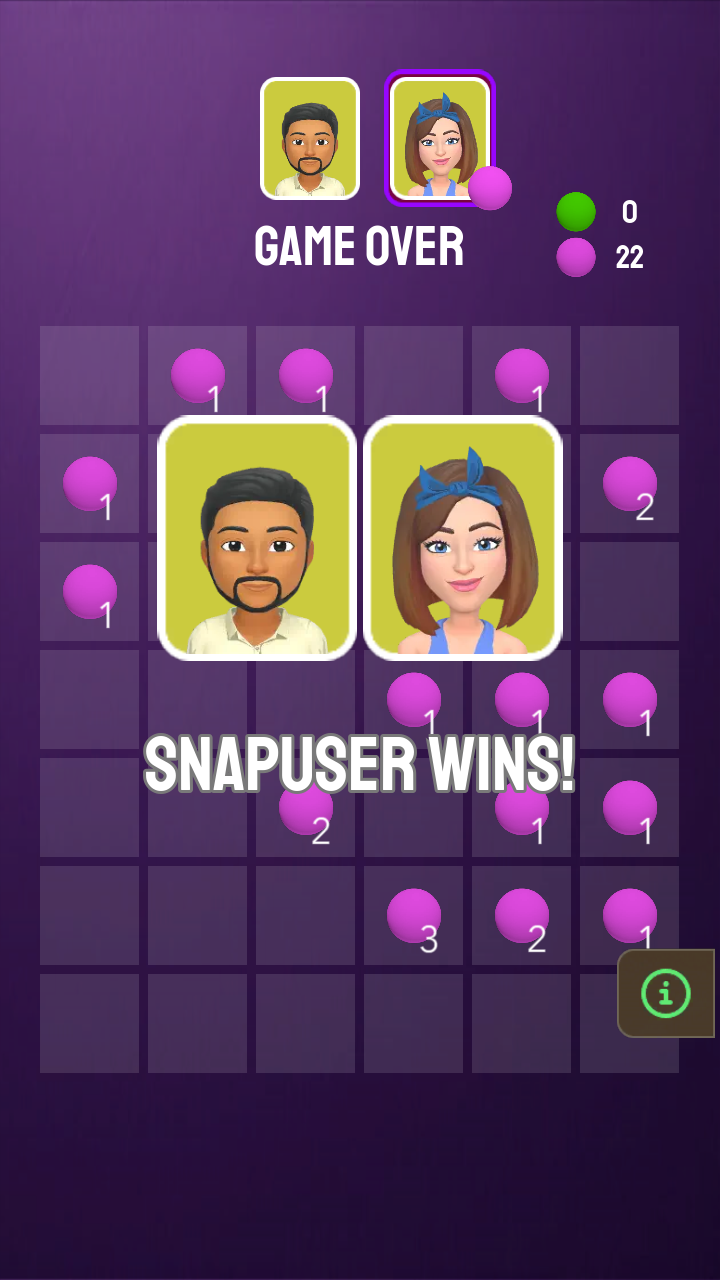
Winner
-
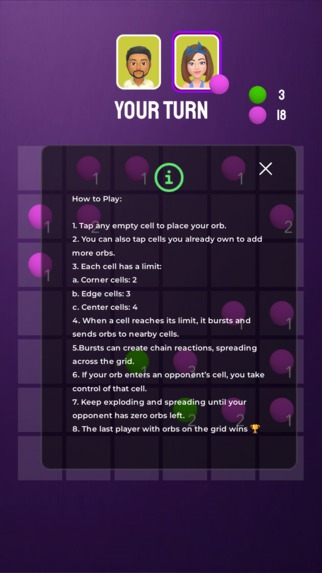
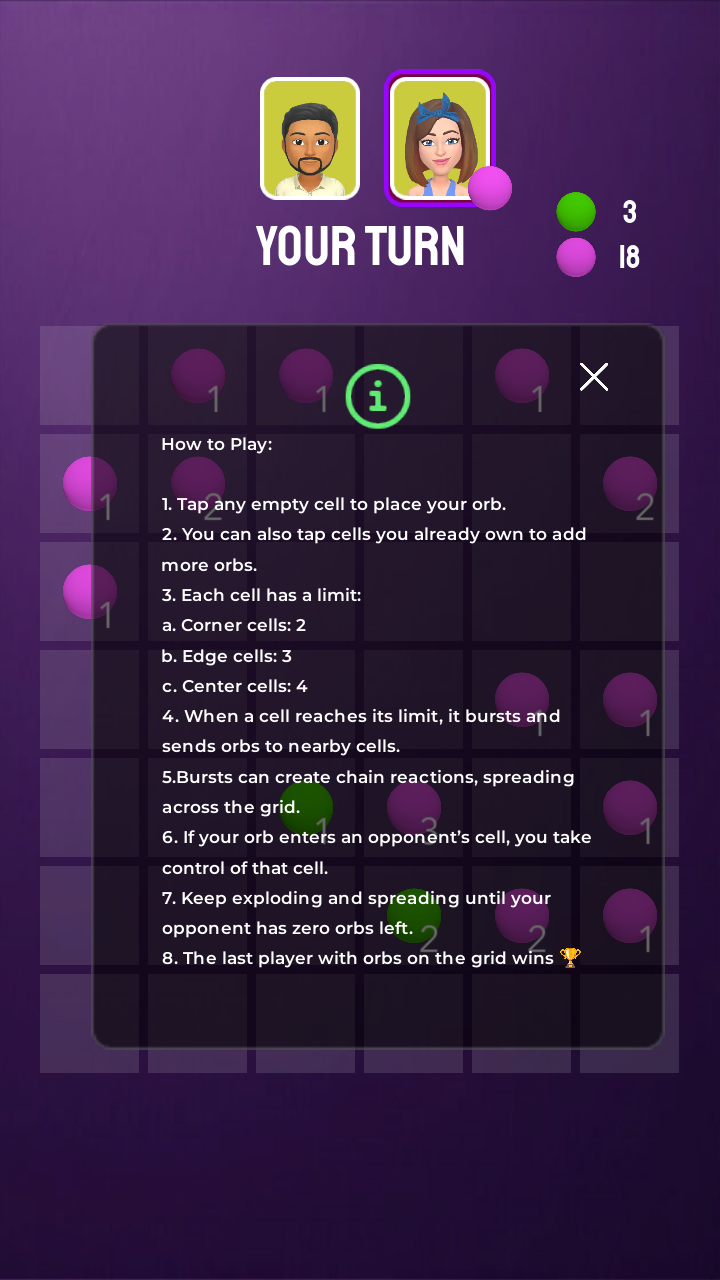
rules

Inspiration
I wanted to build a fast, strategic, and satisfying turn-based game that feels simple to play but deep to master. I’ve always loved games where one small move can flip the entire match, and Chain Reaction is the perfect example of that. The idea of placing orbs, triggering chain explosions, and stealing the opponent’s territory felt like the right combination of strategy + chaos and it looked visually amazing in a 2D grid format.
What we learned
This project helped me understand the real meaning of “simple UI, complex logic.” I learned how to: .Build a complete grid-based game system .Manage game state (owners + counts per cell) .Create burst/chain reaction logic with neighbours + capacity rules .Make the experience feel premium using animations + feedback .Implement turn-based multiplayer logic using a turn system .A key game mechanic I implemented was: a. Corner cells burst at 2 b. Edge cells burst at 3 c. Centre cells burst at 4 .That rule is the core engine behind every satisfying chain reaction.
How I Built It
.I built the game using a structured approach: .Created a 7×7 grid system with tappable cells .Built the “burst logic” using a queue system: add atom → if capacity reached → explode → distribute to neighbours .Added premium feeling UX: pop animation when count updates burst animation when explosions happen combo text like CHAIN x3! for satisfying feedback .Added turn highlight UI: active player highlight + dot enabled player-themed background switching
Final Result
.Chain Reaction became a fun, clean game where every tap feels impactful. .It’s easy to understand in seconds, but it takes skill and timing to win.
Built With
- javascript
- lens
- lensstudio
- snapchat

Log in or sign up for Devpost to join the conversation.