-
-
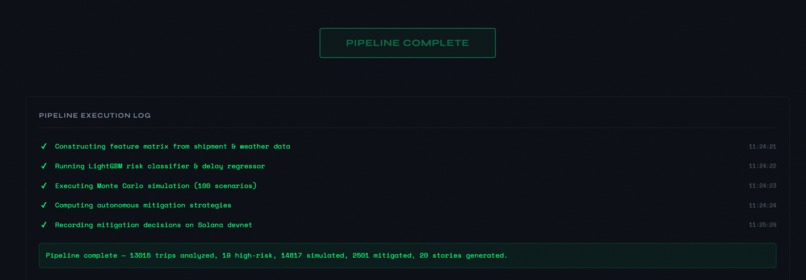
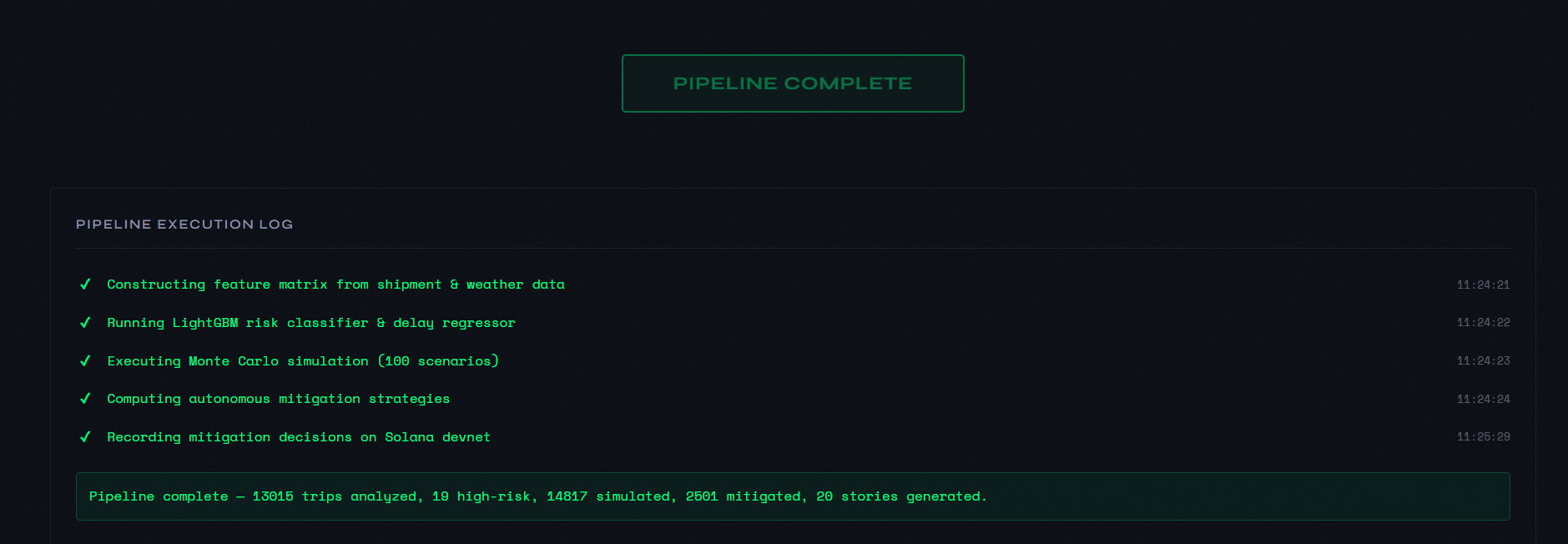
Pipeline execution log
-
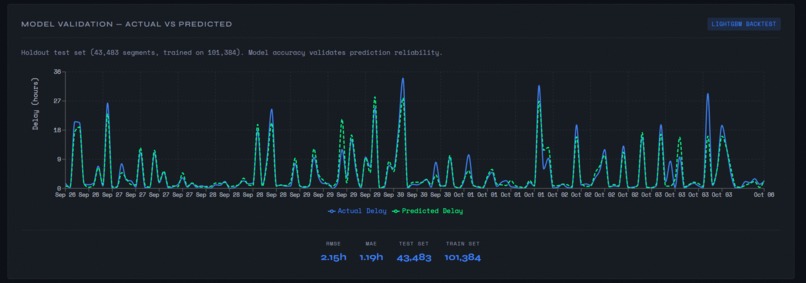
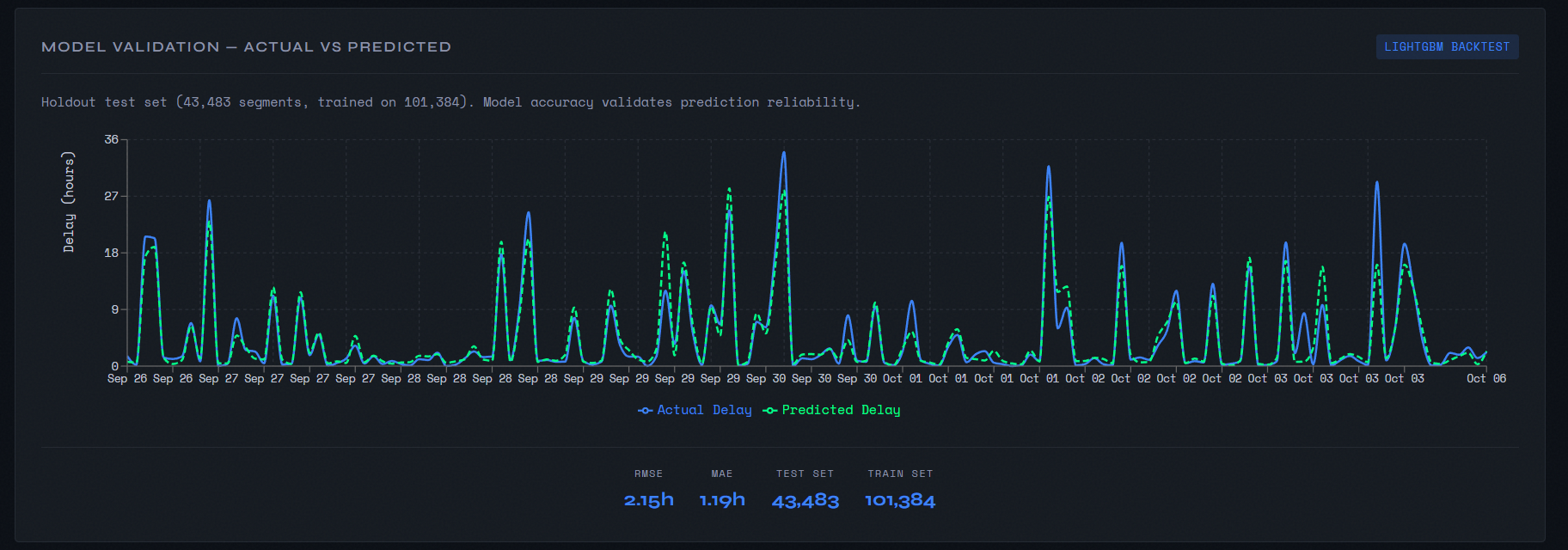
Model Validation — Actual vs Predicted
-
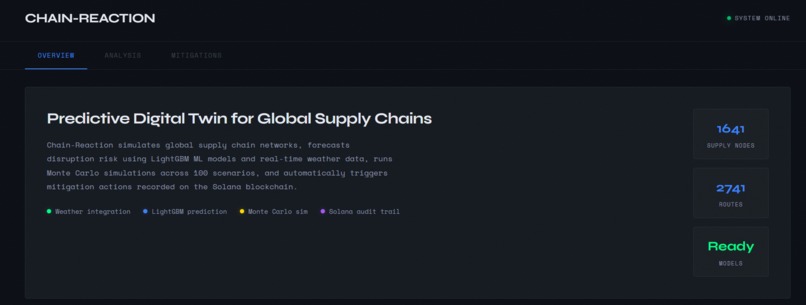
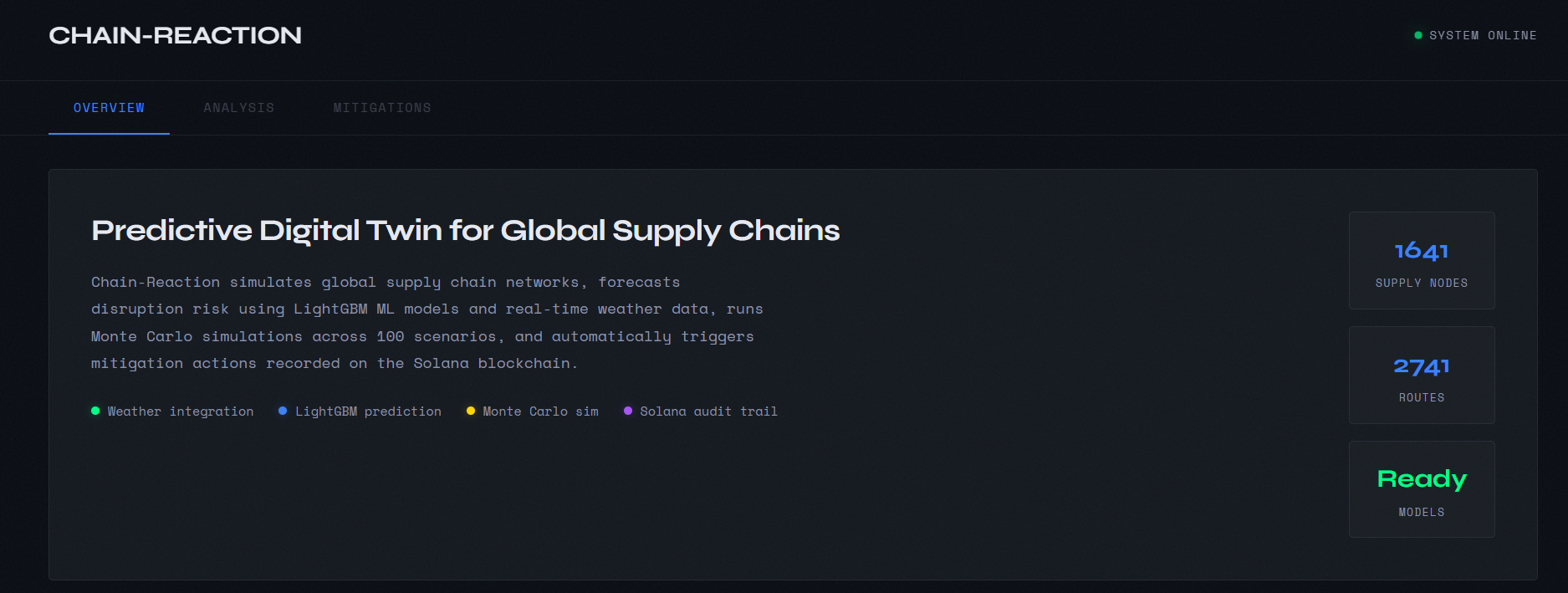
chain-reaction home page
-
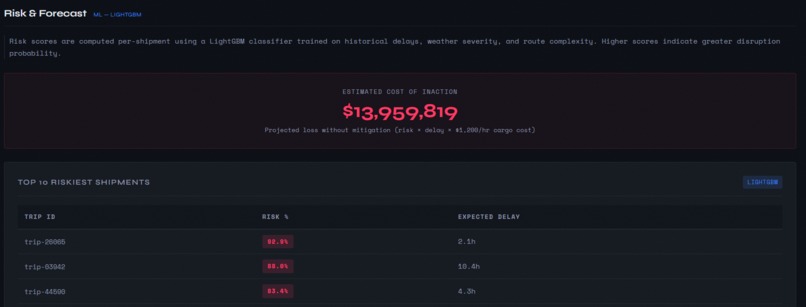
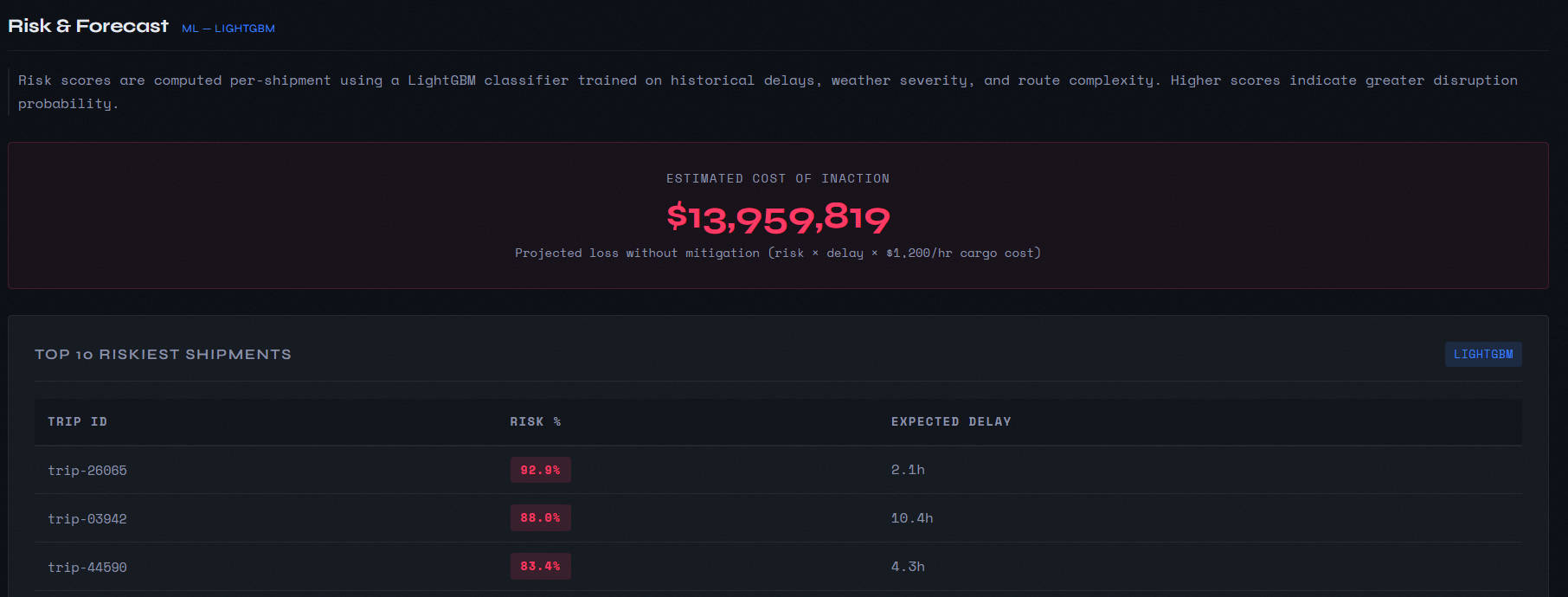
Risk & Forecast ML — LightGBM, Estimated Cost of Inaction
-
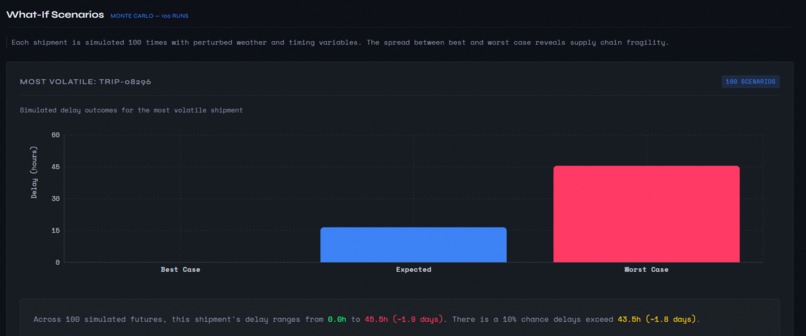
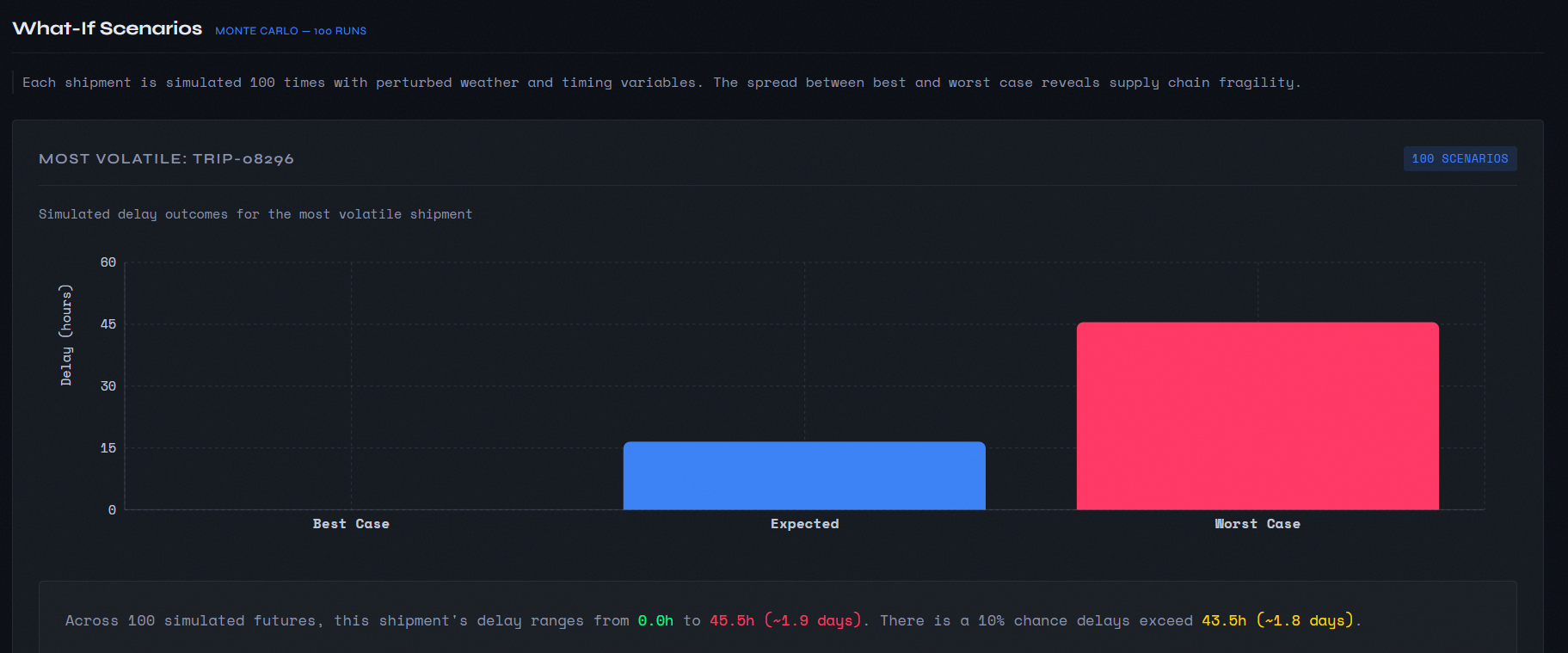
What-If Scenarios Monte Carlo — 100 Runs, Most Volatile: trip-08296
-
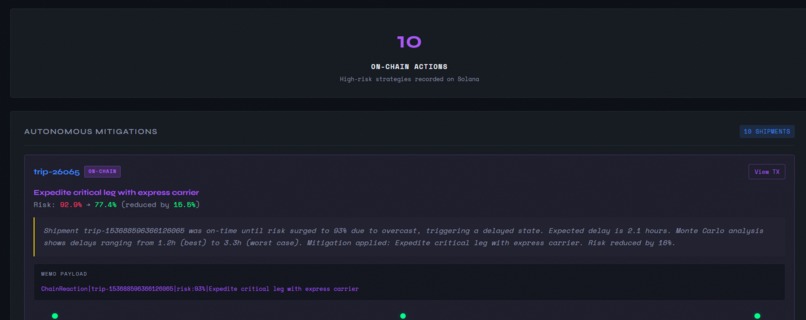
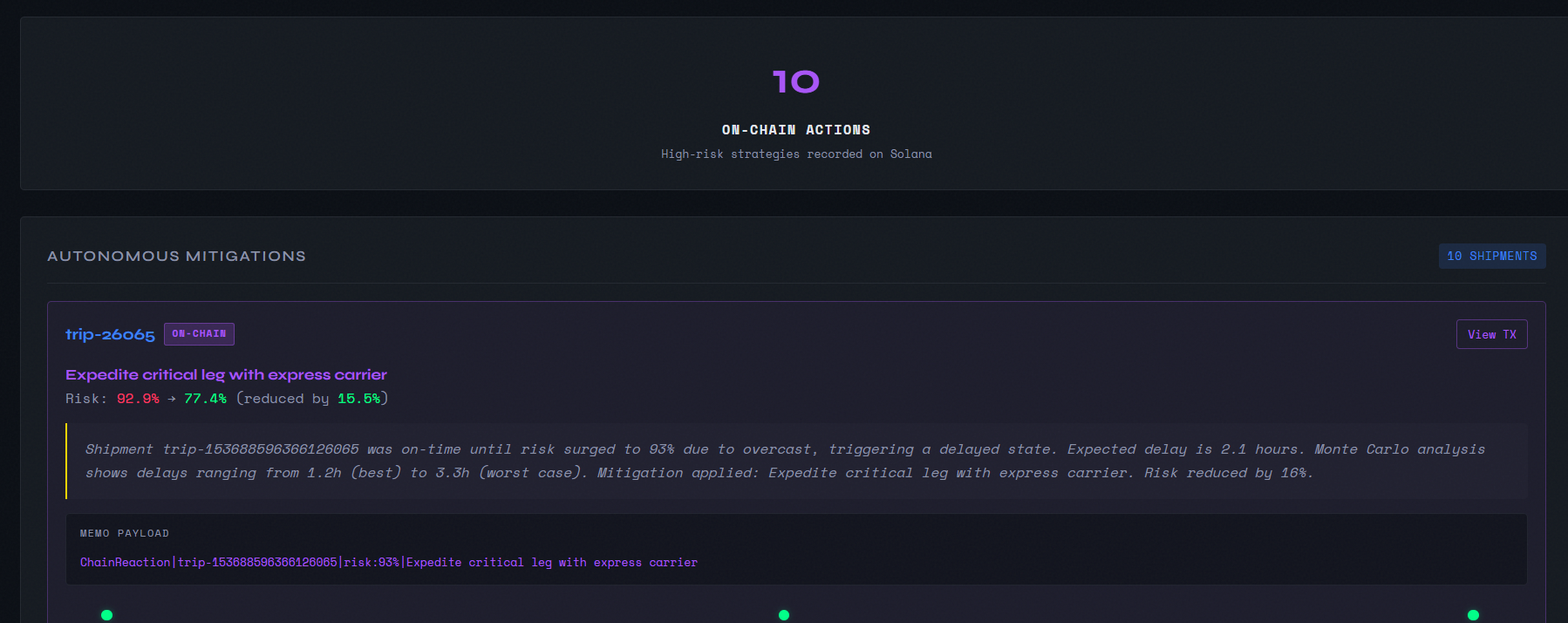
Mitigations: On-Chain Actions High-risk strategies recorded on Solana
Inspiration
We were inspired and excited by the technologies displayed in the challenge briefs. We found the large scope that both Parallax and Ligentia offered exciting and considered the many technologies and methods we could use to implement something which we could envision being used on a grand scale.
What it does
Builds a directed supply-chain graph from shipment history Merges weather features onto nodes and shipment records Trains LightGBM models for risk classification and delay regression Backend: endpoints for prediction, simulation, mitigation, and storytelling Frontend: a React dashboard for exploration and visualization
How we built it
We separated our workload into backend and frontend. whilst some of us worked on algorithm design, some on ETL and some on UI design. When each of us finished we would assist the others until our scope widened and we were able to continue to add more and more features.
Challenges we ran into
We ran into UI design challenges, we attempted to implement a digital twin however that proved to be a little too much. We also ran into data formatting challenges however we were able to overcome them by investigating the content of the data.
Accomplishments that we're proud of
We are proud of our Solana implementation for mitigation of high risk decisions and to create an immutable audit trail. The implementation of the complex algorithms (monte Carlo ) and training lightbm which was new for all of us.
What we learned
We learnt how to train a model to predict data based on historical data and being able to test it on future data to a high degree of accuracy. We also learnt to improve our ui design and manipulate data fluently
What's next for Chain-Reaction
We would finish our digital twin implementation. Next we would also further expand the scope of our project, adding more data, more vectors of information and more locations and means of transport.
Built With
- axios
- axios-backend:-fastapi
- fastapi
- lightgbm
- networkx
- numpy
- pandas
- python
- python-ml/data:-pandas
- react
- rechart
- recharts
- scikit-learn
- solana


Log in or sign up for Devpost to join the conversation.