-
-
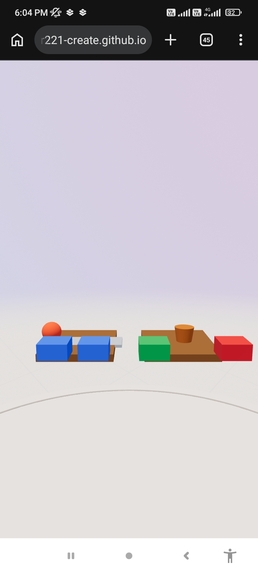
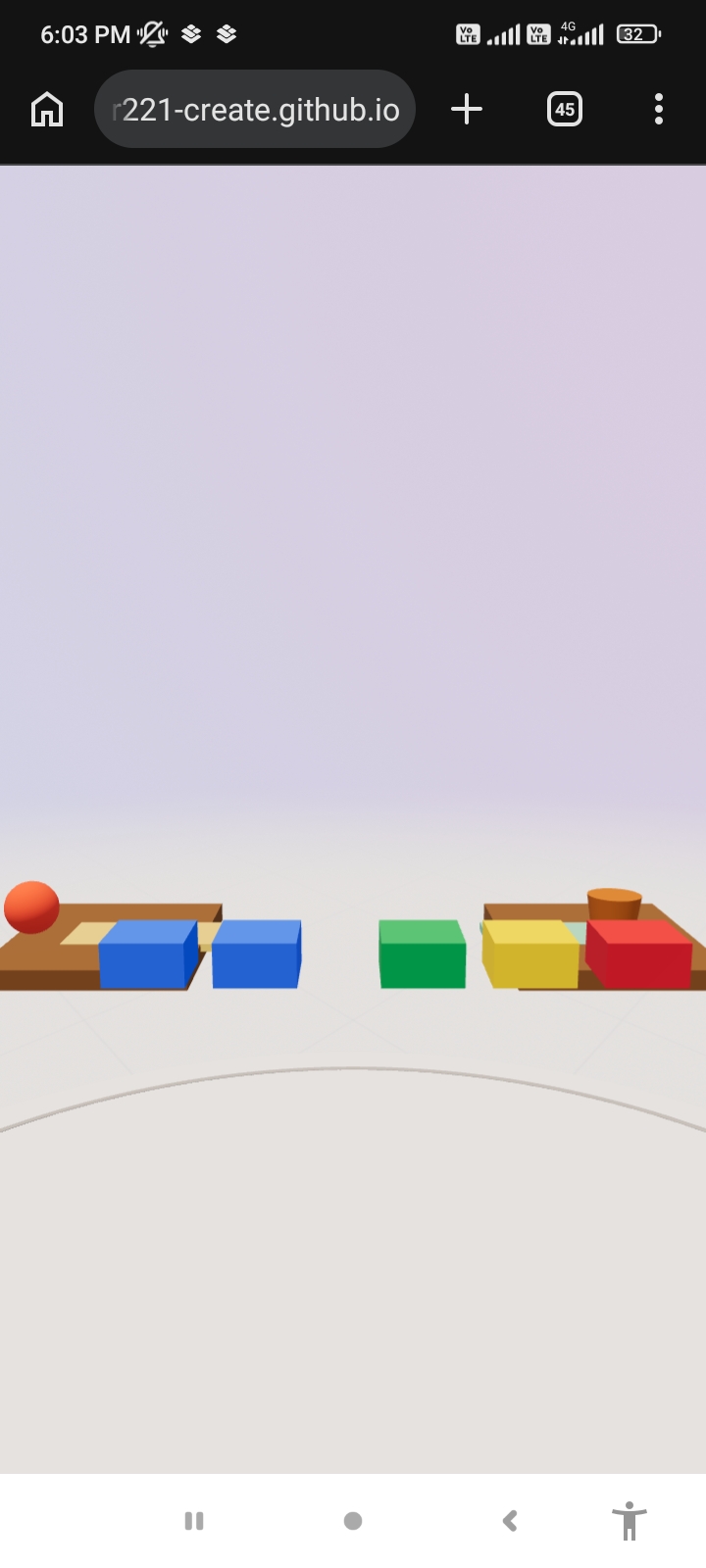
Level 1: one steel plank and large, poke-friendly buttons
-
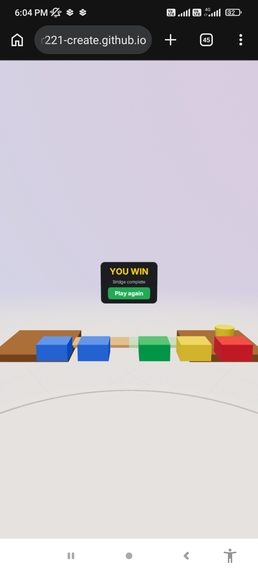
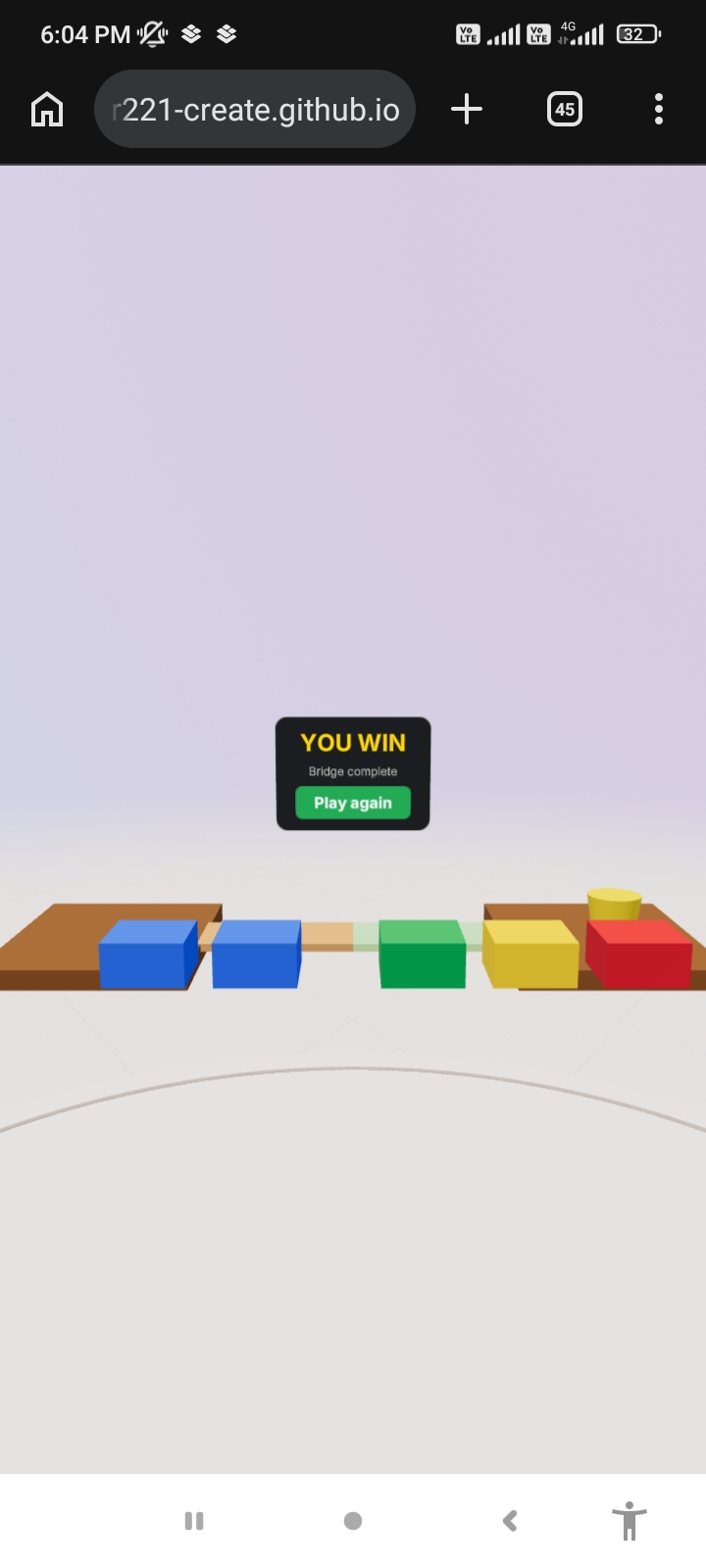
Level 5 cleared: bridge complete, the tea glass turns gold
-
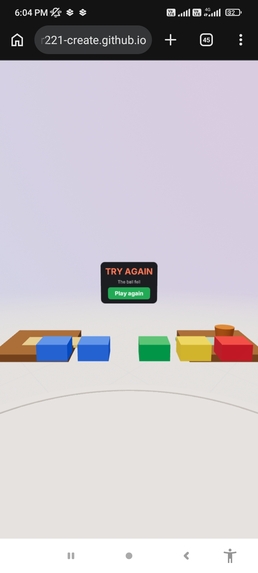
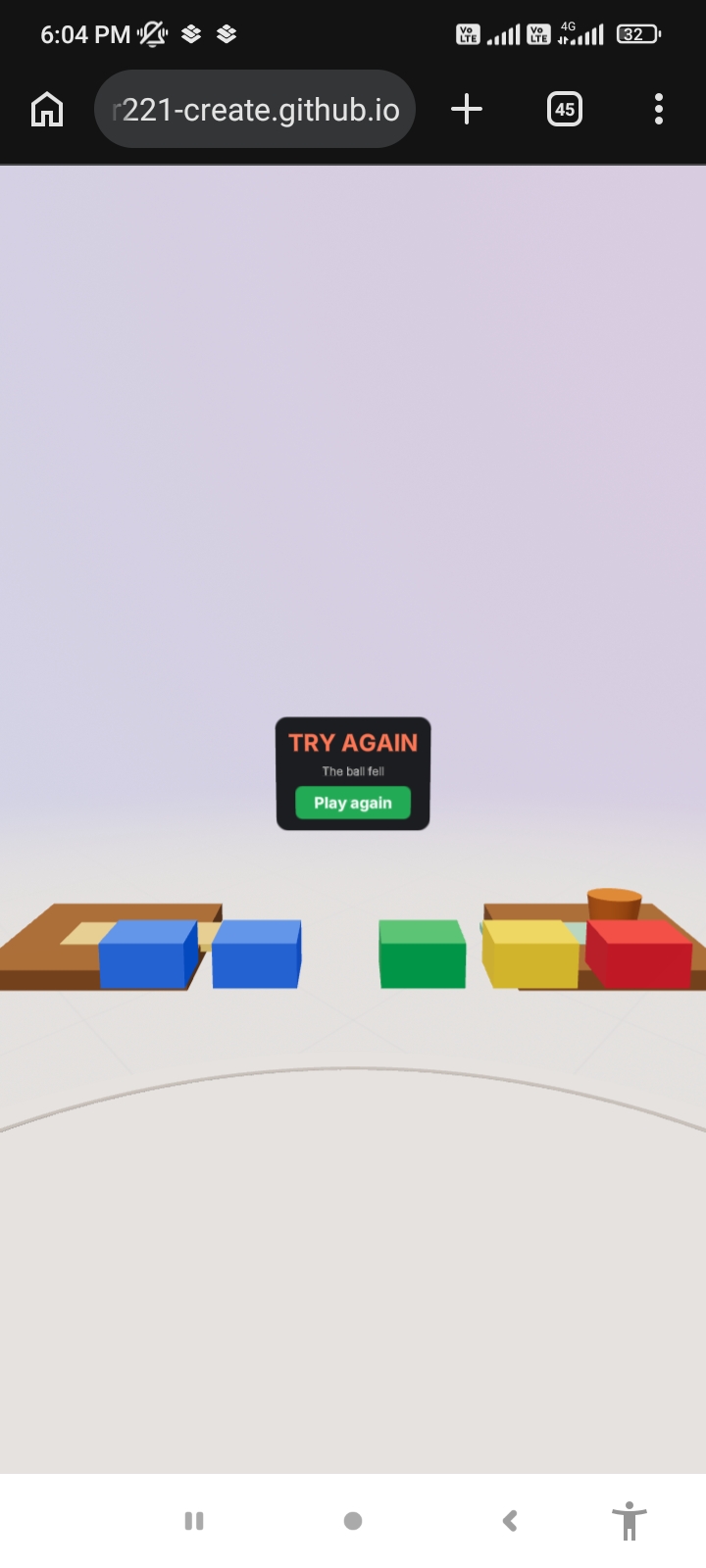
Wrong bridge: the ball falls and you can retry at once
-
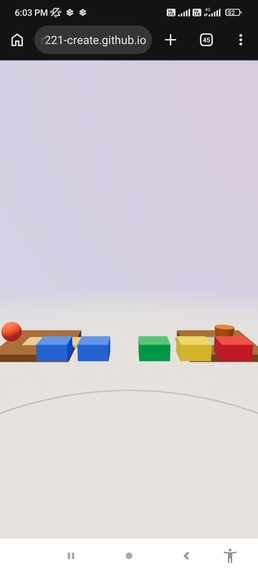
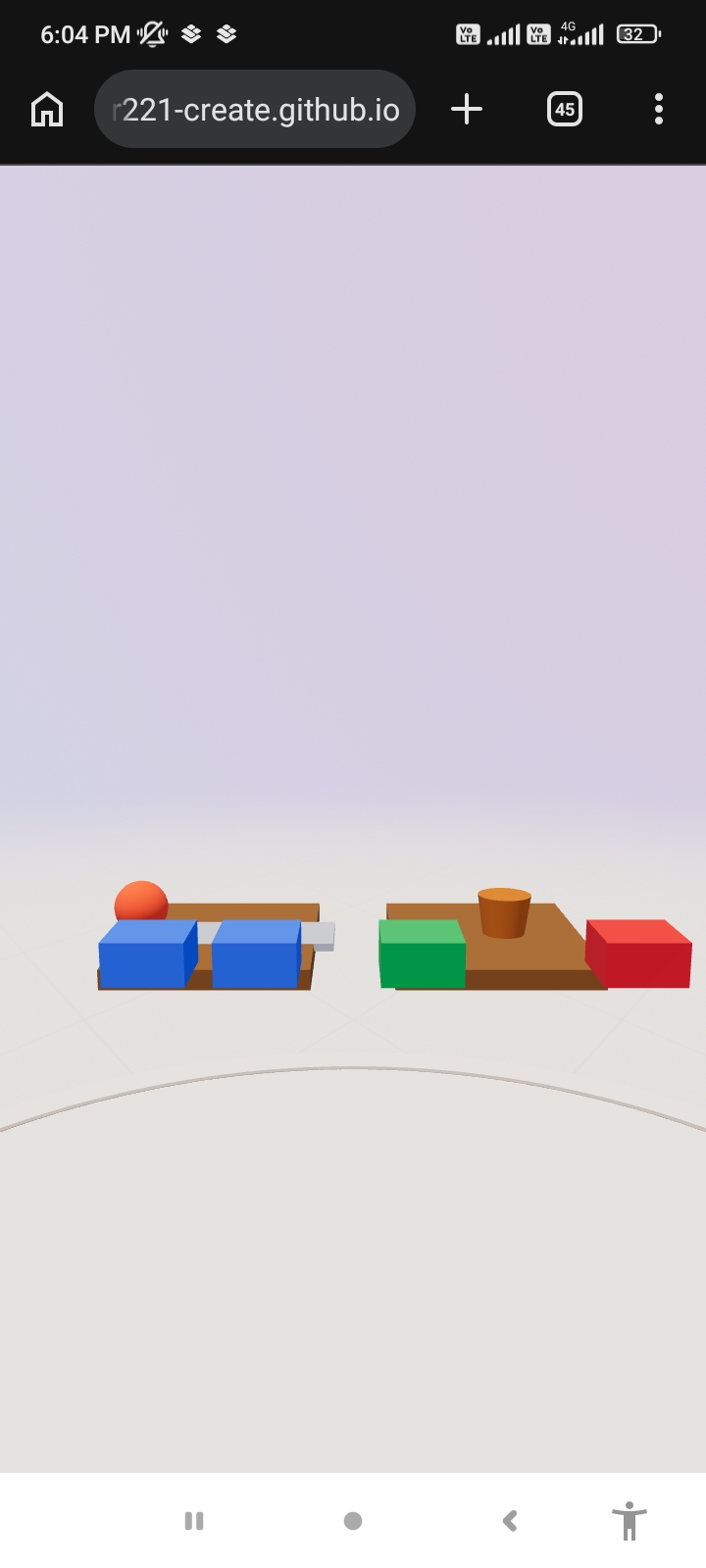
two planks, wide gap. Slide both to meet in the middle
Inspiration
In India, "jugaad" means solving a problem with whatever is lying around. I wanted a VR puzzle that feels like that: simple everyday things, a tea glass, a plank, a marble-like ball, chained together into a small clever fix. I also wanted a game that anyone can play seated, with no controllers, in a space about two feet wide, and that is fun within the first few minutes.
What it does
Chain Reaction is a seated, hands-first VR puzzle game. A table has a gap in the middle. You press large, spaced-out buttons to slide wooden or steel planks across the gap and build a bridge. Then you press the green Start button and a ball rolls across toward the tea glass. If the bridge is right, the glass turns gold, a chime plays and a "YOU WIN" panel appears. If the bridge is wrong, the ball falls and a "TRY AGAIN" panel lets you retry right away.
There are 5 levels. Level 1 and 2 use a single plank over a small gap. From level 3 onward there are two planks and a yellow "pick" button chooses which plank you are moving. The gaps get wider, so the two planks must be lined up almost exactly to meet in the middle. After each win, a "Next level" button takes you forward, and the last level offers "Play again".
Accessibility and design for hands
The whole game is designed to be played with hands only, with no controller needed. Buttons are large, spaced apart, and support both poke and ray interaction. The Reset button is placed far from the others so it is not pressed by mistake. Everything happens on one small table, seated, within a 2 foot area. Win and lose feedback is shown in an in-world panel plus a sound on winning.
How I built it
I built it solo, entirely on an Android phone using Termux. The game uses Meta's Immersive Web SDK (IWSDK), TypeScript, Vite and Havok physics. Levels are defined in a small configuration list, so adding a level means adding one line. The game is hosted on GitHub Pages, so it runs directly in the browser with nothing to install.
Challenges
Working only from a phone was the biggest challenge: no computer and no headset. I tested the game by touch in the phone browser and in the IWER emulator. I have not been able to test it with real hand tracking on a Quest, so the hand interaction is designed for hands but not yet verified on device. Getting the planks to join without gaps, and keeping the physics stable, took many small tests.
What's next
More levels with height differences and obstacles, a losing sound, button labels, and more jugaad-inspired objects such as a rolling pin or a steel plate as bridges. Real hand-tracking testing on a Quest is my top priority.
Built With
- github
- havok
- iwsdk
- physics
- three.js
- typescript
- vite
- webxr
