-
-
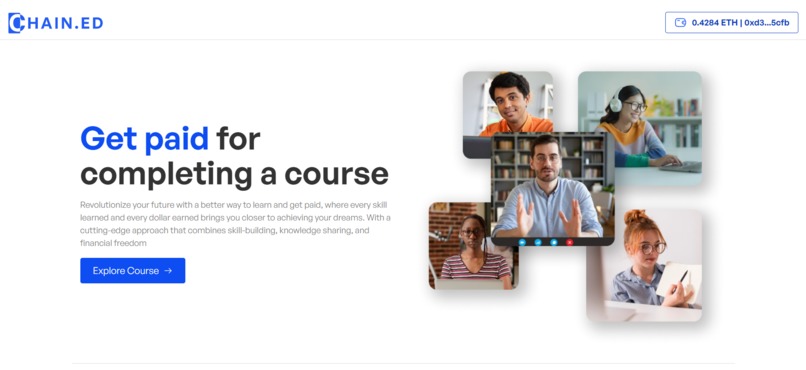
Landing Page
-

Course Explorer
-
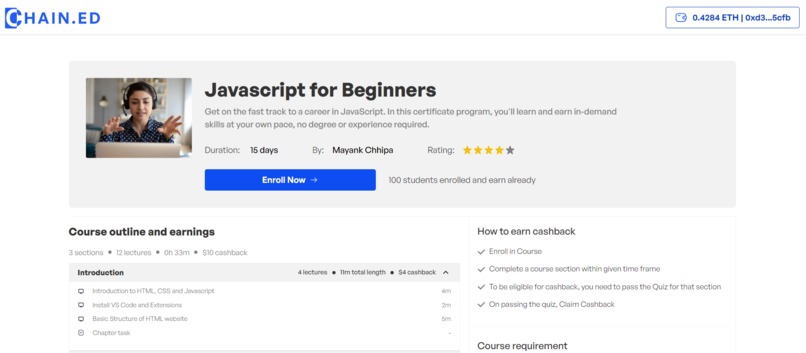
Course Details
-
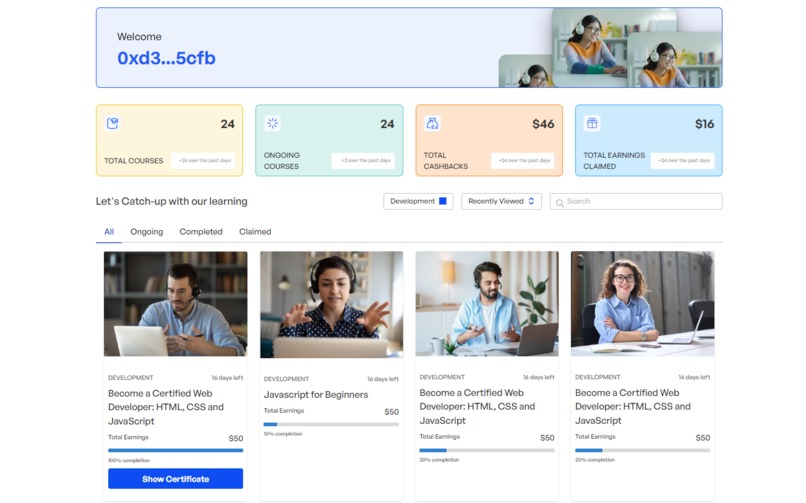
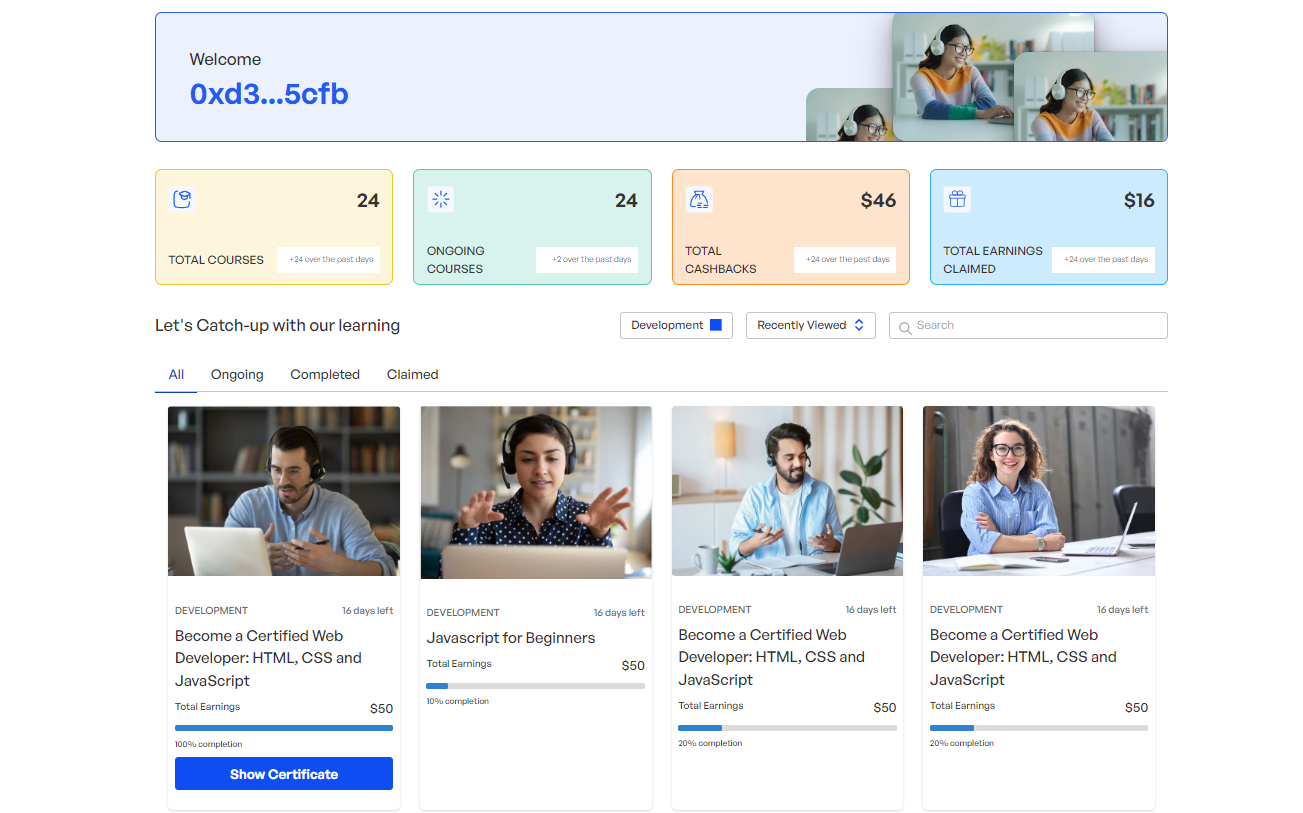
User Dashboard
-
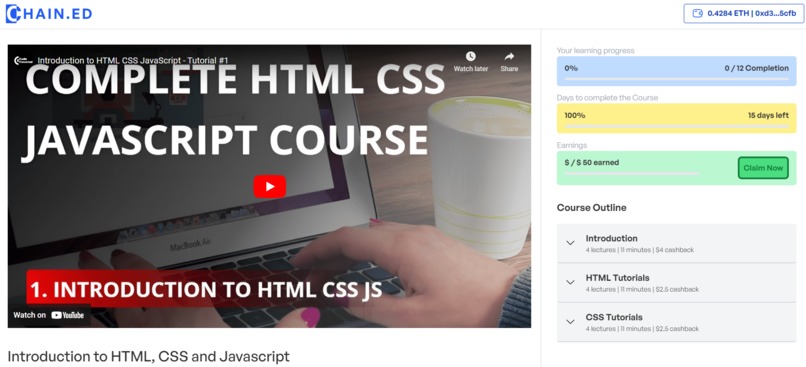
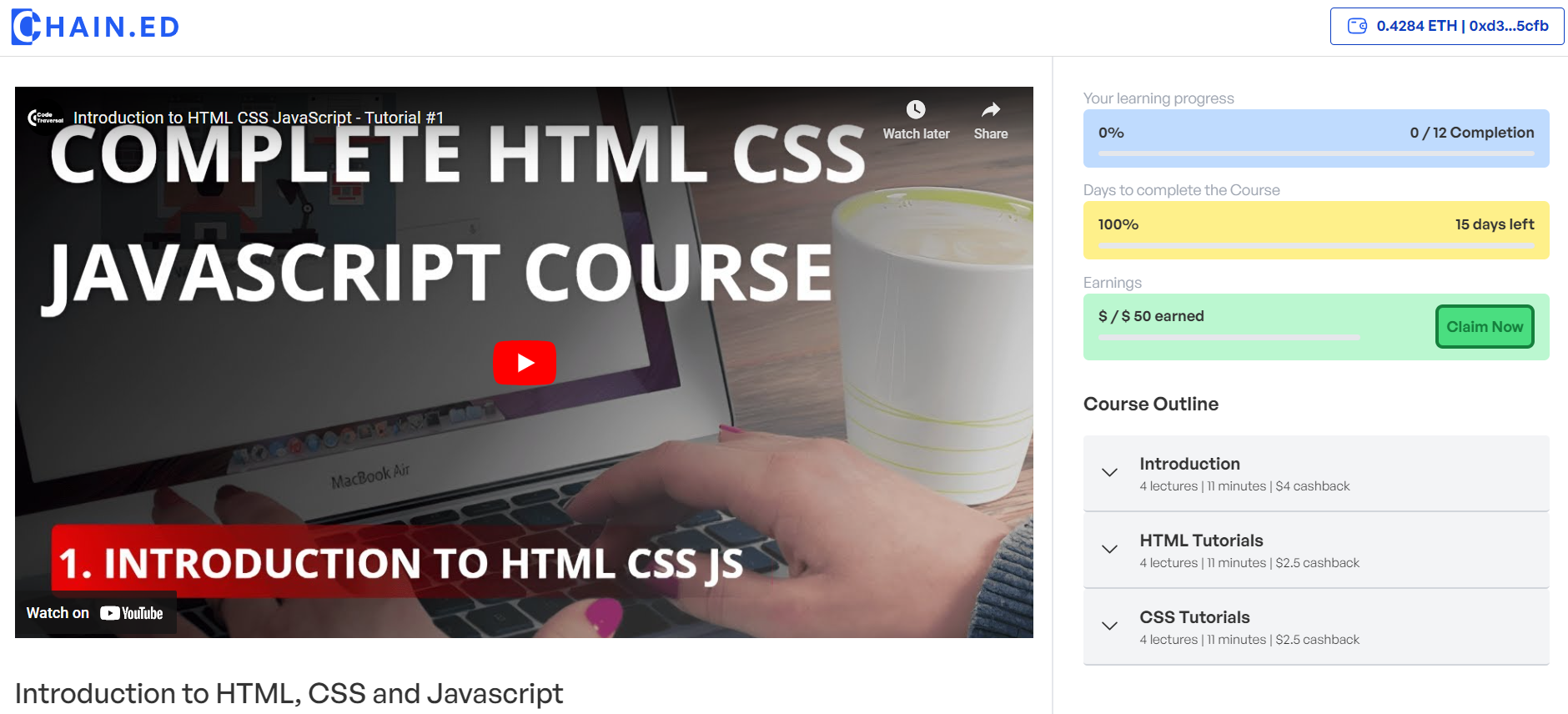
Learning page
-
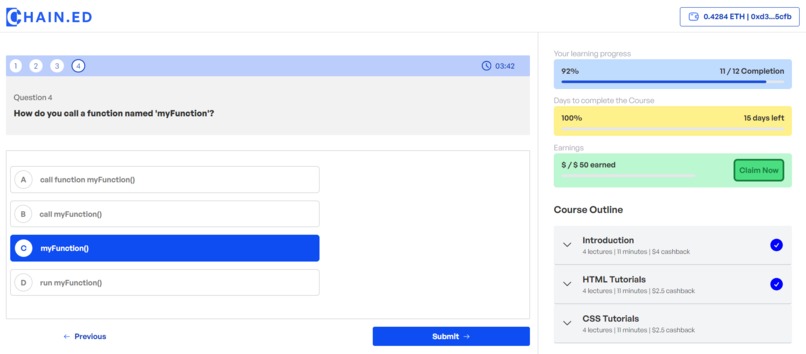
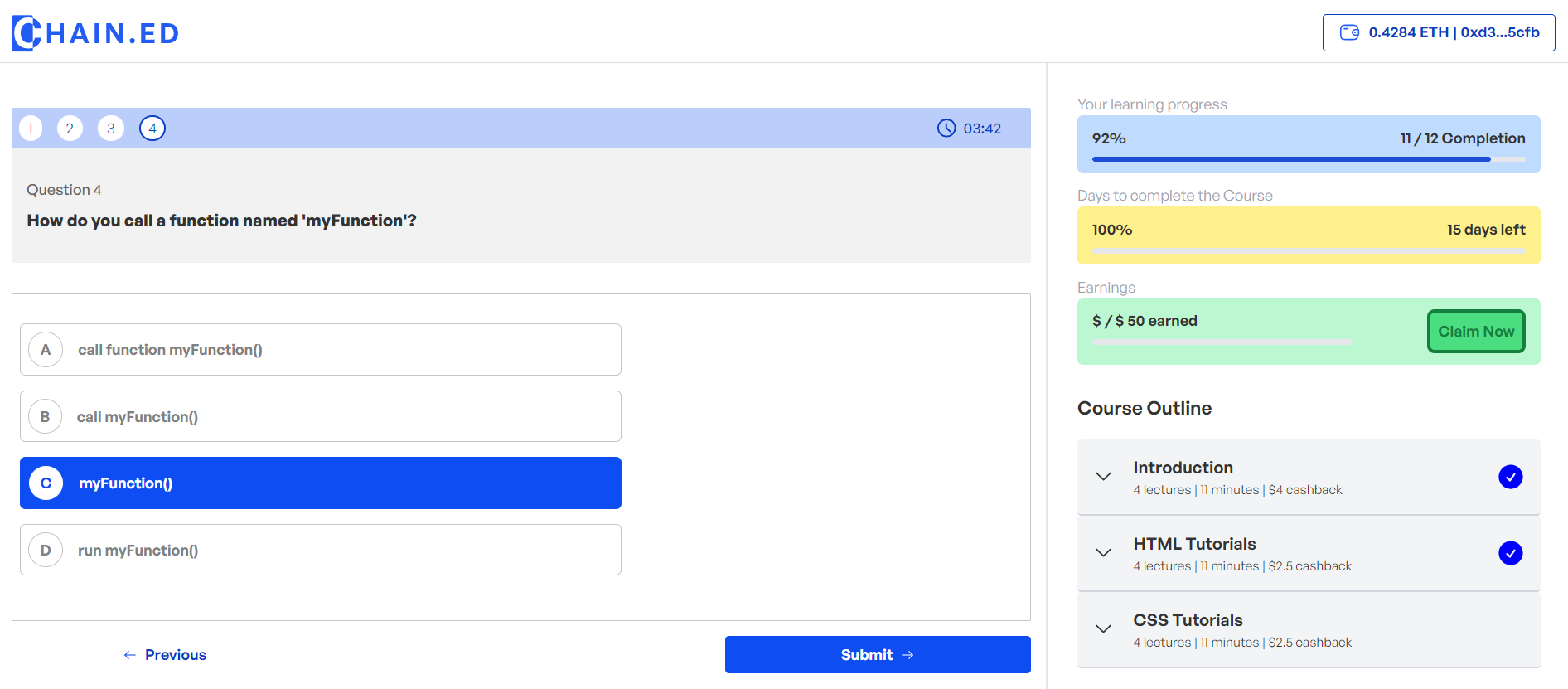
Quiz page
-
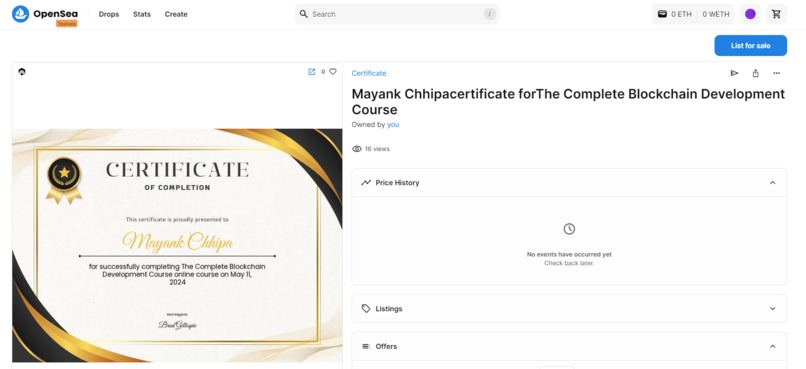
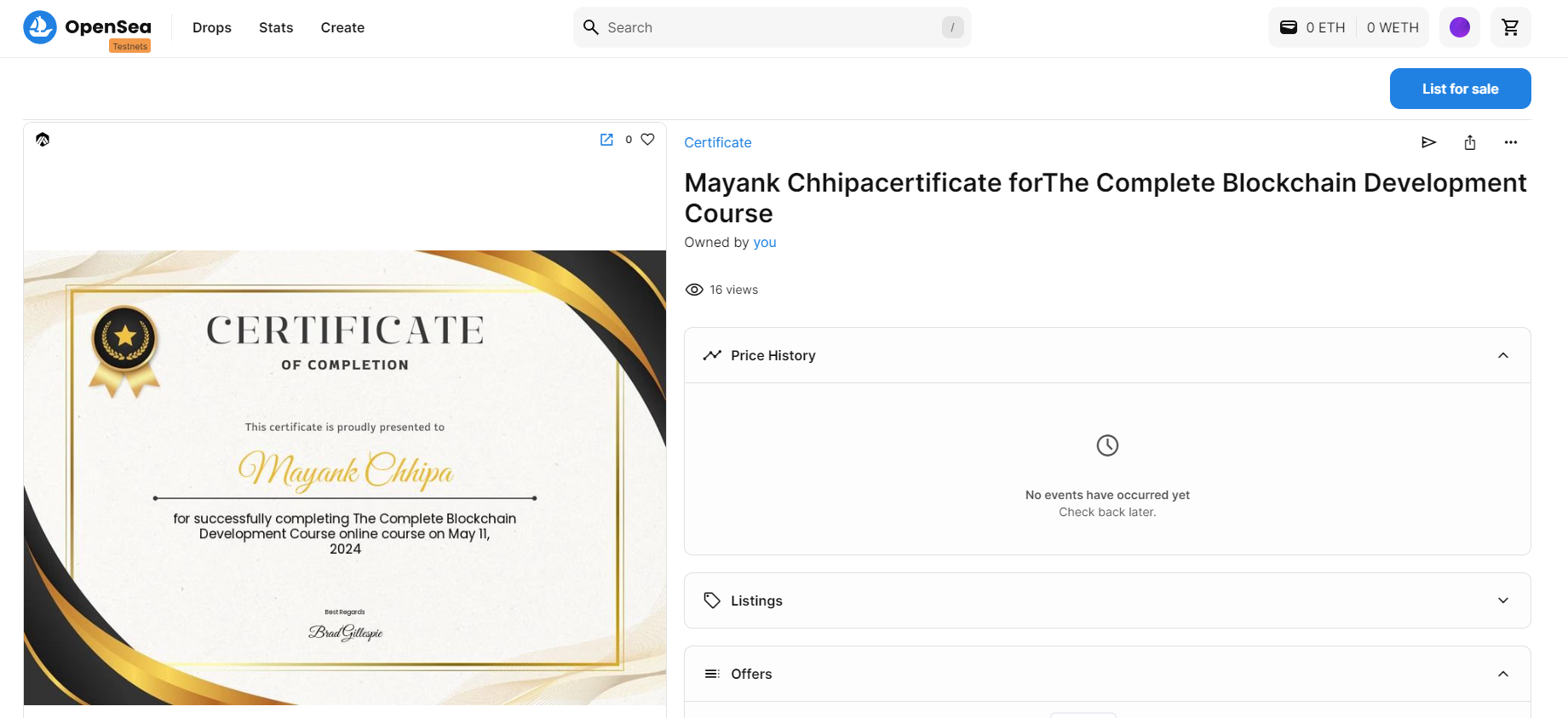
NFT certificate
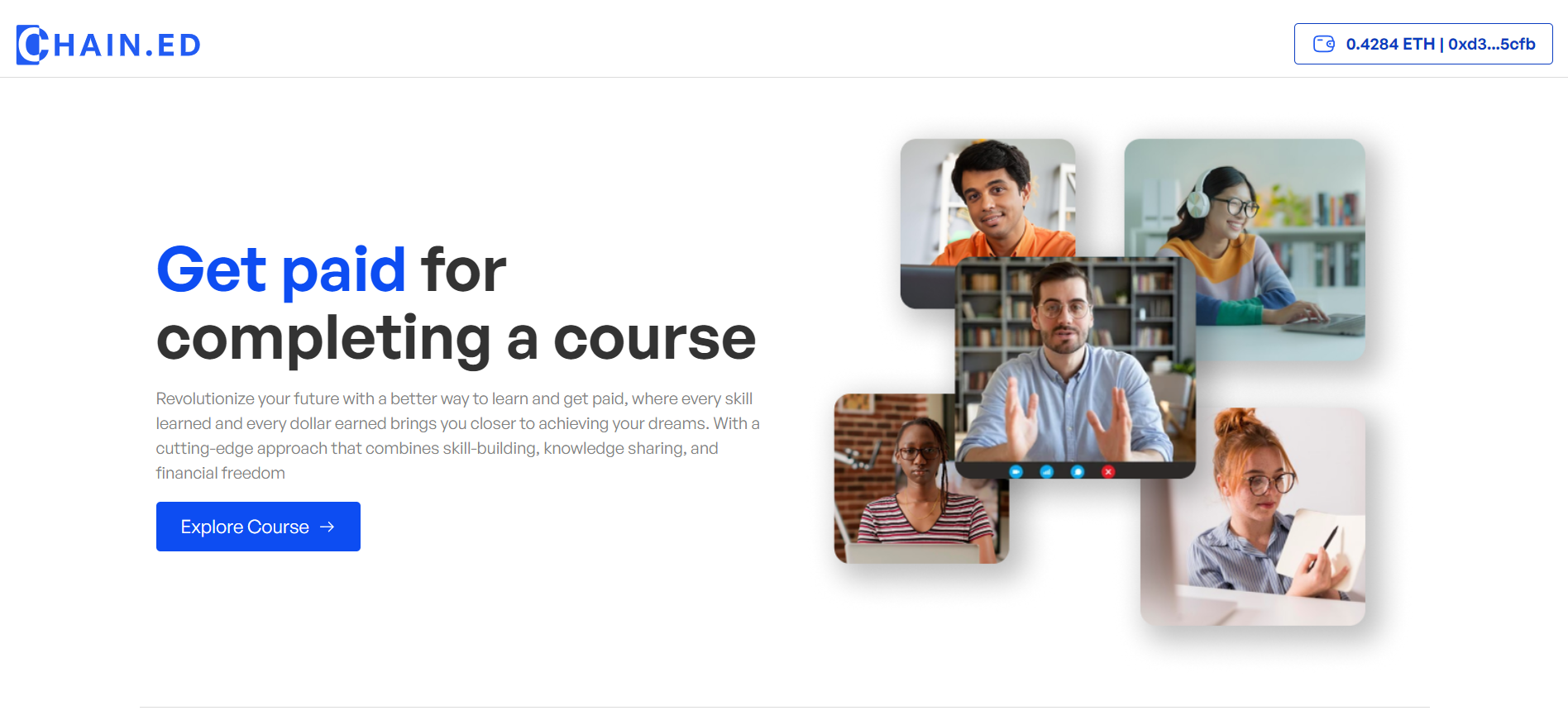

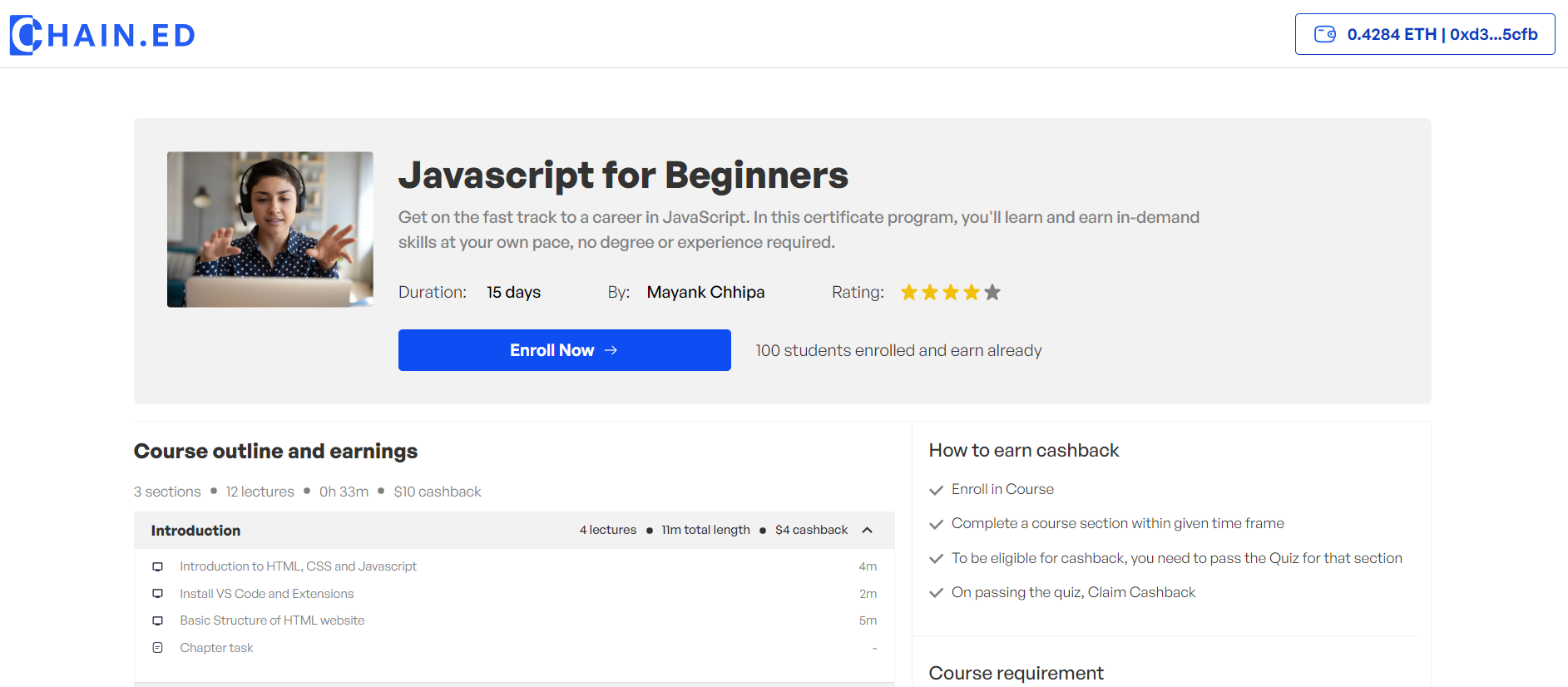
Inspiration
Popular e-learning platforms like Udemy, Coursera and EDX are overflowing with abandoned courses. Promotional materials spark initial interest, but users lack the structure and incentive to complete them.
What it does
We built a platform that addresses this. Users pay with cryptocurrency and earn back the fees in installments upon completing course sections. This motivates focused learning and ensures users are genuinely committed before purchasing. This model is for everyone’s benefit. Users gain valuable skills with reduced financial risk. The platform fosters higher course completion rates and generates income by staking the collected fees.
How we built it
Our platform is designed to revolutionize online learning by incentivizing course completion and leveraging the power of blockchain technology. Here's a glimpse into the core functionalities achieved through our innovative architecture:
Tech Stack:
- Frontend: The UI is developed using Next.JS and ethers.js.
- Blockchain:
- The smart contract is written in Solidity using Hardhat, with Openzeppelin for standard contracts.
- Chainlink contracts, including CCIP, VRF 2.5 (Direct Funding Method) are integrated.
- The smart contract is written in Solidity using Hardhat, with Openzeppelin for standard contracts.
Frictionless Purchase and Secure Staking:
- Users seamlessly connect their crypto wallets for a smooth onboarding experience.
- Upon course purchase, a secure smart contract call deducts the fees from the user's wallet.
- The platform leverages a lending platform like Aave to stake the collected fees, generating passive income.
Motivational Cashback System:
- Each course section is linked to a corresponding quiz that unlocks cashback.
- Completing a quiz section triggers a smart contract call, updating the user's earned cashback amount.
- This earned amount is reflected in real-time on the user interface (UI), providing constant motivation.
Effortless Cashback Claim:
- Users can conveniently claim their earned cashback directly within the platform's UI.
- The retrieved tokens are transferred back to the user's wallet for easy access.
- A smart contract call is initiated, withdrawing the equivalent token value from the staked pool on Aave.
Secure and Verifiable NFT Certificate Generation:
- Upon successful course completion, a unique certificate image is dynamically generated, showcasing the user's name, course details, instructor information, and completion date.
- This image is uploaded to a decentralized storage solution like IPFS for tamper-proof record-keeping.
- Our custom SourceMinter.sol smart contract is called upon to mint the NFT using the generated certificate image.
- Cross-Chain Interoperability Protocol (CCIP) ensures the NFT can be minted on various blockchain networks.
- For internal tracking, a unique ID is generated using Chainlink VRF for each certificate.
- Users can view their earned NFT certificates on popular platforms like OpenSea or directly within their crypto wallets.
This user-centric approach, coupled with the security and transparency of smart contracts, fosters a trust-based learning environment. By aligning incentives and leveraging cutting-edge blockchain technology, our platform empowers users to achieve their learning goals while maximizing their investment.
Chainlink Usage
Chainlink CCIP : Cross Chain Course Completion Certificate NFT
- https://github.com/Trident-BHG/chain-ed-contract/blob/cd1cf59d062275124ea640e3911ba65c6b0398ed/contracts/SourceMinter.sol#L32
- https://github.com/Trident-BHG/chain-ed-contract/blob/cd1cf59d062275124ea640e3911ba65c6b0398ed/contracts/DestinationMinter.sol#L17
Chainlink VRF : Random Token ID for Certificate NFT
- https://github.com/Trident-BHG/chain-ed-contract/blob/cd1cf59d062275124ea640e3911ba65c6b0398ed/contracts/Certificate.sol#L67
- https://github.com/Trident-BHG/chain-ed-contract/blob/cd1cf59d062275124ea640e3911ba65c6b0398ed/contracts/Certificate.sol#L94
- https://github.com/Trident-BHG/chain-ed-contract/blob/cd1cf59d062275124ea640e3911ba65c6b0398ed/contracts/CertificateSepolia.sol#L64
- https://github.com/Trident-BHG/chain-ed-contract/blob/cd1cf59d062275124ea640e3911ba65c6b0398ed/contracts/CertificateSepolia.sol#L91
UI Mockups:
https://www.figma.com/design/STvmV5TFvOIETVE3ohEztv/Chain.ed?node-id=7-75&t=PqHWVhz2o6poZ1Y8-0
Challenges we ran into
- The deployments were failing multiple times due to insufficient gas limit for transaction, callback gas limit for VRF, Manual Execution of CCIP based transactions etc. This required correctly estimating gas limits for various gas lanes.
- Local testing of Chainlink CCIP is not full proof using CCIP Local Simulator. So CCIP had to be tested on testnets which is time consuming and required test Ethers which are available only in limited quantity.
- There is a difference between code for contracts present on chainlink-github and the contracts actually deployed on testnet. Due to which IVRFV2PlusWrapper.sol and VRFV2PlusWrapperConsumerBase.sol contracts had to be manually put in our project. You can find them here.
- Local testing of chainlink VRF 2.5 using Mock contracts was difficult due to deficiencies in documentation for VRF 2.5. Documentation for VRF 2.5 is not up to date, especially the steps for local testing.
- Many VRF related contracts are not up to date in chainlink-github repo and hence have compatibility issues during local testing if I tried to use them by importing from chainlink package. I had to get code from contracts actually deployed on testnet and put them manually in my project. You can find them here.
Accomplishments that we're proud of
- We started from zero blockchain development knowledge and still integrated two Chainlink products - CCIP and VRF 2.5 in our project.
- We learned to use tools like Tenderly and Ethereum Stack Exchange for debugging and getting help from other experienced Blockchain developers.
- Despite challenges with local testing of Chainlink CCIP and VRF 2.5, we were able to test them locally.
What we learned
- We got to understand the working of chainlink services and their immense capabilities to develop innovative on chain solutions.
- We started from zero level of knowledge regarding blockchain development and learned Solidity, Ethers.js, Hardhat, Staking, IPFS, Pinata, Next.js and many more blockchain tools and technologies.
- Learned about DeFi platform , Aave. Learned about how to supply, withdraw tokens from Aave.
What's next for Chain.ed
Our product roadmap prioritizes features that cultivate a dynamic learning experience for users. Here's a condensed look at the roadmap:
Solidifying the Foundation
- We aim to ensure the security of the developed contract before its mainnet launch and seek smart contract audit support.
- Perfecting Core Features: Ensuring a smooth user experience for course purchases, cashback mechanics, and secure NFT certificate generation is paramount.
- Content Enrichment: Actively recruiting high-quality instructors and onboarding a diverse range of engaging courses is crucial.
- Due to time constraints of hackathon, we currently do not support cross-chain payments for buying courses, we would like to integrate Chainlink CCIP for cross-chain payments for our platform. We are currently working on developing those contracts.
Empowering Creators & Cultivating Community
- Creator Module Launch: Developing a user-friendly interface empowers creators to upload content, manage courses, and set pricing.
- Democratized Course Creation: Implementing a screening process ensures quality while enabling broader participation from creators.
- Royalty System Introduction: Incentivizing high-quality course creation through a royalty system, where creators earn a share of fees after a set number of enrollments.
- Community Features Integration: Building a forum or chat room fosters interaction, knowledge sharing, and a sense of community among learners.
Gamification & Building Trust
- Gamification Implementation: Introducing a points or badges system motivates users by rewarding completion of tasks, sections, and courses.
- Reputation System Development: A user-driven rating system for instructors and courses promotes transparency and informs learner decisions.
- Gamification Implementation: Introducing a points or badges system motivates users by rewarding completion of tasks, sections, and courses.
Advanced Analytics Integration: Gathering user data personalizes learning recommendations, tracks completion rates, and identifies areas for improvement.


Log in or sign up for Devpost to join the conversation.