-
-
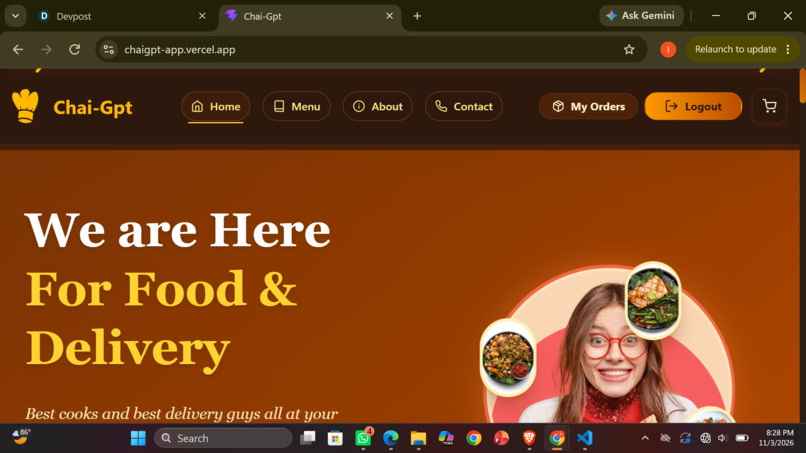
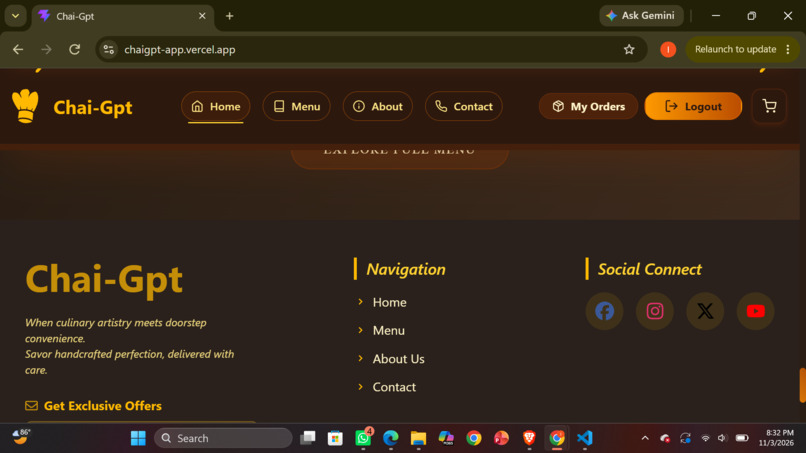
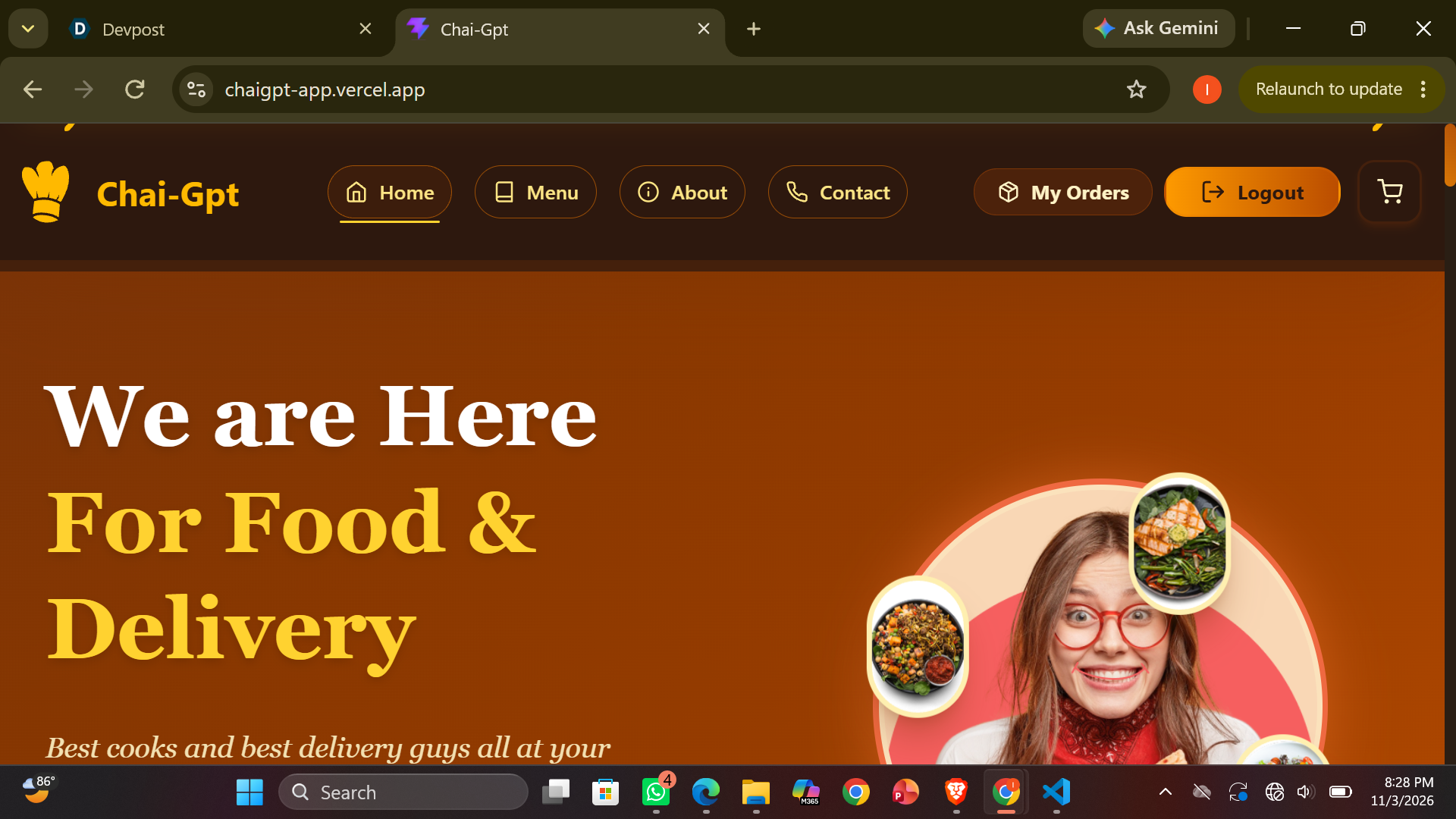
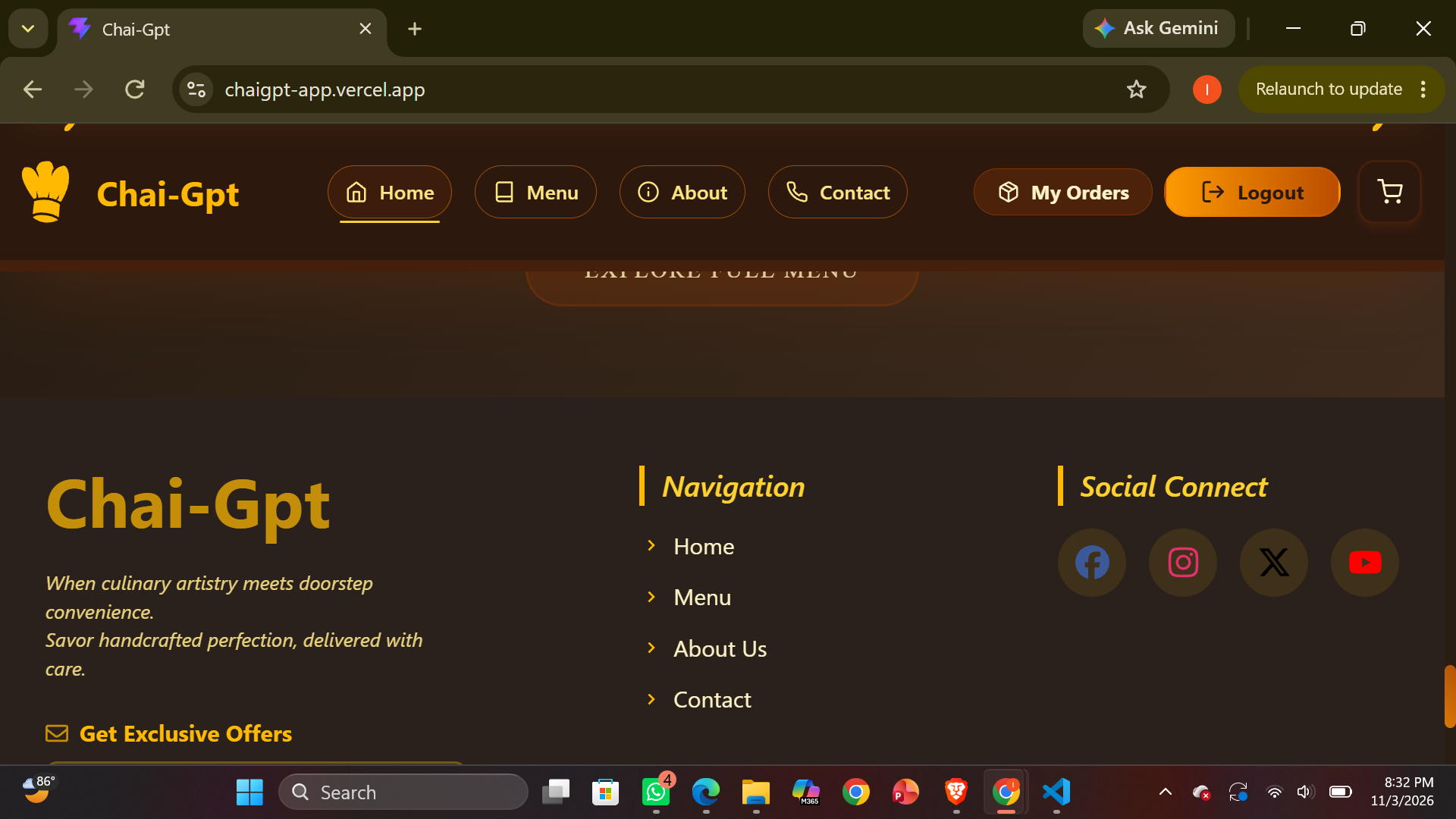
Home page
-
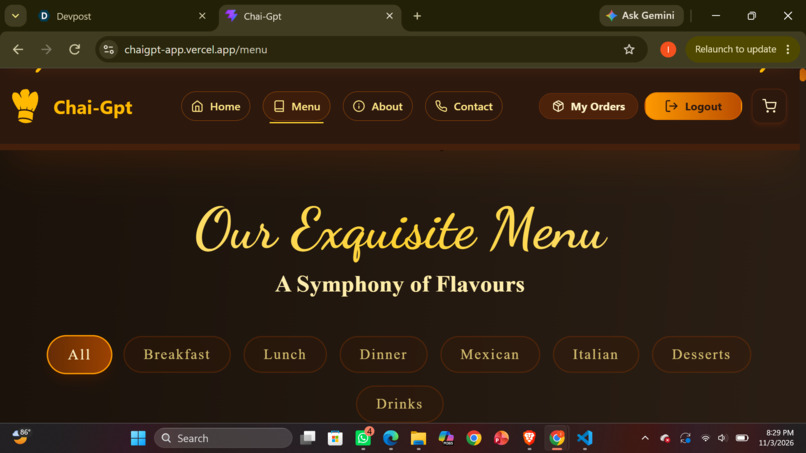
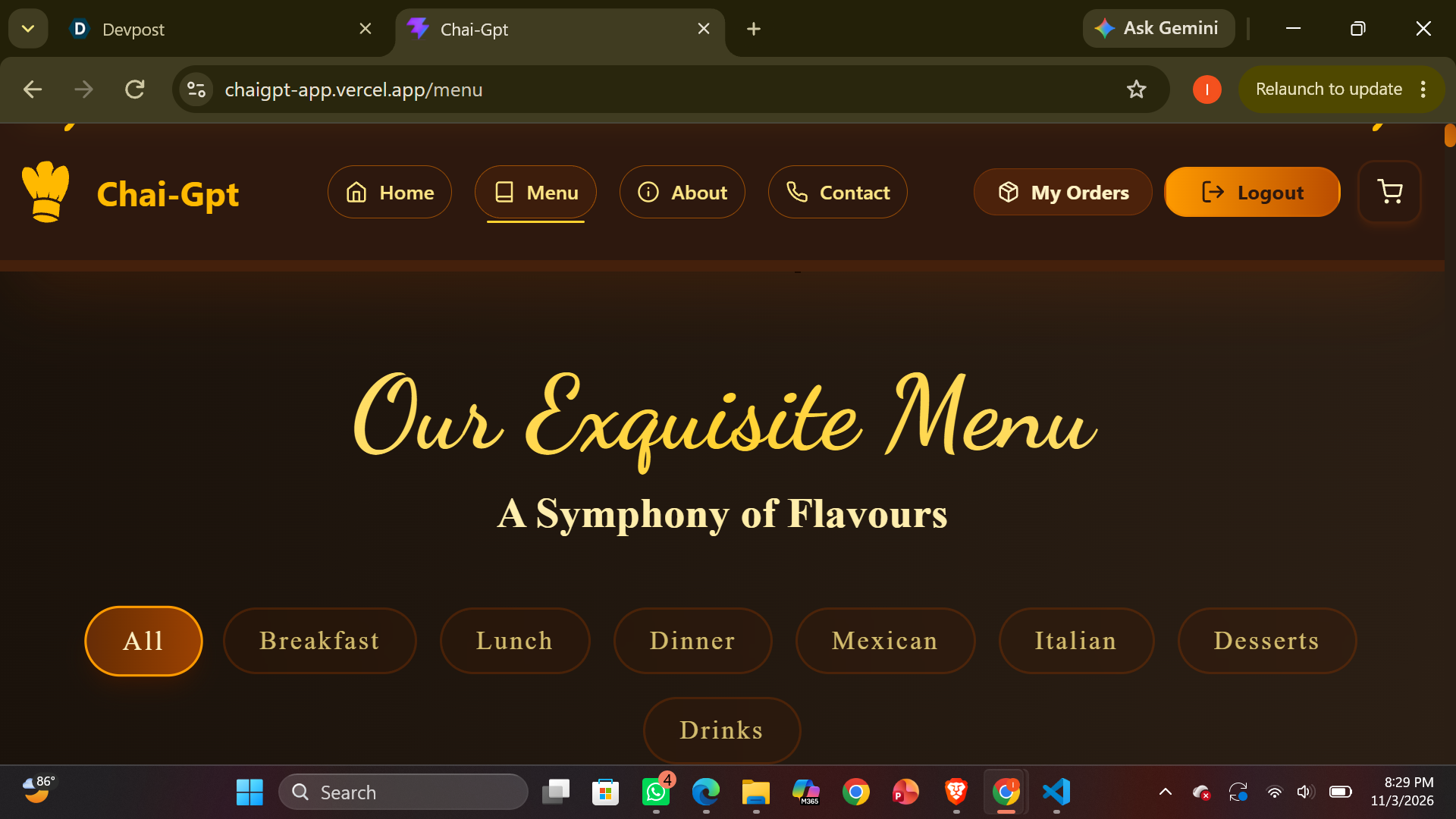
Menu Page
-
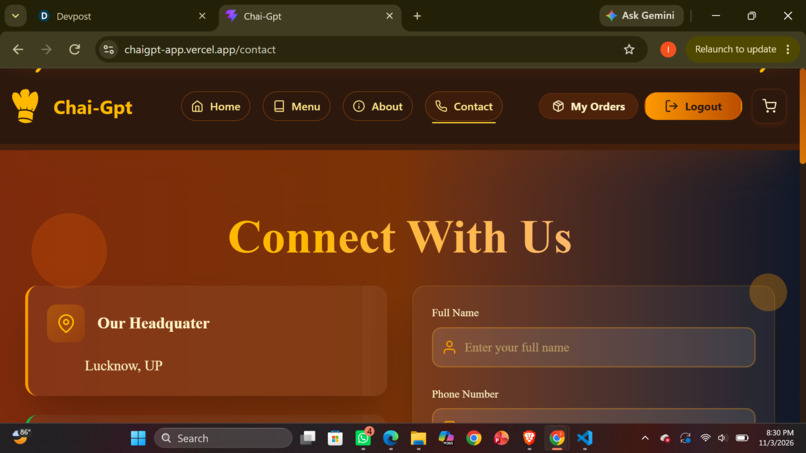
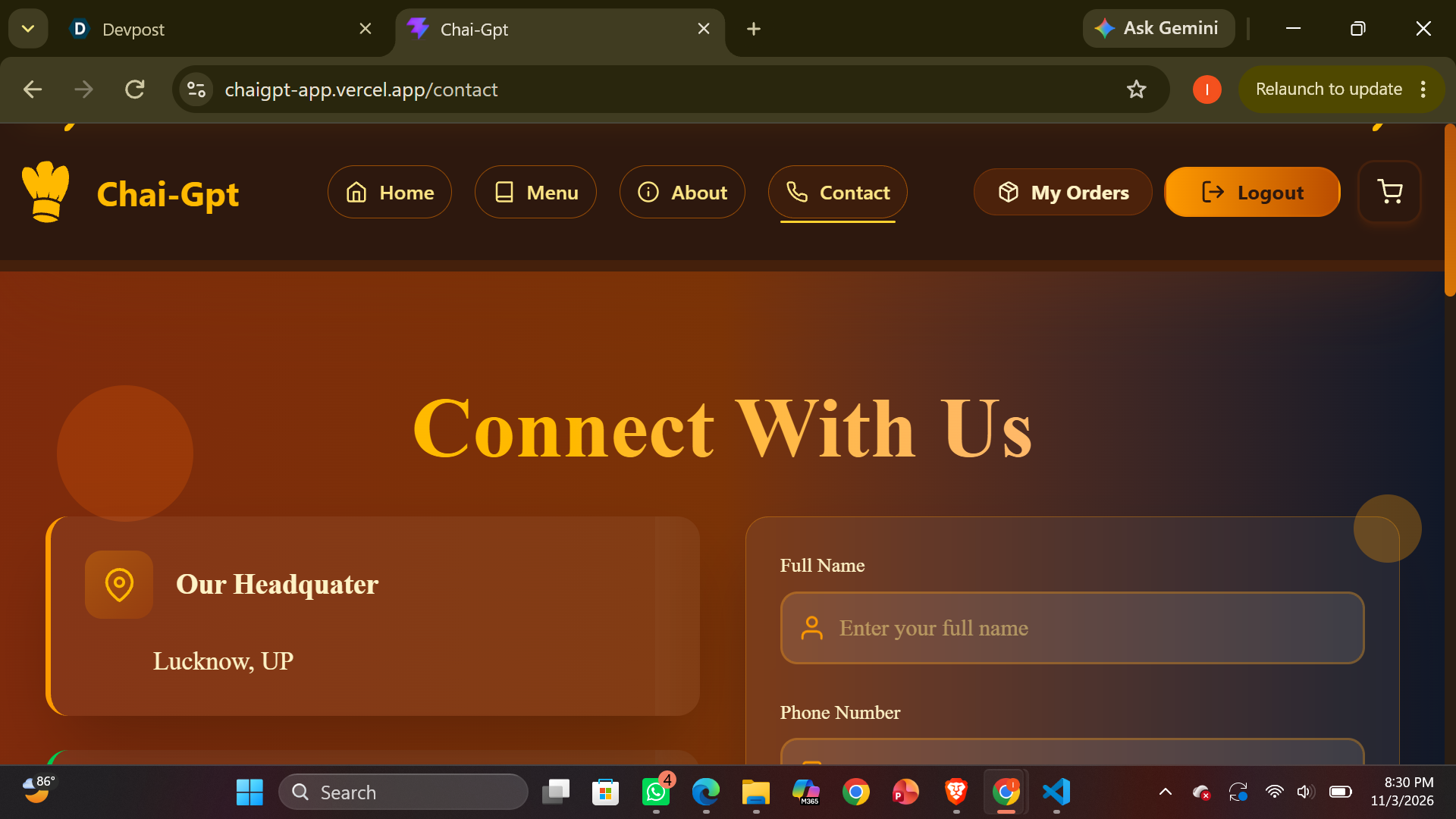
Contact page
-
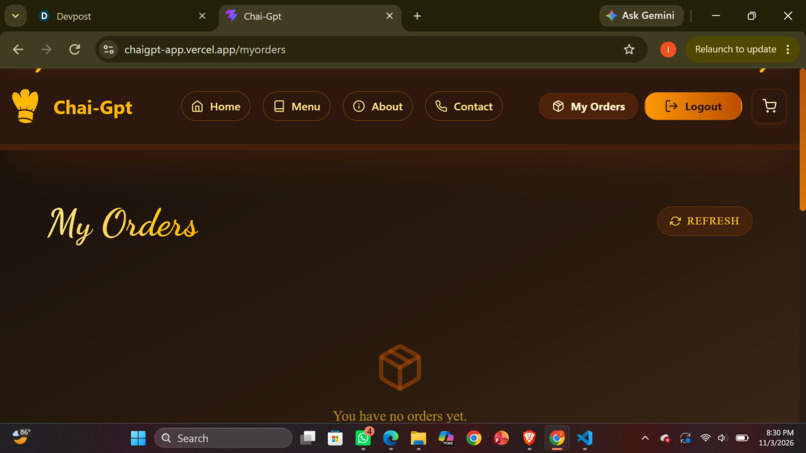
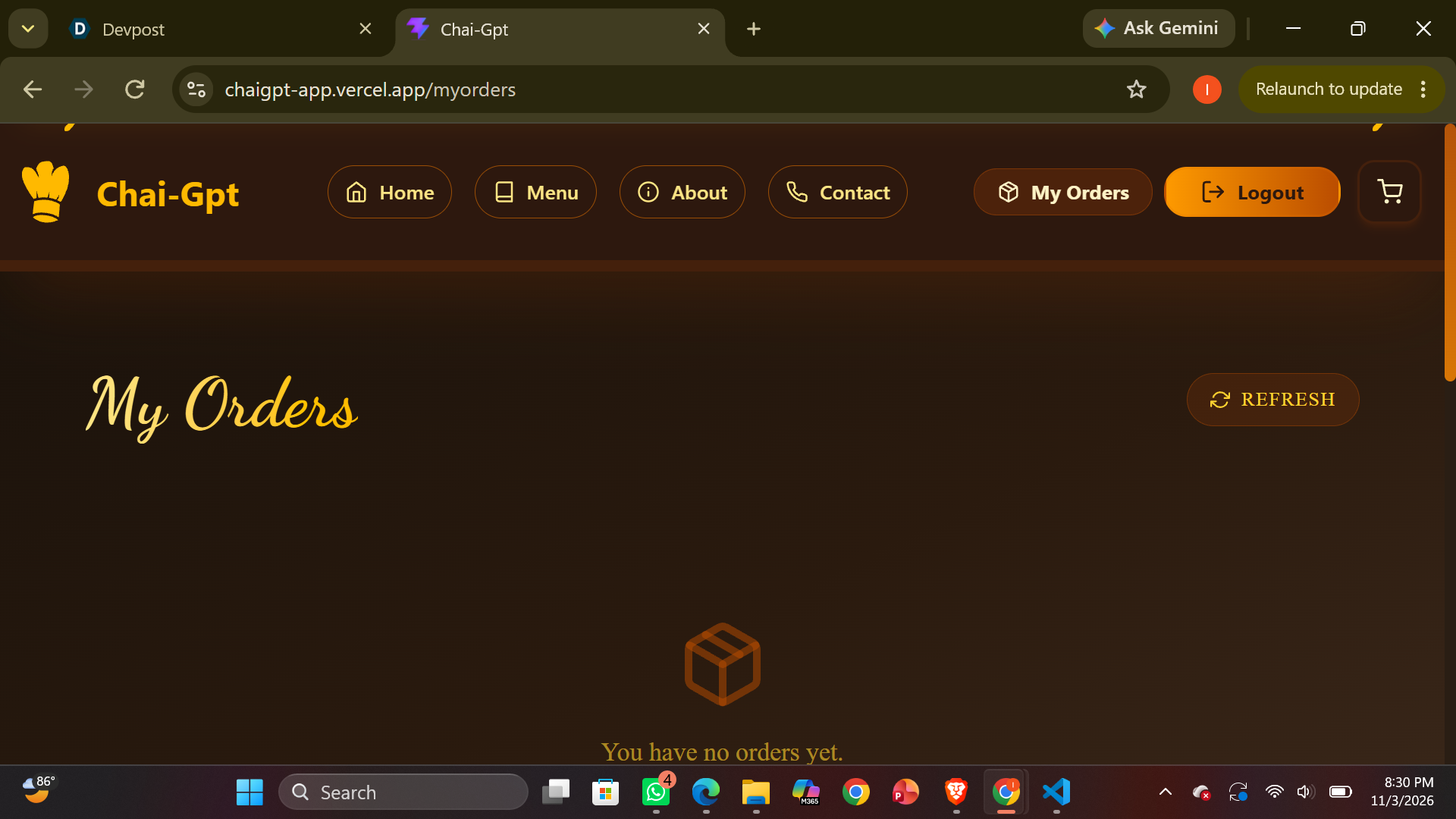
My orders page
-
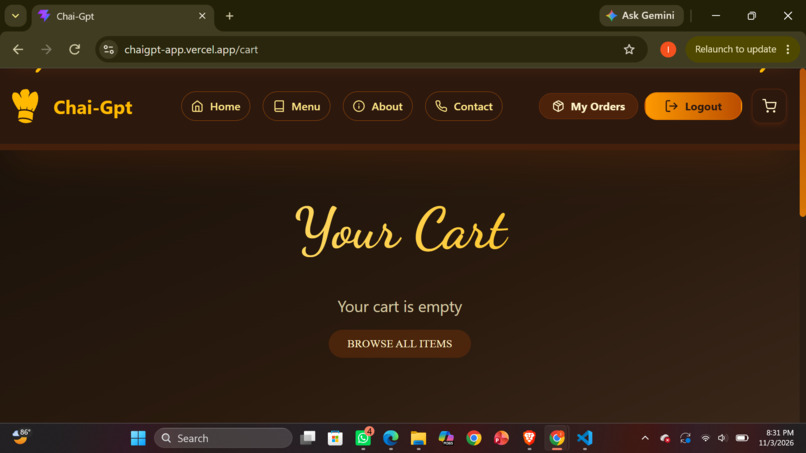
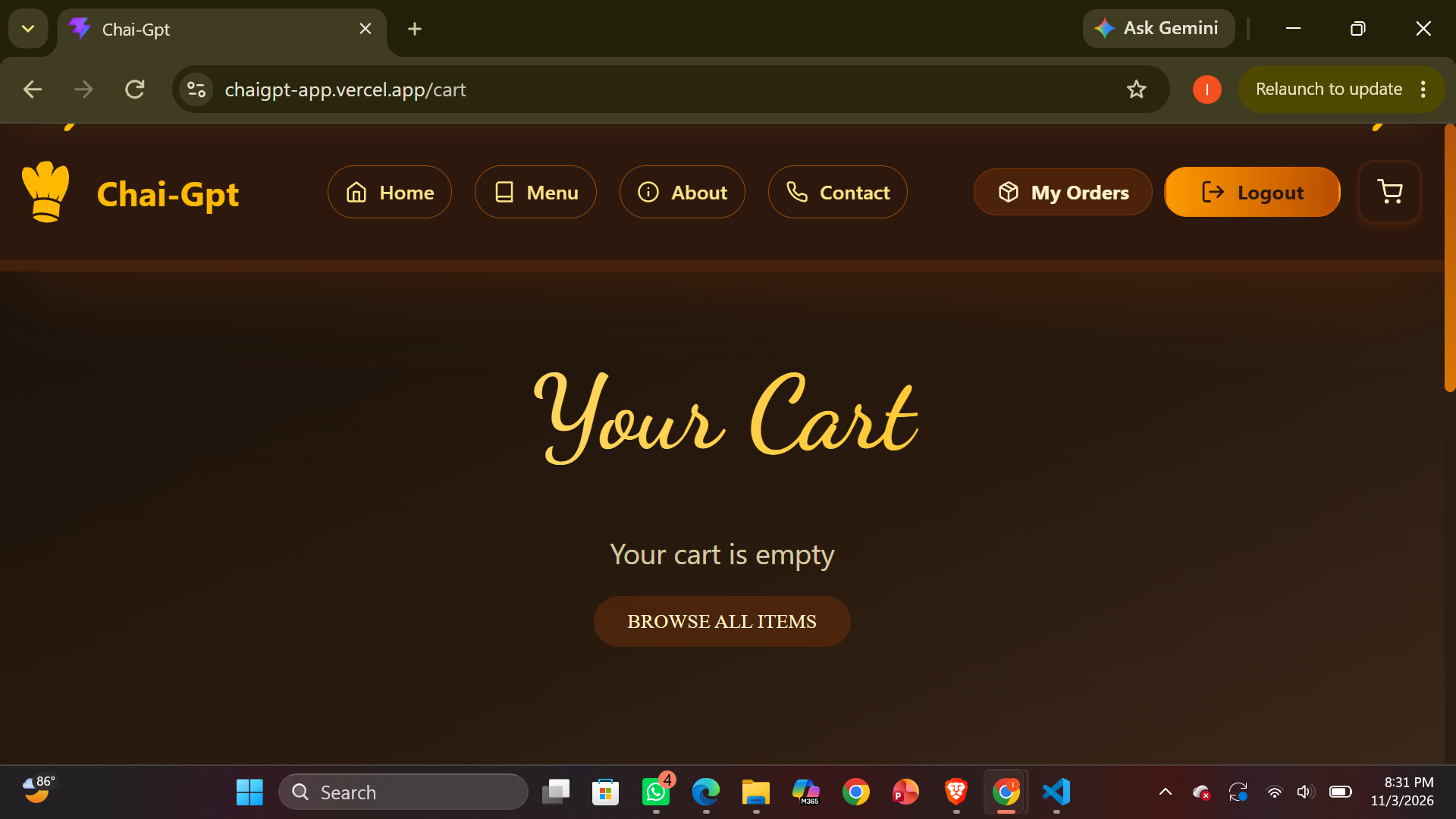
cart
-
Inspiration
The idea behind Chai-GPT came from bridging local food culture with an intelligent, modern web platform. We wanted to build a fast, intuitive ordering ecosystem that streamlines food delivery for customers while providing an AI-ready backend to automate administrative workflows and personalized recommendations.
What it does
Chai-GPT is a full-stack food delivery and restaurant management web application (live at chaigpt.pk). Key capabilities include:
- Interactive Customer Platform: Dynamic UI for users to discover menu offerings, customize cart items, and place real-time orders.
- Smart Admin Management: A comprehensive panel for managing products, tracking active orders, and monitoring inventory.
- Automated Workflow Integration: Streamlined backend data flows for instant order confirmation and status tracking. ## How we built it We developed Chai-GPT using a modern JavaScript web stack:
- Frontend: React and Vite for high-speed client-side rendering, styled dynamically with Tailwind CSS.
- Backend: Node.js and Express RESTful APIs to process order actions, authentication, and platform logic.
- Database: MongoDB Atlas for scalable, real-time data storage across products, users, and transactions.
- Deployment & Operations: Hosted on Vercel and Netlify for continuous integration and optimized delivery. ## Challenges we ran into
- Cart State Management: Synchronizing multi-item cart states efficiently between local storage and backend API endpoints.
- Real-time Order Tracking: Optimizing MongoDB queries and Express middleware to reflect live order updates on the admin dashboard instantly.
- UI/UX Optimization: Designing a responsive interface that maintains ultra-fast load times even on slower network connections. ## Accomplishments that we're proud of
- Successfully engineering and deploying a complete full-stack web application from scratch.
- Delivering a clean, user-friendly interface with sub-second page loads and seamless interaction.
- Structuring an extensible architecture tailored for integration with AI assistants and automated agent workflows. ## What we learned
- Effective state synchronization techniques between modern React frontends and Node.js REST APIs.
- Best practices for structuring MongoDB schema models to handle high-frequency transaction updates.
- Preparing full-stack web platforms for seamless third-party AI service and webhook integrations. ## What's next for Untitled
- AI-Powered Recommendations: Integrating smart machine learning algorithms to suggest personalized food items and combo deals based on user preferences and ordering history.
- Voice & Conversational AI Ordering: Adding an AI voice assistant agent so users can place orders, ask questions about the menu, and track delivery status naturally.
- Expanded Payment Gateways: Integrating local and international payment gateways (including credit cards and mobile wallets) alongside cash-on-delivery.
- Real-time Driver & Delivery Tracking: Implementing GPS tracking and live status updates for customers from kitchen preparation to doorstep delivery.
- Mobile Application: Building cross-platform mobile apps (React Native) for both users and delivery partners for an enhanced mobile experience.
