Inspiration
India has 63 million SMEs — and 90% of them still screen resumes manually. As someone who has applied to internships and watched friends struggle through broken hiring processes on both sides, the inefficiency felt personal.
The average recruiter spends 6–8 seconds per resume. Top candidates get rejected not because they're unqualified — but because they were page 3 of 250. We wanted to fix that with AI that actually understands context, not just keyword patterns.
"What if a first-year student could build something that saves a company ₹50,000 per hire?" — that question started ChaayanAI.
What it does
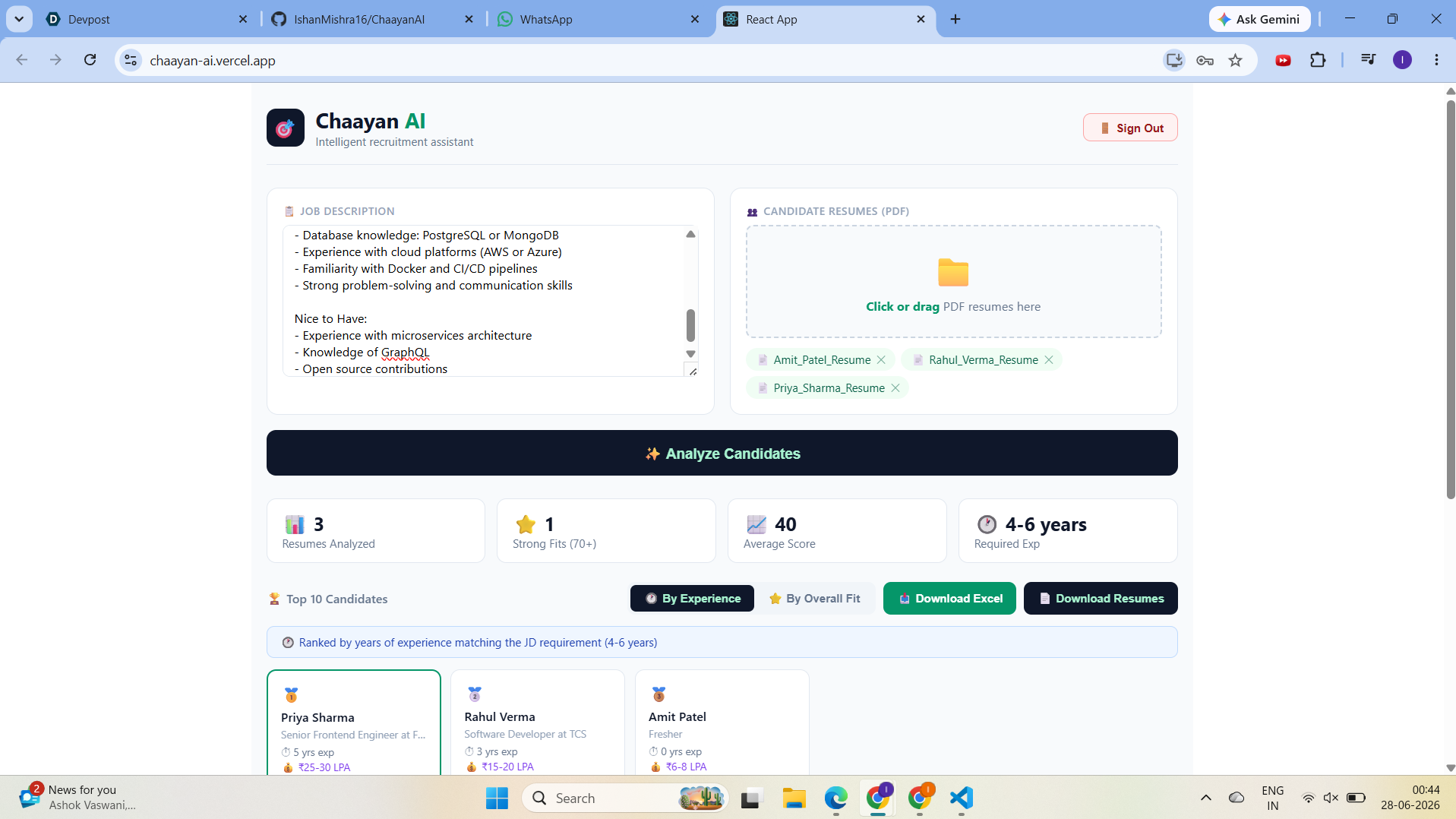
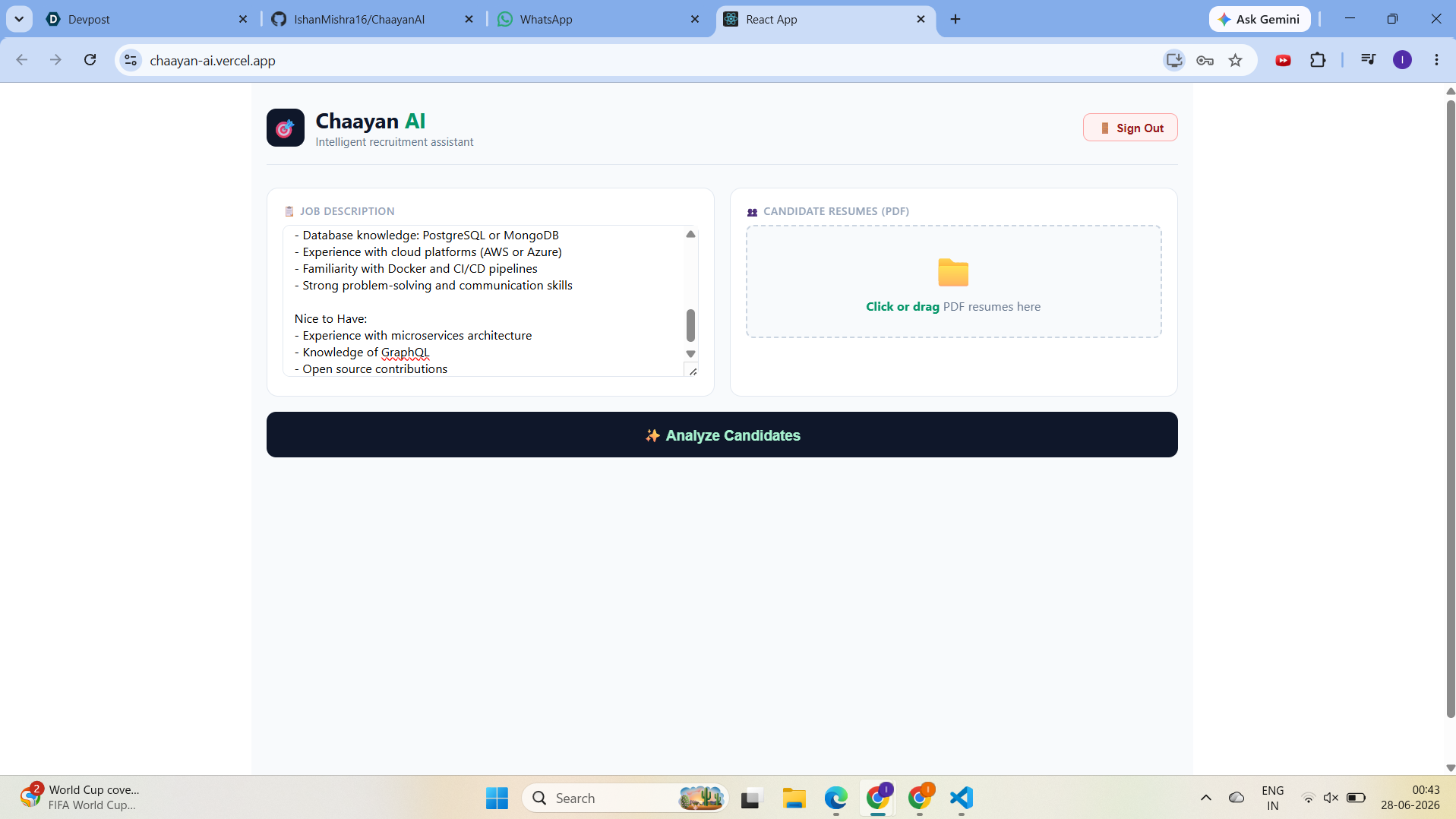
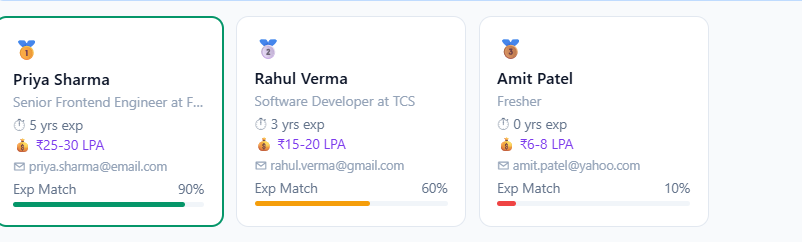
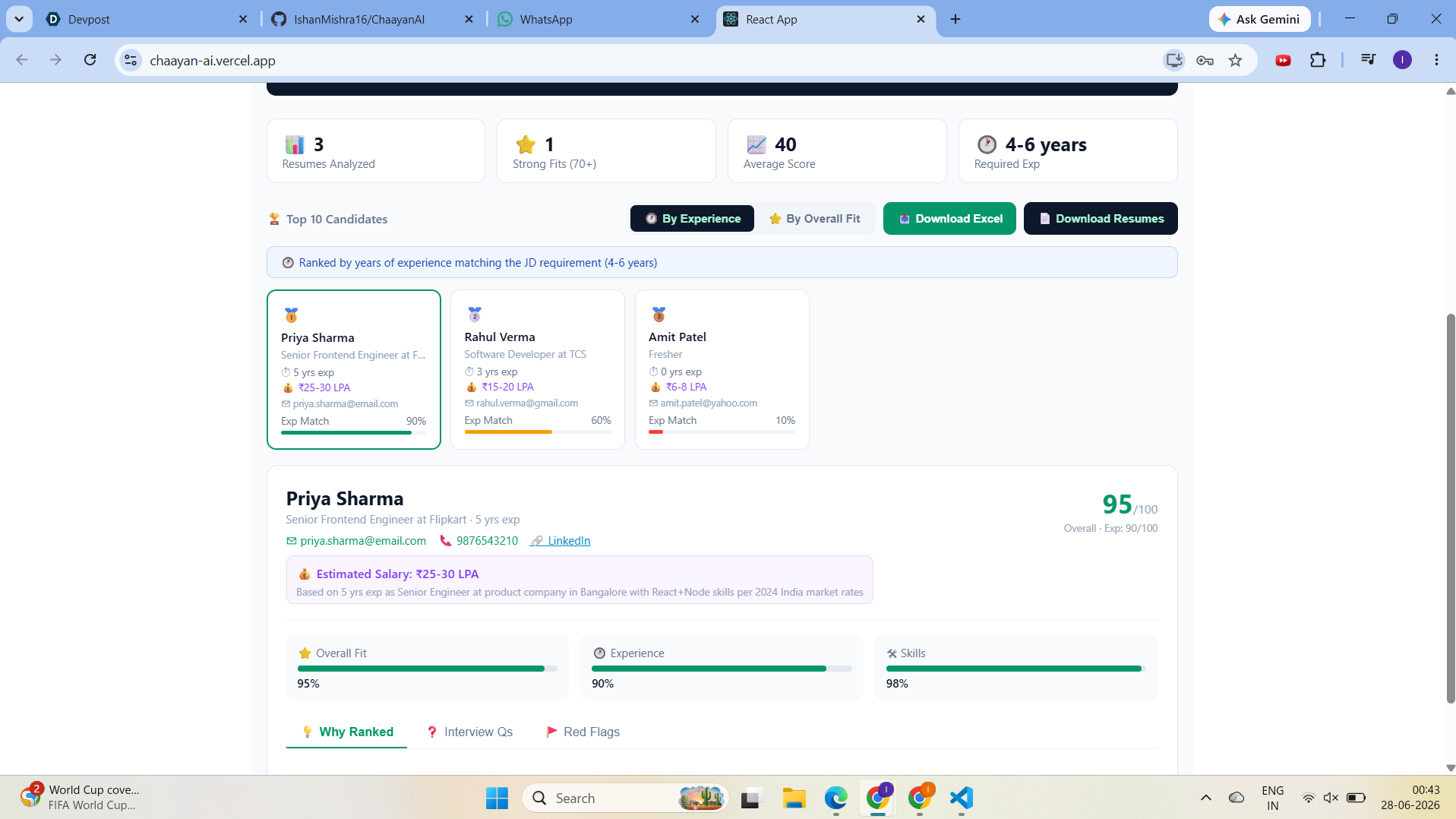
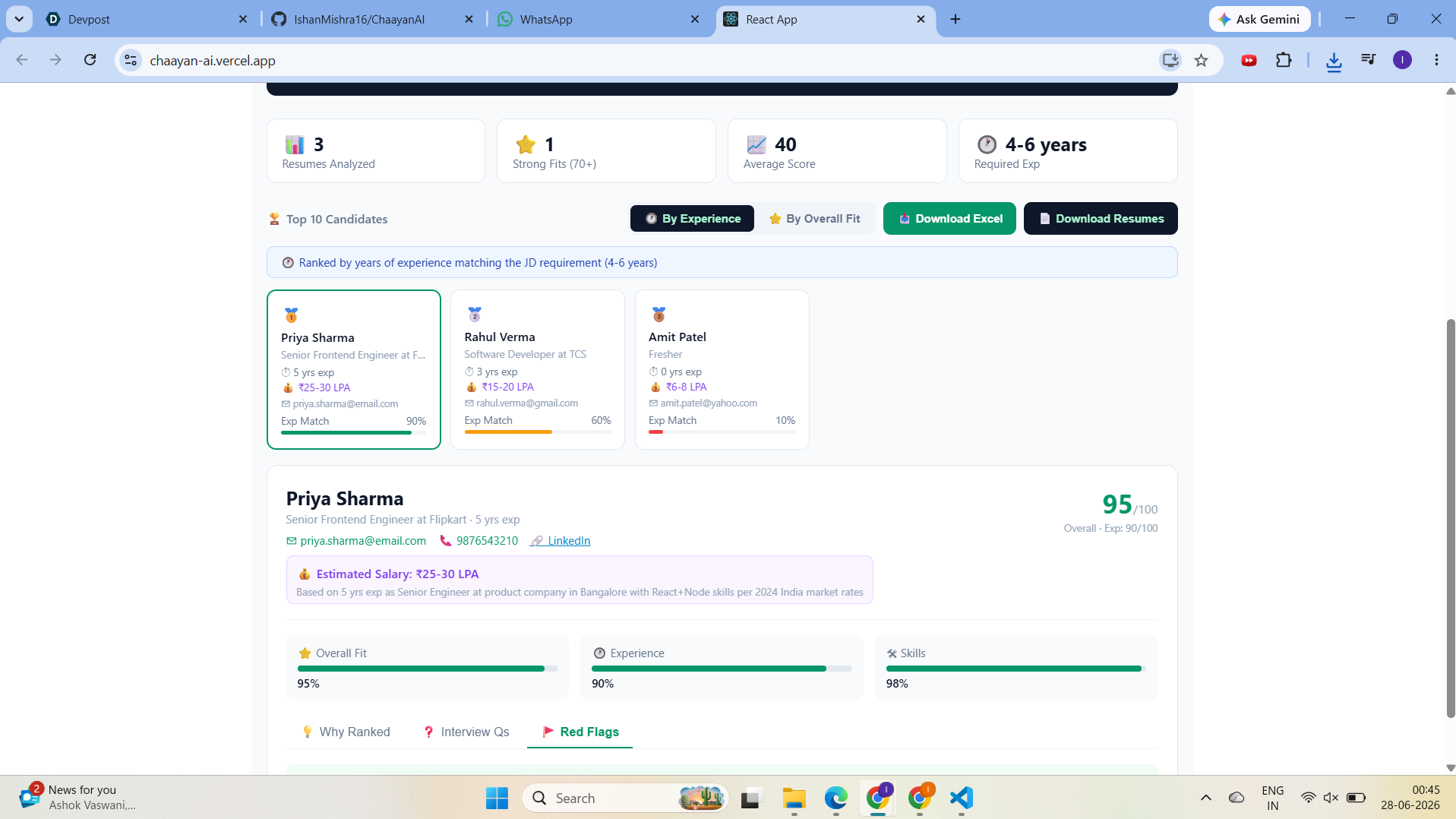
ChaayanAI is an AI-powered recruitment assistant that turns 250 resumes into a ranked shortlist in under 30 seconds.
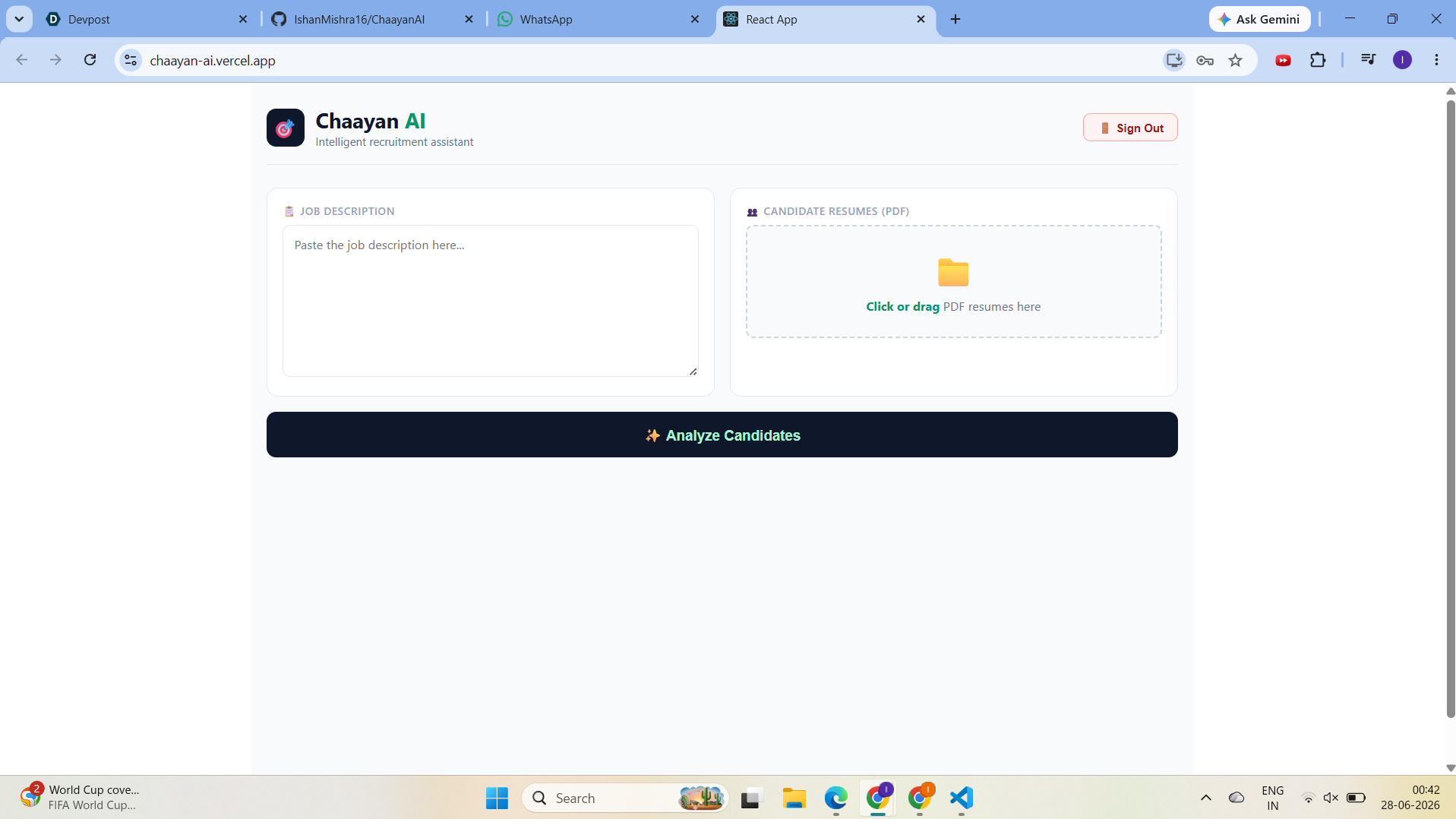
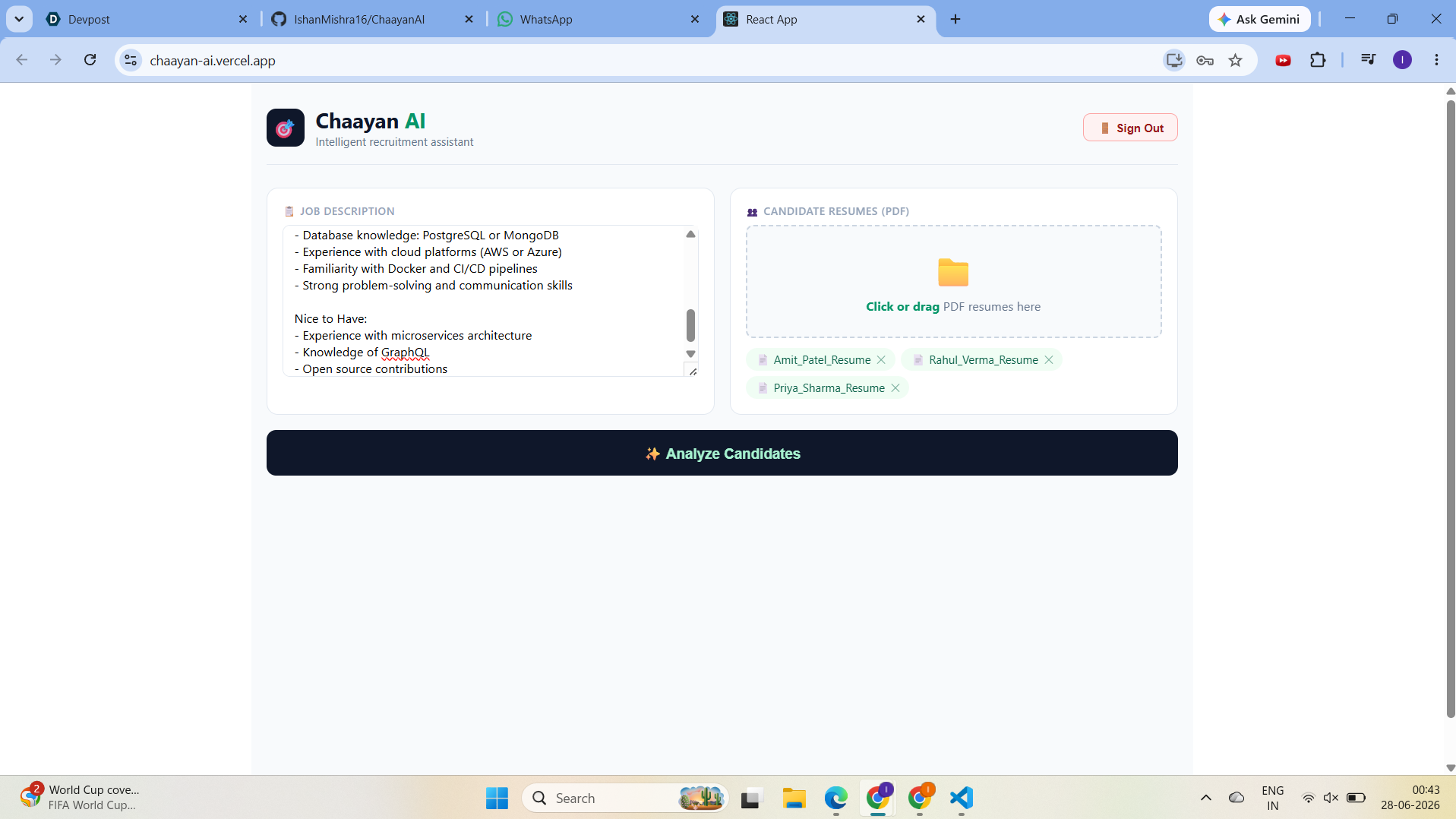
- 📄 Paste any job description — any role, any industry
- 📂 Upload candidate PDFs — bulk upload supported
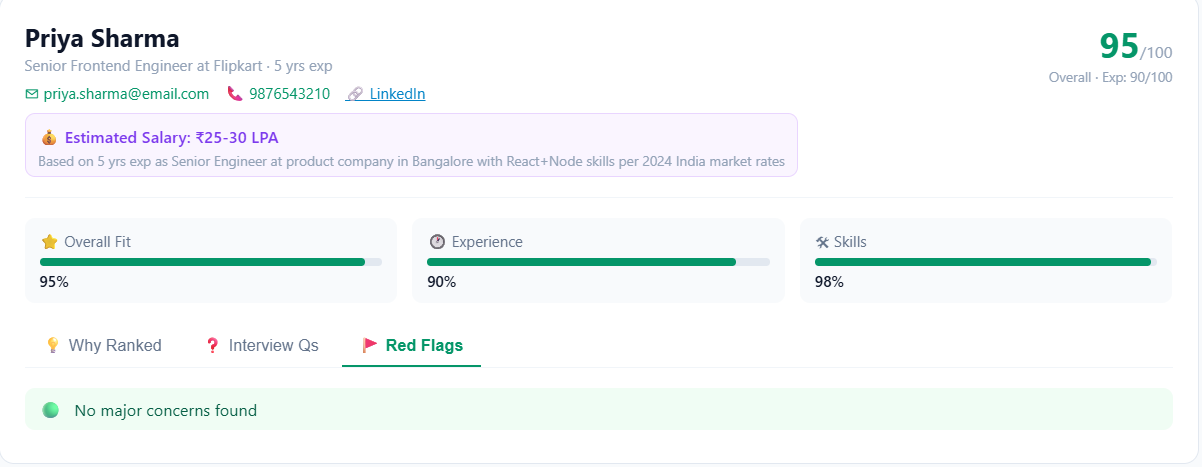
- 🤖 AI ranks every candidate using dual scoring:
$$\text{Final Score} = w_1 \cdot \text{Experience Fit} + w_2 \cdot \text{Skills Fit}$$
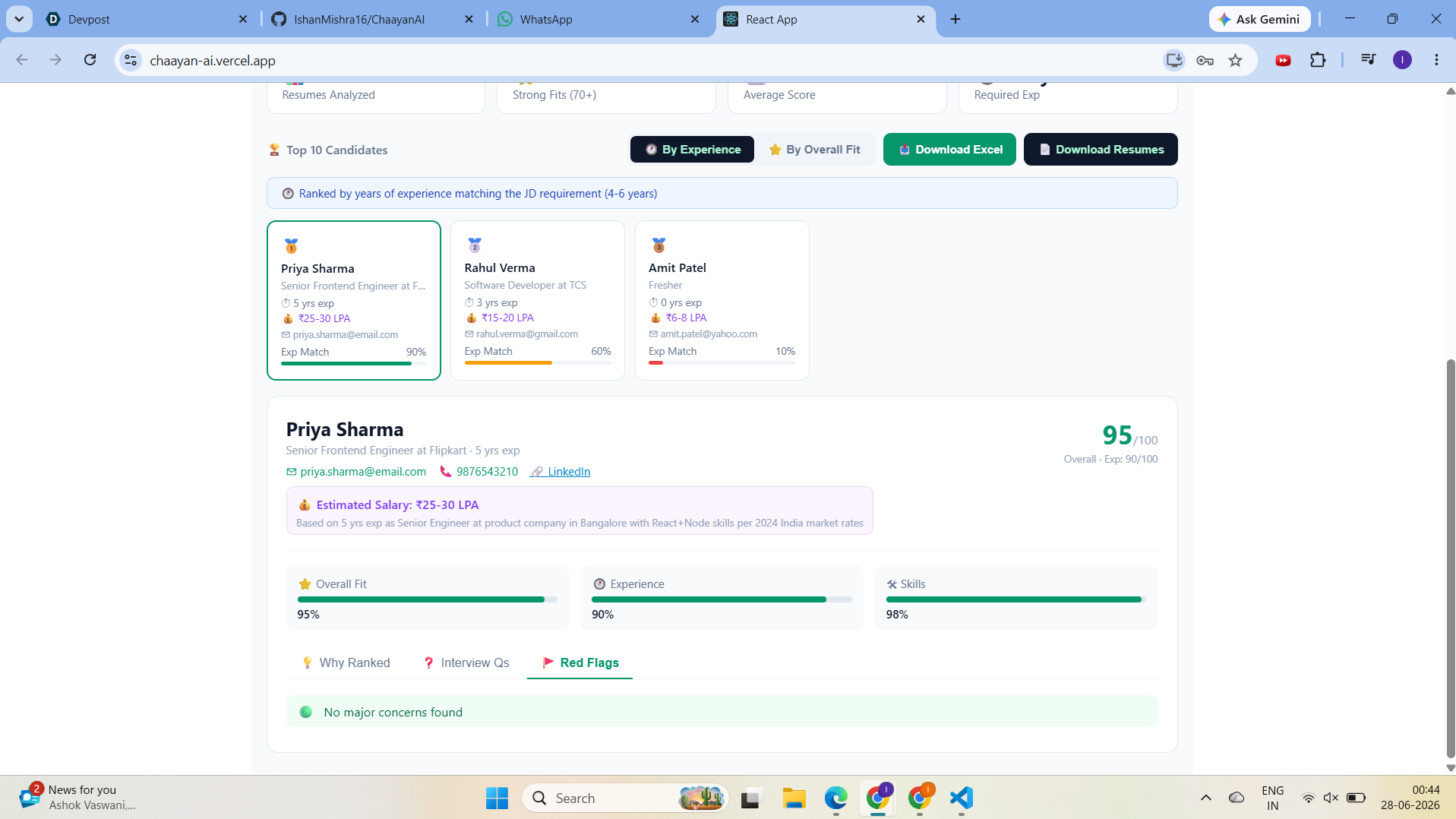
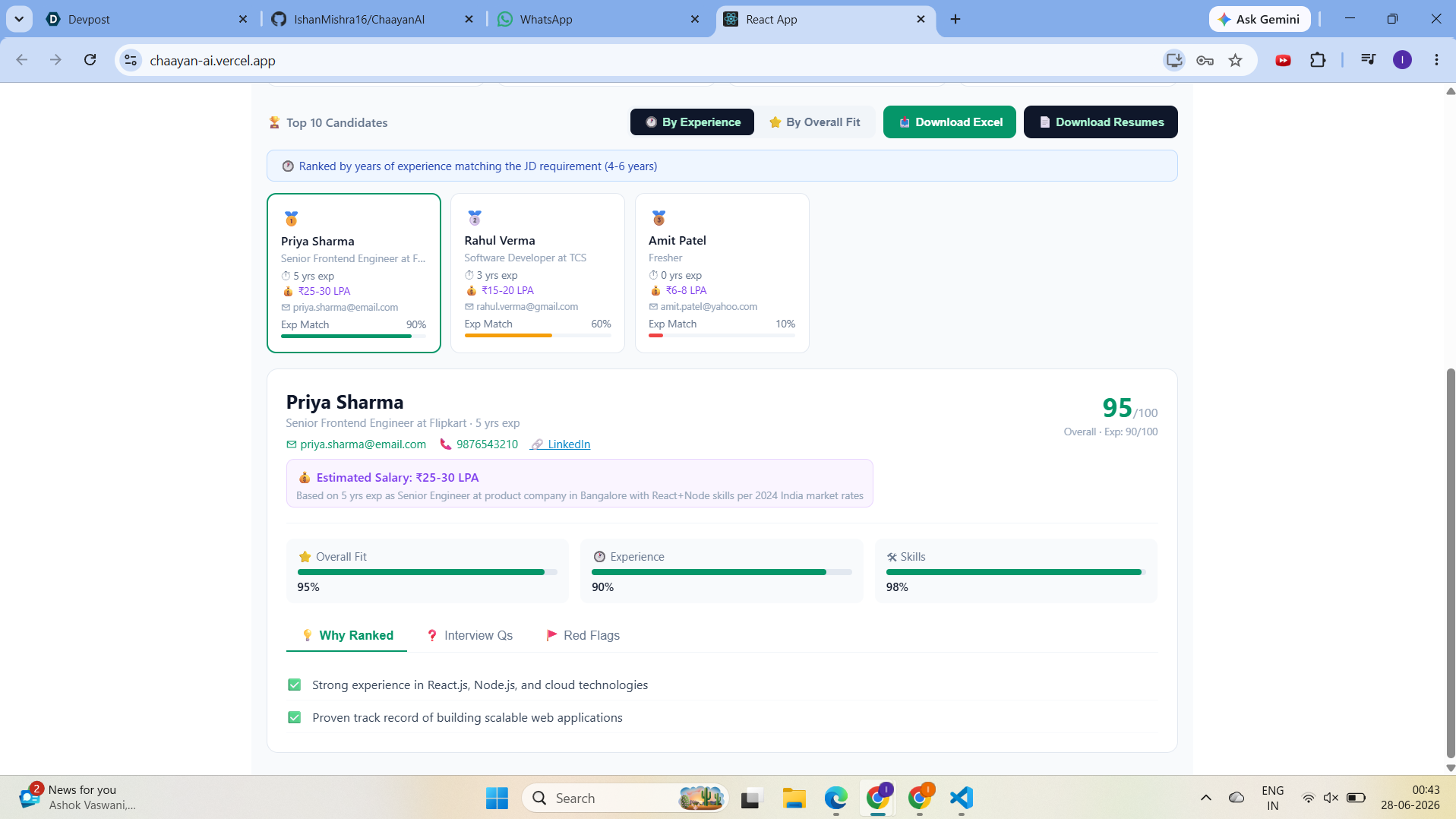
- 💬 Explainable reasoning — the AI tells you why it ranked someone where it did
- 🚩 Red flag detection with severity ratings
- 💰 Salary band estimation per candidate
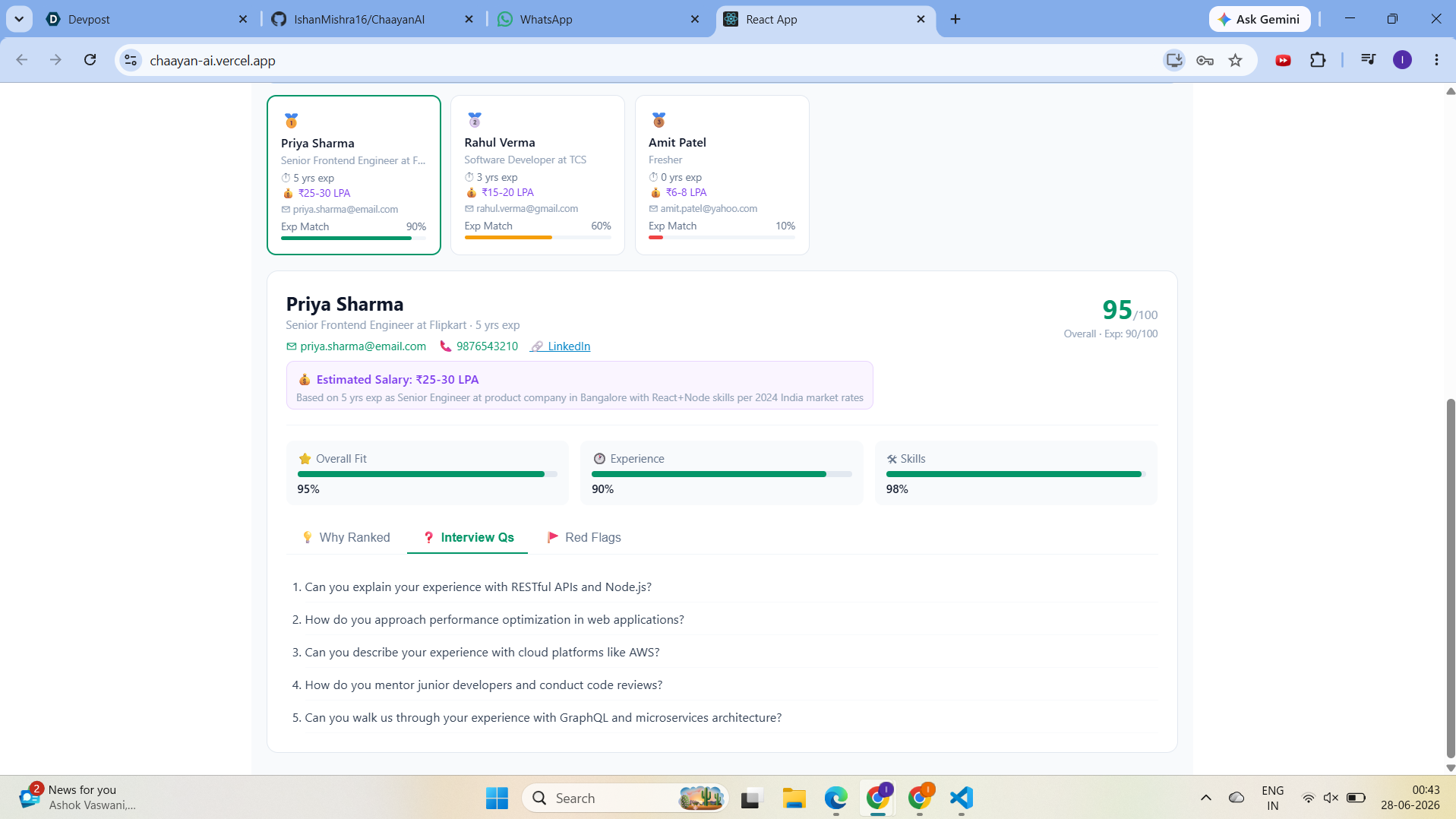
- 📋 Custom interview questions generated per candidate
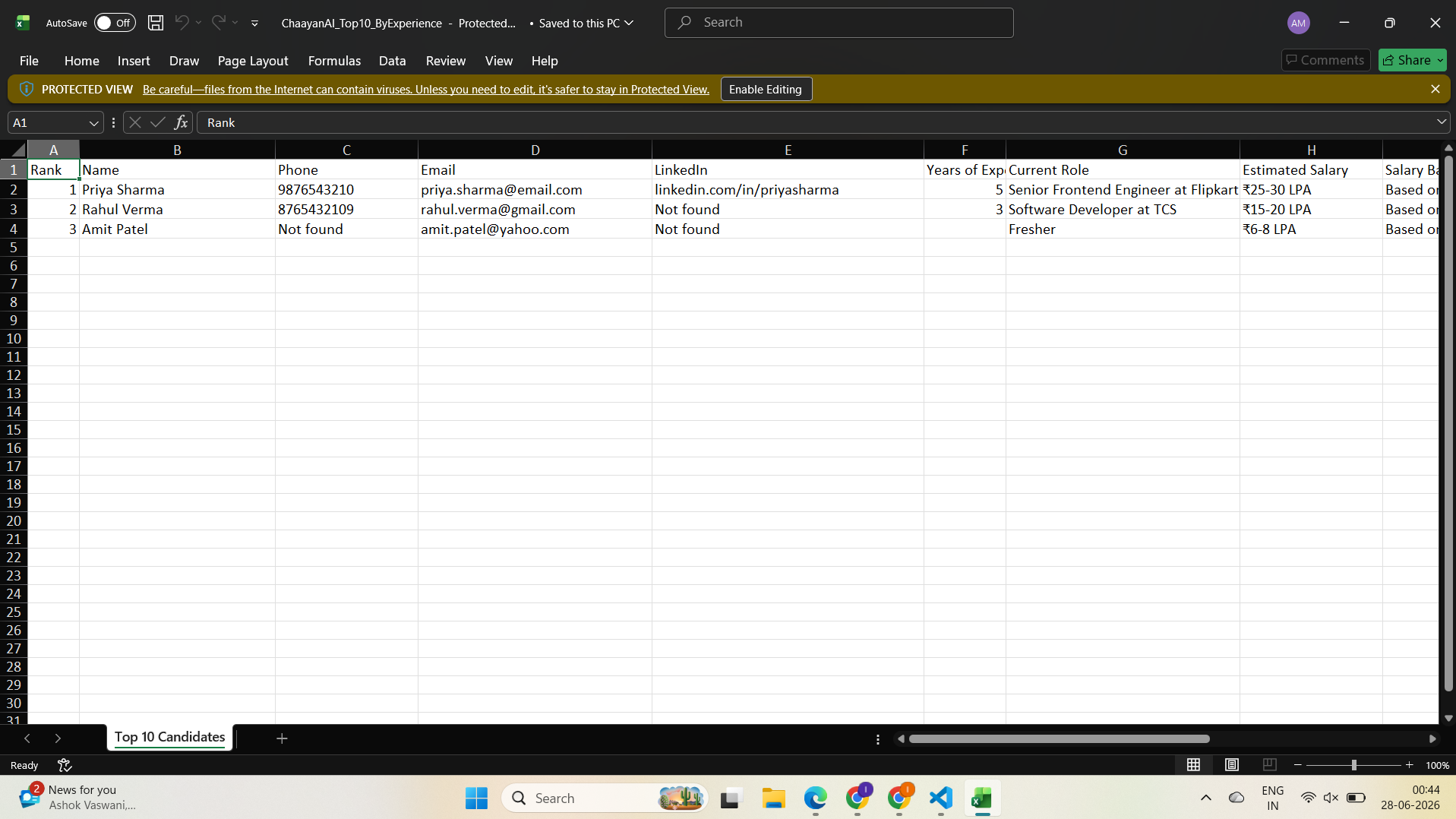
- 📊 One-click Excel export with top 10 candidates + bulk resume download
How we built it
| Layer | Technology |
|---|---|
| Frontend | React.js, PDF.js, XLSX.js |
| AI Engine | Llama 3.3 70B via Groq API |
| Hosting | Vercel |
| Security | Environment variables, no client-side key exposure |
| Export | SheetJS for Excel, bulk PDF download |
The core pipeline: PDF Upload → PDF.js parsing → Text extraction → Groq API (Llama 3.3 70B) → JSON scoring → Dual ranking → Insights generation → Excel export
We used Groq's inference speed to get near-instant results even for 10+ resumes simultaneously — critical for the "30 seconds" promise to hold up.
Challenges we ran into
1. GitHub Push Protection 🚨
Our Groq API key was hardcoded in src/App.js during early development.
GitHub's secret scanner blocked every push. We had to rewrite git history,
rotate the key, and properly configure .env with REACT_APP_ prefixes.
Painful lesson — learned it the right way.
2. PDF parsing inconsistency Real-world resumes come in every format imaginable — multi-column layouts, tables, embedded images. PDF.js would silently drop content from complex layouts. We had to build fallback extraction logic.
3. Prompt engineering for consistent JSON Getting Llama 3.3 to return clean, parseable JSON 100% of the time required significant prompt iteration. Edge cases like missing fields or markdown-wrapped responses would break the ranking pipeline.
4. Balancing speed vs. depth Processing 10 resumes in parallel via Groq was fast — but sequential was more reliable. Finding the right batching strategy took several iterations.
Accomplishments that we're proud of
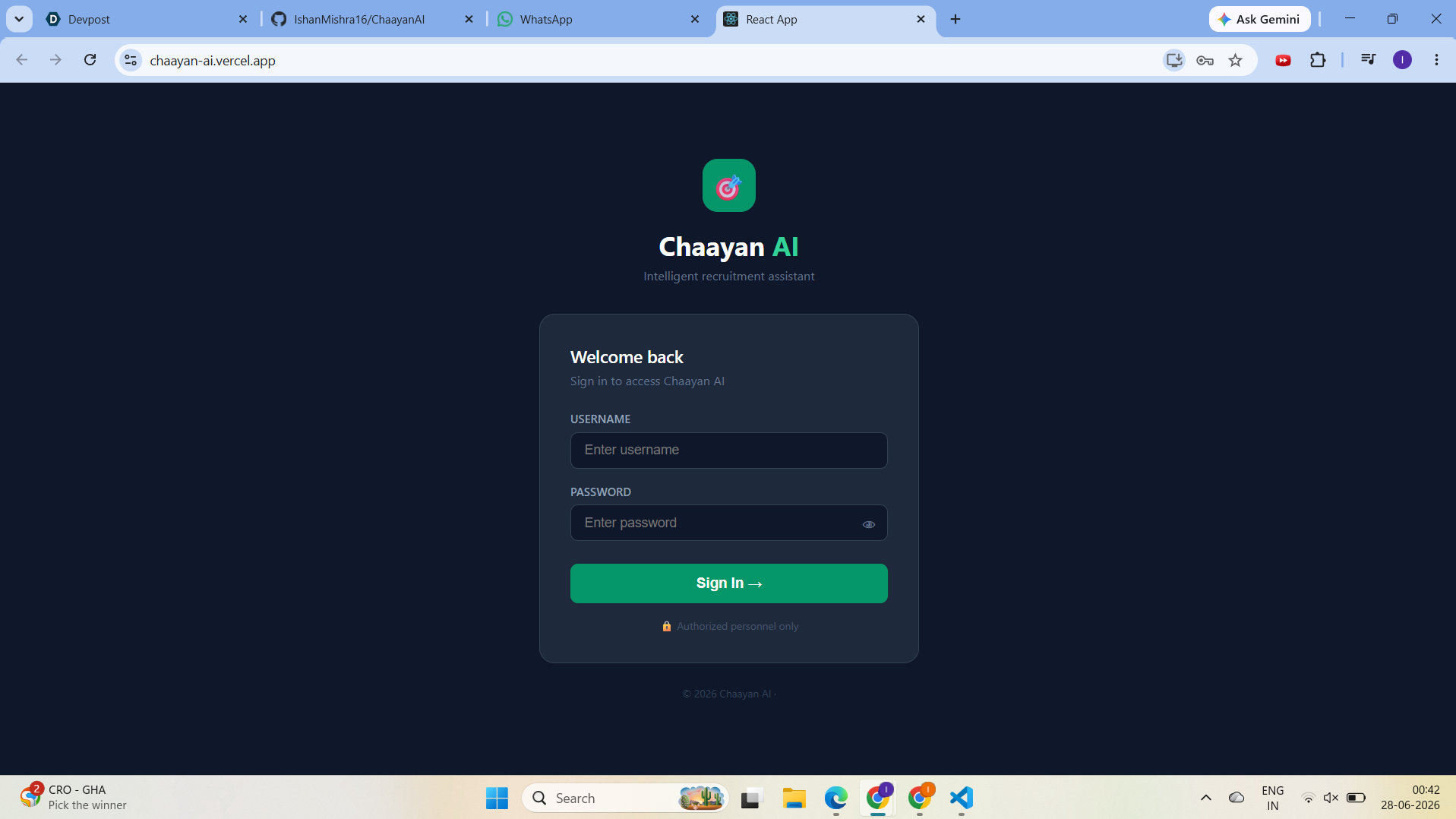
- ✅ Shipped a working product — live at chaayan-ai.vercel.app
- ✅ 250+ resumes processed in under 60 seconds — the core promise holds
- ✅ Explainable AI — not just a score, but a reason behind every ranking
- ✅ Built entirely as a first-year undergraduate with no team, no budget
- ✅ Identified and fixed a real security vulnerability (hardcoded API key) under pressure and shipped anyway
What we learned
- Security first —
.env,.gitignore, and secret scanning aren't optional; they're day one - Prompt engineering is engineering — the difference between a fragile and robust AI feature is how precisely you instruct the model
- Speed of shipping > perfection — deploying early and iterating beats waiting for perfect code
- AI augments, not replaces — HireFlow AI doesn't eliminate recruiters; it gives them their time back for what actually matters: human judgment
What's next for ChaayanAI
Phase 2 — Next 3 months
- 🔗 ATS integrations: Naukri, LinkedIn, Greenhouse
- 🤖 Azure OpenAI + AutoGen multi-agent pipelines
- 🇮🇳 Hindi language support
- 👥 Team collaboration features
Phase 3 — 6–12 months
- 📱 Mobile apps (Android & iOS)
- 💬 WhatsApp integration for SME recruiters
- 🗄️ Azure Cosmos DB candidate database
- 🌏 Pan-India rollout targeting all 63 million SMEs
The foundation is built. The scale is the next step.

Log in or sign up for Devpost to join the conversation.