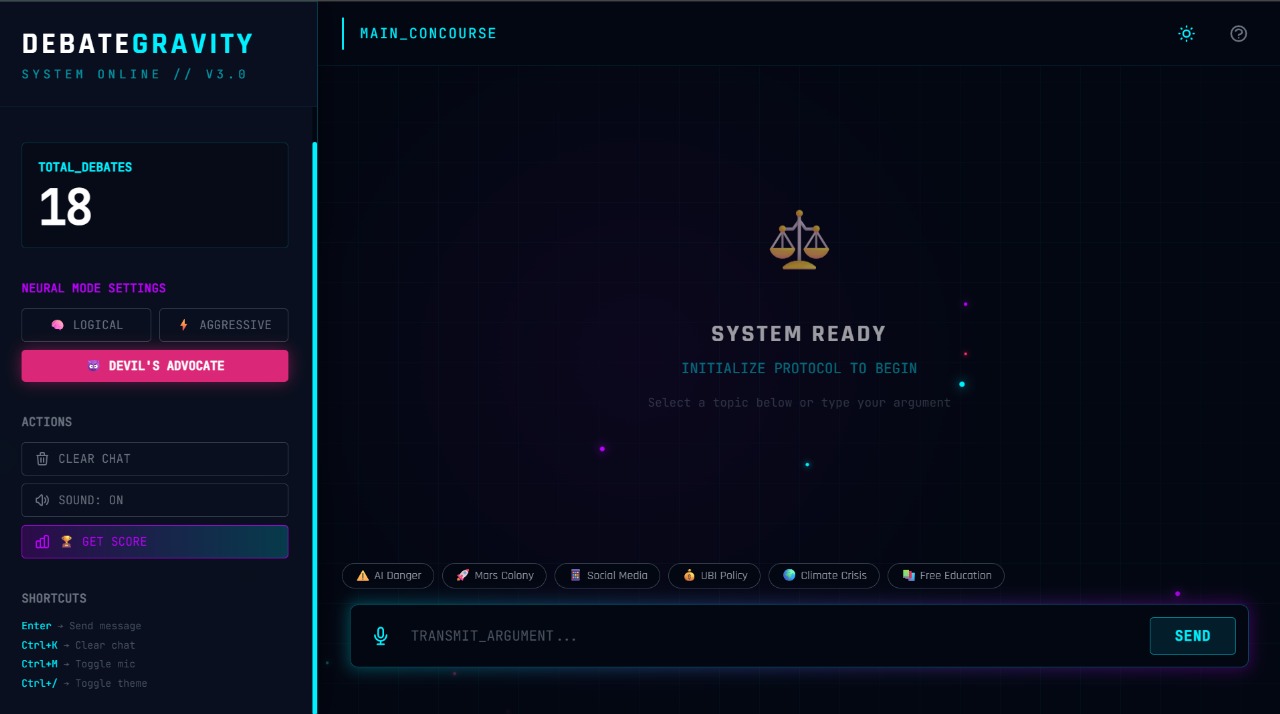
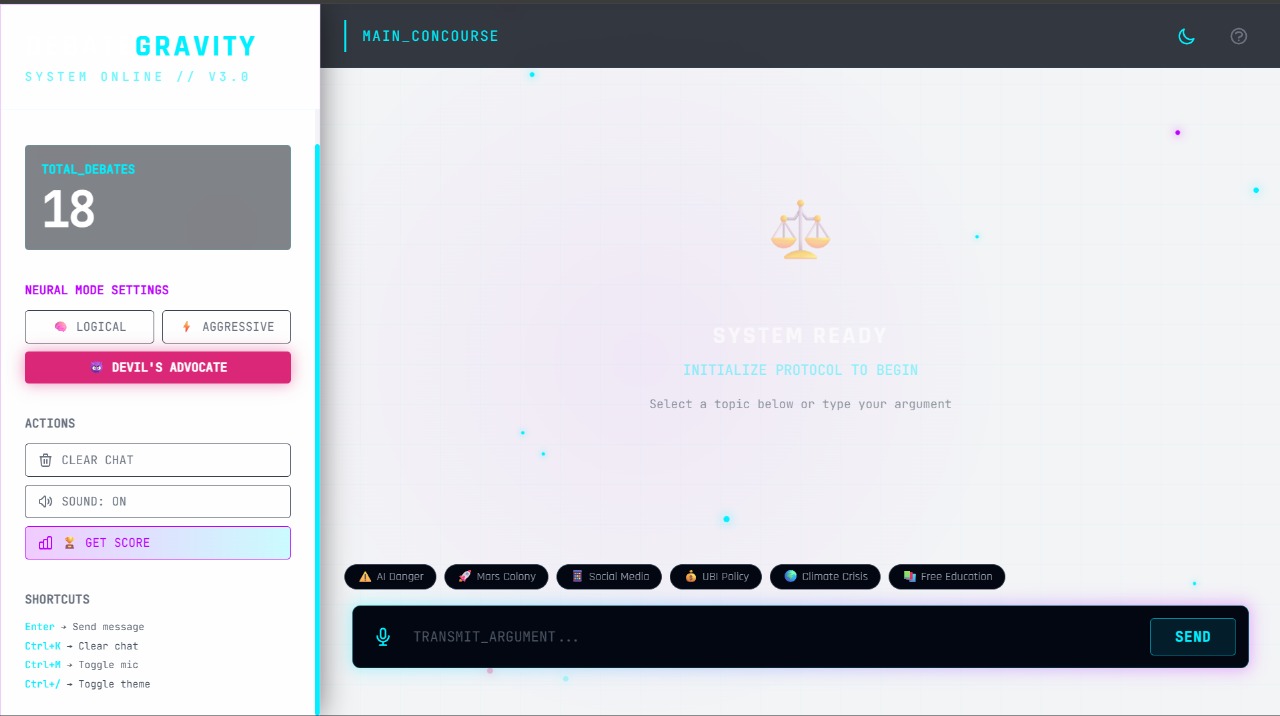
Online discussions often turn into echo chambers where people only hear opinions that reinforce what they already believe. During debates—especially on social media—I noticed that most arguments fail not because of lack of information, but because of cognitive bias and one-sided thinking.
I wanted to explore whether an AI system could act as a thinking partner rather than just an answer generator—something that actively challenges a user’s viewpoint and encourages more balanced reasoning. This idea led to Bias Breaker AI.
What it Does
Bias Breaker AI allows a user to enter a topic and their stance (for or against). Using Google Gemini, the system:
Identifies potential cognitive bias in the user’s stance
Generates a well-reasoned argument from the opposite perspective
Provides three logical counterpoints
Ends with a neutral, balanced summary to encourage critical thinking
The goal is not to “win” an argument, but to improve the quality of thinking behind it.
How I Built It
The project is built as a lightweight web backend using Flask (Python) with a single REST endpoint. I integrated the Google Gemini 1.5 Flash API to handle reasoning and content generation.
High-level architecture:
Flask API for request handling
Google Gemini API for debate reasoning
Environment-based API key management for security
The prompt design was carefully structured to guide Gemini into performing analysis → opposition → synthesis, rather than producing a generic response.
Challenges I Faced
One of the main challenges was correctly integrating the Gemini API under time constraints, including managing environment variables securely and handling API errors gracefully.
Another challenge was prompt engineering—ensuring the model didn’t just argue emotionally, but responded with structured, logical counterpoints. Iterating on the prompt was key to achieving consistent, high-quality outputs.
What I Learned
Through this project, I learned:
How to effectively integrate and test the Google Gemini API in a real application
The importance of prompt structure in controlling reasoning-based AI outputs
How small, focused features can create more impact than complex systems in a hackathon setting
Most importantly, I learned that AI can be used not just to provide answers, but to improve how humans think and reason.


Log in or sign up for Devpost to join the conversation.