-
-
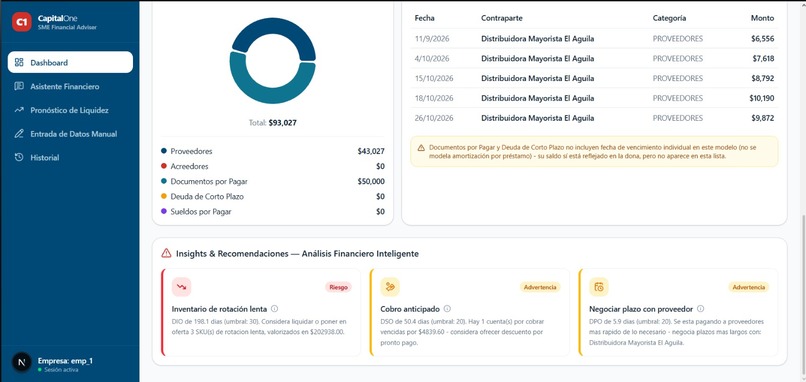
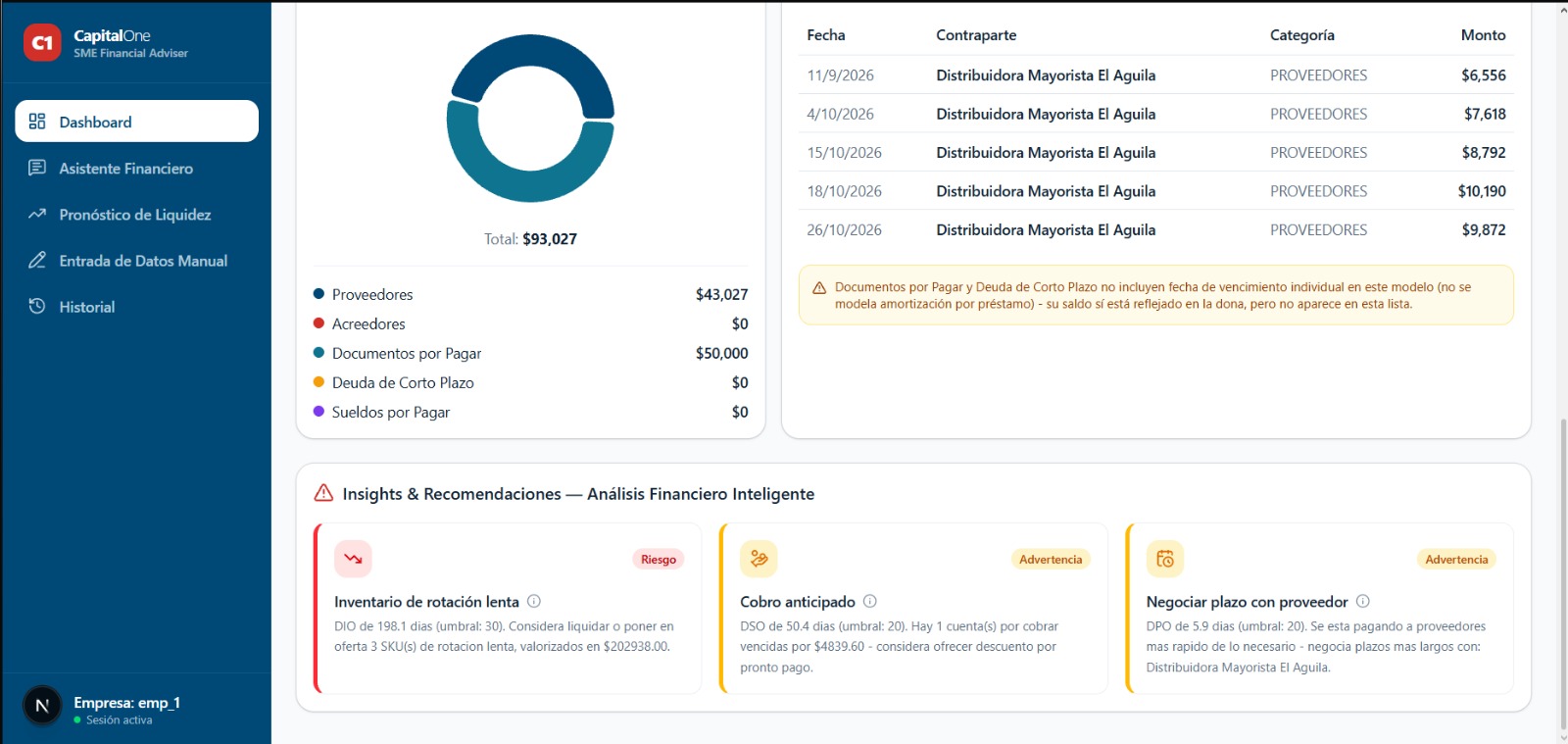
Dashboard
-
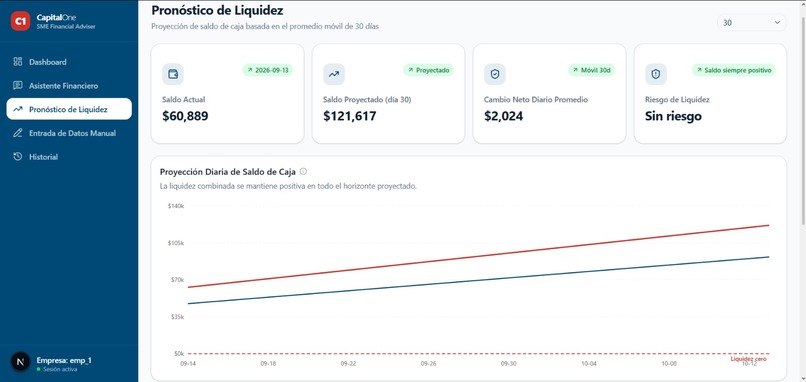
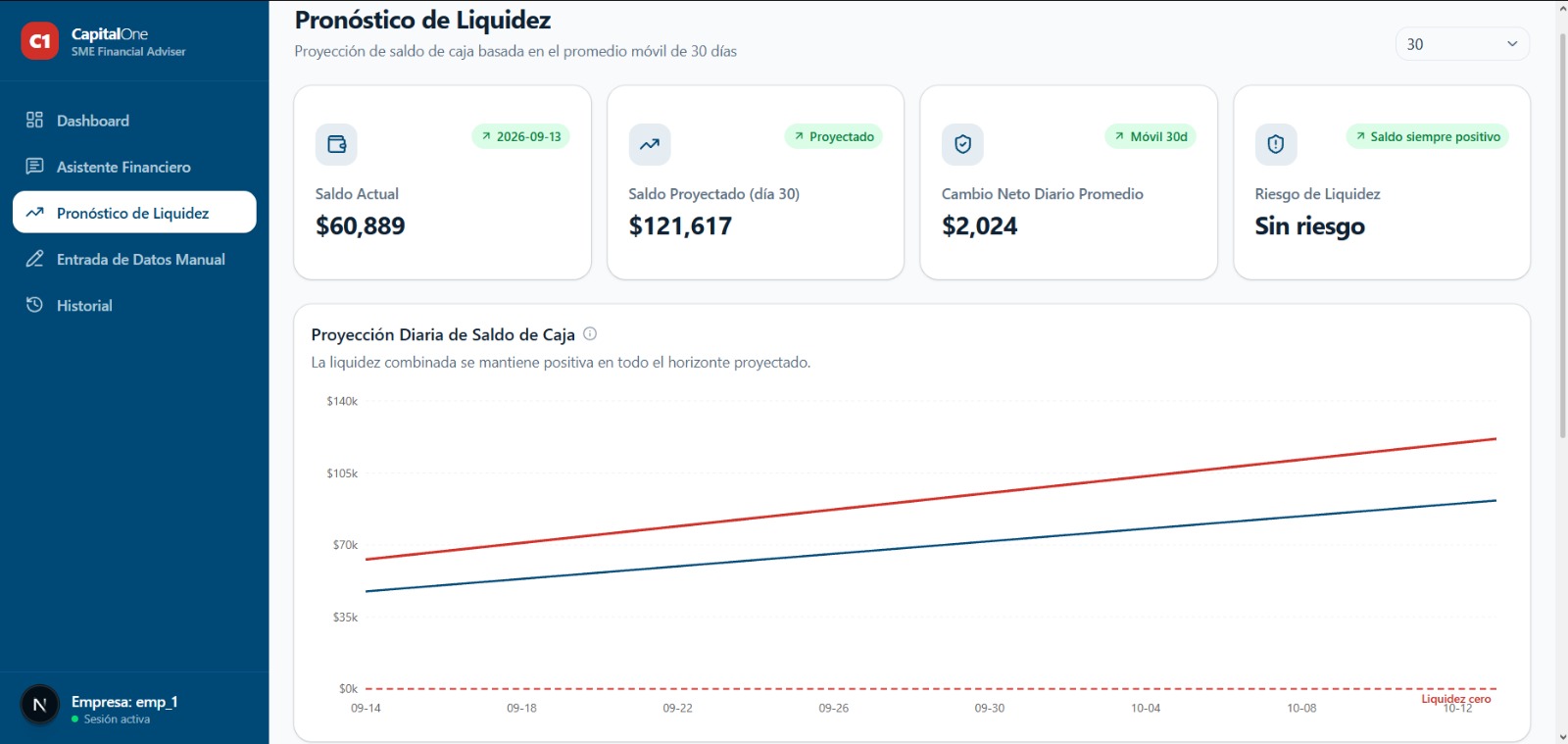
Liquidity forecast
-
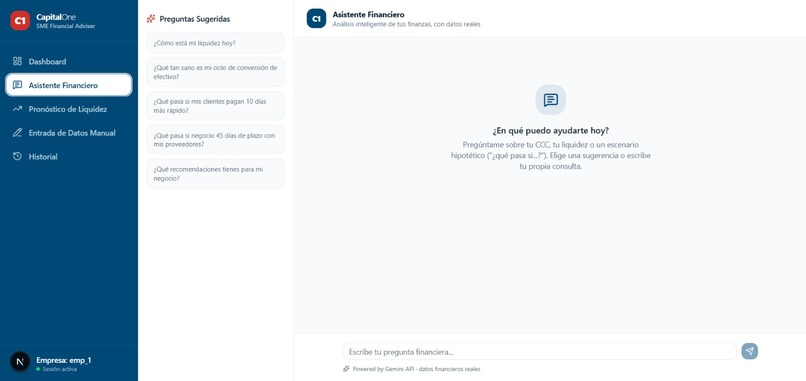
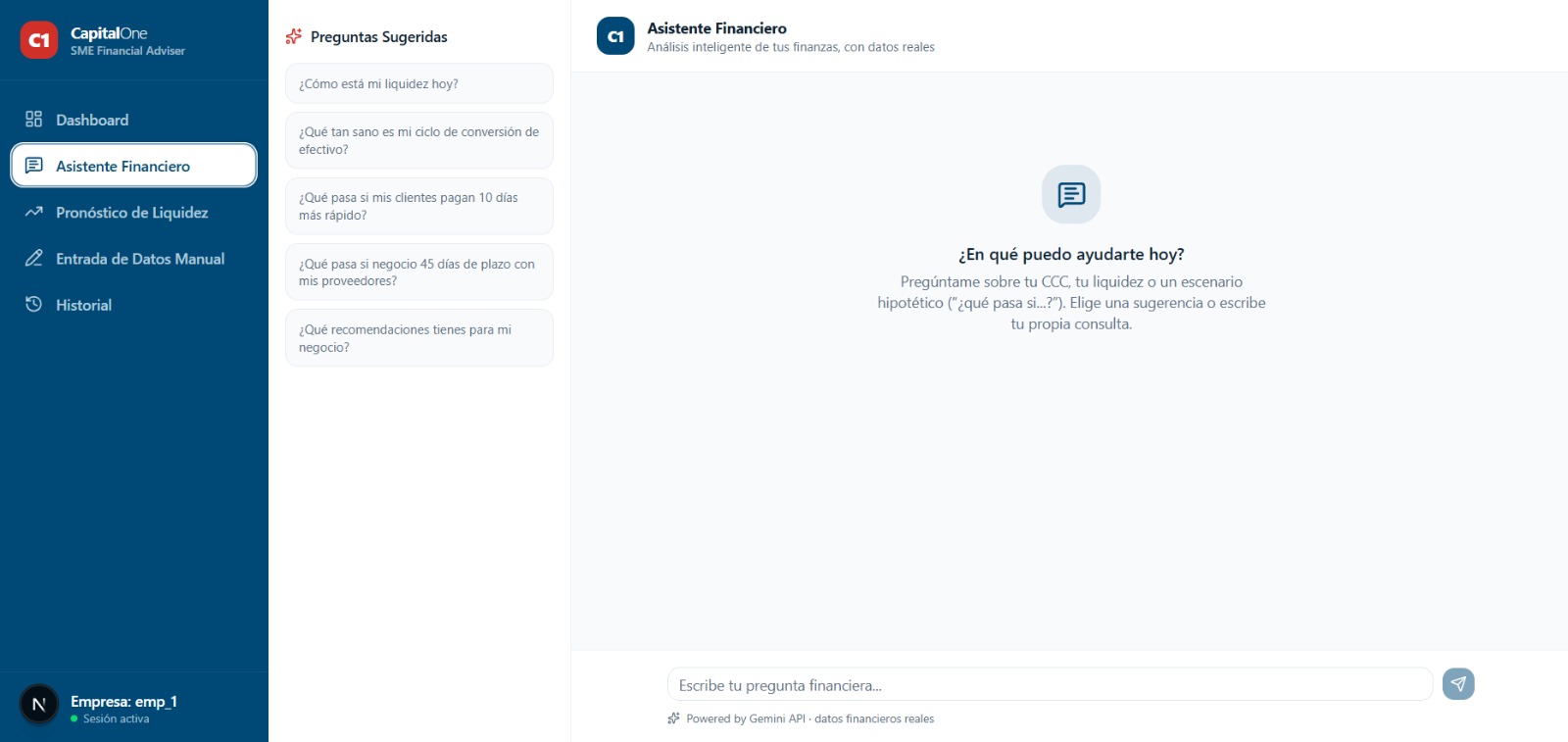
Financial Assistant Chatbot
-
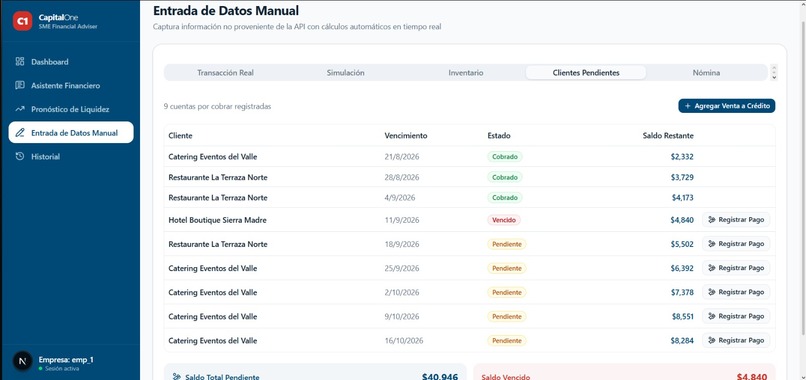
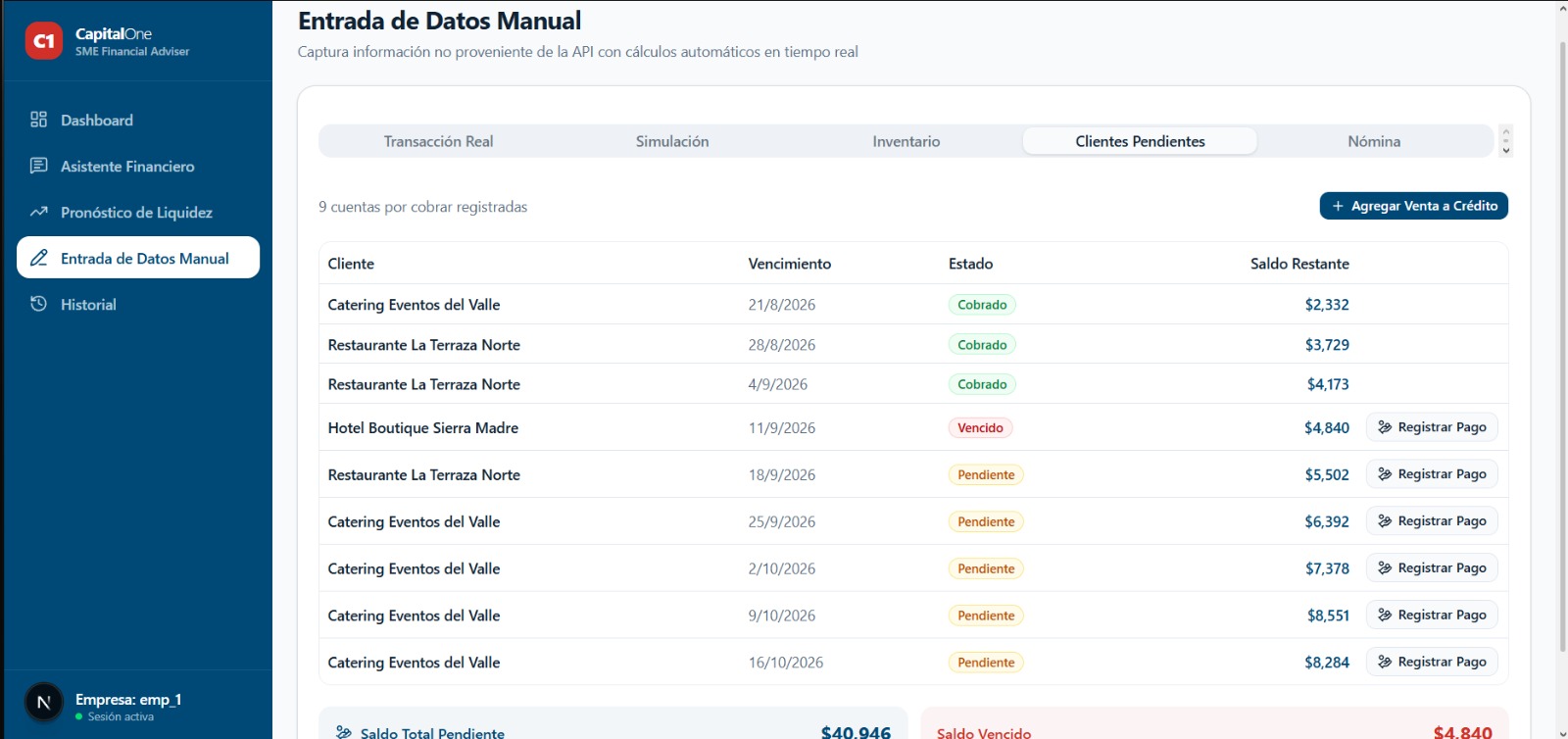
Manual data entry
-
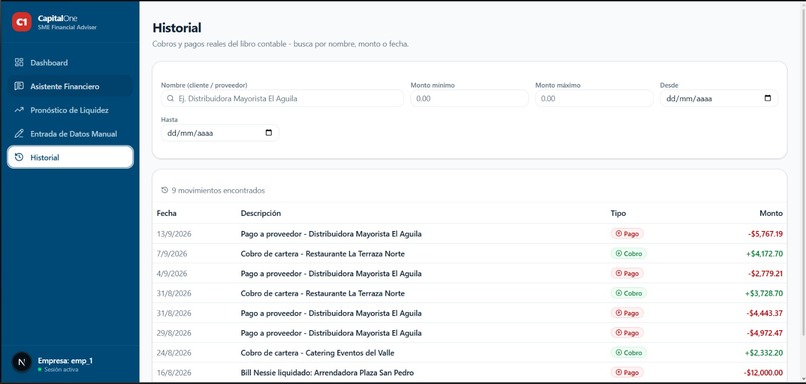
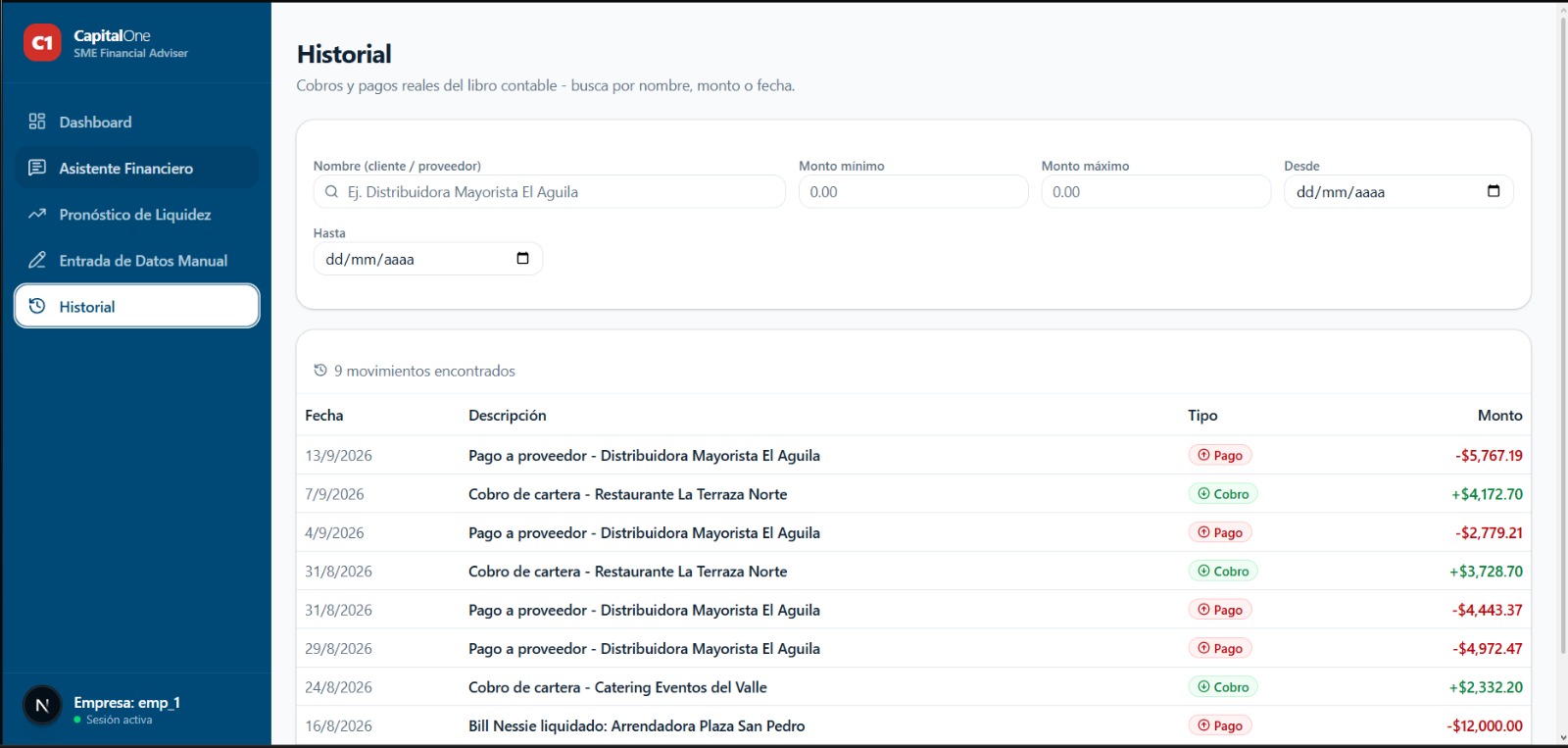
Historial
Inspiration
The Capital One challenge addresses a real and specific problem: small and medium-sized enterprises manage their treasury operations reactively and without tools—not because the technology to do so is lacking, but because enterprise-grade financial intelligence tools (such as liquidity forecasting engines, cash conversion cycle analysis, and working capital recommendations) have historically been inaccessible to businesses that lack a CFO or a dedicated treasury department.
What it does
The system is not a mere reporting calculator; it is a genuine double-entry accounting ledger fed by real data from a banking sandbox (Capital One Nessie). It runs deterministic calculation engines—never AI-generated estimates—to generate CCC figures, liquidity forecasts, and actionable recommendations, all complemented by a conversational assistant that interprets these actual results in natural language.
How we built it
The project runs on the backend and frontend using technologies such as Node, TypeScript, HTML, and CSS.
Challenges we ran into
The biggest challenges we faced primarily involved the initial planning stage and determining exactly what we wanted to develop and achieve. Once the concept was established, the real difficulty lay in the bugs that cropped up in the backend or during API usage.
Accomplishments that we're proud of
We are proud to have created a functional platform and to have added extra features that truly enhance the final product.
What we learned
Throughout the hackathon, some of the key things we learned included using Git for team collaboration, frontend development, connecting the frontend to the backend, and so on.
What's next for Capital Compass
For the future of Capital Compass, we aim to be a software solution that supports and guides companies—or even automates the finance function—thereby democratizing access to financial information for decision-making.
Built With
- css
- docker
- gitlab
- javascript
- postgresql
- prisma-orm
- timescaledb
- tsx
- typescript
- vercel


Log in or sign up for Devpost to join the conversation.