-
-
-
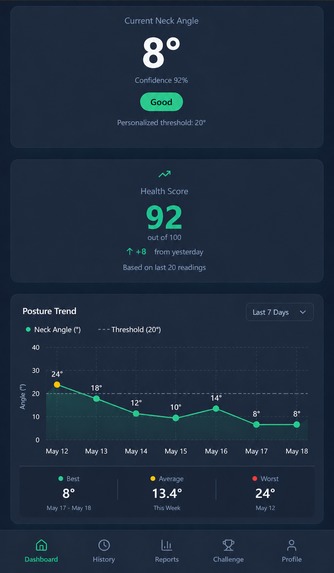
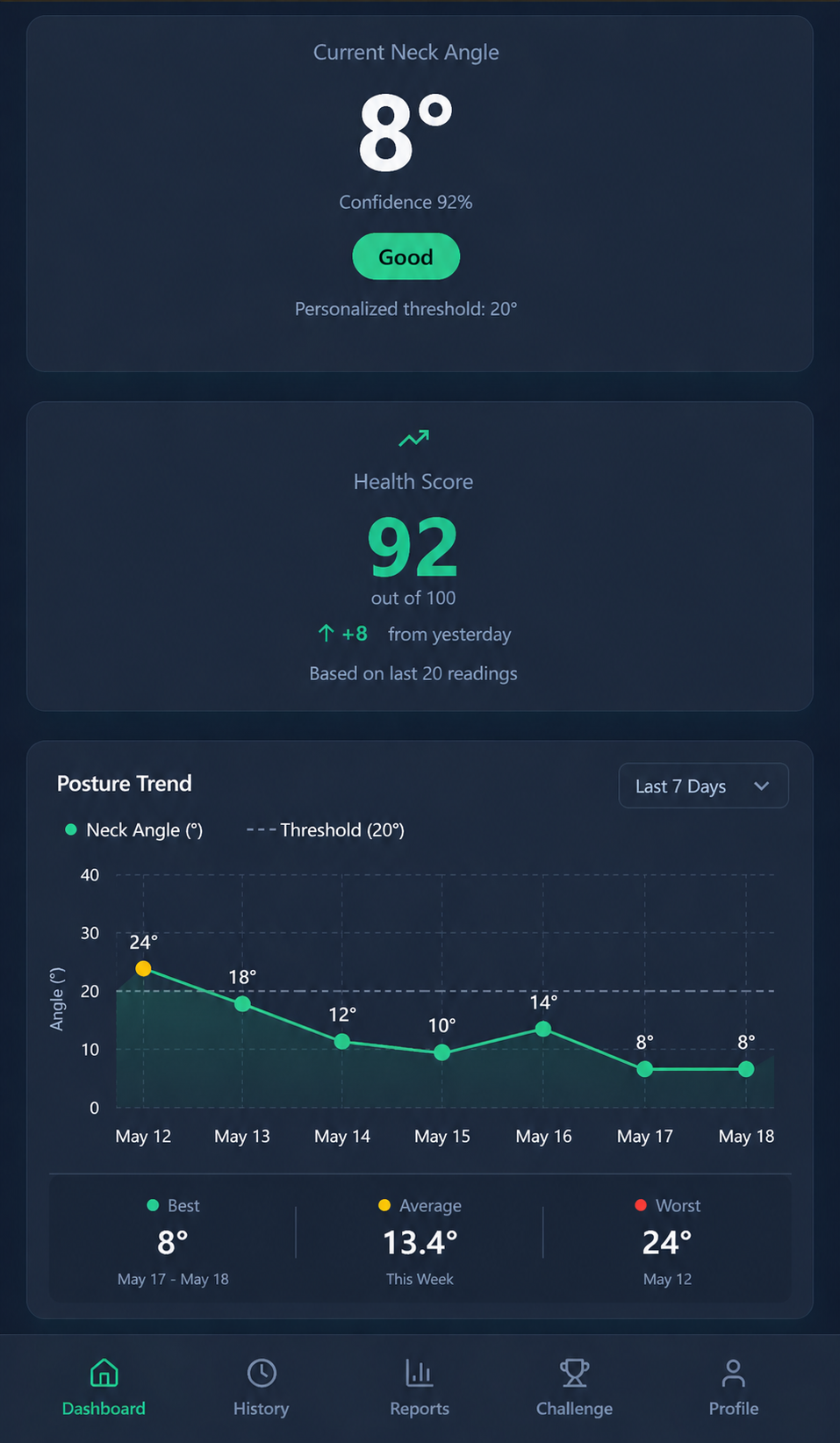
Real-time posture tracking with instant AI feedback
-
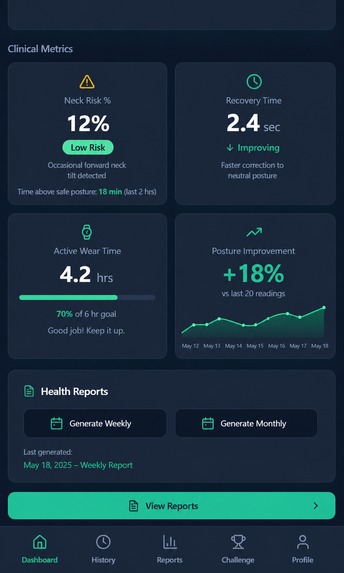
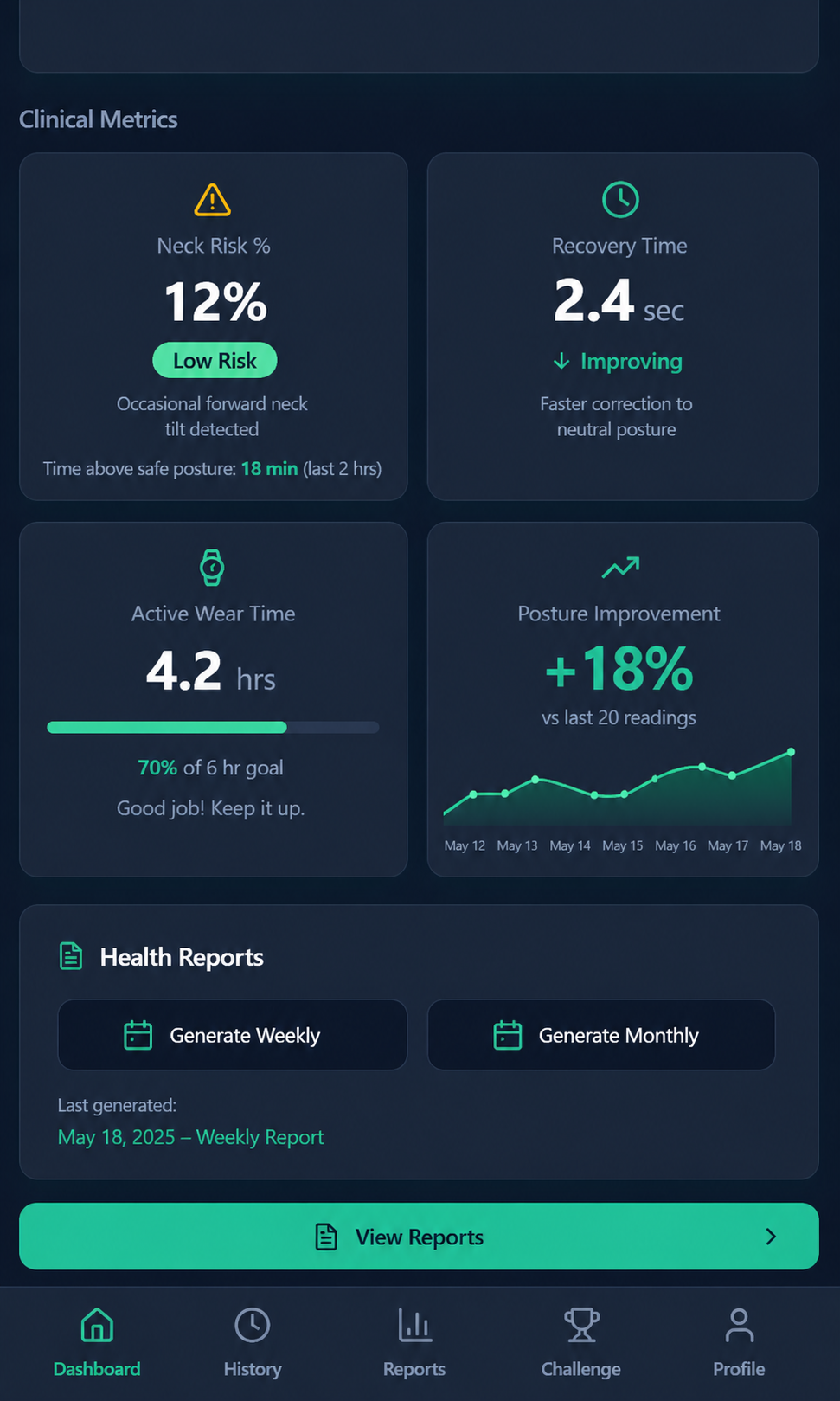
Key health metrics showing risk, recovery, and posture improvement
-
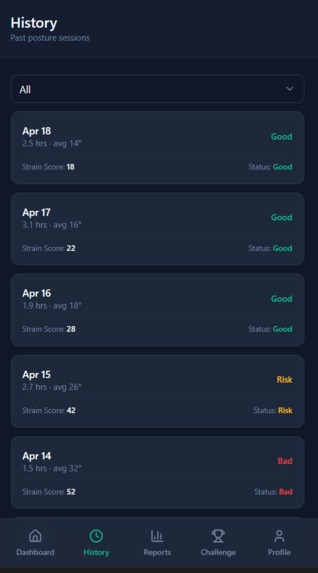
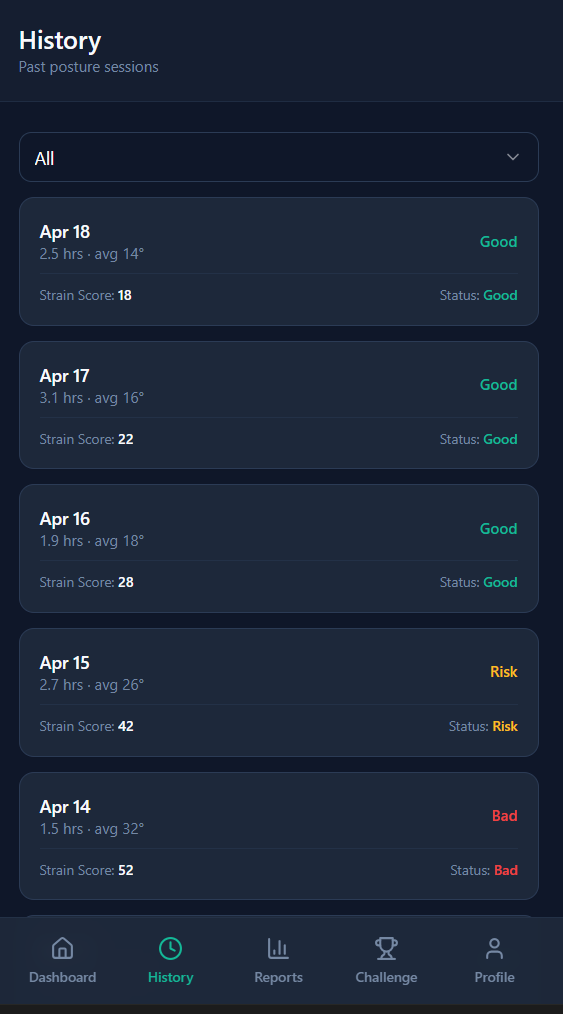
Track daily posture sessions, duration, and strain levels
-
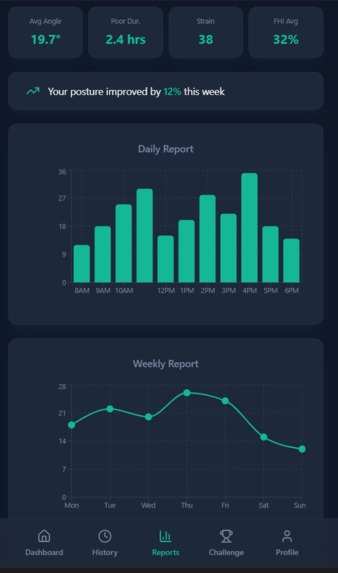
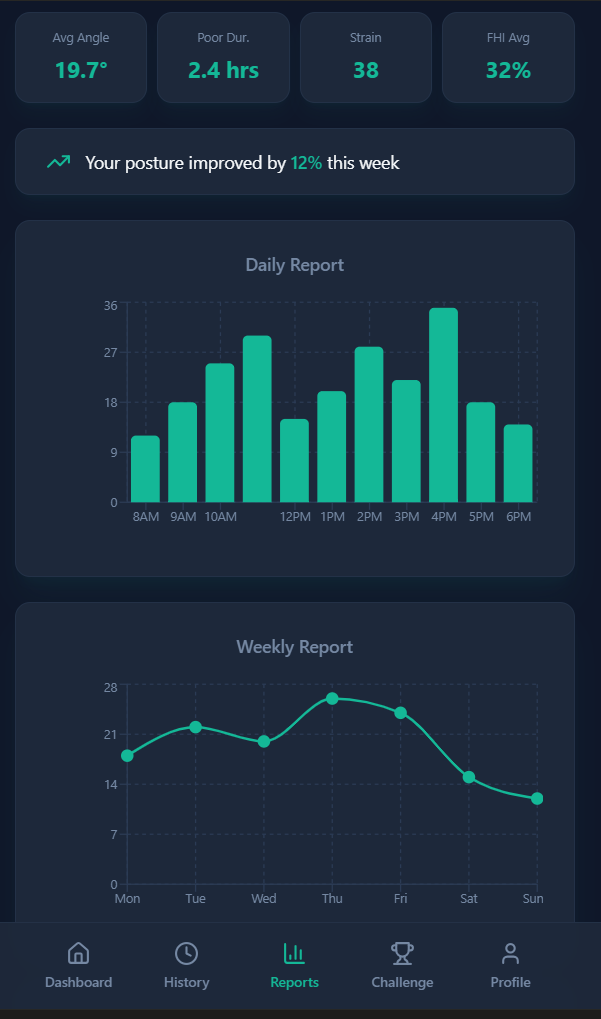
View daily and weekly reports to monitor posture trends
-
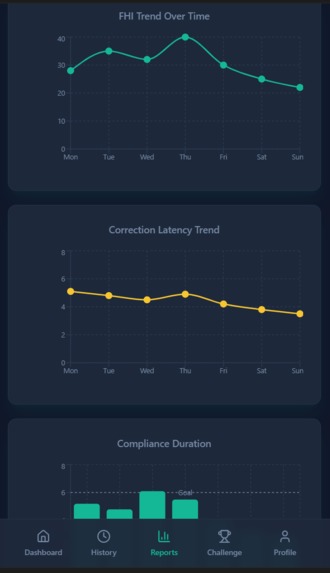
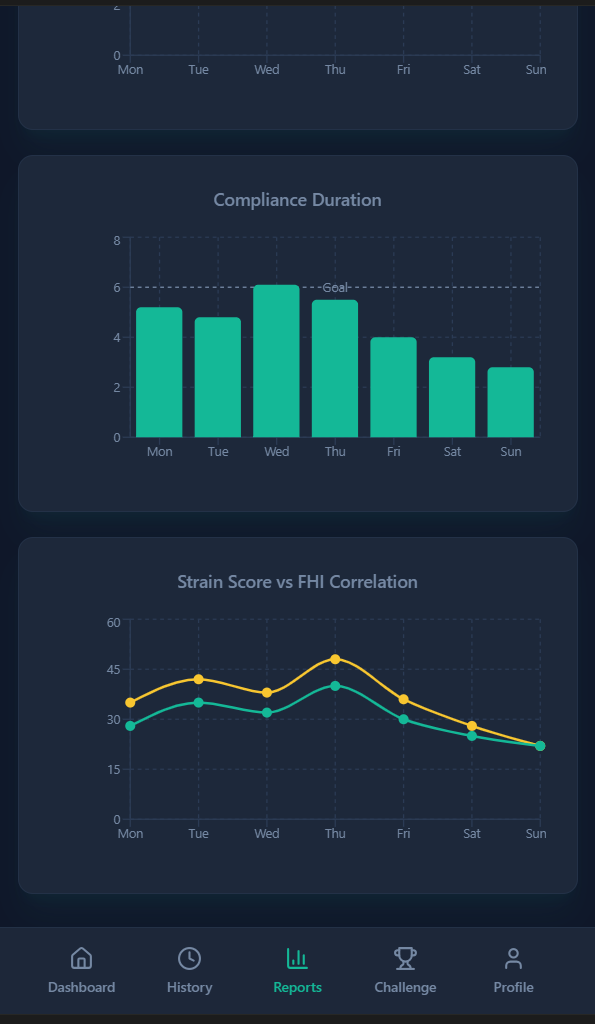
AI analyzes posture trends and performance over time
-
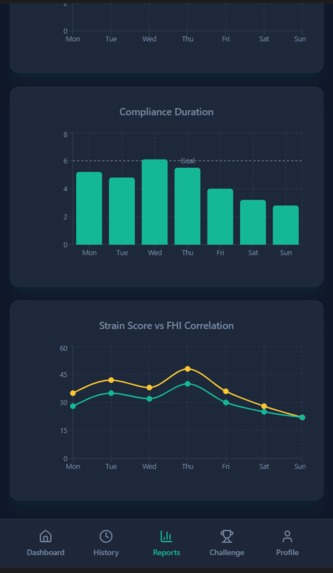
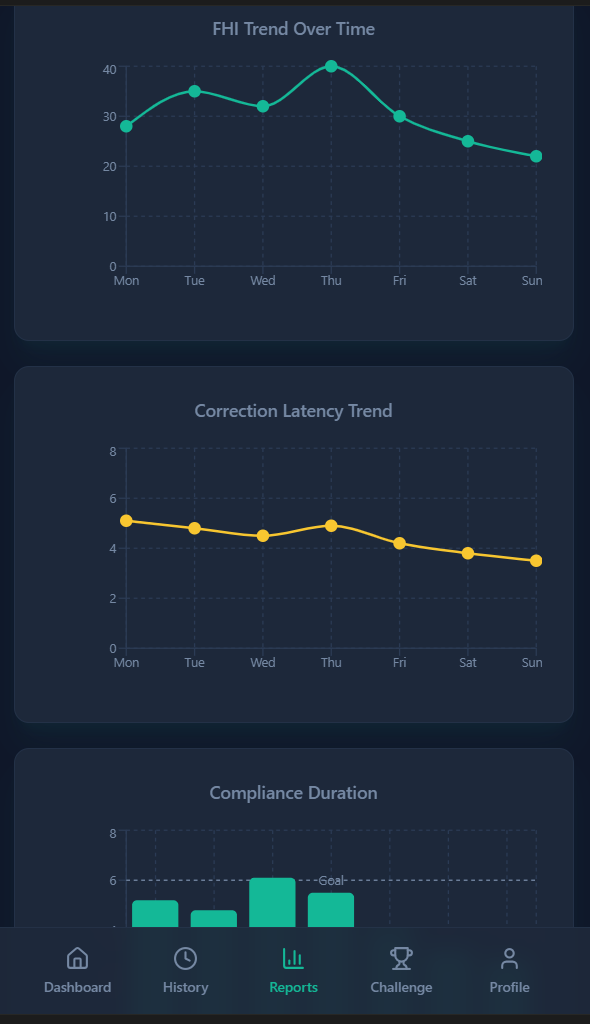
Insights on correction speed and posture behavior patterns
-
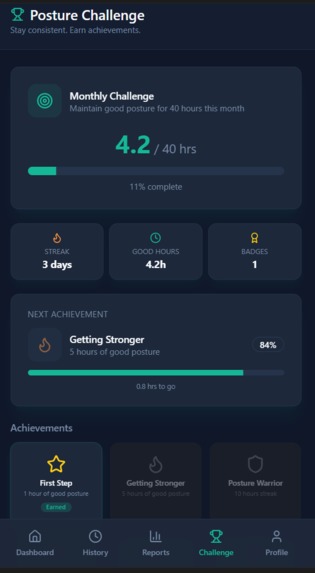
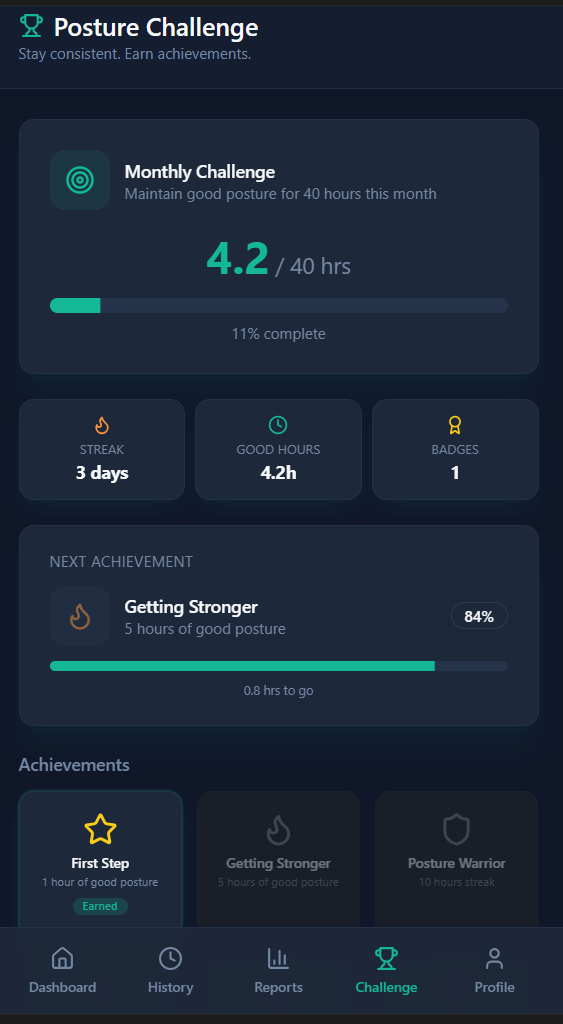
Challenges and rewards to build consistent posture habits
-
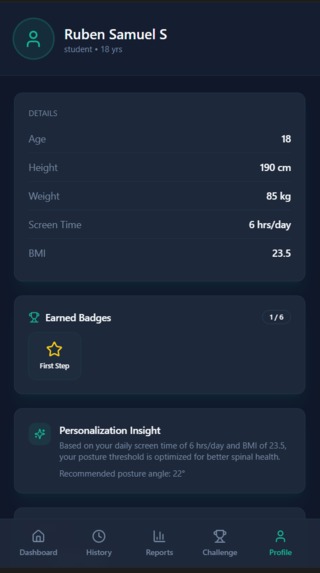
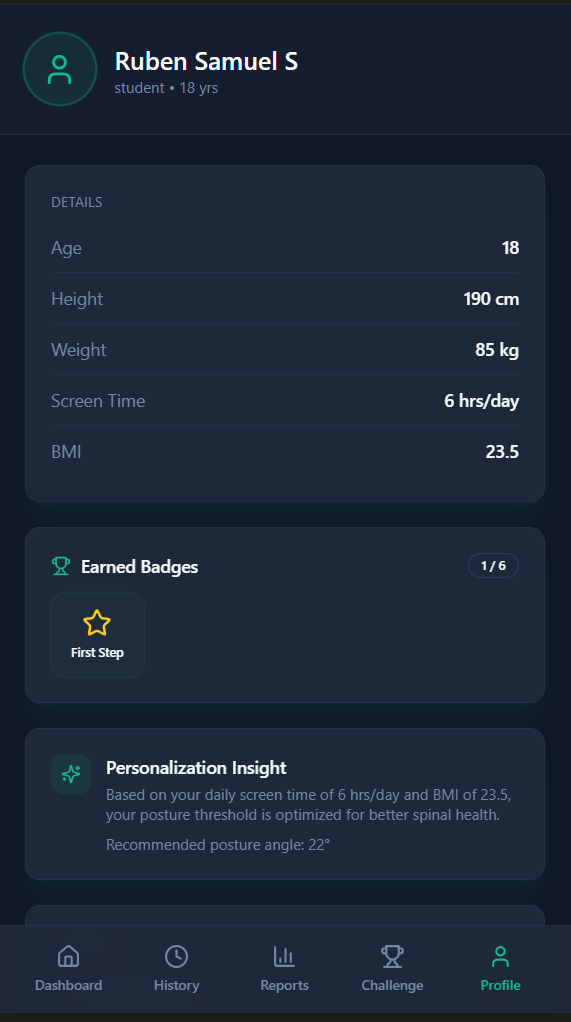
Personalized posture recommendations based on user data
Inspiration
An AI-driven wearable system that doesn’t just detect posture—it actively corrects and learns from it.
With the rise of digital lifestyles, prolonged screen usage has become unavoidable—especially among students and professionals.
We observed that many people around us frequently experienced neck pain, yet lacked awareness or tools to correct their posture in real time. What begins as a minor discomfort often evolves into long-term cervical issues affecting productivity, well-being, and quality of life.
This motivated us to build CerviSense—an AI for Good solution focused on prevention rather than cure, helping users actively maintain healthy posture and avoid chronic disorders.
What it does
CerviSense is an AI-powered smart wearable that continuously monitors cervical posture and provides real-time corrective feedback. Unlike traditional posture correctors, CerviSense combines real-time sensing, AI-driven decision-making, and active feedback in a single closed-loop system.
- Tracks neck angle, tilt, and motion using embedded sensors
- Uses machine learning to classify posture as healthy or harmful
- Delivers instant vibration feedback for immediate correction
- Generates personalized insights and posture trends
- Adapts to individual user behavior over time
Detect → Analyze → Decide → Act → Learn
Unlike passive monitoring tools, CerviSense actively intervenes in real time, promoting healthier habits and reducing long-term risk.
How we built it
CerviSense is designed as an end-to-end intelligent health system, integrating hardware, AI, and data-driven insights.
🔹 Hardware Layer
- ESP32 microcontroller
- MPU6050 IMU sensor (accelerometer + gyroscope)
- Coin vibration motor for feedback
- Compact, ergonomic wearable patch
🔹 AI & Data Intelligence
CerviSense uses a lightweight machine learning model (Random Forest / Decision Tree) to convert real-time sensor data into intelligent posture decisions.
Instead of relying on fixed thresholds, the system learns from patterns in:
- Neck angle deviation
- Motion dynamics
- Duration of poor posture
The model classifies posture as healthy or harmful in real time (<1s latency), enabling instant corrective feedback.
This allows CerviSense to adapt to individual users, reduce false alerts, and provide more accurate posture correction compared to traditional systems. This transforms CerviSense from a simple monitoring device into an adaptive, intelligent health system.
🔹 Platform Layer
- Backend (Supabase) for data storage and APIs
- Dashboard for posture analytics and trends
- Insight generation for long-term improvement
🔹 Core Logic
We model posture intelligence as:
$$ P = f(\theta, \omega, t) $$
Where posture is continuously analyzed and classified into healthy or harmful states.
if posture == "poor":
    trigger_vibration()
System Workflow
To better illustrate how CerviSense operates in real time, the system workflow is shown below:
[ Wearable Patch ]
(ESP32 + IMU)
        │
        ▼
[ Data Acquisition ] → [ Preprocessing ] → [ AI Model ] → [ Classification ] → [ Feedback ] → [ User Correction ] → [ Analytics  & Insights  ]
   (Angle, Motion)      (Filter + Features)    (Edge ML)        (Good / Poor)      (Vibration)         (Posture Fix)        (Dashboard)
                                                                                                              │
                                                                                                              ▼
                                                                                                   [ Learning Loop ]
                                                                                                   (Adaptive AI)
                                                                                                              │
                                                                                                              └────────────↺ Continuous Improvement
Challenges we ran into
Building CerviSense in real-world conditions introduced several challenges.
One of the biggest hurdles was accurate sensor calibration, as posture varies significantly between individuals. We also had to handle noisy IMU data, requiring filtering techniques to ensure reliable predictions.
Achieving low-latency real-time processing on an edge device (ESP32) required careful optimization of both the model and computation pipeline. At the same time, balancing user comfort with hardware constraints was essential for making the device practical and wearable.
Finally, ensuring battery efficiency and adaptability to diverse posture patterns required continuous iteration.
Accomplishments that we're proud of
CerviSense represents more than just a prototype—it demonstrates a shift toward preventive healthcare.
We successfully developed a functional wearable system capable of real-time posture detection and correction. By integrating AI with edge computing, we created a solution that operates efficiently without relying on external processing.
Most importantly, we built a complete pipeline—from sensing to intelligent feedback to long-term analytics, transforming an idea into a scalable and impactful system.
What we learned
This project taught us that real-world engineering goes far beyond theoretical design.
We gained hands-on experience in IMU-based motion tracking, deploying machine learning on constrained hardware, and designing systems that prioritize user comfort and usability.
Beyond technical skills, we learned the importance of building solutions that are not only innovative, but also practical, accessible, and meaningful for real users.
What's next for CerviSense
CerviSense is just the beginning of a broader vision.
We plan to enhance the system with advanced AI models and larger datasets to improve accuracy and personalization. A dedicated mobile application will provide deeper insights and a seamless user experience.
We also aim to collaborate with physiotherapists and healthcare professionals for clinical validation.
In the long term, we envision CerviSense evolving into a comprehensive posture and musculoskeletal health platform, applicable across workplaces, education, and healthcare ecosystems.
Built With
- arduino
- c/c++
- css
- esp32
- html
- javascript
- mpu6050
- numpy
- pandas
- postgresql
- python
- rest-api
- scikit-learn
- supabase
- tensorflow


Log in or sign up for Devpost to join the conversation.