Inspiration
Watching loved ones struggle with anxiety and loneliness—especially elderly family members and trauma survivors—made me realize how underutilized animal-assisted therapy is. Many people can’t access personalized, reliable matches with certified therapy animals, and virtual options were scattered at best. I wanted to build a centralized platform that makes this life-changing support accessible to everyone who needs it.
What it does
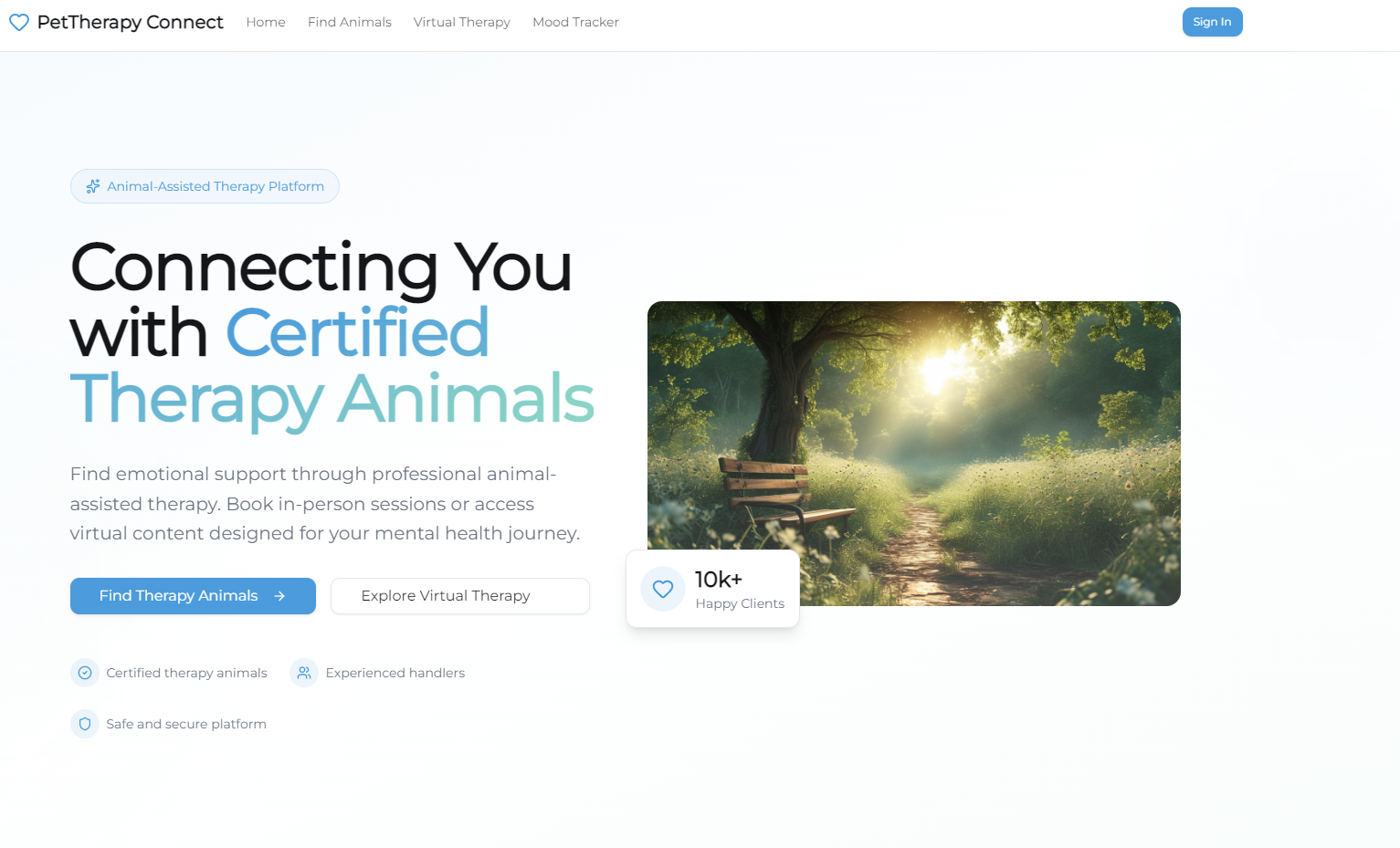
PetTherapy Connect matches users (from PTSD patients to nursing home residents) with certified therapy animals based on their unique needs—calming companions for depression, desensitized animals for anxiety, gentle breeds for elderly care. It supports in-person bookings, on-demand virtual therapy content, and secure mood tracking to measure progress over time. Handlers manage profiles and availability, while users access tailored, compassionate support.
How we built it
We started with mapping core user journeys—from registration to booking to progress tracking. The frontend was built with React for a calm, intuitive UI; the backend uses Node.js to power the intelligent matching algorithm (weighting needs, location, and animal specialization). We integrated Google Auth for login, Stripe for payments, and Twilio for automated reminders. PostgreSQL stores user/animal data securely, with AWS hosting for scalability.
Challenges we ran into
The biggest hurdle was refining the matching algorithm to balance clinical relevance (e.g., PTSD-specific animal training) with practicality (location, availability). We also faced privacy challenges—ensuring mood data was encrypted and only shared with caregivers if users consented. Mobile optimization was tough too, as many elderly users rely on phones with limited focus/energy.
Accomplishments that we're proud of
We created a platform that’s truly user-centered: the mood tracker’s visual progress charts make mental health gains tangible, and the virtual library provides 24/7 support for those unable to attend in-person sessions. We also built a handler dashboard that streamlines their workflow, reducing administrative burden so they focus on their animals and sessions.
What we learned
I learned how critical empathy is in tech—every feature (from gentle color palettes to simple booking flows) had to prioritize accessibility for users with mental health challenges. We also gained insight into the regulatory side of therapy animal certification, working with local organizations to ensure our vetting process was rigorous.
What's next for this project
We plan to expand the virtual therapy offering with live sessions, partner with more care facilities for bulk plans, and add tools for caregivers to monitor progress. We’re also exploring integrations with mental health providers to align animal therapy with broader care plans—making PetTherapy Connect a seamless part of holistic mental health support.

Log in or sign up for Devpost to join the conversation.