

The problem CertaPay solves CertaPay addresses a fundamental gap in enterprise stablecoin settlement . while blockchain rails can move value quickly, the surrounding decision making process still involves fragmented compliance checks, treasury constraints, counterparty risk assessment, approval workflows, and post-transaction auditing.
Before a payment is executed, an enterprise needs to determine whether the counterparty and wallet are acceptable, whether the proposed route satisfies internal treasury and concentration policies, whether sufficient risk evidence is available, and whether the transaction requires human authorization.
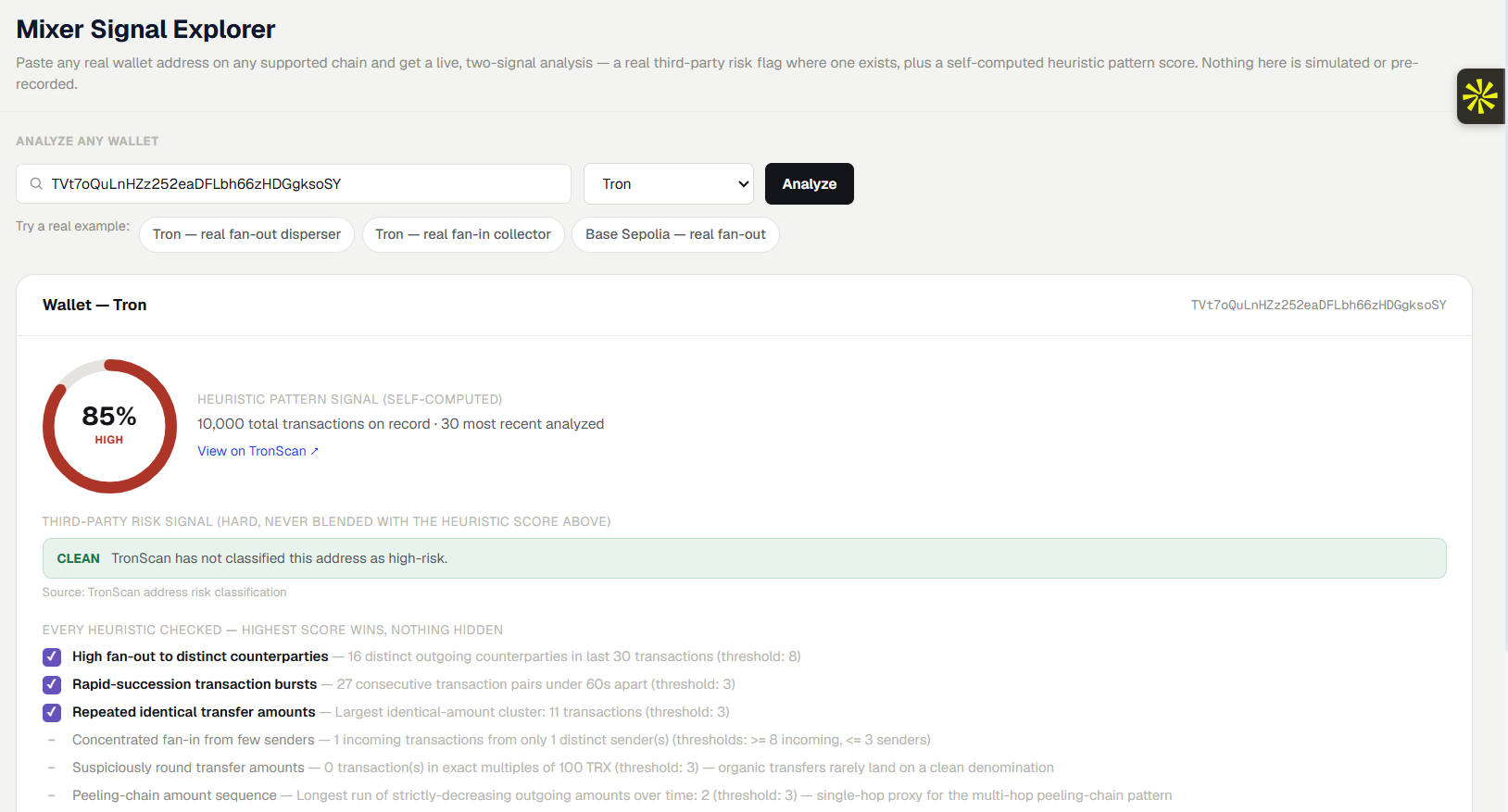
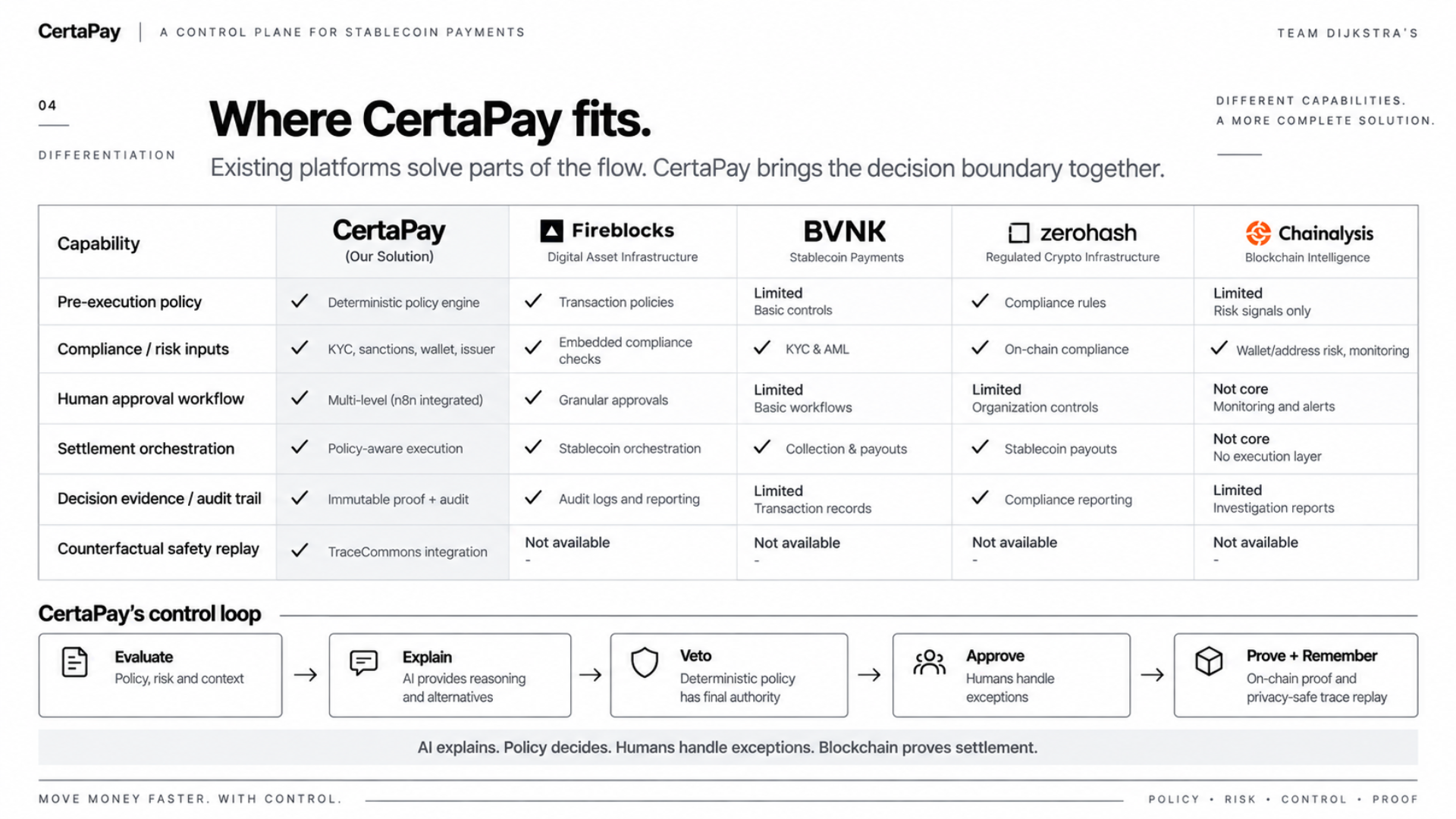
CertaPay acts as a compliance aware control plane between the initial payment intent and final settlement. It evaluates the transaction against deterministic policy rules and external risk signals, allows AI to assist with contextual risk analysis and explanation without giving it authority to override policy, and routes exceptional transactions through human approval workflows.
Once a transaction is authorized, the system maintains a traceable relationship between the original payment intent, the policies and evidence considered, the approvals obtained, and the resulting settlement.
This allows enterprises to treat stablecoin payments not simply as blockchain transactions, but as controlled financial operations that can be evaluated before execution and audited afterward.
Challenges we ran into One of the most significant challenges was designing the system so that AI could contribute meaningful reasoning without becoming an uncontrolled decision maker in a financial workflow.
We therefore separated the advisory and enforcement layers: AI can analyse available evidence, identify potential risks and explain why a particular route may be preferable, while deterministic policy rules remain authoritative for decisions such as transaction limits, concentration thresholds and approval requirements.
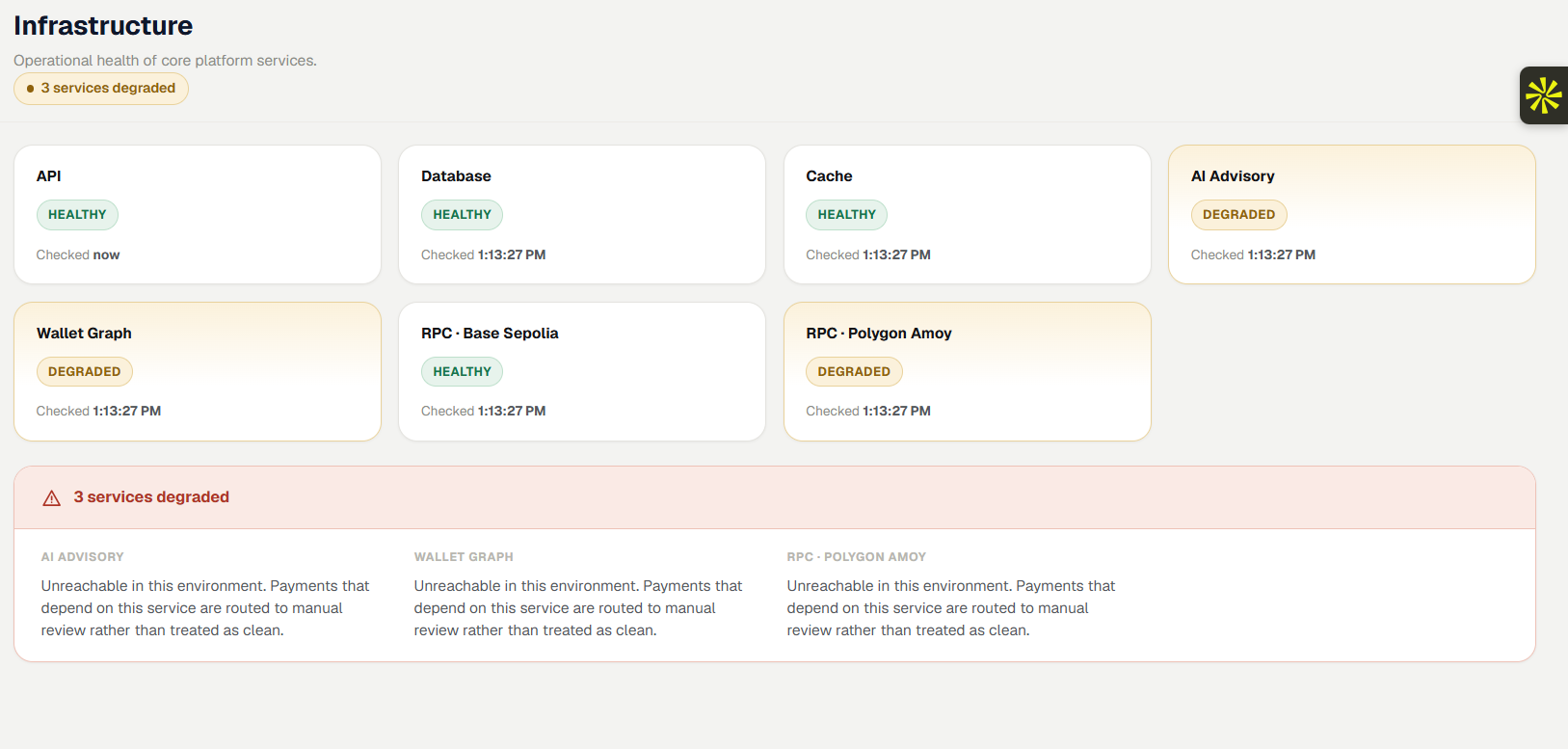
Another challenge was building realistic integrations without depending entirely on production compliance providers. We used Beeceptor to virtualize KYC, sanctions and risk provider APIs and simulate realistic responses, including latency, failures and unavailable services.
This allowed us to test an important edge case: missing or unavailable risk information must not automatically be interpreted as a low risk result, but should instead move the transaction into a controlled degraded or manual review state. We also used Render for deployment and running the application infrastructure, allowing the different services required by CertaPay to operate as a connected system rather than as isolated local components.
Beyond individual integrations, coordinating the complete lifecycle from payment intent and risk evaluation through policy enforcement, human approval, settlement and audit evidence required careful separation of responsibilities between services so that every significant decision could remain traceable and reproducible.
Built With
- alembic
- beeceptor
- etherscan
- fastapi
- n8n
- react
- solidity
- sqlalchemy
- typescript
- vite

Log in or sign up for Devpost to join the conversation.