-
-
Ceres
-
Future Plans
Inspiration
Sustainability is a hot topic among Gen Z and millennials, this is clear as day on social media platforms such as Instagram and Tiktok. However, the problem that comes with these platforms is the reliability of the data. There is such a vast amount of misinformation out there, it's difficult to find reliable sources on how to start your sustainability journey and really make a positive impact.
What it does
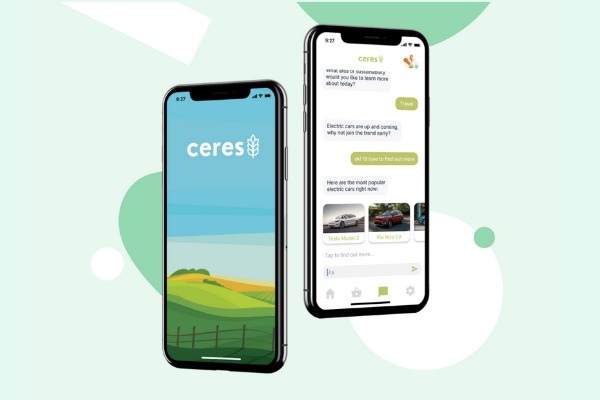
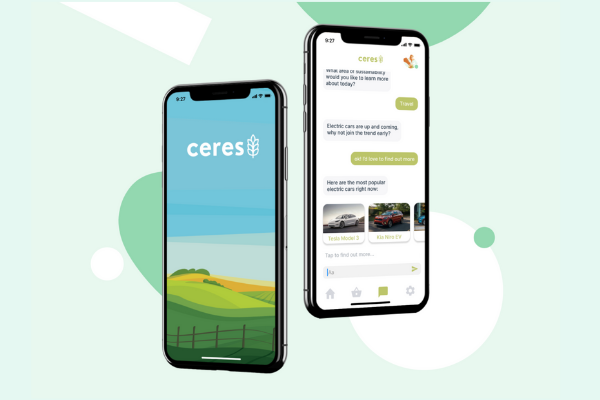
We aim to cut through the noise and provide a reliable voice to turn to. This is where Ceres comes in. Ceres is a chatbot that is designed to assess your current lifestyle and guide you to improvements that will have a real-world impact on the environment.
You might be wondering, why use a chatbot to relay this information? According to Mobile Marketer, “ 40% of millennials claim to engage with bots on a daily basis.” , This statistic is hard to ignore. Furthermore, we believe having an immersive and interactive learning experience will prove much more influential than an article or video format.
When you first meet Ceres (named after the Ancient Roman Goddess of resources), she will evaluate your lifestyle by asking you a series of questions (then give you a sustainability score) and breakdown which areas of your behaviour need the most improvement, and provides you with a tailored training guide to saving the world! We wanted Ceres to feel human and be fun to talk to so we gave her a humorous personality, she loves communicating with GIFs and isn’t afraid to tell you the truth.
How we built it
We used JS and React.js as our language and frame because react is component-based and updates in real-time. The reason for this is because we would constantly be updating the messages and what the user would be able to see which could be done daily easily with reacts states. We decided to not use a backend due to time constraints and a developer dropping out at the last minute.
We started off by researching and finding tips on sustainability. We used our research to come up with the conversation. Planning the conversation structure took up a big chunk of our time.
Once we had our conversations, we then had to get the messages displaying and working correctly which took up a bit of time as we had different types of messages such as gifs and inputs.
We lastly did the styling and layout which was fairly easy.
Challenges we ran into
We faced a few challenges along the way. One of the biggest we faced was losing a team member at the end of the first day which meant we were a developer down and had to rethink what was manageable for our team within the time constraint. This however proved to be a great learning moment about time management and not biting off more than we could chew.
Since a Chatbot communicates openly with the user there was a lot of ground to cover with regards to possible inputs and conversations. We spent a long time covering many different topics for the chatbot to consider as well as the vast research necessary to provide sustainable tips and tricks.
Accomplishments that we're proud of
The time constraint was something that was new to most of us. It caused us to have to plan how long certain activities such as research and the design element would take so that we wouldn’t fall behind schedule. Managing to perform well under the time constraint was something that we felt really proud about.
Rapid prototyping was a key part of this hackathon and what helped us be able to work efficiently. Having a goal and idea to work towards motivated and inspired our group to complete this to the best quality possible. We ended up with a project that embodied our group and sent a key message we thought was crucial for everyone to know.
What we learned
This project proved so valuable to us, we all learned something new. For some members, that was getting to grips with an entirely new framework such React.js in the space of 48 hours. None of the team members had previous experience with chatbots so it was new territory for all of us. From learning about natural language and creating conversations to programming a chatbot, we all will walk away from this with a brand new set of skills.
Since our app depends on providing tips for living sustainably, we were required to do research on finding these. We all scoured the internet for the latest eco-friendly hacks and are excited to apply these to our own lives.
What's next for Ceres
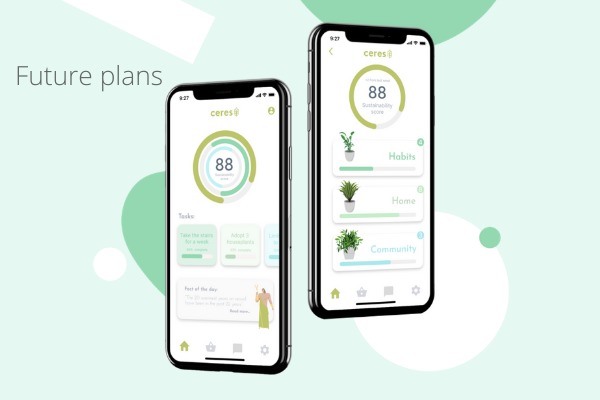
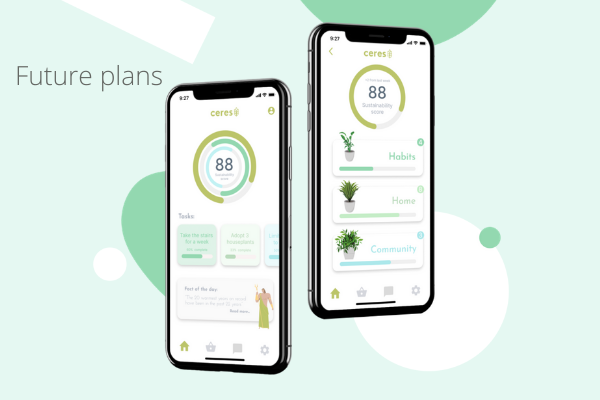
Stretch goals for Ceres include a personalised dashboard with sustainable tips, local/small business shopping suggestions and ongoing tasks as well as integration with your community so you can see where you rank for sustainability in your local area.
From a commercial standpoint, this information would be incredibly valuable to local businesses and create a surge in young people taking extra steps to preserve the environment.


Log in or sign up for Devpost to join the conversation.