Meet the team: Alpert - [email protected] Ammar - [email protected] Yashwanth - [email protected]
Inspiration
Nutrition labels have a lot of useful information, but they aren't always easy to understand when you're standing in a store trying to decide what to buy. We wanted to make that process simpler. CERES helps users quickly understand their products and, more importantly, see how their choices affect their whole cart.
What it does
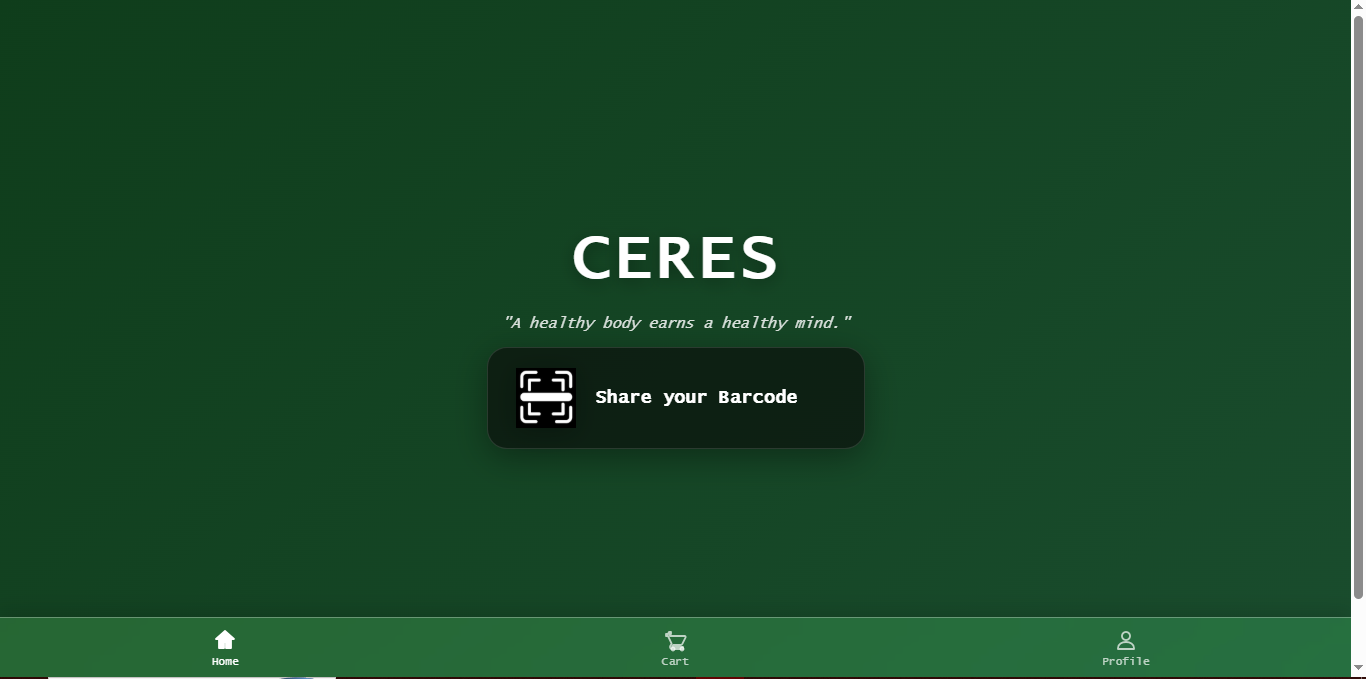
CERES scans product barcodes and gets their nutritional information from Open Food Facts. Each product is given an A–E health grade based on things like energy, sugar, saturated fat, salt, fiber, and protein.
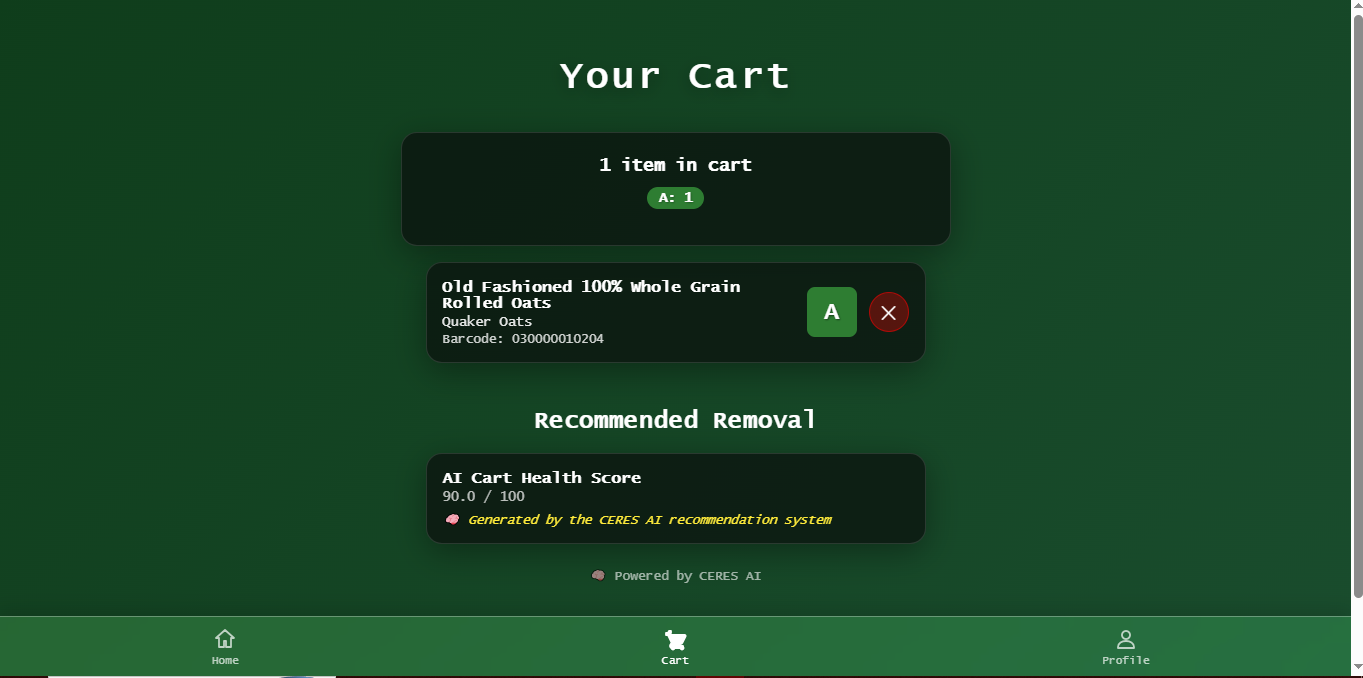
Users can add products to their cart, see an overall health score, find nutritional gaps, and get recommendations. Instead of simply suggesting the products with the best grades, our ML system looks at the current cart and predicts which choices could improve it.
How we built it
CERES has three main parts: the frontend, backend, and ML system.
The frontend is built with HTML, CSS, and JavaScript. It handles scanning, the cart, profiles, and recommendations. Our FastAPI backend connects everything together, handling product data, local caching, health scoring, cart analysis, and the API.
For recommendations, we use a Random Forest model trained using product and cart-level nutritional data. The health grade itself stays deterministic, while the ML model is used for recommendations where the context of the cart matters.
Challenges we ran into
Getting all the different parts to work together was one of our biggest challenges. We had to connect the barcode scanner, Open Food Facts, our local product database, health-scoring system, cart, and ML model.
We also ran into issues with inconsistent product data, training the model, managing dependencies, and getting the ML system to communicate properly with our FastAPI backend.
Accomplishments we're proud of
We managed to build the full process from:
Barcode → Product Data → Health Score → Cart Analysis → ML Recommendation
We're especially proud of how we combined a consistent health-scoring system with machine learning. The grade tells users how good a product is on its own, while the recommendation system considers how that product fits into their cart.
What we learned
We learned that adding ML to a real application is about much more than just training a model. We had to deal with data preparation, feature engineering, APIs, model integration, and making sure all the different parts of the project actually worked together.
What's next for CERES
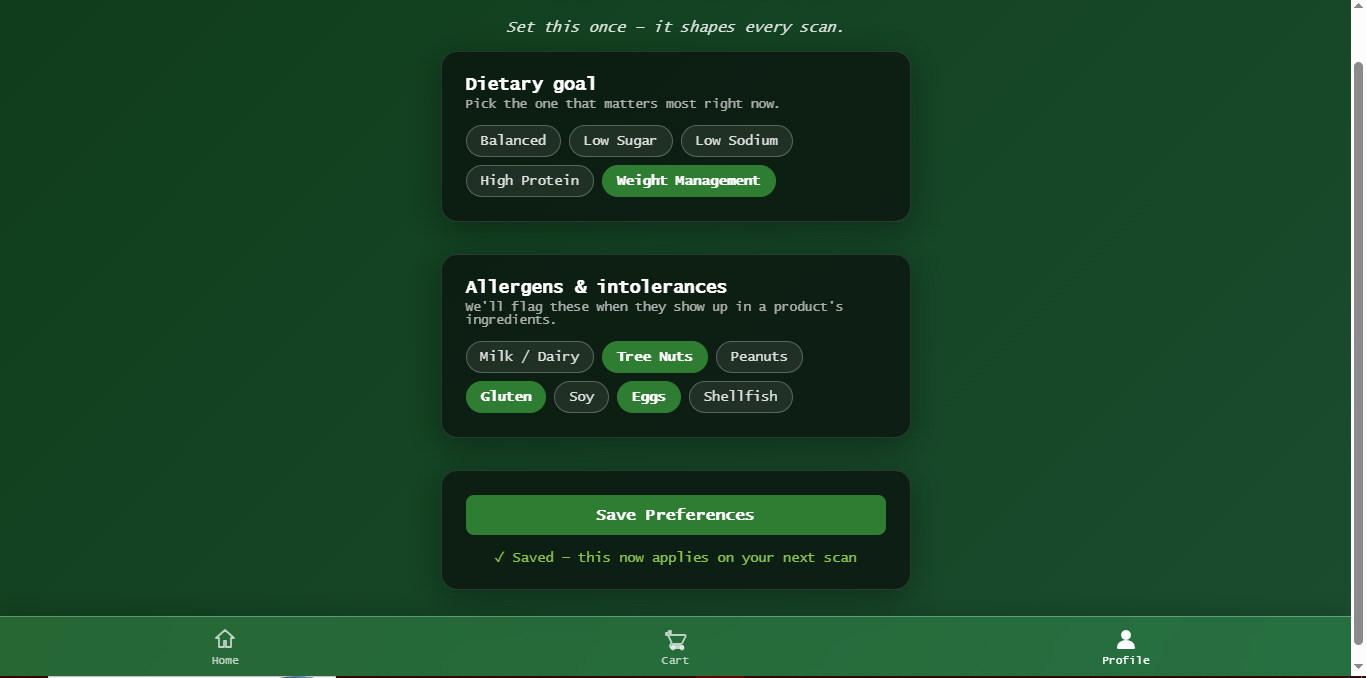
We want to make CERES more personalized by adding better user preferences, nutritional goals, and more training data. We also want to improve the recommendations so they become more useful as users continue shopping.
Our long-term goal is to make CERES a practical tool that helps people make healthier choices throughout their entire shopping trip.
Built With
- ai
- healthtech
- ml
- nutrition
- smartshopping


Log in or sign up for Devpost to join the conversation.