-
-
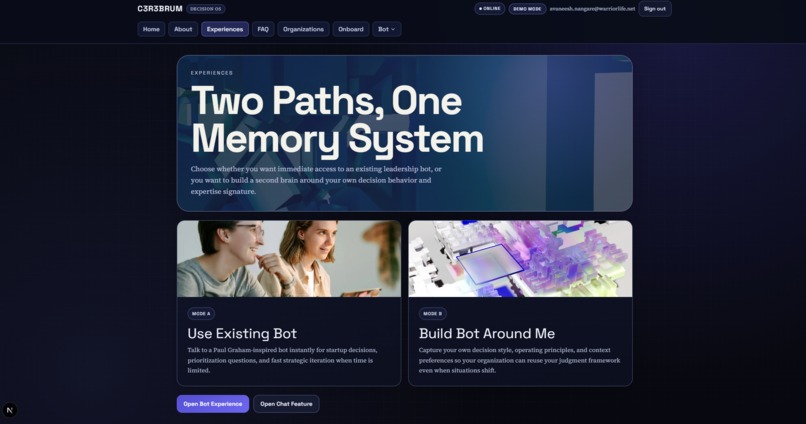
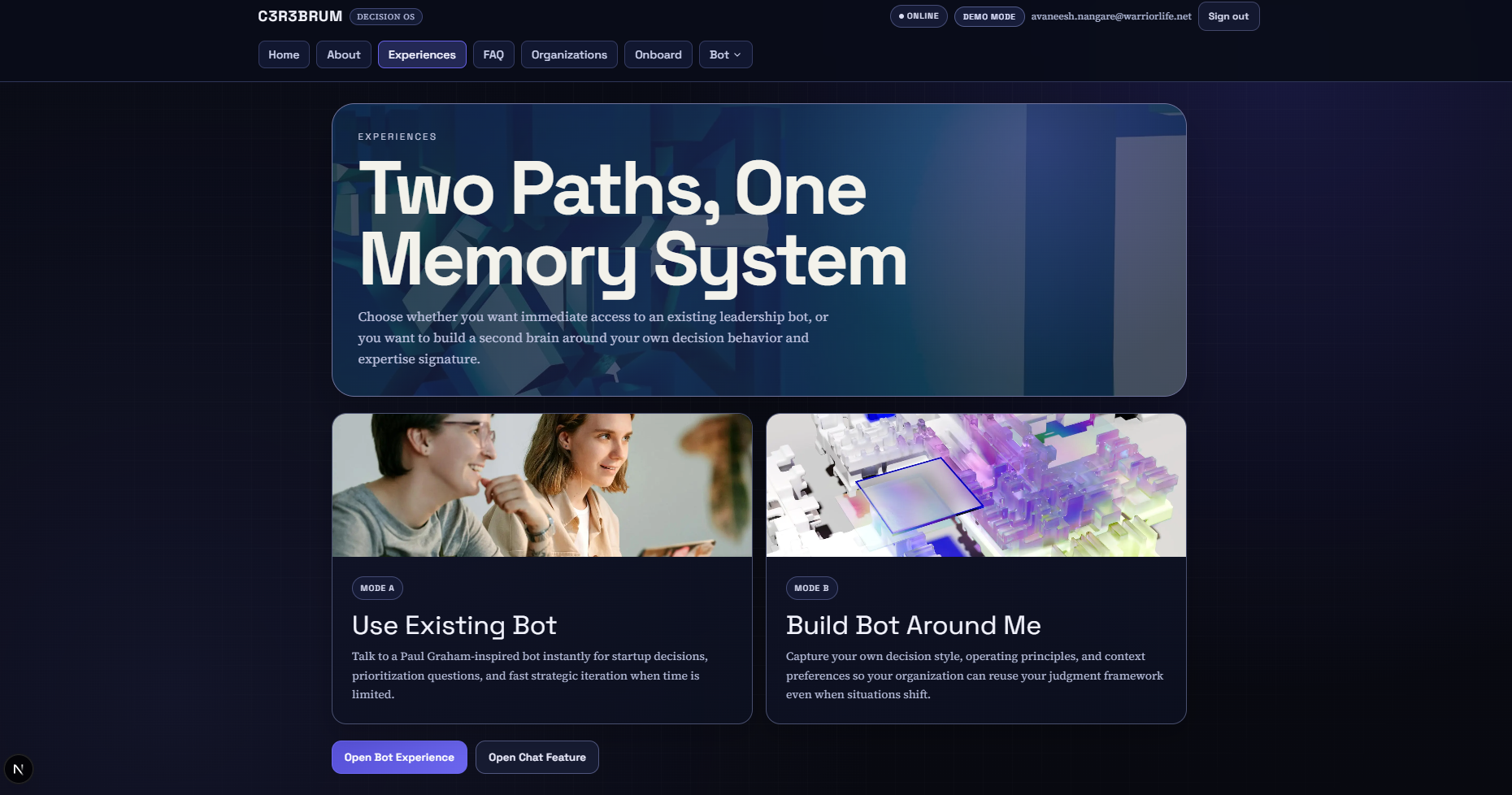
Two Path Creation
-
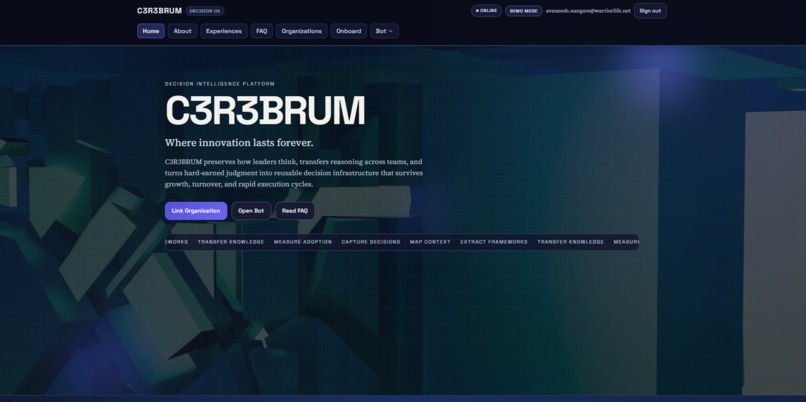
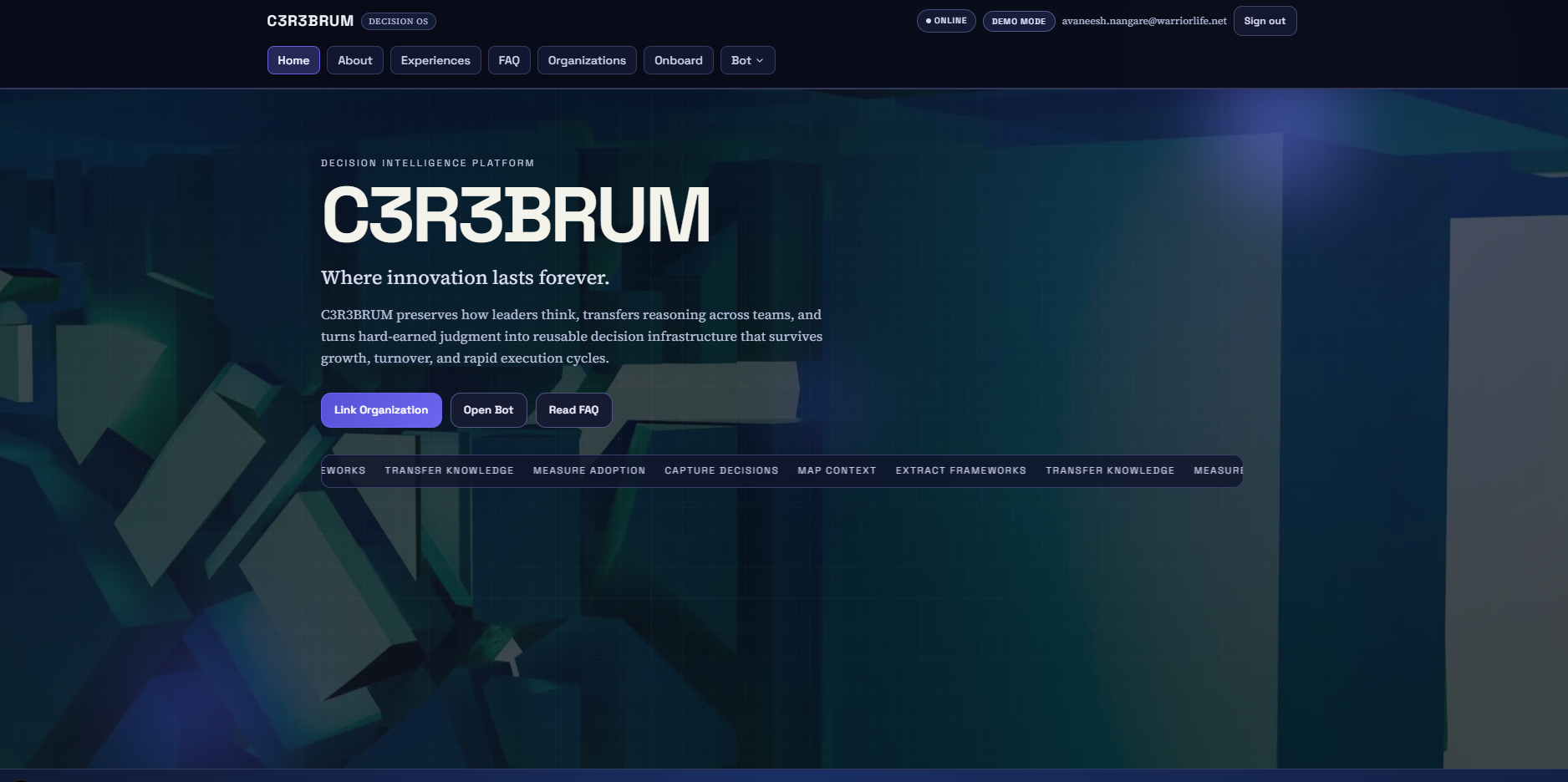
Cerebrum Homepage
-
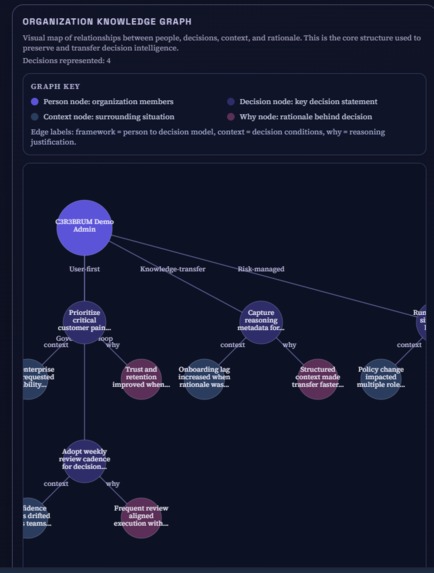
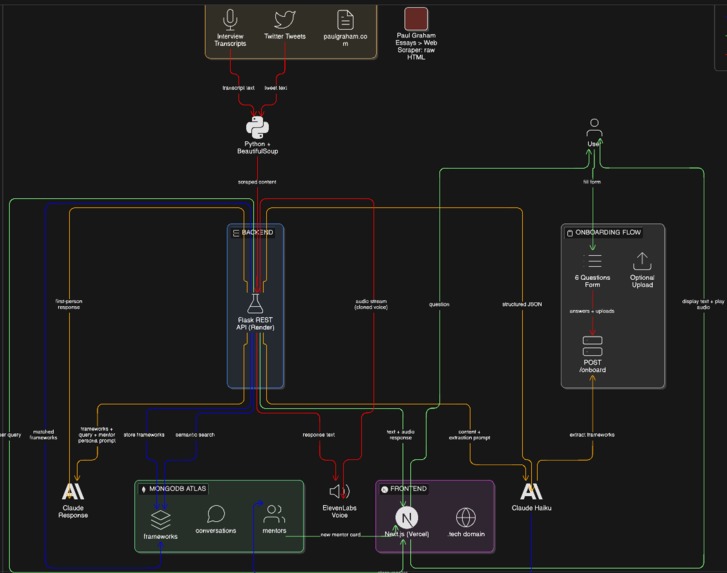
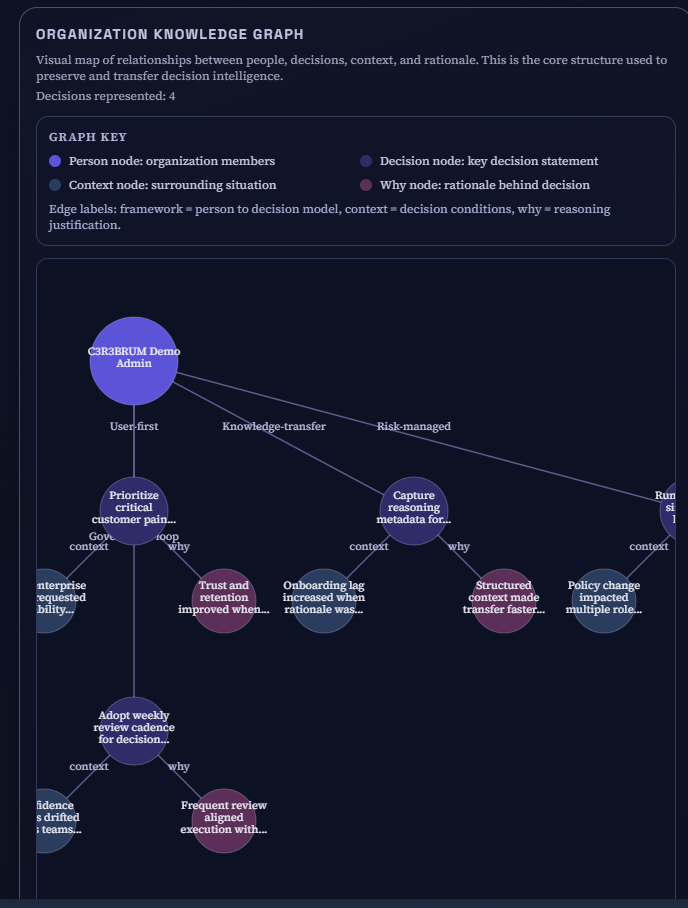
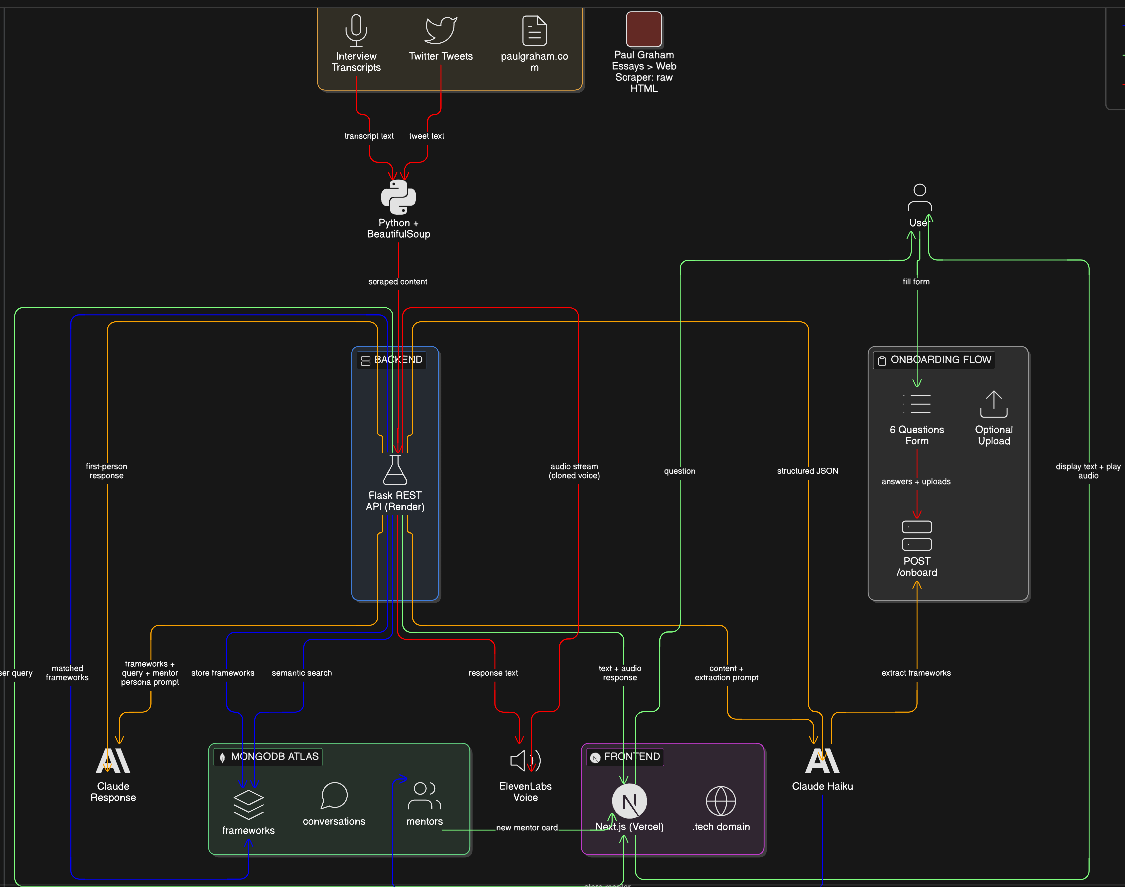
Knowledge Graph Architecture(Synthetic Data)
-
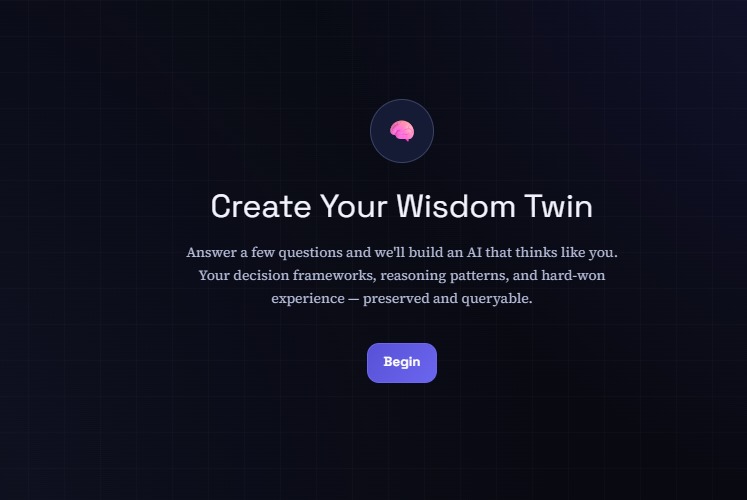
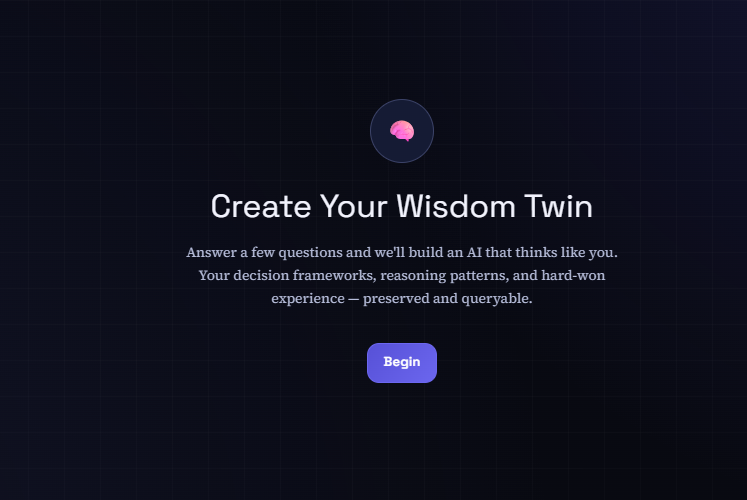
Create a Wisdom Tour
-
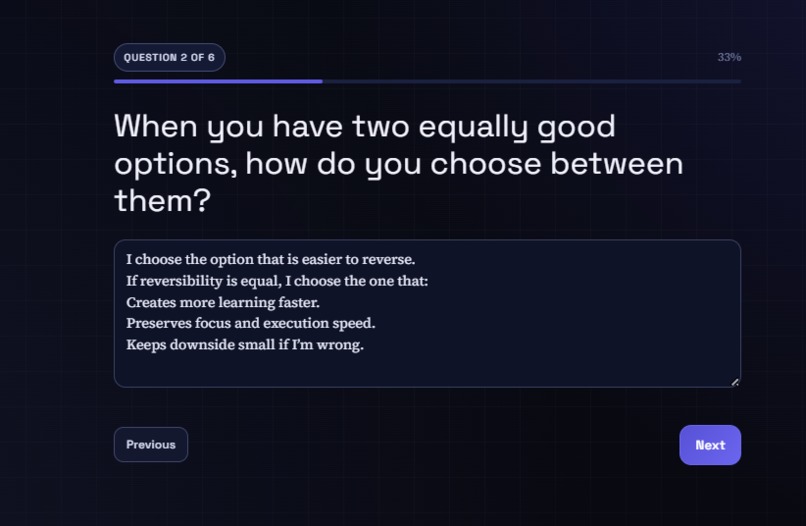
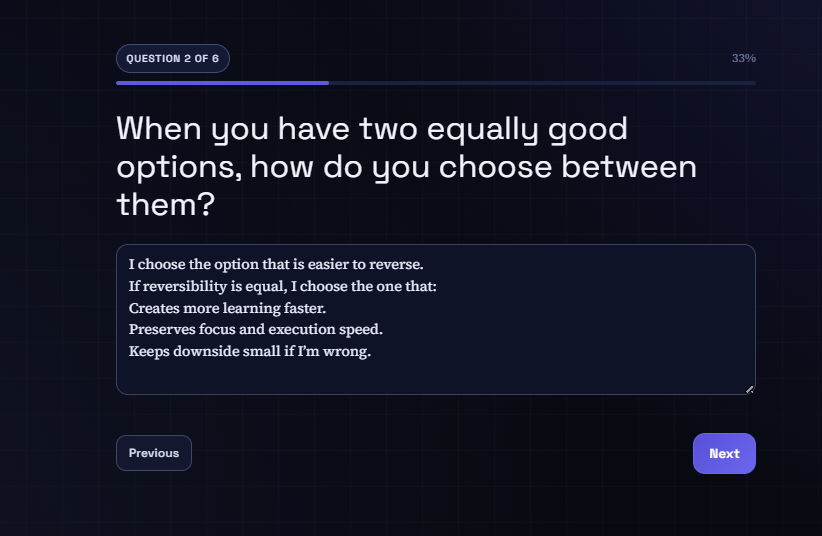
Sample question from WT Questionnaire
-
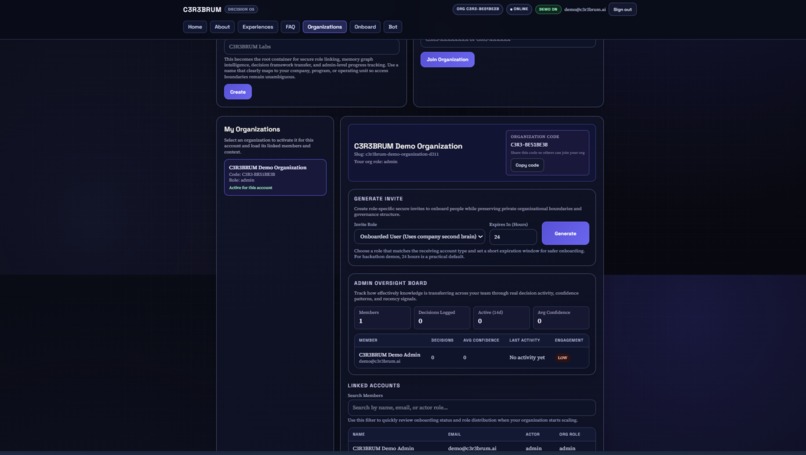
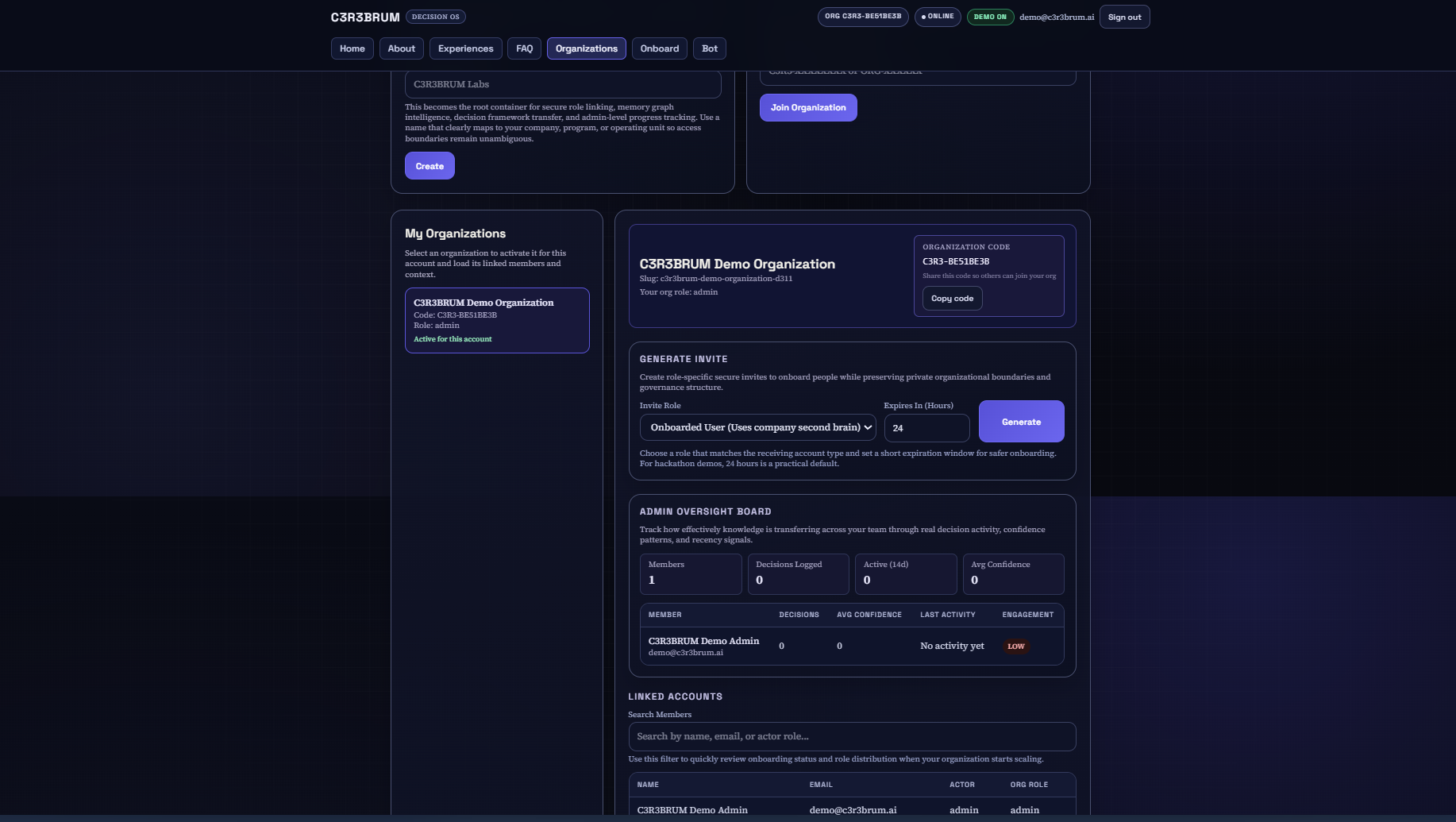
Organization structure
-
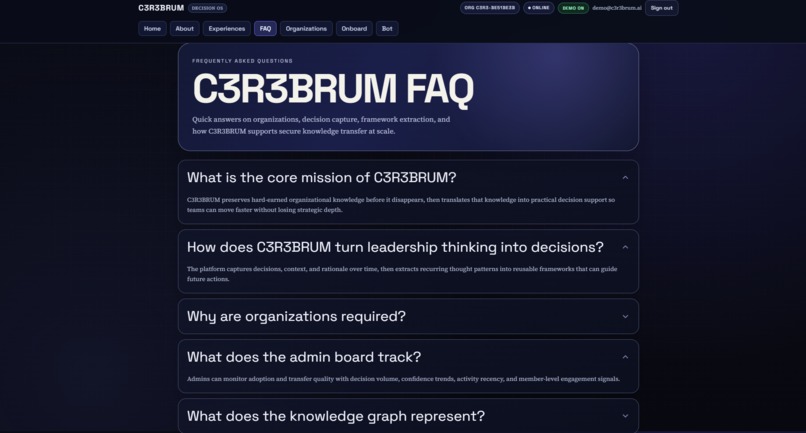
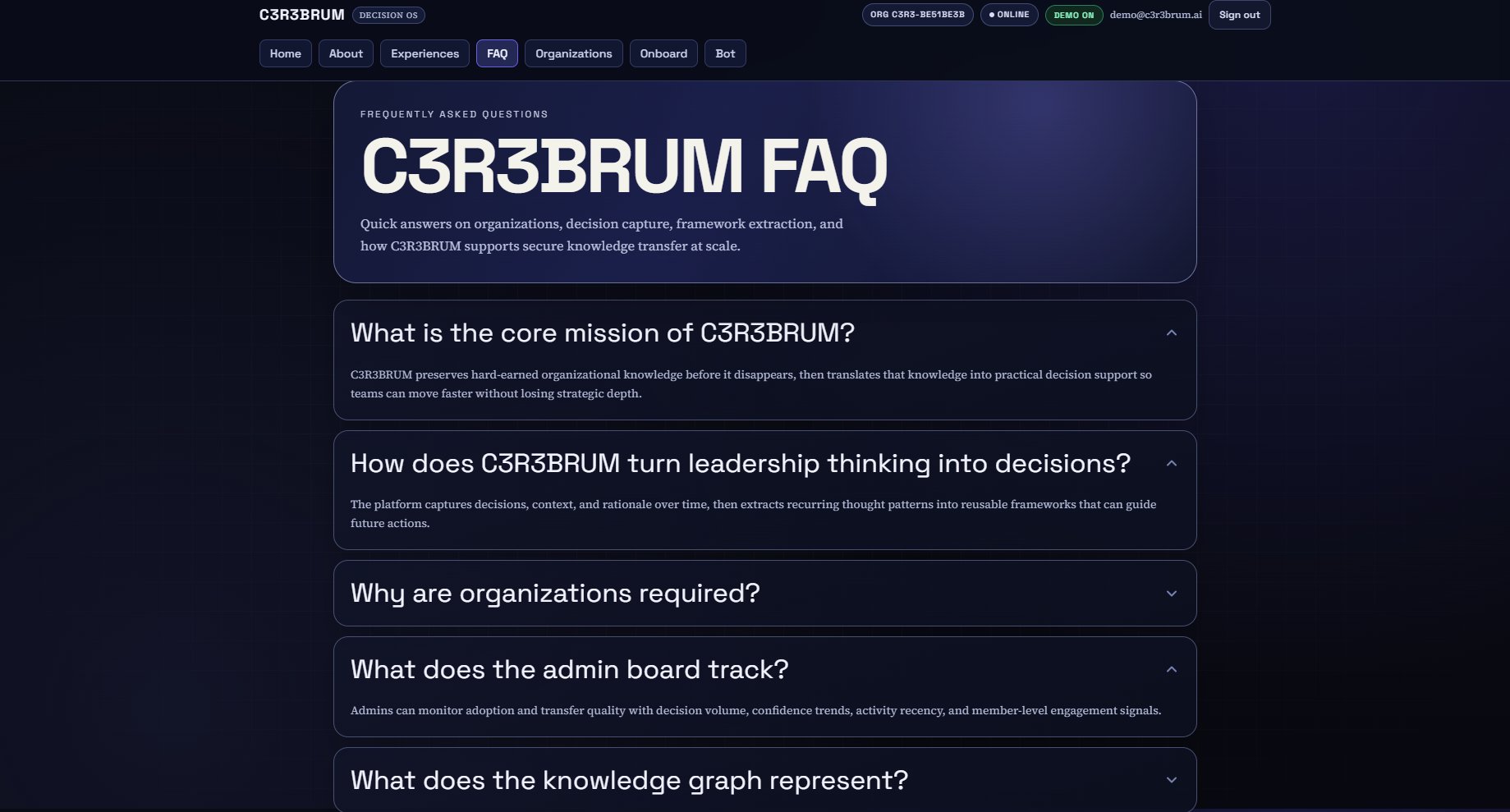
FAQ
-
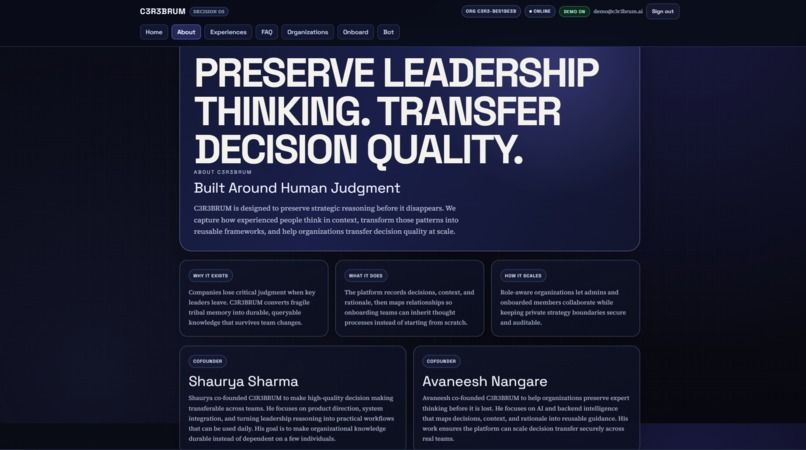
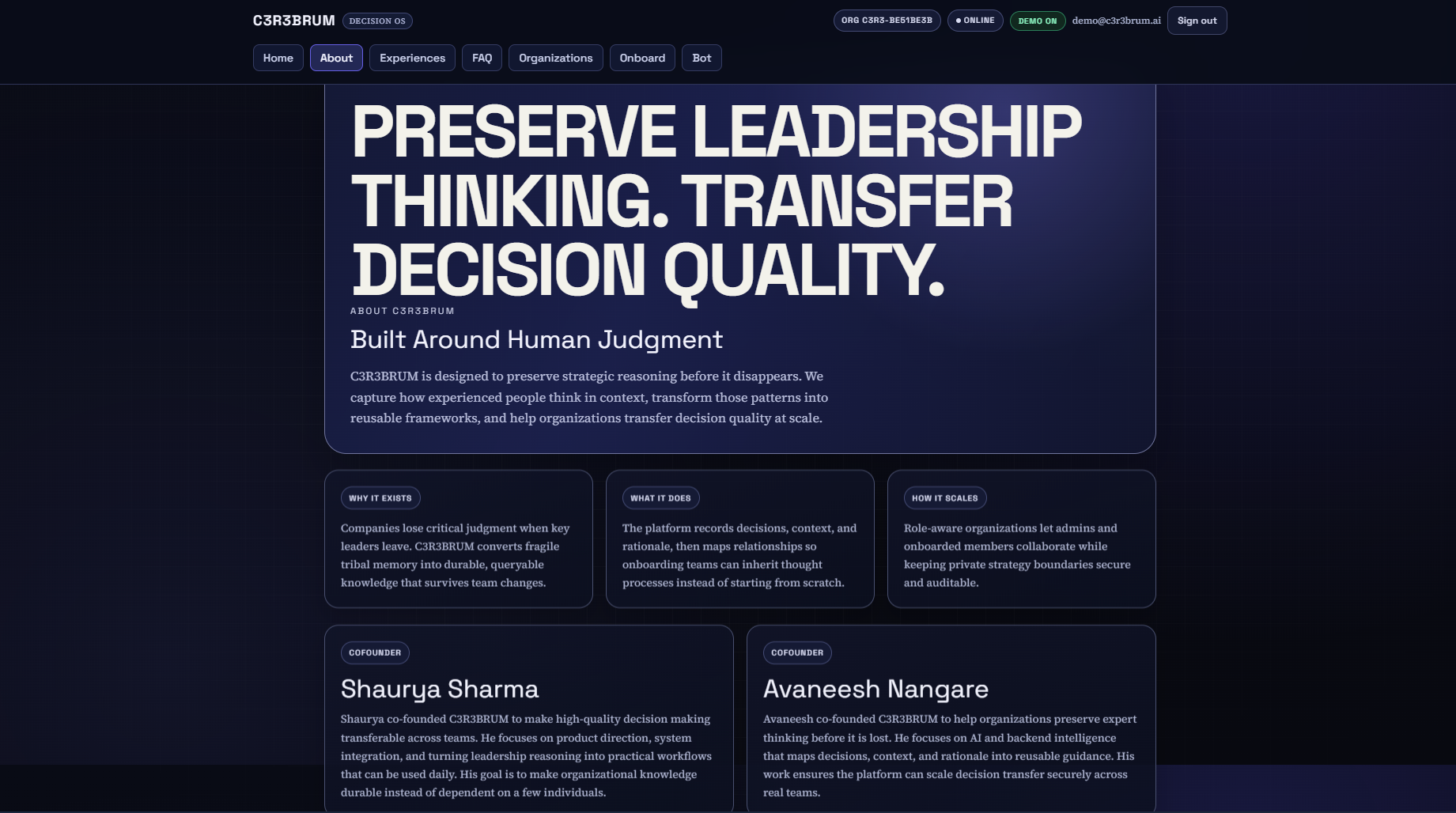
About Us Page
-
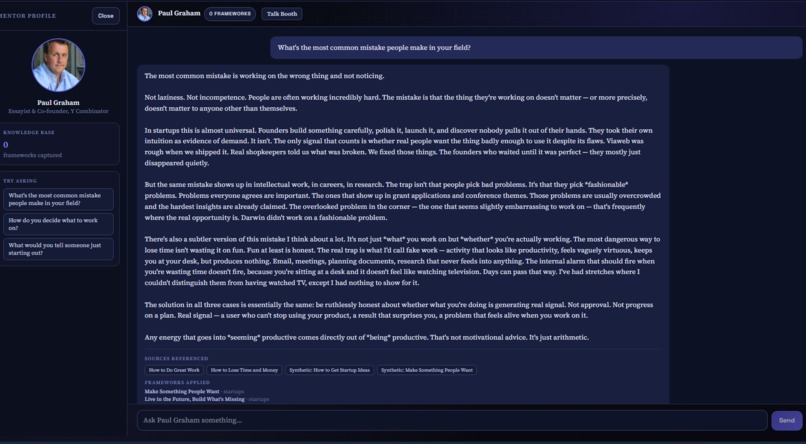
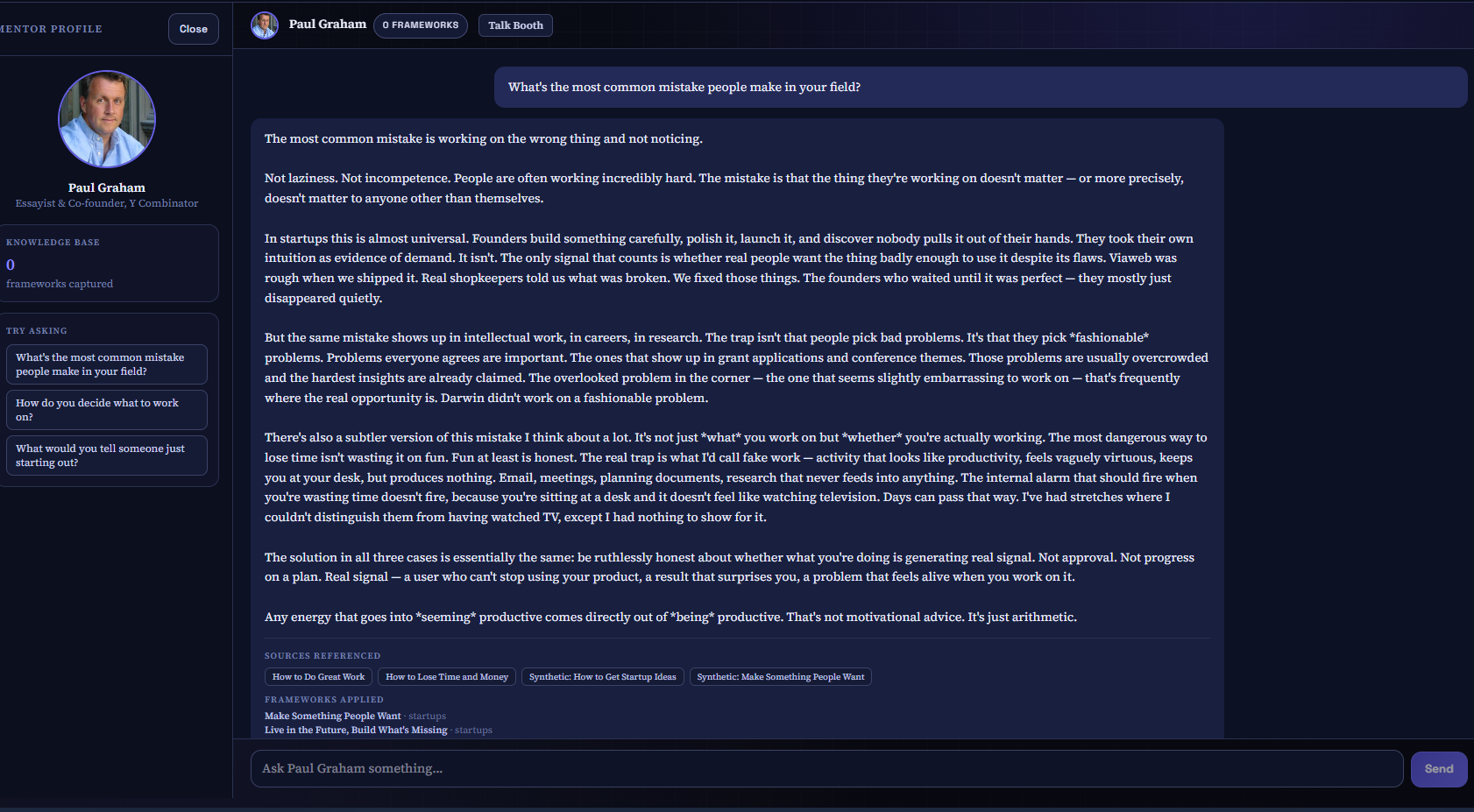
Sample Conversation with a leader(Paul Graham)
-
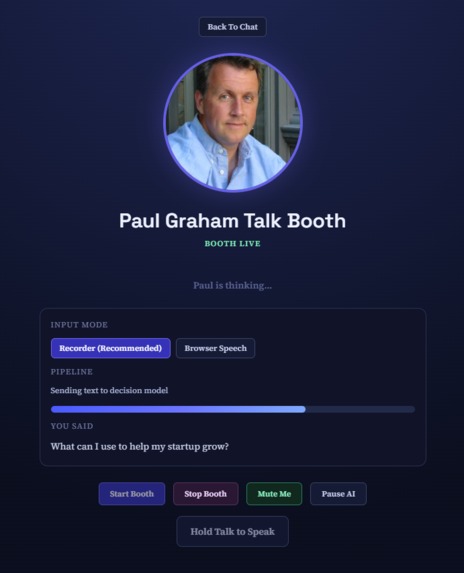
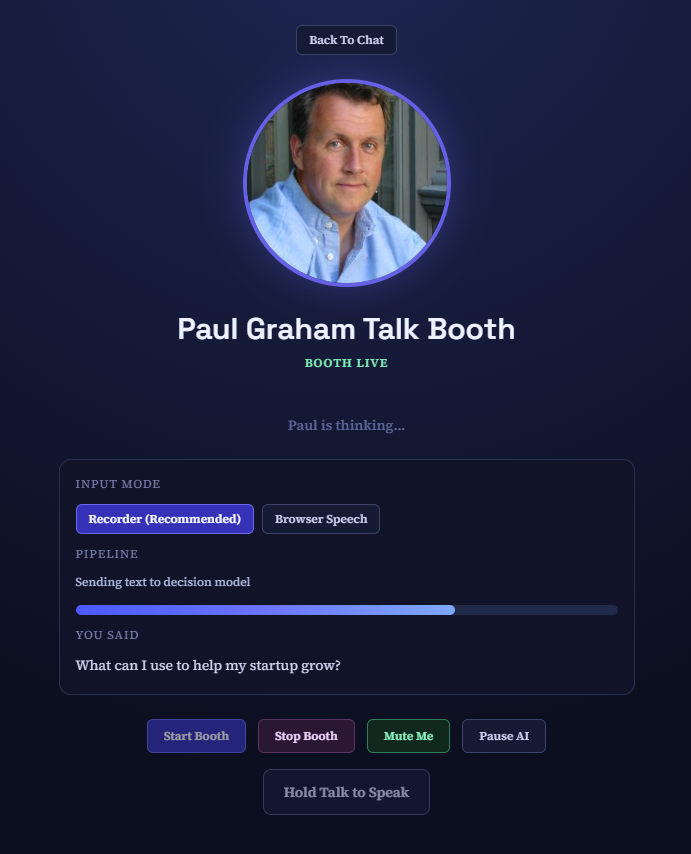
Sample Conversation Booth(Paul Graham)
-
Inspiration
Companies have amazing leaders but as humans we have a biological cap. Often times when leaders leave, new leaders are forced to relearn past experiences which are expensive and time consuming. But if previous leaders were still there the process would be much easier to navigate. We wanted to create a "replica" of the person's in context brain.
What it does
At C3R3BRUM, we essentially have made a product that takes years of data from a leader, public data such as podcasts and essays, but also private data that the company can provide, things like interviews, decision making patterns and employee feedback. After all, who knows a person better than their colleagues at work! This then works to institutionalize the leader into an AI model that can be referred to by the next generation of employees in order to prevent mistakes and get insight from this AI model that only takes framework from the person themselves.
How we built it
We builts the project with Codex(API-Key attached to it) and Claude(Pro Sub). We used multiple languages including python, html, css, and JSON, but we primarily used typescript. We finetuned Claude sonnet 4.6 using a large database in the cloud using MongoDB Atlas, which gave us the basic features of an LLM but training it only on specific user data is what makes us unique. We also used Mongo for storing our accounts, organizations, and bots. We used node.js for the runtime for the next.js app and used react to create the interactive components of our platform. We used mostly flask for the back end. We also used nextauth for security. We deployed on Vercel using a .tech domain(attached below) and linked it to the backend using render. Then obviously, we used GitHub for the repository and collection of our code and comments.
Challenges we ran into
Some of the challenges we ran into were:
- The Eleven labs integration and use. ElevenLabs most professional voice cloning feature required voice authentication to use our example's(Paul Graham) voice. This bummed us a little bit because we were really excited to use authentic voices. We then pivoted to a EL Instant Voice which required no authentication, but the similarity dropped drastically.
- How to link a backend to Vercel using Render. As beginner coders, we were dealing with all sorts of processes that we never even heard of, let alone know how to use. Connecting the backend to us was perplexing, but with a little help from our peers, we figured it out.
- MongoDB Atlas use. Initially, it required a lot of struggle to link the cloud database to our model and our accounts, causing us to waste time waiting for the database to work. Even after we got it working, it kept disconnecting from our platform. Although, after a few tries, we got it to work once and for all.
Accomplishments that we're proud of
We are so proud of ourselves for creating a fully functioning project that solves a problem we see as important. As the saying is, "Knowledge is priceless" and we couldn't agree with that more. We are also proud of ourselves for creating a tailored Artificial Intelligence model that actually worked. As beginners, there is nothing cooler than seeing your work come alive.
What we learned
This weekend we learned that building an AI product is as much systems integration as model quality: connecting frontend, backend, cloud database, auth, and deployment reliably is what makes the experience actually usable. We learned to scope fast under hackathon pressure, prioritize a working end-to-end flow over perfect architecture, and debug real production issues like bad environment variables, wrong deployment commits, and cloud connectivity failures. We also learned that preserving decision-making knowledge is a meaningful use case for AI, but trust depends on clear role permissions, secure organization boundaries, and responsive UX that makes complex intelligence feel simple to use. We learned many things throughout the making of this project, and we will continue to learn as we further develop it.
What's next for Cerebrum
Next for C3R3BRUM is turning this into a B2B platform focused on preserving how leaders think, not just what they know. We want organizations to capture decision patterns from founders, executives, and domain experts so that when people transition out, their reasoning stays accessible and actionable for the team. Over time, our goal is to scale beyond individual companies and create secure, structured access to the thinking patterns of world leaders at the forefront of innovation and AI, so people everywhere can learn from proven judgment frameworks rather than starting from scratch.


Log in or sign up for Devpost to join the conversation.