-
-
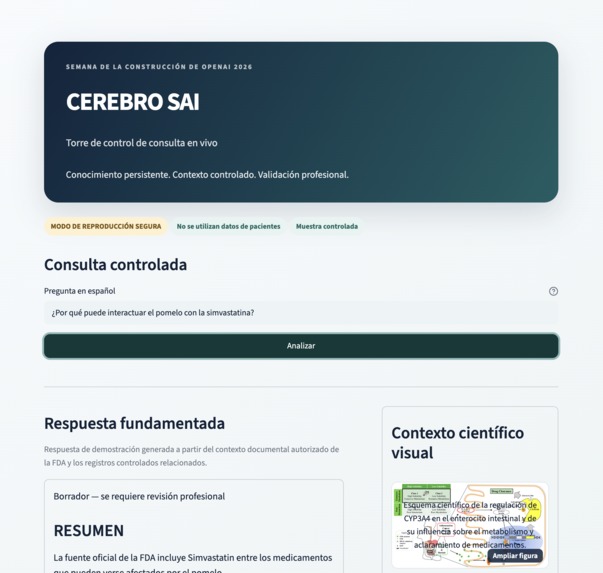
CEREBRO SAI — Evidence-grounded consultation workspace
-
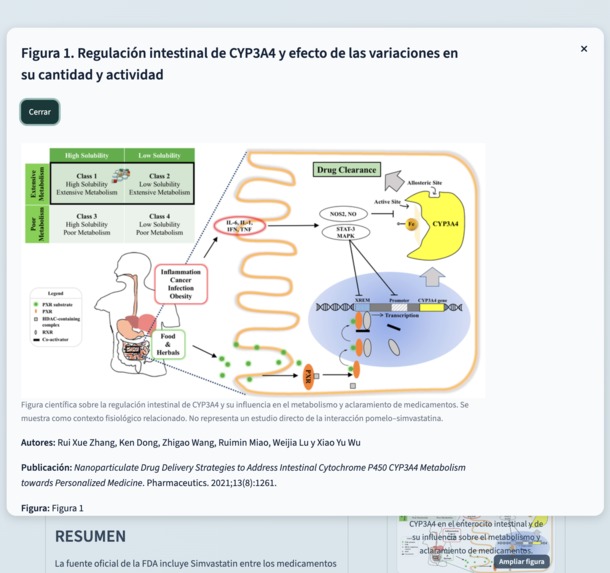
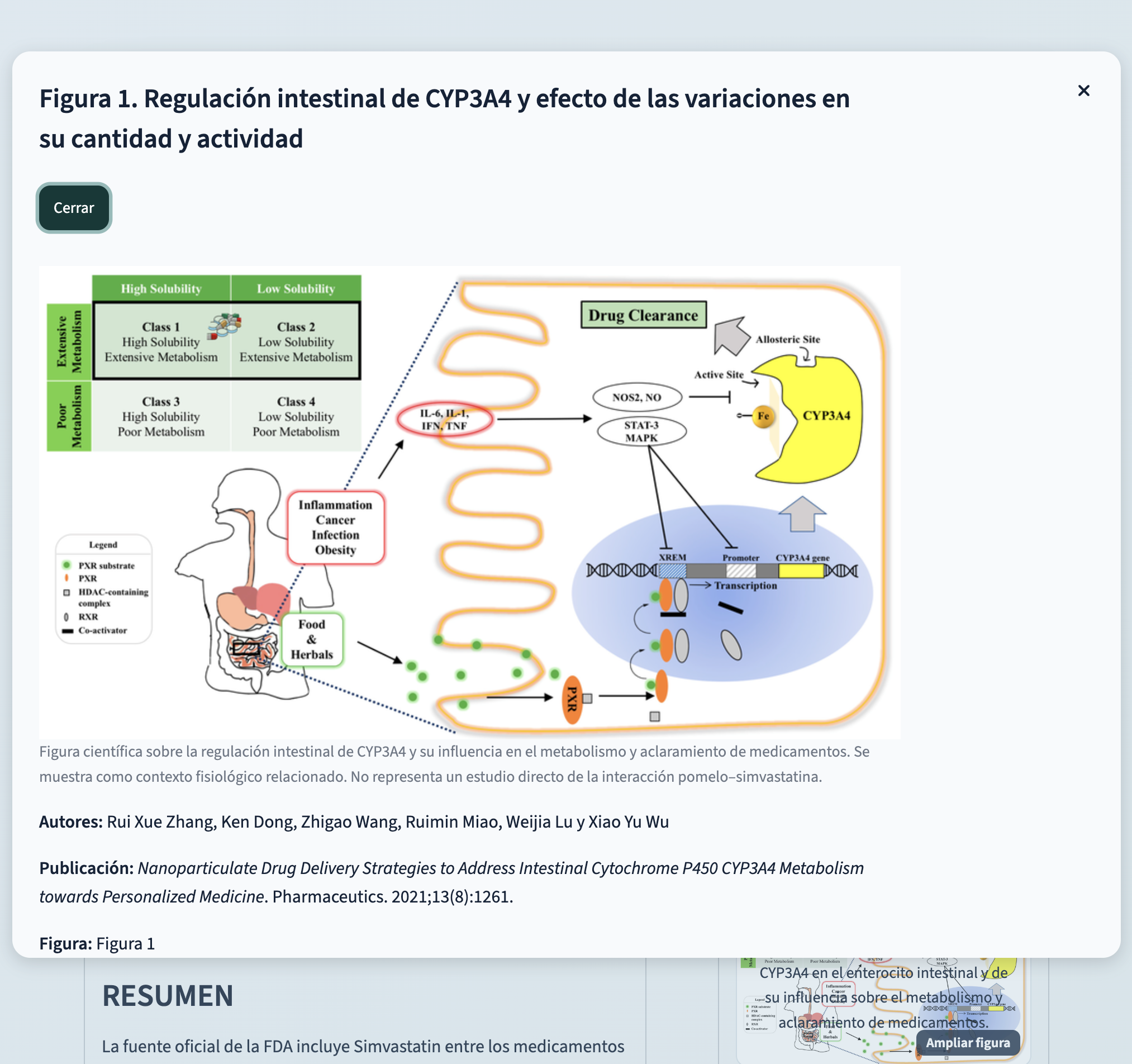
Scientific visual context with source attribution
-
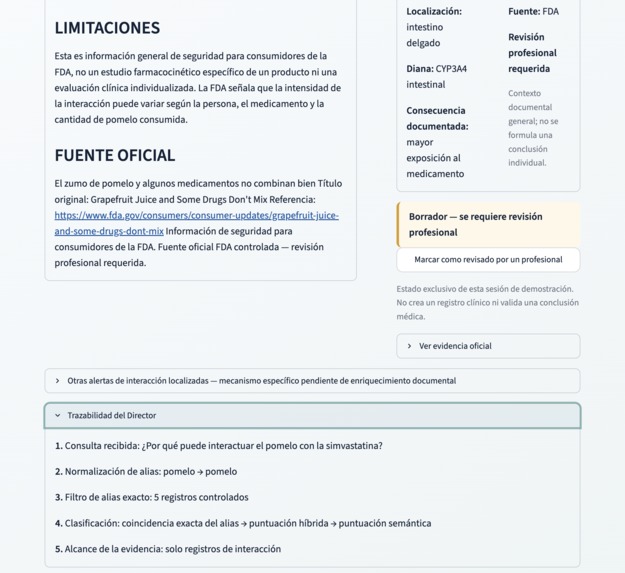
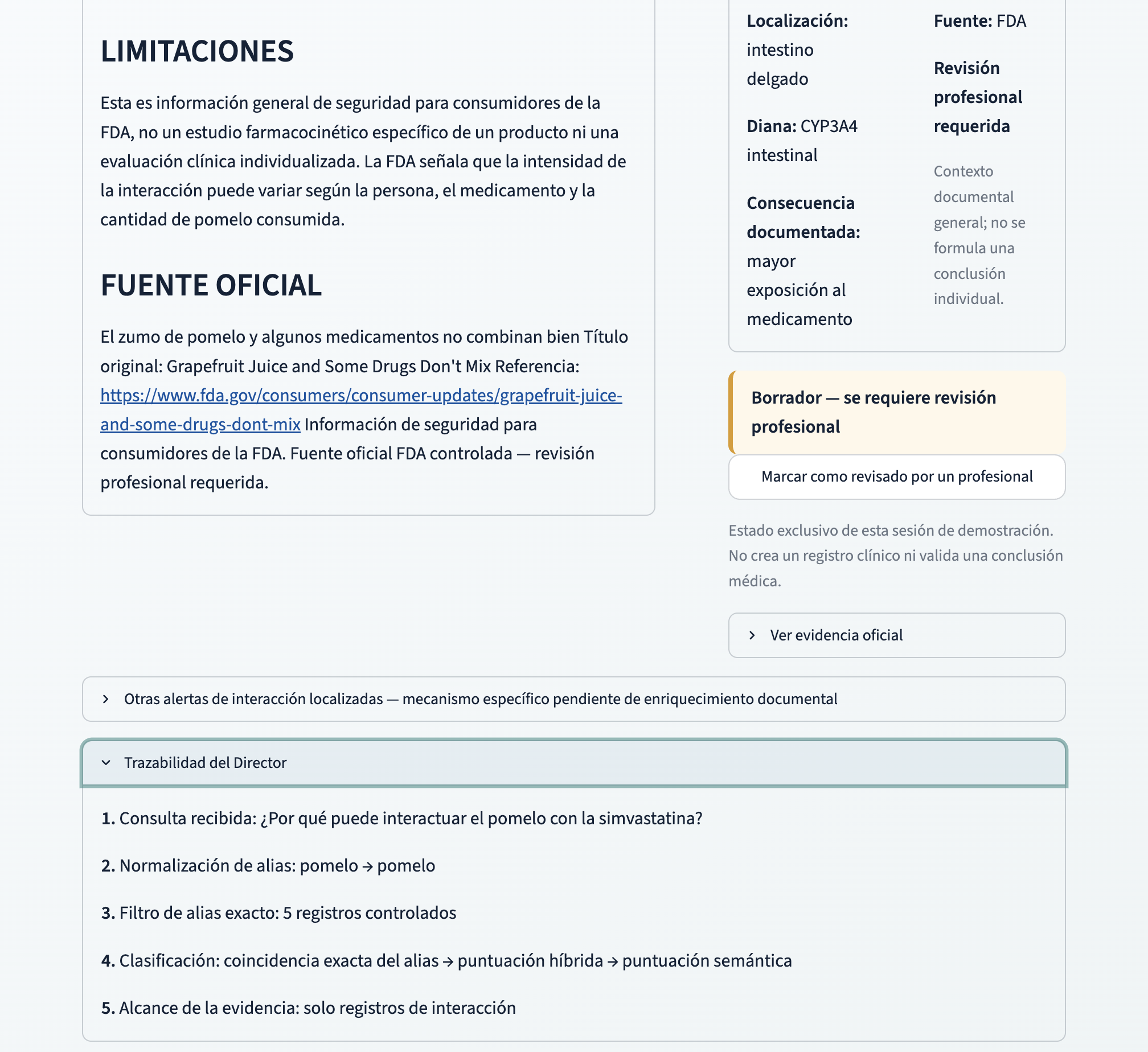
Controlled retrieval, traceability and professional review
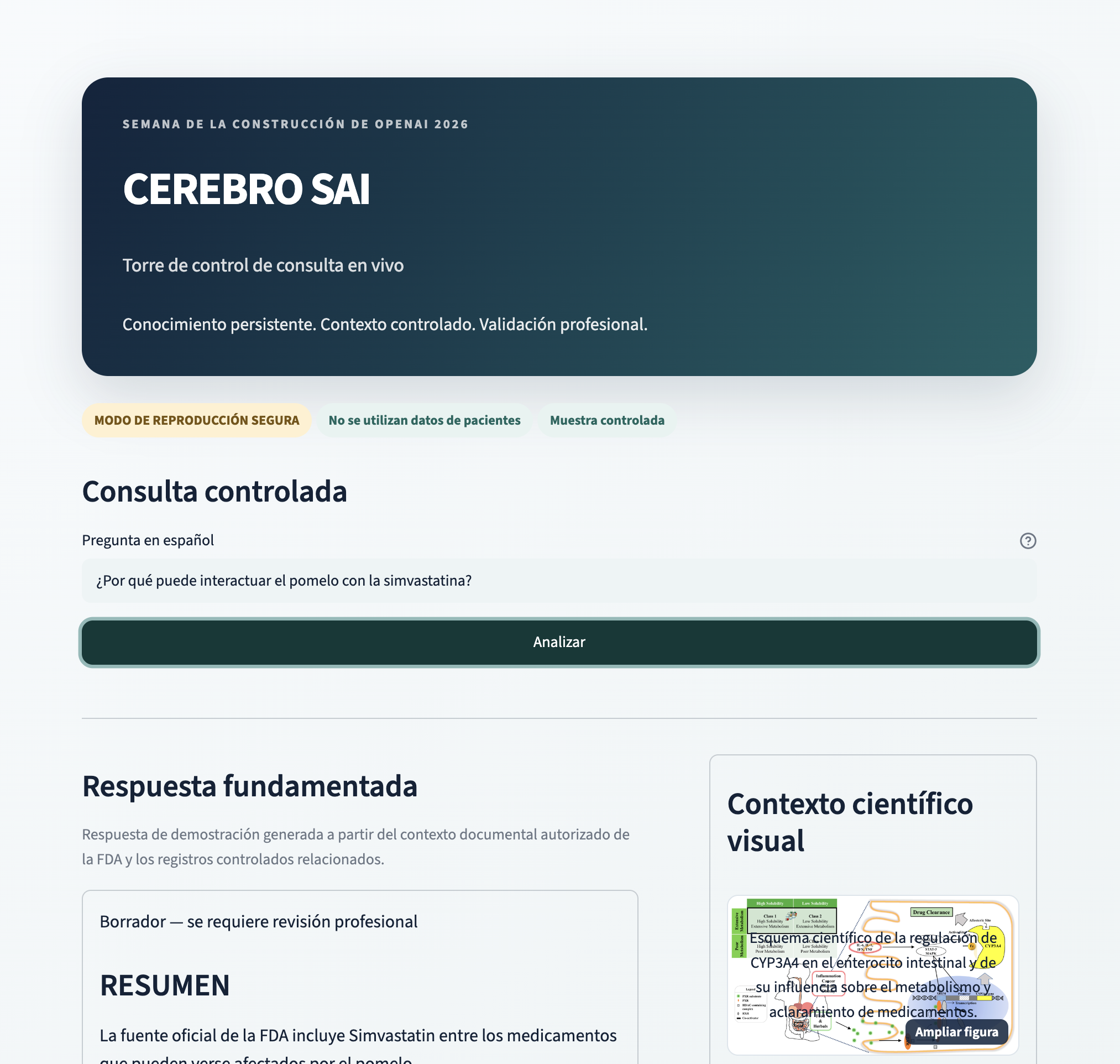
Inspiration
SAI began from a practical problem: professionals working with integrative health often have to consult information scattered across books, databases, spreadsheets, protocols, scientific references, and different therapeutic disciplines.
Searching each source separately is slow, and a normal keyword search frequently returns mentions without explaining whether the information represents a benefit, a contraindication, an interaction, a symptom relationship, or only experimental evidence.
My goal is to build a professional knowledge system that can connect this information, explain it in natural language, and support preventive, educational, and professional decision-making without replacing the practitioner.
I am not a traditional software developer. I am an independent founder and product manager who has spent years defining the professional workflows, knowledge structure, safety requirements, and product vision for SAI. AI-assisted development has allowed me to turn that domain knowledge into a working technical system.
What it does
CEREBRO SAI is a multilingual, evidence-grounded knowledge copilot for integrative-health professionals.
A practitioner can ask a question in Spanish even when the original reference material is written in English. The system:
- identifies the intent of the question;
- expands controlled synonyms and multilingual equivalents;
- combines semantic retrieval with exact entity matching;
- retrieves the most relevant knowledge fragments;
- preserves the distinction between human, animal, experimental, and pending evidence;
- produces a clear professional explanation in Spanish;
- keeps technical evidence available for review;
- avoids unsupported diagnosis or prescription.
The current demonstration focuses on drug–food and drug–plant interactions.
For example, a user may ask about “pomelo” in Spanish. The system recognizes related terms such as “grapefruit” and “toronja,” retrieves the relevant English-language source material, and prepares the evidence for a grounded conversational response.
The broader SAI architecture is designed to expand progressively across multiple connected domains, including:
- nutrition;
- phytotherapy;
- Traditional Chinese Medicine;
- acupuncture;
- cofactors and supplementation;
- biomarkers;
- physiological and metabolic pathways;
- professional questionnaires;
- interaction safety;
- protocol support;
- educational and preventive guidance.
CEREBRO SAI is not designed to diagnose, prescribe, or replace a healthcare professional. It is designed to help professionals retrieve, compare, review, and explain knowledge more efficiently.
A Living Consultation Control Tower
CEREBRO SAI is not designed as a standalone chatbot or as an AI model that stores the professional record in its own memory.
Its architecture separates three responsibilities:
- SAI stores persistent, structured, and authorized knowledge.
- The Director selects the relevant memory, rules, relationships, and evidence for each request.
- The conversational AI analyzes and explains only the context that has been retrieved and authorized.
This creates a Living Consultation Control Tower: professional work does not begin from a blank chat. Each authorized case can maintain its history, current state, pending items, evolution, previous decisions, and validated professional actions.
AI-generated content is treated as a proposal, hypothesis, or draft. It does not automatically become part of the persistent professional record. A professional must review and validate it before it can be stored with its date, context, author, and version.
For OpenAI Build Week, the demonstration focuses on one controlled part of this larger architecture: multilingual retrieval of drug–food and drug–plant interaction knowledge, followed by a grounded Spanish explanation. The public prototype contains no real patient data.
From conversational AI to a multimodal professional workspace
The broader vision of CEREBRO SAI goes beyond returning text in a chat.
The conversational interface acts as the controller of a dynamic professional workspace. A practitioner can ask a question, and the system can transform the retrieved and authorized information into structured visual components such as:
- evidence cards;
- interaction and contraindication alerts;
- comparison tables;
- plants and product images;
- anatomical diagrams;
- acupuncture points;
- physiological pathways;
- professional questionnaires;
- short expert audio explanations;
- technique and assessment videos;
- product-composition comparisons;
- pending questions for the practitioner.
The conversation remains available, while each follow-up question can add, refine, filter, or compare the visual results without losing the previous context.
For example, a practitioner could first ask about phytotherapy, then request the relevant cofactors, then compare commercial products by composition, quantity, price, and the minimum number of products required. Each answer would appear as a new structured block within the same living consultation.
The same architecture is designed to support multiple domains, including Traditional Chinese Medicine, acupuncture, phytotherapy, nutrition, orthomolecular practice, osteopathy, biomagnetism, physiological pathways, interaction safety, and other authorized professional knowledge areas.
Context-aware safety
In an authorized consultation, the system is designed to consider more than the current question.
Relevant information may include:
- previous visits;
- anamnesis;
- questionnaires;
- medication;
- allergies;
- known contraindications;
- relevant conditions;
- lifestyle factors;
- professional protocols;
- previous validated decisions.
This allows the system to identify when an otherwise relevant option may be inappropriate for the specific case.
The goal is not to replace professional judgment. It is to reduce the risk of missing relevant information that may already exist in the authorized record or knowledge base.
The system must distinguish clearly between:
- information retrieved from structured databases;
- evidence retrieved from documents;
- rule-based alerts;
- AI-generated explanations;
- professional validation.
AI-generated content remains a draft until it is reviewed by a professional.
Existing multimedia knowledge
SAI already has a growing collection of professional multimedia resources, including approximately:
- 60–70 short expert-based audio explanations;
- 400 osteopathy and assessment videos;
- visual and written therapeutic material.
These resources can be linked to concepts, techniques, anatomical regions, plants, tests, or professional questions and displayed only when they are relevant.
The Build Week prototype demonstrates one controlled slice of this larger vision: multilingual retrieval, traceable evidence, a structured response, and professional review status. It contains no real patient data.
How I built it
The project uses a hybrid architecture rather than relying on a language model alone.
The main layers are:
- Structured databases for exact facts, entities, and professional records.
- A knowledge graph for relationships between concepts.
- Rule-based logic for questionnaires, alerts, and controlled workflows.
- Vector retrieval for narrative knowledge and multilingual semantic search.
- A conversational AI layer for synthesis and explanation.
- An API layer connecting the knowledge system with the SAI professional interface.
For the Build Week prototype, I created a controlled sample containing 200 interaction documents. These documents were divided into 320 searchable knowledge fragments and encoded using a multilingual embedding model.
The first retrieval evaluation produced:
- 8 correct results in the first position out of 10 controlled questions;
- 9 correct results within the top three;
- 9 correct results within the top five.
A free-form Spanish query about medication and pomelo also demonstrated an important limitation of pure semantic search: the relevant grapefruit interaction appeared, but not in the first position.
To improve this, I added hybrid retrieval using:
- semantic similarity;
- exact terminology;
- controlled aliases;
- cross-language synonyms;
- entity-level prioritization.
This showed that reliable professional retrieval should not depend only on vector similarity.
Safety and privacy
Safety is a foundational design requirement.
The public demonstration uses only controlled sample information and contains no real patient data.
In the future production system:
- general knowledge can be indexed and vectorized;
- patient information will remain in the authorized operational database;
- patient data will be retrieved only when an authorized professional opens the relevant case;
- patient records will not be mixed into the global knowledge index;
- generated responses must remain traceable to retrieved information;
- the professional remains responsible for every final decision.
The system is intended for educational, preventive, organizational, and professional-support purposes.
Challenges
The main challenge was not simply generating text. The difficult part was building a system that could retrieve the correct information before asking an AI model to explain it.
Some of the most important challenges were:
- multilingual terminology;
- synonyms such as pomelo, grapefruit, and toronja;
- distinguishing exact interactions from semantically similar but irrelevant documents;
- preserving the type and strength of evidence;
- separating structured facts from narrative knowledge;
- preventing unsupported conclusions;
- protecting private patient information;
- designing a system that can change conversational models without rebuilding the entire knowledge architecture.
Another challenge was working as a non-programmer. I had to translate professional requirements into data structures, workflows, validation rules, and testable development tasks. This experience reinforced the value of AI-assisted software development for founders with deep domain knowledge.
What I learned
I learned that embeddings are powerful, but they are not enough by themselves for professional knowledge retrieval.
A safer system needs to combine:
- semantic retrieval;
- exact matching;
- controlled terminology;
- structured metadata;
- rules;
- knowledge relationships;
- conversational synthesis.
I also learned that the language model should not be treated as the database. Its role is to explain and organize the information that the retrieval system has already selected.
This separation makes the architecture more transparent, safer, and independent from any single AI model.
What is next
The next stages are:
- connect the retrieval engine to the conversational interface;
- add evidence visibility controls;
- complete the GPT-5.6 grounded-response workflow;
- expand the controlled terminology and synonym system;
- integrate more SAI knowledge domains;
- add evaluation tests for unsupported claims;
- connect authorized professional workflows without exposing patient data;
- generate structured summaries and professional reports.
The long-term vision is a holistic professional knowledge copilot capable of connecting multiple integrative-health disciplines while remaining evidence-aware, traceable, privacy-conscious, and under professional supervision.

Log in or sign up for Devpost to join the conversation.