-
-
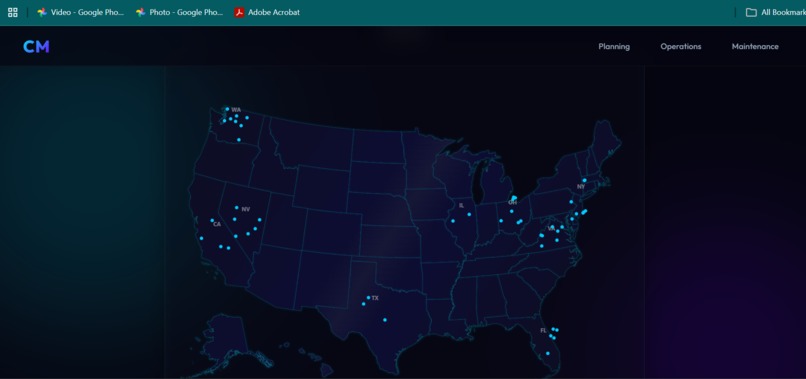
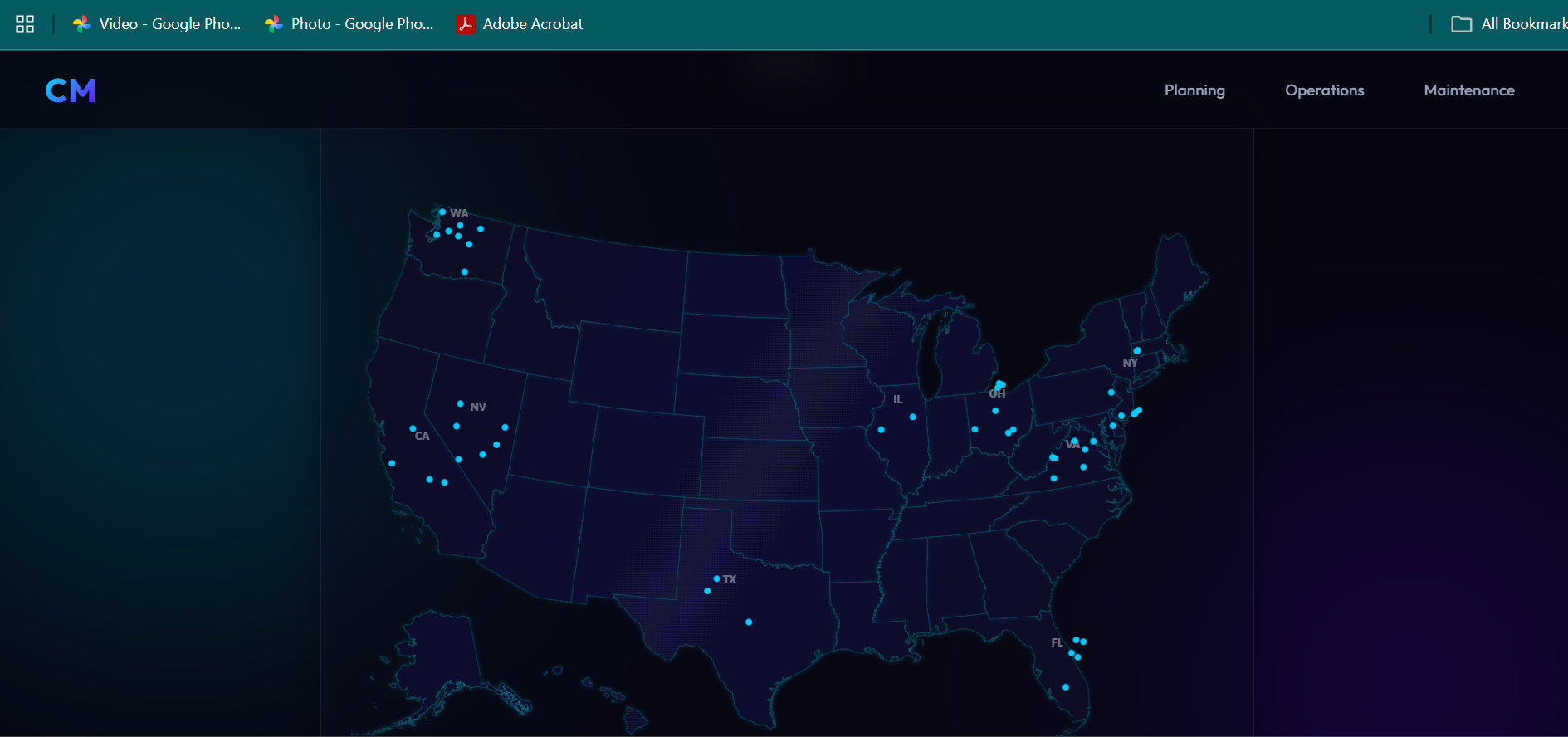
Homepage
-
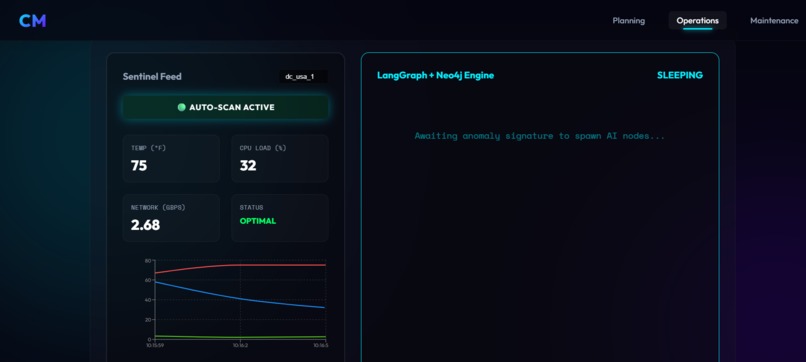
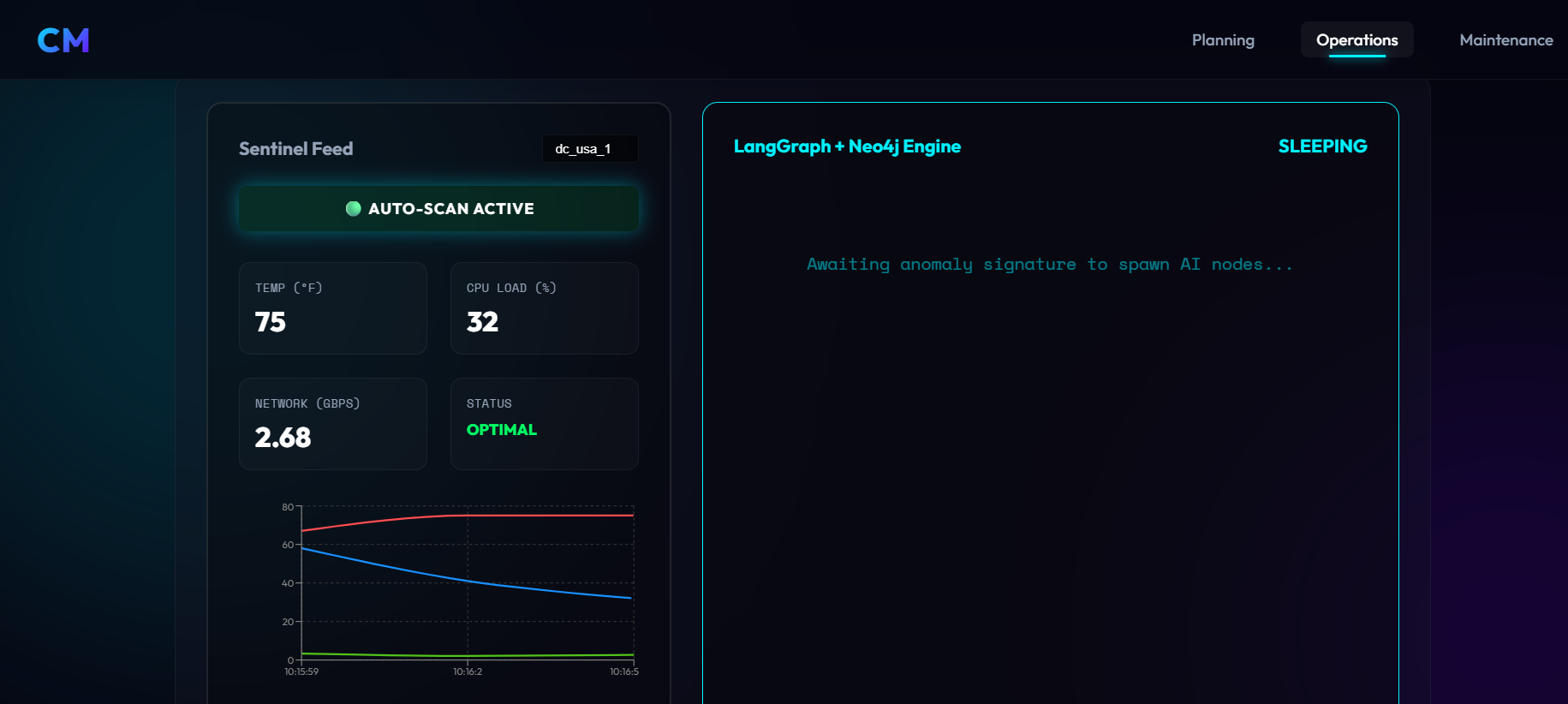
Operations Management Agent - Optimal Case
-
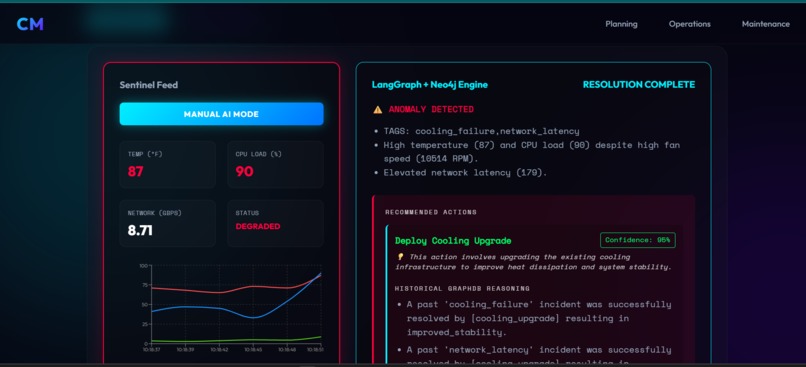
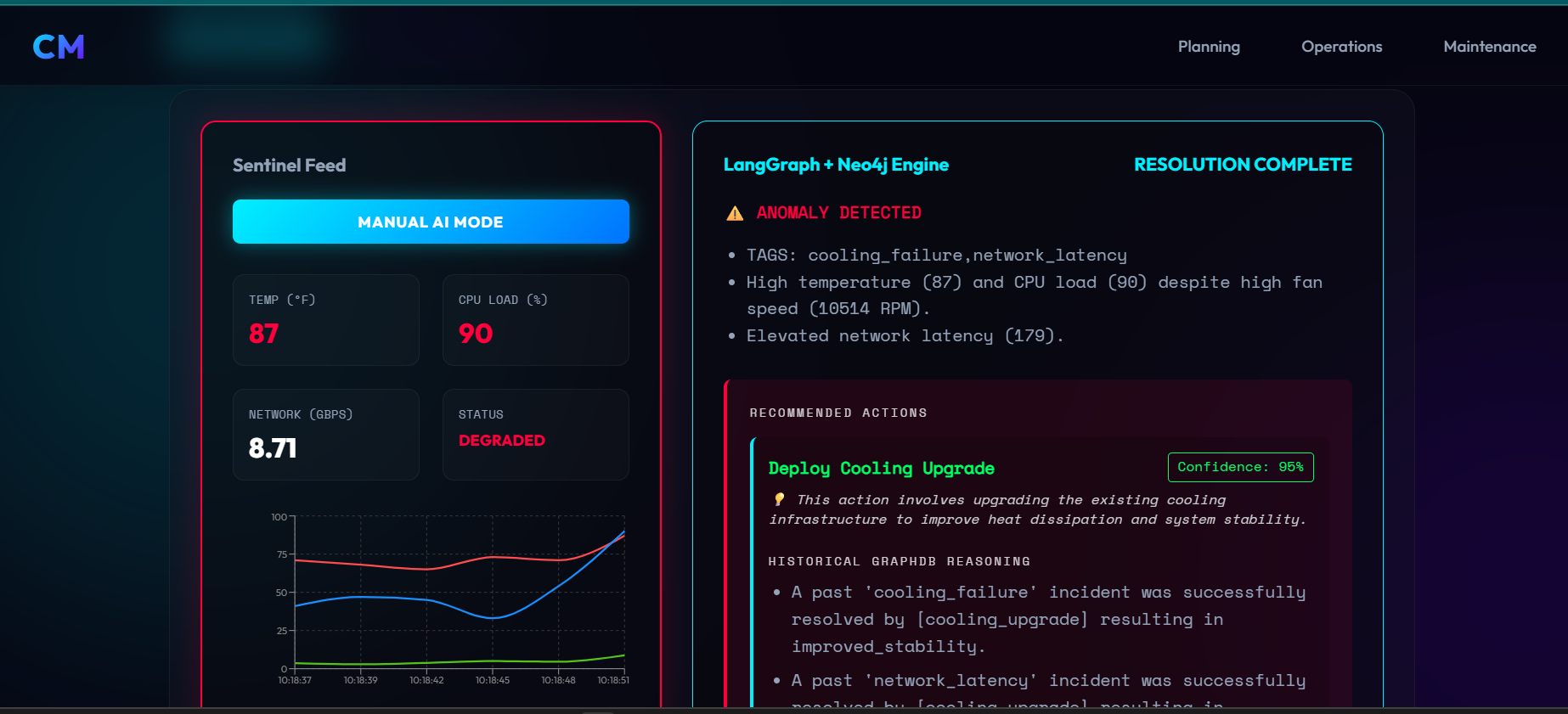
Operations Management Agent - Degraded Case
-
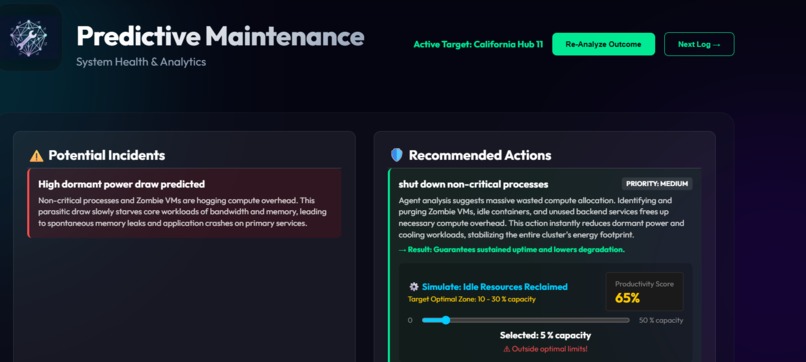
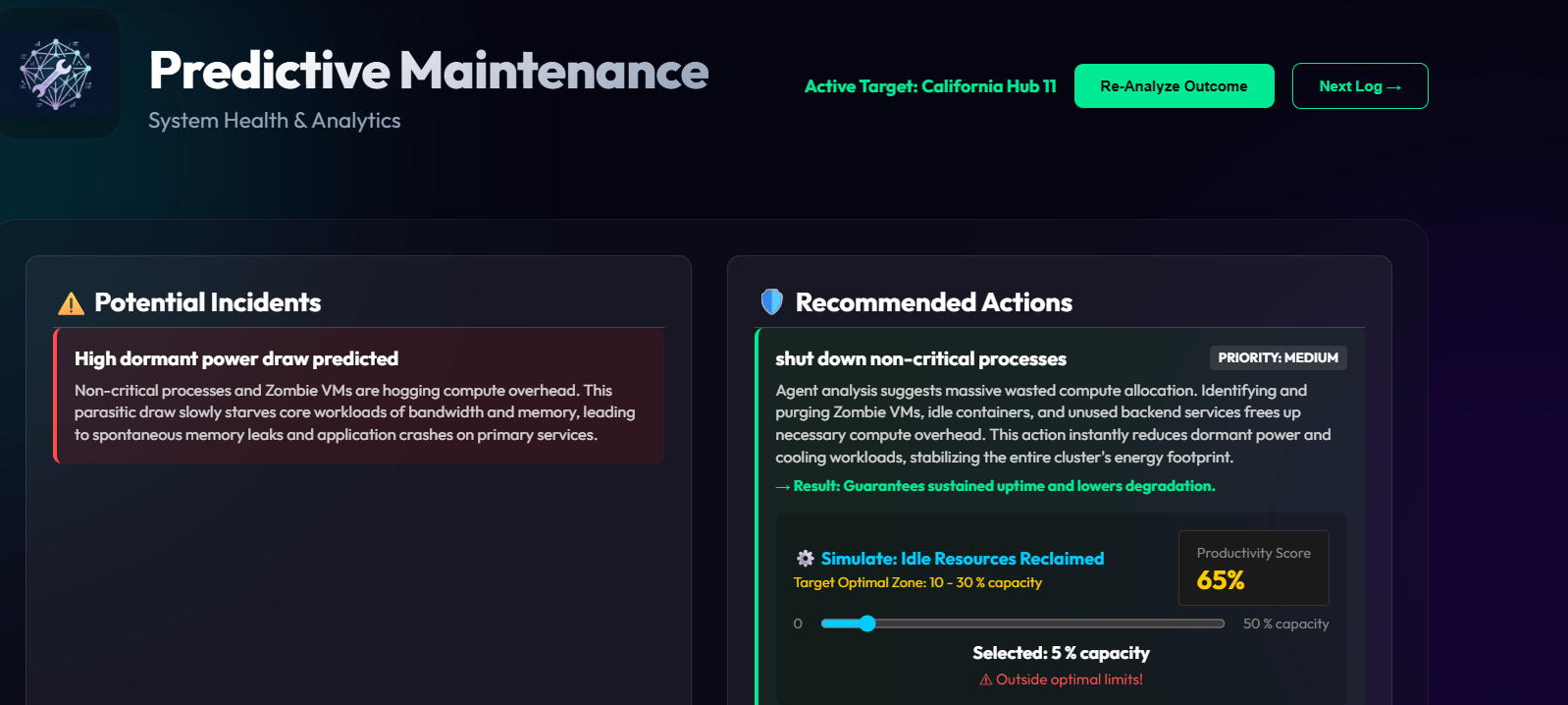
Predictive Maintenance Agent
-
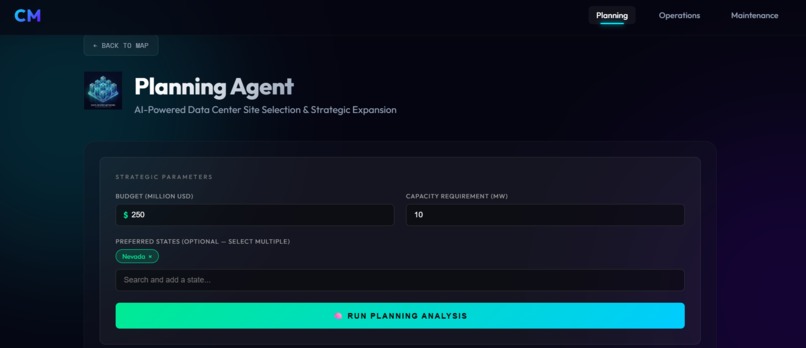
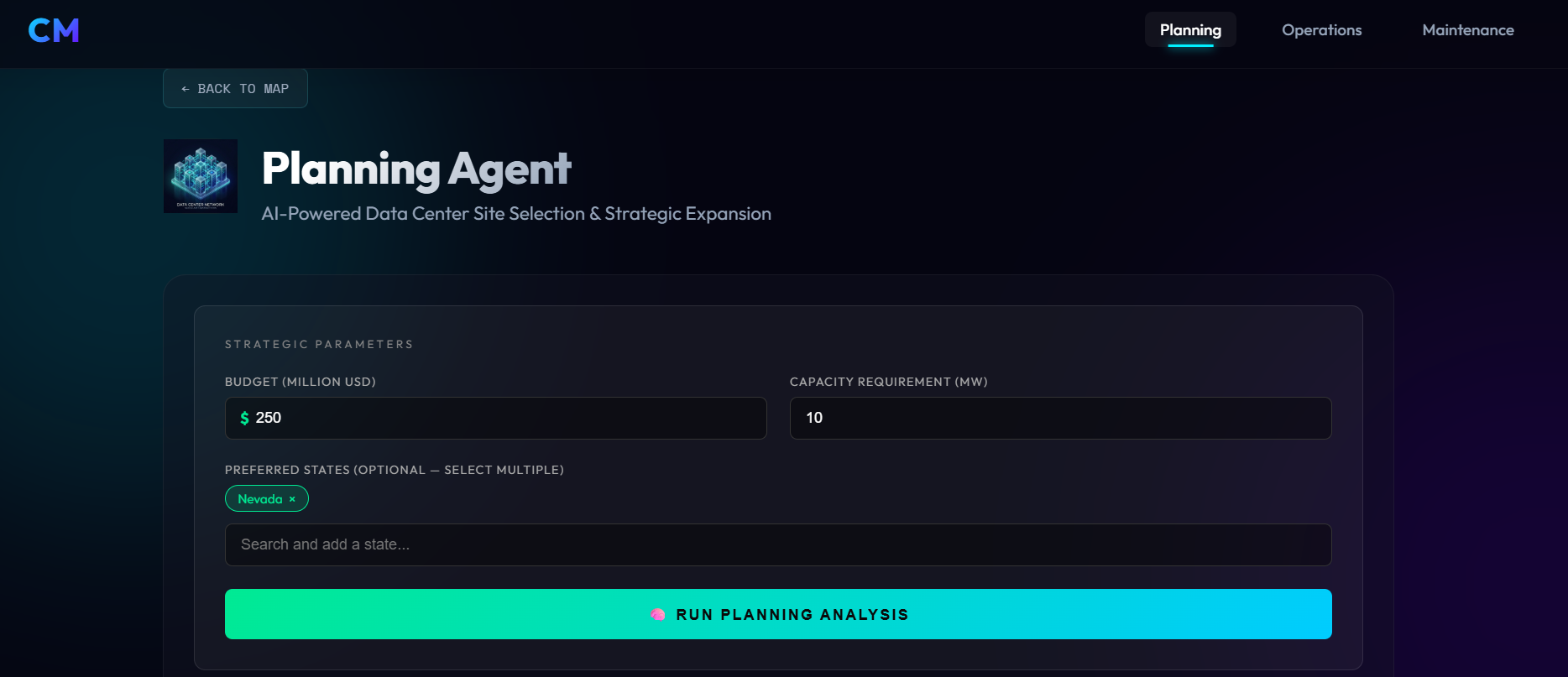
Planning Agent - User Preference Inputs
-
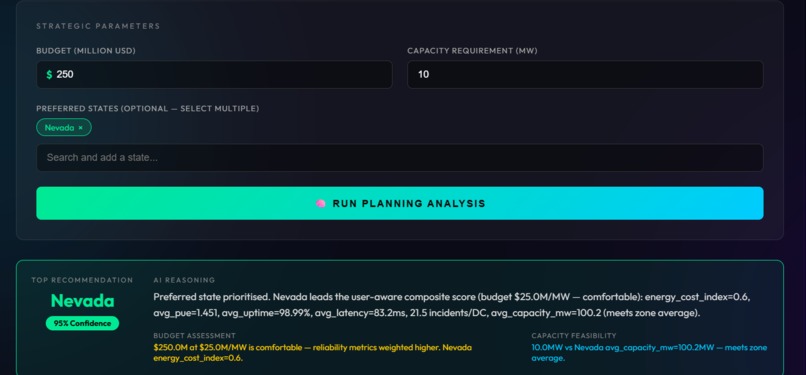
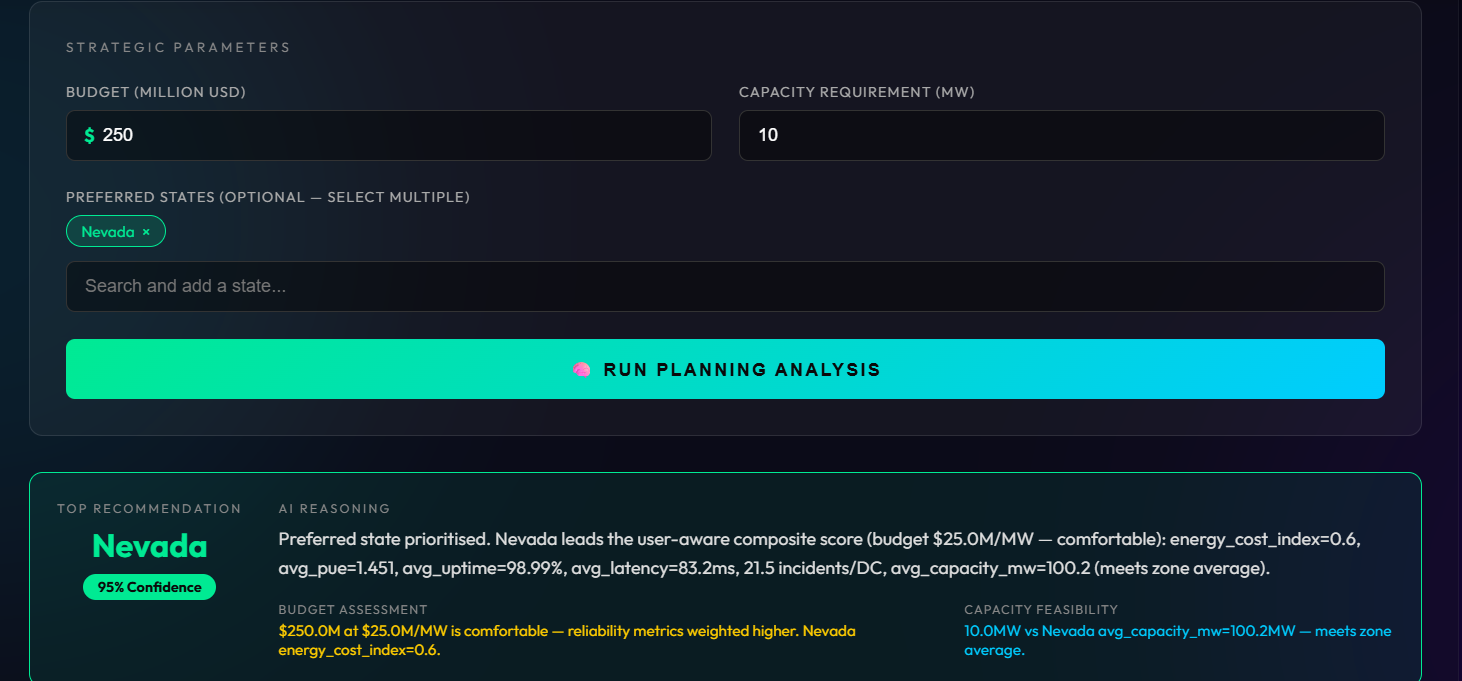
Planning Agent - Recommended New Data Center Location and Metrics
-
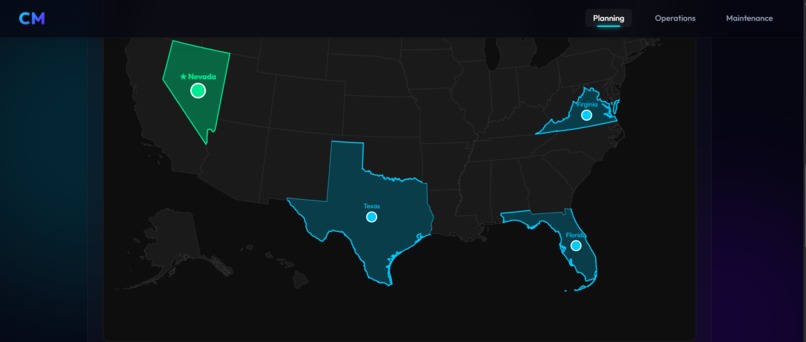
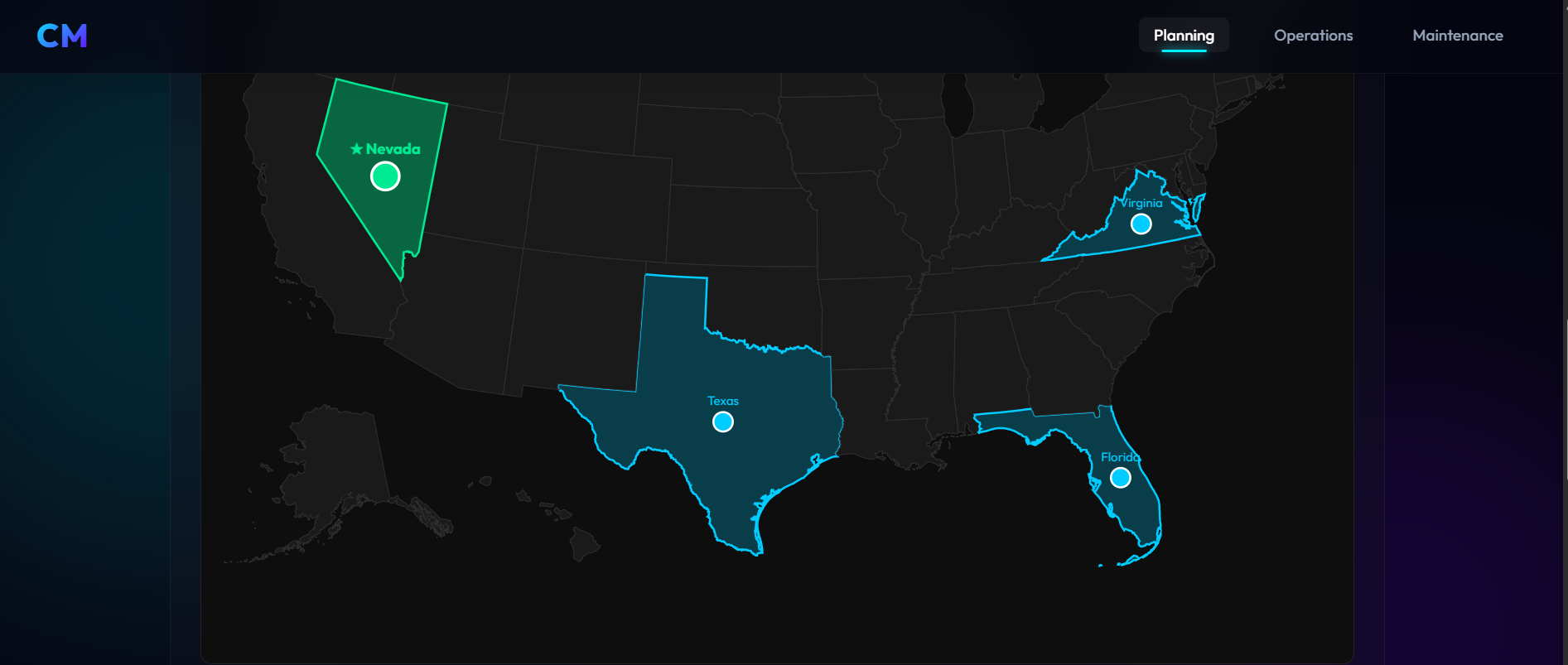
Planning Agent - Recommended New Data Center Location on the Map
-
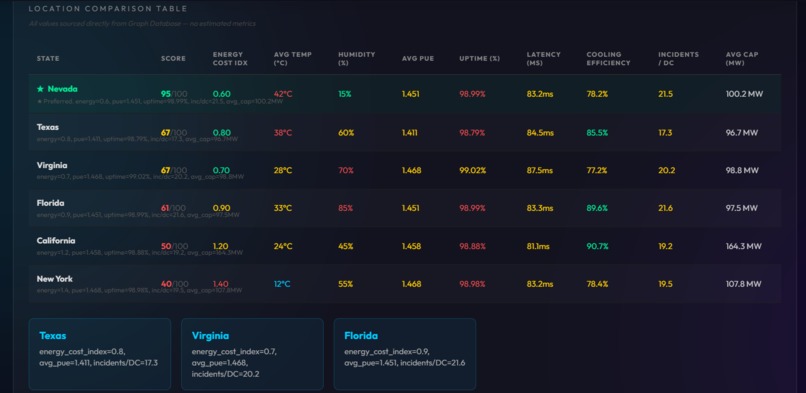
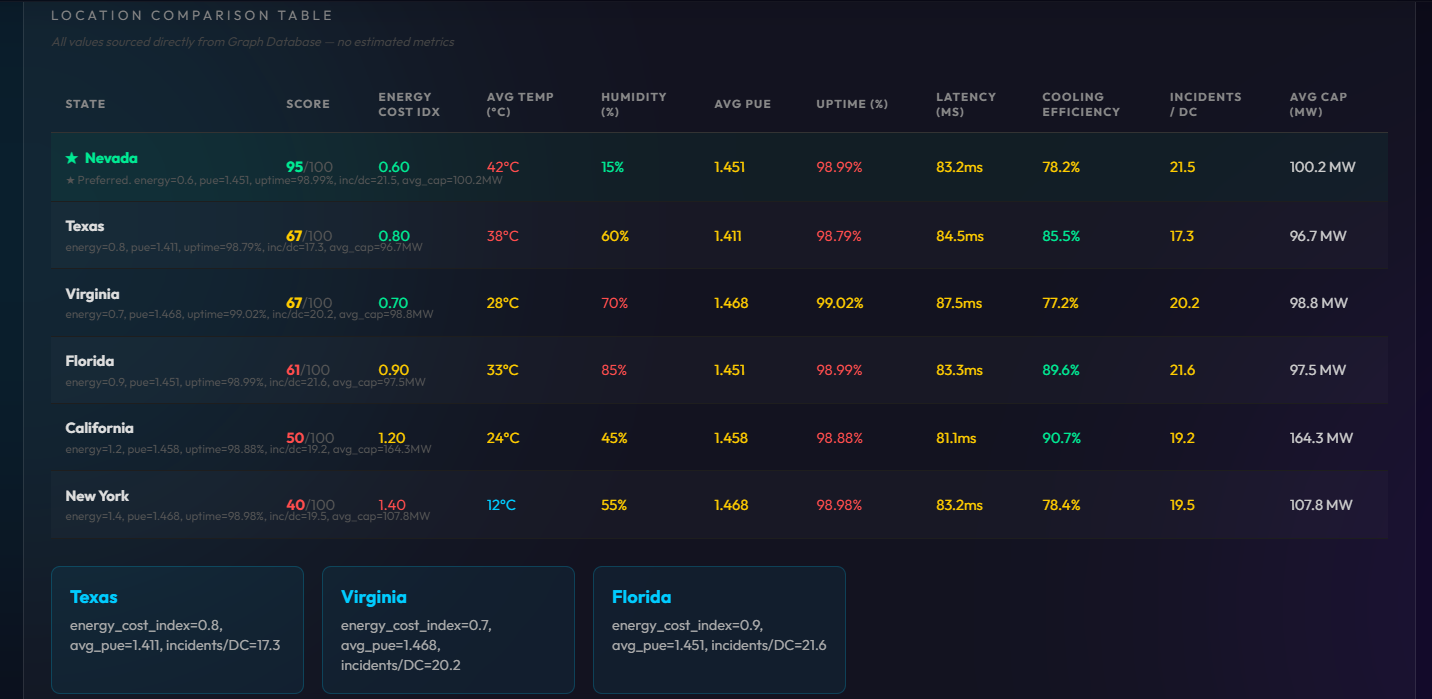
Planning Agent - Alternate Data Center Location Options Comparison Table
Inspiration
Most agents operate in the moment, lacking the ability to truly learn from history, adapt over time, or explain their decisions. In industries like commercial real estate and infrastructure management, this limitation is costly. We were inspired by two ideas:
- CBRE’s challenge: transforming massive streams of operational data into durable, actionable memory
- "Night at the Museum” theme: bringing the past to life; not as static records, but as active intelligence that shapes the future. The organizations often struggle to connect these stages, planning is static, operations are reactive, and maintenance is delayed.
What it does
CenterMind AI provides an hybrid-memory multi-agent platform with three main components:
i. Real-Time Operations Module - Detects present anomalies and resolves them using historical data
- Monitors live metrics like temperature, load, and power usage.
- Detects anomalies and triggers alerts.
- Suggests actions based on historical patterns.
ii. Predictive Maintenance Module - Simulates future scenarios and predicts failures before they happen.
- Uses historical data to predict potential failures.
- Recommends preventive actions before incidents occur.
- Reduces downtime and operational risks.
iii. Planning Module - Recommends optimal expansion strategies using historical data.
- Suggests optimal data center locations.
- Considers factors like power availability, cooling, budget, and capacity needs.
- Ranks locations based on risk scores.
How we built it
We designed a hybrid memory system and agent framework.
Memory Architecture
i. Long-Term Memory (Neo4j GraphDB) - Structured, queryable knowledge graph storing:
- Historical incidents
- System relationships
- Regional performance metrics
ii. Short-Term Memory (Redis) - High-speed ingestion of live telemetry:
- Temperature, CPU load, bandwidth, fan speed, latency, power usage.
- Real-time system states
- Combines retrieval from graph memory with LLM reasoning for context-aware decisions
Agent Orchestration
- LangGraph: Multi-agent workflows and decision trees
- Gemini 2.5 Flash: Fast, multimodal reasoning engine
Backend - FastAPI
Frontend - React + Vite
Challenges we ran into
- It was a challenge to decide which data is relevant to be stored in the long-term memory.
- Implementation of reward modeling became a challenge as the model became too biased towards the location preferences given by the user.
- Integrating the three agents was one of the hard parts as well, we also faced some version conflict problems with the libraries that the different agents were using.
Accomplishments that we're proud of
- Three distinct agents with defined roles that communicate through shared hybrid memory combining Redis (short-term) and Neo4j (long-term).
- Operations Agent continuously monitors data centers, detects anomalies, auto-diagnoses against historical patterns, and renders live chart visualizations with metrics (Temperature, CPU load, Network bandwidth) that update every 3 seconds based on real-time data pulled from the Redis memory.
- Every recommendation, alert, and action is backed by evidence from the GraphDB that makes it context-aware to avoid hallucinations.
- Human-in-the-loop feedback loop - Operations Agent recommends corrective actions for incidents; users approve or reject each action; approved actions are updated in GraphDB, enabling the system to learn from operator decisions.
- Predictive Maintenance agent predicts the possible future failure incidents that can take place at a data center by analyzing the real-time data from Redis using GraphDB as a context
What we learned
Memory is the foundation of true intelligence - Most AI systems rely on short-term memory alone, losing context immediately. Our approach involves a hybrid memory architecture combining Redis (real-time short-term) and Neo4j (long-term graph), for the agent to be context-aware and learn patterns that persist across sessions
Graph-based relationships unlock hidden connections - Traditional relational databases would require creating numerous normalized tables to capture datacenter-incident relationships; Neo4j's graph structure naturally models these connections, making pattern discovery and reasoning efficient
Unified memory is the key to true collaboration - Agents only collaborate effectively when operating on shared knowledge. We implemented a centralized memory layer (Redis + Neo4j) accessible by all the three agents (Planning, Insights, Operations), enabling them to leverage each other's insights and collectively improve recommendations over time
What's next for CenterMind AI
- Currently focused on a single client, scale the product to be used by multiple clients.
- We are currently focused in USA, making it available for others countries as well.
- Currently our application focuses just on data centers, we will expand it to all types of real estate.


Log in or sign up for Devpost to join the conversation.