Inspiration
All 3 of us have lived in China, a country known for the great firewall. After coming to Canada, we were intrigued by how different censorship laws were across the world. As a result, we came up with the idea of an educational website to spread awareness about censorship in different countries.
What it does
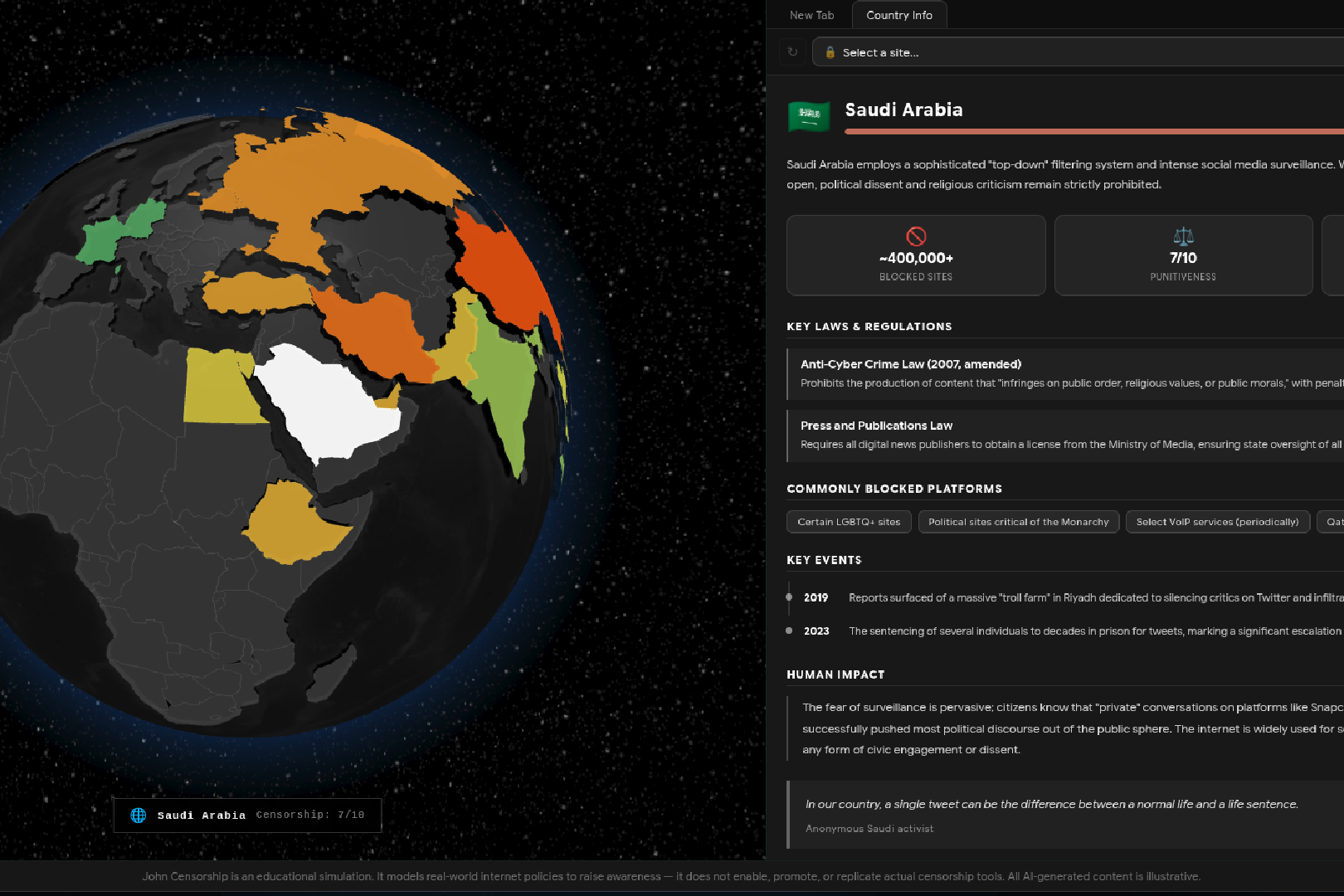
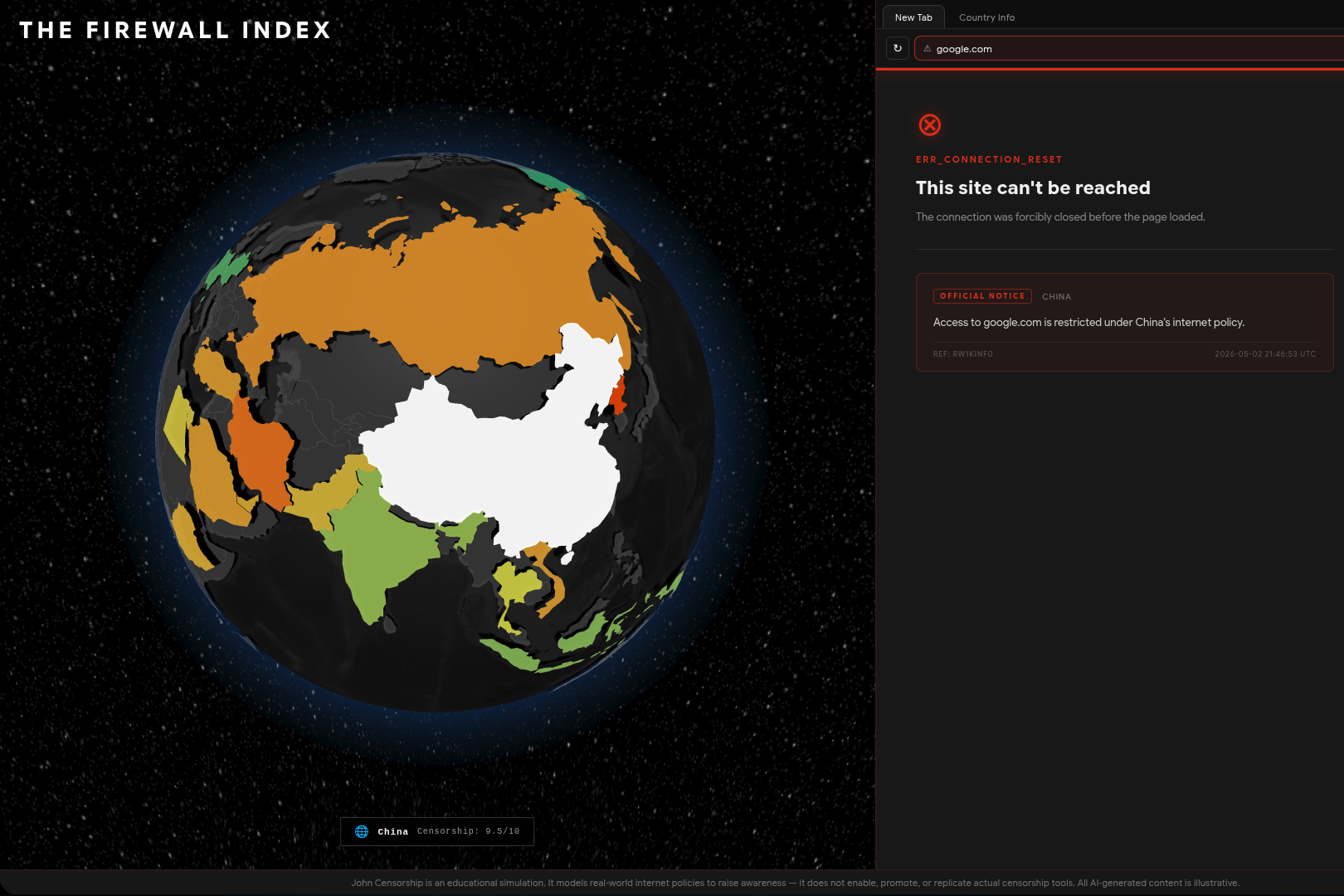
The Firewall Index is a simple, intuitive, and easily expandable website designed to spread awareness of censorship in various countries. It contains detailed information about laws and restrictions in various countries, and has a simple simulated "browser" where you can access different websites and see whether or not it has been blocked in the selected country.
How we built it
Online tutorials and guides were incredibly helpful to learning the skills we needed this project. However, to increase efficiency and direct our attention to the creative process, AI agents were used to significantly speed up parts of our development.
Challenges we ran into
Frontend development was our biggest challenge, as the three of us were mostly familliar with other languages such as Java, C++, and Python.
Accomplishments that we're proud of
This project was incredibly ambitous and we never though we would have been able to finish it at the start. We are especially proud of the interactivity and design of the UI, as well as the amount of information this website is able to provide.
What we learned
We learned a lot about frontend development, especially Vite and React, in addition to censorship around the world. During deployment, we also learned how to host a node website on an Alpine Linux virtual machine server.
What's next for The Firewall Index
The firewall index was designed to be easily expandable. New countries can be added in the blink of an eye, while existing information can also be changed easily. This allows the project to easily be kept up to date with the latest censorship updates around the work.
A more ambitious plan in the future would be to use proxy and VPN services to actually simulate browsing in different locations, instead of hardcoded block lists. However, this would be tricky and introduces a variety of technical, financial, and ethical complications.
Other Details
Gitlab: https://git.cornlab.cc/hwang/hackathon2 Self Hosted on Alpine Linux Server: https://johnmusic.cornlab.cc/
Built With
- react
- vite


Log in or sign up for Devpost to join the conversation.