Inspiration
Most 18 to 24 year olds pick their first credit card blind. Nobody tells them whether they will be approved, and a rejection leaves a hard inquiry on a credit file they barely have. In our 10 student interviews this fall, 6 students brought up credit cards without being asked, and 8 said their families shape their money decisions. Social listening showed the same pattern: students don’t want another app that tracks spending. They want someone to answer one question, “what should I do?” Cense answers it at the moment the decision is due, starting with the first card.
What it does
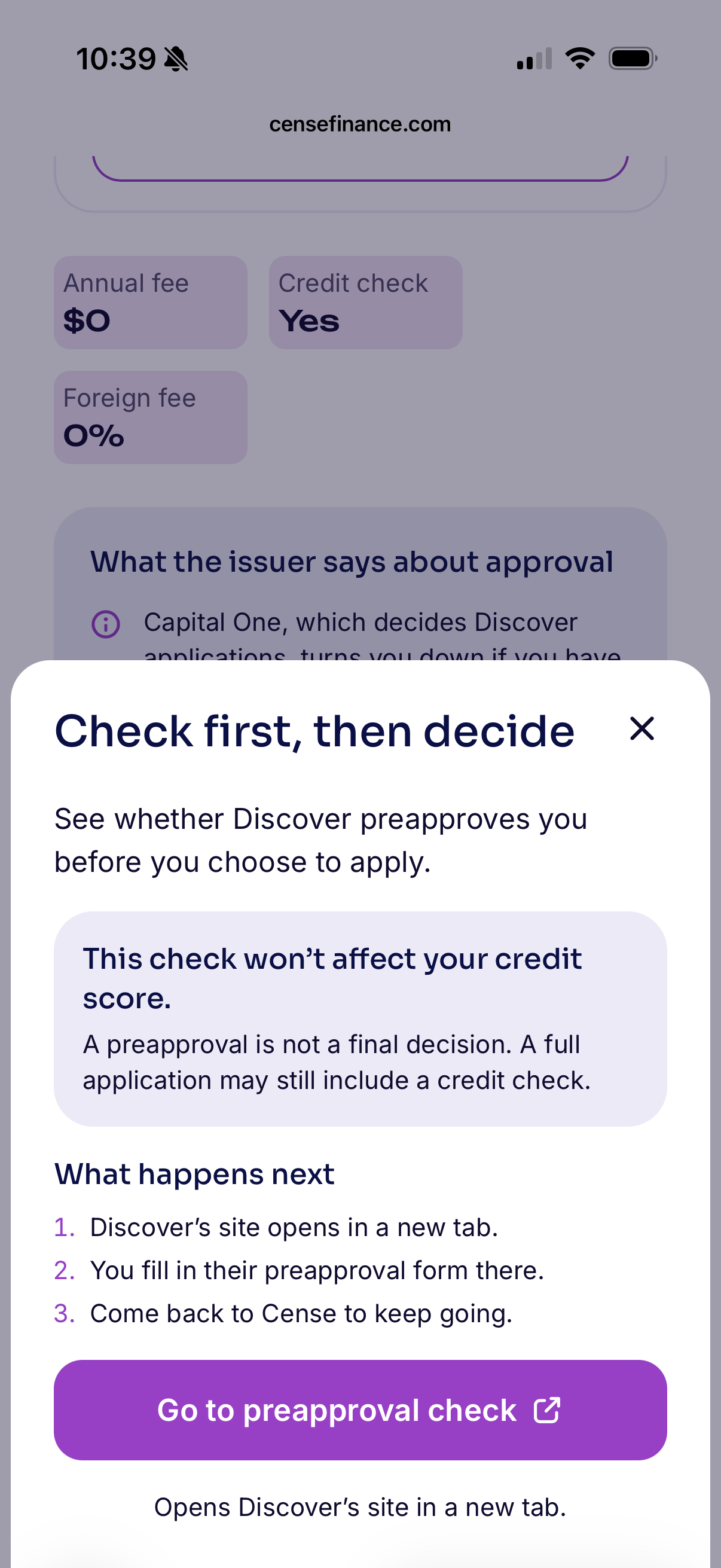
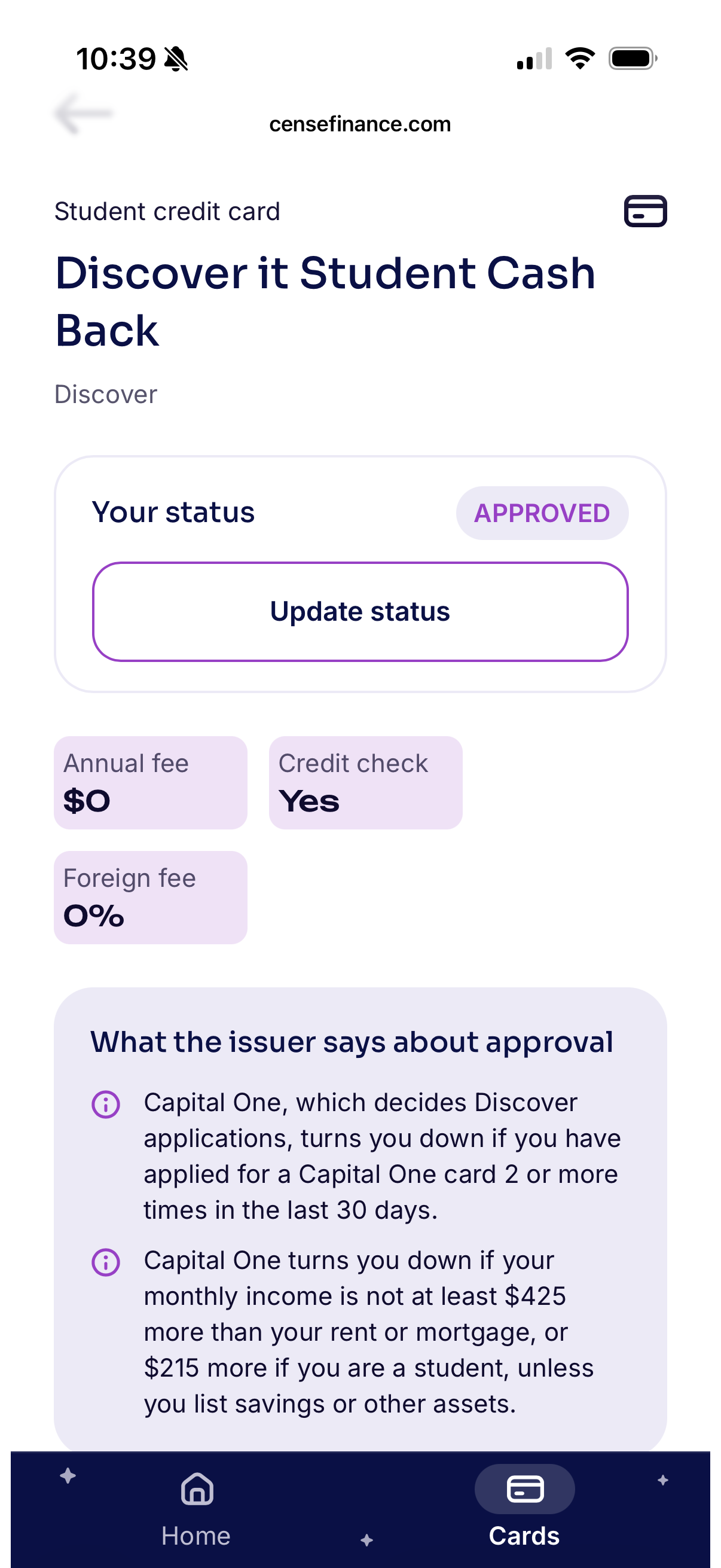
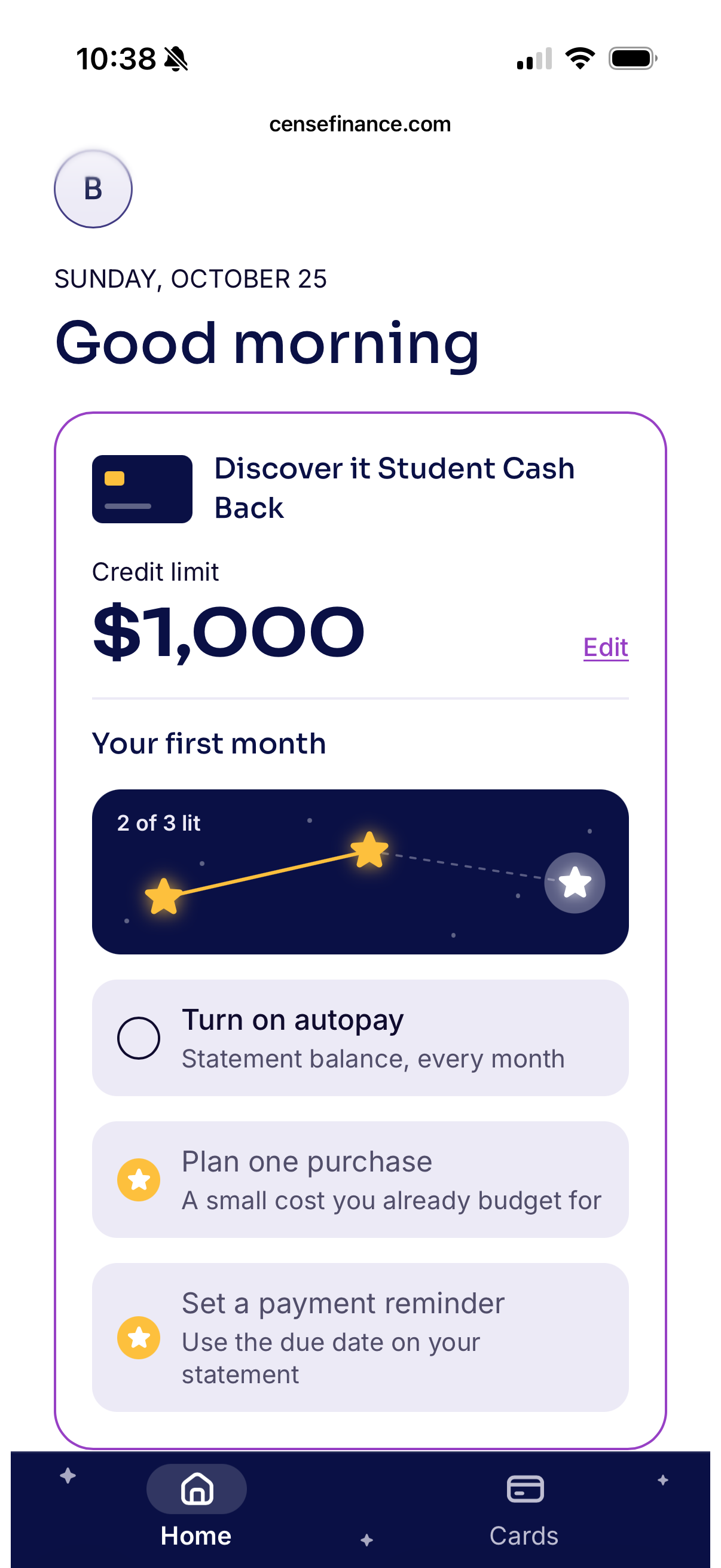
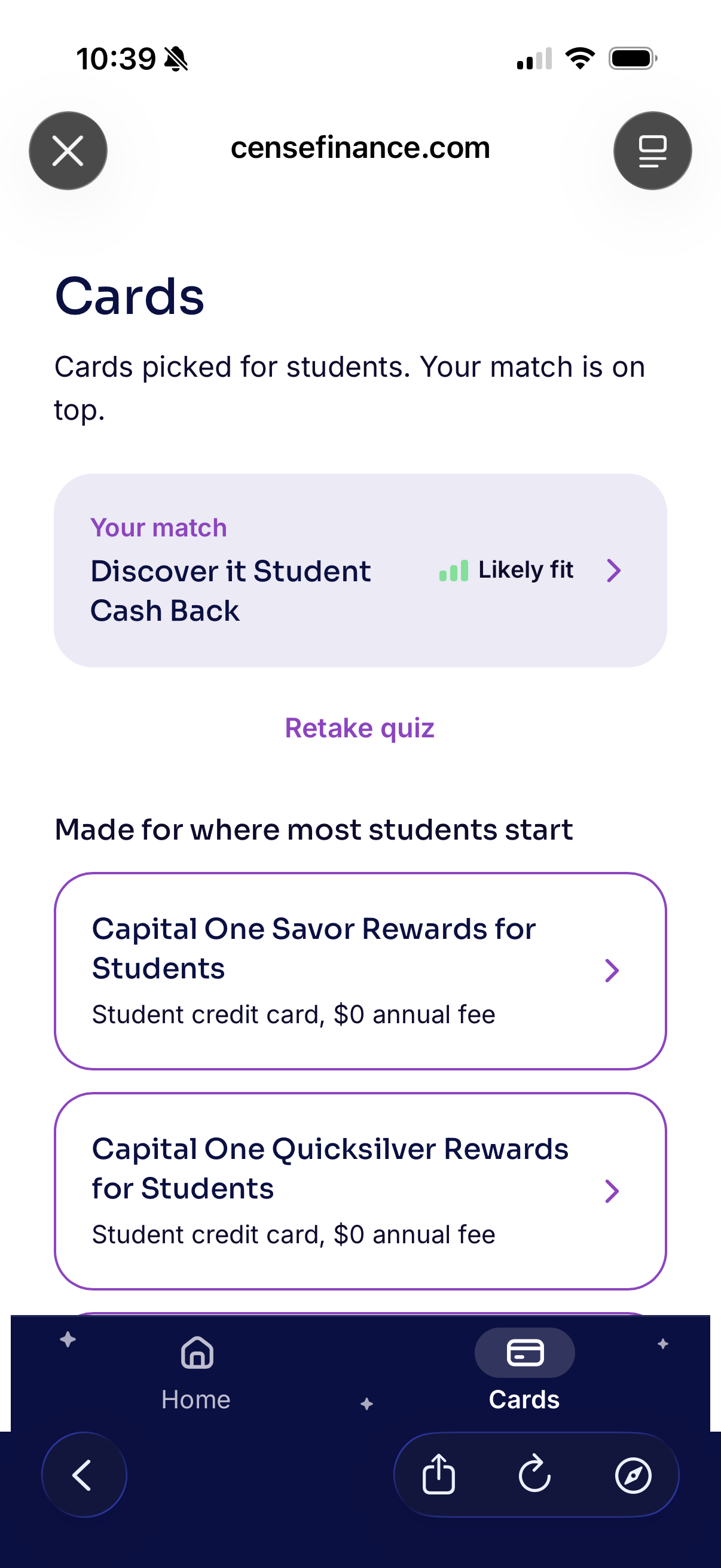
A student takes a six-question quiz, and Cense gives each card a fit tier (likely fit, stretch or not yet) with the reason, before they apply. Cense then sends them to the issuer’s own preapproval check and application. Once they apply, they track the result in Cense: applied, approved or denied, plus the credit limit. An approved card gets a simple first-month plan: turn on autopay, plan one purchase, and set a payment reminder. A denial gets a calm five-step plan and a reminder for when to reapply. That way the first card builds the student’s credit instead of hurting it.
How we built it
We started with research: 10 discovery interviews, social listening and a paid ad A/B test. We then ran solution interviews on a lo-fi prototype. Our designers made hi-fi Figma frames, and every screen in the app is built to an approved frame. The app runs on Next.js and TypeScript on Vercel, with Supabase Postgres for data. Row level security keeps each student’s data private, and students sign in with an email code. The API follows a versioned OpenAPI contract, Resend sends the reminder emails, and PostHog records privacy-masked analytics. The core of Cense is a rules engine in which every eligibility rule cites its source, such as the CARD Act’s independent-income rule for applicants under 21.
Challenges we ran into
Our first hypotheses failed. The paid ad got strong click-through but zero sign-ups from 257 landing page views, and social listening showed students turn to people rather than apps for money advice. So we moved from budgeting to the first card decision. We also learned that passing automated checks is not the same as working. Three bugs reached production with every check green, such as a star that didn’t stay lit after a reload. Since then, every change is walked end to end as a real student before it merges. Finally, we had to be helpful without overpromising. Cense only says “likely fit” when the rules support it, and it always shows why.
Accomplishments that we’re proud of
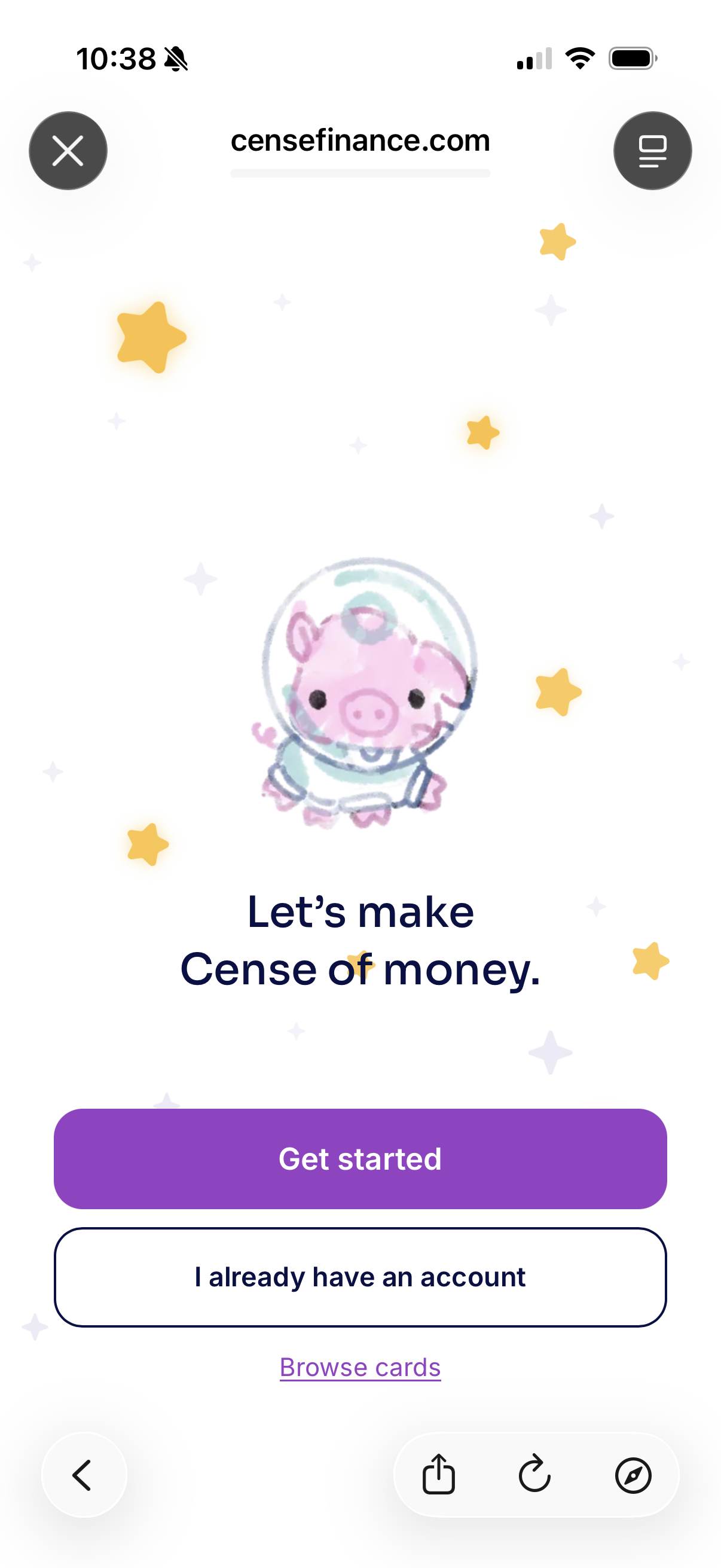
We shipped a live product at censefinance.com that real students use, built by a team of five across economics, design, data science and computer science. It covers the full first-card arc in one flow: match, preapproval, applying, tracking, and next steps after an approval or a denial. Every recommendation comes with a source and a reason. The product is also built with privacy first: we never ask for a Social Security number, date of birth or bank login.
What we learned
Test the riskiest assumption first, and be willing to throw out a whole direction when the data says so. Trust is the product: students will hand over their first credit decision only when every claim has a source. And shipping to real users every week beat planning for the perfect launch.
What’s next for Cense
Next, our second release (November 9) helps students use the card well: card setup, statement and due-date reminders, reapply reminders, and a pilot of bank linking through Plaid. By Demo Day on December 11 we plan to add safe-to-spend from linked accounts, personalized recommendations, matched learning resources, an iOS app with push alerts, and Ask Penny, our in-app guide that answers money questions. The long-term goal is for Cense to be where every student goes for their first big financial decisions.
Built With
- axe-core
- canva
- claude-code
- cloudflare
- figma
- github-actions
- next.js
- node.js
- notion
- openapi
- playwright
- postgresql
- posthog
- react
- resend
- row-level-security
- supabase
- tailwind-css
- typescript
- vercel
- vercel-cron
- vitest
- zod


Log in or sign up for Devpost to join the conversation.