-
-
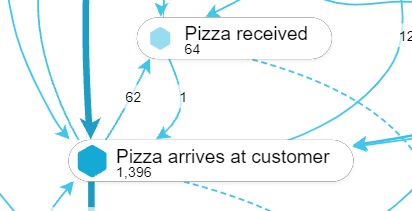
The "pizza received" step can be removed from the system as it is redundant and wastes time between delivering orders.
-
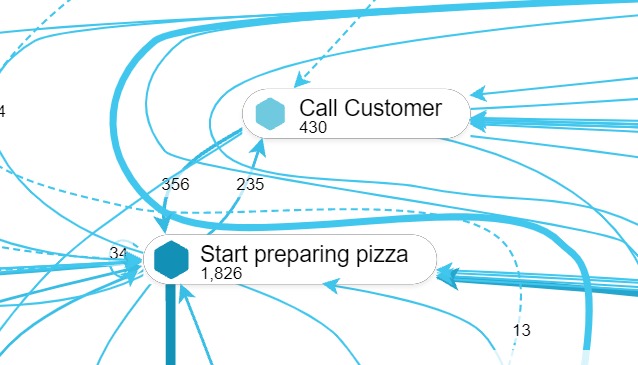
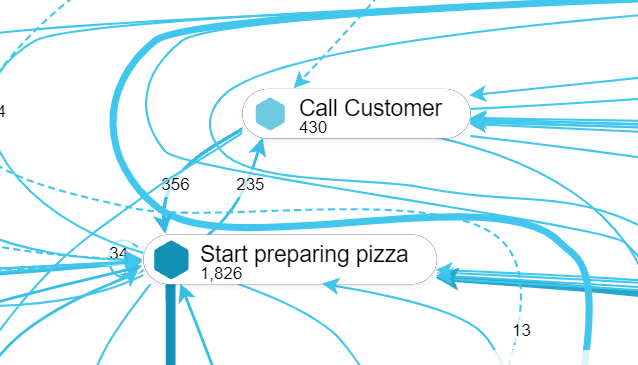
Many orders result in calling the customer after starting the pizza preparation process, this likely leads to wasted time and resources.
-
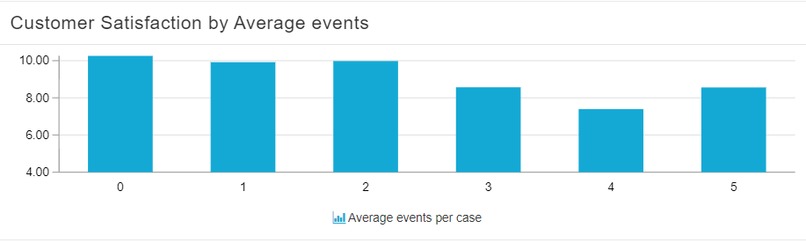
The more steps there are in the process, the lower customer satisfaction tends to be. More steps is more time the customer spends waiting.
-
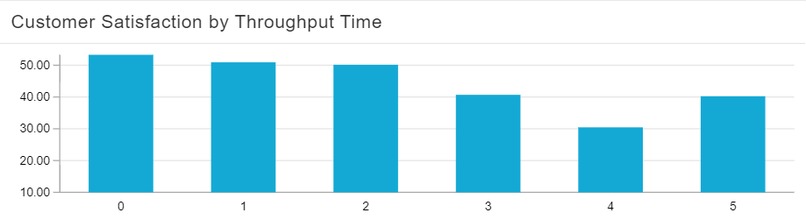
The longer it takes for a customer to receive their order, the lower their satisfaction rating tends to be. Hot pizza beats cold pizza.
-
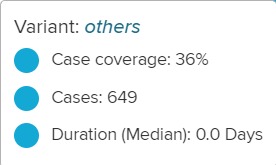
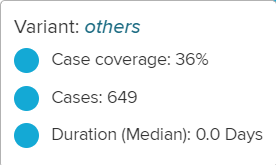
36% of orders follow a unique order of operations. By making the system more consistent, we can cut confusion and wasted time out.



Inspiration
We love pizza and thinking of ways to make things better. This project gave us a chance to do both and learn how to use Celonis's analytical tools too!
What it does
Our process analysis report can be used to visualize processes from the time an order is placed to when it gets to the customer and make generalizations based on historical data.
How we built it
We first joined the three datasets provided into one in python. From there we were able to give the merged dataset to Celonis. From there we were able to create dashboards and visualizations using Celonis's data analysis tools.
Challenges we ran into
It took a bit of digging trying to figure out what recommendations to make. This just indicated to us that our visualizations weren't good enough yet. By tuning our visualizations, we were eventually able to make several recommendations almost obvious.
Accomplishments that we're proud of
It was pretty nice when people would come by to check out what we were working on and responses would gradually transition from "sounds like a cool project" to "wow you guys made that? That's cool!" It was also very rewarding incrementally learning new things as we dove deeper into using Celonis and asked questions when we got stuck.
What we learned
We learned a lot about how to take raw datasets, synthesize them into a larger dataset, and then present that dataset in a way that can be used to make business recommendations. We also learned a lot about using Celonis's tools to automate parts of the data analysis process and generate our visualizations.
What's next for Time Is Money
The next step in this project would be to take our report and recommendations to the owner of Pizzeria Mamma Mia and present them. From there we would strategize ways to implement our proposed changes and see if their were any blind spots in the data where we could try to generate further recommendations. After proposing our recommendations, we would check back with the pizzeria after another six months or so to see if there have been any changes to customer satisfaction and profits.


Log in or sign up for Devpost to join the conversation.