-
-
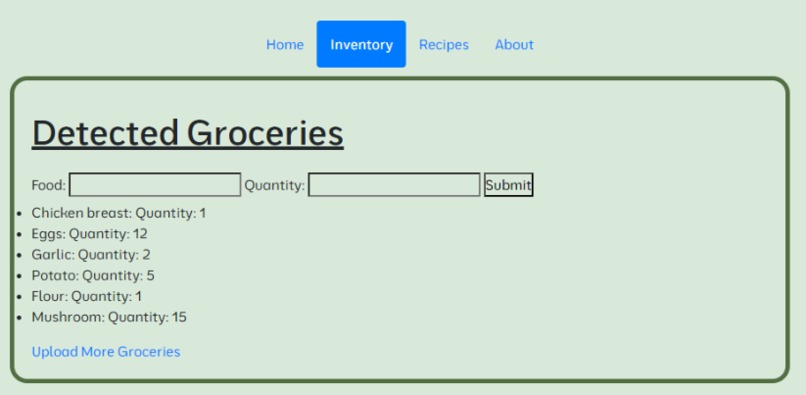
Inventory Page (with form to edit inventory)
-
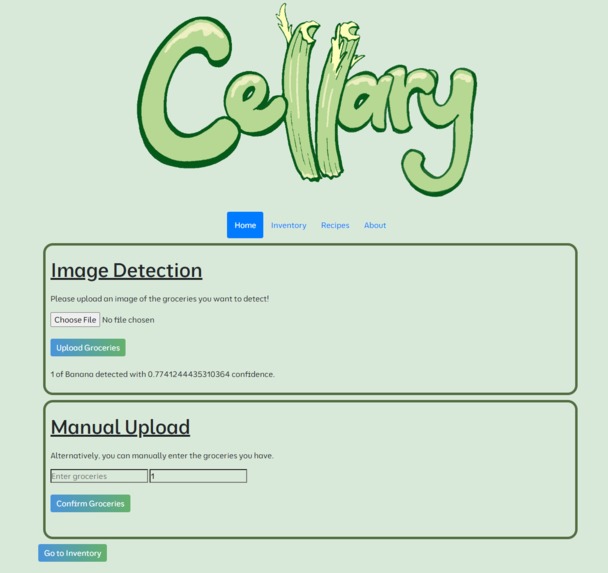
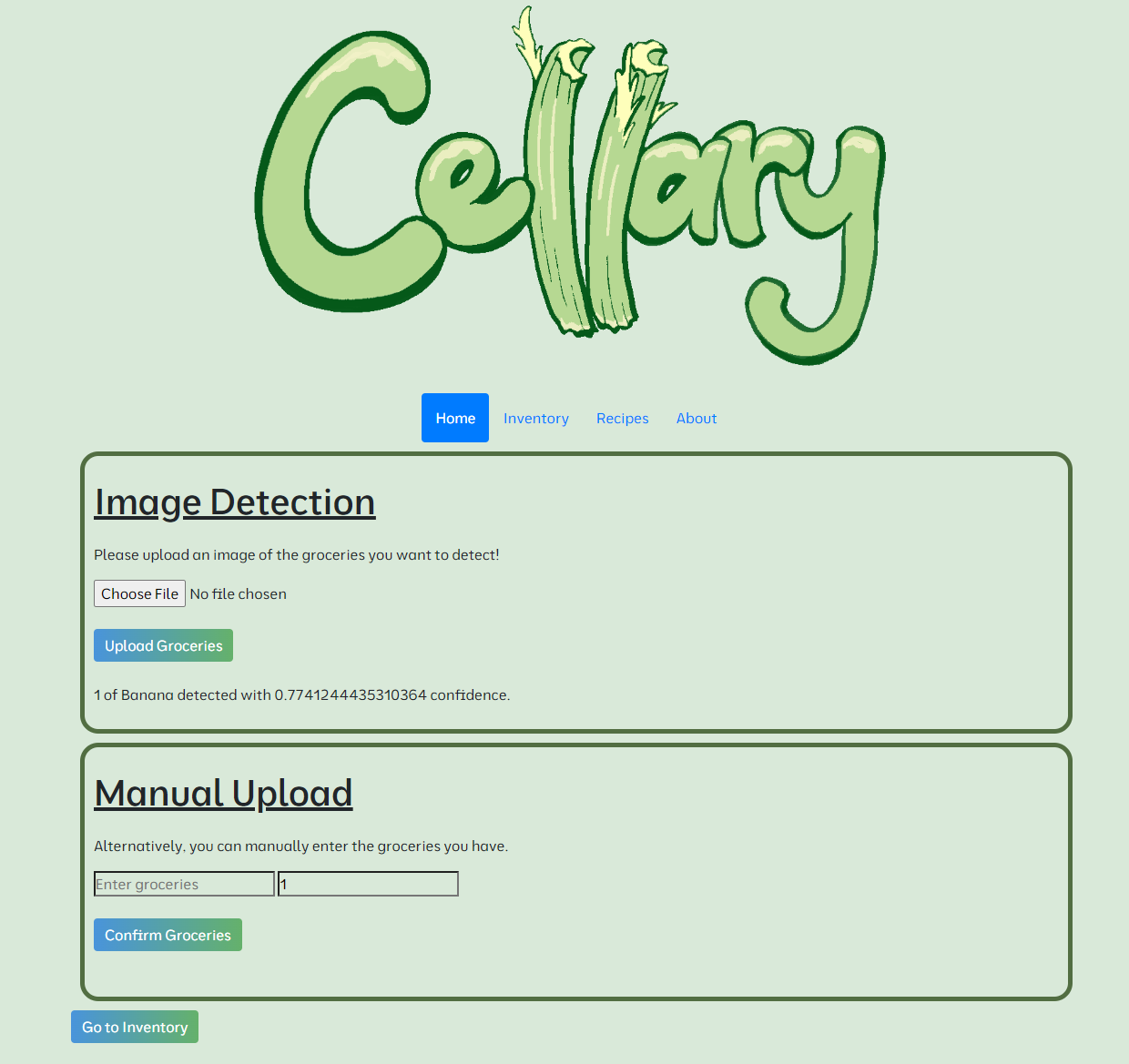
Home Page (contains image detection input and manual input to inventory)
-
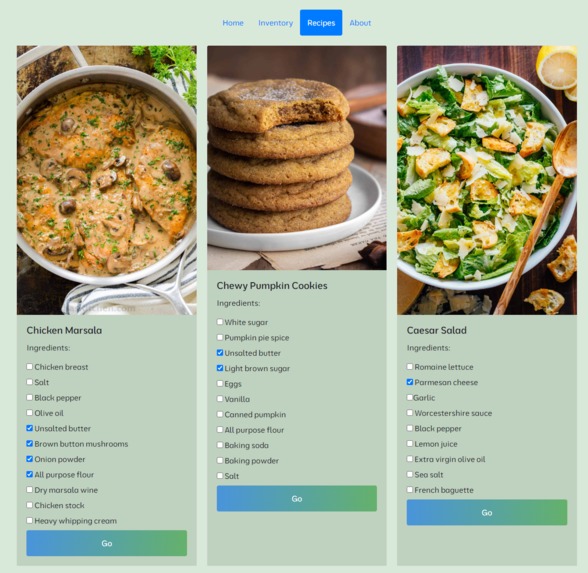
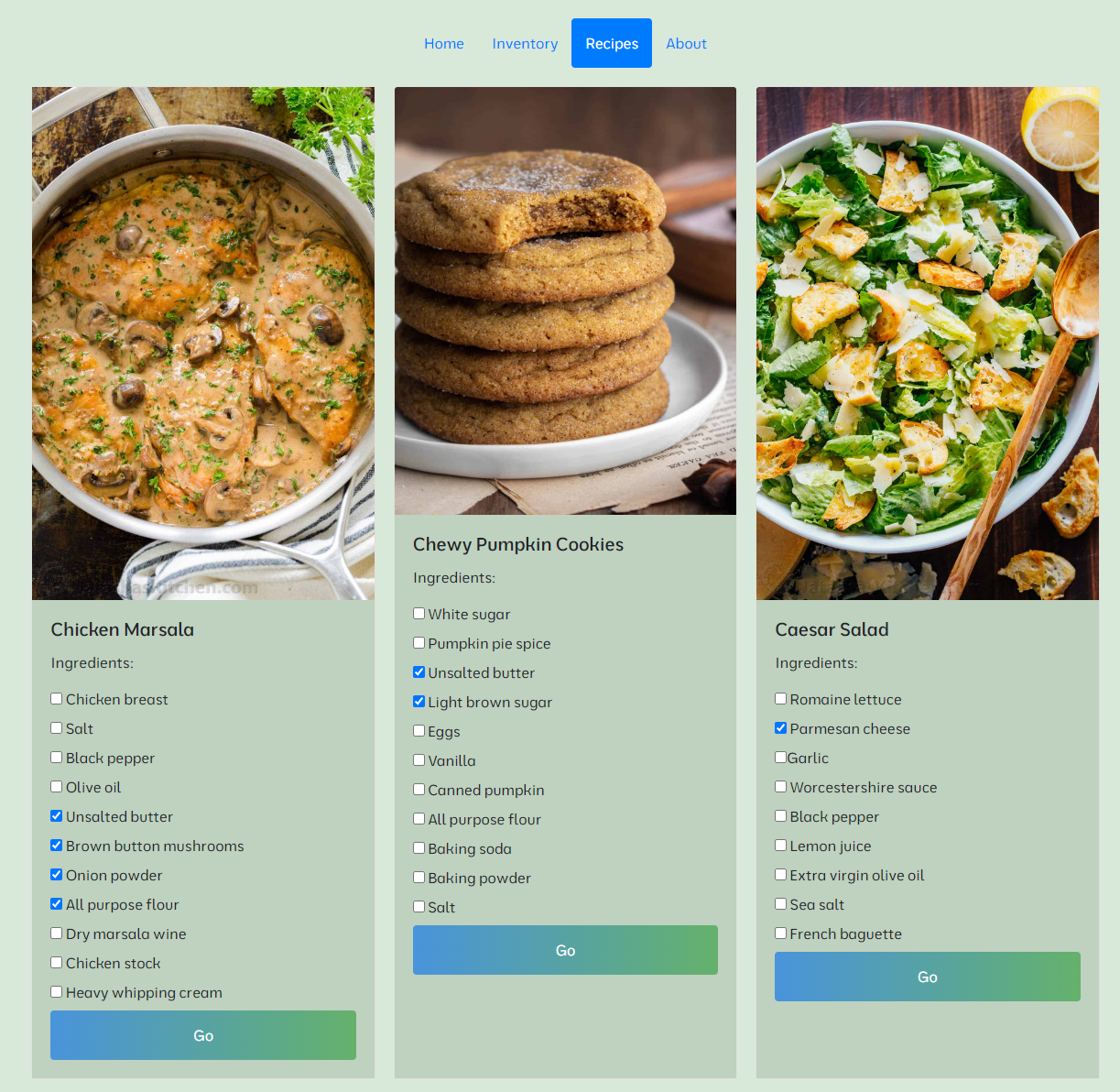
Recipes Page
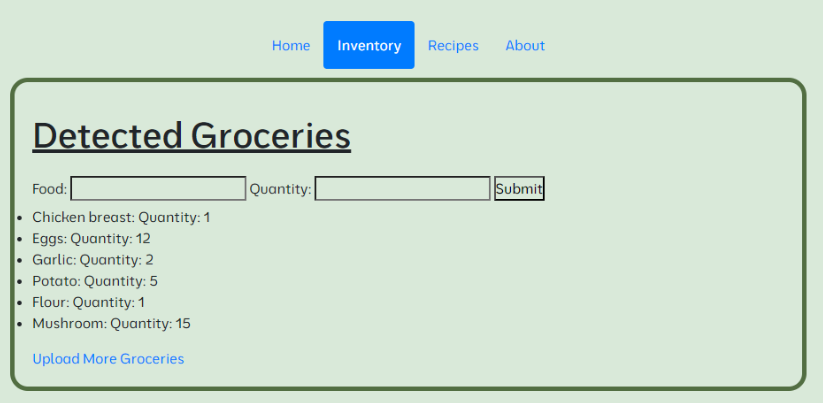
Inspiration
Through my friends and I's journeys through cooking and meal prep, we have encountered issues with remembering food that has been in the fridge for a long time, as well as finding recipes to then use these old ingredients. If we aren't able to accomplish either of these steps, we cause food waste and end up throwing previously perfectly good ingredients away.
In finding a remedy for this issue, my team and I explored different apps such as Paprika, which stemmed from the same inventory management system. The only issue was that logging existing groceries was extremely slow, since you could only enter them manually or scan a barcode, which is where Cellary is able to stand out from the rest of the apps.
What it does
Cellary is a computer vision Python webapp that is able to take in an image through a file, call a pre-trained model through API, and return the results into a dictionary in order to process within the inventory page of the webapp. Through quick grocery logging and saved recipes, Cellary is able to help its users keep track of their fridge and pantry, all while reducing food waste.
How we built it
We made Cellary through Flask and used Bootstrap on the frontend to create a simple yet aesthetic look. In our Flask app.py, we are able to handle form and button submissions from the html files and store them properly into the dictionaries that track the user's inventory. Flask is also able to process image files and send them to the computer vision model for analysis, which then sends back its predictions for the image.
Challenges we ran into
Because we had a short time and had to go off of a pre-trained model, the model is inconsistent in identifying groceries, which definitely hinders the effectiveness of our application. In addition, with all our members being new to Python and Flask, getting set up was a challenge that definitely paid off in the end, as I believe that Flask has been extremely powerful in handling user requests and external API calls.
Accomplishments that we're proud of
Even with our inexperience, we were able to get a lot of stuff, both back-end and front-end, figured out, which has been a huge feat in itself. In addition, we were able to work with image detection, which has helped our app stand out and be innovative in the industry.
What we learned
Although we learned many technical skills, we also learned how to work together in a semi-professional environment, playing to everybody's strengths and dividing up tasks properly in order to minimize merge conflicts and maximize productivity.
What's next for Cellary
Although Cellary has many working features, it has a long way to go in order to compete with order apps. The first step would be creating a recipe scraper to greatly increase the available recipes, and also developing an algorithm to recommend recipes based off the user's inventory. In addition, a calendar that lets the users schedule which recipes to make on which day and automatically compiling a shopping list would all be things that would greatly enhance the app and allow for a great user experience. Overall, Cellary has a lot of different paths it could go down, but we are excited to see its future progress.

Log in or sign up for Devpost to join the conversation.