-
-
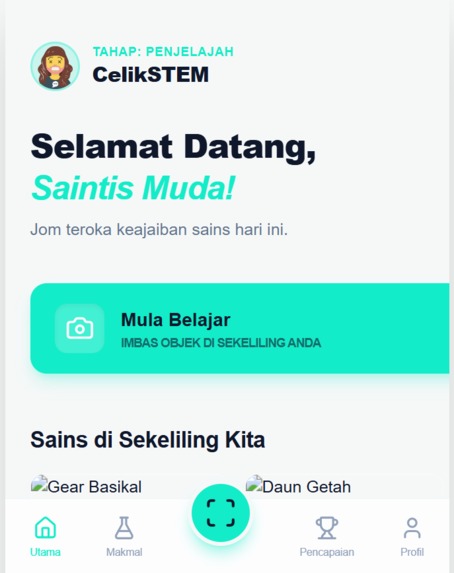
Homepage
-
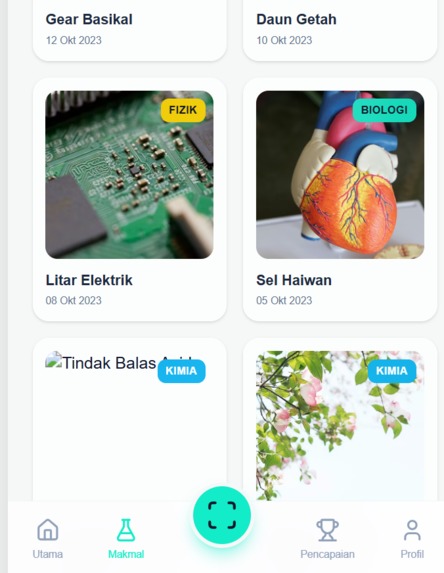
Homepage2
-
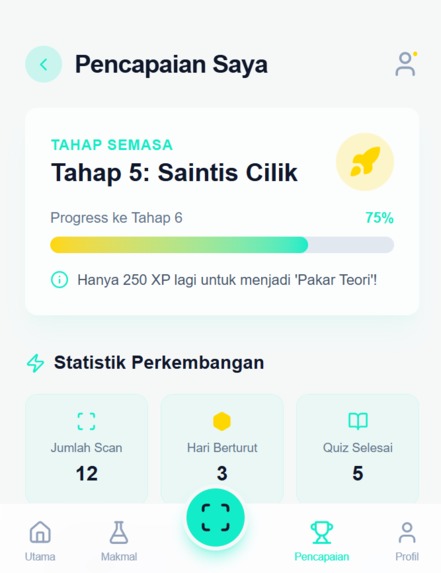
Homepage3
Inspiration
This project began with a clear challenge: many B40 and rural students in Malaysia face limited access to quality STEM tutoring, while classroom science often feels abstract and disconnected from daily life. When STEM feels distant, students lose confidence, curiosity, and interest in pursuing the science stream. We saw an opportunity to make STEM more accessible not just by improving access, but by improving relevance.
What it does
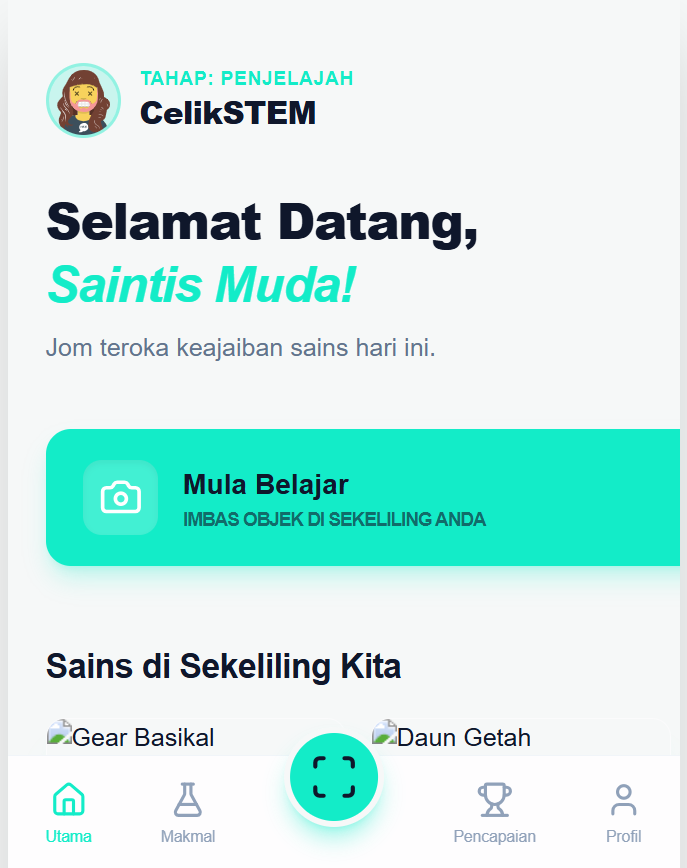
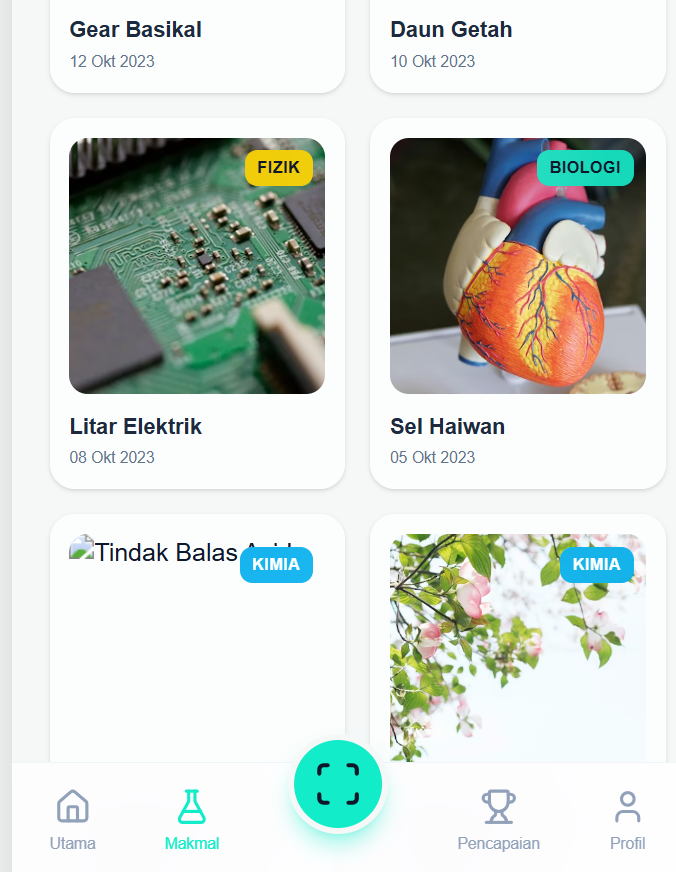
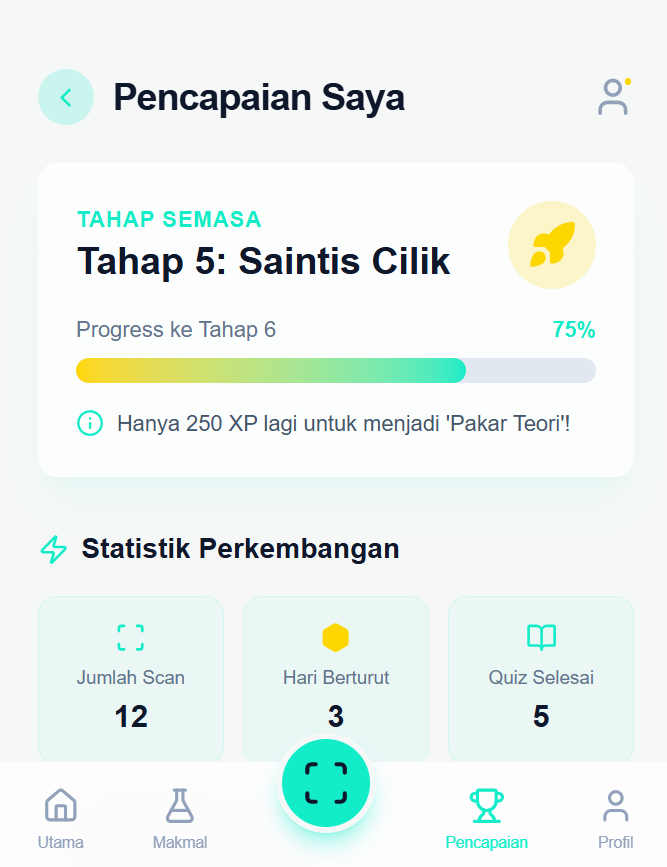
Our project is an AI-powered STEM tutor that helps students learn science and math through the objects around them. A student can take a photo of an everyday item, such as a bicycle gear, fan, or kitchen tool, and the AI explains the STEM concepts behind it in simple conversational Malay or English. By connecting lessons to real-life objects, the tool turns ordinary surroundings into a personalized learning environment. This makes STEM more engaging, relatable, and easier to understand for students who may not have access to quality tutoring or lab-based learning.
How we built it
We designed the project around a simple but meaningful flow: image input, concept recognition, and contextual explanation. The AI connects visual objects to STEM principles, then explains them using familiar language and real-world examples. Our focus was not only technical capability, but usability for underserved learners. That meant keeping the experience intuitive, bilingual, and encouraging.
Challenges we ran into
The biggest challenge was balancing simplicity with accuracy. STEM concepts can quickly become too technical, but oversimplifying them would reduce their educational value. We also had to ensure that explanations felt natural in both Malay and English while staying grounded in local, familiar contexts. Another challenge was designing for students who may have lower confidence or less academic support. This pushed us to think beyond functionality and focus on clarity, tone, and accessibility.
What we learned
We learned that relevance is a powerful driver of learning. When students see science in objects they use every day, curiosity increases and abstract concepts become much more approachable. We also learned that educational accessibility is not only about availability. It is about making learning feel understandable, inclusive, and connected to real life
Built With
- aistudio
- gemini
- stich

Log in or sign up for Devpost to join the conversation.