-
-
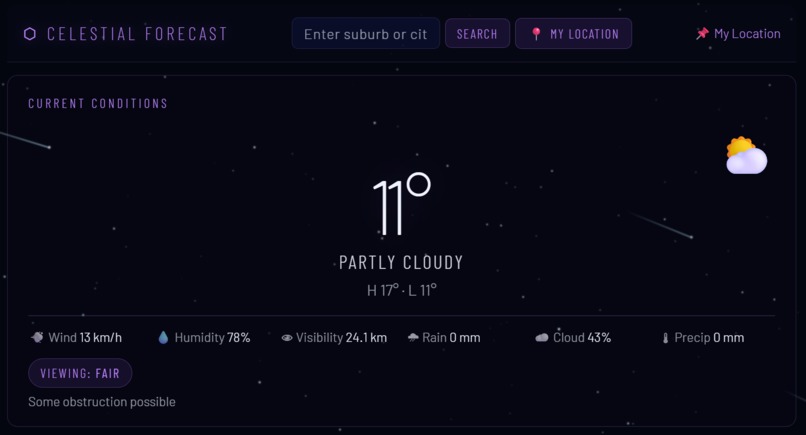
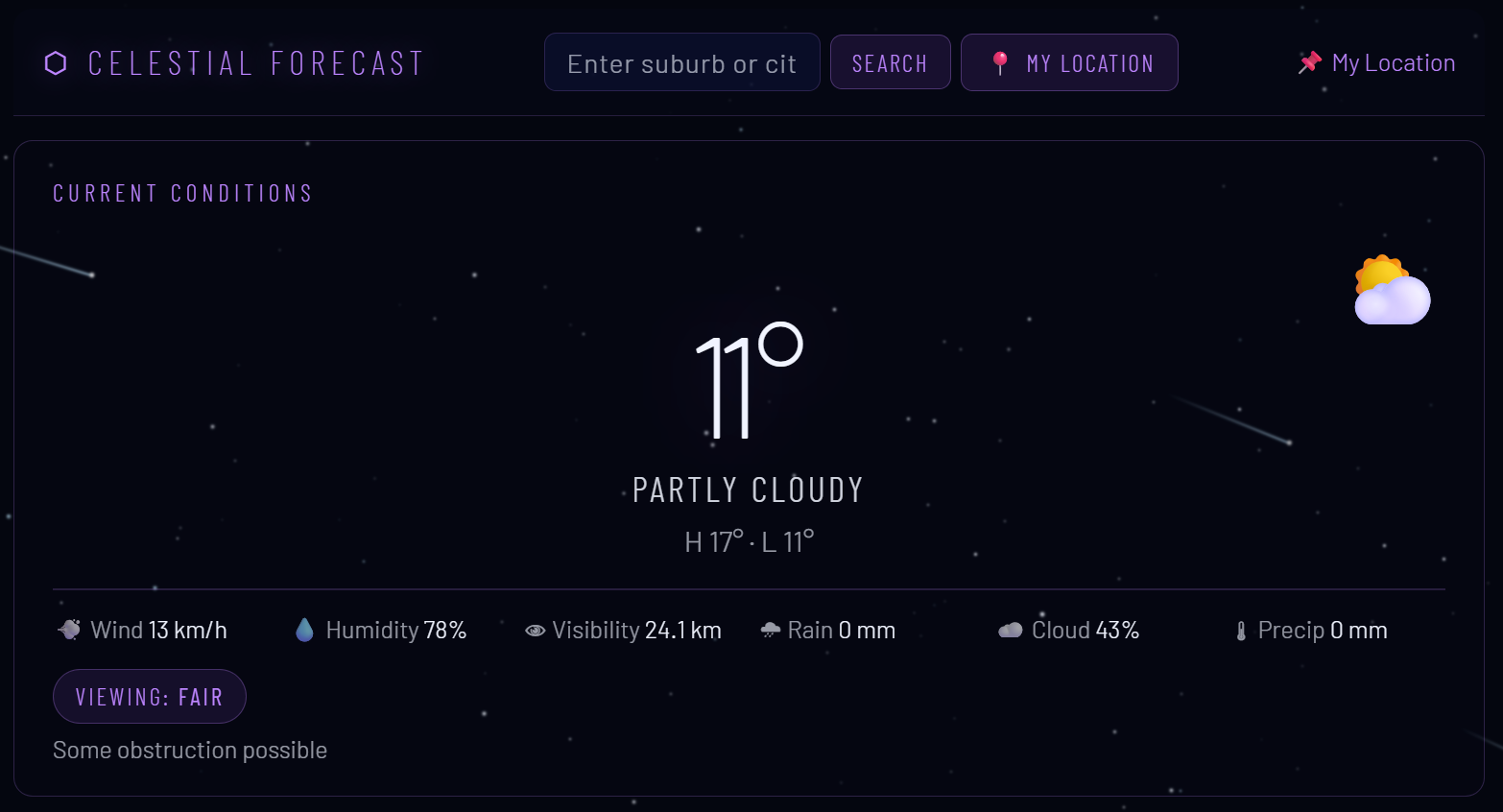
Weather dashboard main panel
-
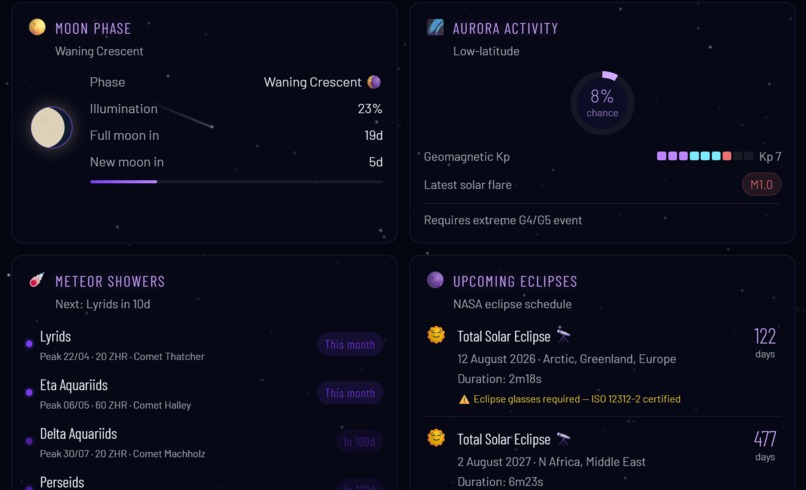
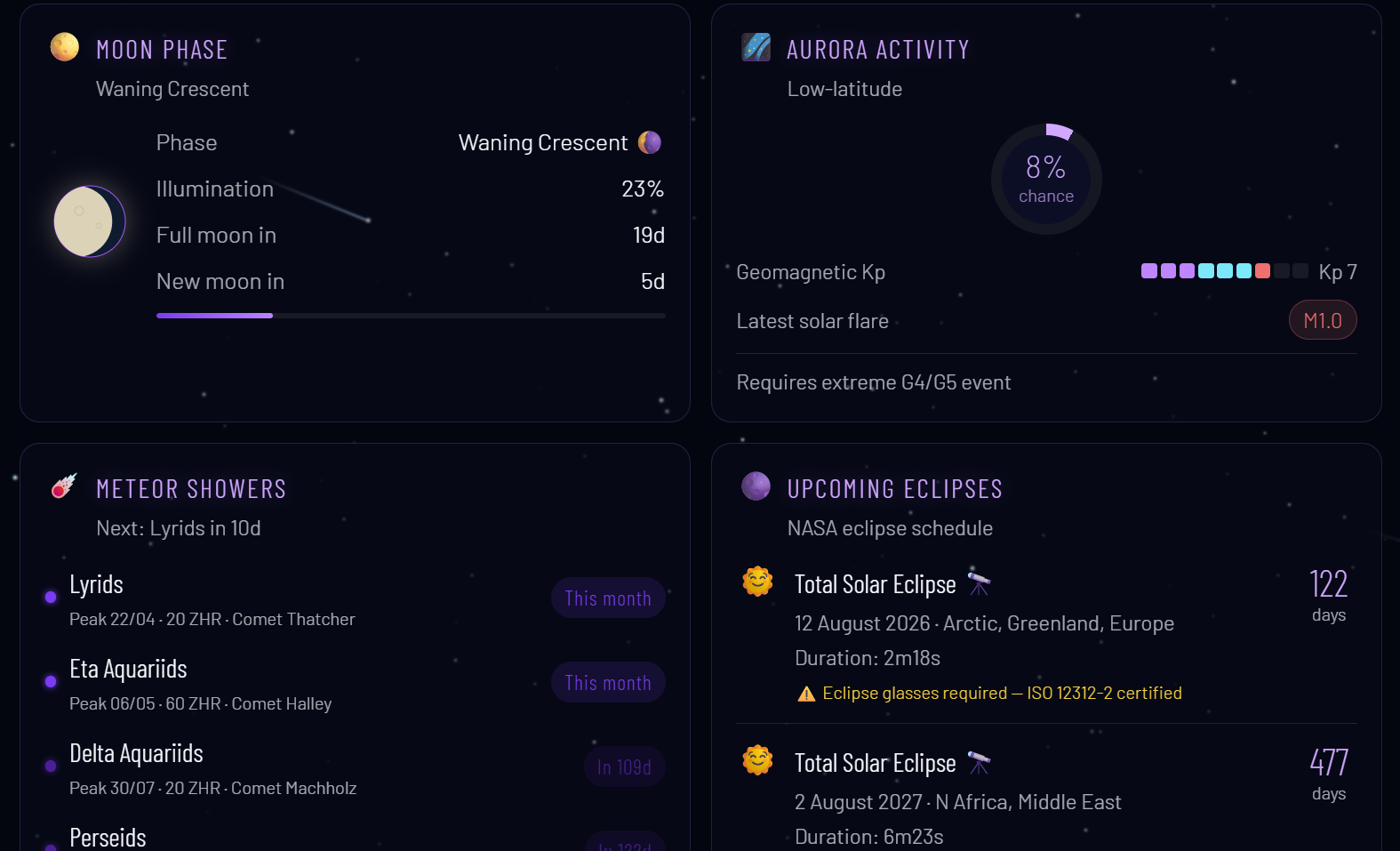
Celestial events data dashboard
-
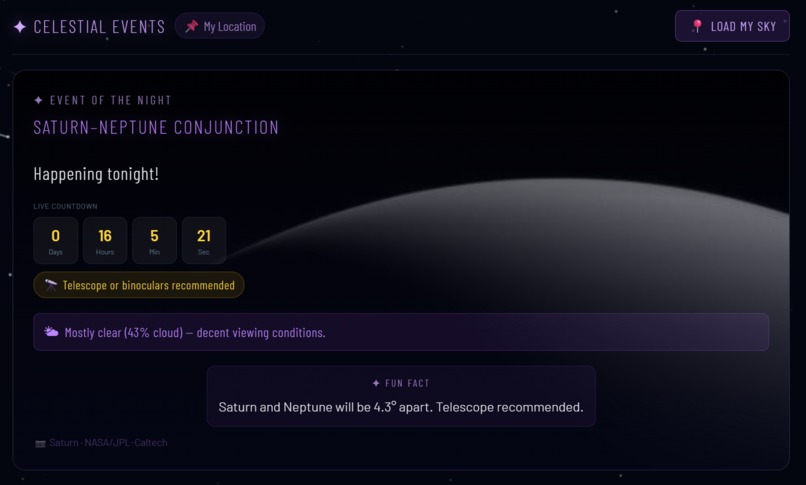
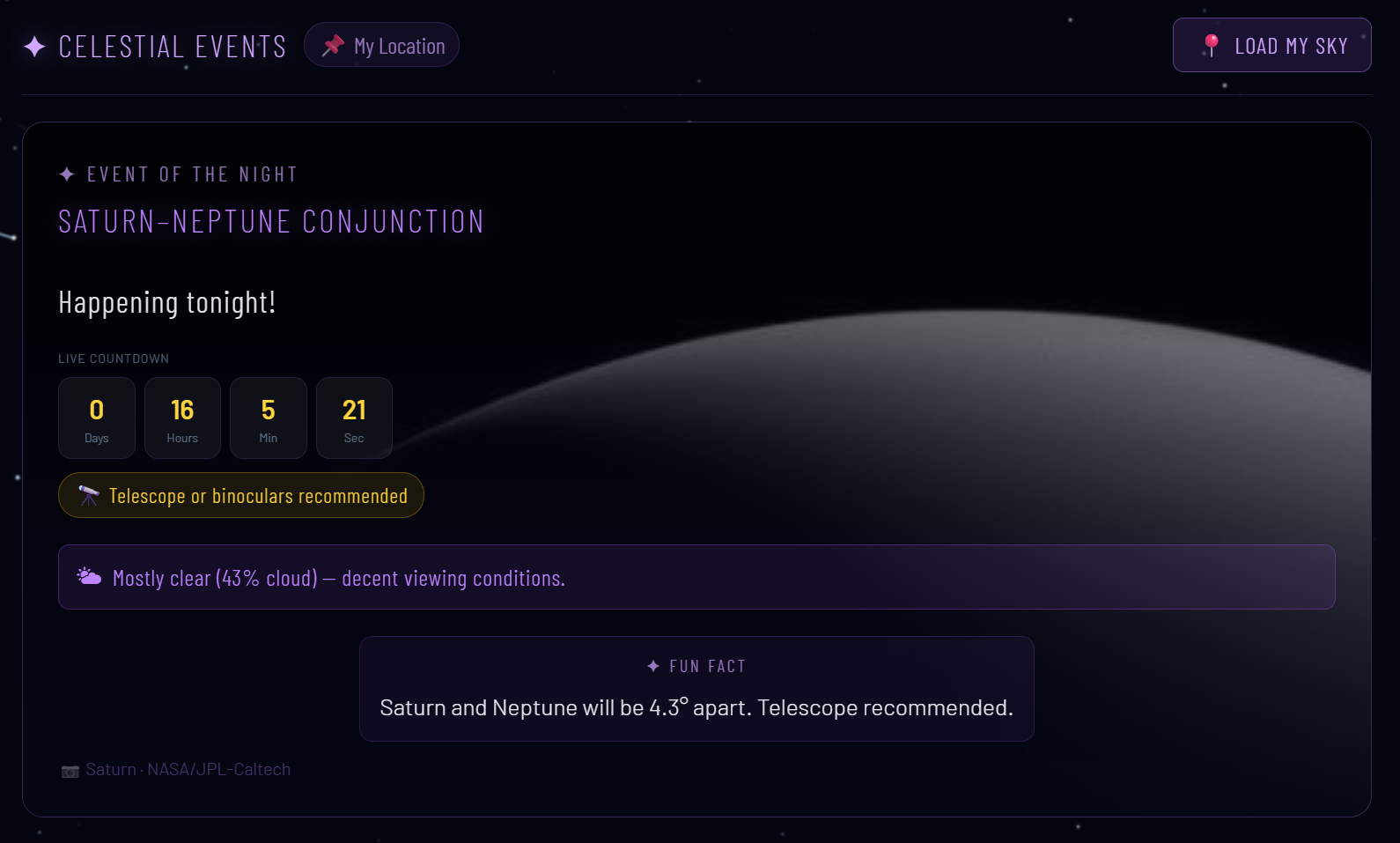
Celestial event (nearest) card
-
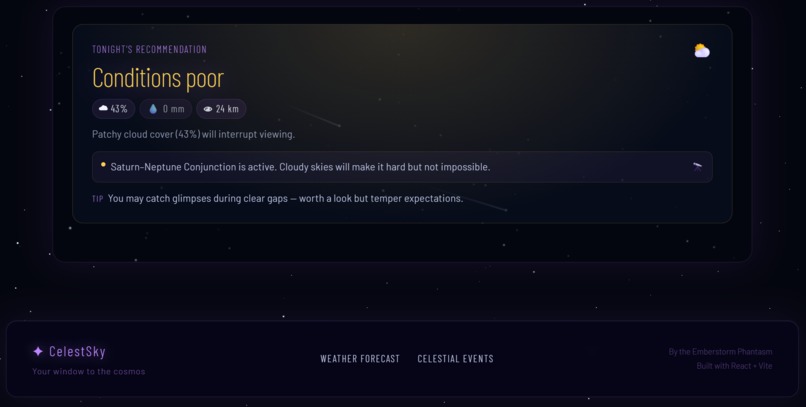
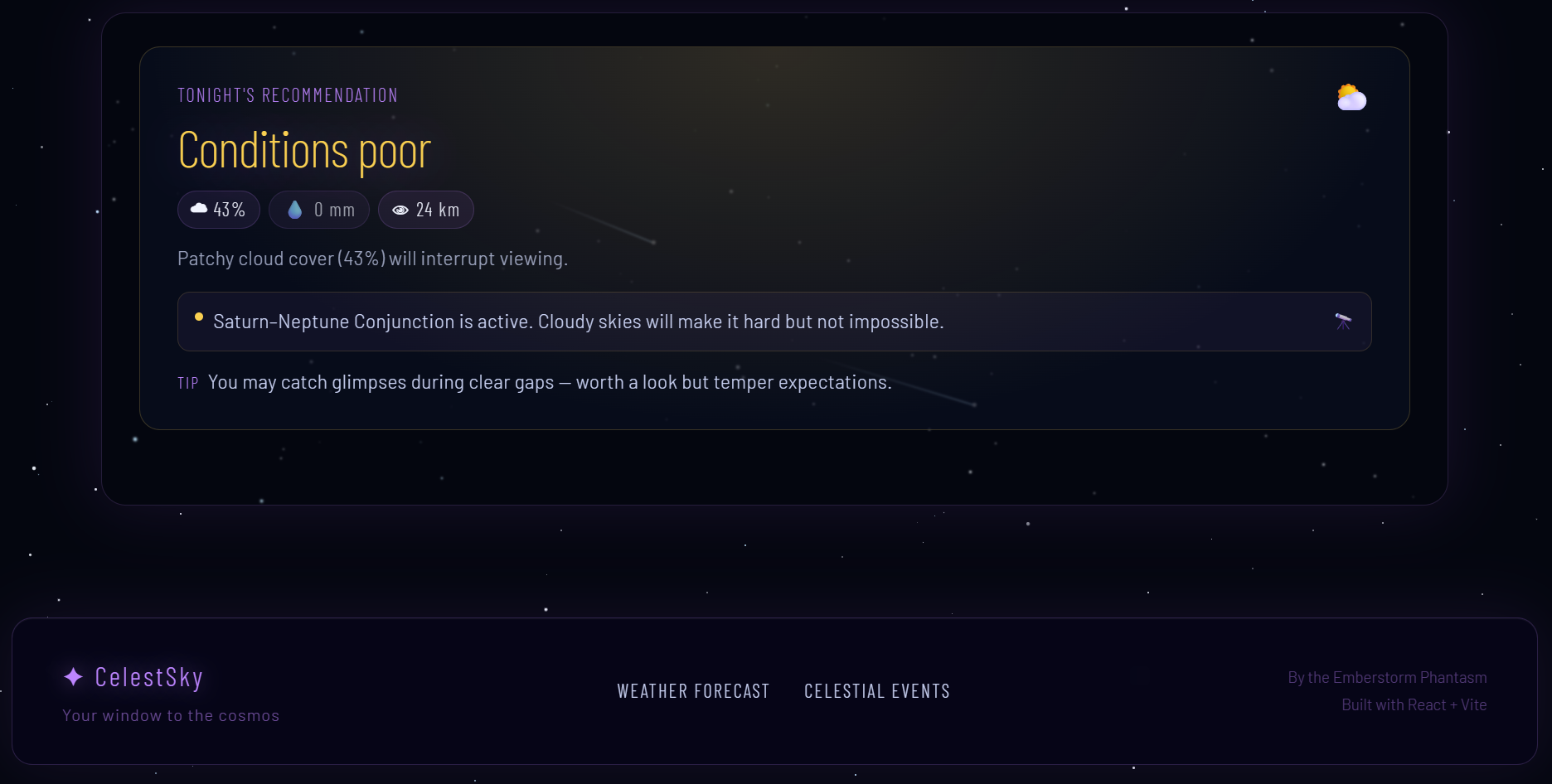
Recommendation board
-
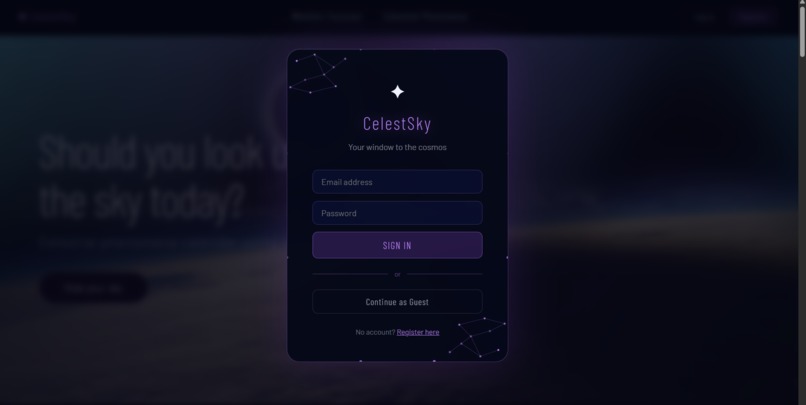
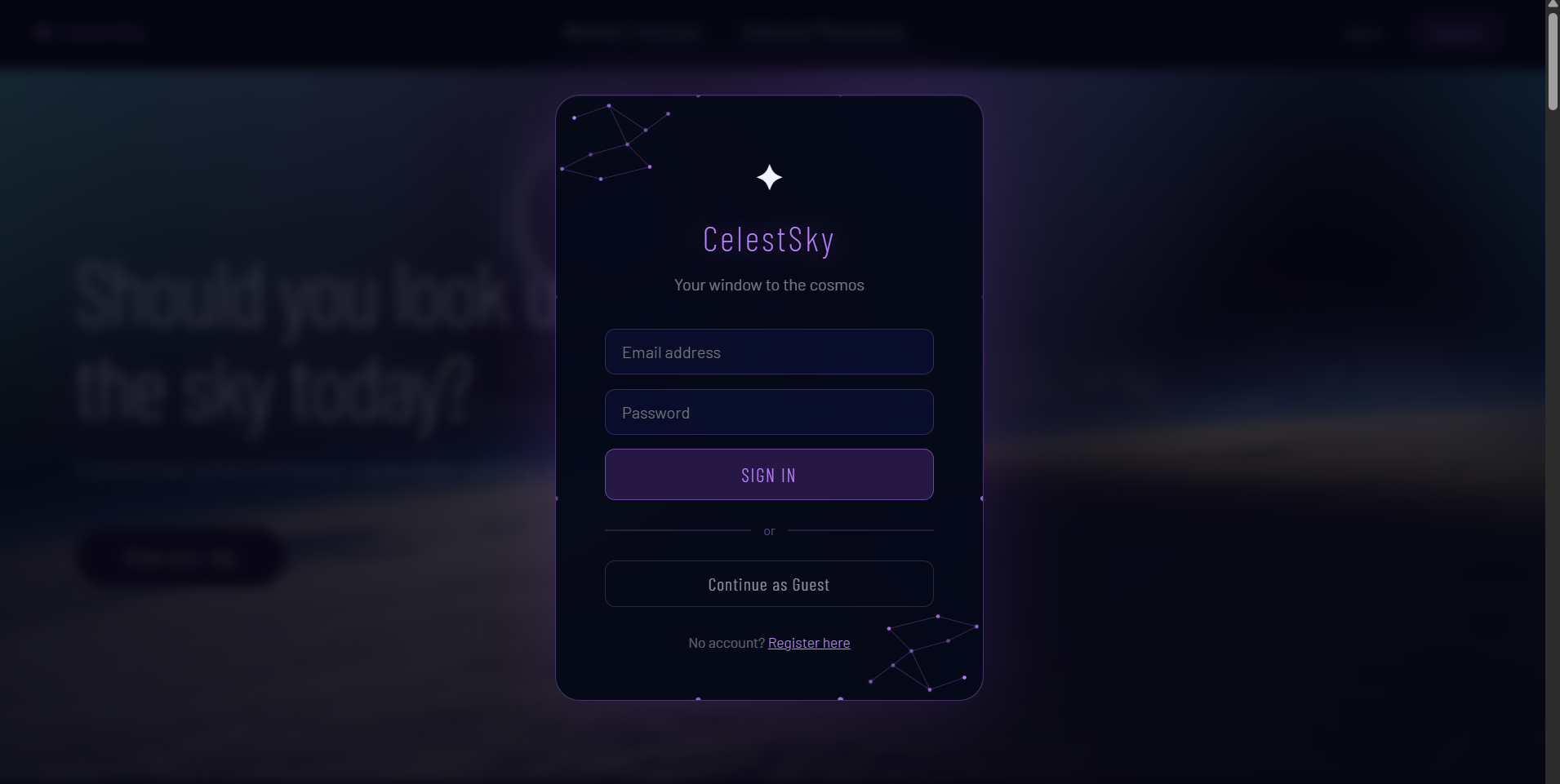
Login pop up
-
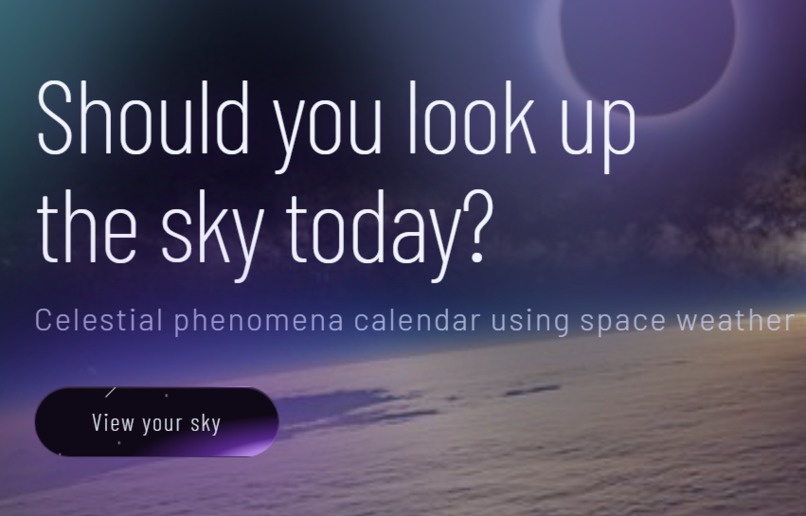
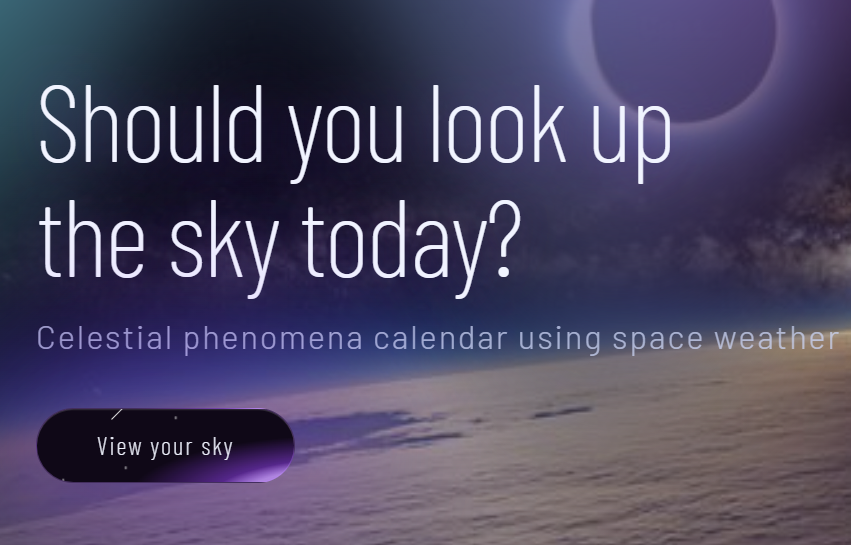
Main question on landing page and button
-
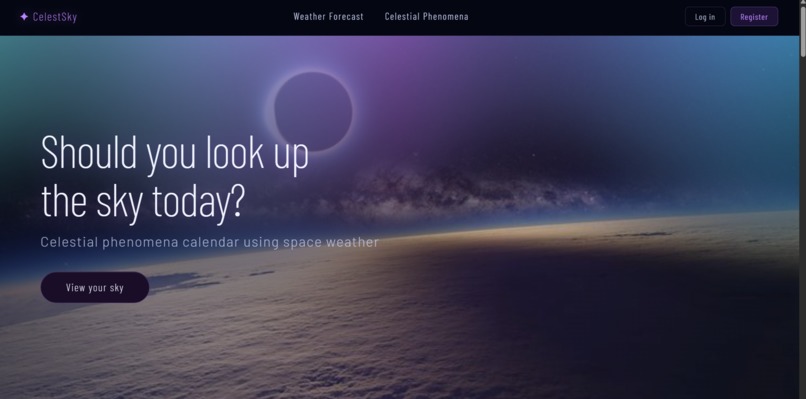
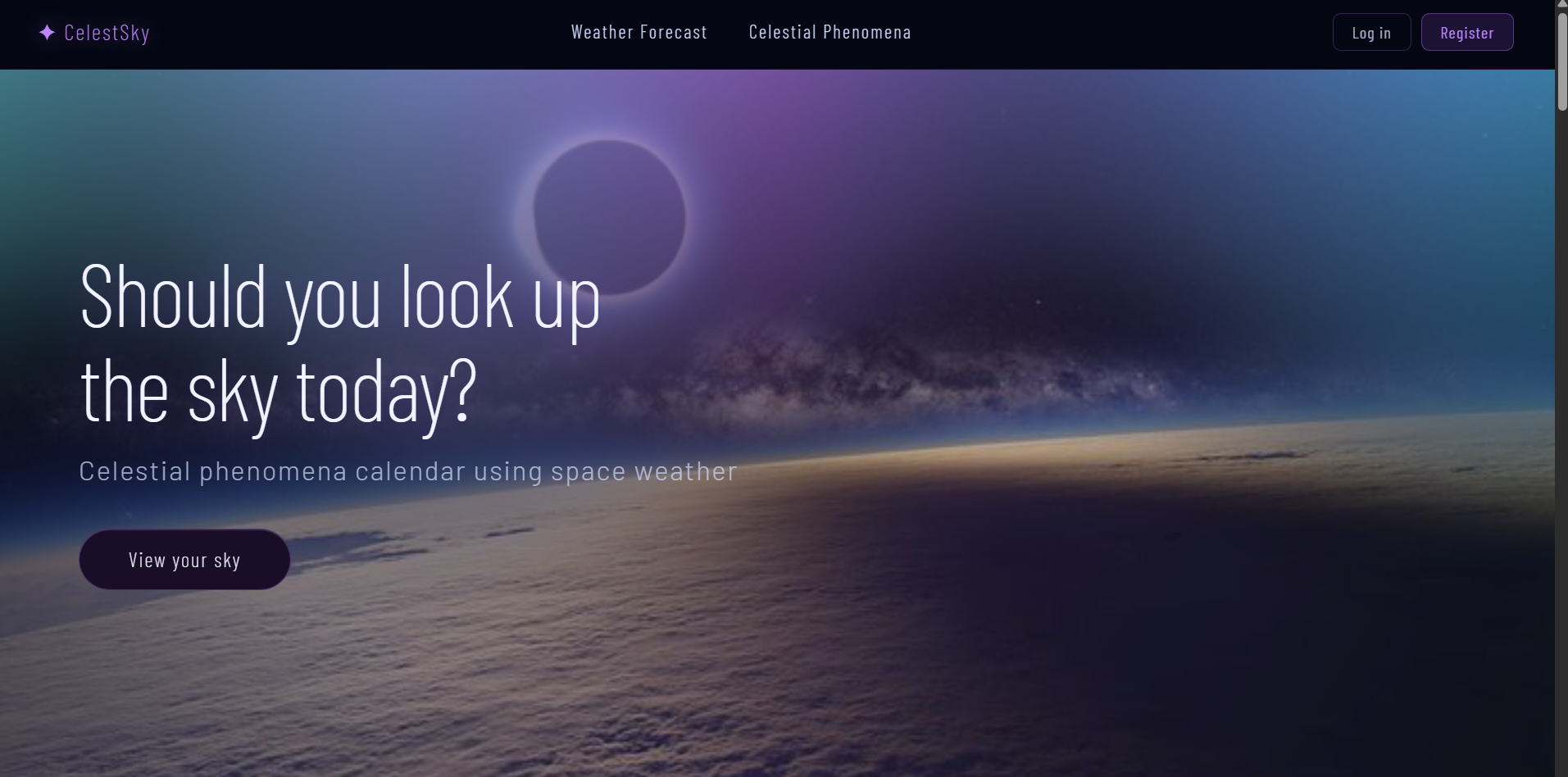
Landing Page
-
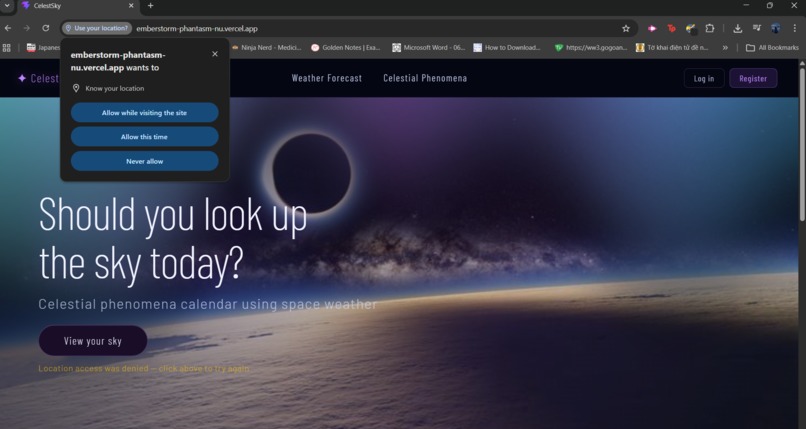
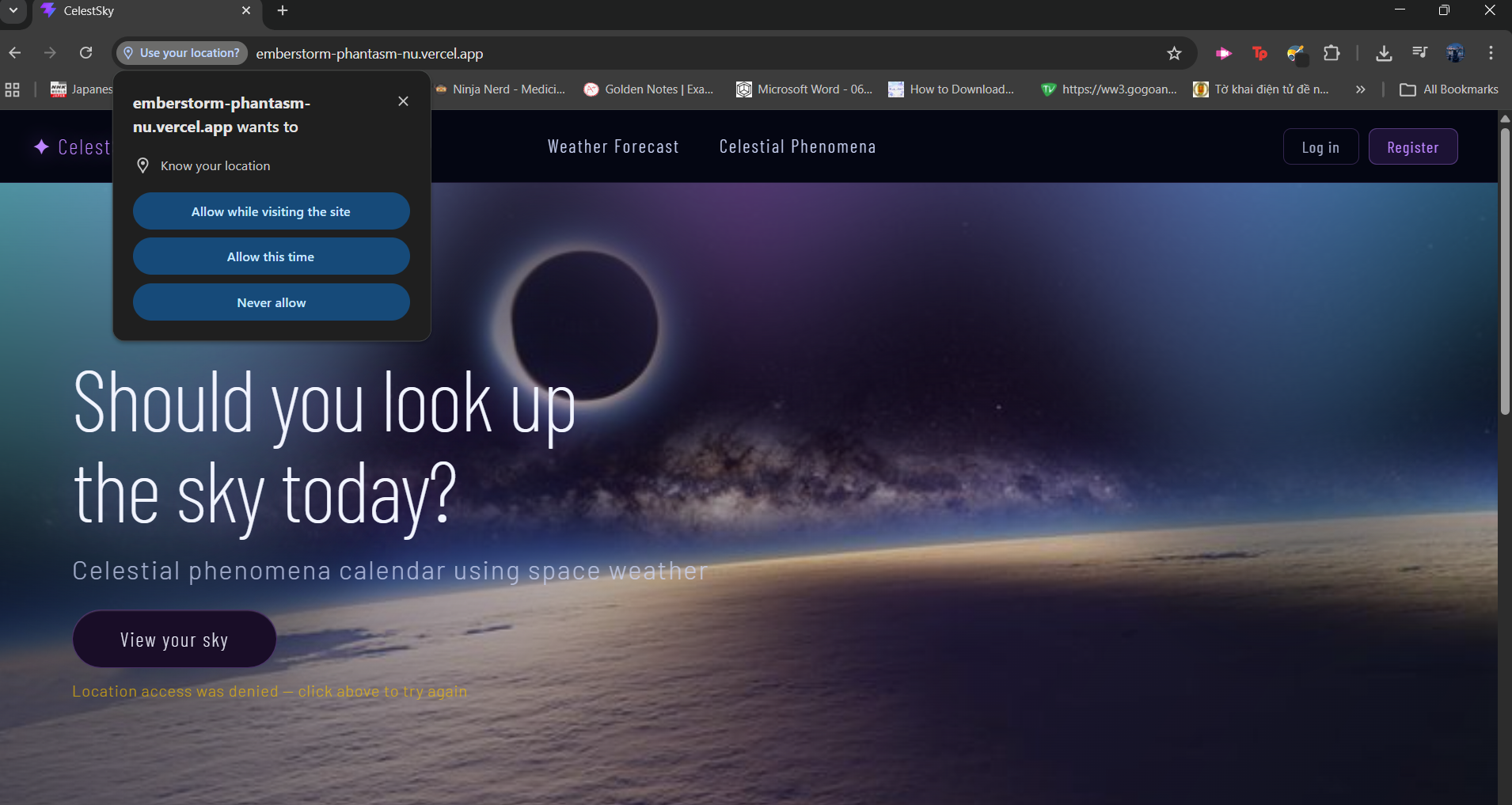
Location allow prompt pop up
Inspiration
Our idea was inspired by a common experience: we often came across TikToks and social media posts showcasing stunning celestial events such as auroras, meteor showers, or eclipses — only to realise we had already missed them. We wanted to solve this problem by creating a platform that helps users discover upcoming events before they happen, while also answering a more practical question: “Can I actually see it from where I am?” This led us to design CelestSky as a location-aware system that not only tracks celestial phenomena, but also evaluates real-world visibility conditions.
What it does
CelestSky is a celestial forecast web app that combines real-time space weather with live, location-based atmospheric conditions. On a single page, users get a full weather dashboard (temperature, humidity, wind, UV index, sunrise/sunset, hourly breakdown, and 7-day forecast), a celestial events panel covering moon phases, aurora activity, meteor showers, upcoming eclipses, planetary conjunctions, and near-Earth asteroid approaches, all with day countdowns. A Recommendation Board then synthesises all of this into a single daily verdict: good skies, fair, poor, or blocked. The page also dynamically responds to the closest upcoming celestial event with a full-page visual overlay, such as aurora lights for geomagnetic storms, shooting stars for meteor showers.
How we built it
The frontend is a React + Vite single-page app. On load, the browser's Geolocation API captures the user's coordinates and feeds them simultaneously into two engines: the weather engine (Open-Meteo API, returning current conditions, hourly forecasts, and 7-day outlooks) and the celestial engine (NASA DONKI for geomagnetic storms and solar flare data, NASA NeoWs for near-Earth asteroid passes, and NASA Images API for event photography). Moon phases are computed locally using Julian date arithmetic, and planetary conjunctions are calculated on the fly with a custom orbital geometry engine. The sky quality recommendation is derived from a grading algorithm that cross-references cloud cover, visibility, and precipitation against the significance of the nearest celestial event.
Challenges we ran into
One of the main challenges was integrating multiple data sources with very different structures and update frequencies. Weather data is split between hourly and daily formats, while space weather and astronomical events are event-based and irregular, making it difficult to unify them into a single coherent timeline. We also faced challenges in designing a visibility scoring system that is both simple and meaningful, as real-world visibility depends on multiple interacting factors such as cloud cover, humidity, and light conditions. Another challenge was managing time constraints during the hackathon, requiring us to prioritise core functionality and ensure a stable, working prototype rather than overextending into overly complex features.
Accomplishments that we're proud of
We are particularly proud of successfully combining real-time weather data and space event data into a single, intuitive interface that answers a practical user question. The dynamic Recommendation Board is a key highlight, as it transforms raw data into actionable insights for users. We also achieved a strong level of interactivity and visual engagement through event-based overlays, which enhance the user experience and make the platform feel responsive to real-world phenomena. Additionally, implementing location-aware functionality allowed us to personalise the experience, making the platform more useful and realistic.
What we learned
Through this project, we learned how to design and build a full-stack application that integrates multiple external APIs and processes heterogeneous data. We gained experience in structuring a clean separation between frontend presentation and backend data handling, as well as handling asynchronous data flows in React. We also developed a deeper understanding of how environmental factors influence the visibility of celestial events, and how to translate technical data into meaningful user-facing insights. Importantly, we learned how to scope features effectively under time constraints and focus on delivering a clear, functional product.
What's next for CelestSky
Email and push notifications so users get alerted before a major event, an ISS flyover tracker using live TLE orbital data, a calendar view for planning ahead, and mobile app versions for iOS and Android. We also want to expand the overlay effects to cover more event types, such as solar eclipse shadow animations, comet tail effects, and more.
Built With
- css3
- geolocation-api
- glsl
- javascript
- julian-date-mathematics
- nasa-donki-api
- nasa-images-api
- nasa-neows-api
- ogl
- open-meteo-api
- react
- vercel
- vite
- webgl

Log in or sign up for Devpost to join the conversation.