-
-
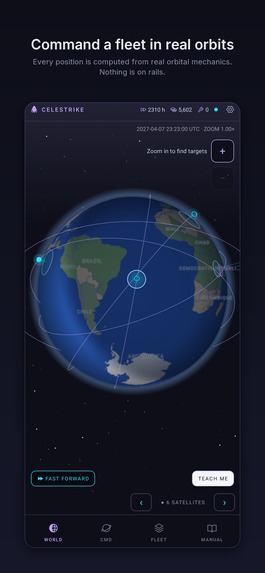
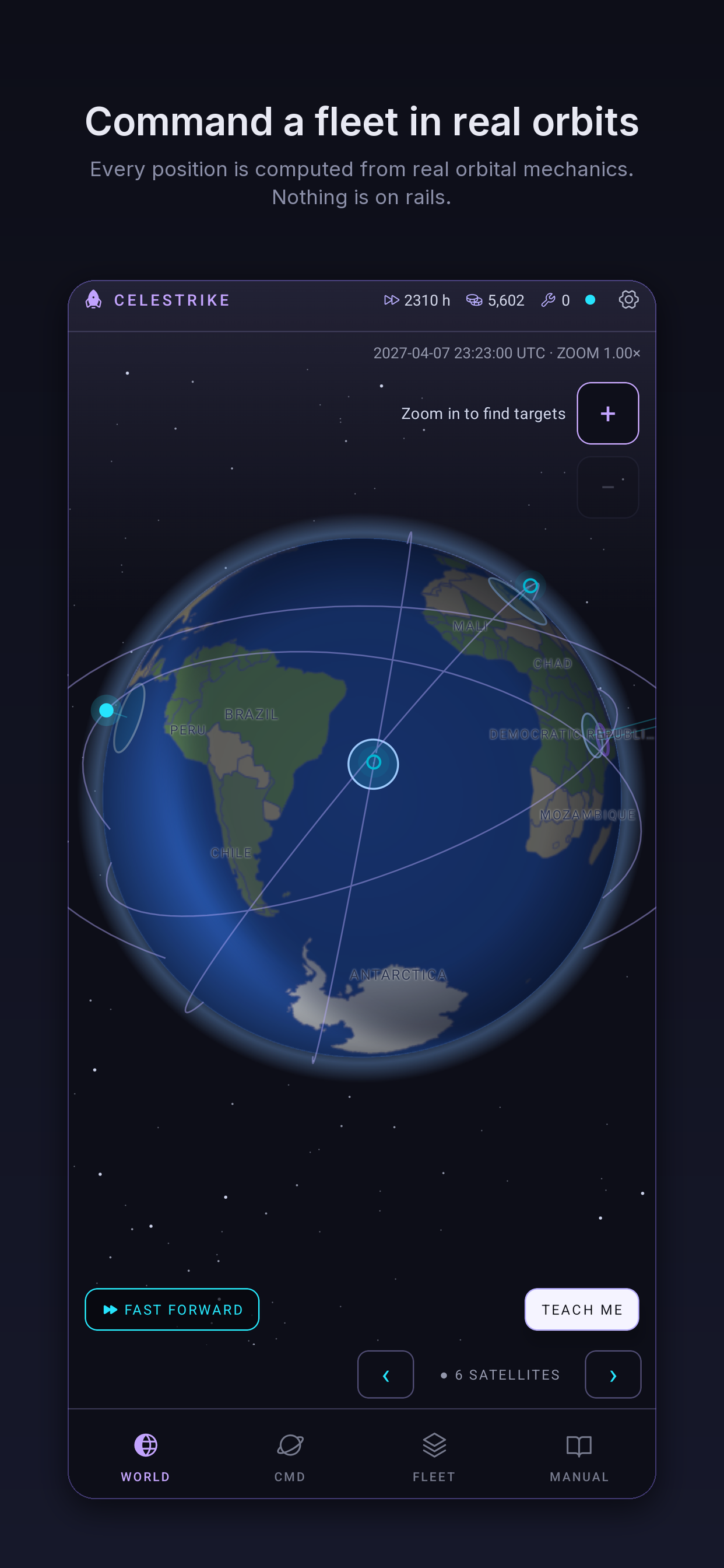
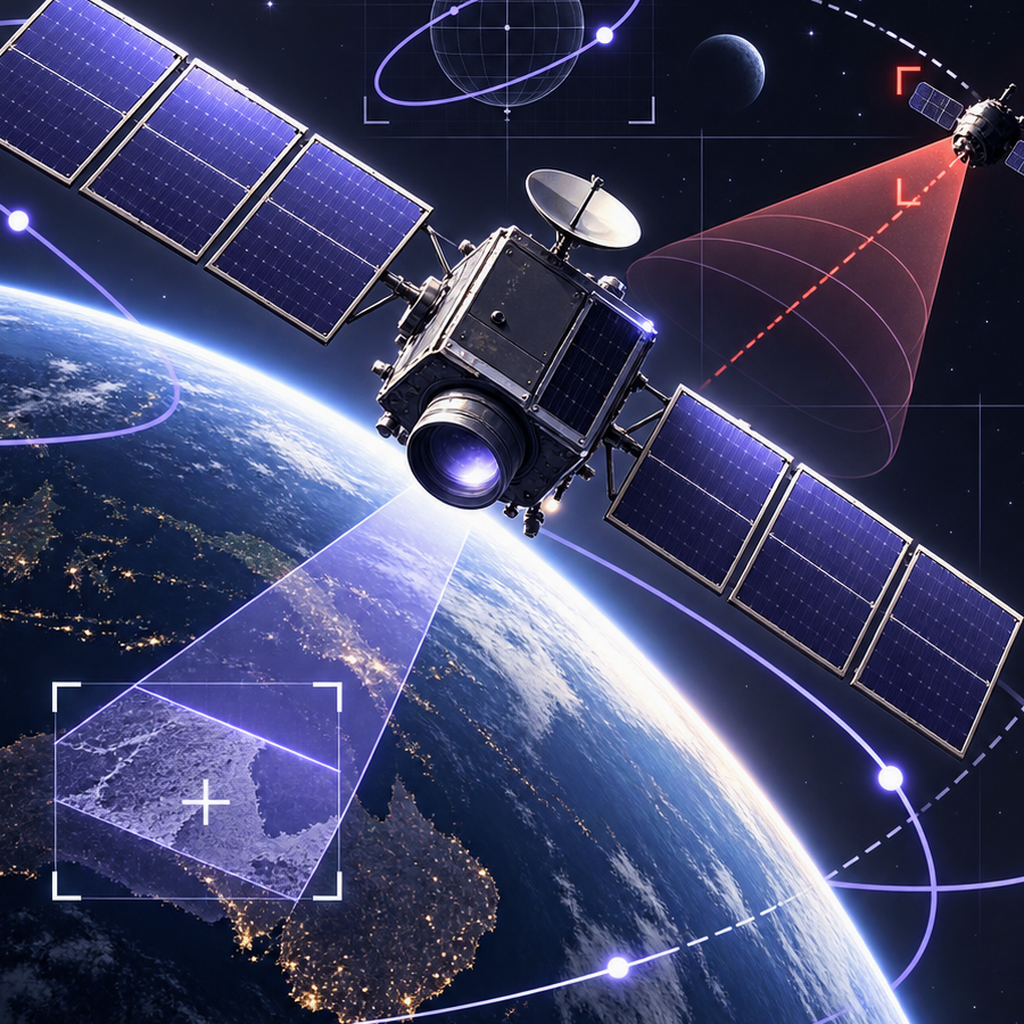
Command a fleet of spy satellites in real orbits
-
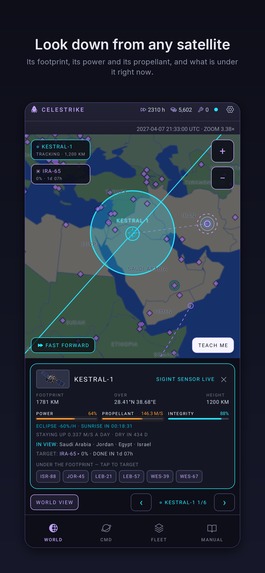
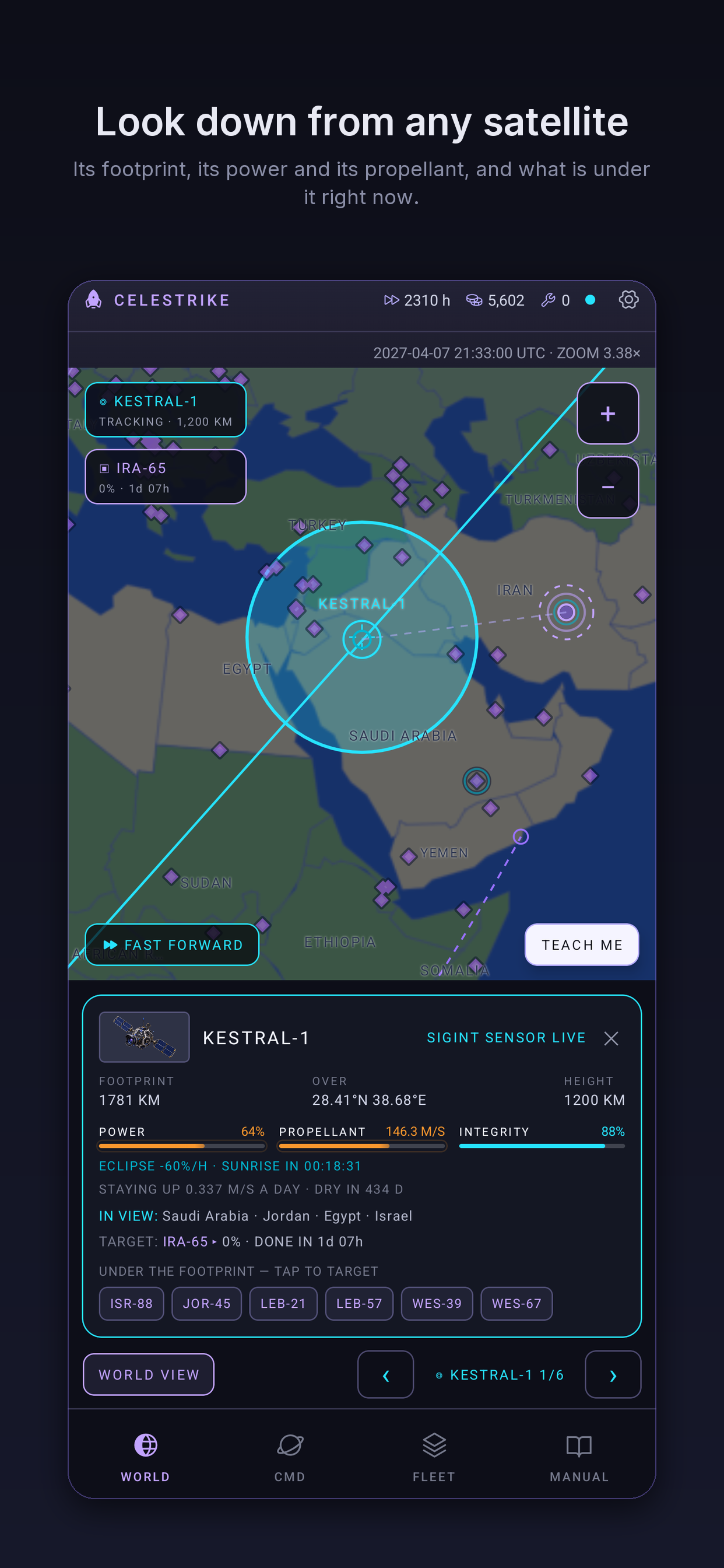
Look down.. Every ground target has a price. Stolen intel helps you upgrade your satellites.
-
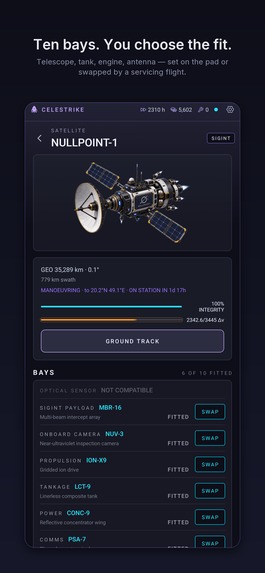
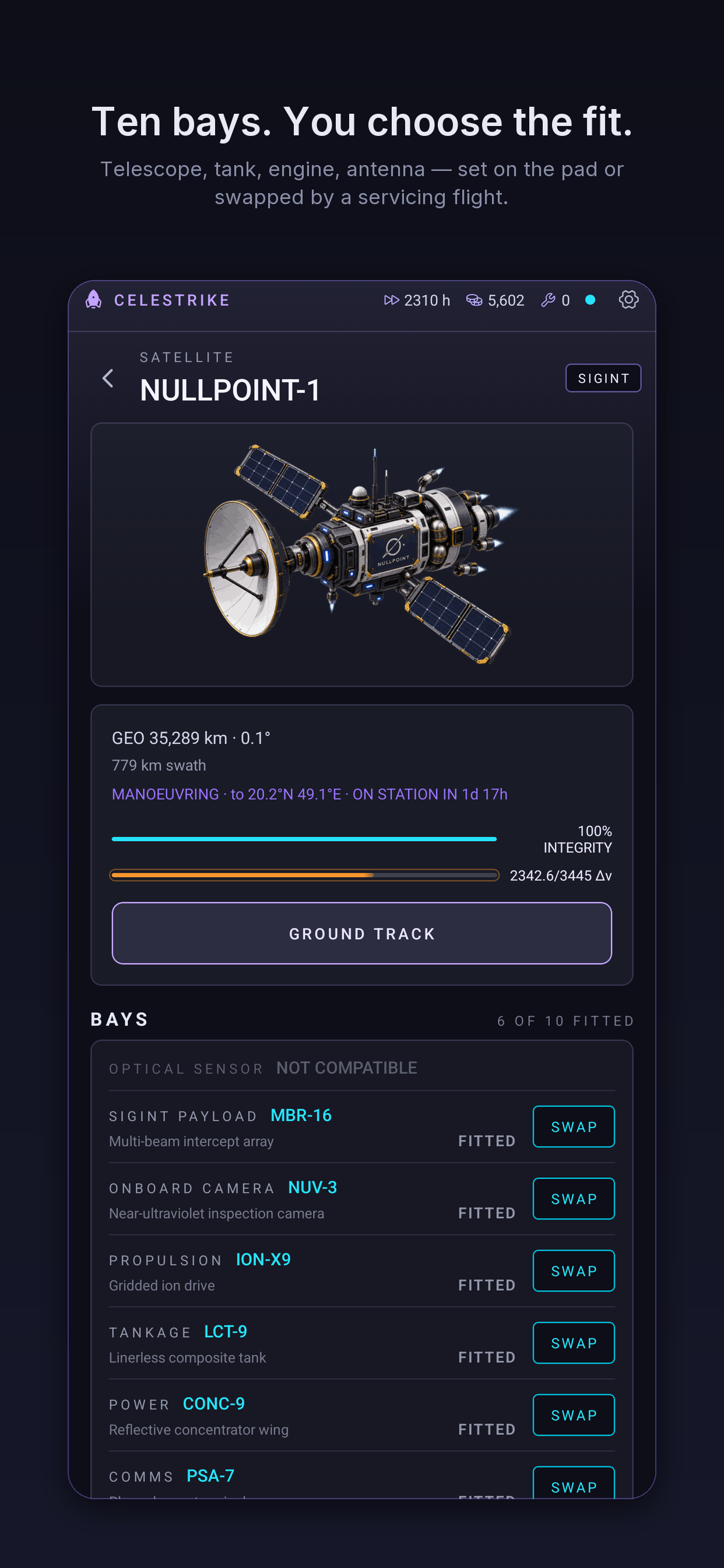
Upgrade and customise your satellites
-
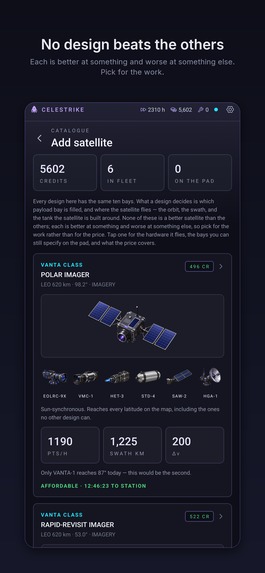
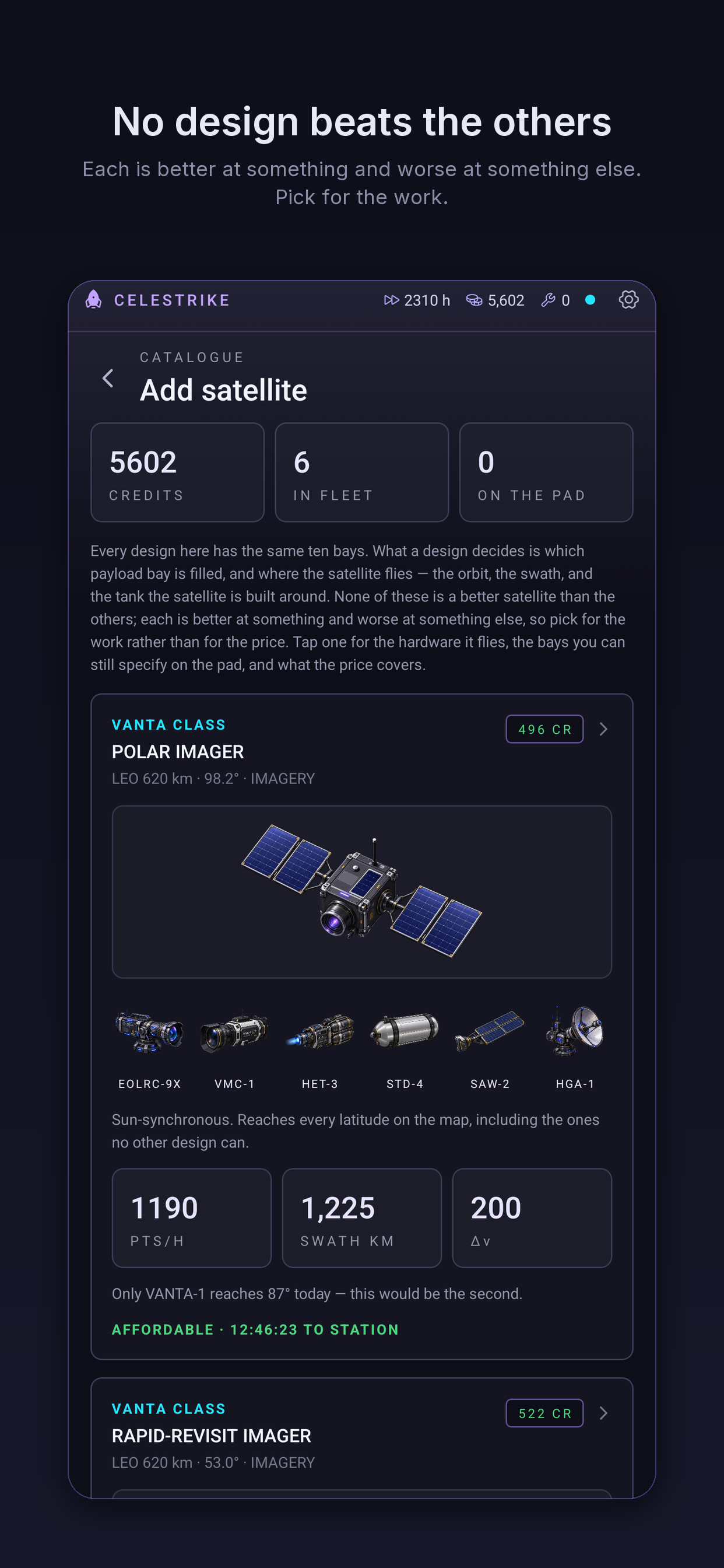
Multiple satellite classes for different objectives
-
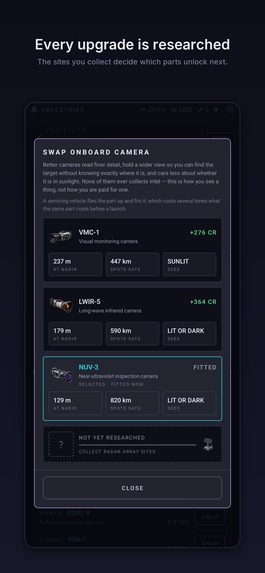
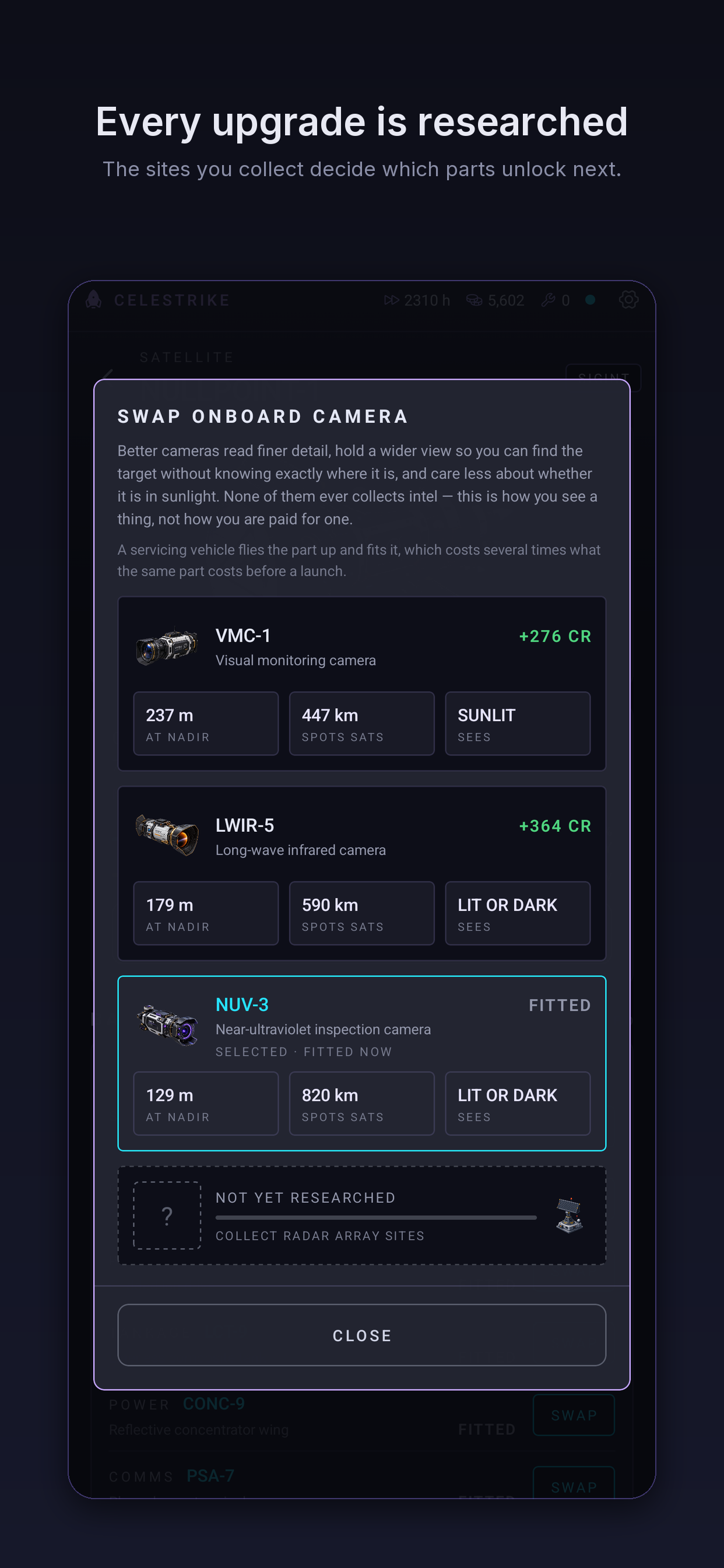
Every upgrade is comes from researched intel
-
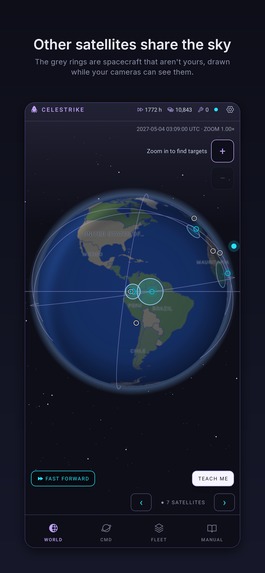
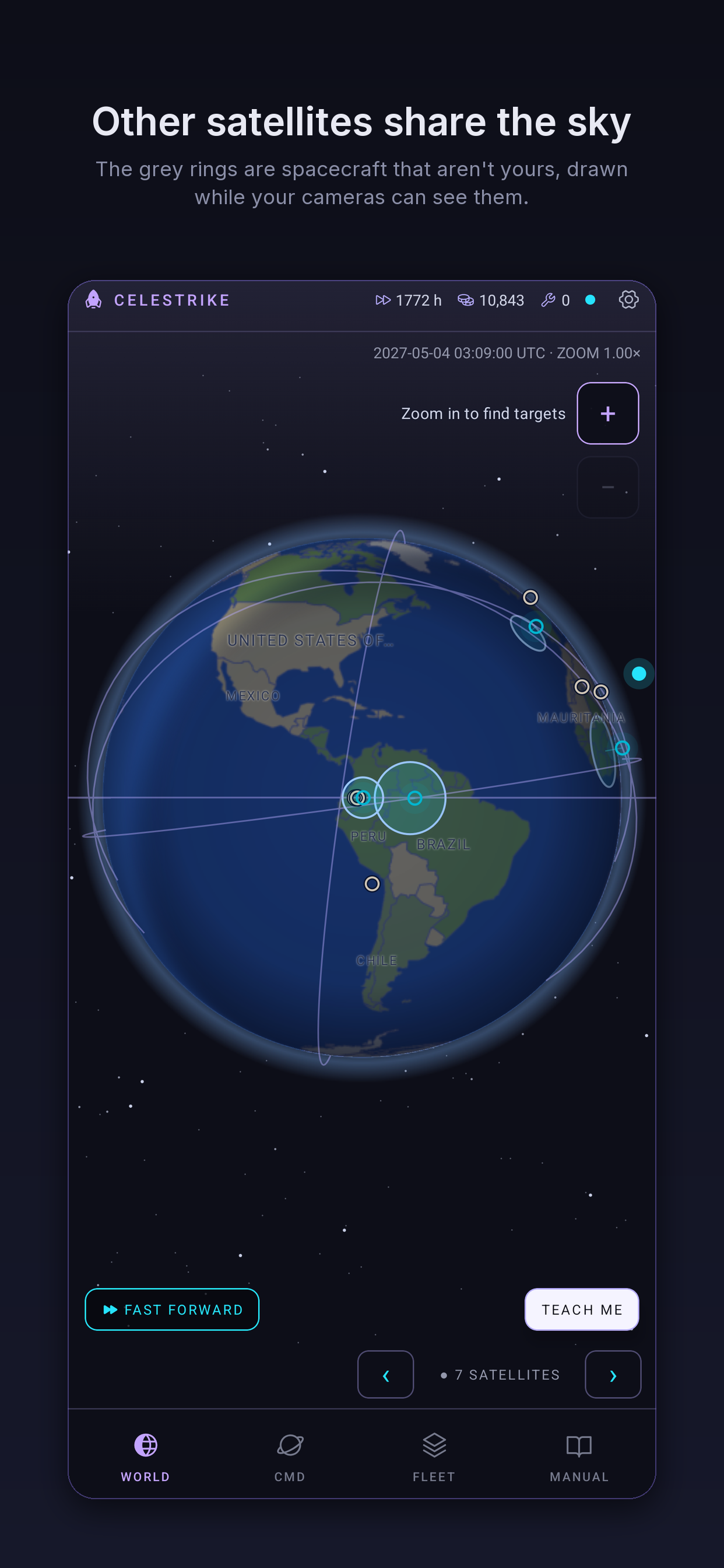
Other satellites share the sky
-
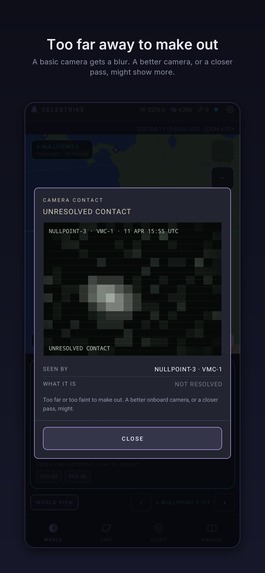
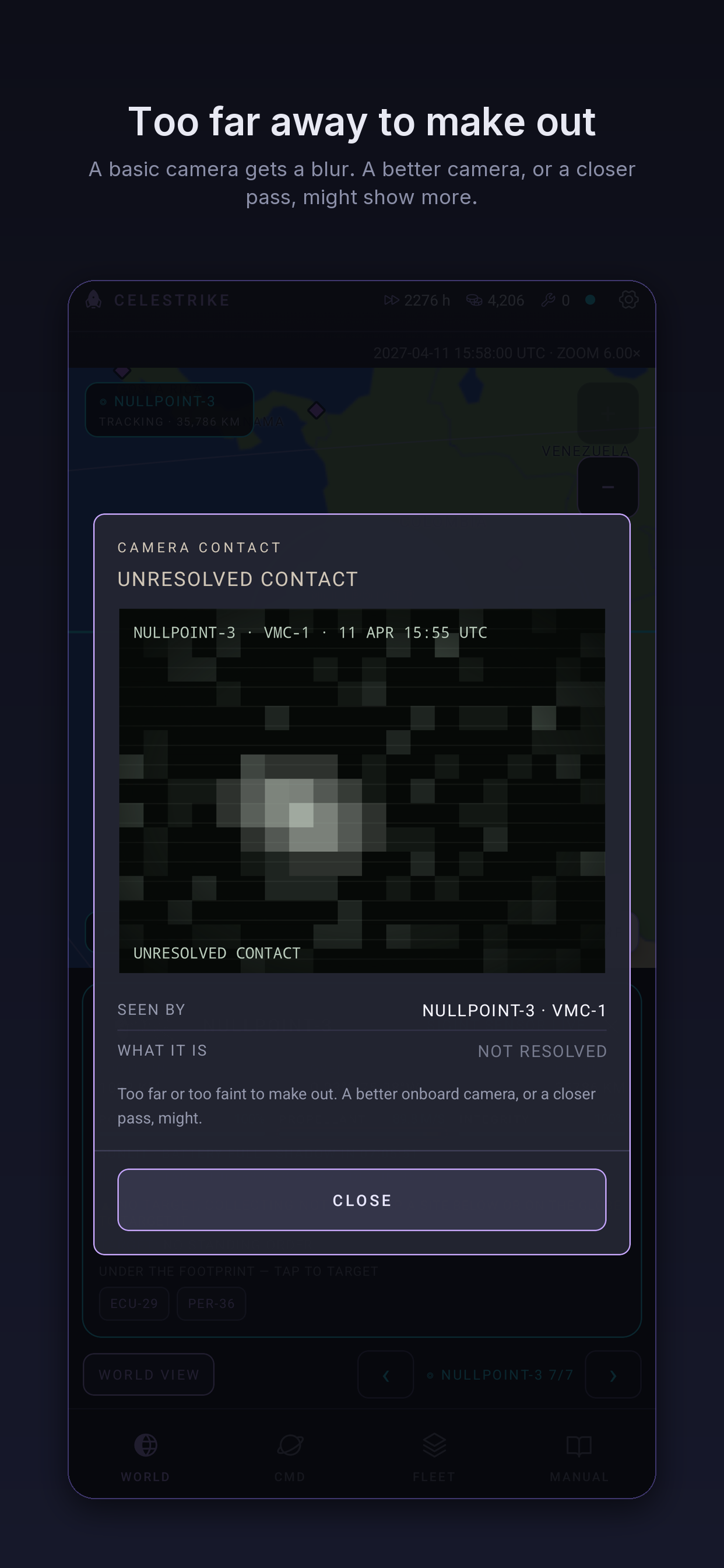
Too far away to make out
-
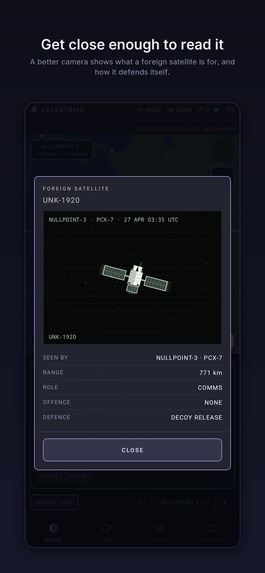
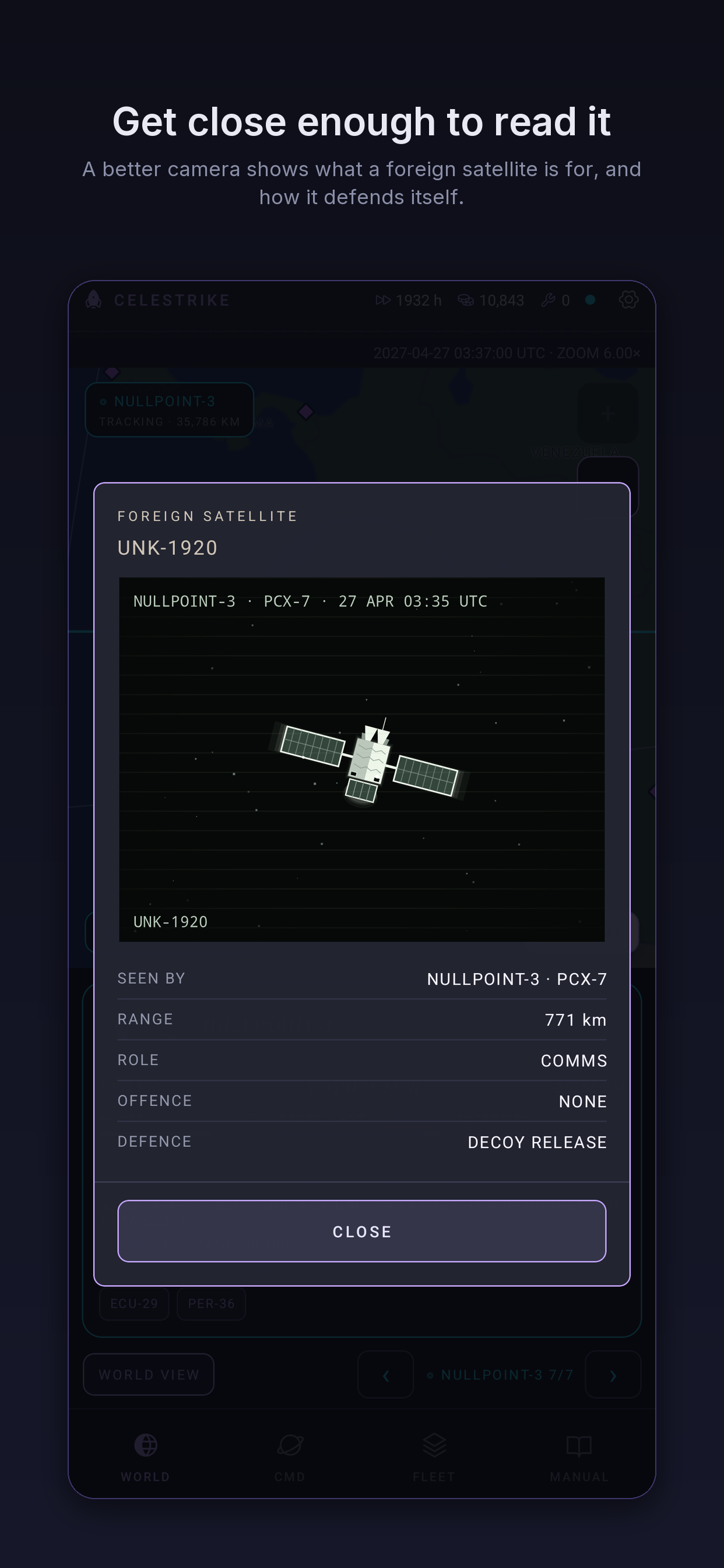
Get close enough to read it
-
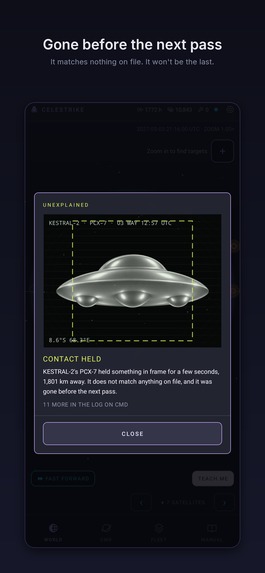
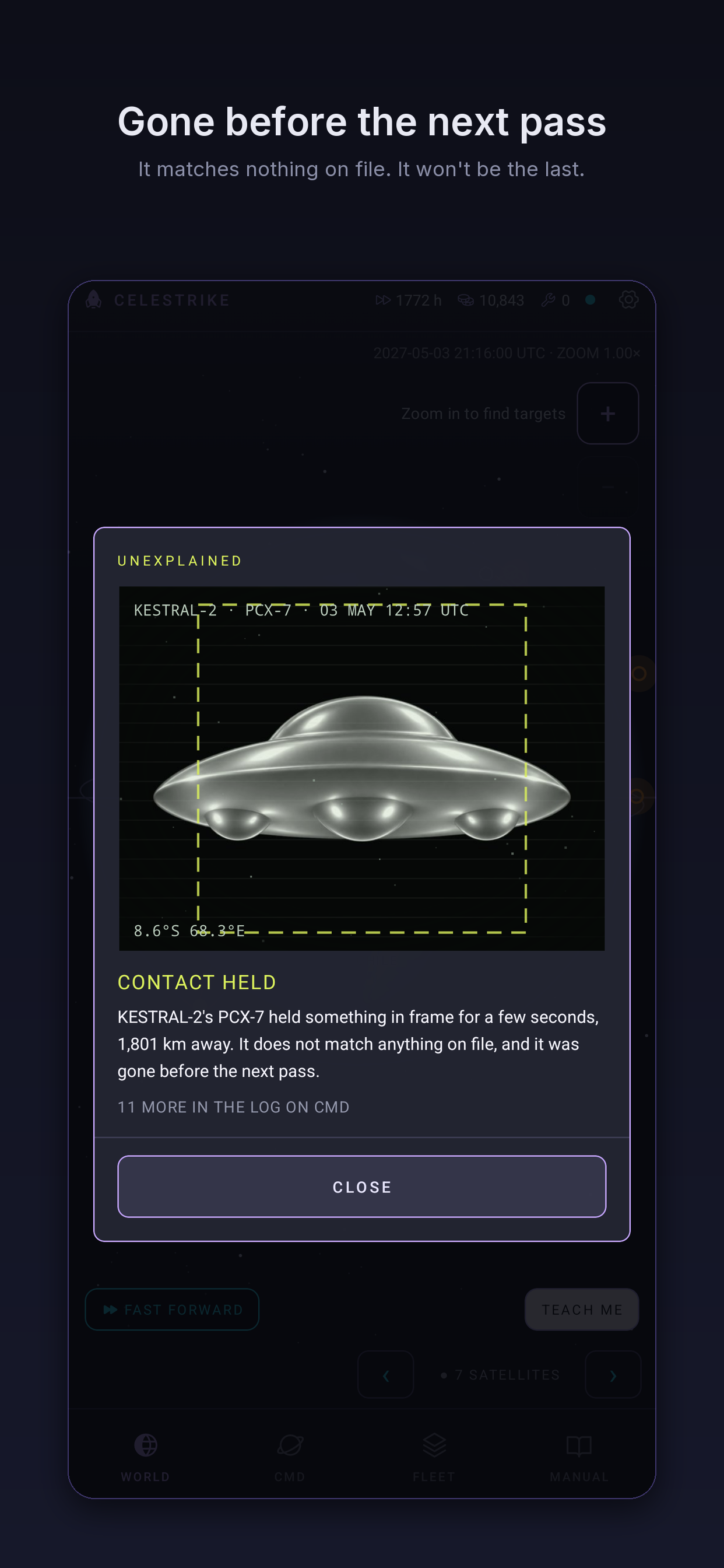
Gone before the next pass
-
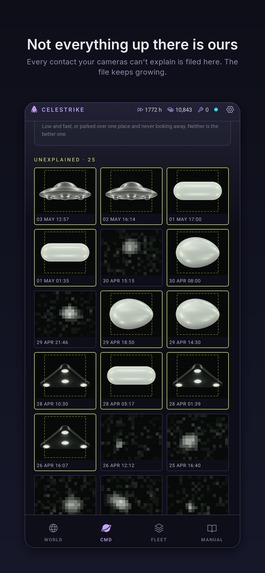
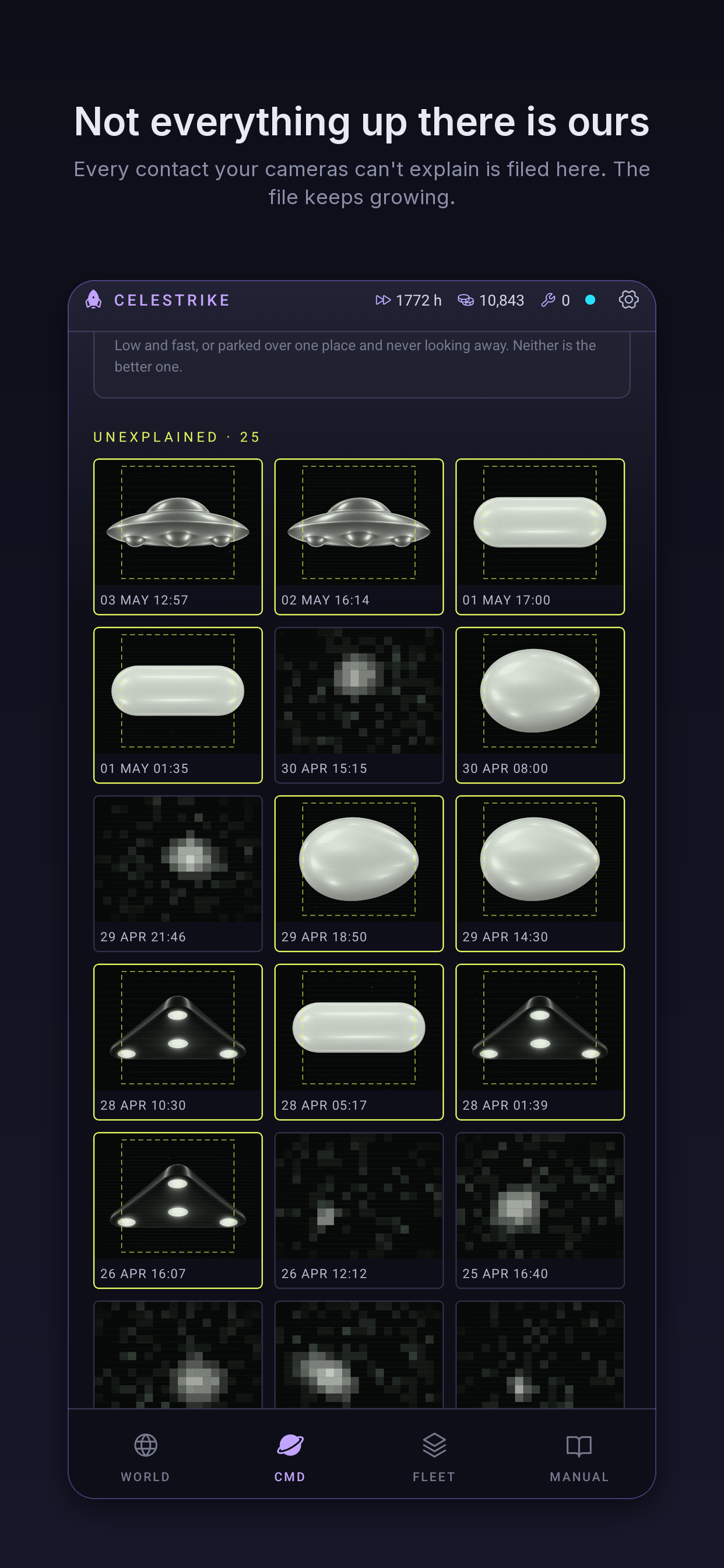
Not everything up there is ours
-
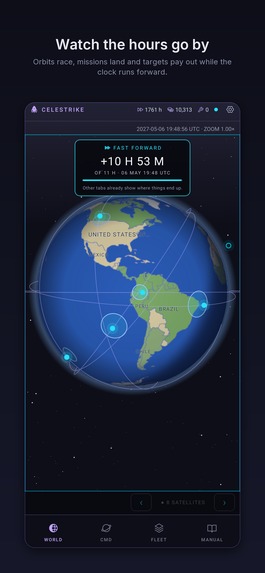
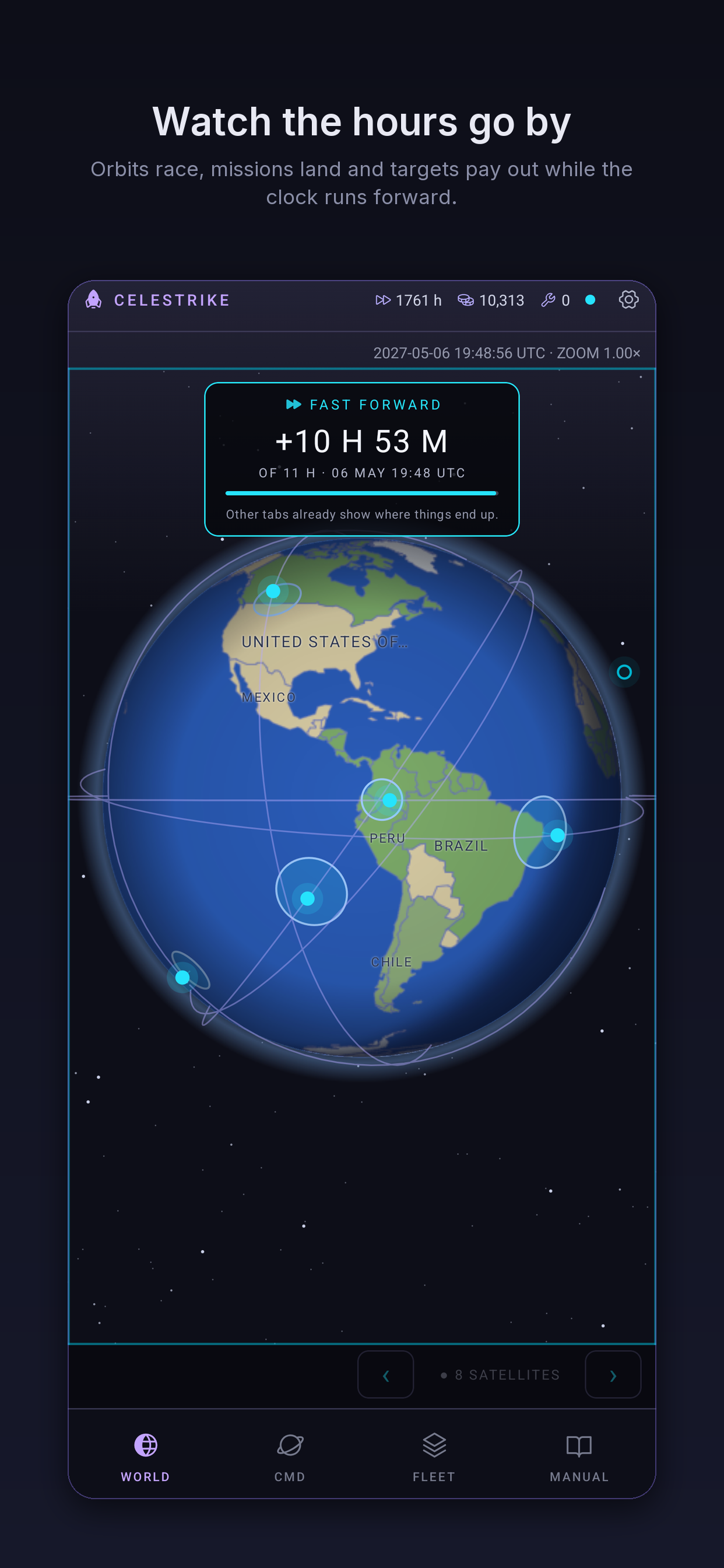
Skip the wait time, if you want to
-
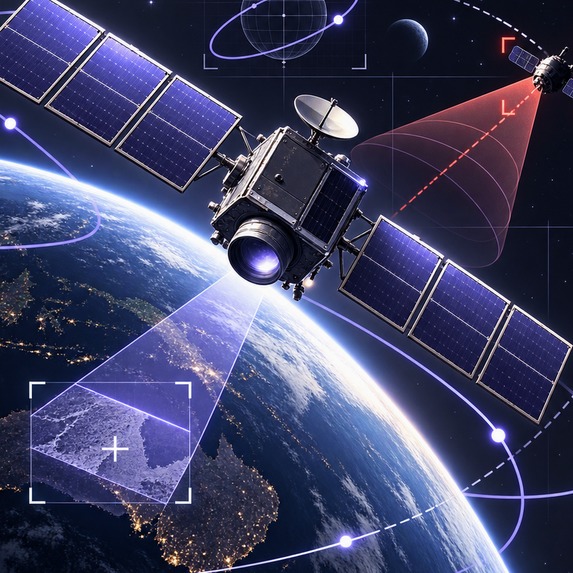
Icon 1024 x 1024
-
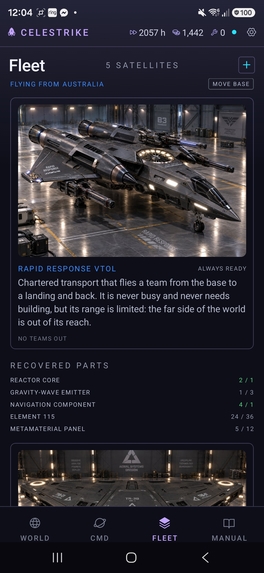
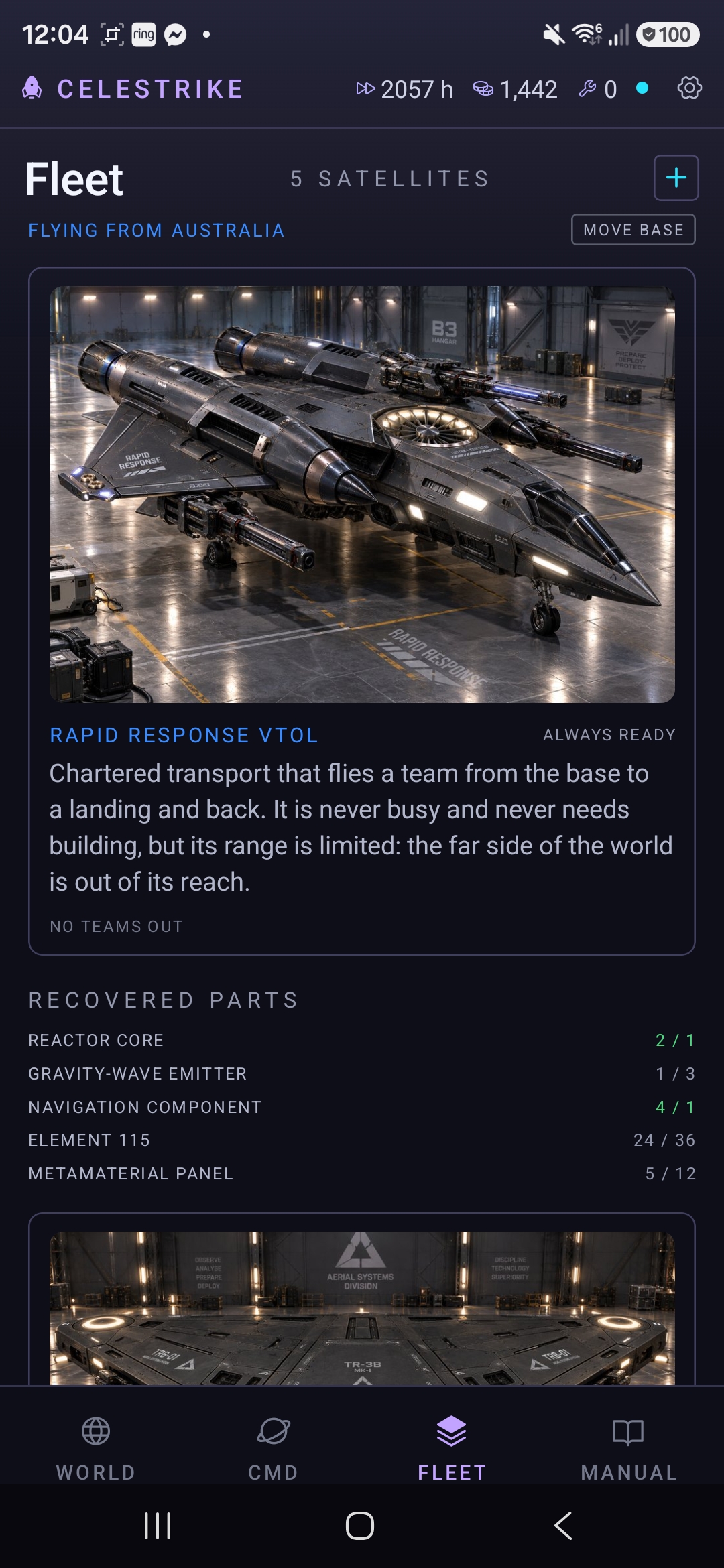
Build retrieval crafts to recover technology
-
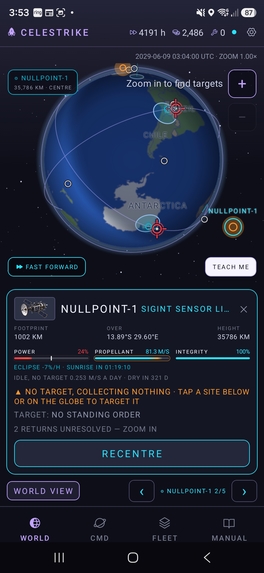
Shadow, steal intel from, and hunt other satellites
-
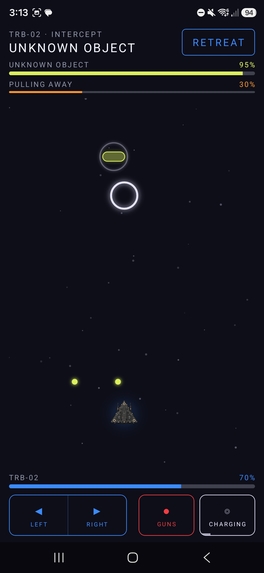
Take alien craft down or die trying
Judges: every new campaign starts with 200 free in-game hours of FAST FORWARD. That is the only paid feature. Nothing else is for sale, and no code is needed.
Inspiration
Over some drinks at a tech conference, I spoke with a former Shark Tank Australia judge who told me about satellites spying on and shadowing other satellites. The idea that there could be a cold war in space captured my imagination and it got me thinking. A real spy satellite can't be wherever it wants. Its orbit decides what it can see, how often it comes back and how long it can stay, and the propellant it launched with is all it will ever have. That is already a strategy game. I wanted to keep the orbits honest, keep the jargon off the screen, and add the question everyone who watches the sky ends up asking: what else is up there?
What it does
They came to shut your black-budget satellite programme down, but something didn't smell right so you took it rogue.
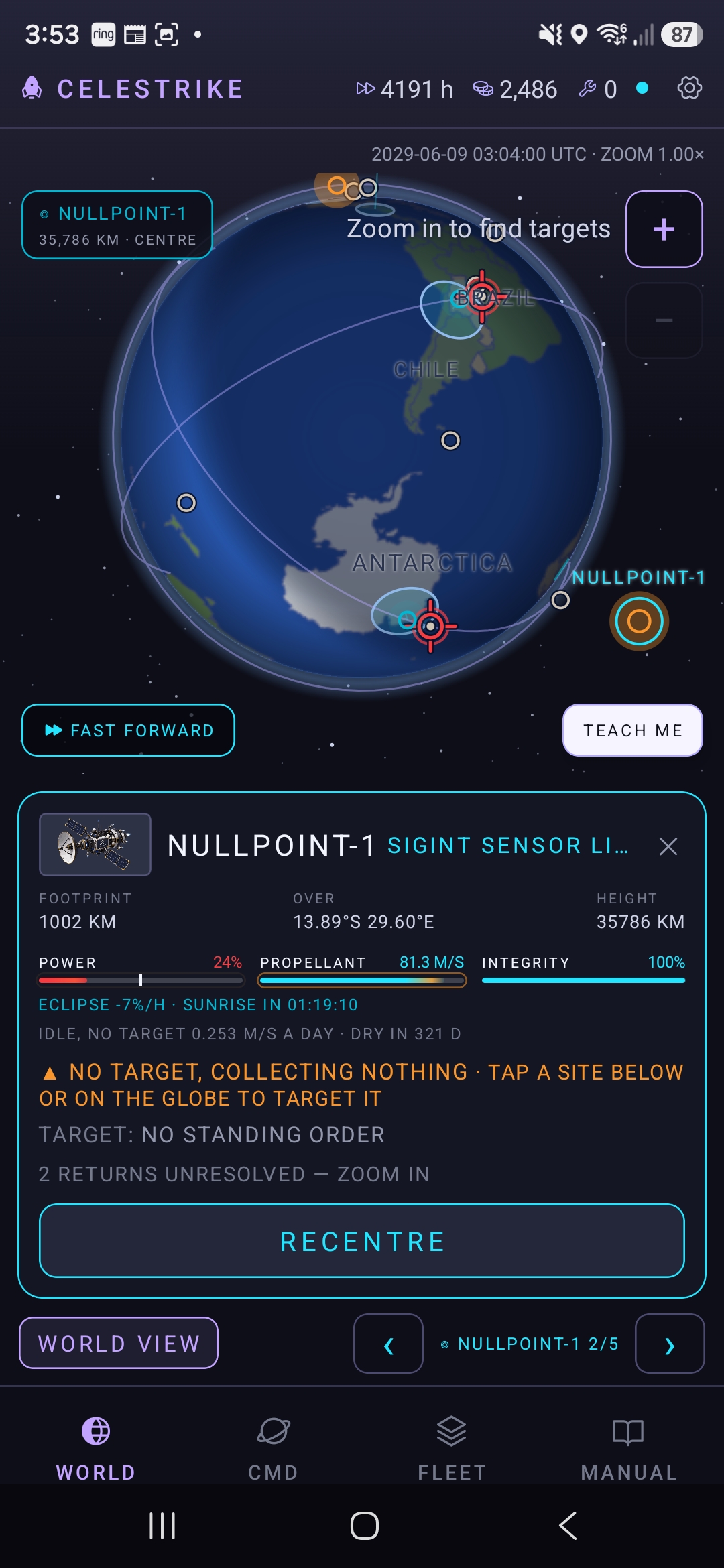
- Find and target. Zoom in to reveal secret sites, pick one, and target it. If your orbit can't see it yet, the game prices the move in propellant: faster costs more.
- Wait, then sell. One real minute is one game hour, and collection carries on with the app closed. Finished sites pay credits.
- Grow. Buy more satellites or upgrade the ones you have. Every bay is an upgrade ladder, and every upgrade is researched from the intel you collect.
- Fight. Shadow foreign satellites to steal their technology and data, or arm yours with mines, a railgun or directed EMPs and bring them down.
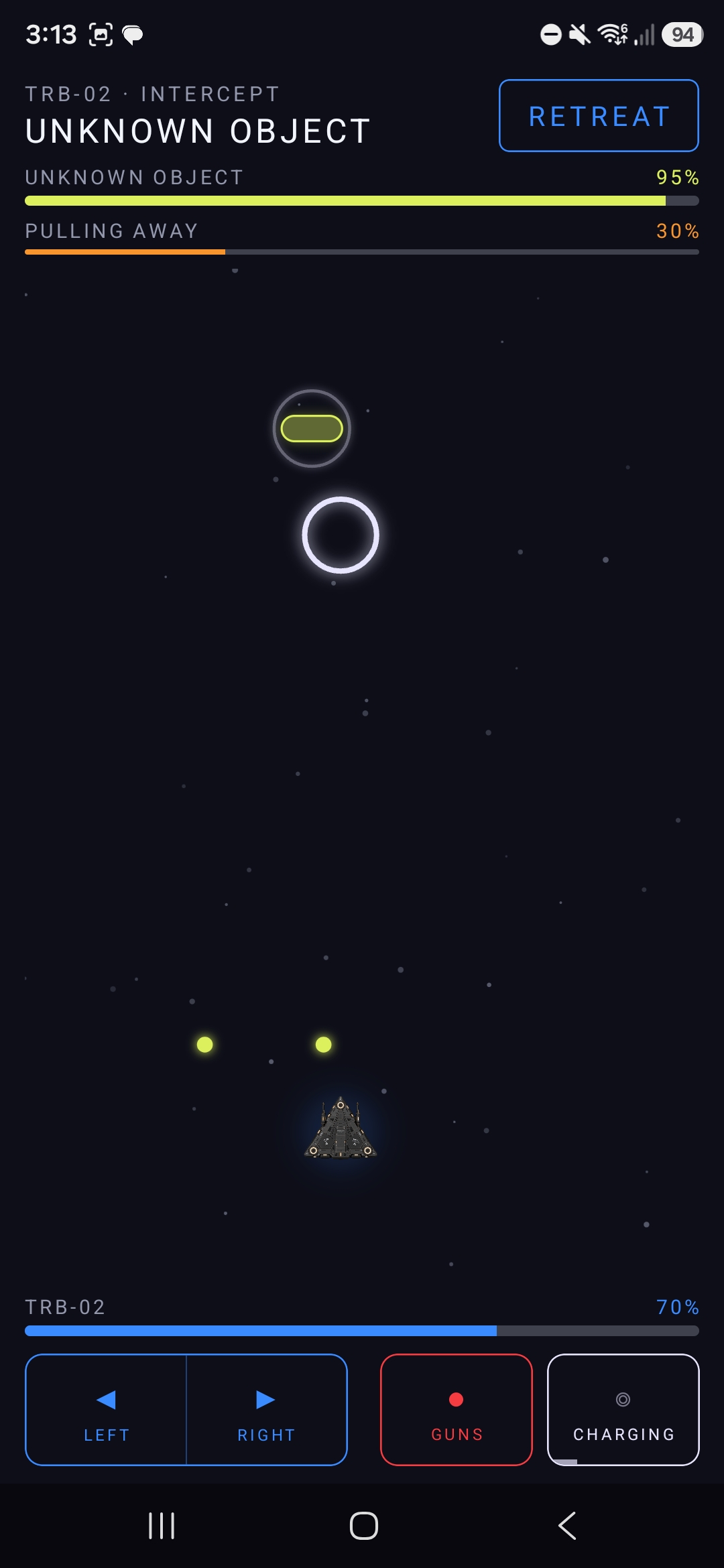
- Investigate. Your camera catches things that match nothing on file. Plot your sightings to find structures under ocean and polar ice, send recovery teams to take what they can, and build the TRB-01 alien replication interceptor to chase and bring UFOs down in a real time dog fight. Then send a team to recover the alien wreckage.
The look
A night-shift operations console: near-black panels, thin letter-spaced type, and one colour rule. Cyan is always a spacecraft and violet is always a place on the ground. Day and night sweep across the globe in real time, and your photographs come back grainy, with a distant satellite and an unknown contact looking like the same blur until you fit a better camera.
Why the one purchase is a time skip
Celestrike runs on real waits, and waiting always works. The only thing for sale is time: FAST FORWARD moves the whole world clock forward by the number of hours you choose. Satellites collect, missions land, tanks burn and hulls age. Money gets you the same outcome sooner, never a different one. Propellant, parts and satellites are only ever bought with credits you earn. Packs are 336 hours (2 weeks in-game time) for $1.99, 720 hours (~ 1 month in-game time) for $4.99 and 2,160 hours (~ 3 months in-game time) for $9.99, and the game never spends "in-game" hours for you.
How I built it
Expo and React Native, with a 2D globe drawn in react-native-skia, and RevenueCat running the hour packs on both the App Store and Google Play. The orbits are real Keplerian elements, including the drift caused by the Earth's flattening. There is no simulation loop: every position is computed from the orbit and the clock. That is why the game is exactly right after a week away, why fast-forward only has to move the clock, and why notifications need no server. Over 1,700 unit tests cover the game logic.
Challenges
- Real physics without a physics lecture. Every target the player can see comes with a priced way to reach it, and words like "inclination" never appear on screen.
- Performance. React Native's JavaScript engine on the phone runs the globe's projection maths about 20× slower than a desktop does, so the globe was rebuilt around doing less work per frame. I also had to patch a native memory leak in Skia.
What I learned
When correct physics makes a screen unreadable, simplify the model. Don't write a better explanation.
What's next
Defensive modules (shields and hardening), contacts that react when you approach them, other satellites actively targeting yours, and eventually other players in the same sky.
Built With
- android
- eas
- expo-router
- expo.io
- git
- ios
- javascript
- nativewind
- node.js
- react-native
- react-native-skia
- react-native-svg
- revenuecat
- skia
- tailwind
- typescript


Log in or sign up for Devpost to join the conversation.