Inspiration
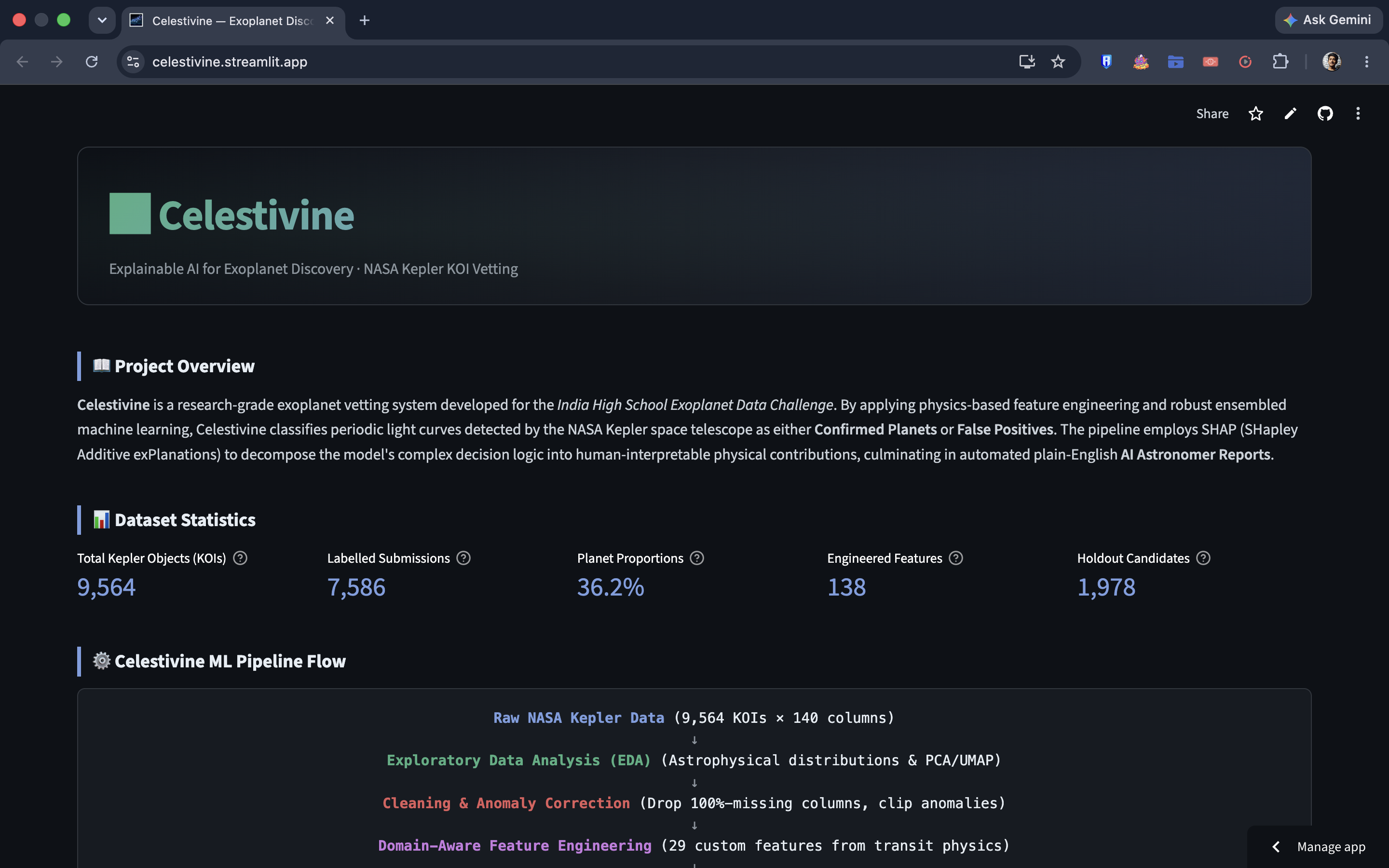
Finding exoplanets is one of the most exciting challenges in modern astronomy, yet most AI models used for this task behave like black boxes. Astronomers often receive a prediction without understanding why the model reached that conclusion. We wanted to bridge this gap by building an explainable AI system that not only predicts whether a Kepler Object of Interest is a planet or a false positive, but also provides transparent scientific reasoning that researchers can trust.
What it does
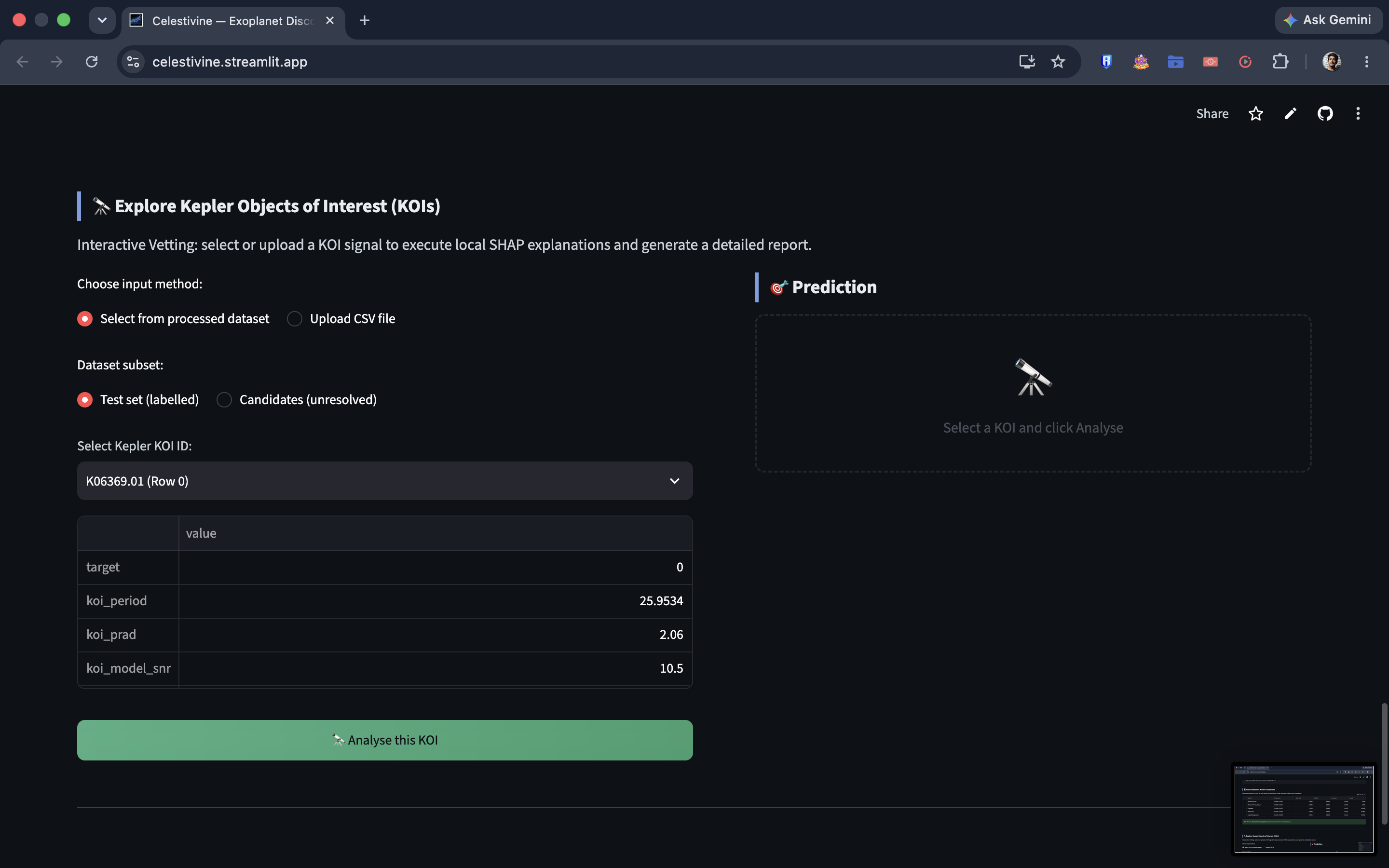
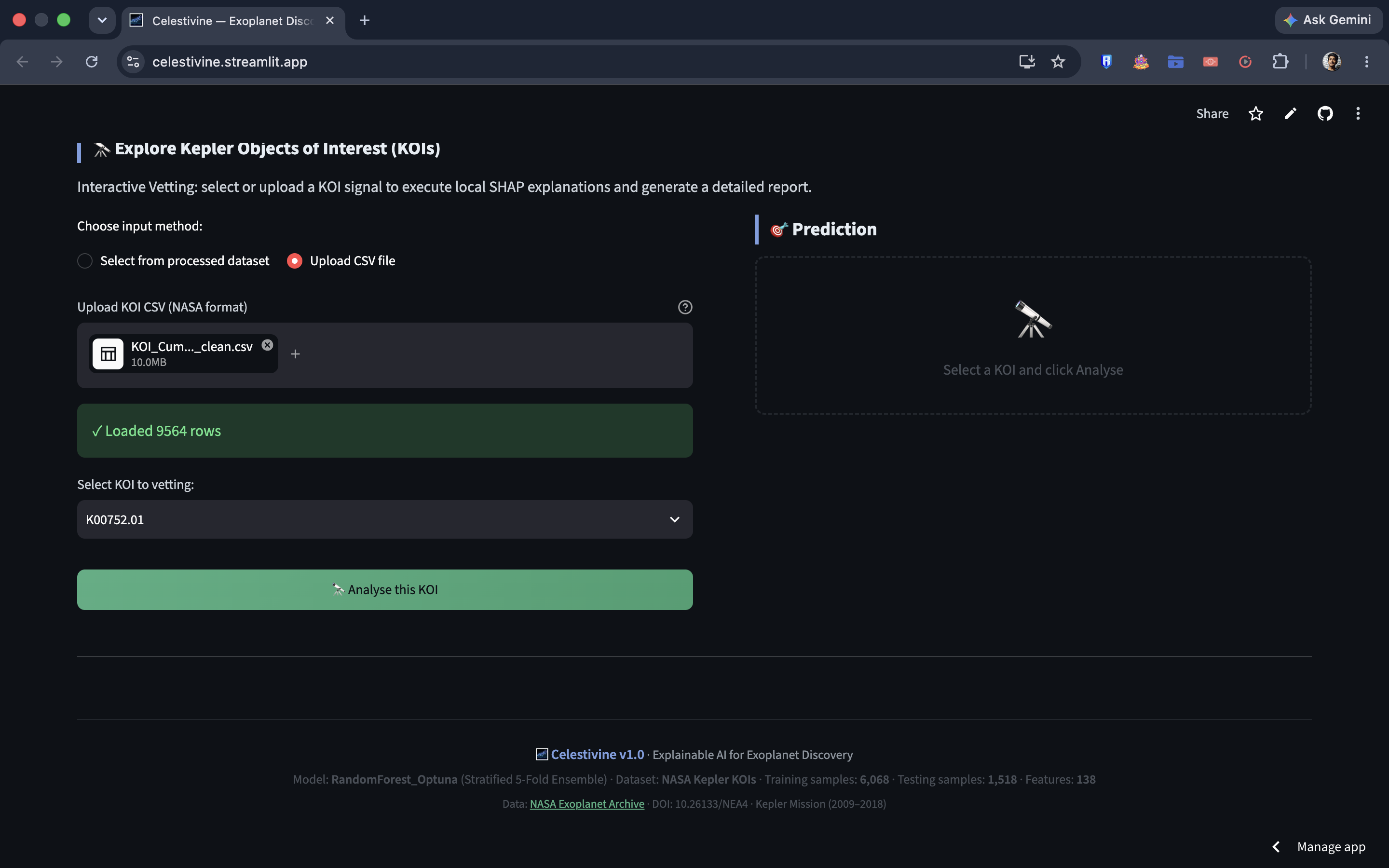
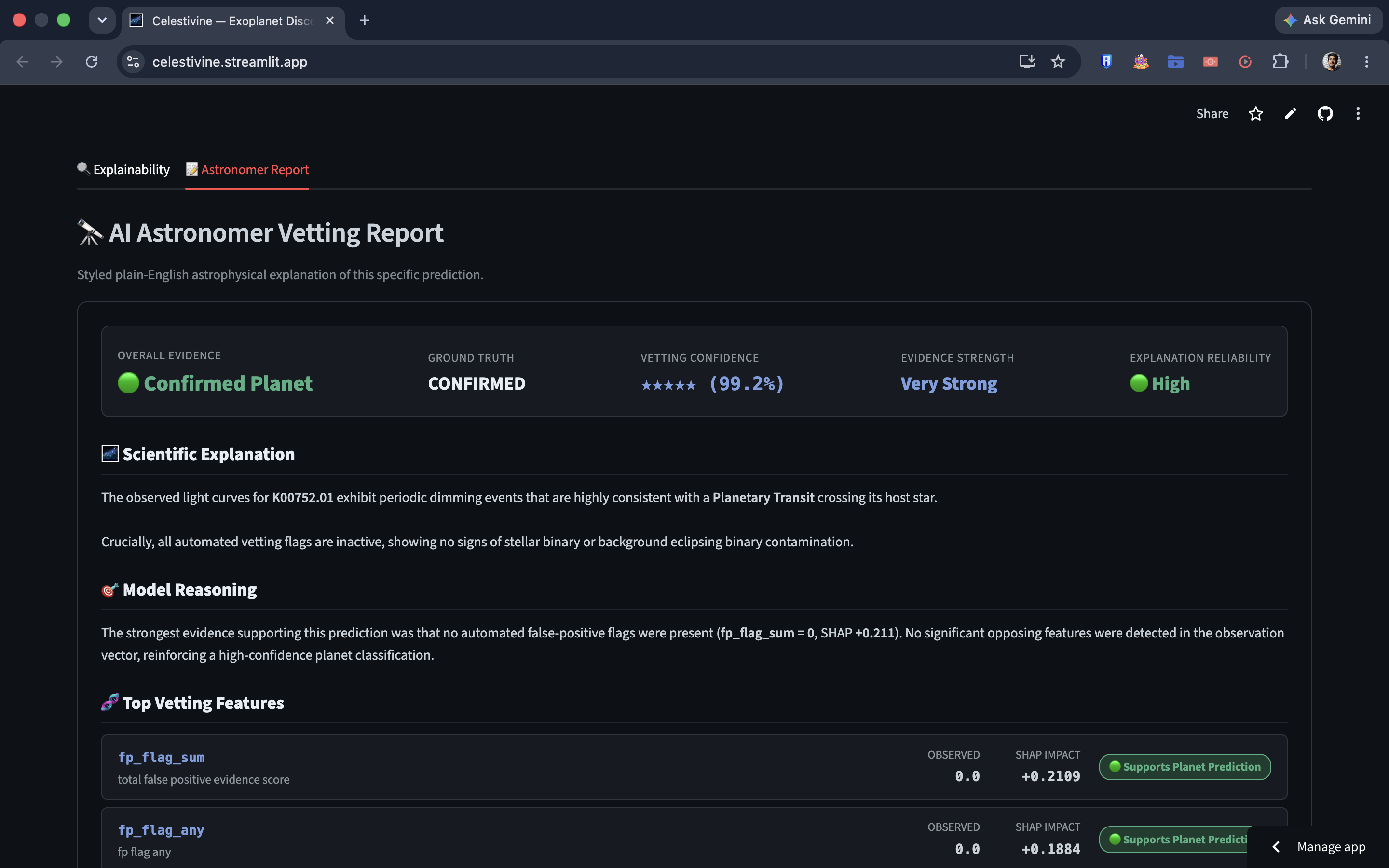
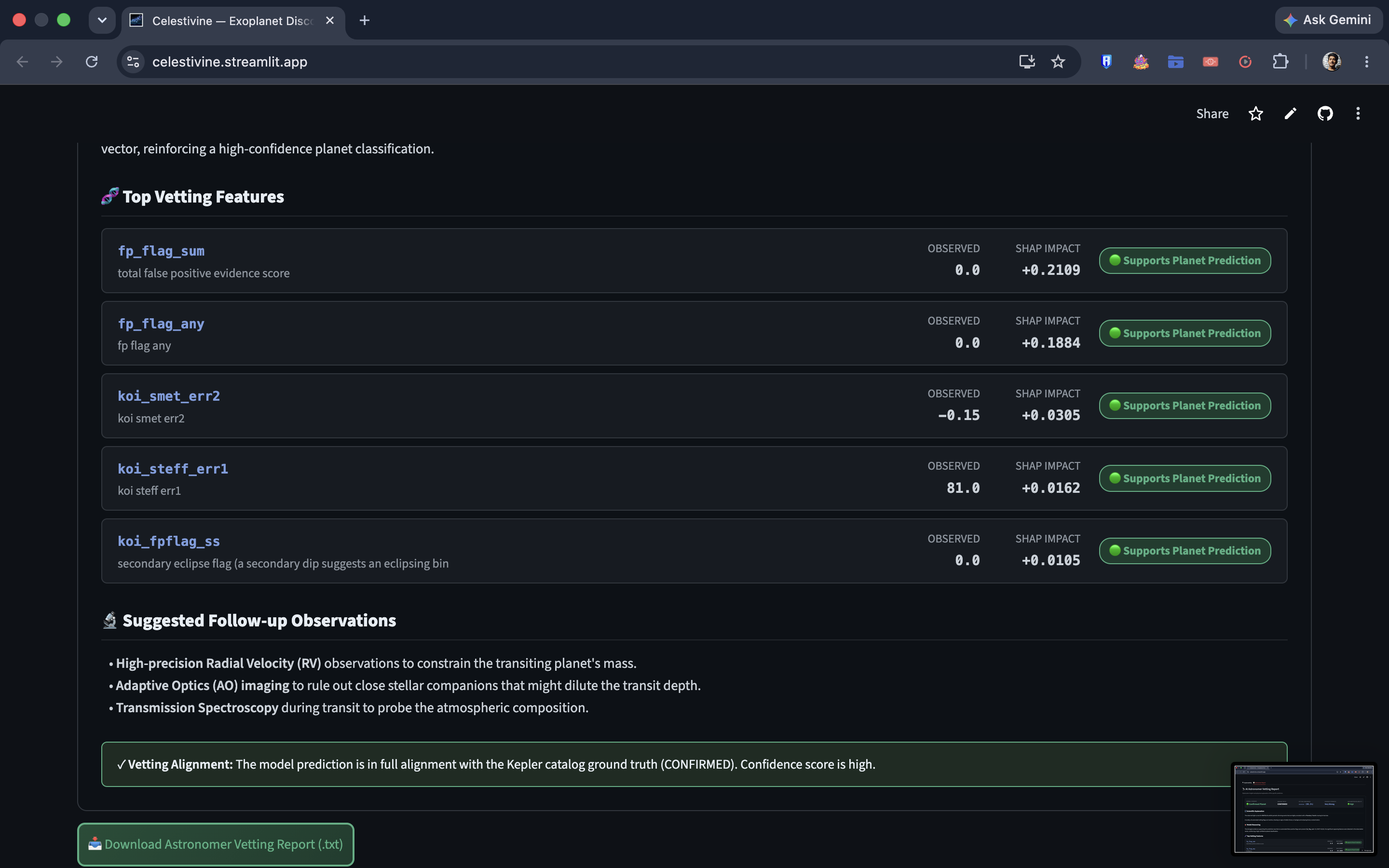
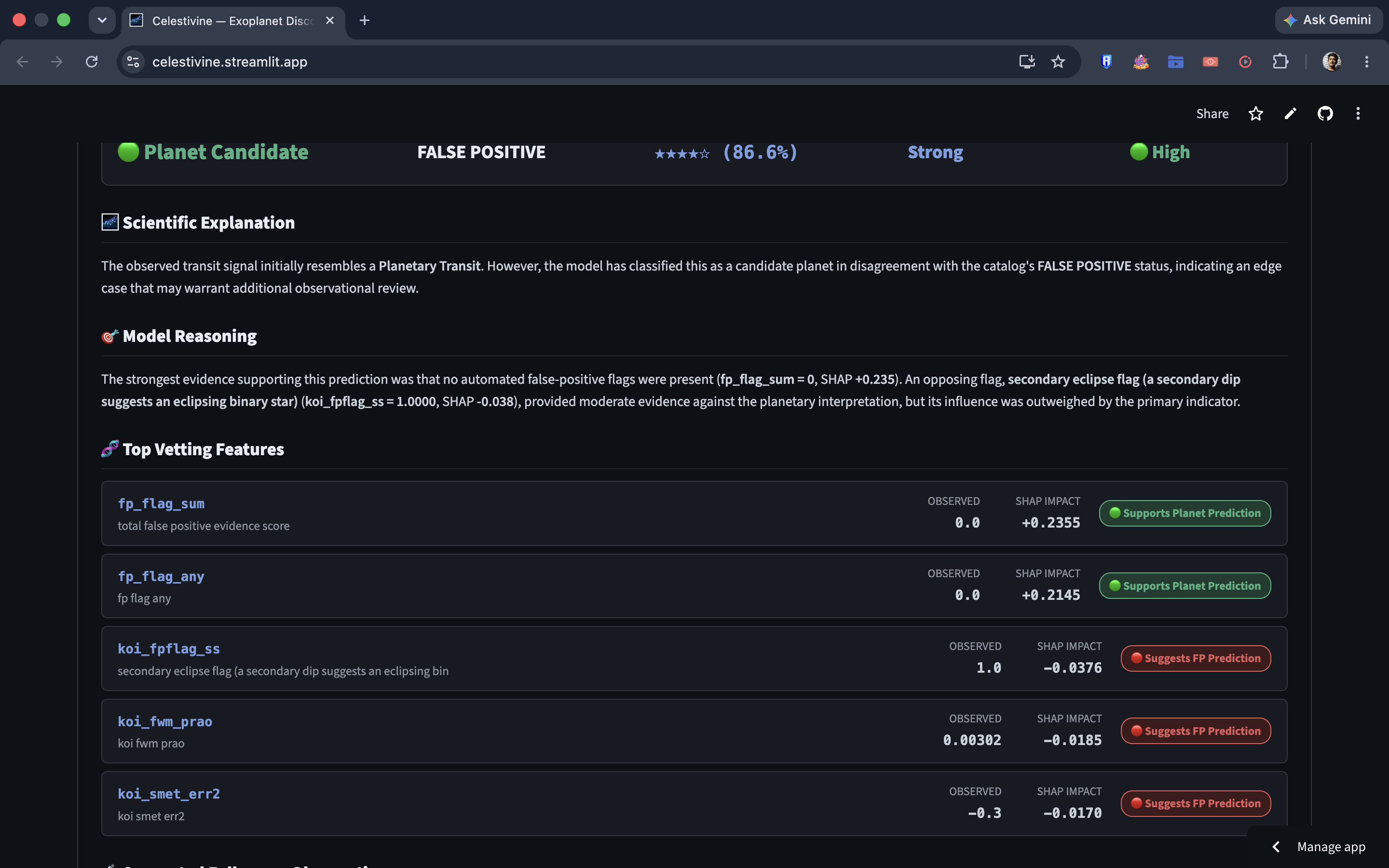
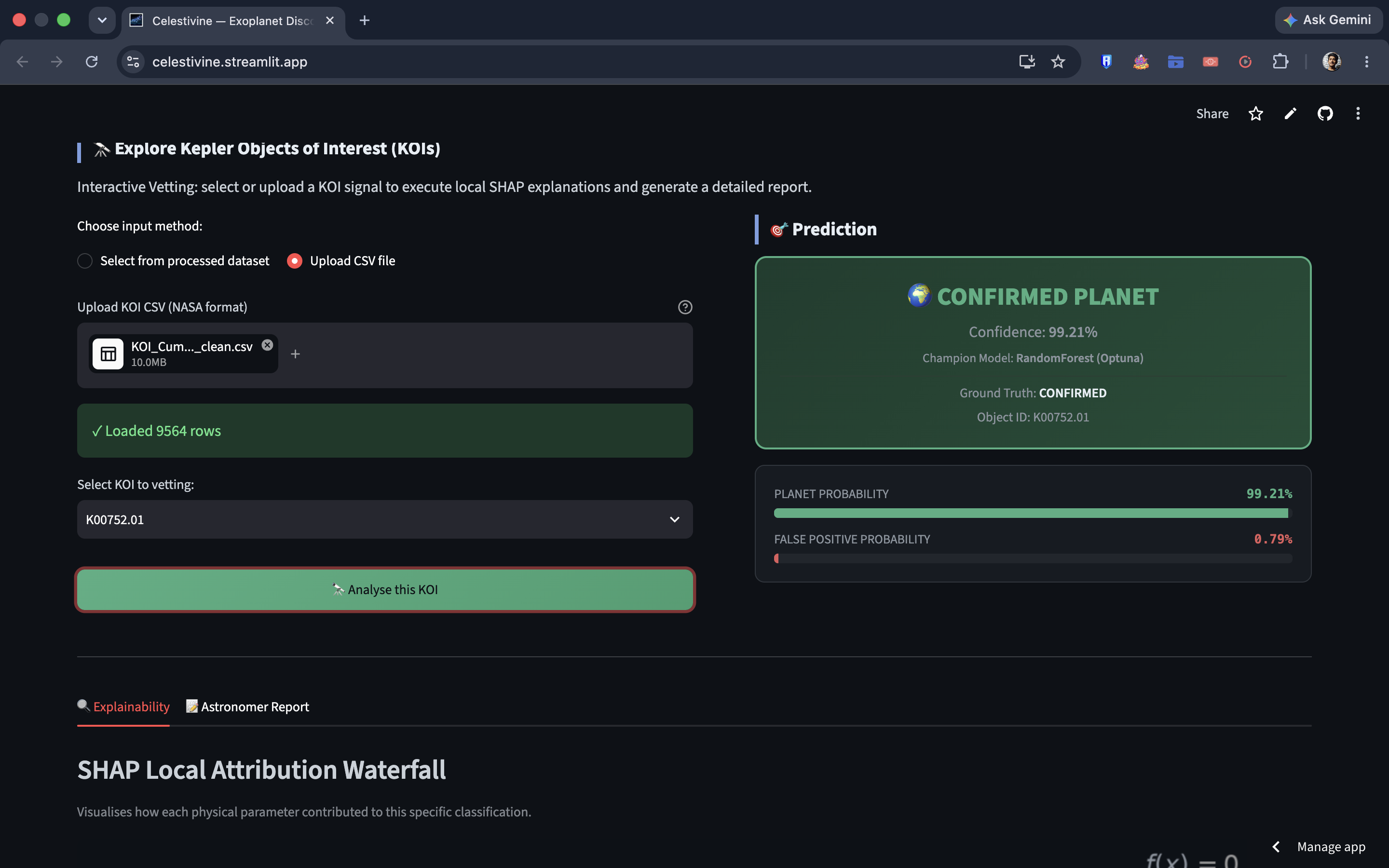
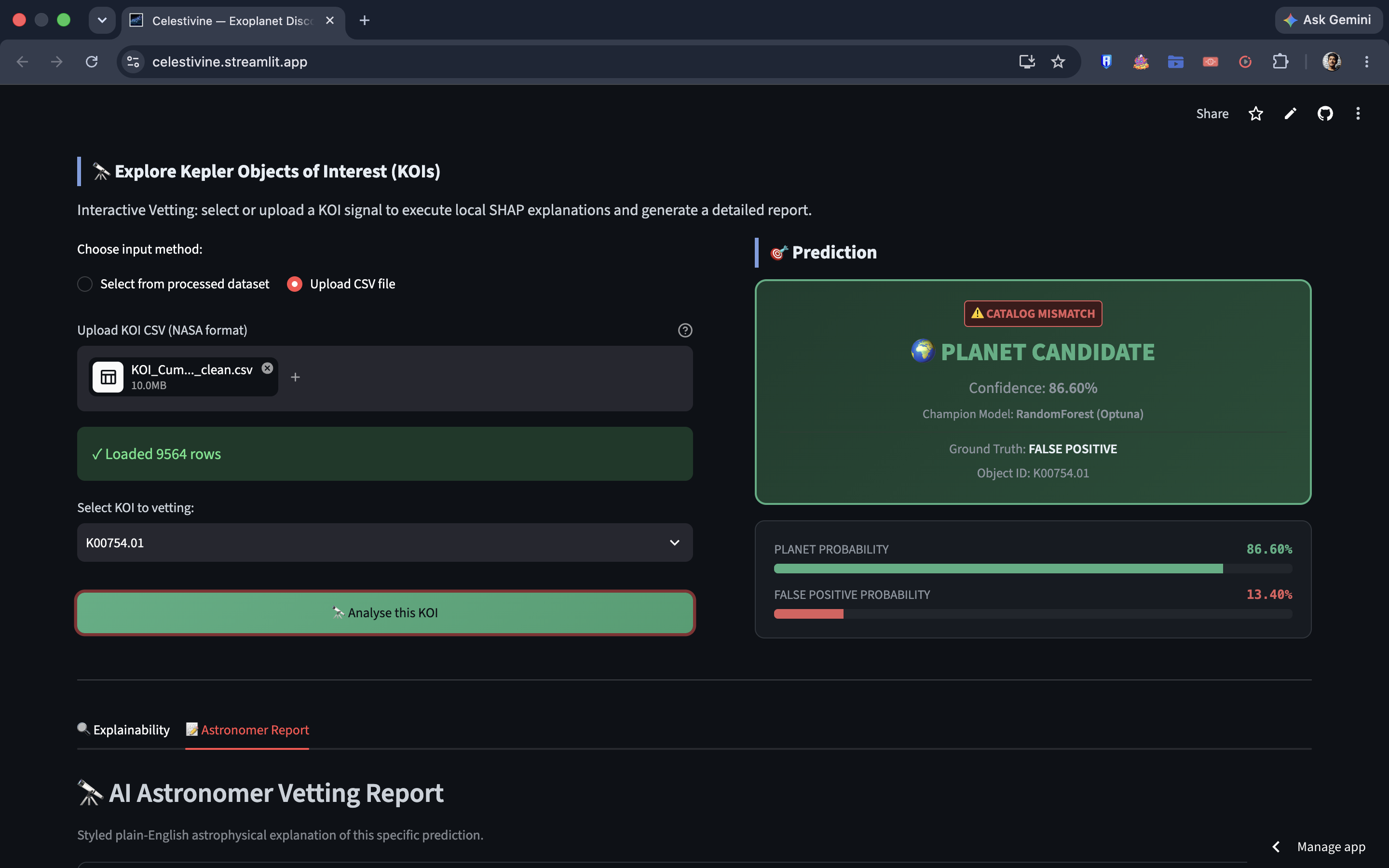
Celestivine is an explainable AI platform for exoplanet vetting using NASA's Kepler KOI dataset. Users can upload a NASA-format KOI catalog or select an object from the processed dataset to receive an AI prediction along with confidence scores, SHAP-based feature explanations, scientific reasoning, astronomer-friendly reports, and recommended follow-up observations.
The platform identifies Confirmed Planets, Planet Candidates, and False Positives while highlighting catalog disagreements that may deserve additional astronomical review.
How we built it
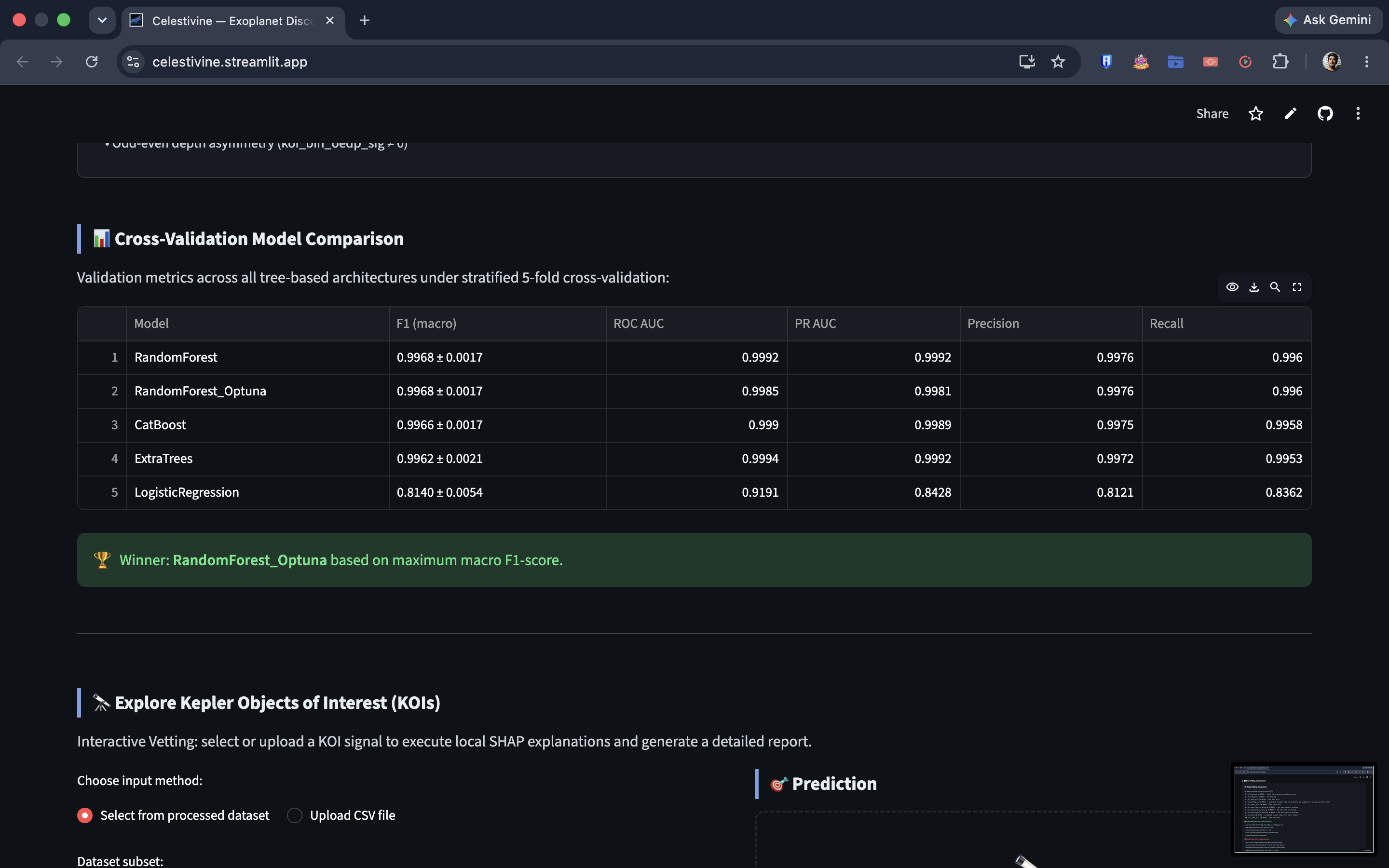
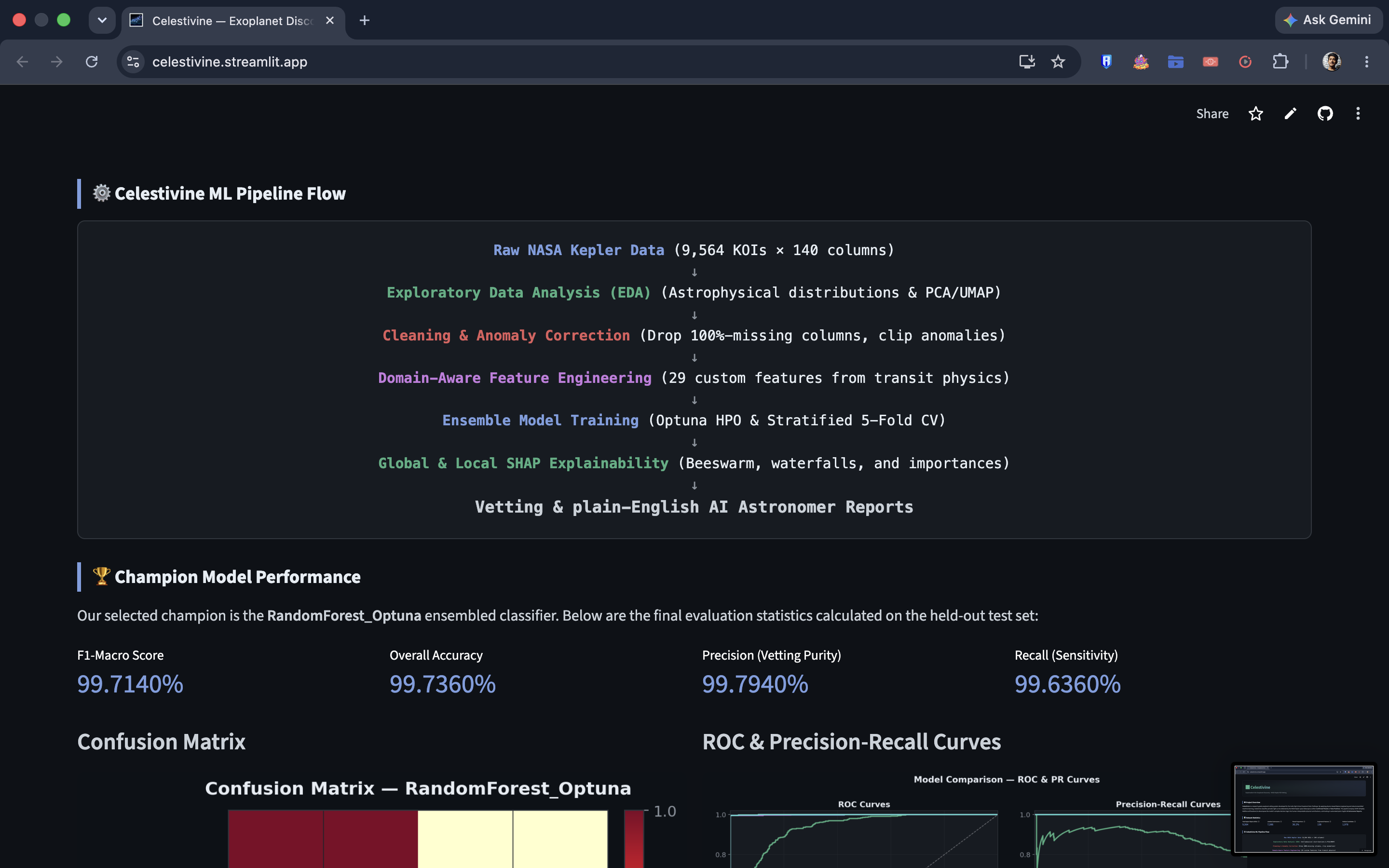
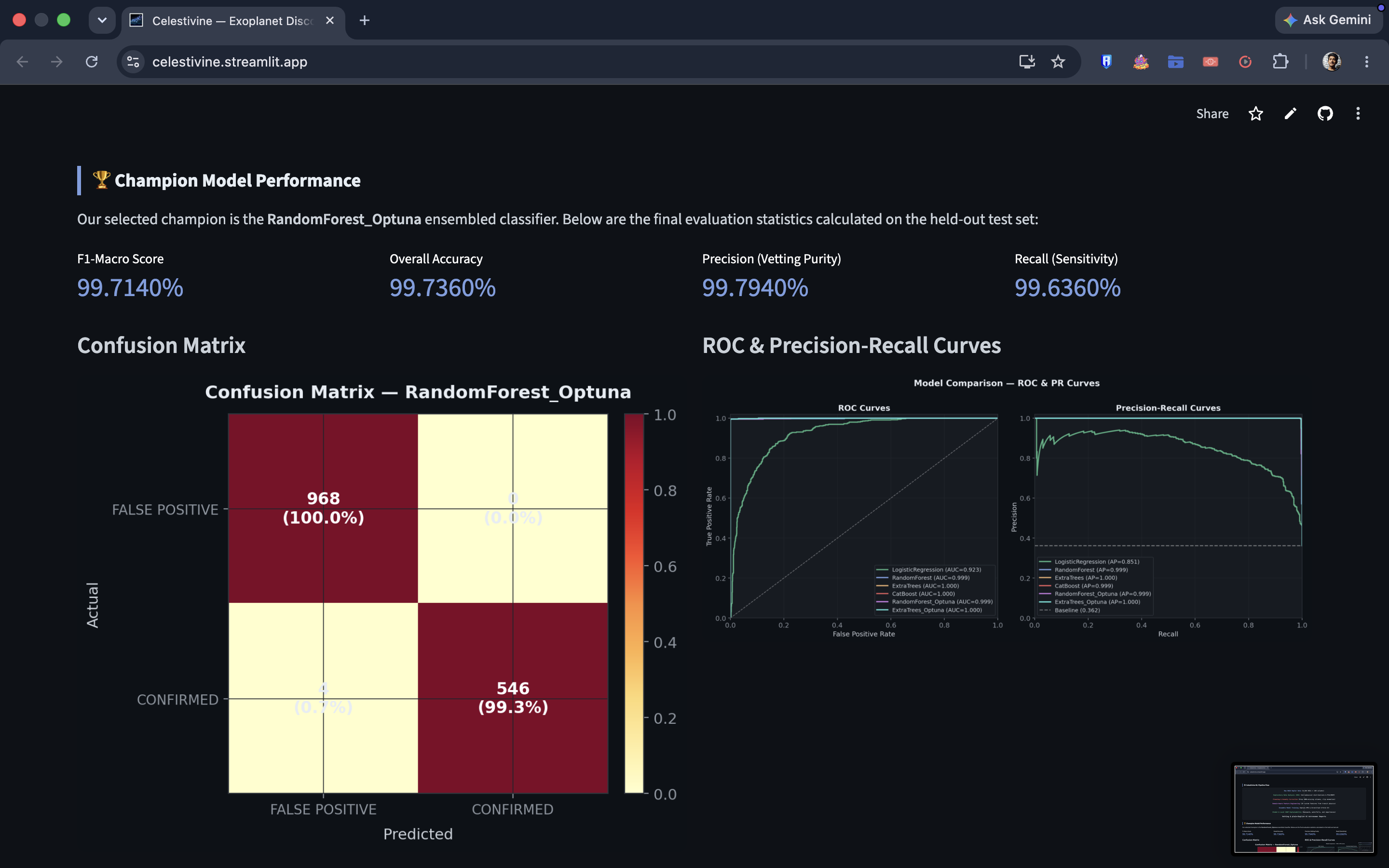
We cleaned and engineered features from the NASA Kepler KOI catalog before training multiple machine learning models including Random Forest, XGBoost, LightGBM, CatBoost, Logistic Regression, and Extra Trees. Hyperparameter optimization was performed using Optuna, with Random Forest emerging as the best-performing model.
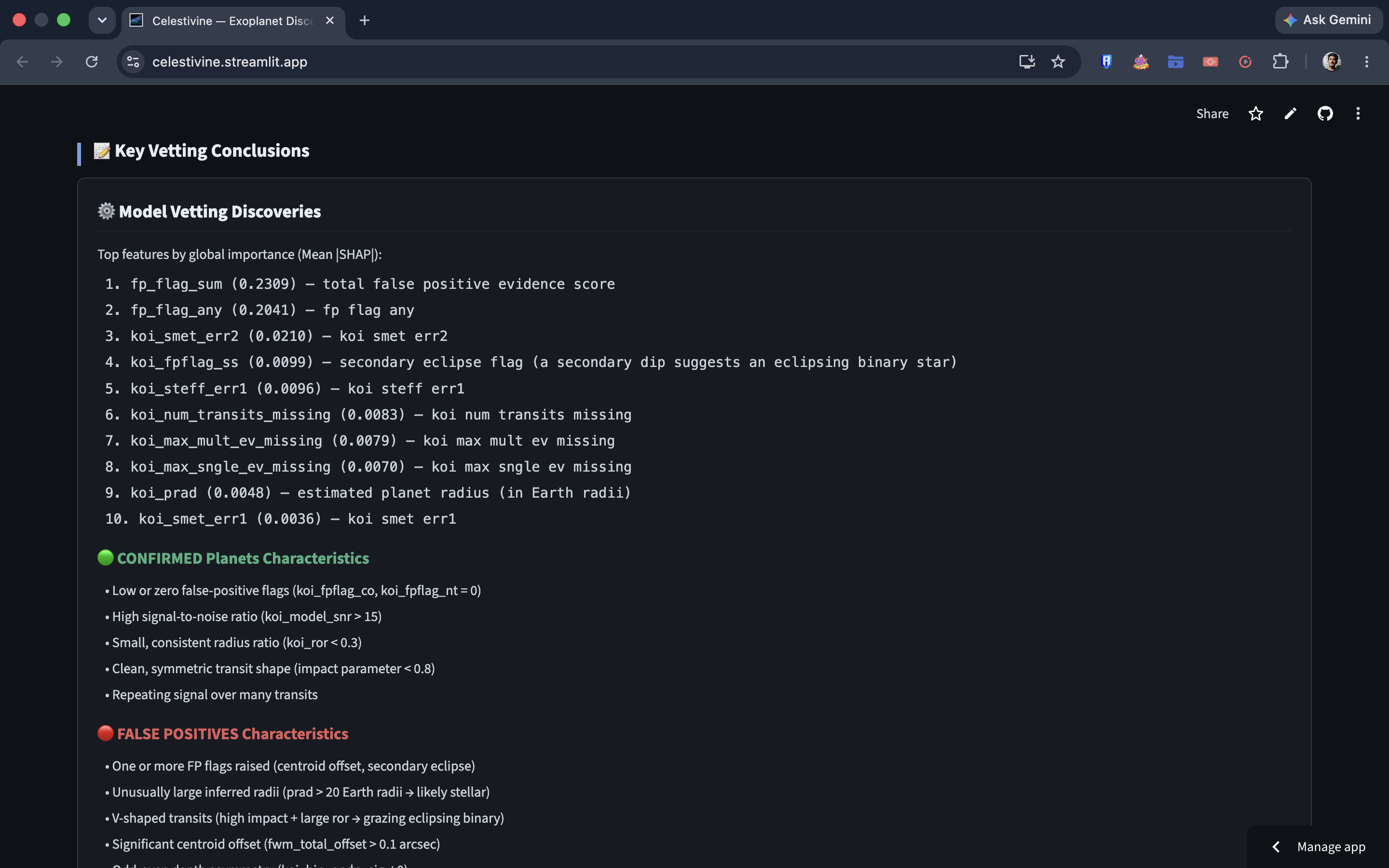
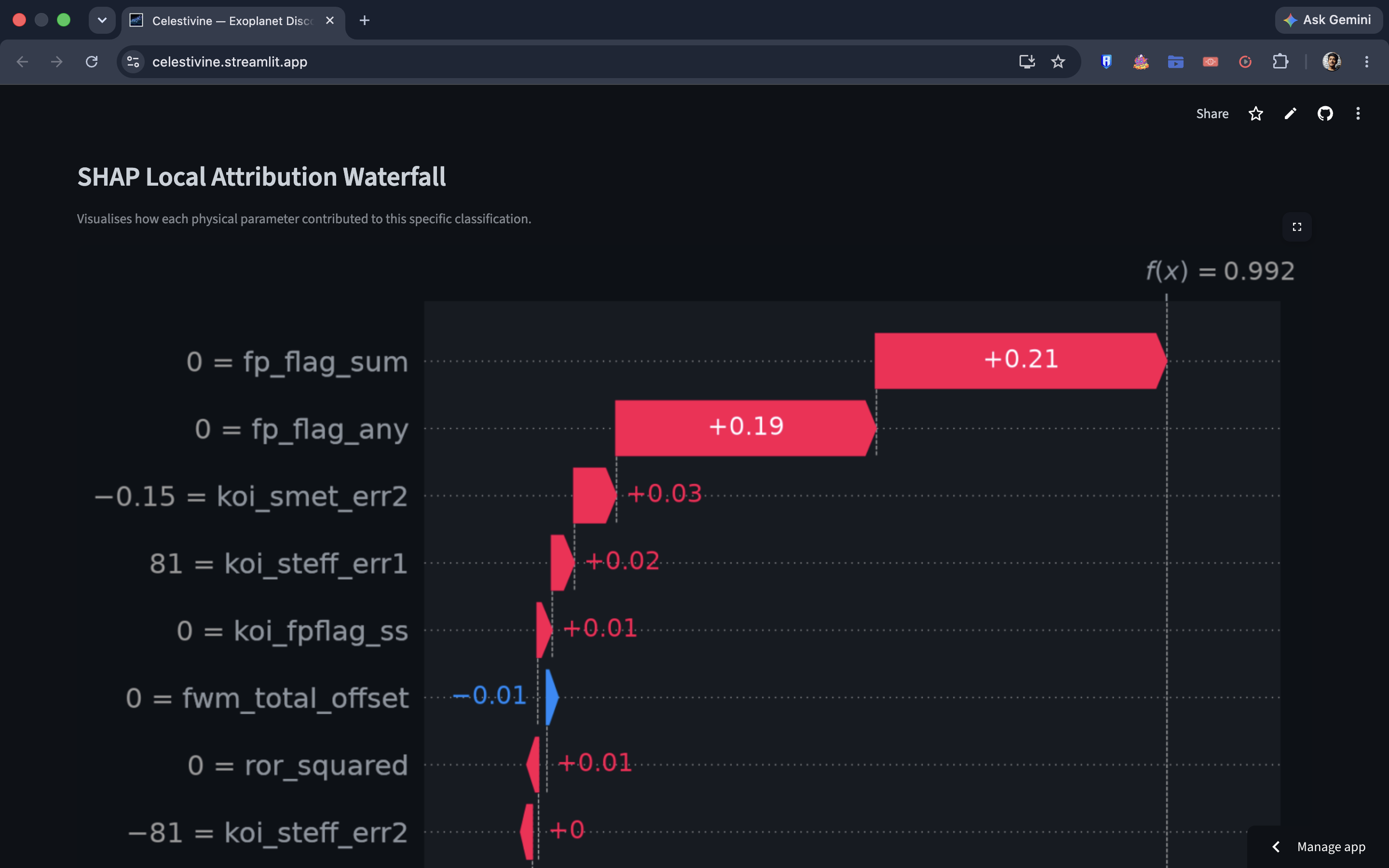
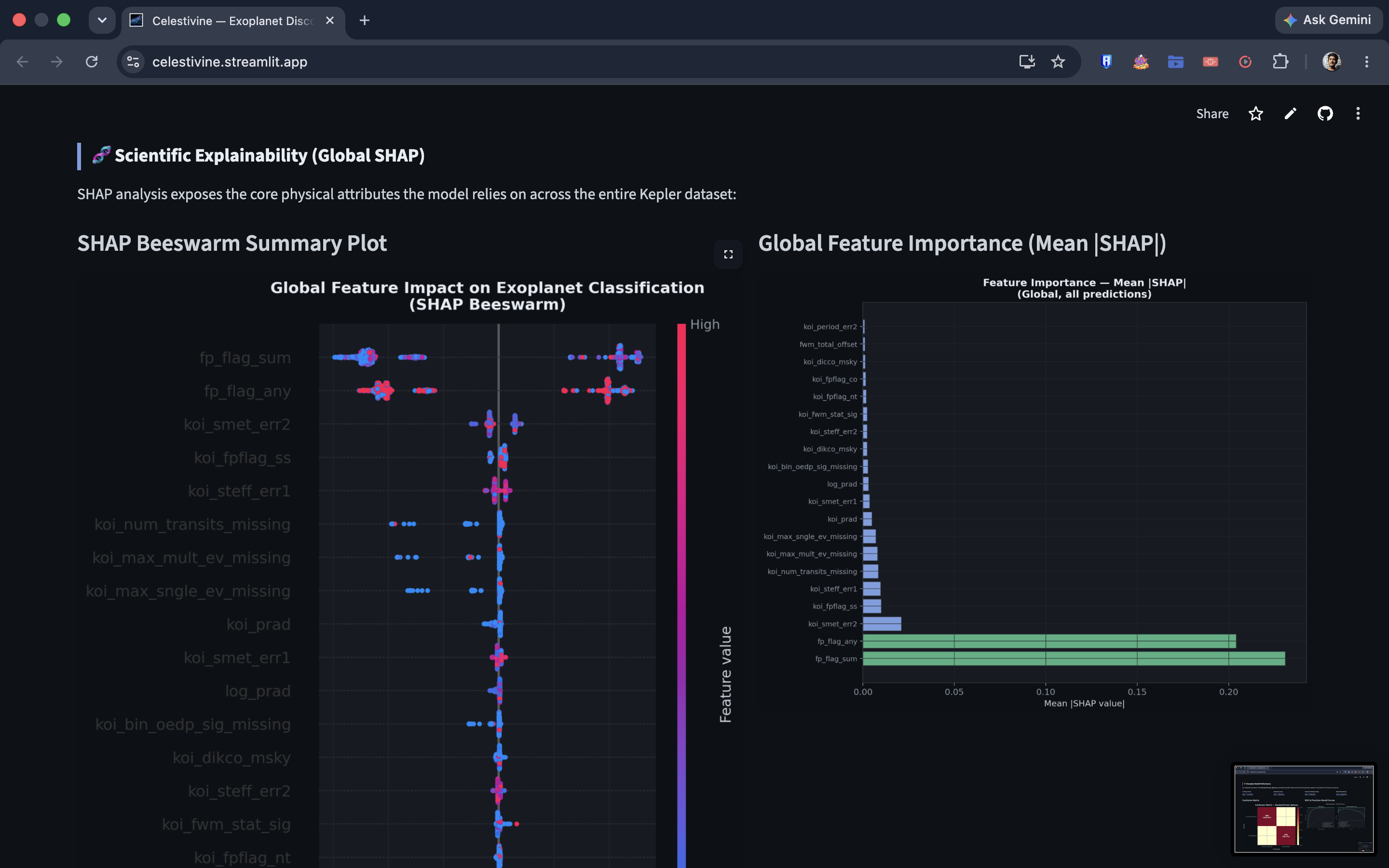
To make predictions interpretable, we integrated SHAP (SHapley Additive Explanations), allowing every classification to be broken down into the physical parameters that influenced the decision. We built a fully interactive Streamlit application featuring probability visualizations, local feature attribution waterfalls, detailed vetting reports, downloadable astronomer summaries, and an intuitive interface designed for both students and researchers.
Challenges we ran into
The largest challenge was balancing predictive accuracy with interpretability. High-performing models alone were not sufficient because astronomers need scientific justification behind every prediction. We also had to carefully handle missing astronomical measurements, engineer meaningful astrophysical features, generate reliable natural language explanations from model outputs, and ensure SHAP explanations remained fast enough for interactive analysis.
Another challenge was presenting complex astrophysical concepts in a way that high school students, educators, and researchers could all understand without sacrificing scientific accuracy.
Accomplishments that we're proud of
We successfully built an AI system that explains every prediction instead of simply producing a classification. The application combines machine learning, explainable AI, and astronomy into a practical research tool capable of highlighting unusual catalog disagreements, generating readable scientific reports, and making exoplanet vetting significantly more transparent.
What we learned
This project taught us that explainability is just as important as accuracy in scientific AI. We gained hands-on experience with astrophysical datasets, feature engineering, ensemble machine learning, hyperparameter optimization, SHAP explainability, and designing interfaces that communicate complex scientific reasoning clearly.
What's next for Celestivine
Our next goal is to extend Celestivine beyond Kepler by supporting TESS observations, integrating raw light curve analysis, incorporating uncertainty estimation, enabling comparison across multiple AI models, and exploring retrieval-augmented scientific explanations using published exoplanet literature. We also plan to support collaborative vetting workflows and cloud deployment so astronomers and students can analyze new candidates directly from their browser.


Log in or sign up for Devpost to join the conversation.