Inspiration
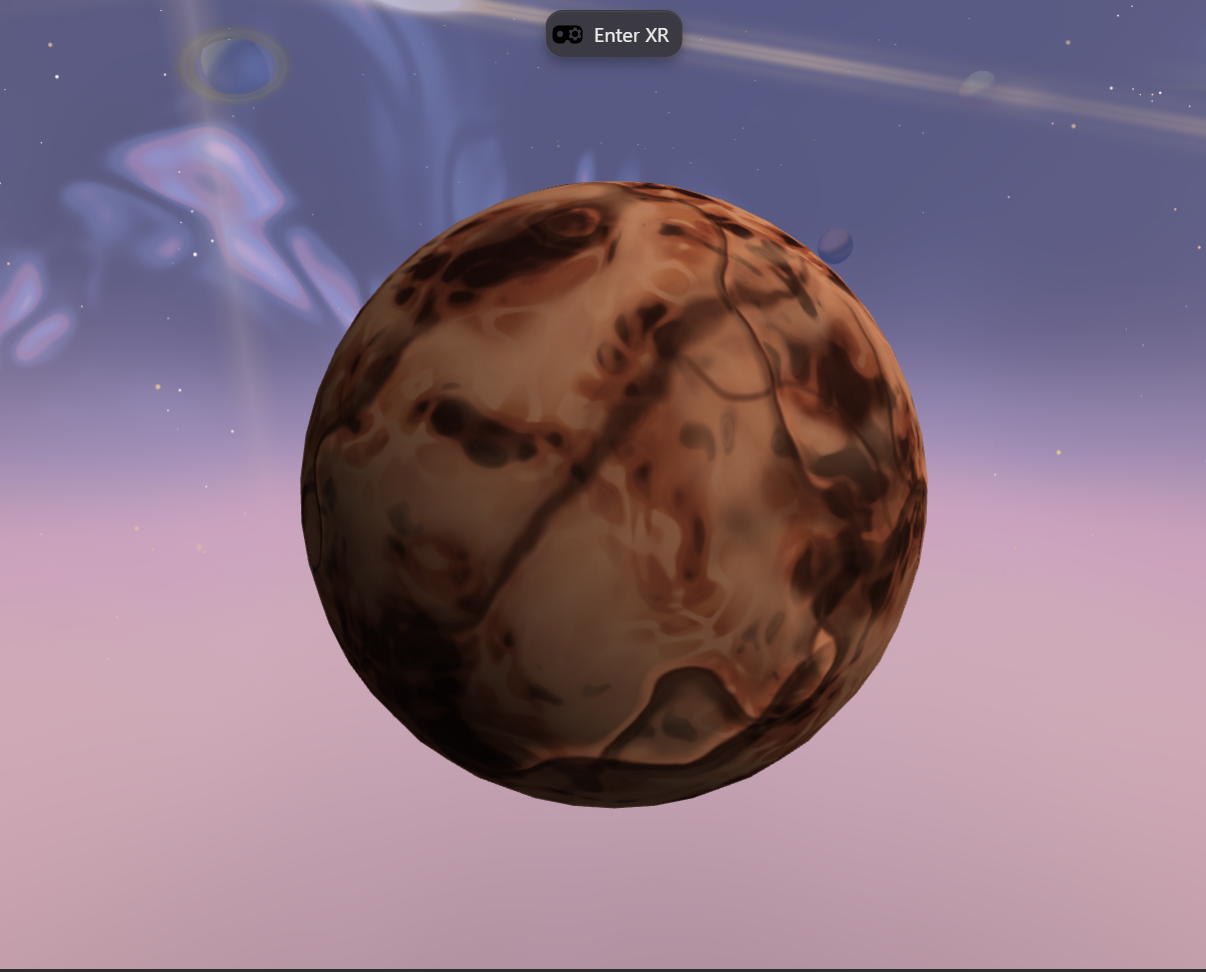
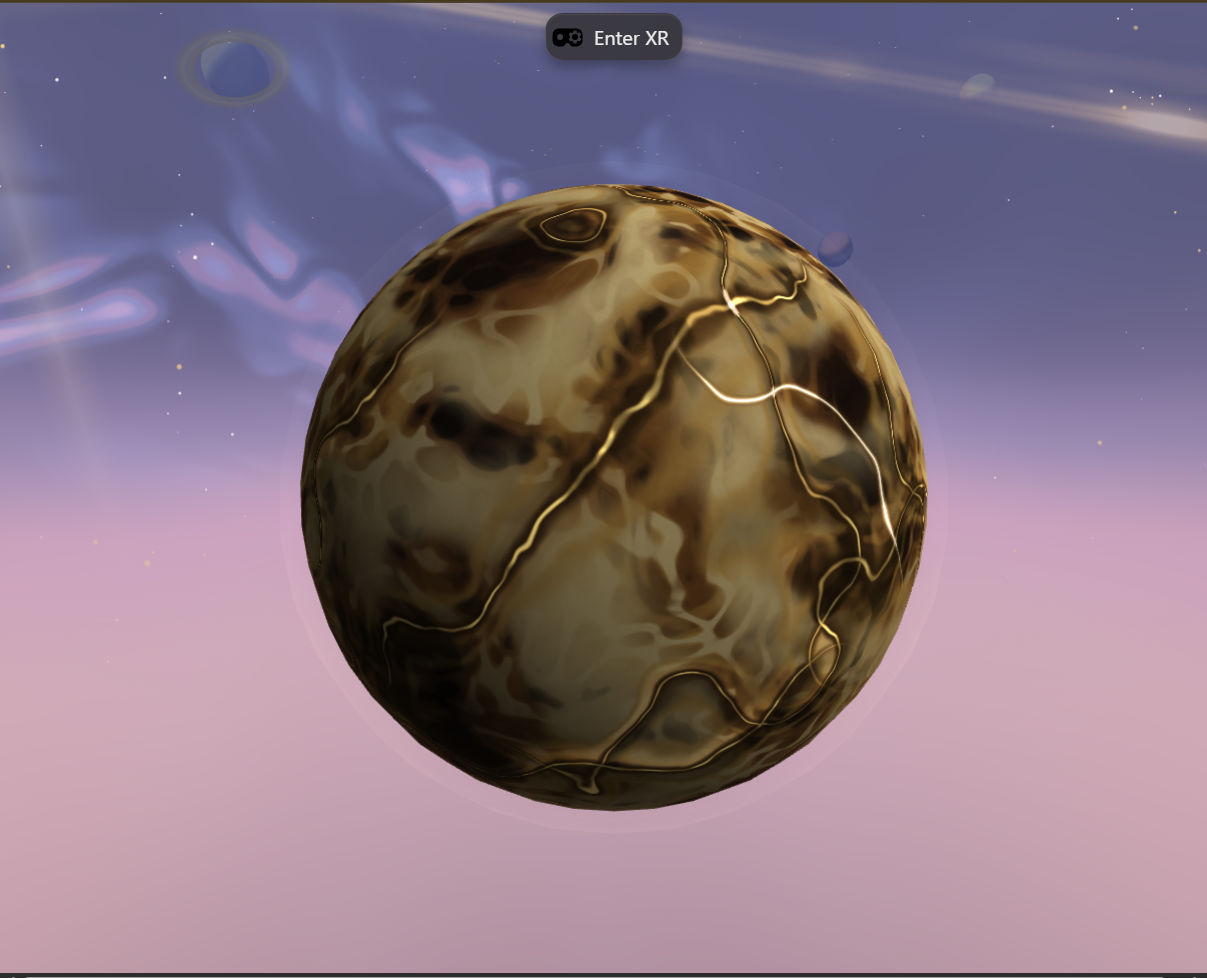
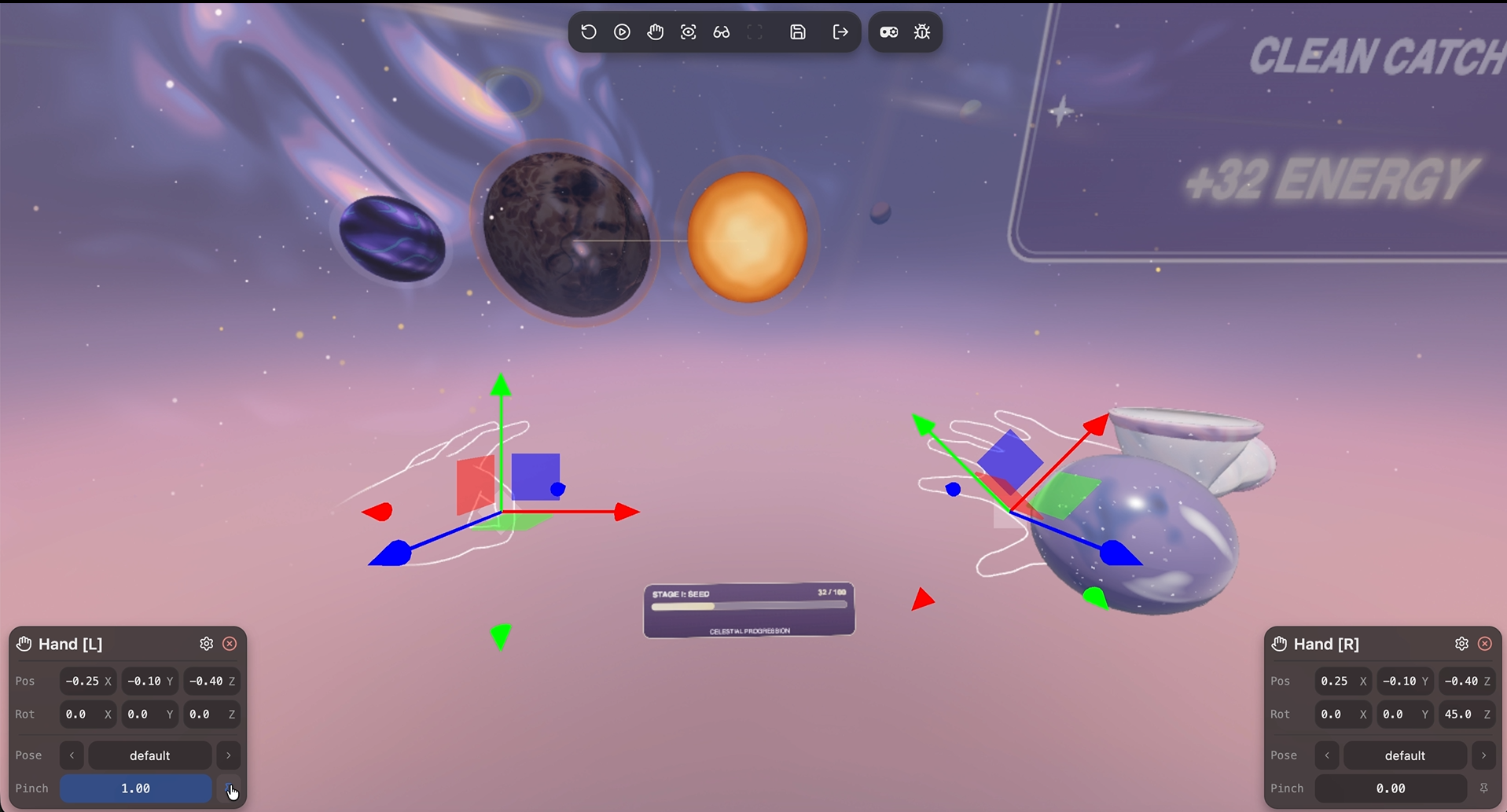
Kendama is a simple toy that takes real skill: you catch a ball on a cup, again and again, and the rhythm of the catches is the whole game. We wanted to carry that feeling into VR and make it mean something. What if every catch you made had real consequences in space? That idea became Celestial Kendama, where a kendama in your hands drives a cosmic mission, and your rhythm literally shapes the orbit of a planet.
What it does
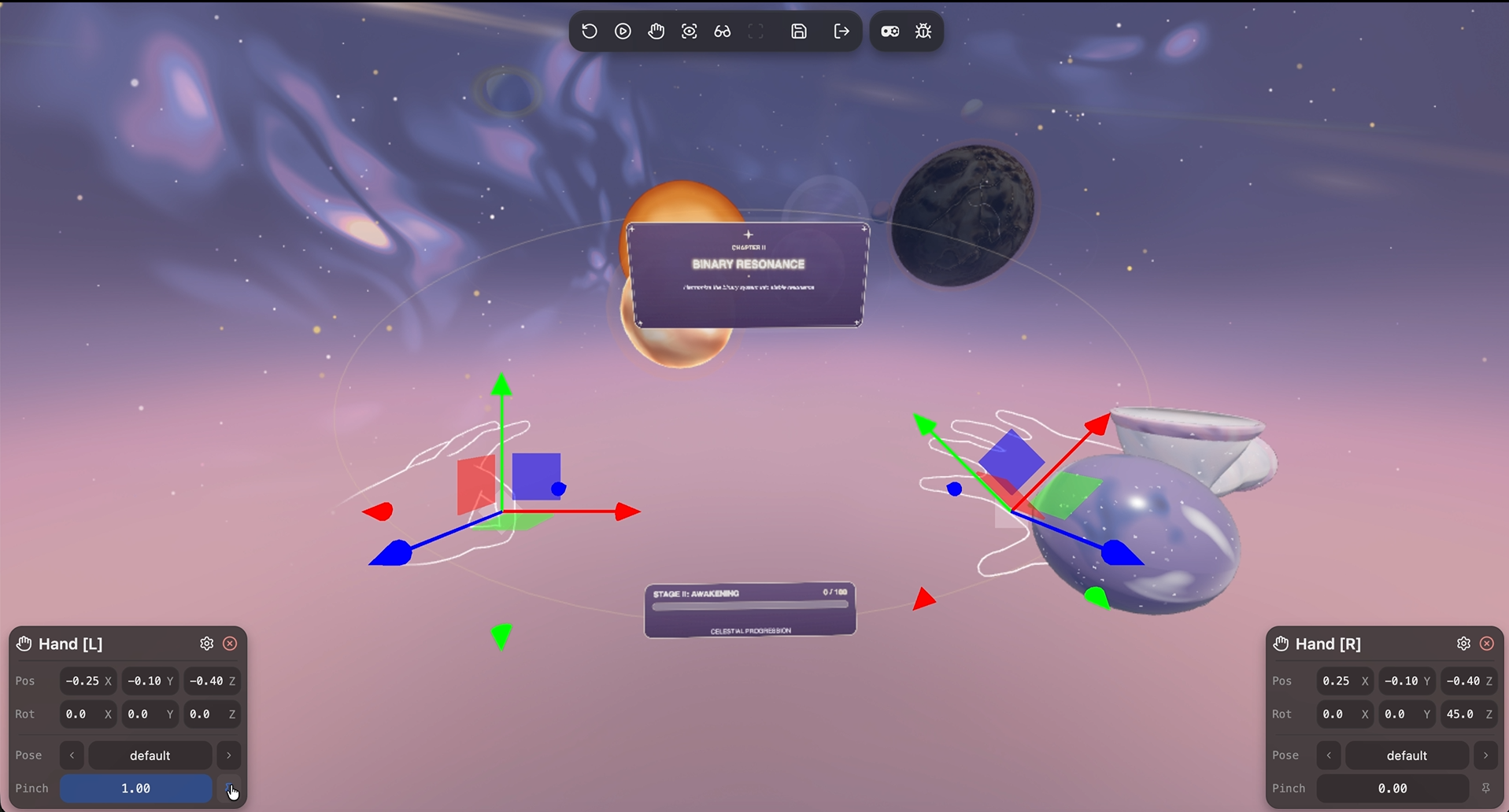
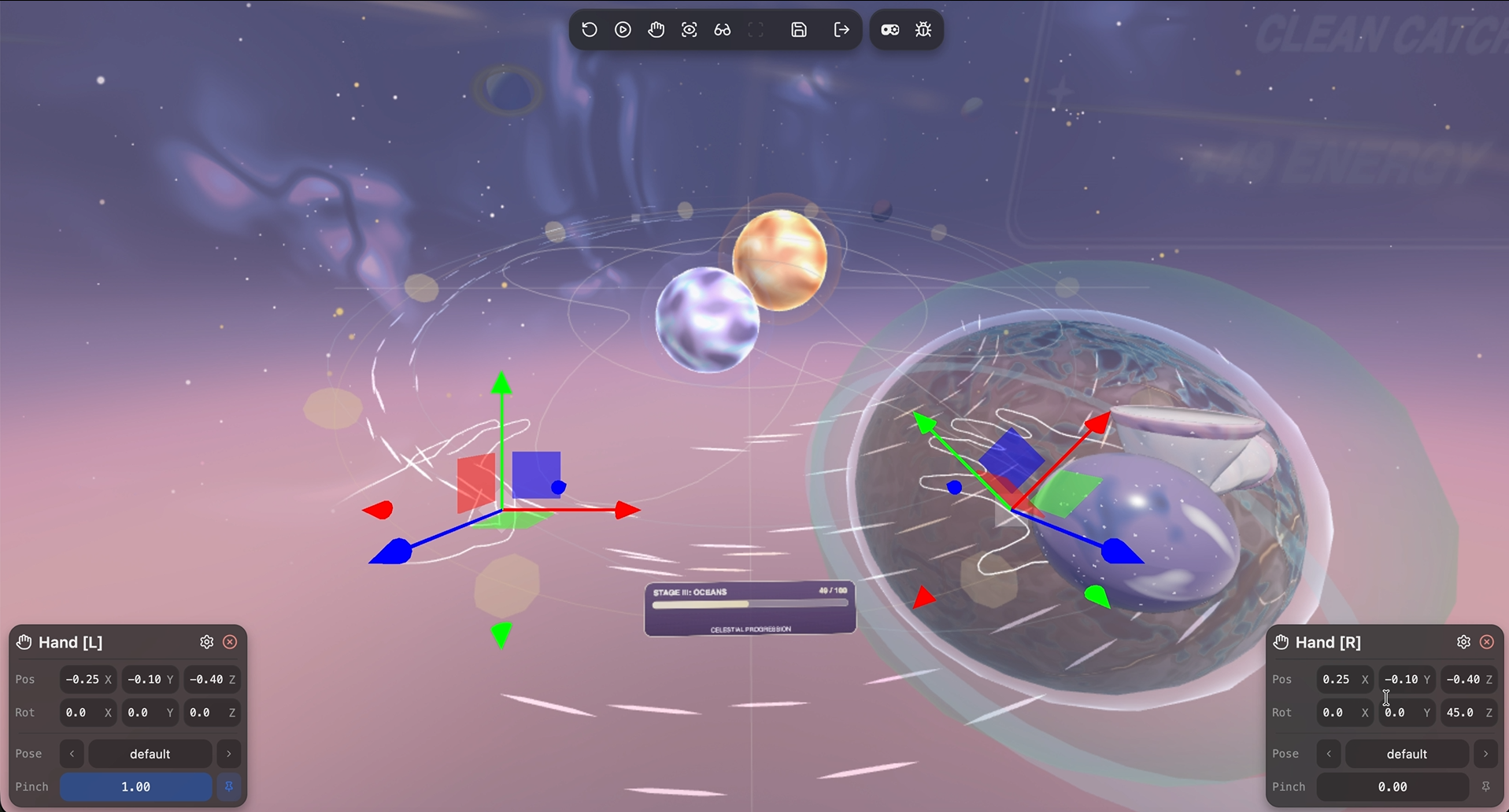
Celestial Kendama is a hand-tracked VR game for Meta Quest. You pick up a virtual kendama with your bare hands and catch the ball (tama) on its cups. Each catch adds cosmic energy, which moves the mission through four chapters:
- Gravitational Capture: Catch on the Big Cup (Ozara) to bind a rogue planet into orbit.
- Binary Resonance: Alternate between the Big and Small Cups (Kozara) to ride a planet around a pair of stars.
- The Slingshot: Make inverted catches on the Base Cup (Chuzara) to assist a gravitational slingshot.
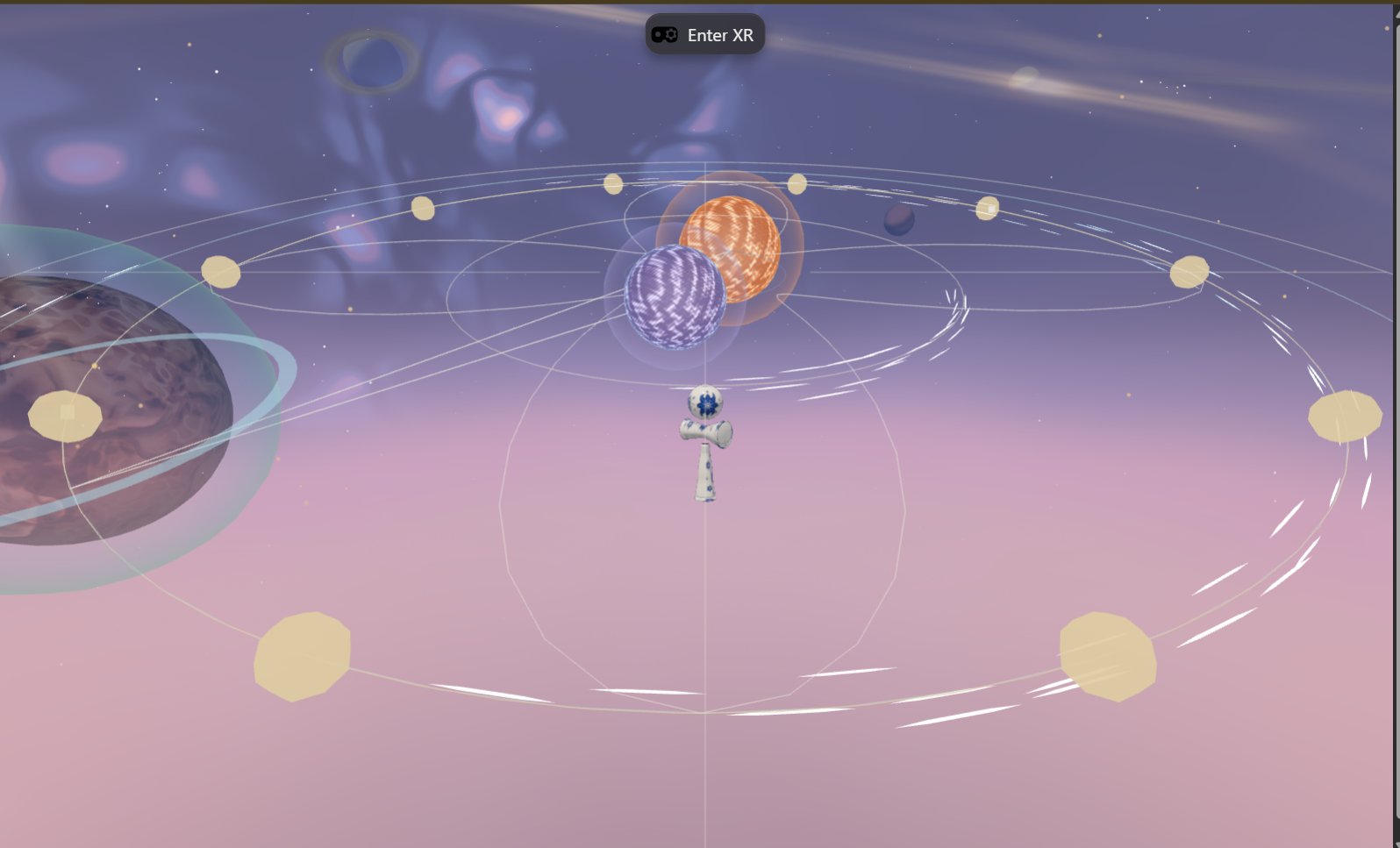
- Calibration Climax: Land the Tomeken spike catch to trigger a finale where three stars lock into a stable figure-eight orbit.
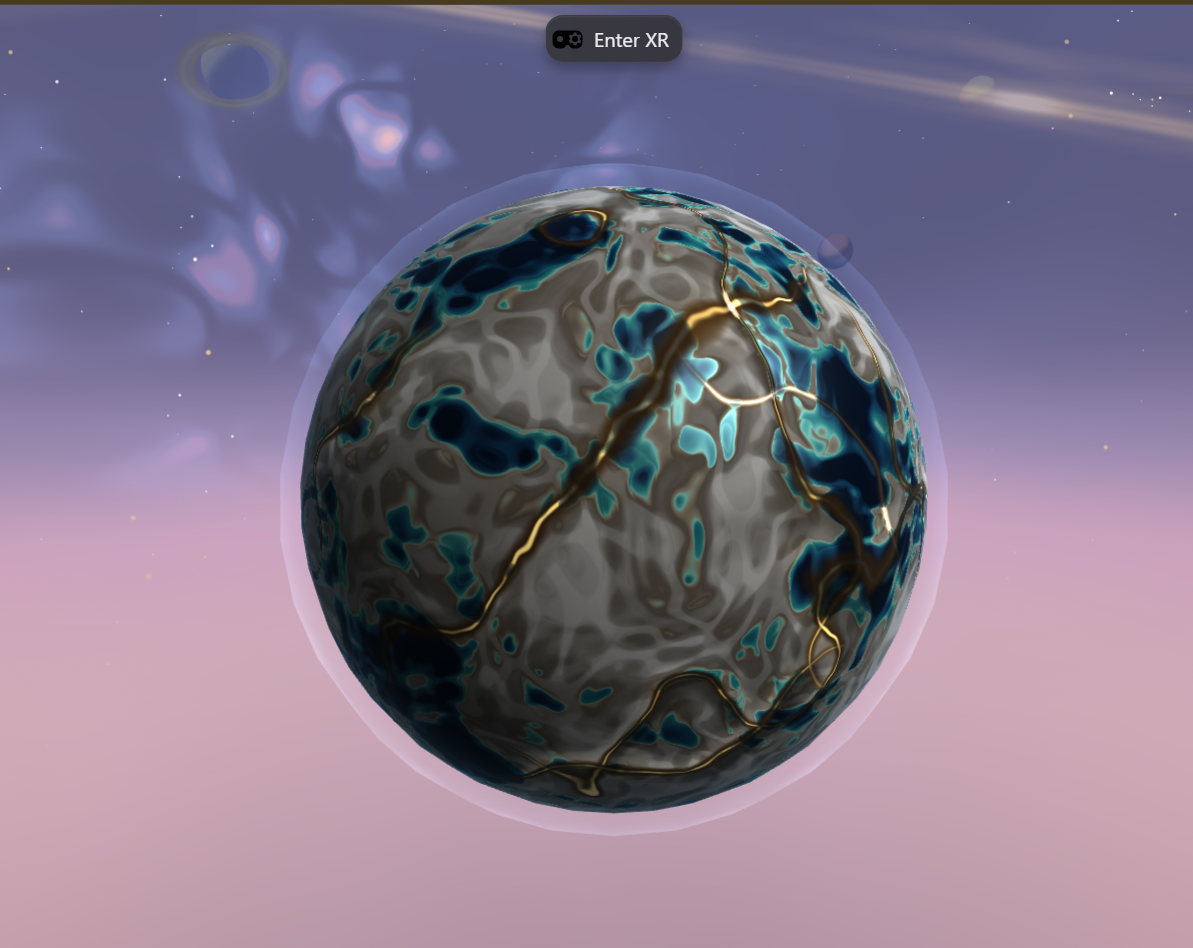
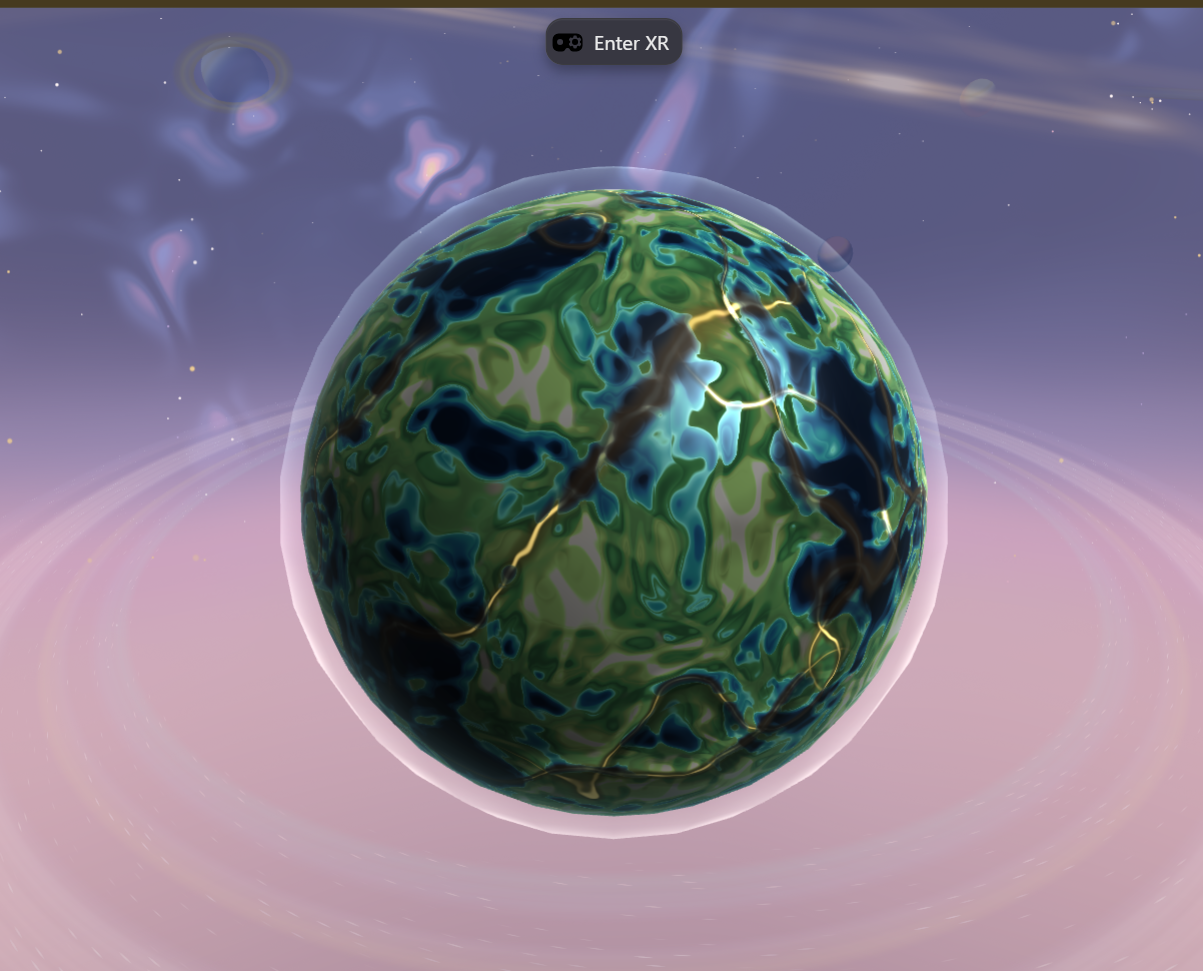
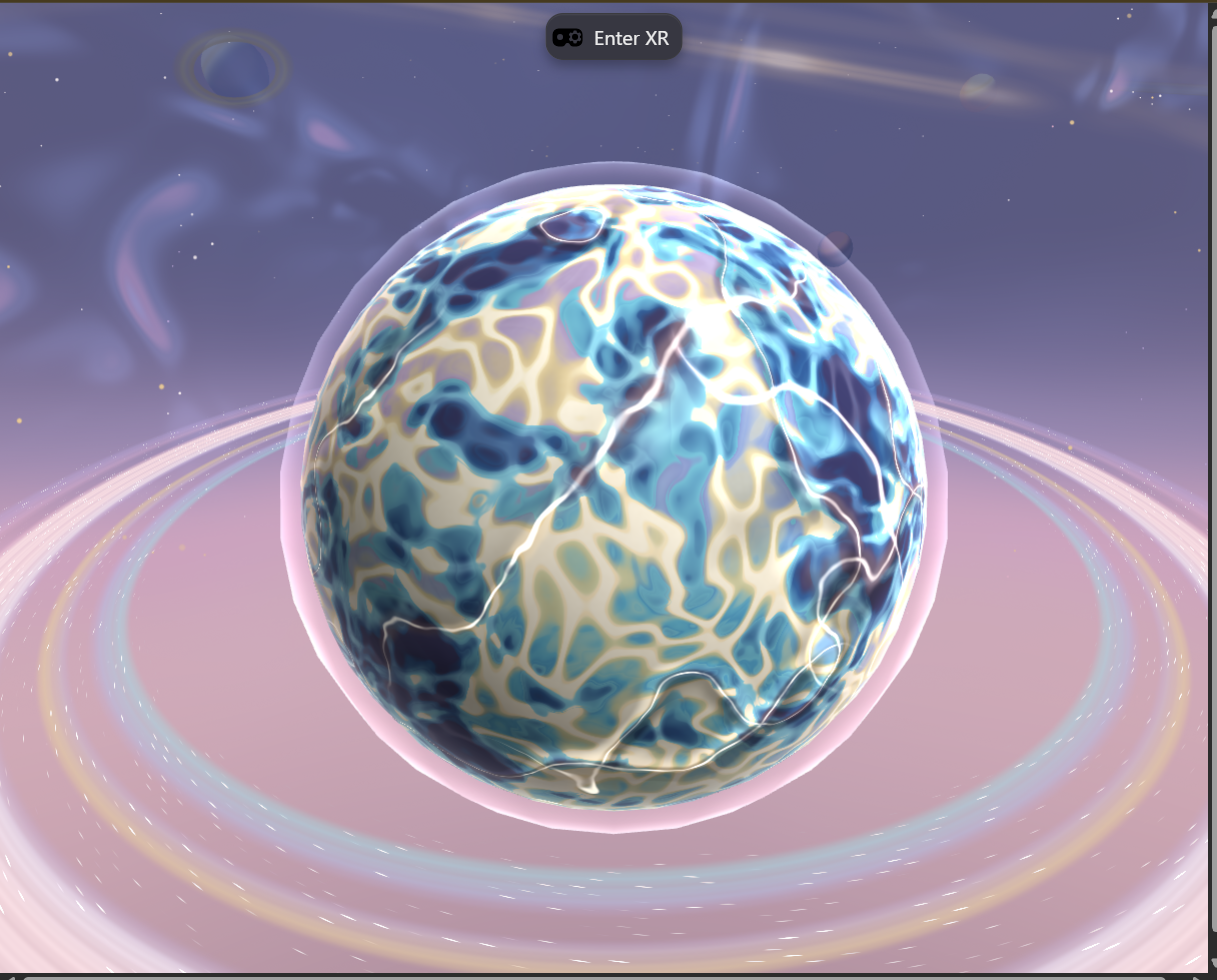
Clean catches, streaks, and staying on beat all multiply your score, so the better your rhythm, the faster the planet evolves. A full run takes about 3 to 4 minutes. There are five kendama presets, including Celestial Kendama, Galaxy Wood, Bubblegum Pop, Dark Matter, and Porcelain Dreams.
How we built it
We built it on Meta's Immersive Web SDK (IWSDK) with Three.js and WebXR, in JavaScript with Vite. We split the work into three layers so we could build in parallel:
- Input (hands): WebXR hand-joint tracking, pinch detection, wrist roll and pitch, and catch detection against exact cup geometry. A One Euro filter smooths tracking so the ball feels responsive during fast swings but steady when you hold still.
- Physics and mission: A custom orbital engine using RK4 integration with adaptive substepping on a 120 Hz fixed timestep. It handles gravitational capture burns, binary star systems, a deterministic slingshot preset, and the three-body figure-eight finale. A mission controller tracks energy and chapter progression.
- World and visuals: Procedural kendama and ball geometry, custom shaders and materials for each preset, and a celestial environment with a starfield, nebula, stardust, and landmarks.
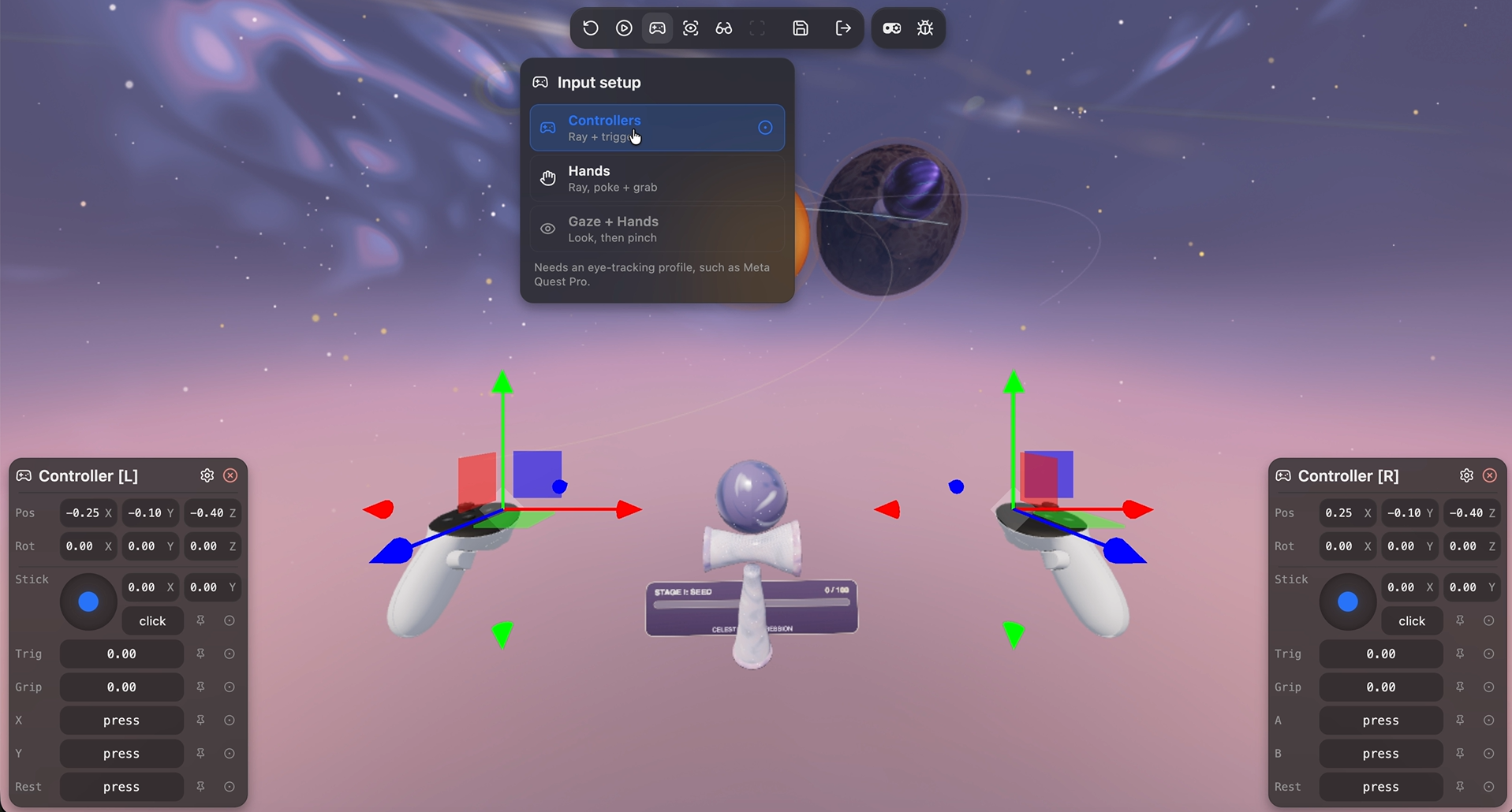
The layers talk through shared contracts and an event bus. We also built a mouse-and-keyboard desktop simulator and a physics simulation script, and we wrote over 45 automated test files covering physics, input, scoring, rendering, and end-to-end missions.
Challenges we ran into
- Noisy hand tracking: Raw hand data jitters, which makes catches feel unfair. Tuning the One Euro filter to remove jitter without adding lag took many iterations.
- Stable physics on a headset: Close planet-star encounters can blow up numerically. We used a fixed-step accumulator, adaptive RK4 substepping near close approaches, and collision-avoidance limits to keep the simulation stable and smooth on Quest.
- Making chaos deterministic: The slingshot and the figure-eight finale had to behave identically every run, so players always get a satisfying result. We found stable parameters through grid sweeps and verified them with deterministic-playback tests.
- Coordinating three builders: Input, physics, and visuals depend on each other. We agreed on shared contracts and single definitions, such as what counts as a "perfect catch", so changes in one layer didn't break the others.
- Developing without always having a headset: We needed a way to test everything quickly, so we built the desktop simulator and relied on the IWSDK emulator and automated tests.
- Pacing: Tuning energy thresholds and cadence timing so the whole mission lands in about 3 to 4 minutes took a lot of playtesting.
Accomplishments that we're proud of
- A complete, playable mission arc from first catch to finale, driven by real orbital mechanics rather than scripted animation.
- Hand-tracked catching that feels natural, with no controllers needed.
- A physics core that is deterministic, allocation-free in its hot loops, and well tested.
- A distinct visual identity, with five themed kendama presets built entirely in code.
- Over 45 automated test files and a clean three-layer architecture that let us build in parallel without constantly colliding.
What we learned
- How WebXR hand tracking works in practice, and why signal filtering matters so much for how a VR interaction feels.
- Numerical integration trade-offs: fixed versus adaptive timesteps, and how to keep n-body simulations stable in real time.
- How to design contracts and event buses so a team of three can build independent systems that fit together.
- That gameplay, physics, and visuals all feed into the feeling of a catch, so tuning them together matters more than perfecting any one alone.
- How to build and test XR experiences efficiently with emulators, simulators, and automated tests.
What's next for Celestial Kendama
- Playtesting on real Quest hardware with more players to refine catch tolerances and difficulty.
- More tricks, such as lunar and airplane catches, plus new chapters and cosmic scenarios.
- Leaderboards, replays, and a freeplay mode for practising individual tricks.
- Spatial audio and a reactive soundtrack that follows your rhythm.
- Mixed-reality mode so the cosmos unfolds in your own living room.
- More kendama presets and unlockable cosmetics.

