Inspiration
As part of Carolina Data Challenge 2025, we wanted to approach a problem far away but becoming increasingly large by the day: space debris. There are thousands of new satellites entering orbit every year, and with them, the risk of collision and crowding in space is increasing. We asked ourselves this question: How do we make an abstract problem understandable and interesting?
What it does
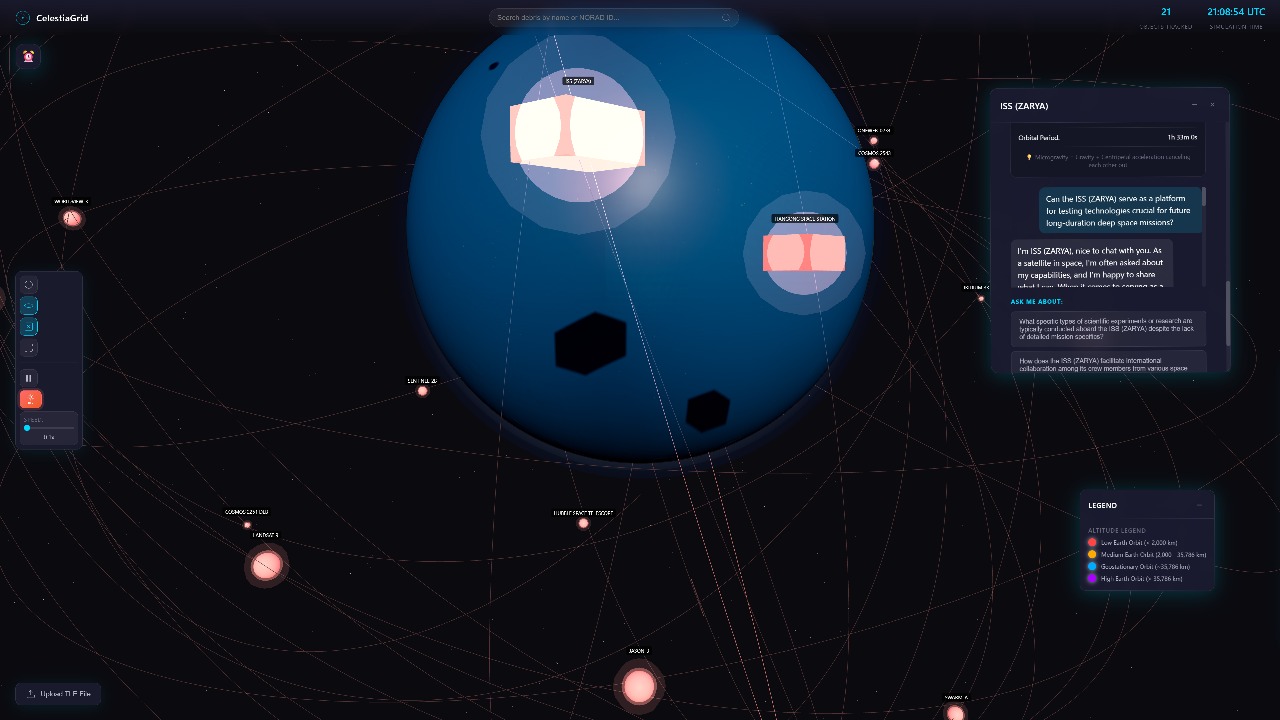
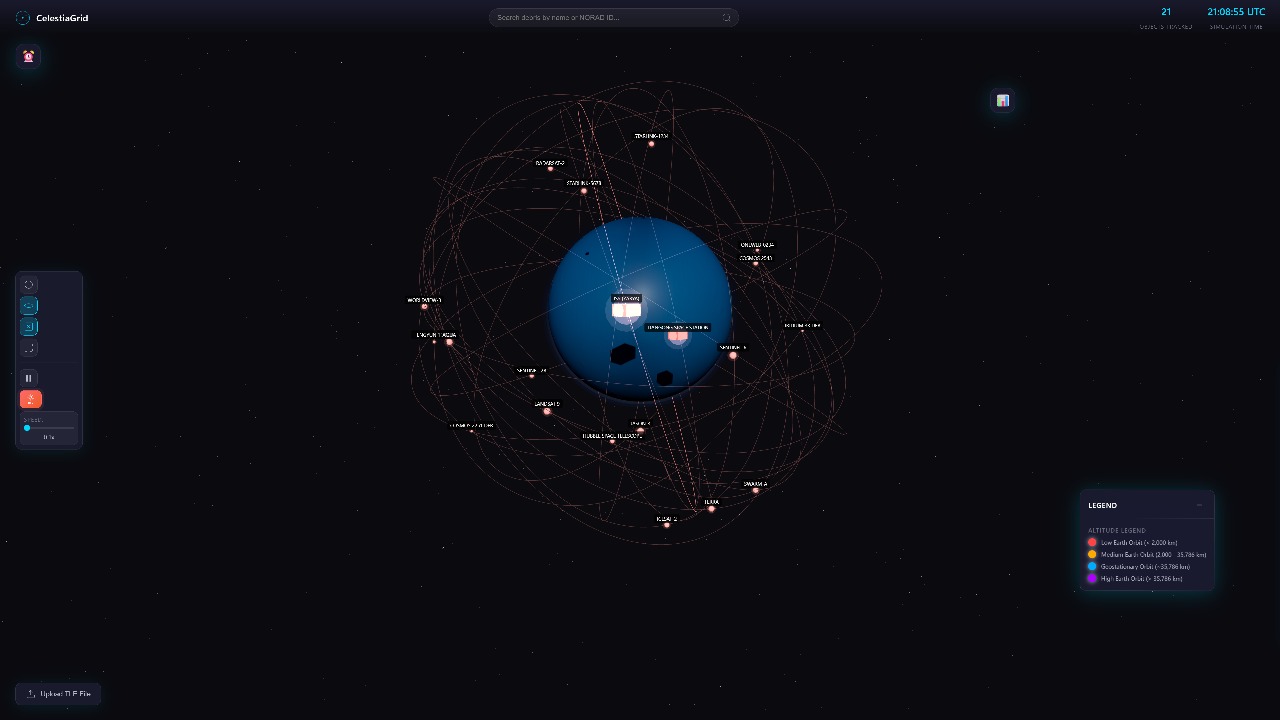
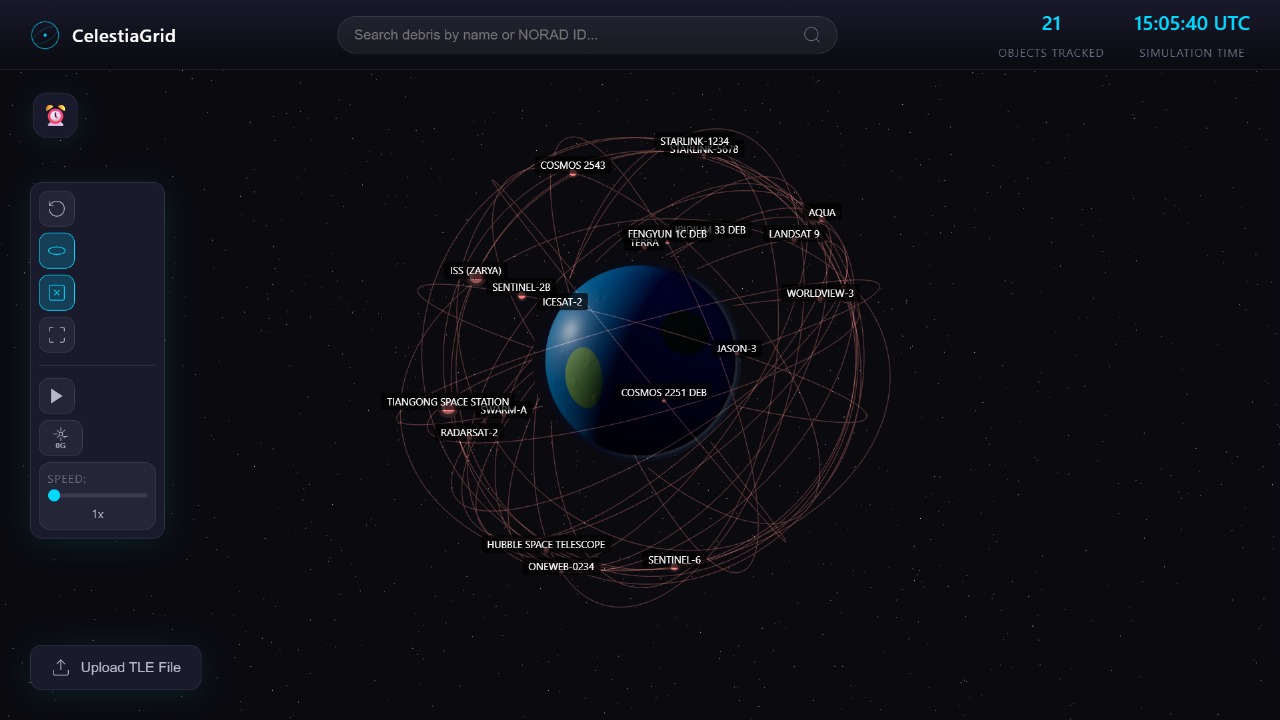
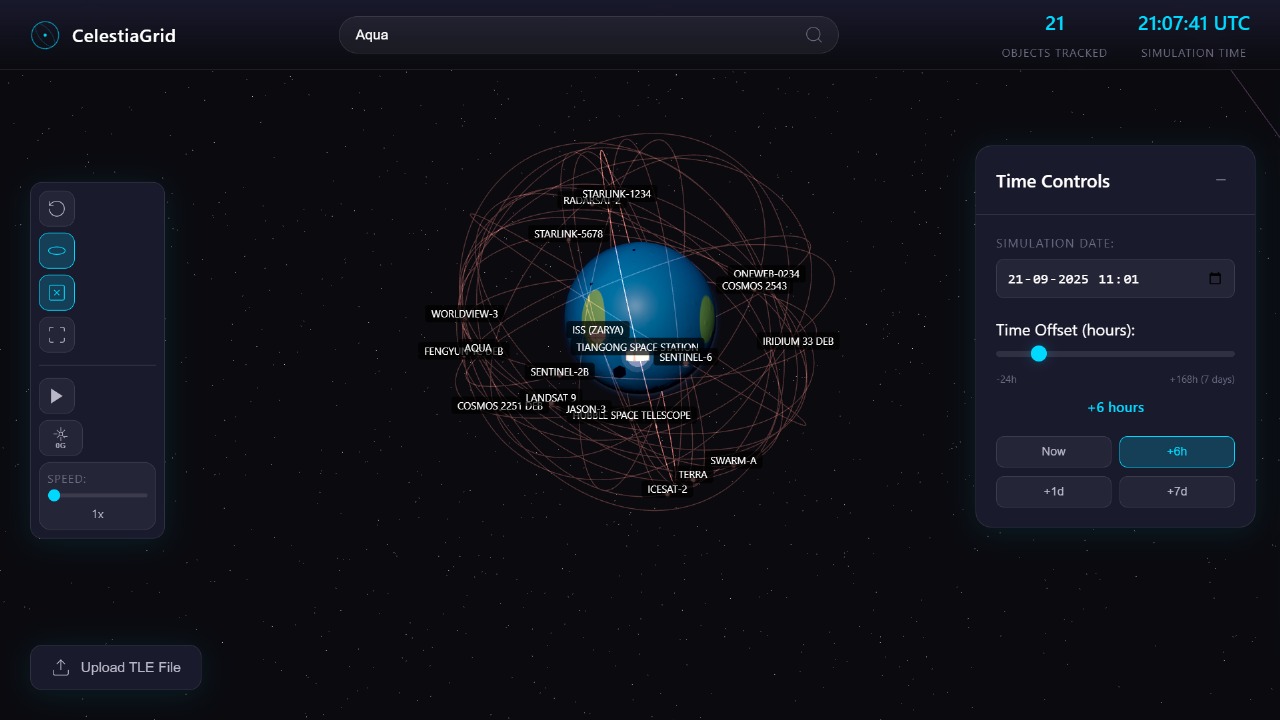
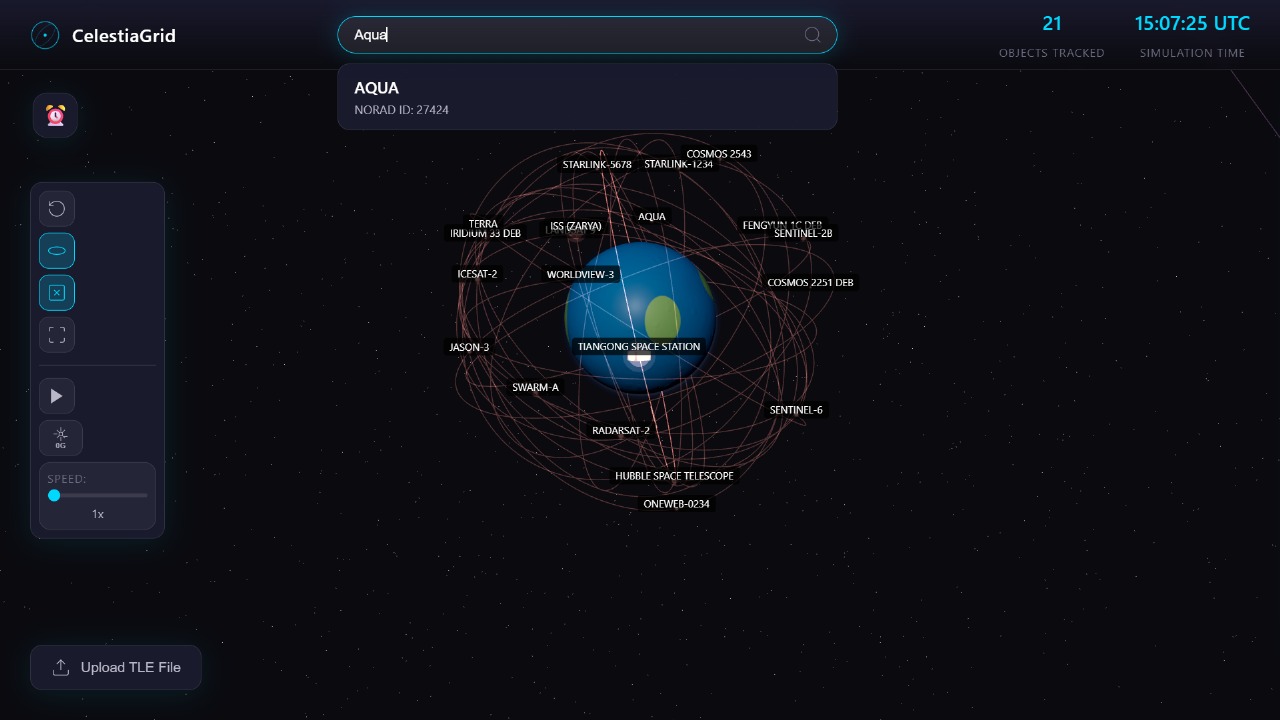
That’s how we developed CelestiaGrid – Orbital Debris Tracker (3D Space Visualization). From TLE (Two-Line Element) data we receive from organizations such as NASA and CelesTrak, we established a platform which brings satellites and debris to life on a 3D globe. Users can explore Earth's orbit in real time, track thousands of objects, and even pose an AI assistant a question regarding orbits, altitude bands, or collision dangers.
How we built it
Our adventure wasn’t simply about creating dots on the map — it was about data storytelling. We authored with Three.js, simulated orbital mechanics with Satellite.js, and integrated Gemini AI for natural-language interaction. Along the way, we explored methods for sorting debris (LEO, MEO, GEO, HEO), detecting potential conjunctions, and demonstrating just how much more populated Earth’s orbit is becoming.
Challenges we ran into
Working with large datasets of TLEs meant handling inconsistencies, parsing errors, and performance bottlenecks. Ensuring smooth rendering while tracking thousands of objects required optimization. Integrating the AI assistant also brought its own challenges with security and environment variable management.
Accomplishments that we're proud of
We’re proud that CelestiaGrid not only works but makes orbital debris tangible and interactive. We built a tool that combines visualization, orbital science, and AI into one cohesive platform. For us, bridging data science with storytelling and accessibility was the biggest win.
What we learned
We learned how to handle real-world space data, how orbital mechanics can be approximated through TLE propagation, and how to present complex information in a way that is engaging for non-experts. We also deepened our skills in web development, 3D rendering, and AI integration.
What's next for CelestiaGrid
What we are most eagerly anticipating is the impact. Such a tool could benefit students, researchers, and policymakers by making orbital debris easier to understand. It can be used in education, to raise awareness, and even as the seeds of future collision warning systems. Placing orbital debris within sight and manipulability should help foster conversation about space sustainability and the future of humanity in orbit.


Log in or sign up for Devpost to join the conversation.