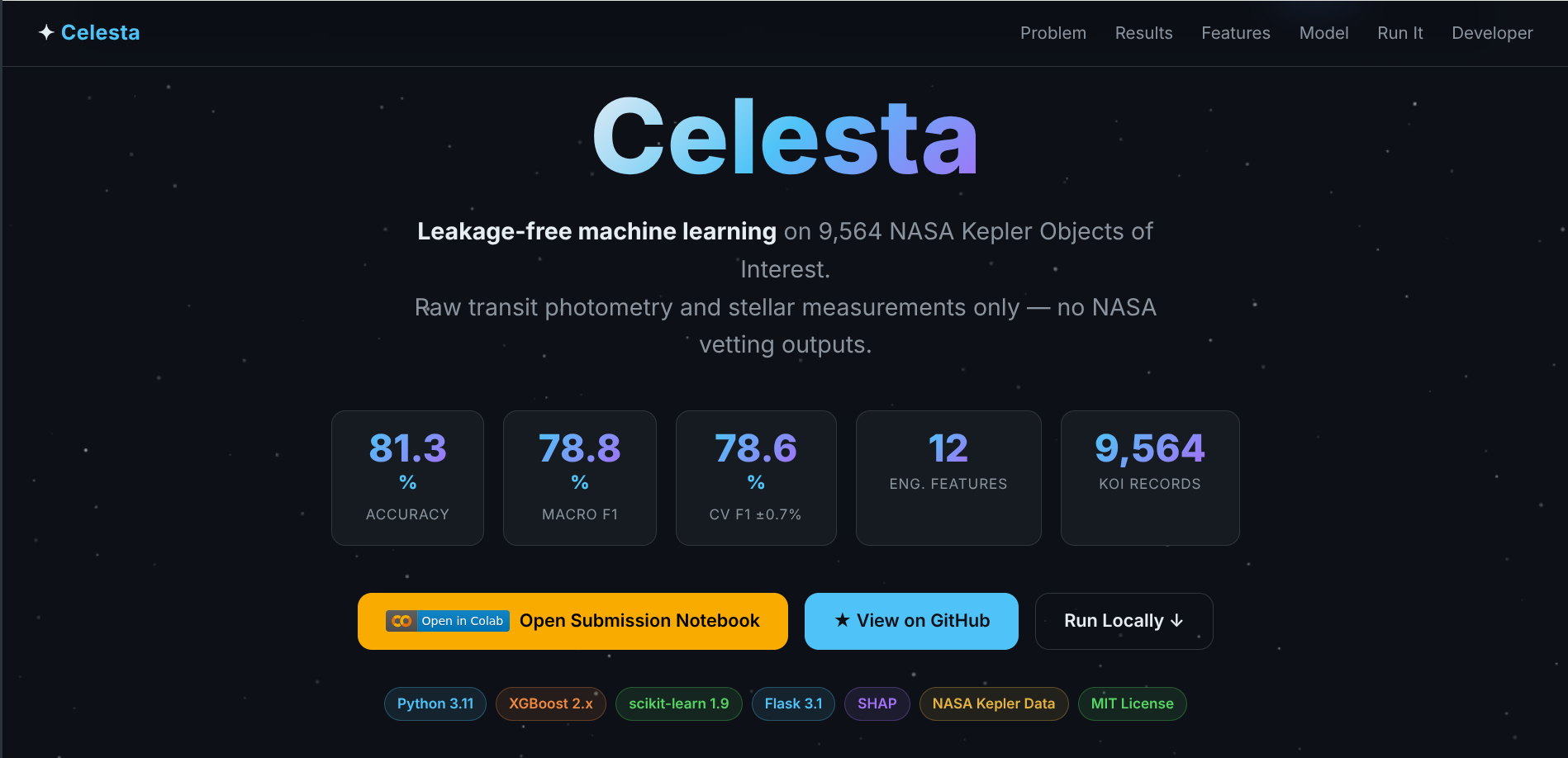
What's next for Celesta Leakage-free machine learning
🌌 ExoplanetAI – Explainable Machine Learning for NASA Exoplanet Discovery
Inspiration
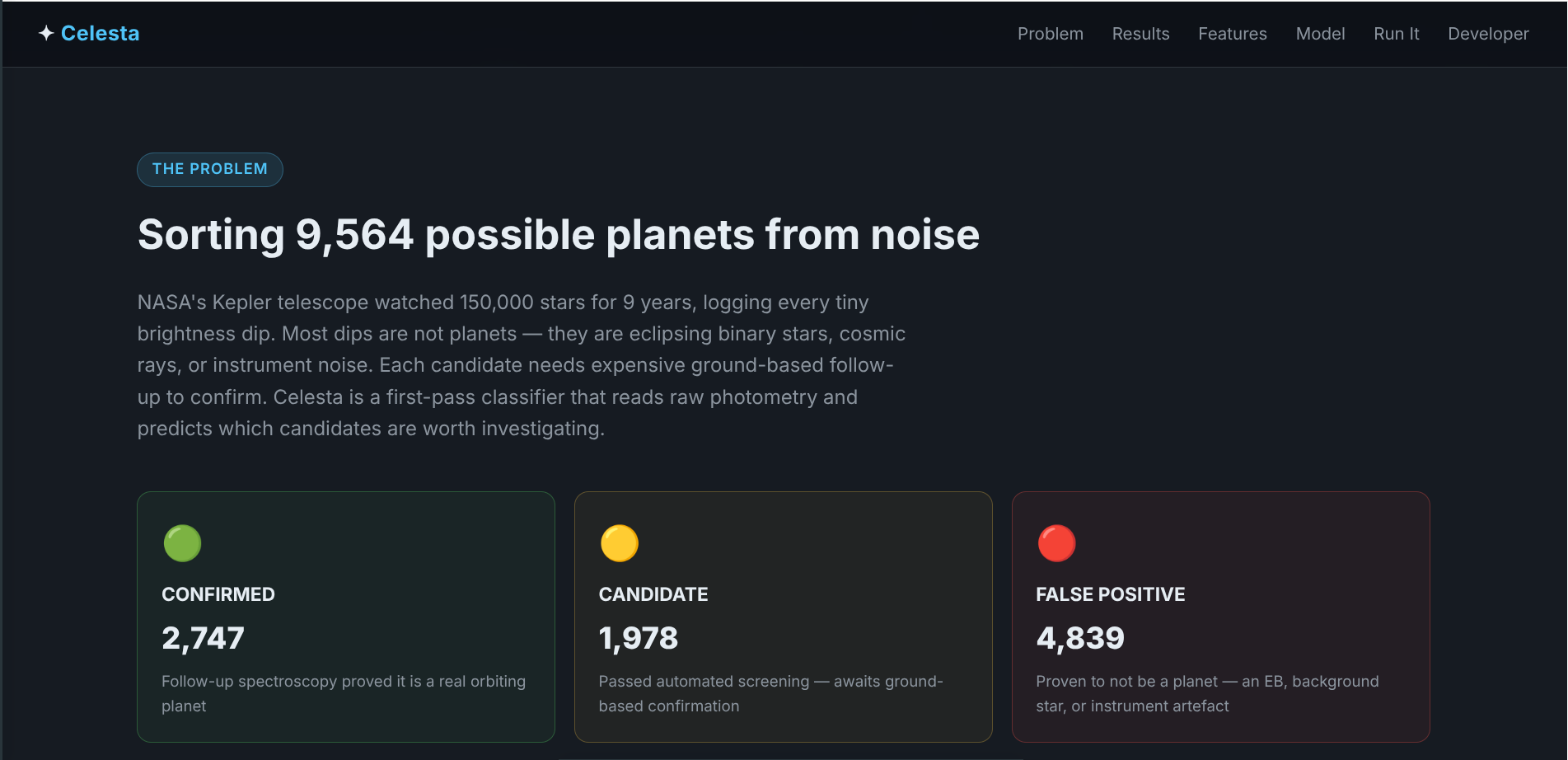
Thousands of stars have been observed by NASA's Kepler mission, producing an enormous amount of astronomical data. While many of these observations indicate the presence of exoplanets, others are simply noise or false signals. Identifying real planets from this data is a challenging machine learning problem that combines science, statistics, and artificial intelligence.
We wanted to explore how modern machine learning could assist astronomers by building a transparent and explainable classification system using real NASA Exoplanet Archive data. Rather than treating AI as a "black box," we focused on creating a solution that explains why each prediction is made.
🚀 What it does
ExoplanetAI is an end-to-end machine learning pipeline that classifies whether an exoplanet candidate is likely to be a genuine planet or a false positive.
The system automatically:
- Loads and validates the NASA dataset
- Performs data cleaning and preprocessing
- Handles missing values and class imbalance
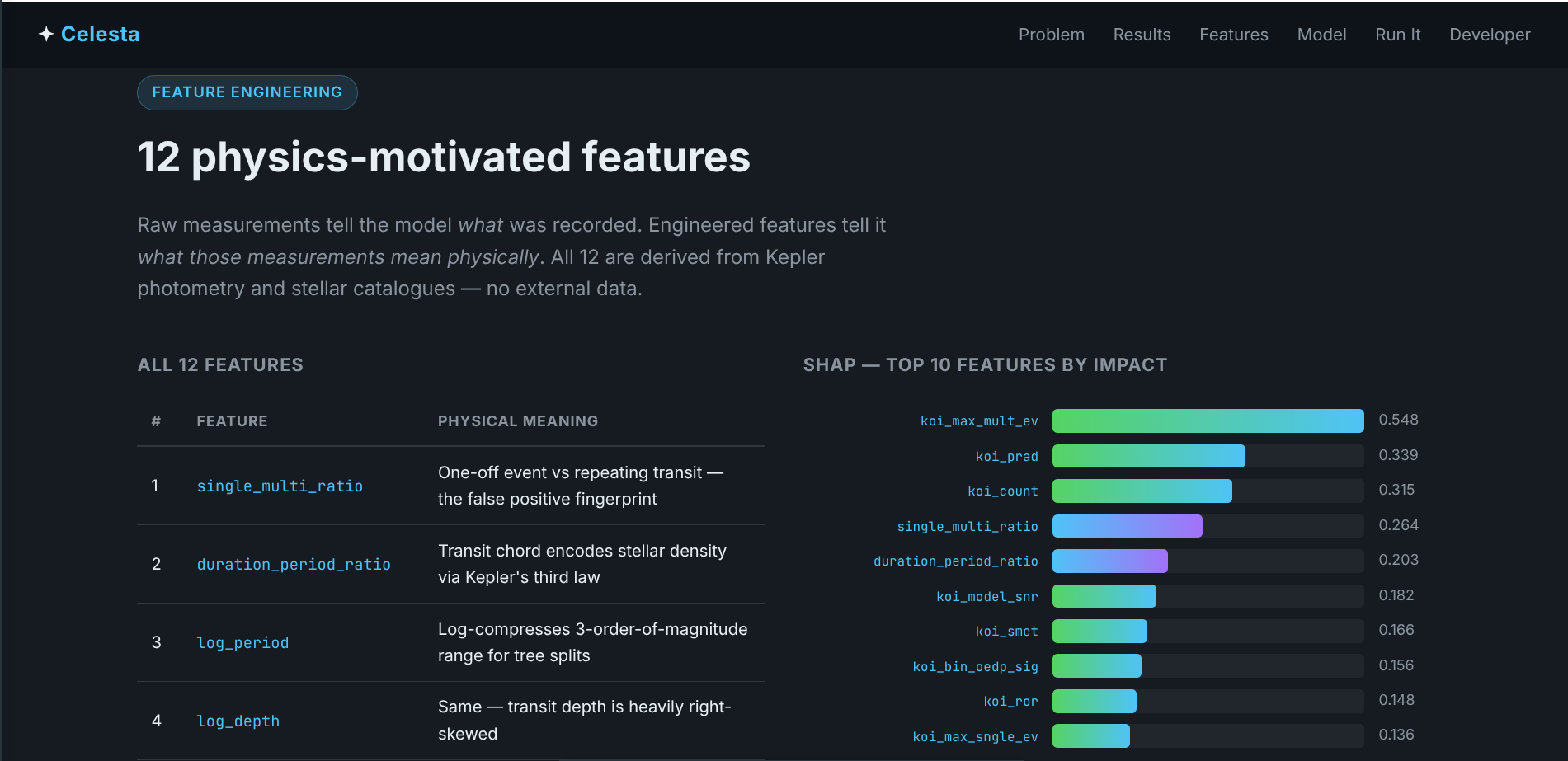
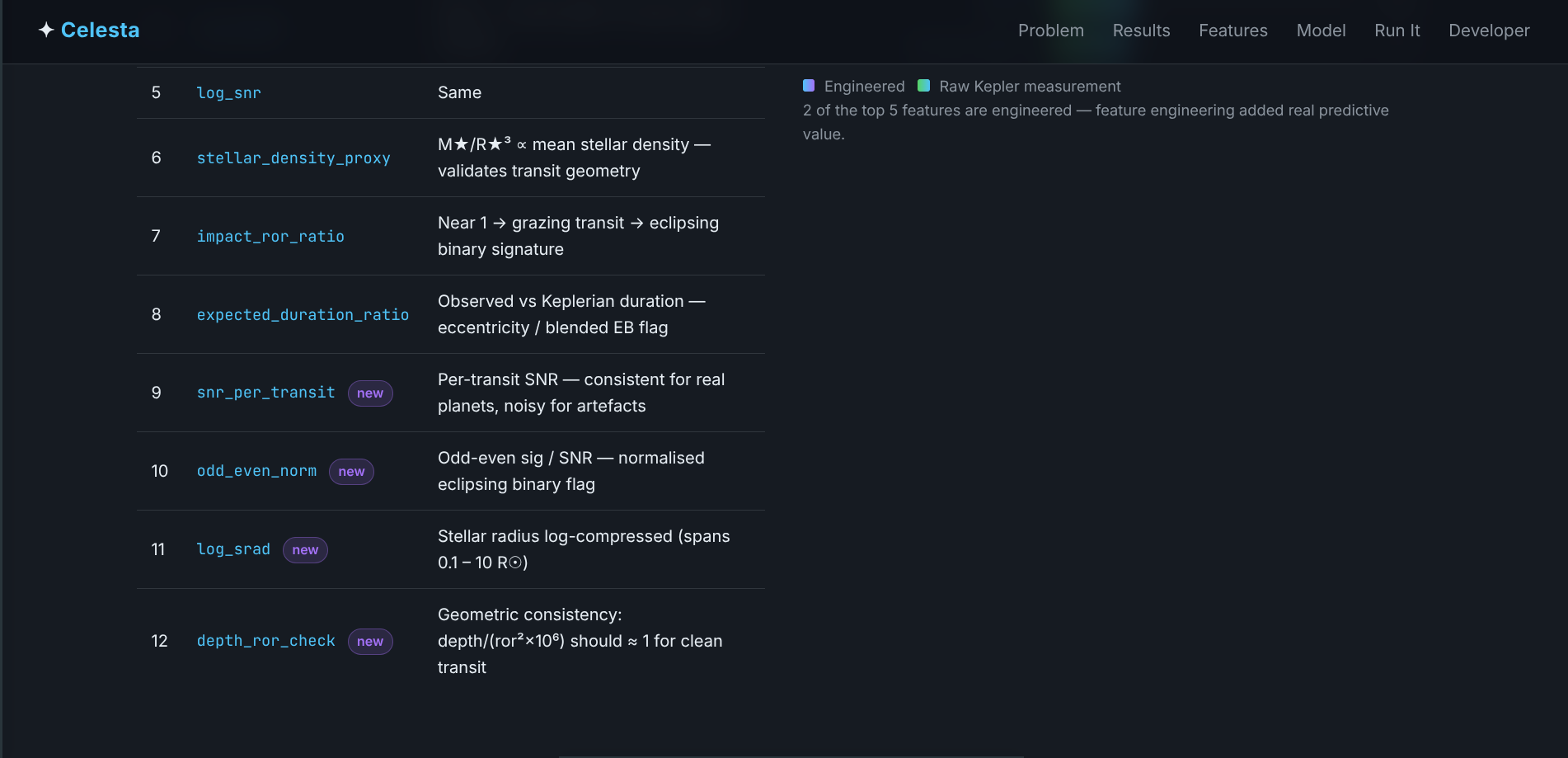
- Engineers meaningful features
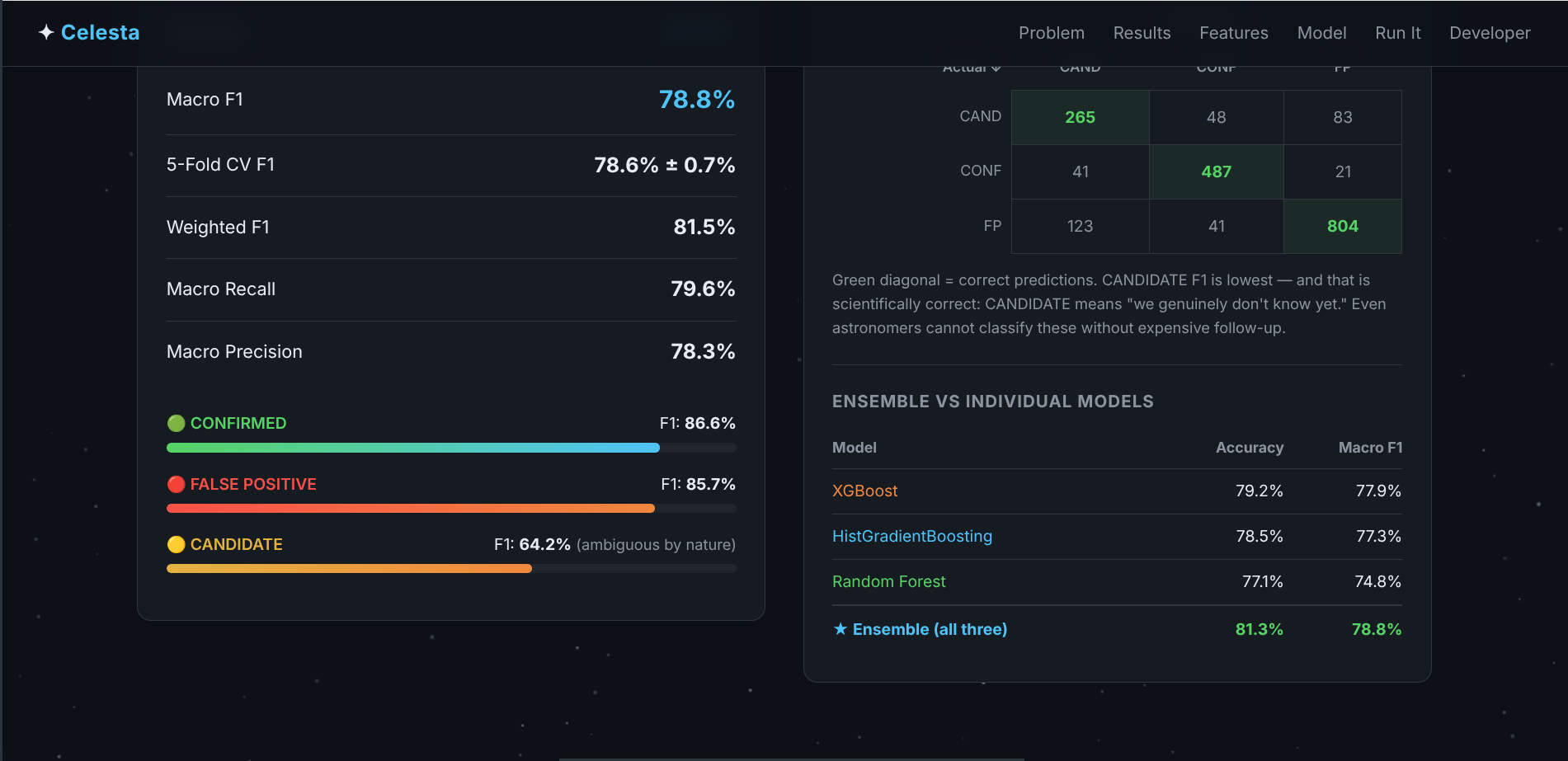
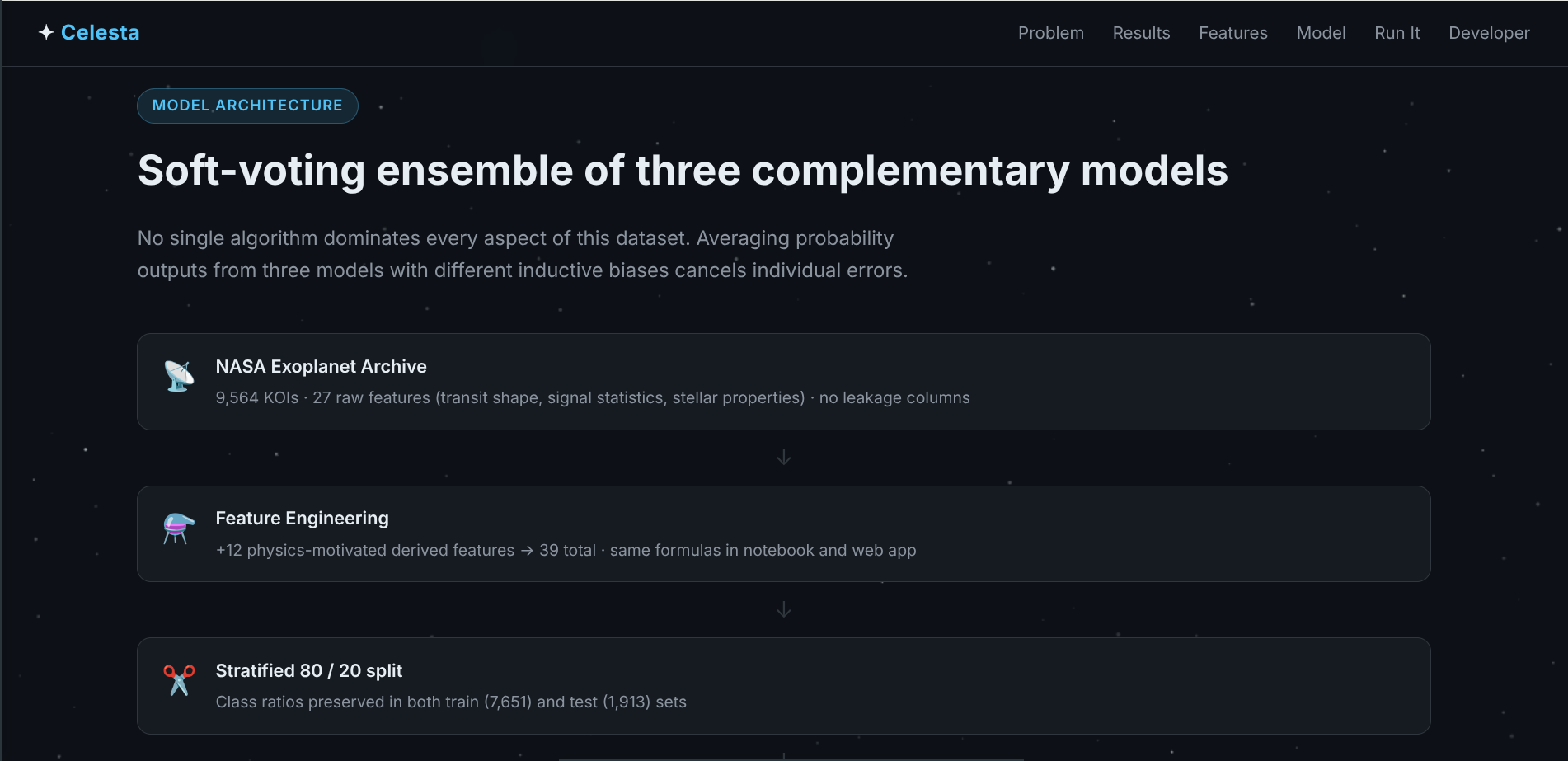
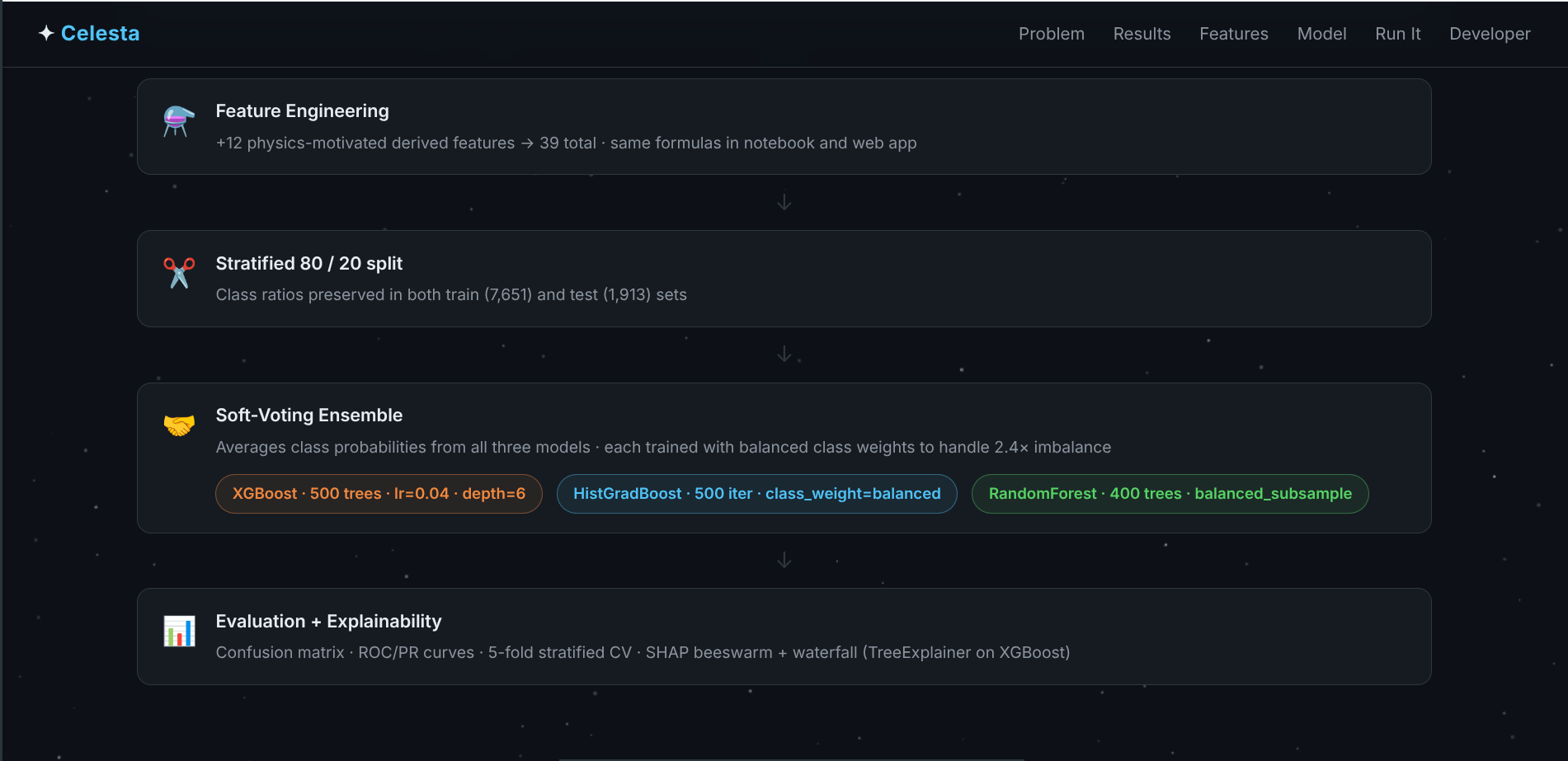
- Trains and compares multiple machine learning models
- Optimizes the best-performing model
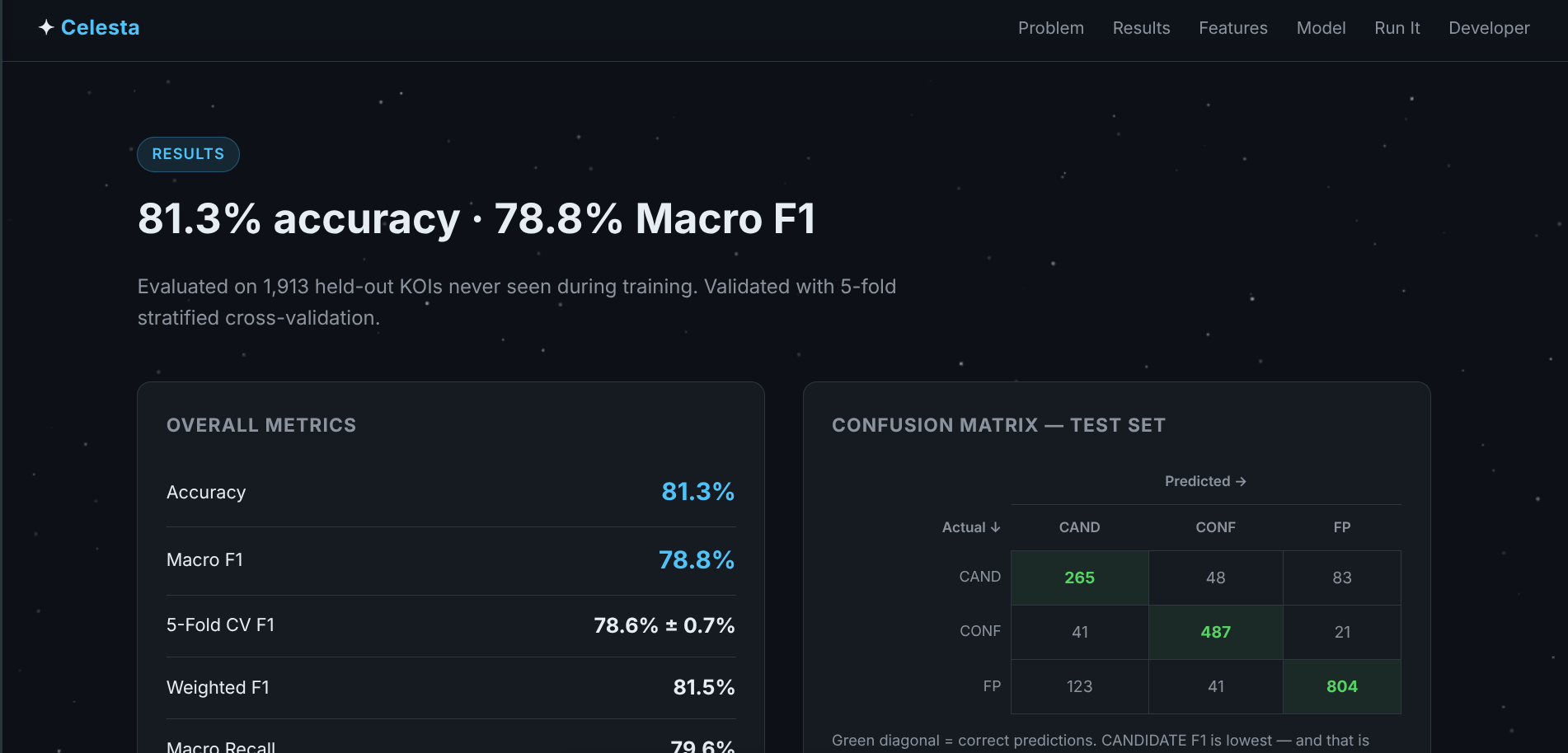
- Evaluates performance using multiple metrics
- Explains predictions with Explainable AI techniques
- Generates interactive visualizations and reports
The project is designed to be reproducible, well-documented, and easy to understand for both technical and non-technical audiences.
🛠️ How we built it
The project was developed entirely in Python using a modular architecture.
Our workflow included:
- Exploratory Data Analysis (EDA)
- Data preprocessing and cleaning
- Feature engineering
- Model training
- Hyperparameter optimization
- Model evaluation
- Explainability using SHAP and feature importance
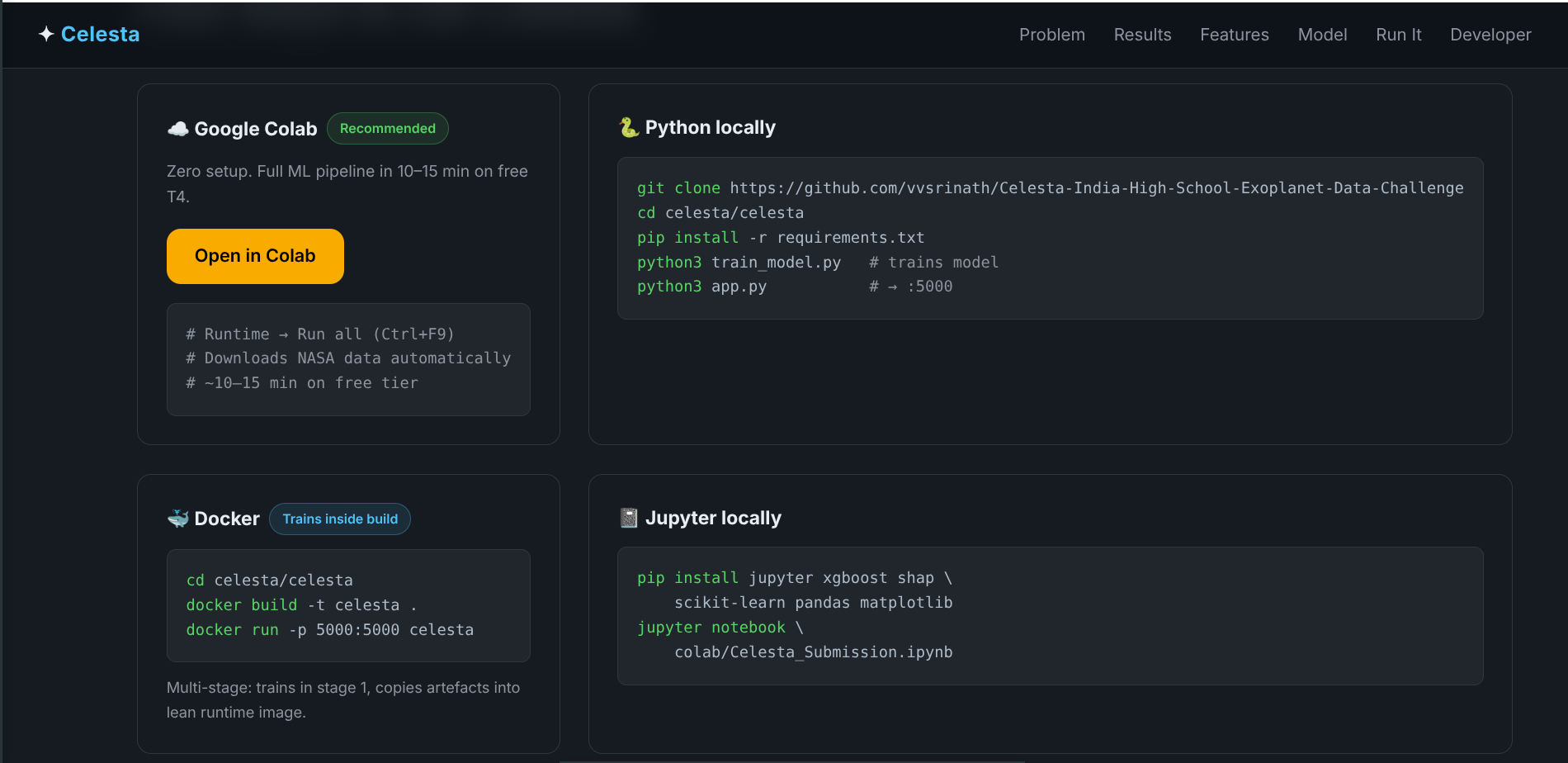
- Deployment through a simple web interface
We compared multiple classification algorithms before selecting the best-performing model based on balanced evaluation metrics rather than accuracy alone.
🔍 Machine Learning Pipeline
The pipeline includes:
- Data validation
- Missing value handling
- Feature scaling
- Feature selection
- Class imbalance handling
- Cross-validation
- Hyperparameter tuning
- Performance evaluation
- Explainability analysis
Evaluation metrics include:
- Accuracy
- Precision
- Recall
- F1 Score
- ROC-AUC
- Confusion Matrix
📊 Explainable AI
A major goal of this project was interpretability.
Instead of simply predicting whether a candidate is a planet, the model also provides insight into which features influenced each prediction.
This helps users understand the reasoning behind the model and makes the results more transparent.
Challenges we ran into
Working with real scientific data introduced several challenges.
- Handling missing values and inconsistent observations
- Managing class imbalance
- Selecting meaningful features
- Preventing overfitting
- Comparing multiple models fairly
- Balancing model performance with interpretability
Another important challenge was designing a workflow that remains reproducible while being easy for students and judges to understand.
Accomplishments that we're proud of
- Built a complete end-to-end machine learning workflow.
- Used a real NASA dataset instead of a synthetic educational dataset.
- Compared multiple machine learning models.
- Integrated Explainable AI techniques.
- Created a clean, modular, and reproducible project structure.
- Produced comprehensive visualizations and documentation.
What we learned
This project provided hands-on experience with:
- Data preprocessing
- Exploratory Data Analysis
- Feature engineering
- Classification algorithms
- Cross-validation
- Hyperparameter tuning
- Explainable AI
- Scientific data analysis
- Reproducible machine learning workflows
Beyond technical skills, we learned the importance of making AI systems understandable and trustworthy, especially in scientific applications.
What's next for ExoplanetAI
Future improvements include:
- Testing additional ensemble models
- Improving feature engineering using domain knowledge
- Expanding explainability with local prediction insights
- Building a richer interactive dashboard
- Supporting additional astronomical datasets
- Exploring deep learning approaches trained exclusively on challenge-approved data
- Adding automated experiment tracking and model versioning
🌠 Final Thoughts
Artificial intelligence has enormous potential to accelerate scientific discovery, but only when it is accurate, transparent, and reproducible. Through ExoplanetAI, we explored how machine learning can support astronomical research by helping distinguish genuine exoplanets from false signals using real observational data from NASA.
This project represents not only a machine learning solution, but also a learning journey into data science, explainable AI, and the exciting search for worlds beyond our own.
Built With
- css
- docker
- flask
- github
- google-colab
- html
- javascript
- jupyter
- matplotlib
- numpy
- pandas
- python
- scikit-learn
- xgboost

Log in or sign up for Devpost to join the conversation.