-
-

app icon
-

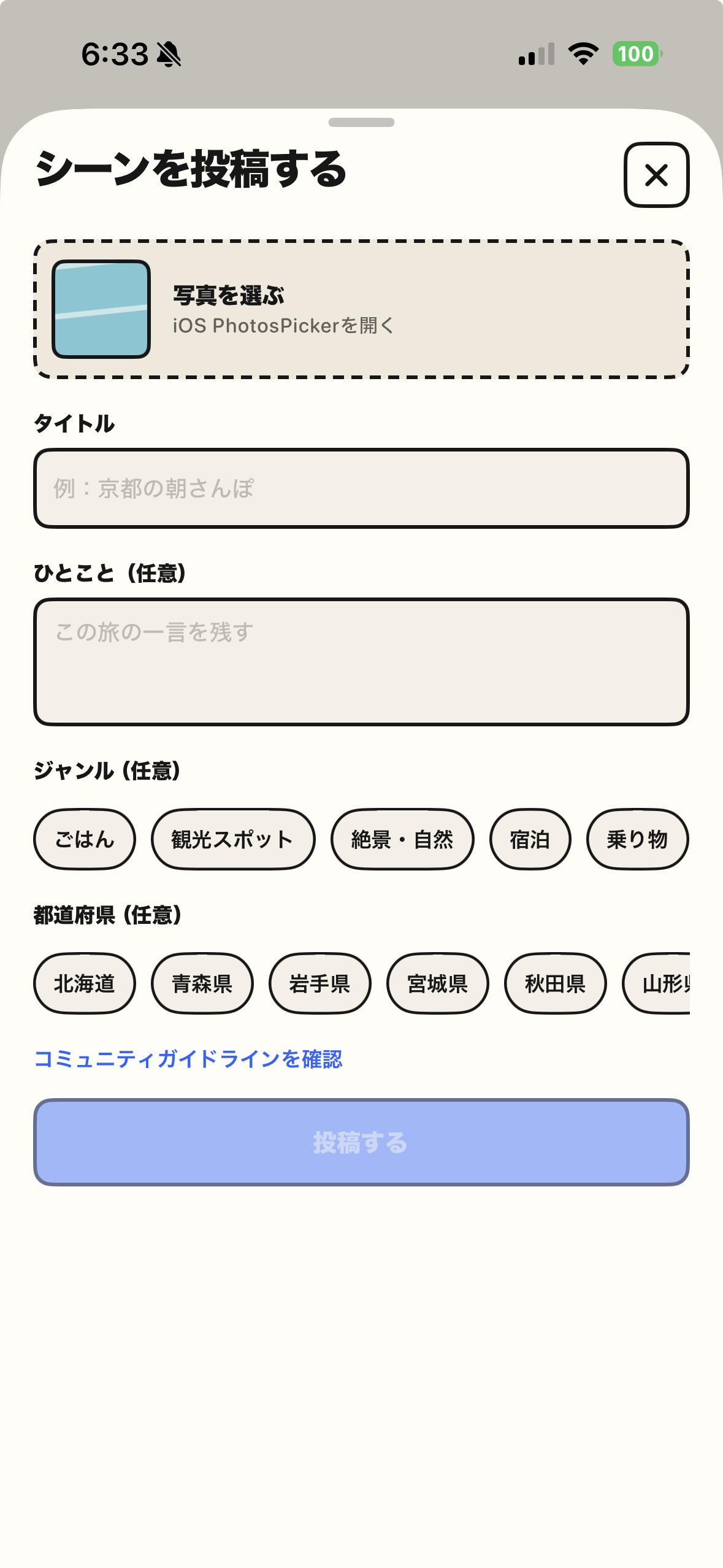
AddPost
-
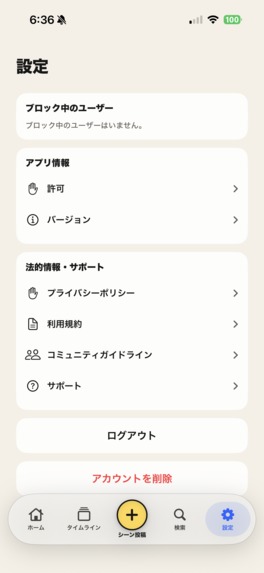
Setting
-
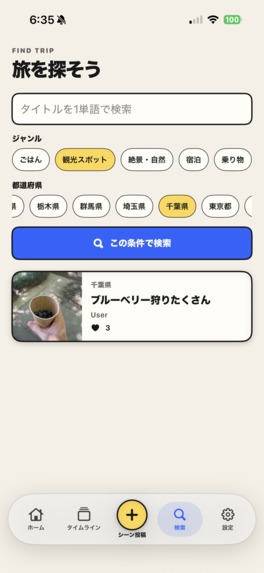
Serch
-
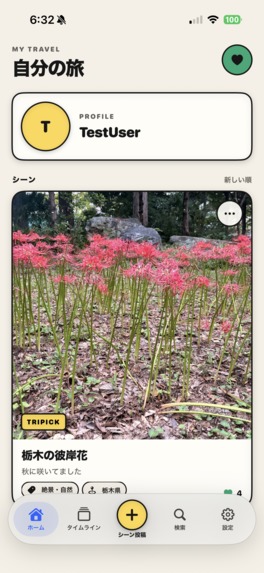
Home
-

TimeLine

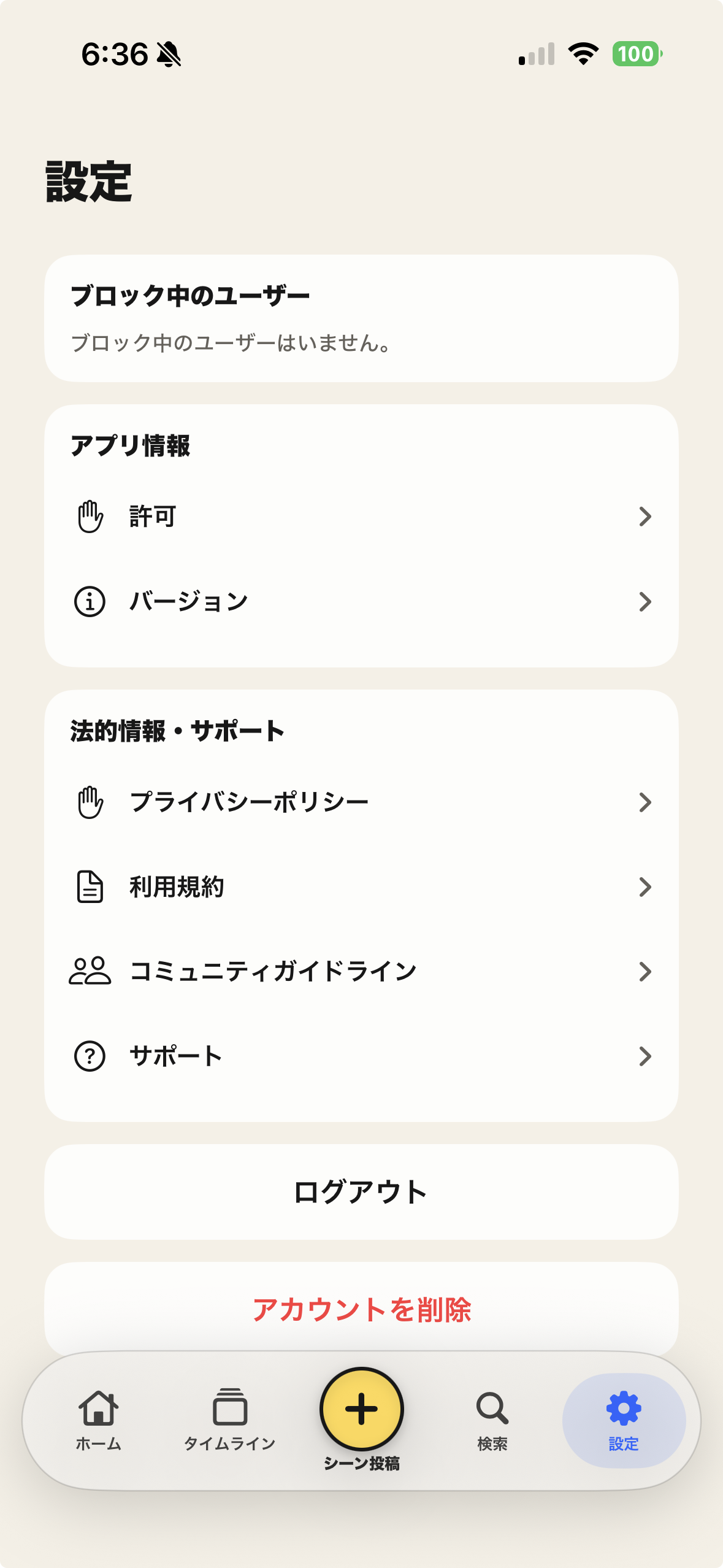
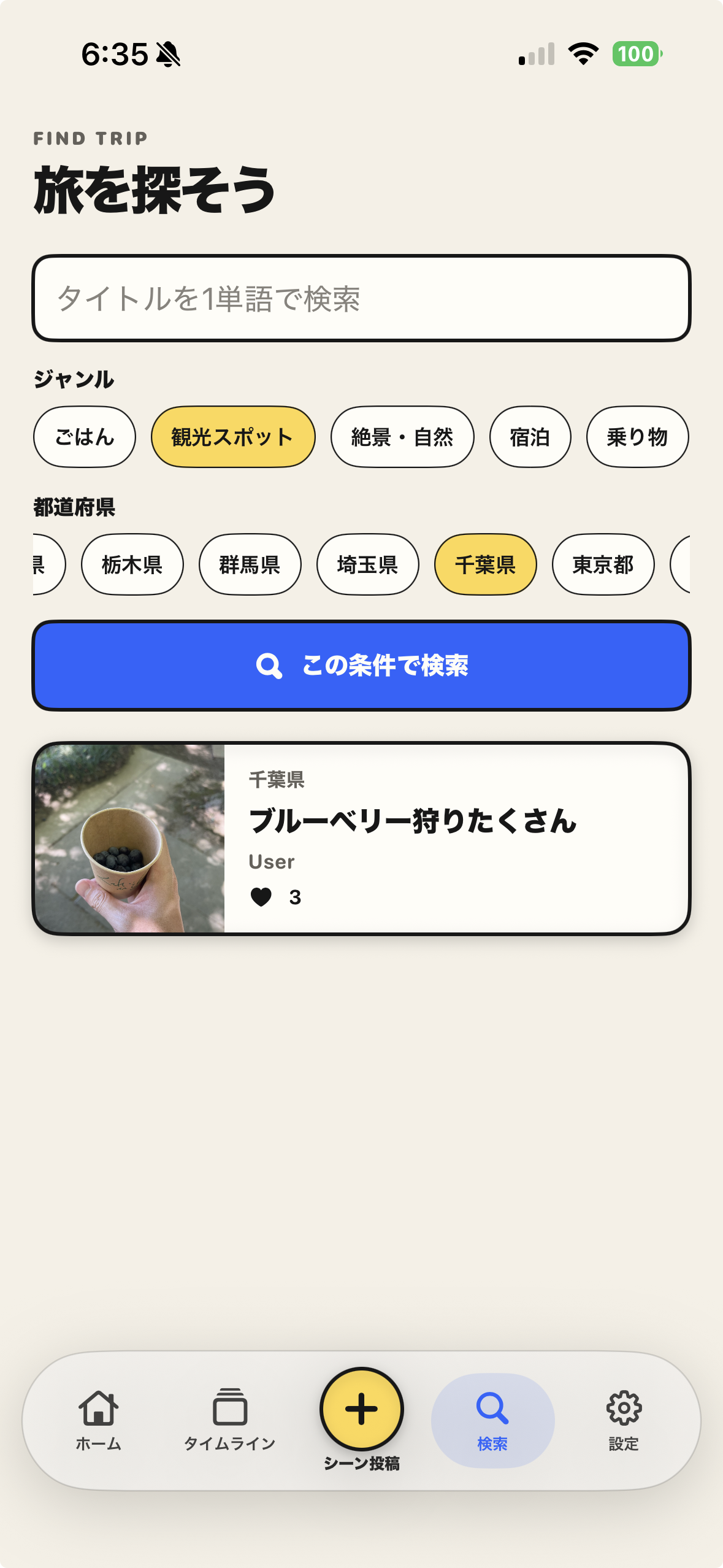
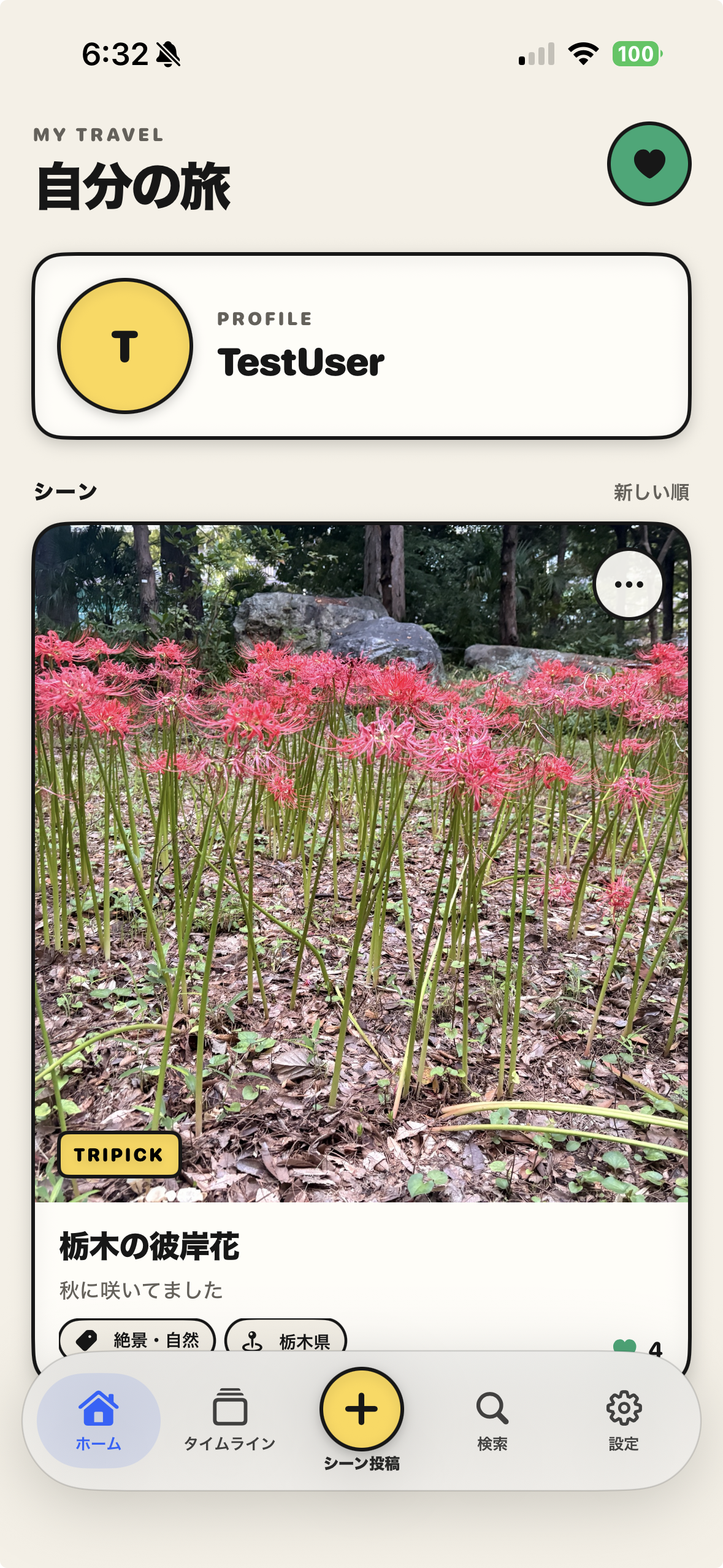
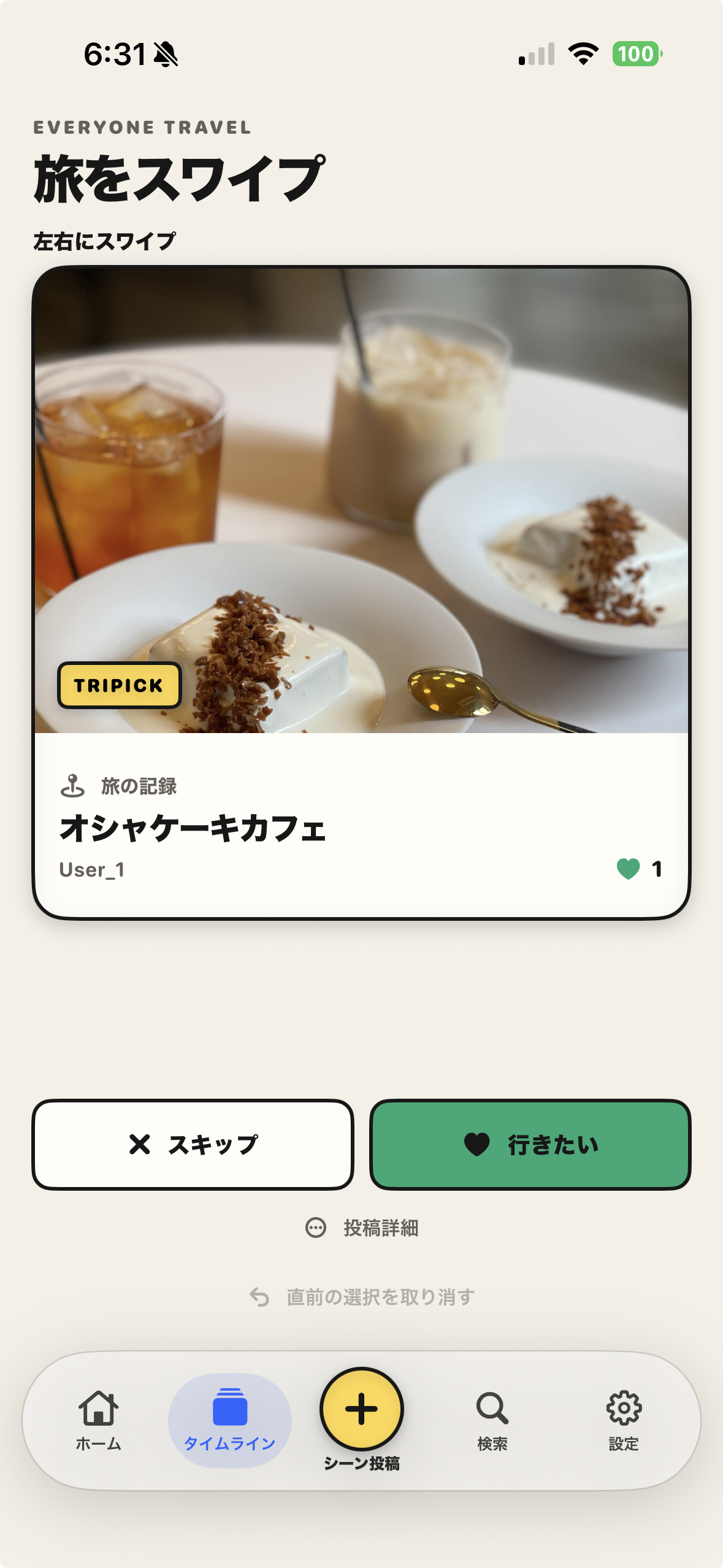
About the Project
Inspiration
We wanted to create a travel SNS that could help people not only record their trips, but also discover their next destination.
When looking for travel destinations, we often found that platforms such as Instagram and Google Maps contained too much information, making it difficult to discover places that genuinely interested us. We wondered if the intuitive swipe experience of dating apps could be applied to travel discovery.
This idea led us to TriPick — a travel SNS where users can discover destinations by swiping through travel posts, just as they would browse profiles on a dating app.
What We Built
TriPick allows users to share travel memories through photos and text. Each post can be categorized with prefecture and genre tags, such as food, sightseeing spots, scenic views, accommodation, transportation, events, and shopping.
Users can browse posts through a swipe-based timeline, like a dating app, and discover travel destinations in an intuitive and engaging way. They can also like and favorite posts, search for posts using tags, and manage their own profile and posts.
We also implemented advertising within the post-based experience. Using RevenueCat, we built an interface that integrates advertisements into the content flow while also collecting user feedback on advertisements.
How We Built It
We developed TriPick as a four-person team over two months. The application was built for iOS using SwiftUI, with Firebase Authentication for Google login. The backend provides APIs for communicating with the application, and the infrastructure is deployed on Google Cloud Run.
I was mainly responsible for the iOS frontend and advertising functionality. During development, I also used Codex as part of our development workflow, using AI-assisted coding to implement and refine SwiftUI features while reviewing and adapting the generated code to our project.
We managed the source code with GitHub and used Discord and Notion for communication, development management, and sharing specifications.
Challenges
One of our biggest challenges was integrating the iOS application with the backend API. We needed to handle communication between the SwiftUI frontend and the backend while keeping the application's UI and data flow consistent.
Integrating advertisements with RevenueCat was another challenge. Rather than simply displaying advertisements separately from the main content, we wanted them to fit naturally into the application's post-based experience and collect useful information about users' reactions to advertisements.
Finally, completing the App Store submission and review process was a new experience for our team. Preparing the application for release required us to consider aspects beyond development itself, including the requirements for publishing an actual iOS application.
What We Learned
Through this project, we learned that building an application is much more than writing code. Connecting the frontend and backend, integrating third-party services, preparing advertisements, and getting an application through App Store review all require different kinds of knowledge.
We also learned a new development workflow using Codex for AI-assisted development. Instead of relying entirely on manually writing every piece of code, we learned how to clearly communicate requirements to an AI coding tool, review the generated implementation, identify issues, and iteratively improve the application.
Most importantly, we experienced the entire process of turning an idea into a working iOS application that can actually be released to users.