-
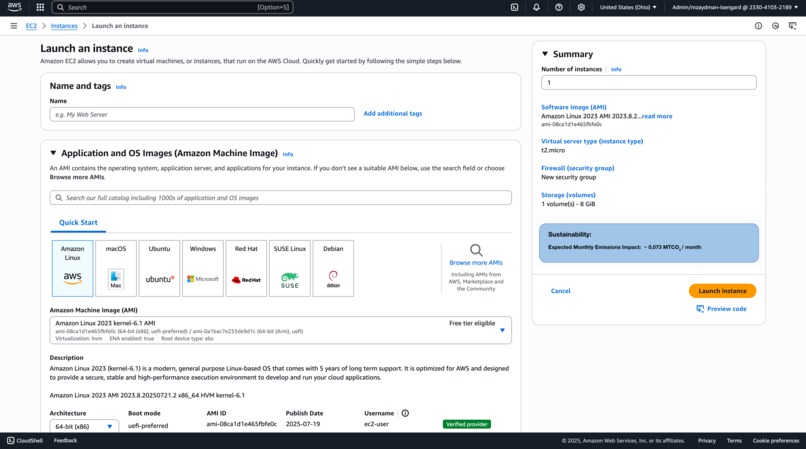
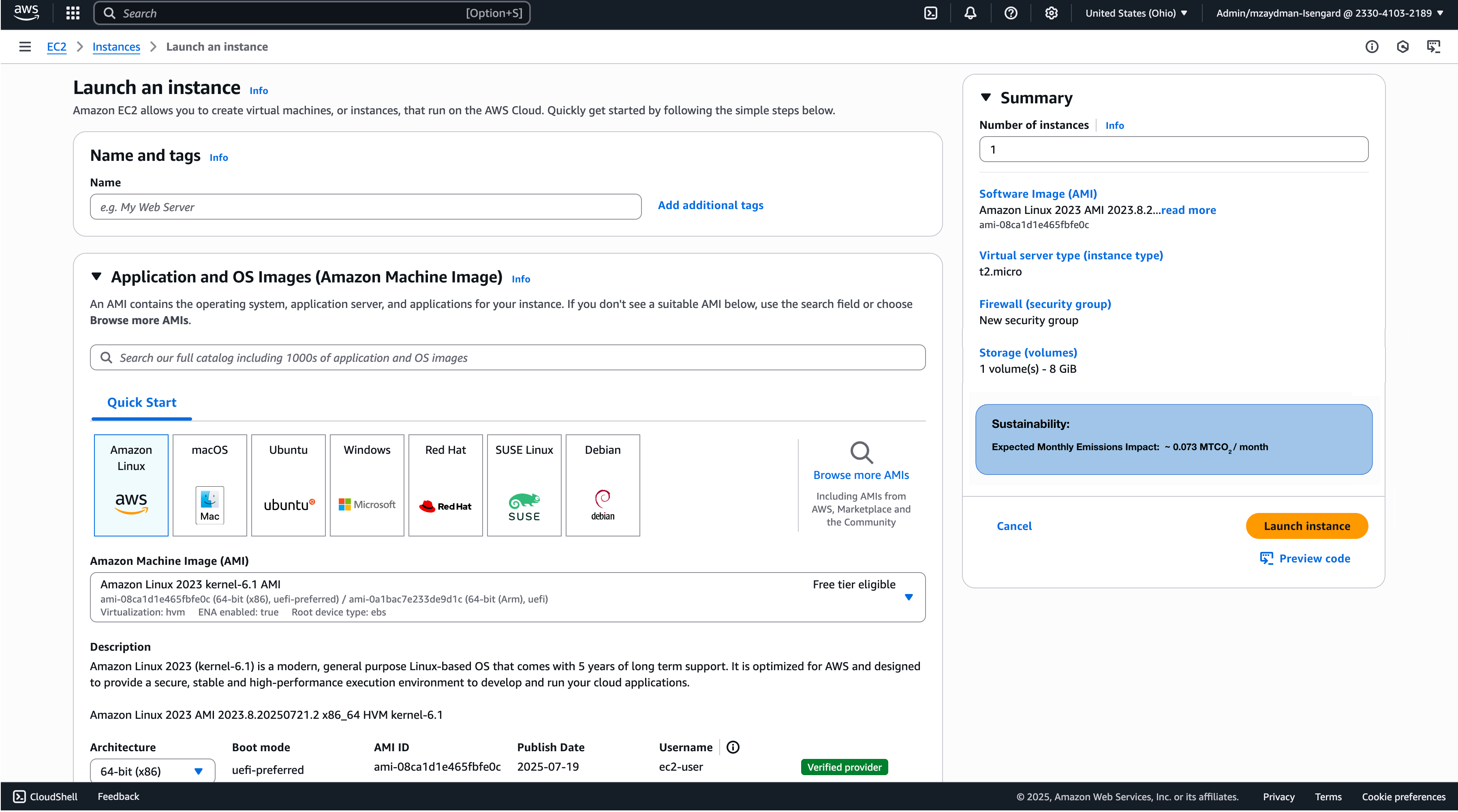
estimated carbon impact when creating ec2
-
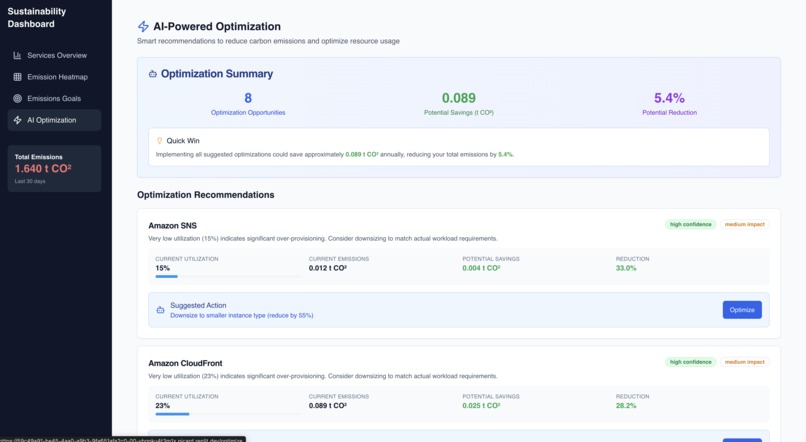
Ai carbon optimizer
-
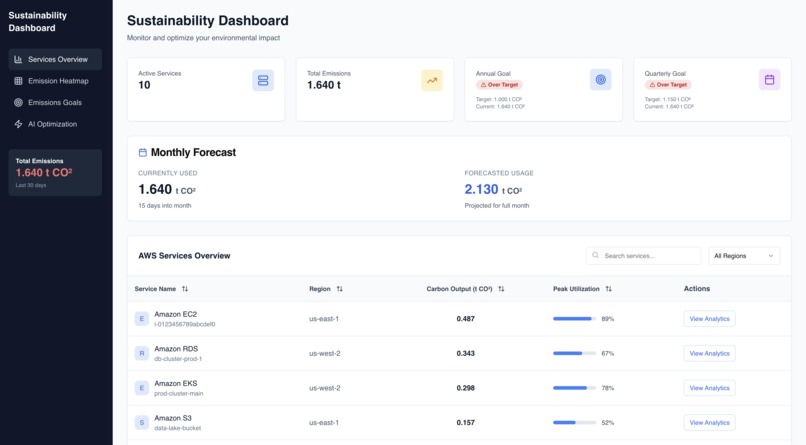
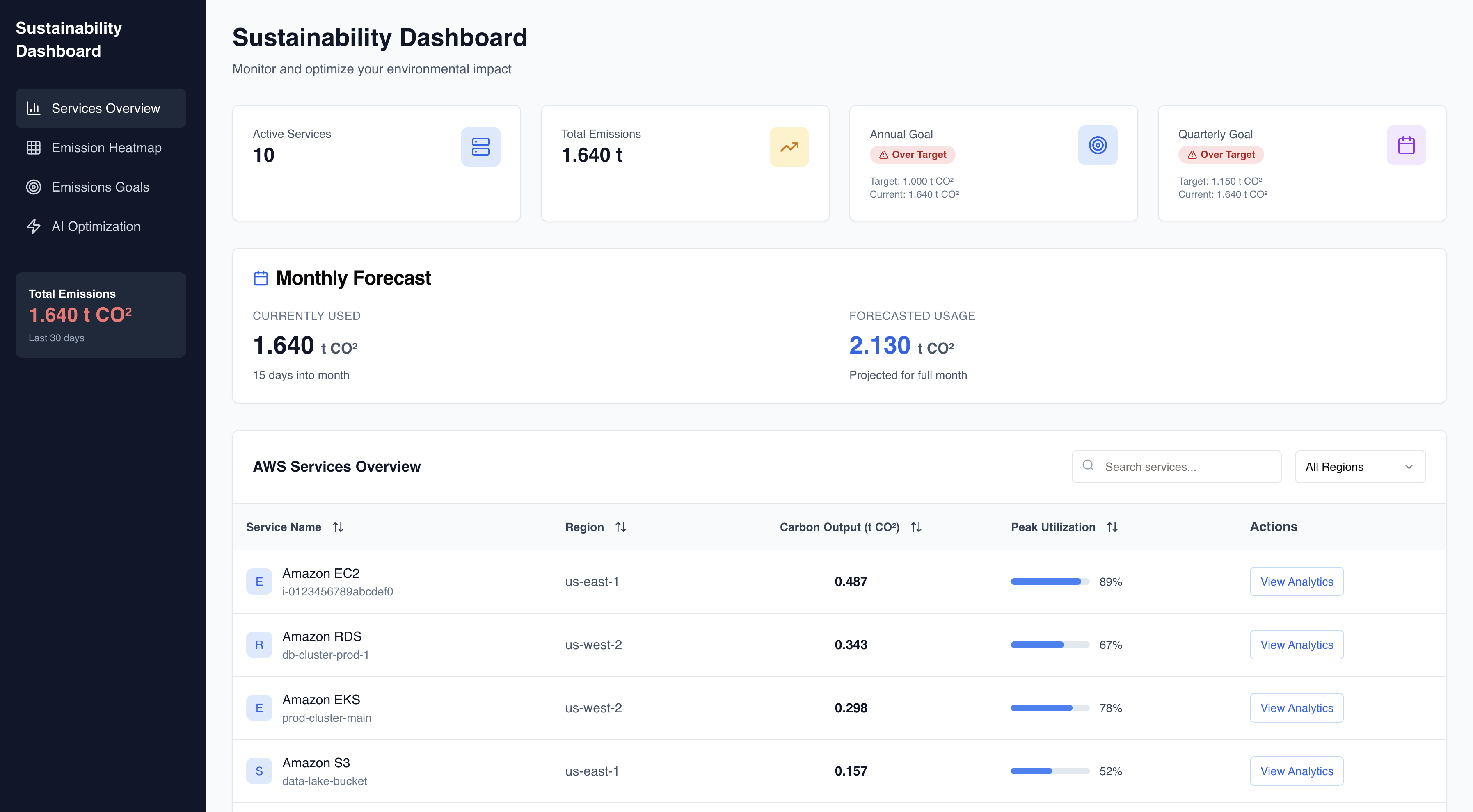
Dashboard overview
-
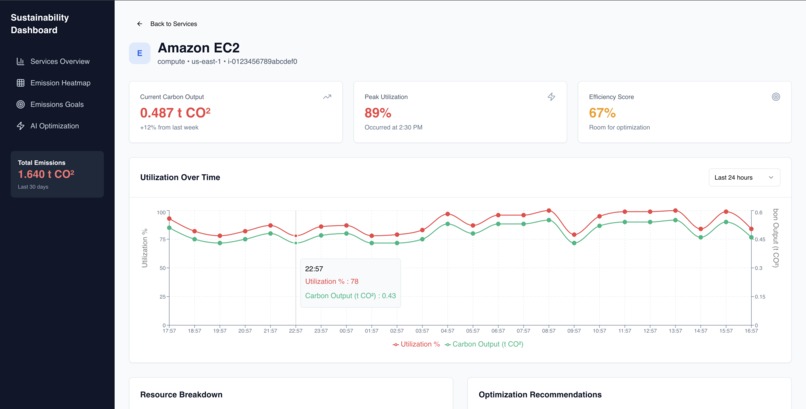
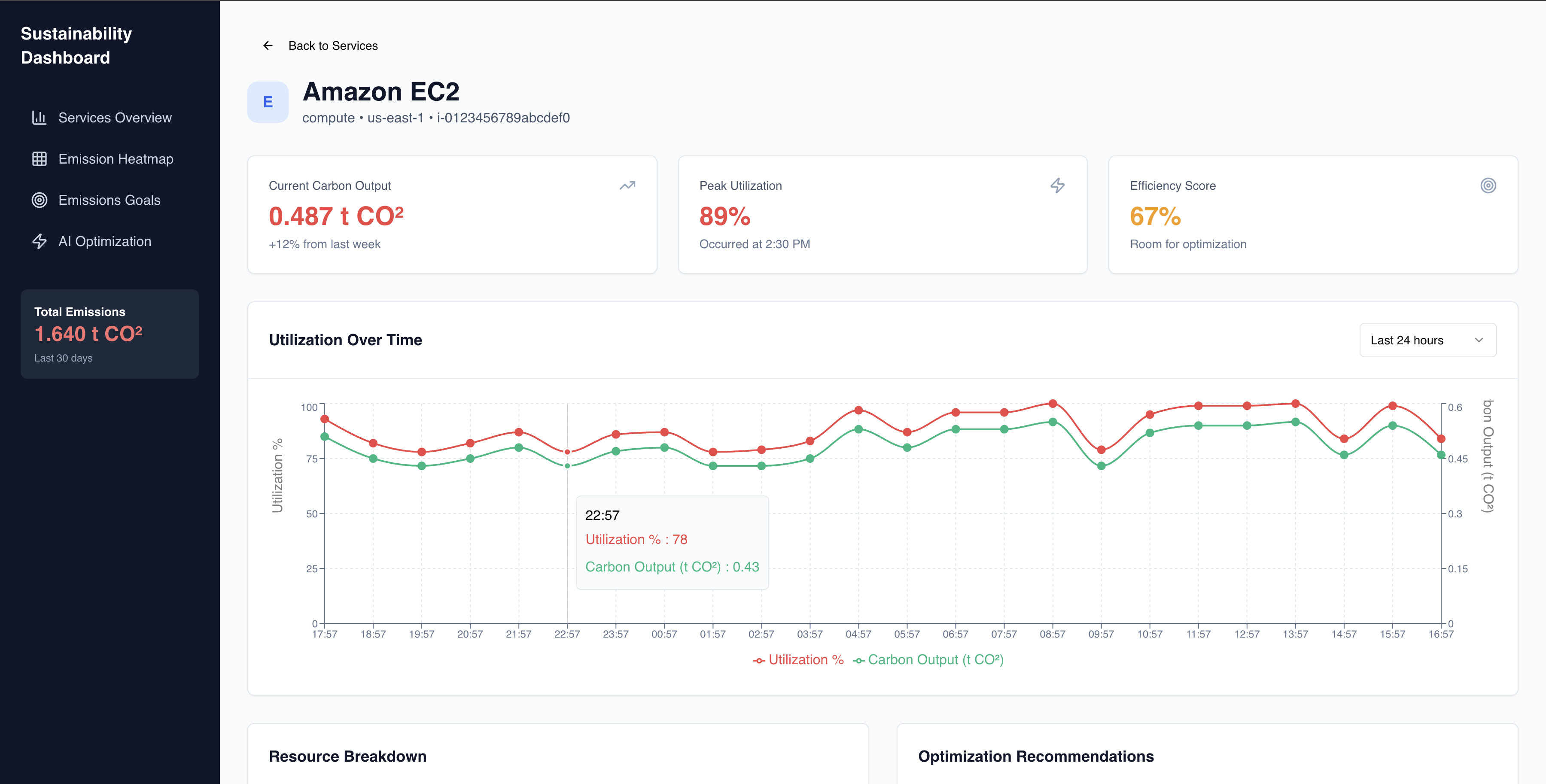
carbon emission monitoring for specific service
-
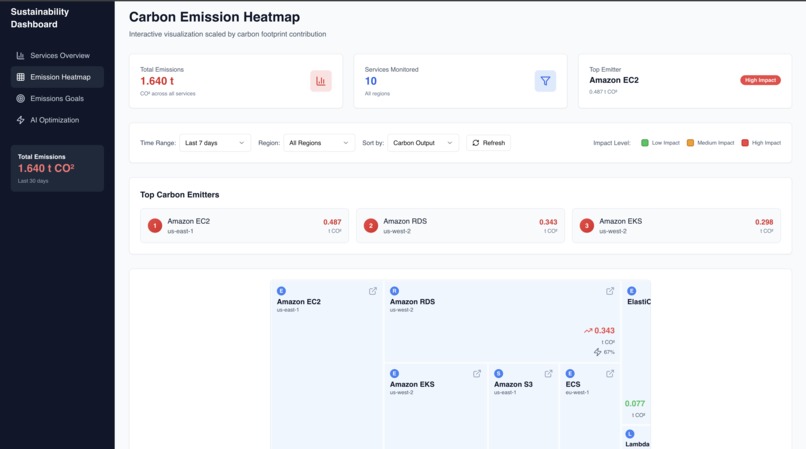
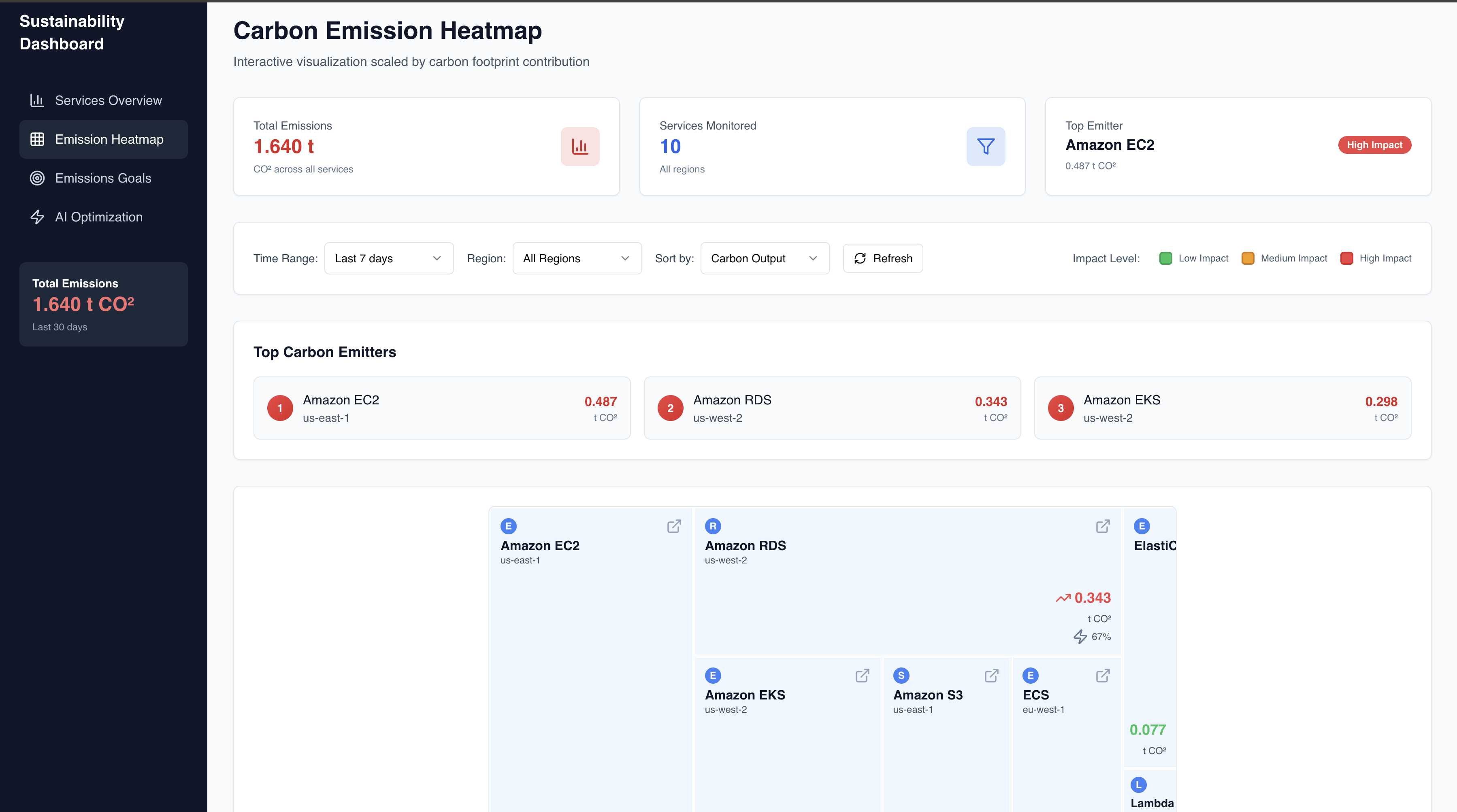
Usage treemap
-
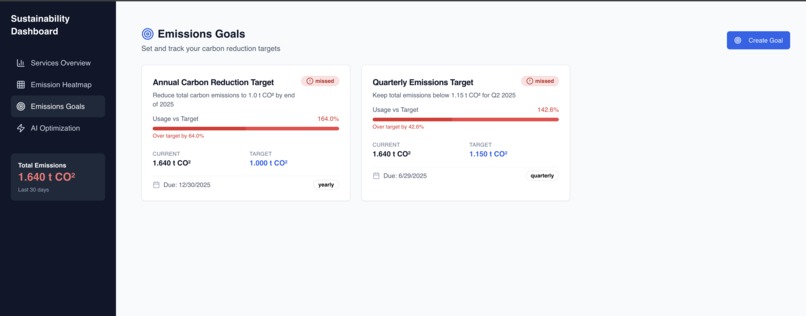
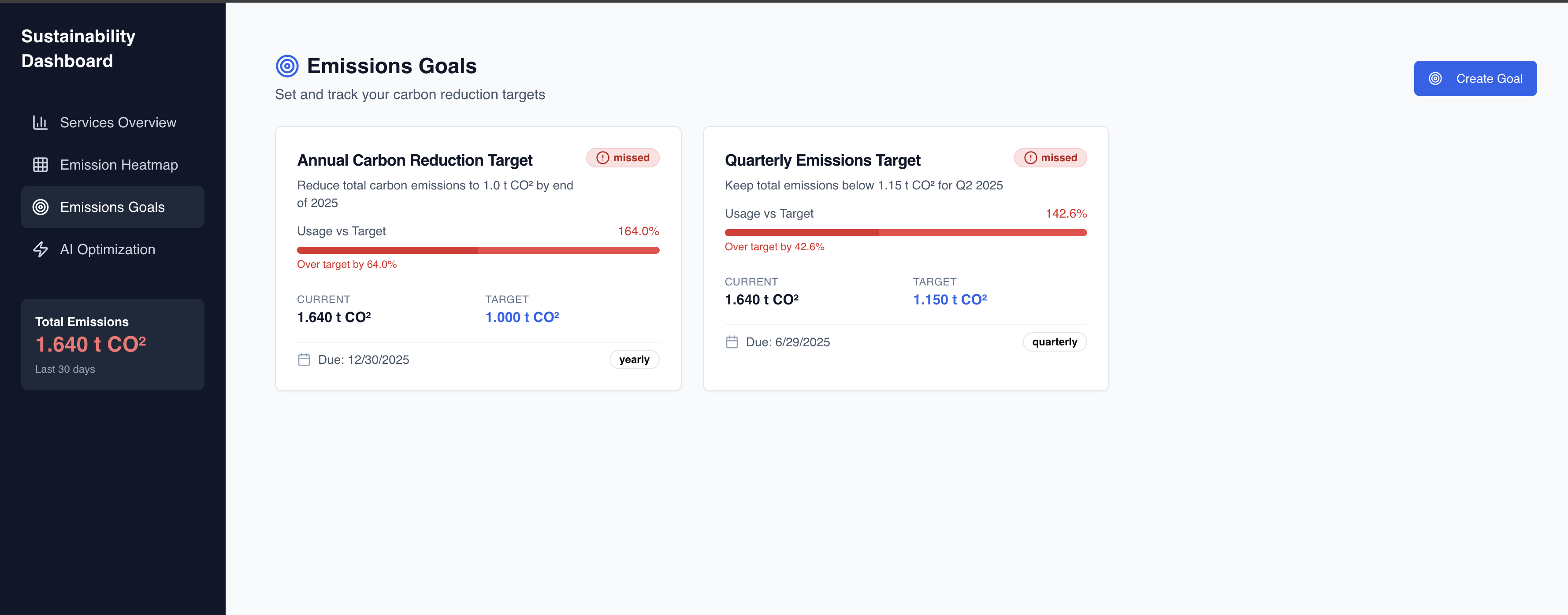
Carbon emission target page

CCFT Sustainability Dashboard Design Doc
Demo - https://drive.google.com/file/d/1b8jUVy-7BfGZIm0m5-0ocw_PnxadxVlT/view
Contributors
- Isha Gosalia
- Bhakti Chindhe
- Mark Zaydman
- Aaditya Thukral
Problem Statement:
The existing platform for monitoring AWS sustainability, Customer Carbon Footprint Tool, provides aggregate monthly data of regional and service usage. This service currently allows users to view this data on an AWS Athena cluster, allowing users to make their own queries to relate their business data with the carbon footprint. However, estimates about the carbon footprint prior to creation of allocated services as well as metrics about the carbon footprint as it relates to data tables for allocated services are not currently available. Our goal is to improve sustainability metrics within CCFT by including more fine grained monitoring and bringing the data/impact closer to the developers/customers using a service at the time of usage.
Introduction:
The idea behind cloud services is to move all the hardware and software tools away from the consumers. In doing so, we create a disconnect from the impact all the services we use and software we produce has on the environment. From resources consumed in the production of hardware to energy consumed in keeping it running, it is important for us and for the customer to understand how to best optimize their consumption and improve overall sustainability.
What we propose is offering a new feature to Amazon CCFT service such that it creates a dashboard for more fine grained utilization and carbon output metrics. This will be paired with the ability to set sustainability goals directly correlated to AWS Scope 1/2 emissions.
Impact
Customer Benefit / Use Case
- Sustainability built into development process: this feature will add transparency about the carbon impact from the creation phase itself, allowing both users and enterprises to be wary of their carbon footprint.
- Inbuilt carbon footprint insights: for users/enterprises, this feature would add inbuilt insights depending on a user opt-in decision. As a result, these companies would not need to write their own queries to join the CCFT data with data already present as a part of AWS, which would save development and testing time and provide them with useful feedback with every CCFT report. Some examples of inbuilt insights would include:
- Cost-to-Carbon Analysis: Joining CCFT data with AWS Cost Explorer/Cost and Usage Reports (CUR) tables to analyze the relationship between financial cost and carbon footprint, enabling optimization decisions that balance both factors.
- Application-to-Carbon Correlation: Customers want to join CCFT data with AWS CloudWatch metrics to correlate application performance metrics (requests, compute time, memory usage) with carbon impact, helping identify which workloads have the highest environmental cost.
Business Impact
By providing users of AWS services with the ability to access specific metrics on their carbon footprint, enterprises and individual users can gain a better understanding of their current impact on the environment.
From a business standpoint, companies can use this to make informed decisions about their usage of these services while considering the environmental impact. For companies that are interested in improving their carbon footprint or their corporate social responsibility (CSR) practices, these predictions on the carbon footprint prior to allocation of the services along with additional metrics and monitoring of their environmental impact over longer periods of time could be incredibly useful. This could also provide a competitive advantage to companies over their competitors who may not have the resources or ability to monitor and improve their carbon footprint.
Features
- Pre-Creation Carbon Footprint Estimation
- Provides real-time carbon impact estimates when configuring new AWS resources
- Displays comparative analysis between different configuration options
- Shows environmental impact alongside cost estimates
- Impact: Critical for informed decision-making at the point of resource creation
- AI-Powered Optimization Recommendations
- Machine learning-based optimization recommendations
- Provides predictive modeling for carbon emissions based on current usage patterns
- Trend analysis across services and regions
- Impact: Delivers actionable insights rather than just data
- Granular Resource-Level Carbon Metrics
- Provides carbon metrics at table/database level for data services
- Identifies underutilized resources with high carbon impact
- Impact: Fills the critical gap in current offering, enabling targeted optimization
- Integrated Sustainability Dashboards
- Consolidated view of carbon metrics across all services
- Monthly/annual trend analysis with customizable timeframes
- Visual indicators for high-carbon-impact services
- Heat maps showing carbon intensity across regions
- Impact: Creates visibility and encourages accountability
- Business Intelligence Correlations
- Cost-to-Carbon Analysis: Joins CCFT data with AWS Cost Explorer
- Application-to-Carbon Correlation: Links CloudWatch metrics to emissions
- Impact: Provides business context to sustainability metrics
- Sustainability Goals
- Allows setting organization-wide sustainability targets (linked to AWS Scope 1/2 emissions)
- Provides warnings when projected to exceed carbon targets
- Impact: Transforms passive monitoring into active sustainability management
Competitor Analysis
Company Azure - Azure has expanded their emissions impact dashboard to include Scope 3 emissions as well as per-location carbon footprint, however they do not currently have AI to provide suggestions on how to make their system more sustainable. GCP - Google Cloud offers a dashboard that provides data on scope 1-3 emissions for both location-based and market-based. They also allow users to export the data to BigQuery, and also can provide recommendations on removing projects that appear to be idle in order to improve your carbon footprint. DigitalOcean - Doesn't allow users to view their carbon footprint
Next Steps
- Best Practices Wiki
- Best practice sharing across AWS customer base
- Impact: Creates competitive incentives for sustainability improvements
- Compliance & Governance Tools
- Automated sustainability reporting for regulatory compliance
- Carbon reduction tracking with historical comparisons
- Department/team-level attribution of carbon impact
- Impact: Simplifies sustainability reporting requirements
Built With
- replit

Log in or sign up for Devpost to join the conversation.