-
-
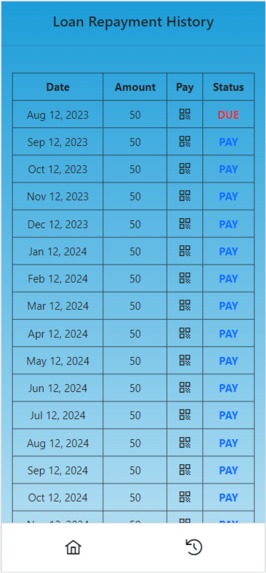
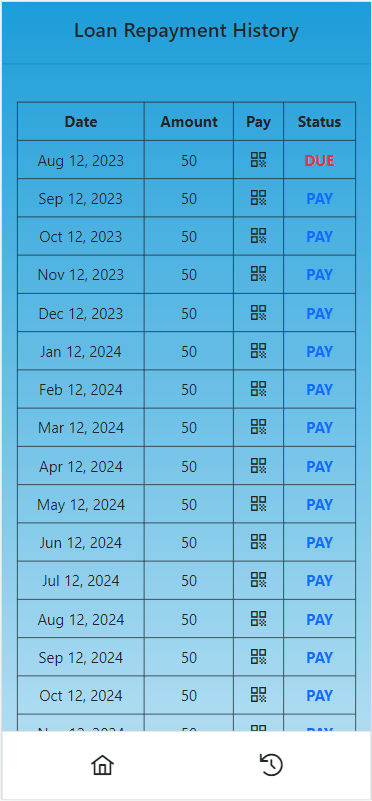
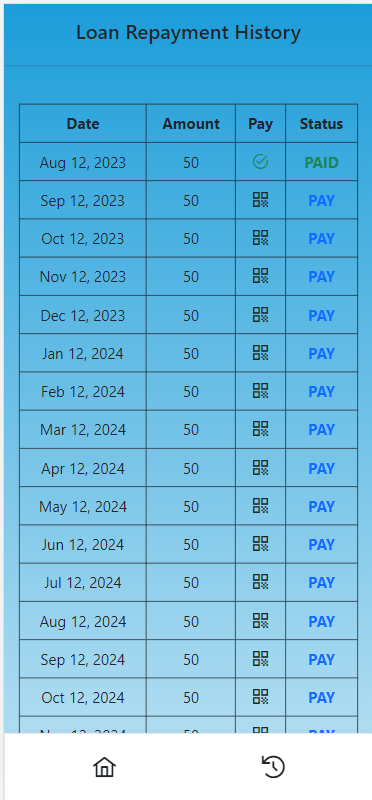
Customer wallet - EMI schedule downloaded in the wallet
-
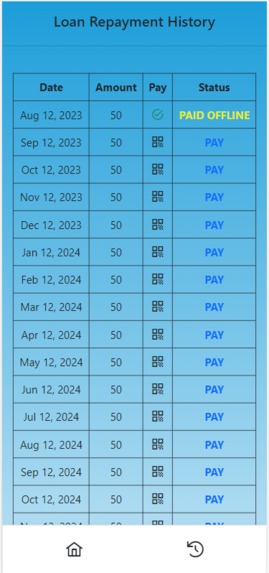
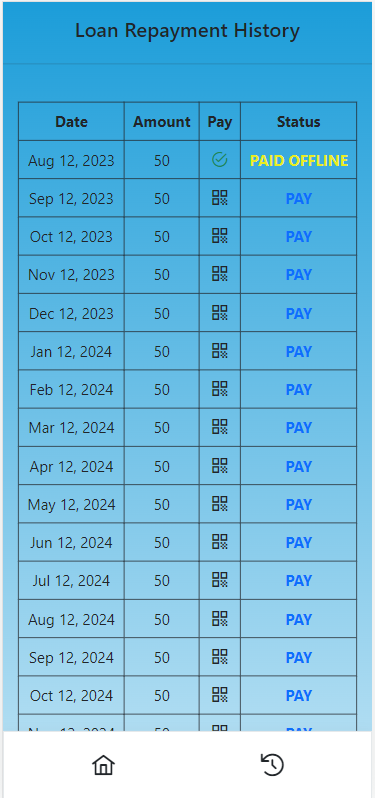
Customer wallet - Offline payment done
-
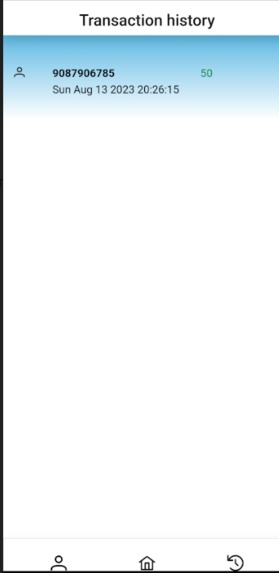
Loan collection agent wallet - offline payment collected
-
Loan collection agent wallet - payment submitted to CBDC N/W
-
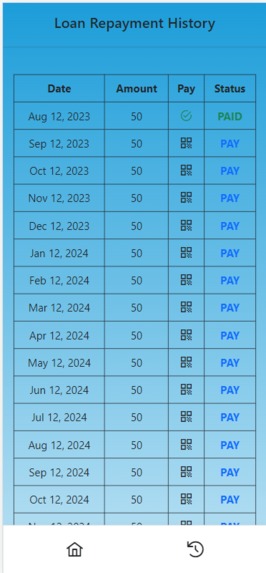
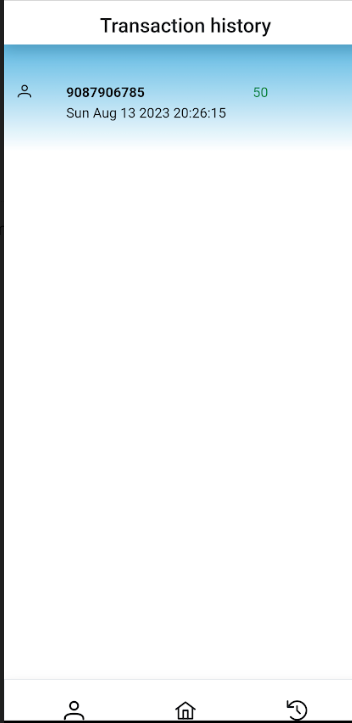
Customer wallet - EMI payment synced with online CBDC loan A/C
-
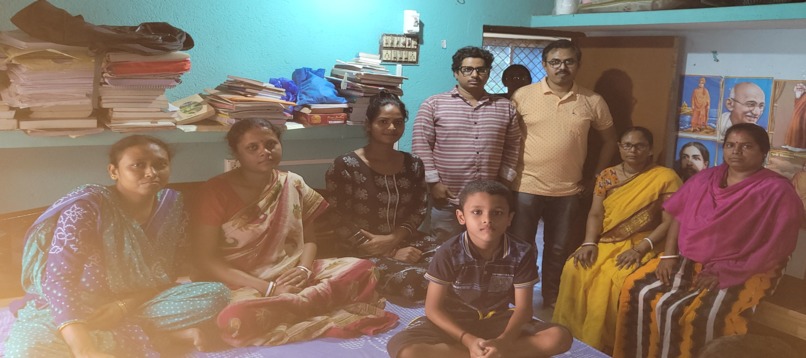
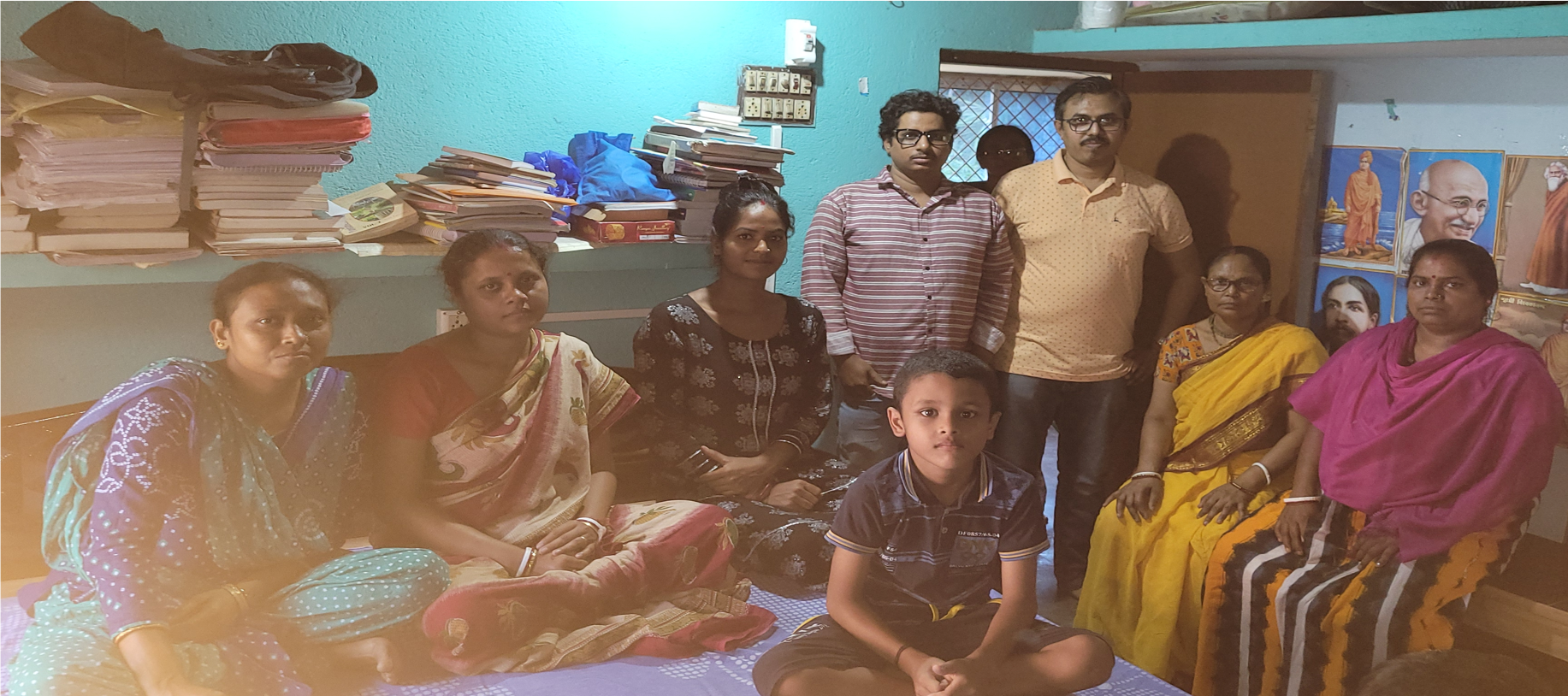
Prototype validation session with microfinance customers
Inspiration - Financial Inclusion of unbanked / underbanked population
This project was conceived from a funny conversion with my housemaid who bragged one day that she got a dirt cheap personal loan @5% interest. I was quite impressed as 5% APR for personal loans are unheard of in Indian banking sector. As I learnt the details, it turned out the 5% interest was calculated on a monthly basis, taken from a local unlicensed institution. It's a classic example of financial exclusion where my housemaid won't get loans from financial institutions, and unscrupulous financial agents taking advantage of her situation & financial illiteracy. I started exploring options for her and came to know of Microfinance Industry which caters to the needs of economically marginalized
Microfinance is a $44B industry in India serving 66M unbanked or underbanked citizens by providing collateral free loans, 99% of whom are women (Data as of Mar 31st 2023, source: here. Submitted video was recorded based on data as of Dec 31st, 2022 - difference in data is due to an additional quarter). In it's current state, Microfinance industry is a cash heavy Ecosystem primarily because:
- Rural customers prefer cash over digital payments as they prefer face to face payment acknowledgement
- Inconsistent rural network coverage unsuitable for digital transactions
- Apprehension among less tech savvy rural population in using complicated digital payment apps
As a result, microfinance loan repayment workflow is primarily manual involving intermediaries, which has several drawbacks for both the Microfinance Institutions (MFIs) and their customers.
MFIs has to deal with following unwanted operational expenses:
- Manual error-prone accounting
- Intermediary charges
- Loan collection agents fleeing with EMI payments from customers
Microfinance customers on the other hand
- Need to safe keep & maintain physical passbooks where all transactions are recorded
- Are often cheated by loan collection agents taking advantage of their illiteracy
All these ultimately result into unsatisfied microfinance customers, requiring them to pay high APR ranging between 20-25%.
What it does - Digital transformation of Microfinance Industry leveraging XRP CBDC wallet supporting offline transactions
Our objective is to create a self sustaining CBDC ecosystem which would serve the purpose of all parties involved in Microfinance industry. We propose to eliminate the inefficiencies & malices in microfinance system by using XRP based CBDC Mitra wallet ('Mitra' in ancient Sanskrit language means friend) supporting offline transactions, thereby reducing the Industry payment collection opex by 75% - which will translate to lower interest rate for Microfinance customers. Let's have a walk-through at how the solution would work:
- Microfinance users apply for loans with microfinance institutions in person. Note: Online loan application from 'Mitra' wallet will also be activated at a later stage
- On approval of the loan (usually communicated by loan collection agents in person), microfinance users (customers now) need to download the EMI schedule in their Mitra wallet
- On EMI repayment date(s), microfinance customer would initiate an offline payment through their Mitra wallet to their CBDC loan accounts (not to the collection agent's account/wallet - crucial difference), which will be saved as transaction file locally for the time being.
- The encrypted transaction / payment file would be then transferred to loan collection agent's Mitra wallet using wi-fi direct feature of phones. There would be no dependency on internet coverage for this payment file transfer. On successful receipt of payment file by collection agent, the same will be confirmed through voice confirmation from receiver's wallet
- The collected payment files would then be automatically submitted to XRP CBDC network, thereby crediting the payment directly to user's CBDC loan account, from loan collection agent's wallet when the agent moves to a place where internet coverage is available. Alternatively, it could be also transferred from customer's wallet once she/he is under internet coverage. The XRP CBDC network will accept the first payment submission & second submission will be automatically discarded
This is a win-win proposal for Microfinance Institutions and their customers. Microfinance Institutions stand to gain as
- They will now have a single 100% digital system, irrespective of network coverage, to track the flow of payments, saving all accounting error related complexities & costs
- Payment can be collected bypassing intermediaries saving related costs
- Payments are collected in the form of cryptographically signed transaction, not money - which can be only submitted to customer's CBDC loan account. Hence loan collection agents can no longer escape with cash, saving corresponding losses
Microfinance customers will also be benefitted since they:
- Need not maintain physical passbooks any more, all the transaction records will be available in their wallets (automatic syncing with online loan account whenever they come under network coverage)
- Will get manipulation free EMI payment option as customers will have full control over their payments without any option for loan collection agents to cheat. Payments are transferred as cryptographically secure transactions which can't be diverted to any other accounts
- Will get potentially lower interest rate on loans as MFIs can pass some of the cost savings to the customers
- Will have pretty much same EMI payment process with digital convenience – payments will still be confirmed upfront face to face by loan collection agents, & through voice confirmation by the receiver's wallet. Microfinance industry has already tried several digital options with Microfinance users like standing instruction with bank accounts, sending payment links over WhatsApp, etc. But nothing succeeded as the users were not comfortable with online payment without having upfront payment acknowledgment
We are confident that ‘Mitra’ wallet will be the friend in need for ushering Microfinance 2.0
How we built it - starting with the humble Ripple desktop wallet provided with sample code
Currently we have a functional wallet prototype apk which is connected with Ripple Testnet. But it all started with the non-custodial Python desktop wallet code sample provided in https://xrpl.org/build-a-desktop-wallet-in-python.html.
- First, desktop wallet was augmented with features like offline transaction using xrpl.py library, XRP - fiat currency conversion using Escrow, etc.
- Second, this desktop wallet was converted into apk using capacitor framework
- Third, additional implementation for ensuring offline transaction security was implemented on a Node.js server (detailed in corresponding Technical challenge section below)
- Four, additional services for microfinance EMI schedule specific integration was implemented on AWS. Corresponding UI changes were also made in the wallet
- Five, the prototype was demoed with industry representative and end users in multiple iterations. Corresponding changes were made (or planned) based on the received feedback (couple of them detailed below under Functional challenges section).
Challenges we ran into - Technical & functional
Technical challenge - Ensuring transaction security in offline mode
- Confirming identity proof for offline users - an additional server is provisioned for validating users through public key cryptography & zero knowledge proof (zkp) in offline mode. This purpose can also be served by CBDC servers as well
- Preventing double spending problem in offline mode - online balance is saved in the wallet before user goes offline. This balance is used to create & sign transactions in offline mode in the wallet while ensuring no transactions are allowed with negative balance
- Loss of mobile / wallet while having offline balance - user mobile will be uniquely tracked by IMEI number. If it's detected that user has logged in using another IMEI number, user can continue to use the same CBDC account with new mobile wallet, but his/her offline balance in the previous mobile wallet won't be available for spending through the new wallet
Technical challenge - Scanning high density QR code with low resolution android smartphones
- Our initial design was to transfer the encrypted transaction files between wallets through QR code scanning. But we found out that would not be realistic approach since QR codes were too dense to be scanned by low resolution android smartphones, typically used by economically weaker section in rural areas. Hence we decided to change our approach to wi-fi direct for transferring encrypted transaction files between wallets
Functional challenge - modifications required due to end user profile
- Need for vernacular support - We built the first version of the wallet on English language, but quickly realized that the end users need to be supported vernacularly. We decided to support four languages in the wallet (both font & voice announcement) based on the four biggest microfinance market in our country
- Simple workflow - We took a conscious decision to move away from a general purpose wallet & focus on microfinance specific needs as we observed that end users are getting confused if the workflow is too complicated. We redesigned the wallet so that users can complete the EMI payment just by two clicks after login
Accomplishments that we're proud of
- This idea was selected under stipend category in Chunauti 4.0 (A competition for startups/individuals to demonstrate their idea, organized by Ministry of Electronics and Information Technology - Government of India) which encourages innovative ideas by providing monthly stipend – December 2022
- Software Technology Park of India, Chennai (FinTech Center of Entrepreneurship under Ministry of Electronics and Information Technology - Government of India) offered Incubation Equity (INCE) to support implementation of the idea. This is a long term commitment for 12-36 months during which STPI Chennai will guide us to launch and scale – July 2023
- Other prominent incubators from top tier academic institutions of the country has also shown interest to partner with us
What we learned - Creating a win-win proposal through minimalistic approach
When we started, we quickly found out that we are dealing with two sets of customers with very different customer persona. While the Microfinance CXOs are highly educated urban individuals, microfinance customers on the other hand are mostly based in rural areas - some of them are even illiterate. Their goals are also very different. While the CXOs are focussed on improving profitability & expanding their business, their customers are concerned about repaying their loans as per schedule without getting cheated by the loan collection agents
To cater to the need of both set of customers, we decided to trim down few features retaining only the most required ones, & modify others to create the minimum viable prototype. We understood it was of paramount importance to strike the right balance between wallet features and operational simplicity to entice both the set
What's next for CBDC 'Mitra' Wallet
Our immediate objective is to explore Indian pilot CBDC implementation (which has not been published by the authorities yet) and customize our working prototype accordingly to translate it into a full fledged secure wallet. We have plans to introduce innovative features like CBDC - fiat currency conversion through existing ATMs using XRP features like Escrow, should the Indian CBDC implementation support it. Since this idea has already been selected for incubation by STPI Chennai, they would support validating technical feasibility, implementation & launch within India by way of:
- Access to sandBox environment consisting of APIs of NPCI (National Payments Corporation of India), the organization piloting India's CBDC implementation
- Infrastructure facilities like cloud computing credit & testing security vulnerabilities in the wallet
- Domain specific mentorship for Technology, legal, compliance, etc.
- Carrying out effective marketing by organizing knowledge sessions, conducting road shows, creating the FinTech CoE web platform, organizing networking events, etc.
- Product launch in the market and scaling
We hope with the help & guidance of all the incubators/STPIs, we will be able to positively impact the live of 64M Indians and their families (considering average family size of 4, that's more than a quarter Billion people) through 'Mitra' wallet. But we believe that this solution has potential to be implemented in other countries as well where Microfinance (or similar) industry is primarily cash based & intermediaries are involved. We are open to explore any opportunity that can help the economically marginalized section of society globally
Built With
- amazon-ec2
- amazon-rds-relational-database-service
- amazon-web-services
- angular.js
- capacitor
- java
- microservices
- node.js
- springboot
- xrpl.js


Log in or sign up for Devpost to join the conversation.