-
-
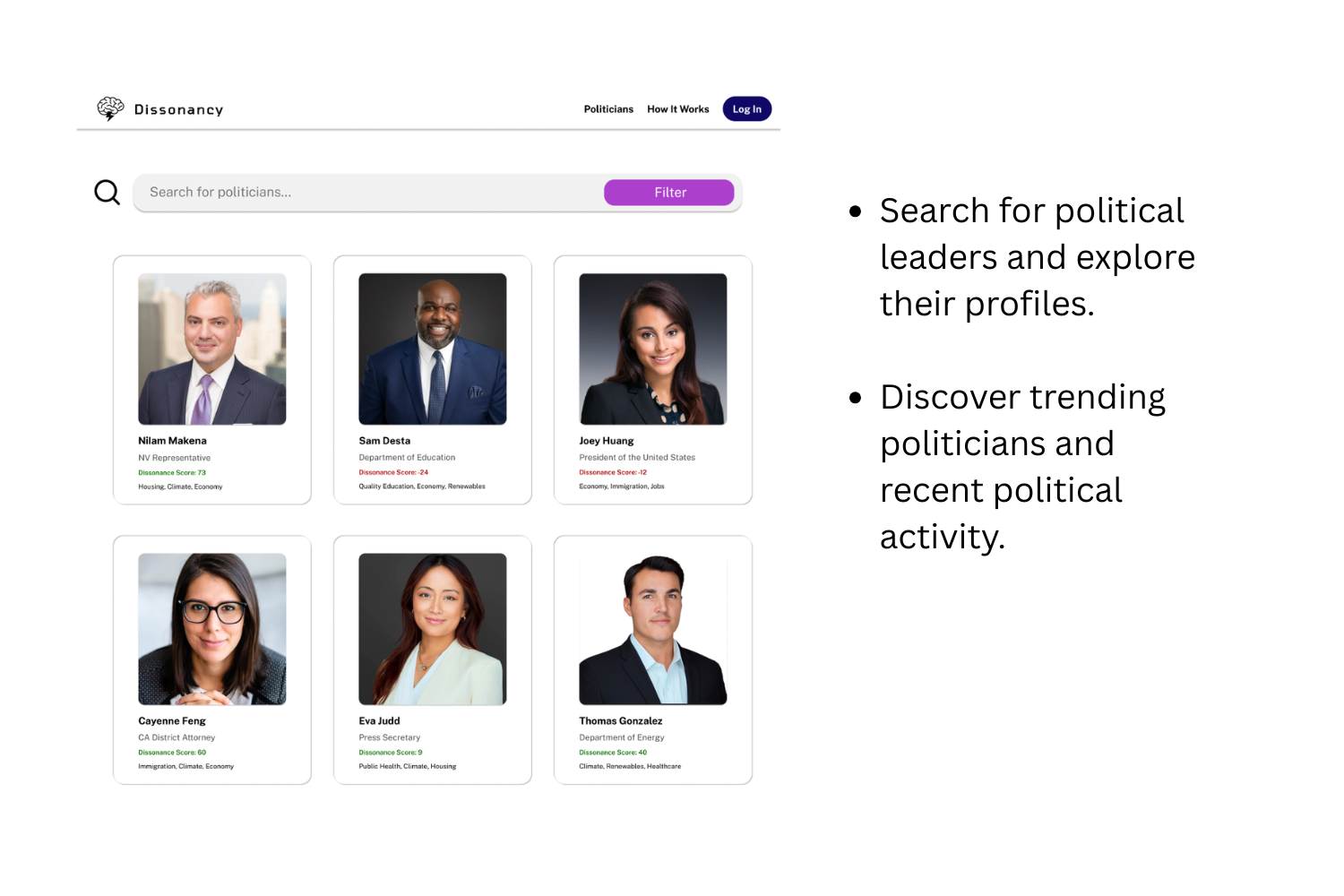
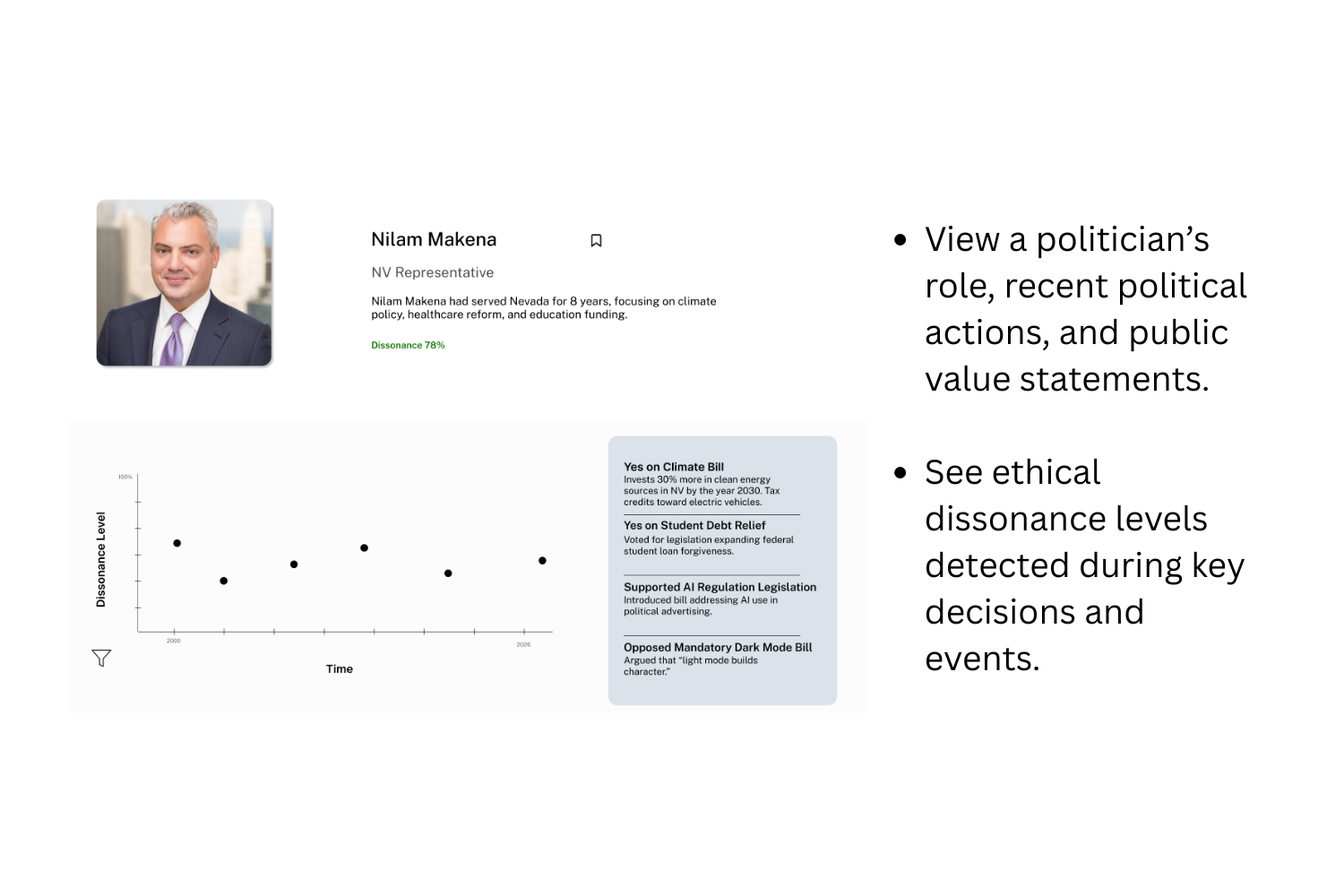
Dissonancy visualizes ethical dissonance in political leadership, revealing when actions conflict with stated values.
-
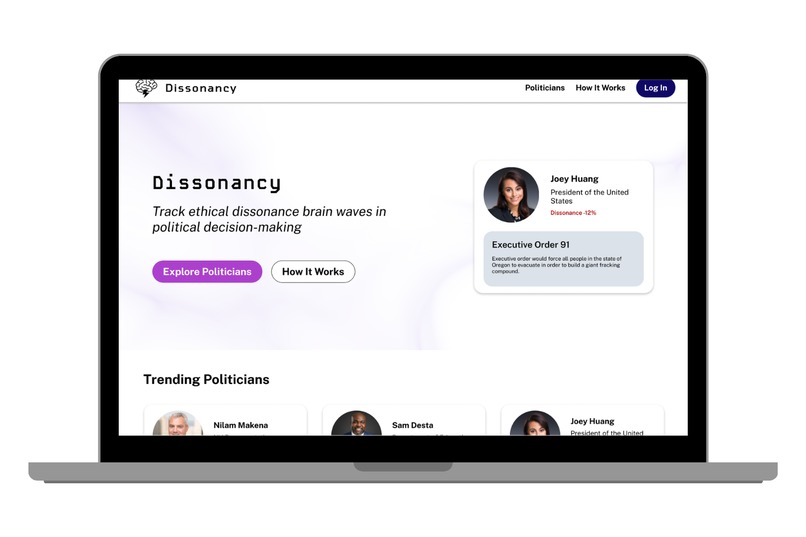
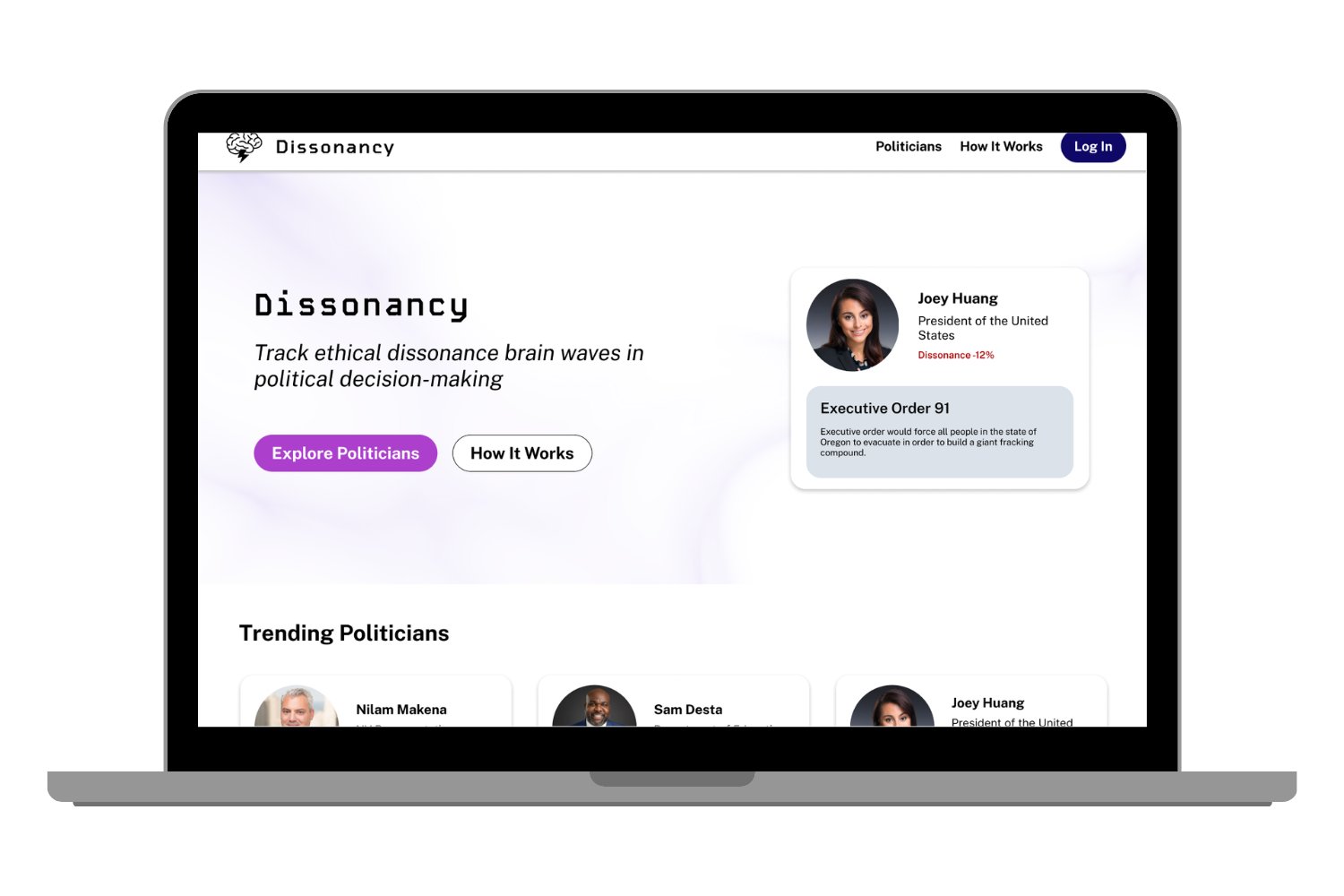
Our hero page!
-
-
-
Speculative start:
Our team developed the Dissonancy project by investing lots of our energy into worldbuilding and playing with the fantastical aspect of the design prompt. Though a practical sensory tracking app that could help people today is important, we instead pursued the speculative as a means of imagining more honest and trustworthy systems for the future. Without considering practical constraints, we were able to be wildly more imaginative and reflective of what normally holds back larger, societal change.
Deciding target audience?:
Early in our design process, we understood that the ability to record when someone crosses a moral boundary has enormous potential in holding people accountable. Originally, we focused on personal accountability, where everyday users could get an alert when they deep down sensed that they were making a mistake. This idea came from a shared Cognitive Psychology background. Our Psychology classes teach how the weight of a role and situation is able to wildly influence what a person is willing to do, even if their personal morals are against it. We then wondered how this could affect accountability in roles where violence and corruption are prominent, such as in policing or government positions. Very quickly, we transitioned our idea to encompass a somewhat dystopian future where the only way to ensure accountability in governance is via microchip technology that releases ethical dissonance data in high-ranking government officials for the public good. We understand that though there is no way to ensure that individuals with a lot of power will have moral integrity, there could be a way to keep the public informed of their behavior, to guide voter decision making.
Practical considerations:
Implementing this very conceptual idea proved challenging, and we faced several roadblocks where our ideas were realistically impossible, not only because of established social systems preventing the implantations of micro-chips, but also because of the confines of the database structure. Ultimately, we privileged building an interesting speculative future with intuitive UI. Sensory tracking is particularly interesting because it is difficult to quantify something intangible!
Learning Figma:
We were all unfamiliar with Figma before this project, and most of us were new to the fast pace of hackathons. We learned so much about the Figma interfaces and enjoyed working in-person teams on the same Design page. When one of us was confused, another person could direct their mouse to help fix the issue. We started our build with Figma Make to help ideate, then transitioned to FigJam, Drafting, Components, Design, and Prototyping. Considering how new the platform is to us, we were able to effectively use the available resources and YouTube videos to move through roadblocks.
Built With
- figma


Log in or sign up for Devpost to join the conversation.