-
-
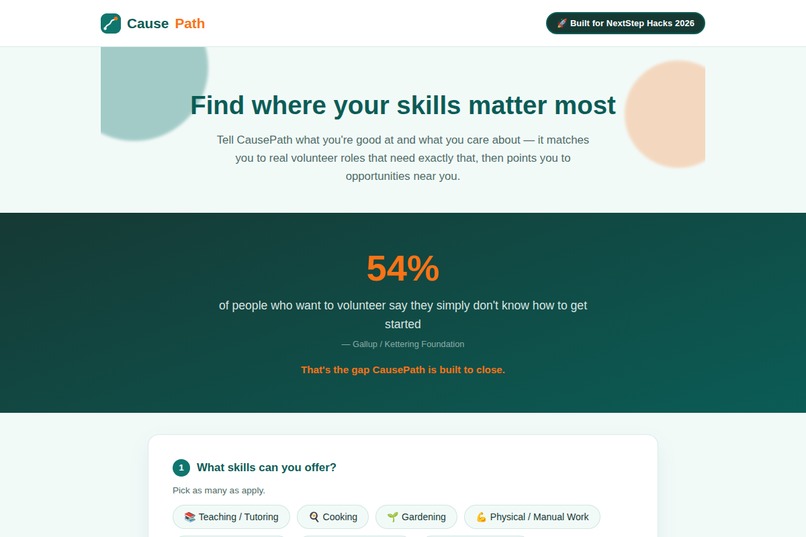
first impression
-
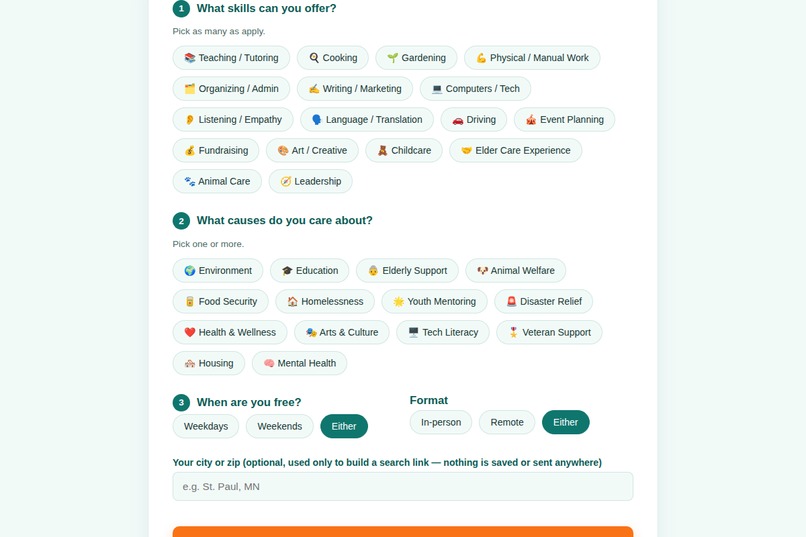
shows the interaction
-
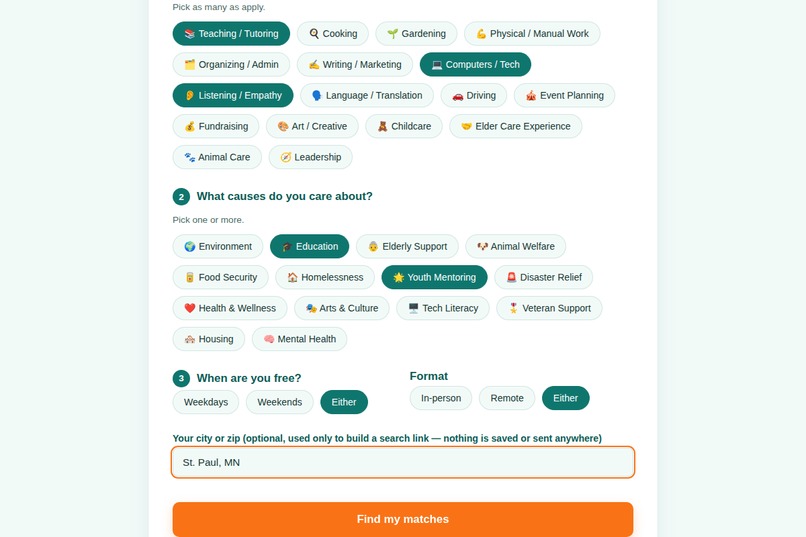
nice touch showing the polish
-
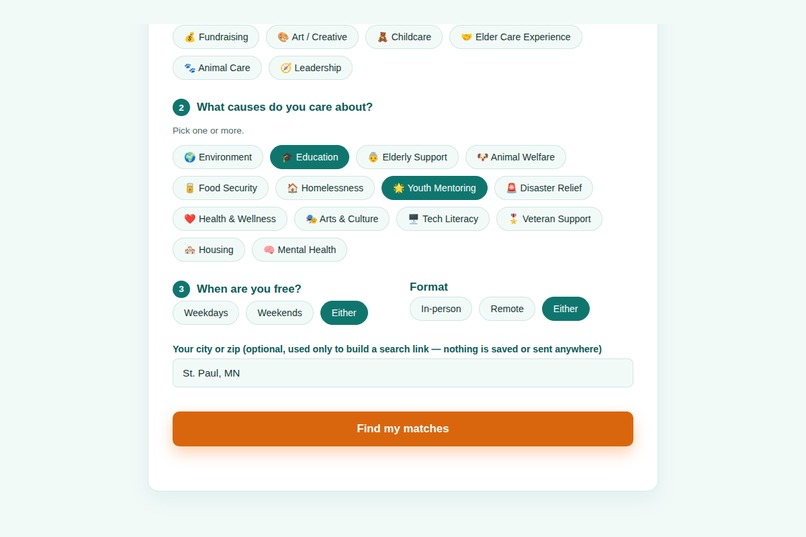
the payoff, proves it works
-
transparency/trust angle
-
wrap-up (optional, given overlap with #07)
-
wrap-up (optional, given overlap with #07)
InspiThat's exactly what the DEVPOST_WRITEUP.md file already covers — here's the content ready to paste straight into that field:Quick fix first — the write-up still says "16" opportunity types from before we expanded the database to 26. Let me correct that so what you paste is accurate.Now here's the corrected content, ready to paste directly into that "About the project" field:
Inspiration
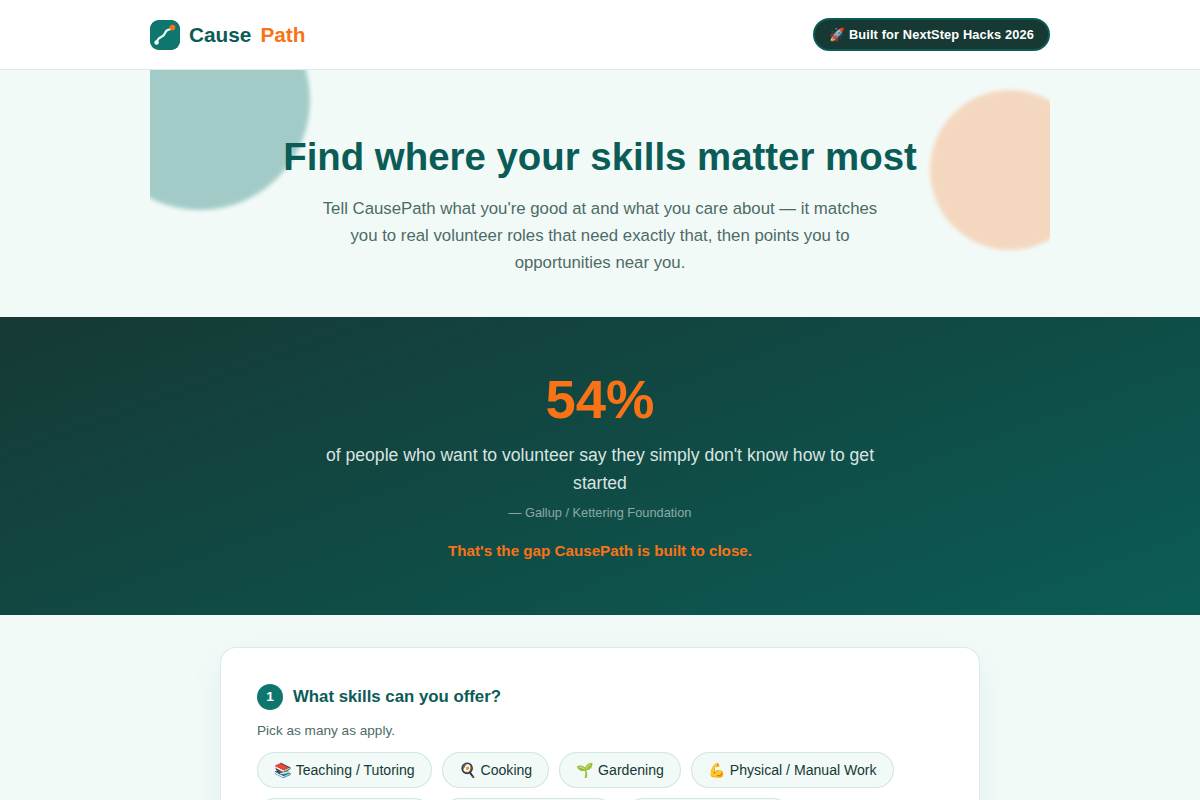
A Gallup and Kettering Foundation study of over 20,000 Americans found that the biggest reason people who want to volunteer never do isn't free time — it's that 54% of would-be volunteers simply don't know how to get involved. Meanwhile, nonprofits across every cause area are chronically short-staffed and could put almost any skill to use, from cooking to coding.
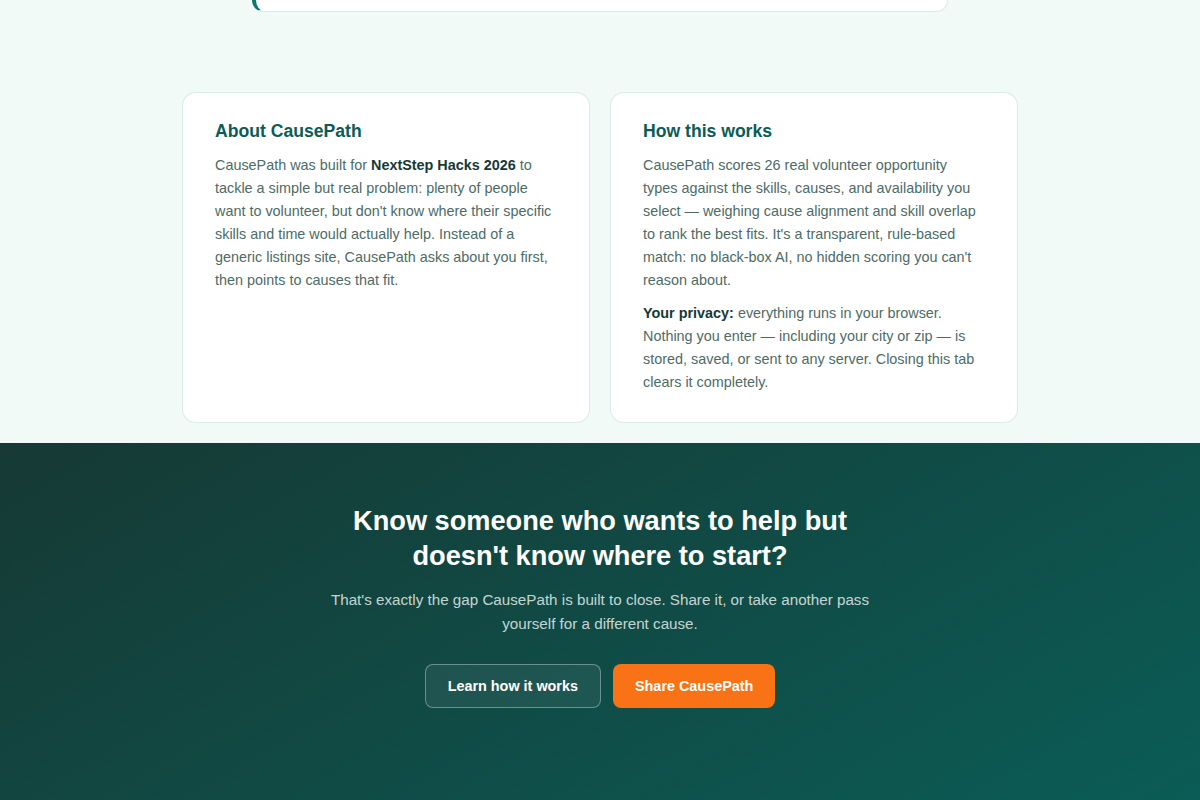
That gap — willing people on one side, real unmet need on the other, and no simple bridge between them — is exactly what CausePath is built to close.
What it does
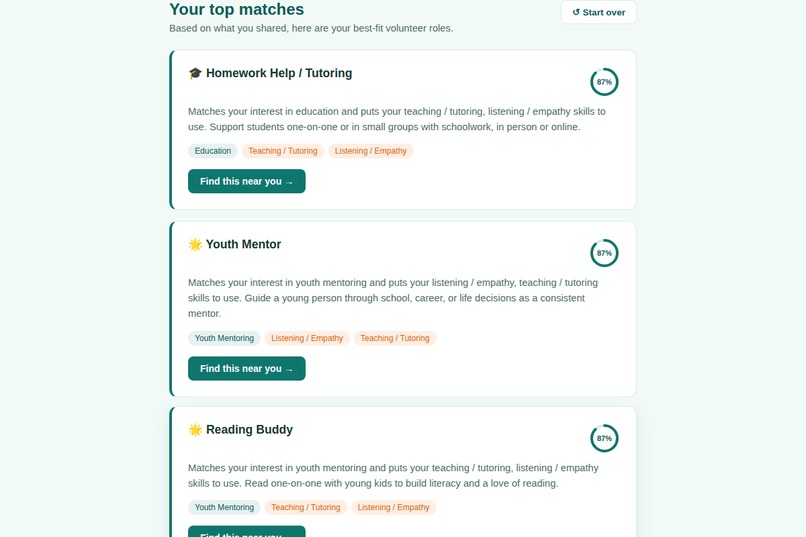
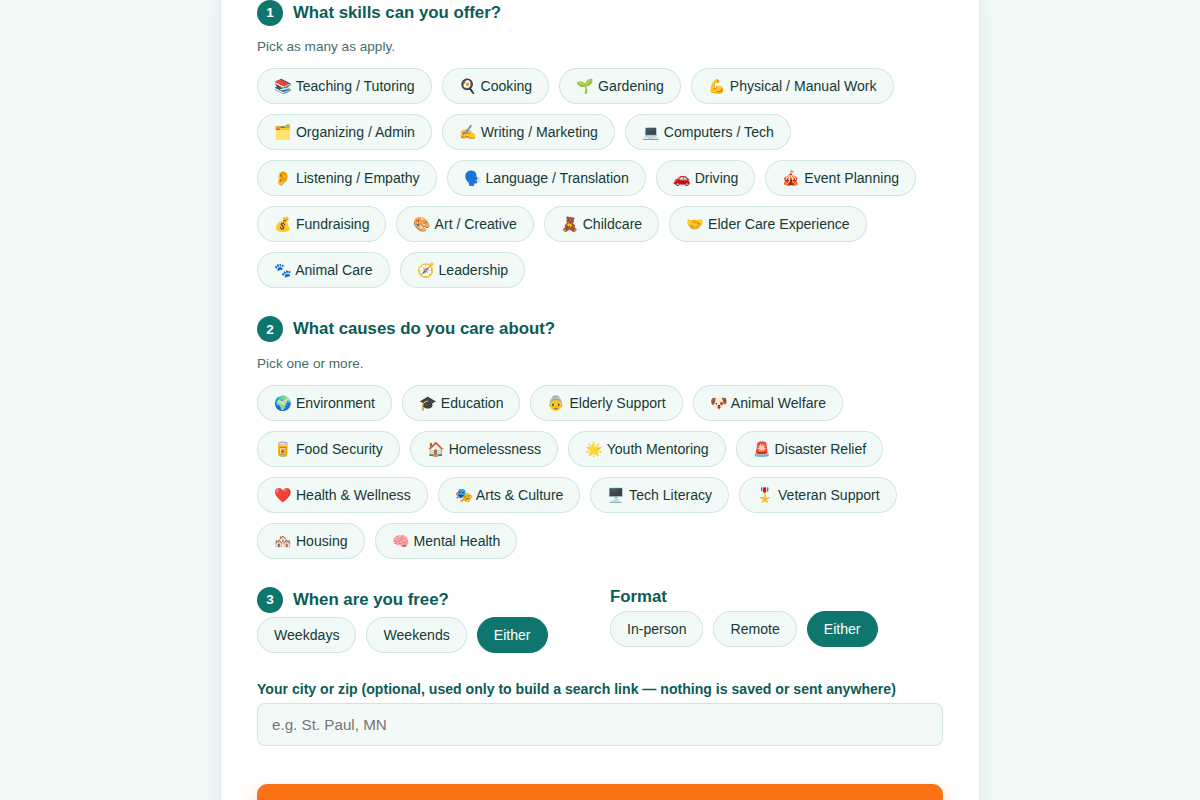
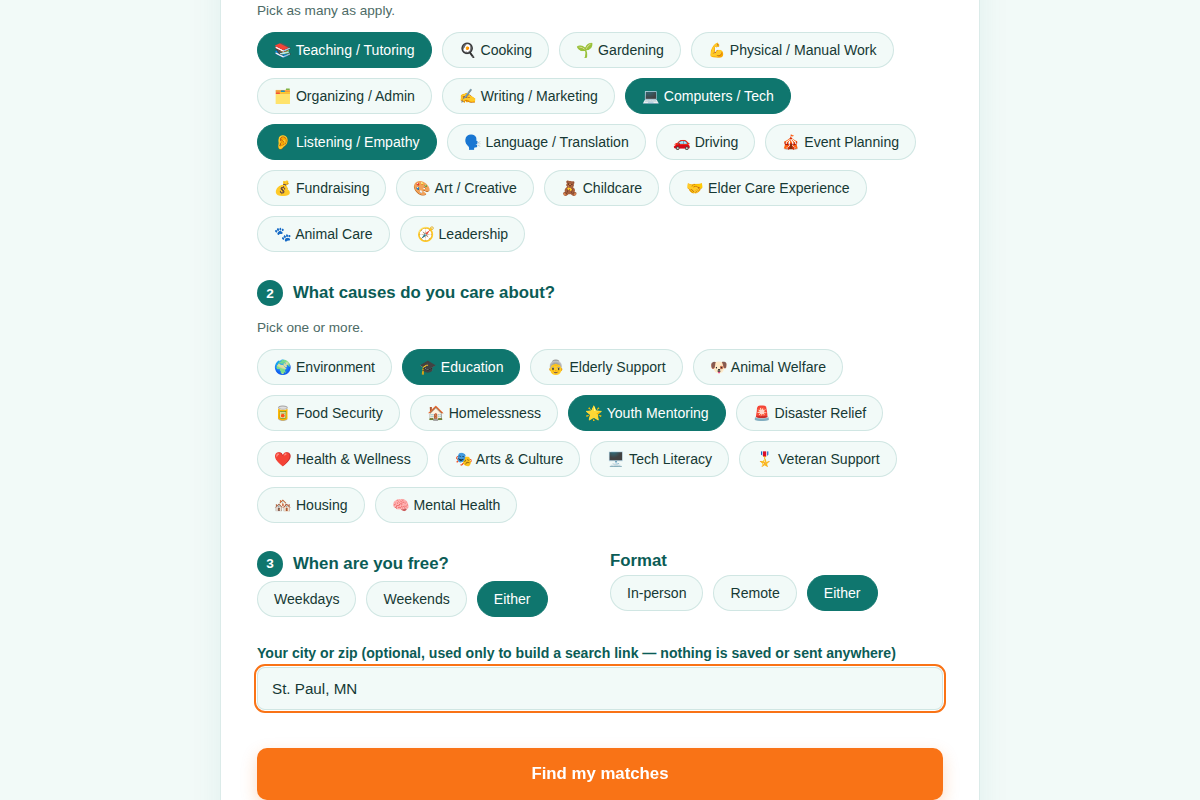
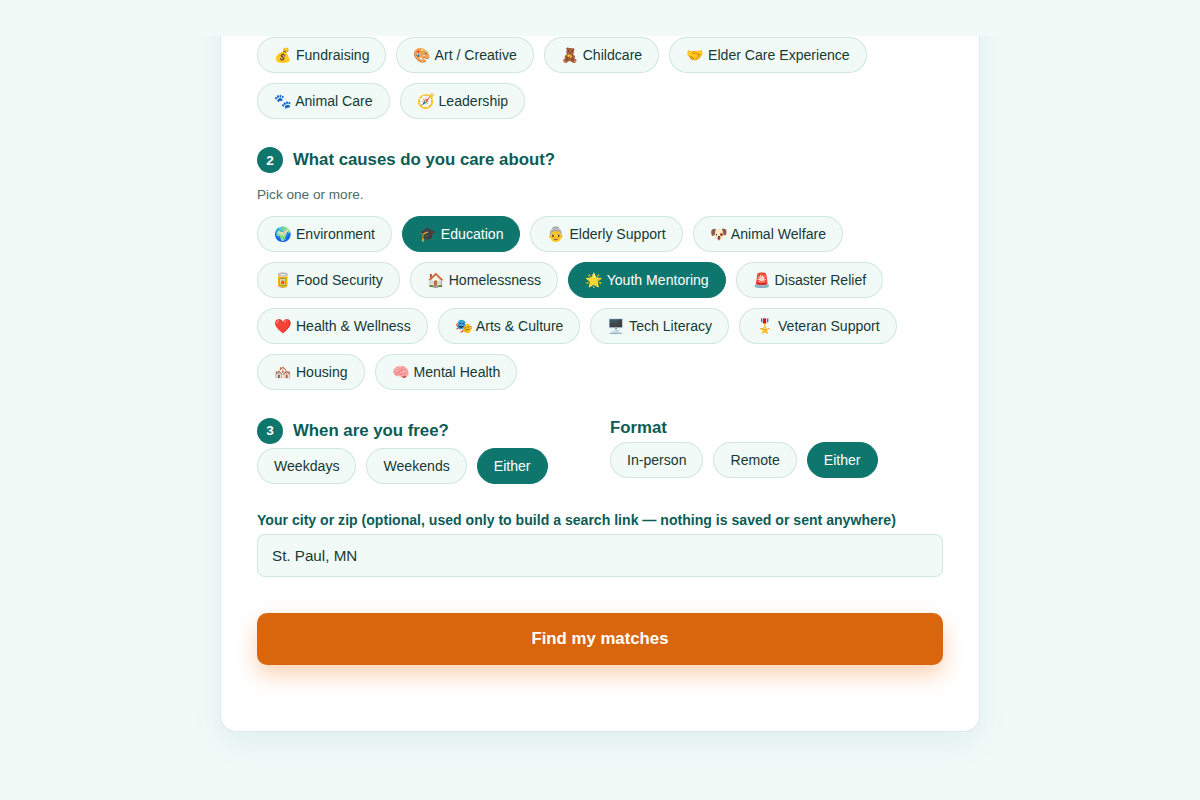
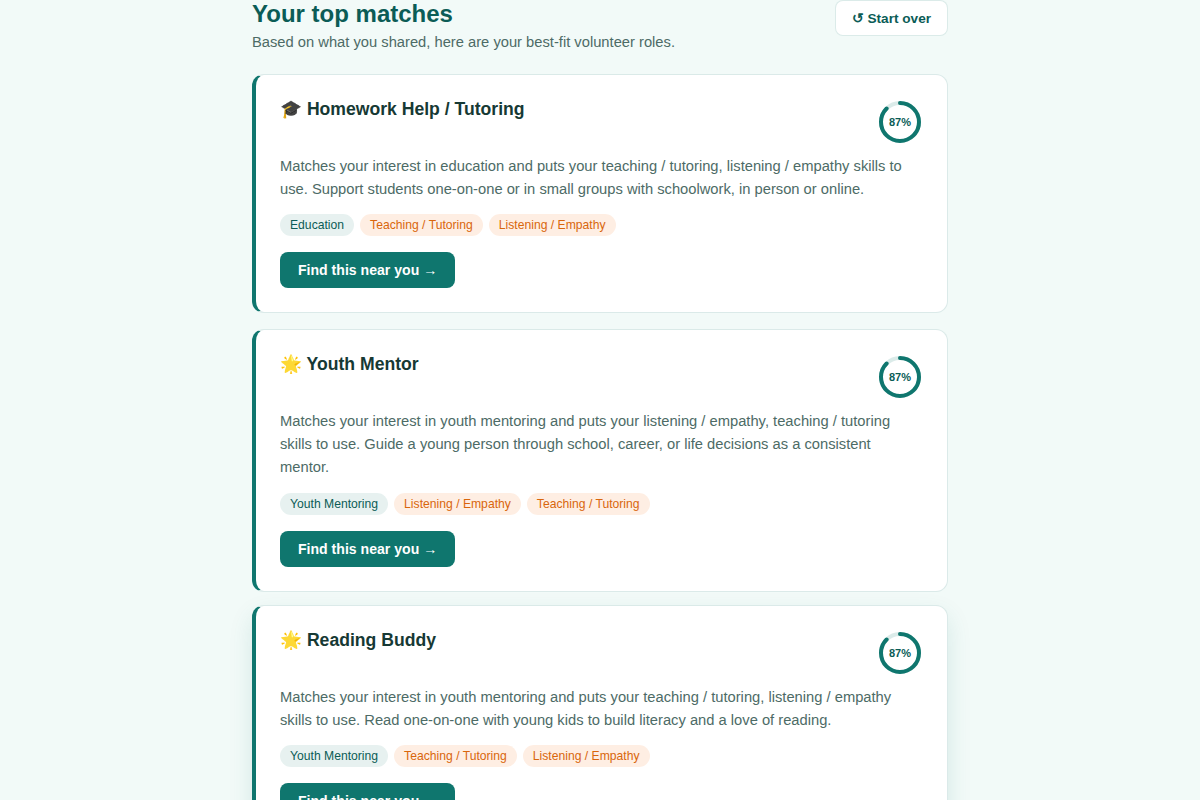
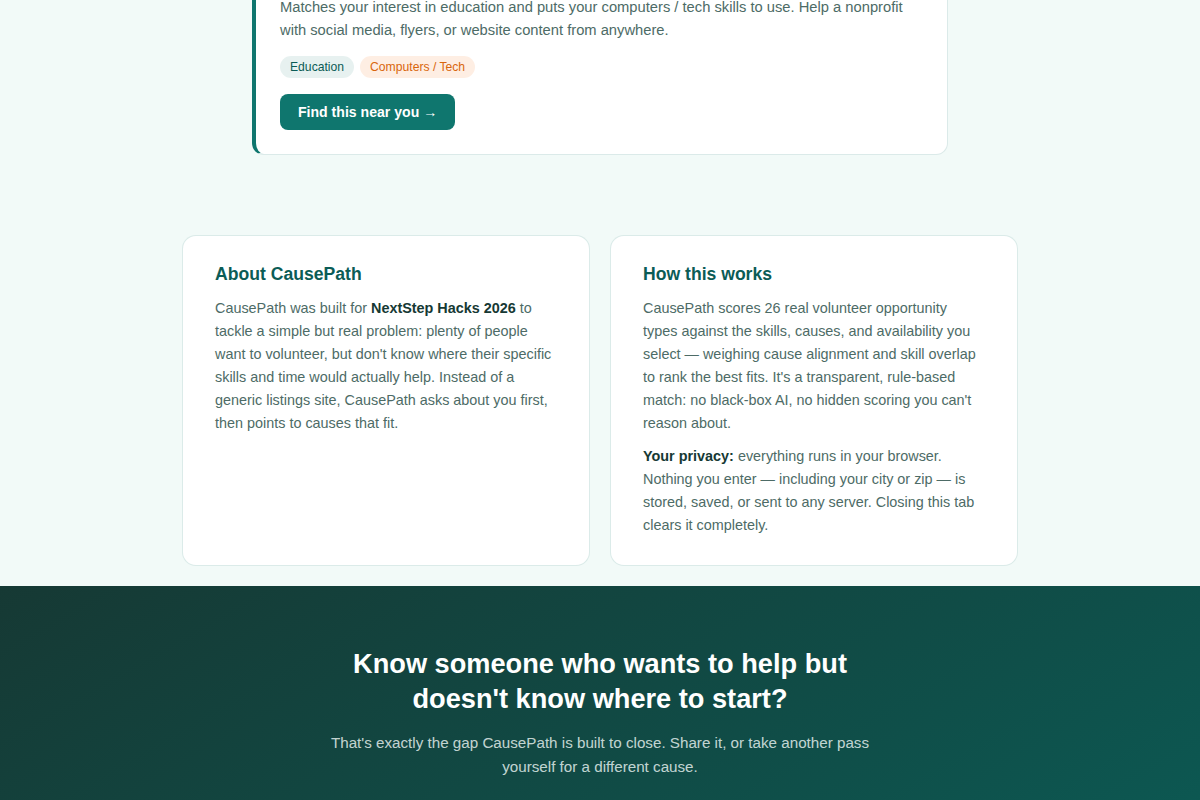
CausePath asks you three simple things: what skills you can offer, what causes you care about, and when/how you're available. It then scores your answers against a database of 26 real volunteer opportunity types — things like community garden work, tutoring, senior companion visits, animal shelter support, and more — and shows you your top 5 matches, each with a visual match-percentage ring, a plain-language explanation of why it's a good fit, and a one-click "Find this near you" button.
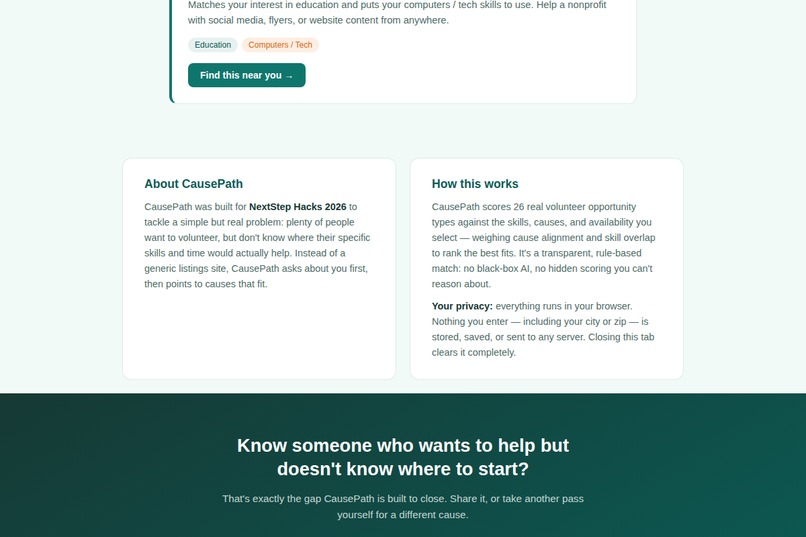
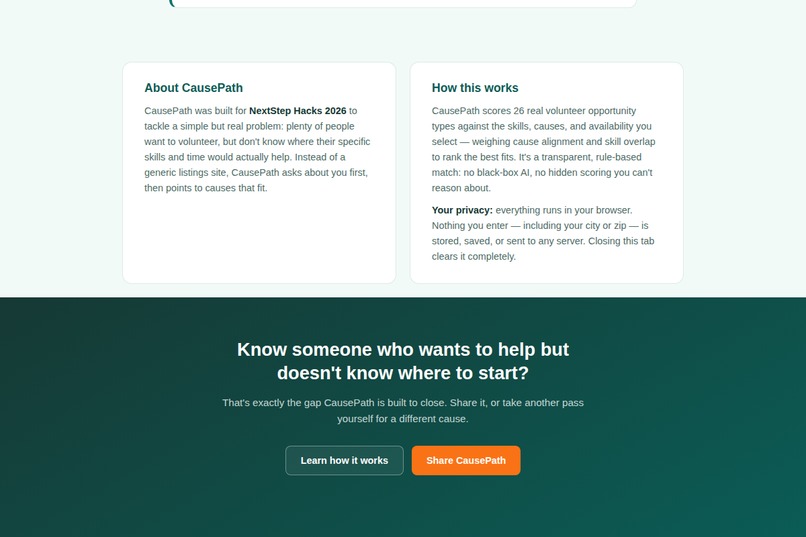
No account, no data collection — everything runs client-side in your browser.
How we built it
CausePath is built with plain HTML, CSS, and JavaScript — no frameworks, no backend, no external API calls. The matching engine is a transparent, weighted scoring algorithm: each opportunity earns points for skill overlap, cause alignment, and availability/format compatibility. We chose a rule-based approach over calling a large language model specifically so the logic stays auditable — anyone can see exactly why a match scored the way it did, which matters for a tool meant to build trust with first-time volunteers.
Challenges we ran into
As a newer developer, structuring a scoring algorithm that felt fair across very different opportunity types took some iteration — early versions over-weighted skill overlap and under-weighted whether someone actually cared about the cause. We rebalanced the scoring so cause alignment carries the most weight, since volunteering for something you don't care about rarely sticks.
What we learned
Building the scoring system taught us how to translate a fuzzy human idea ("what fits me?") into something a simple algorithm can reason about consistently. We also learned the value of testing logic in isolation before trusting it inside a UI — several scoring edge cases only became obvious once we ran real test inputs through the algorithm directly, outside the browser.
That should drop in cleanly with Devpost's Markdown support. Want me to also draft short answers for any other specific fields on the form (like "What it does" if that's a separate box, or a one-liner for the project tagline field)?ration
What it does
How we built it
Challenges we ran into
Accomplishments that we're proud of
What we learned
What's next for CausePath
Built With
- since-your-"how-we-built-it"-section-specifically-highlights-the-rule-based


Log in or sign up for Devpost to join the conversation.