
Inspiration
We were frustrated by how fundamentally broken modern marketing attribution is for e-commerce brands. Traditional analytics tools rely heavily on last-click methodologies. If a customer sees an Instagram ad, opens a newsletter, and later searches the brand name on Google before buying, Google gets 100% of the credit. This structural flaw misleads founders into overfunding search capture channels while starving the creative channels that actually generate initial demand. We wanted to build a solution that surfaces the truth without invading user privacy.
What it does
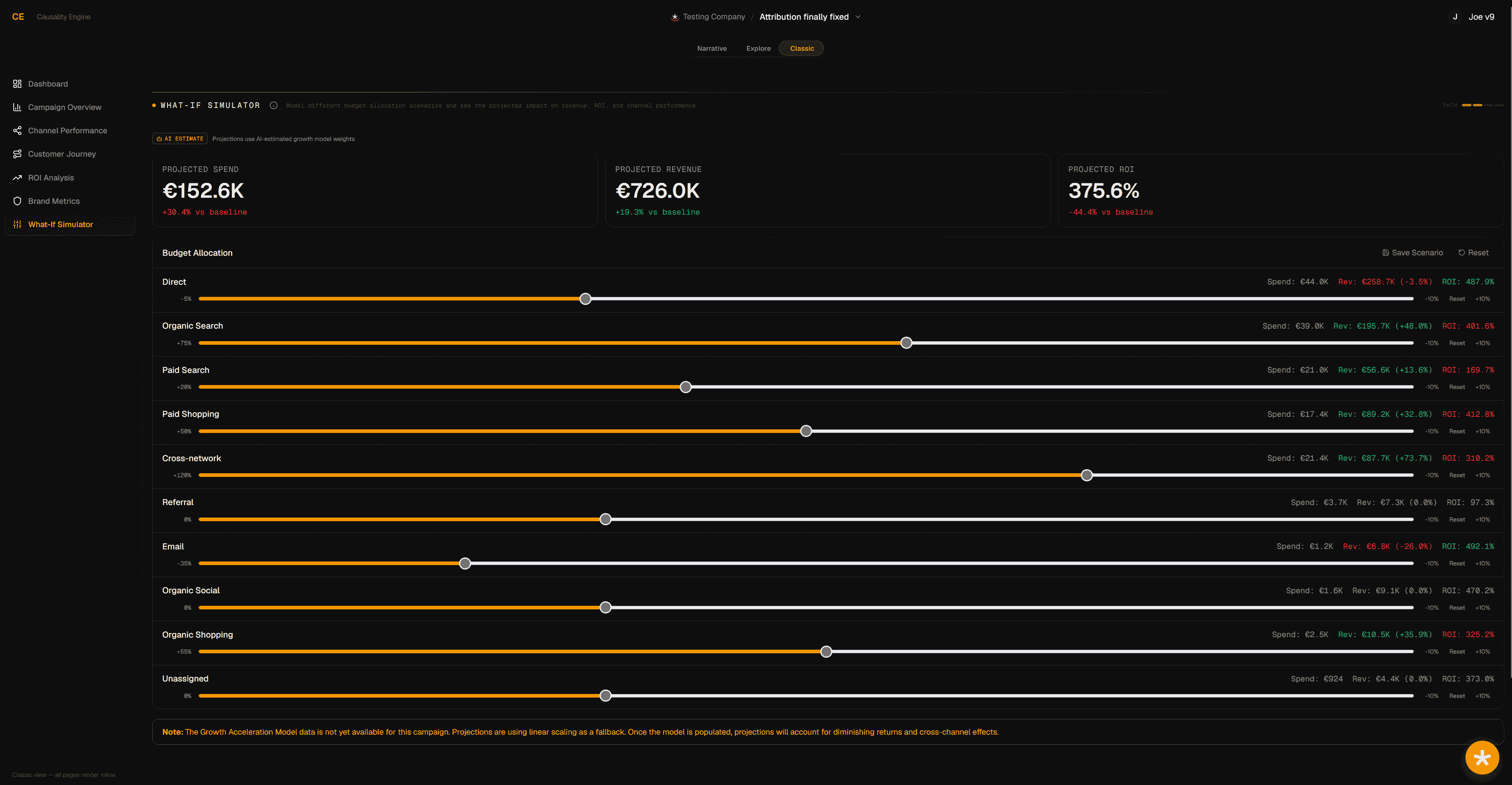
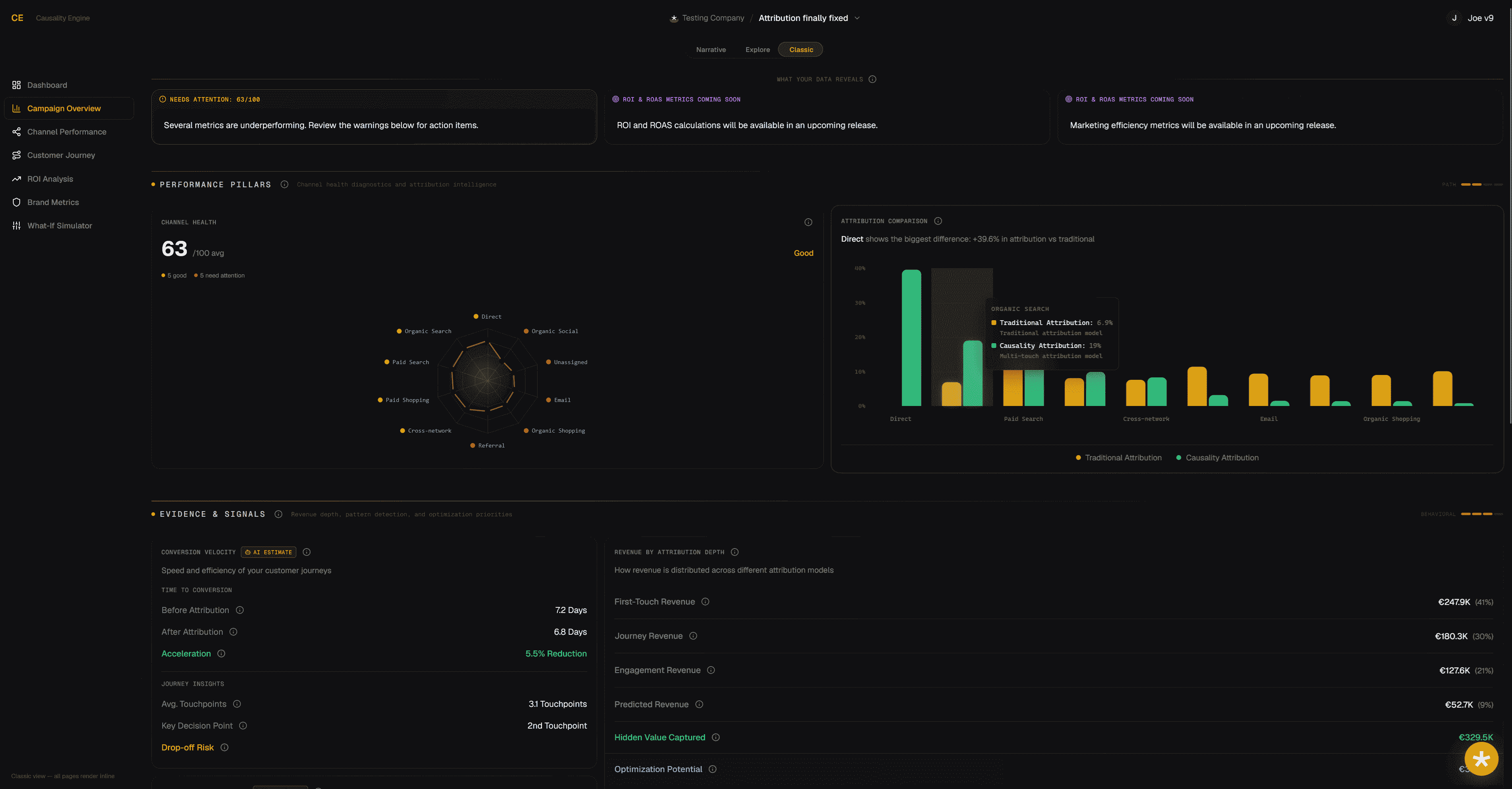
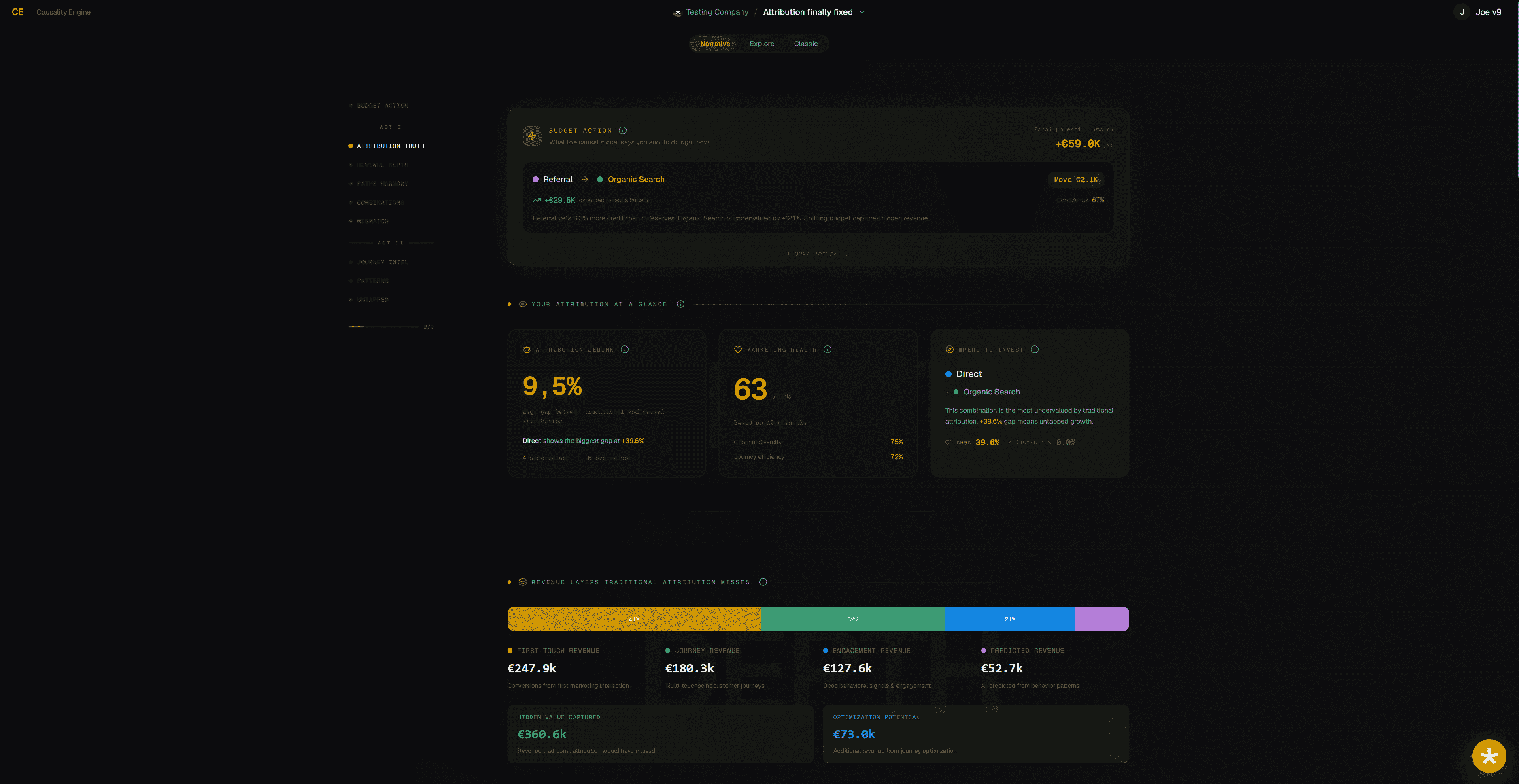
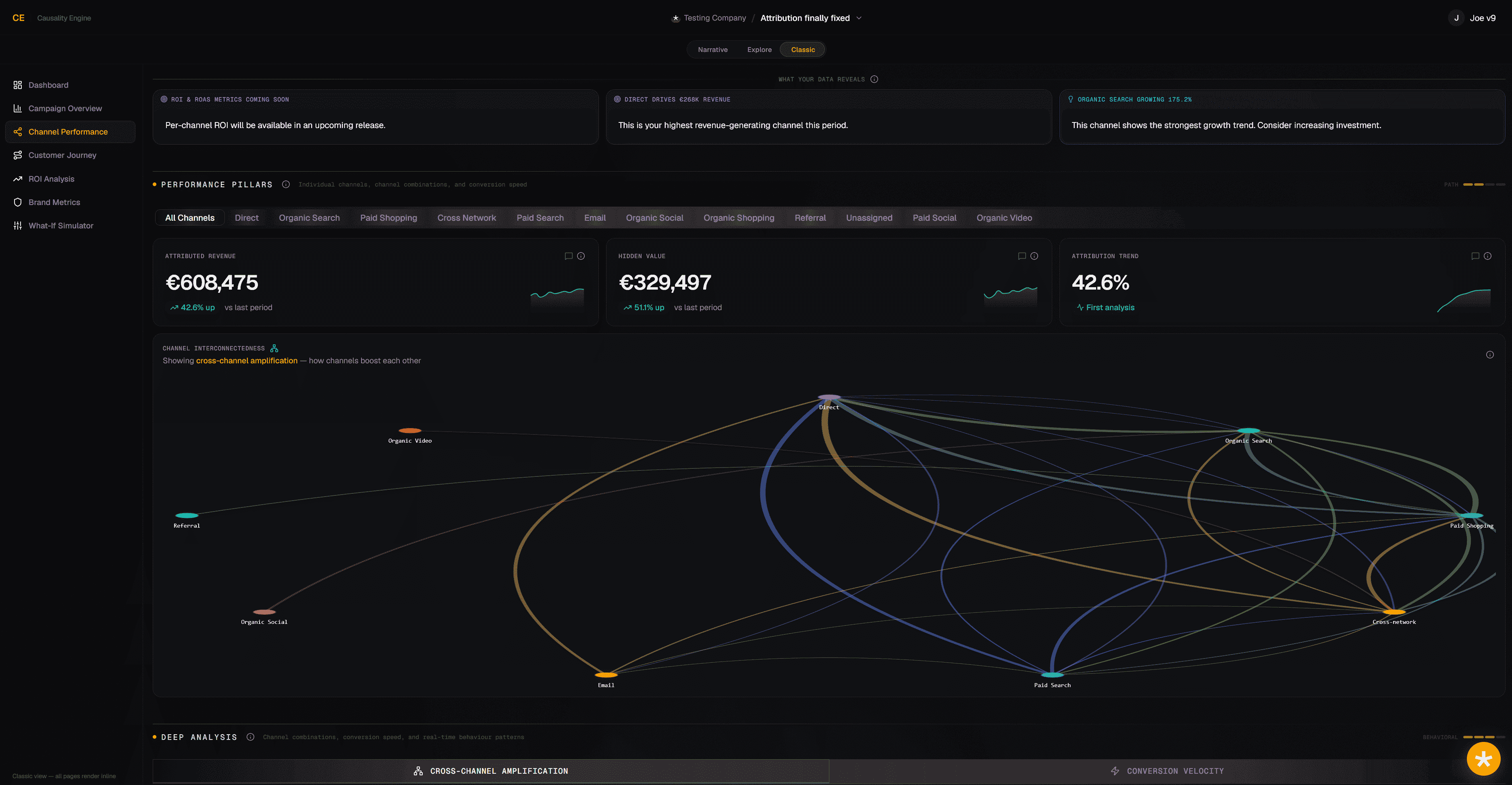
Causality Engine is a specialized marketing attribution platform that uses true causal inference, rather than simple correlation, to uncover exactly which marketing channels drive sales. By analyzing historical touchpoint journeys from a standard Google Analytics CSV export, it calculates the real incremental lift of each channel within minutes. The platform reveals 15% to 25% of revenue that traditional tools structurally cannot see and quantifies it as an exact euro amount per channel. It is entirely EU-hosted and GDPR-compliant from the ground up, requiring zero client-side tracking pixels or SDKs.
How I built it
The platform architecture is built specifically to process heavy client data workloads entirely server-side. I focused on building high-performance data ingestion pipelines that parse and structure the multi-touchpoint data histories from simple CSV files. The core engine applies backend statistical causal inference modeling to calculate channel paths independently without browser execution overhead. The infrastructure integrates native data anonymization layers, automated right-to-erasure workflows, and a fraud detection engine to ensure top-tier privacy compliance.
Challenges I ran into
A major technical obstacle was dealing with the inherent messiness and inconsistencies found in raw analytics data cross-channel paths. Bypassing client-side tracking pixels meant we had to extract maximum signal exclusively from historical CSV data. Writing an algorithmic pipeline robust enough to precisely map out complex customer cross-device paths, isolate interaction effects, and calculate clean causal lift without slowing down the application processing window required multiple core logic rewrites.
Accomplishments that I'm proud of
I am incredibly proud of achieving an environment that requires absolutely zero code integration or script installation from our clients. E-commerce store owners do not need a developer or any tracking pixels to gain complete clarity. Additionally, successfully engineering the mathematical engine to reveal an average of 15% to 25% of hidden revenue, validated by concrete monetary figures per channel rather than vague projections, feels like a massive win.
What I learned
Building this project reinforced how critical server-side processing is becoming as front-end browser privacy controls and ad-blockers tighten globally. I learned that relying on client-side JavaScript for marketing intelligence is rapidly becoming obsolete. More importantly, I deeply explored practical applications of causal inference models over standard predictive correlation models in real-world business data contexts.
What's next for Causality Engine
We are working on extending our analytical capabilities for our Pro tier users. This includes widening our historical lookback windows to process much larger sets of multi-year operational data. We are also building out an interactive, natural language data chat interface that allows store owners to query their causal analysis reports directly using conversational questions.
Website: https://causalityengine.ai
Built With
- next.js
- node.js
- postgresql
- tailwind
- vercel

Log in or sign up for Devpost to join the conversation.