-
-
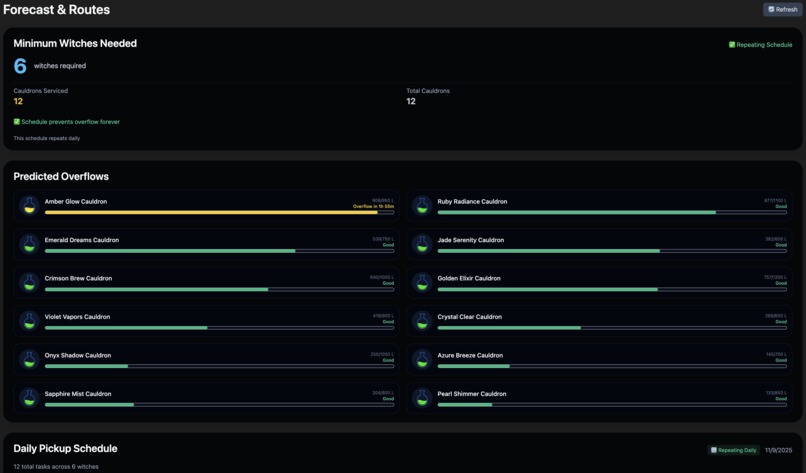
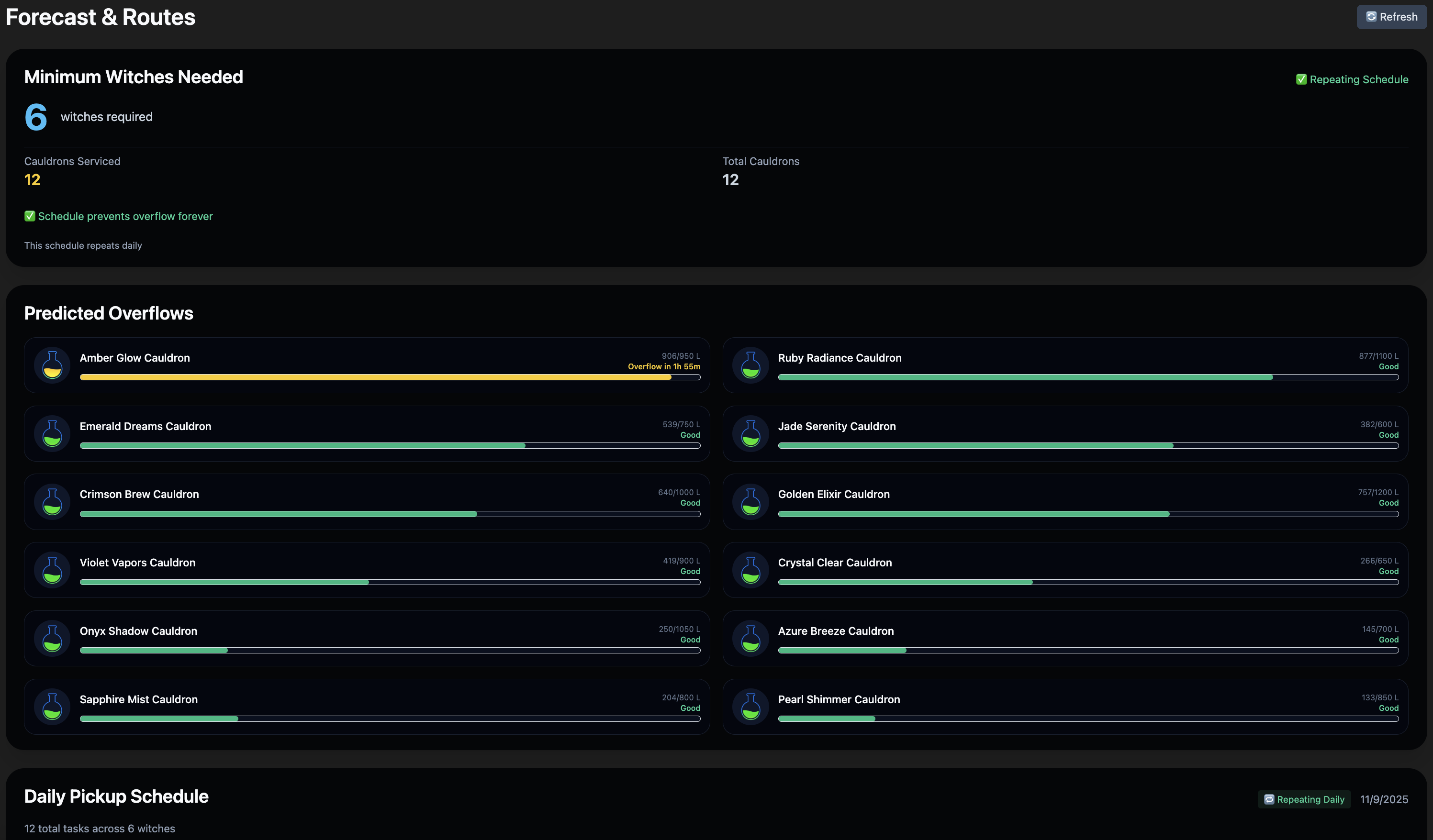
Forecast page
-
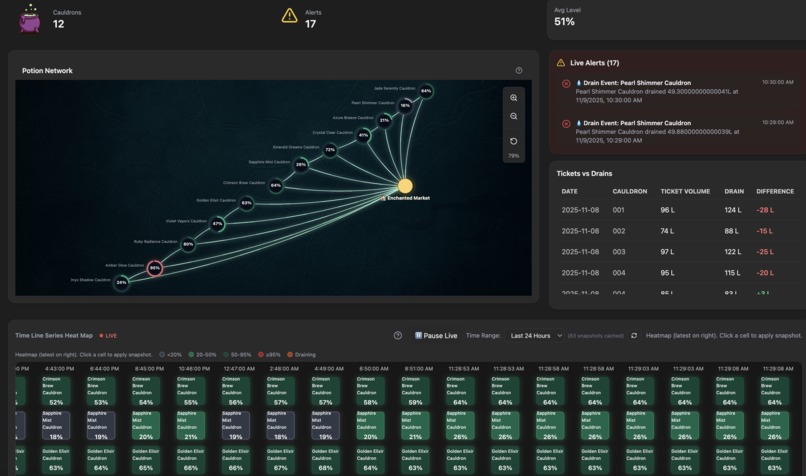
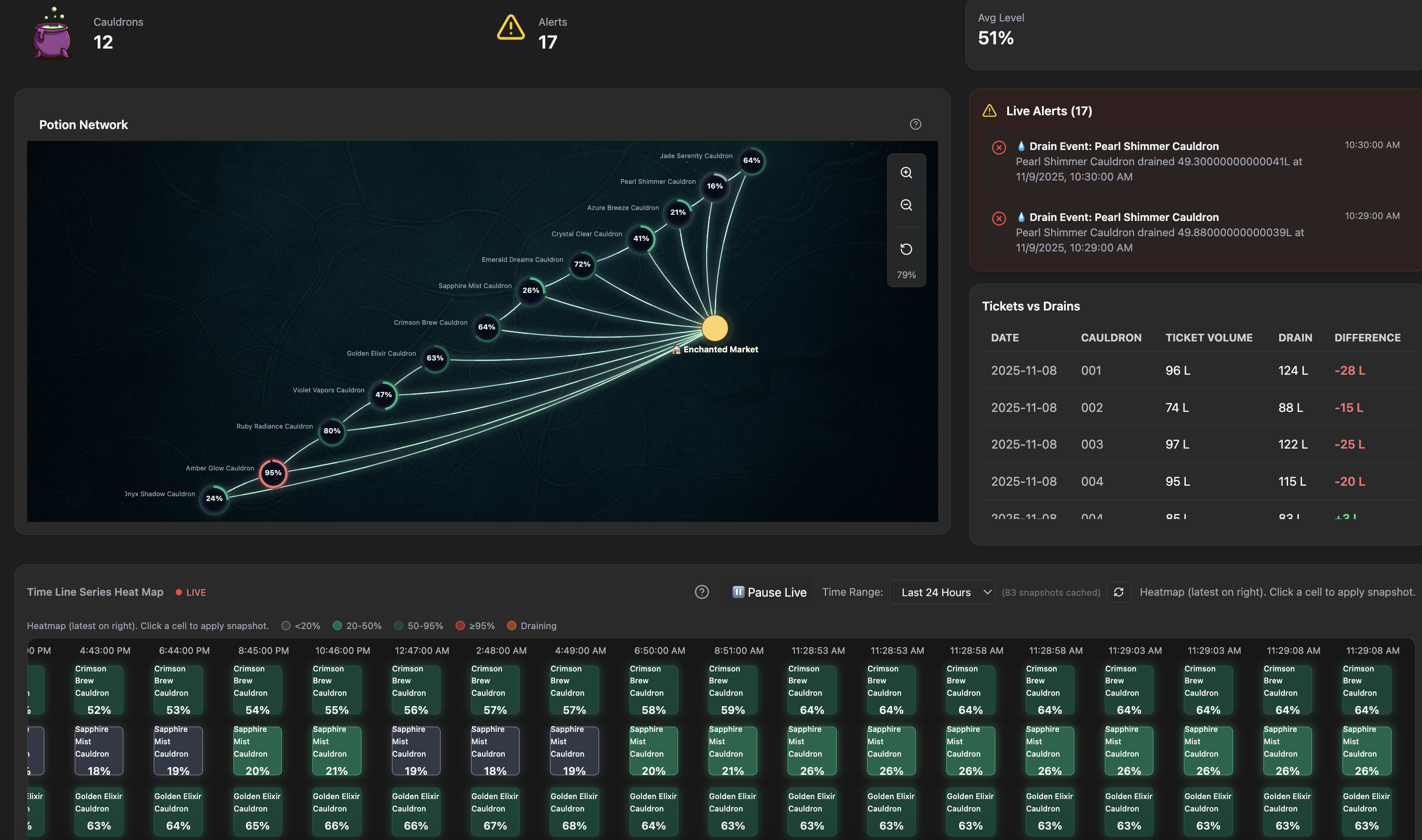
Overview page
-
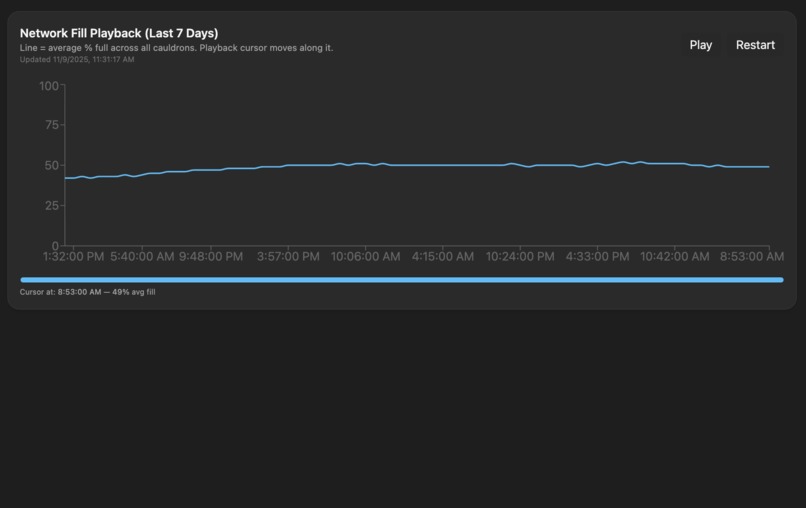
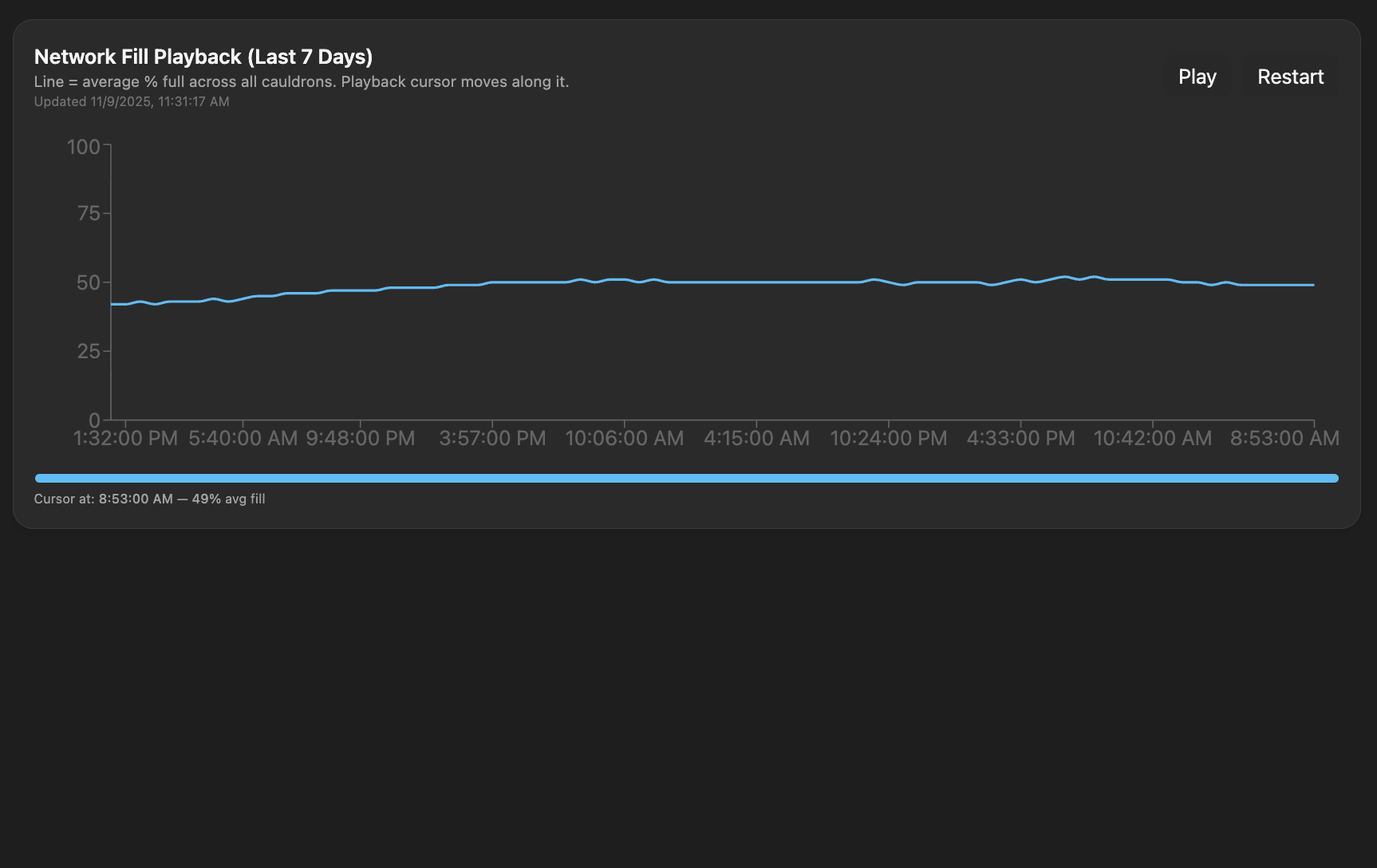
History page
-
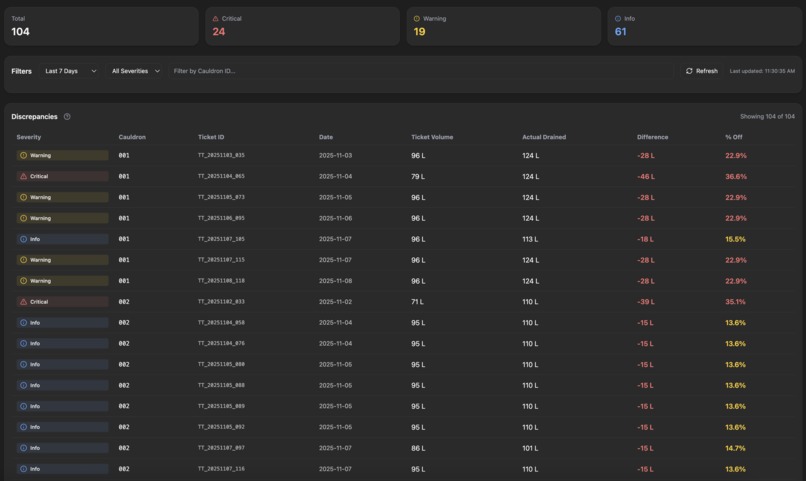
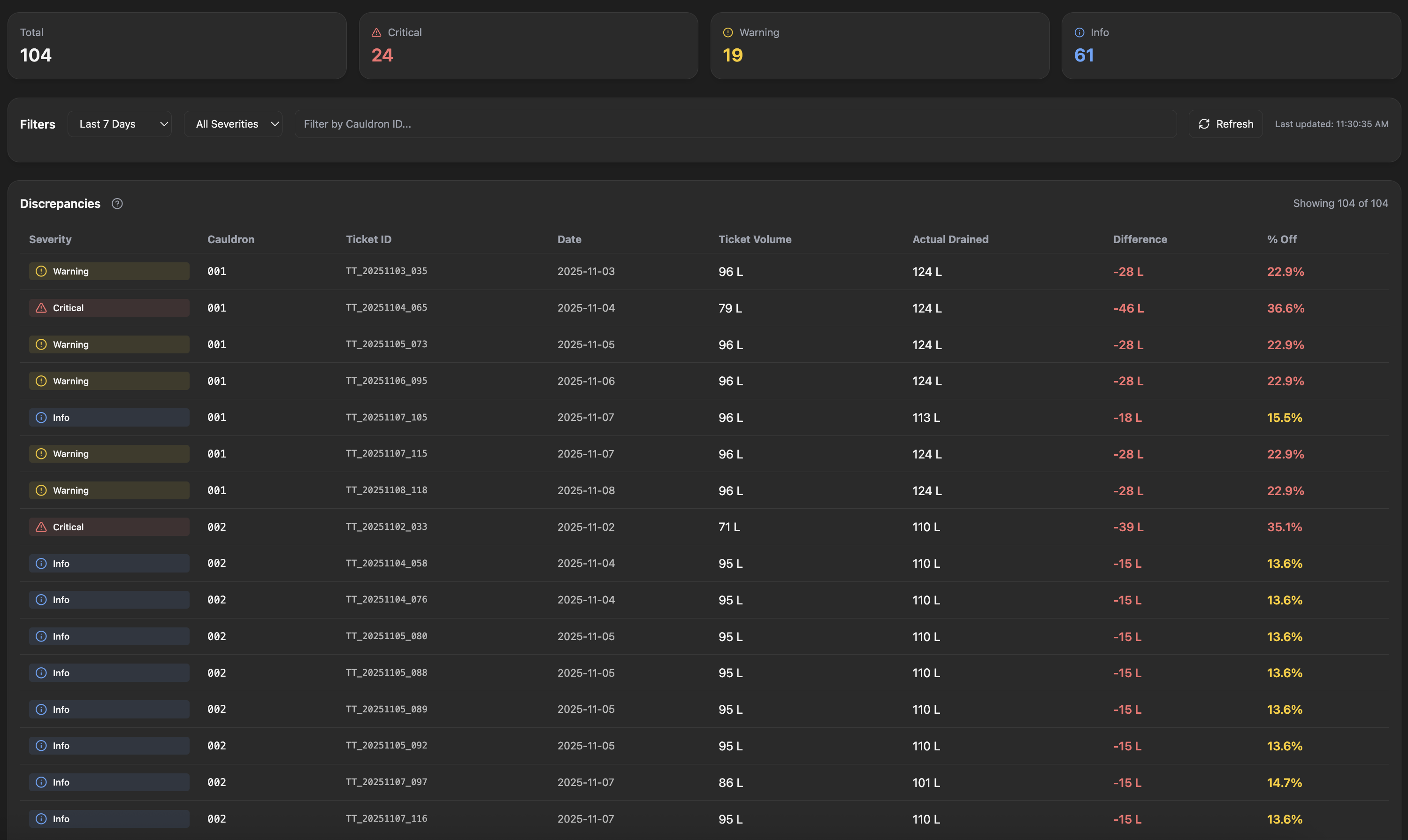
Discrepancies page
-
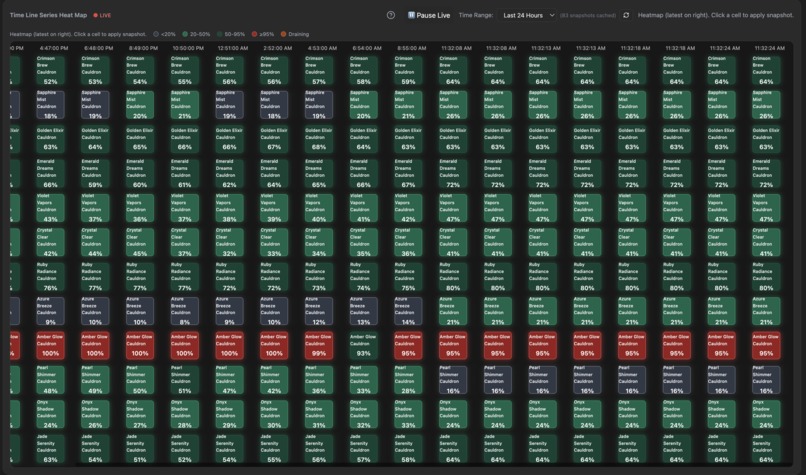
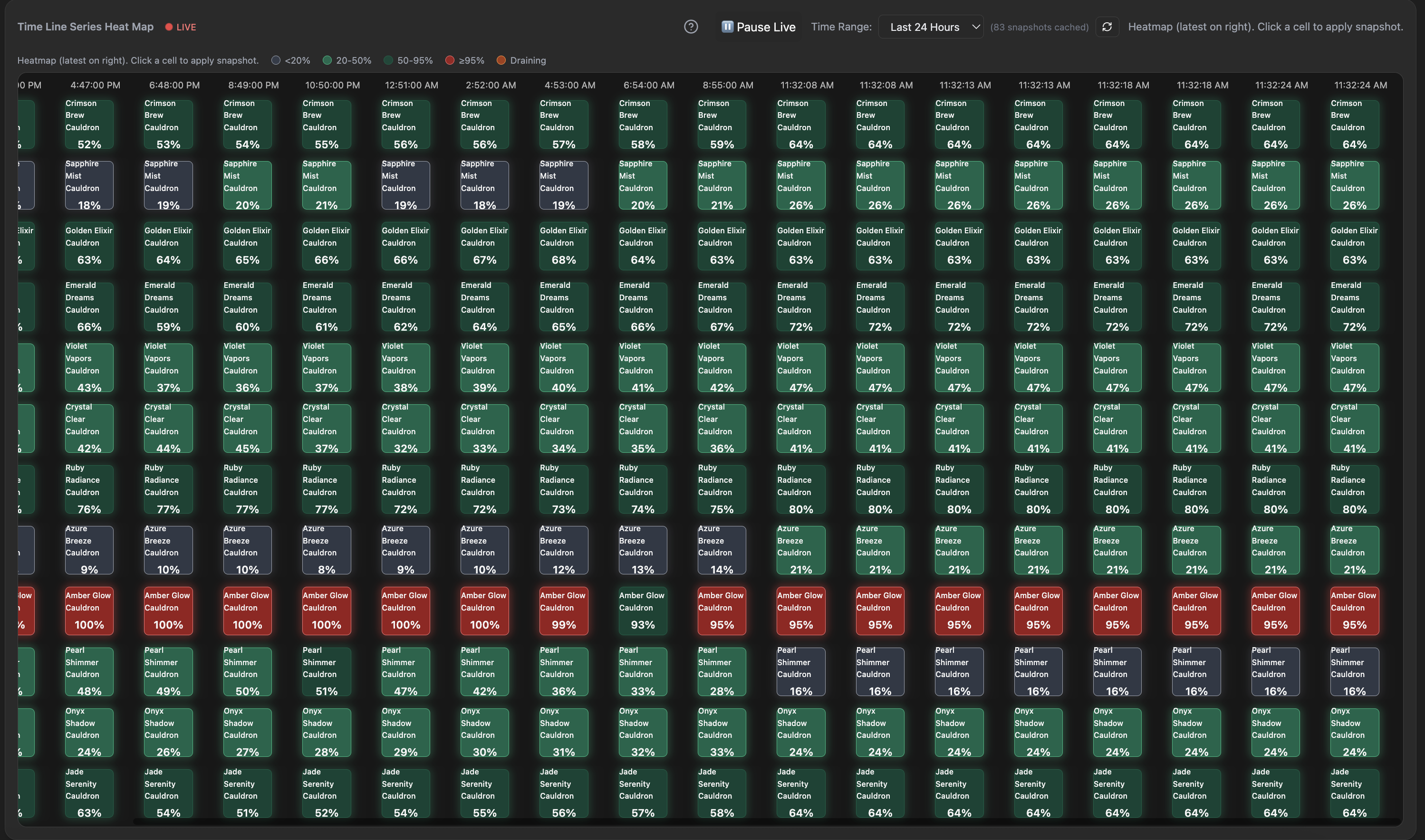
Time Line Series Heat Map
Inspiration
During HackUTD, our team was inspired by the EOG Systems challenge involving cauldrons, courier witches, and potion logistics. Beneath its creative theme lies a real-world challenge that many industries face: unreliable reporting, inefficient workflows, and operational risks caused by human error or miscommunication. We wanted to design a system that could intelligently verify data, monitor activity, and prevent these inefficiencies before they caused larger problems. This idea became Cauldron-FlowGuard AI, a predictive monitoring and optimization platform for transparent, reliable operations.
What it does
Cauldron-FlowGuard AI continuously monitors cauldron levels, ticket reports, and courier activities to verify that the reported potion volumes match actual drained amounts. When the system detects unusual differences, it flags those discrepancies for review and ranks them by severity. Beyond detection, it also calculates optimized courier routes and schedules, ensuring that no cauldron overflows and that resources are used efficiently.
The main dashboard provides a clear overview of operations, displaying metrics such as total discrepancies, average difference, largest overflow, and greatest loss. Users can instantly identify where issues occur and make informed decisions based on real-time insights.
How we built it
We built Cauldron-FlowGuard AI using Flask, React, and OpenAI’s API. The backend processes cauldron and ticket data from the EOG API to detect anomalies, while OpenAI interprets discrepancies and summarizes risk insights. The React frontend visualizes these results through interactive charts, trend indicators, and optimized courier routes for real-time monitoring.
For the bonus challenge, we implemented a scheduling module that determines the fewest couriers required to manage all cauldrons without overflow. This algorithm accounts for travel times, drain rates, and potion input rates, resulting in efficient coverage of the entire factory network.
Challenges we ran into
One of the most difficult parts of the project was aligning time-based data from different sources. Ticket data and cauldron levels did not always synchronize perfectly, which made accurate verification complex. We also faced the challenge of balancing sensitivity in anomaly detection—ensuring the system caught real issues without producing too many false alarms. Finally, integrating multiple components into a cohesive, stable system within the limited HackUTD timeframe required tight coordination and rapid problem-solving.
Accomplishments that we’re proud of
We are proud to have developed a fully functional prototype that identifies discrepancies in real time and provides actionable insights through a clear, visual interface. This took most of our time. Our system can not only verify reported data but also predict and prevent potential issues by generating optimized schedules. Presenting this project at HackUTD was rewarding because it directly addressed the challenge theme and demonstrated how AI and data analytics can enhance operational integrity.
What we learned
Throughout the project, we learned how to transform a creative concept into a technically grounded, data-driven system. We gained experience with real-time data synchronization, time-series comparison, and the balance between accuracy and interpretability in predictive analytics. We also deepened our understanding of how to design dashboards that communicate insights clearly and effectively under time pressure.
What’s next for Cauldron-FlowGuard AI
Next, we plan to expand Cauldron-FlowGuard AI to handle larger and more complex workflows across different industries. We aim to introduce adaptive learning models that refine anomaly detection over time and add automated alerts for early intervention. In the long term, our goal is to evolve this project into a scalable platform capable of supporting real-world production environments where reliability, efficiency, and transparency are critical.
Built With
- javascript
- openai
- python
- react
- tailwind


Log in or sign up for Devpost to join the conversation.