-
-
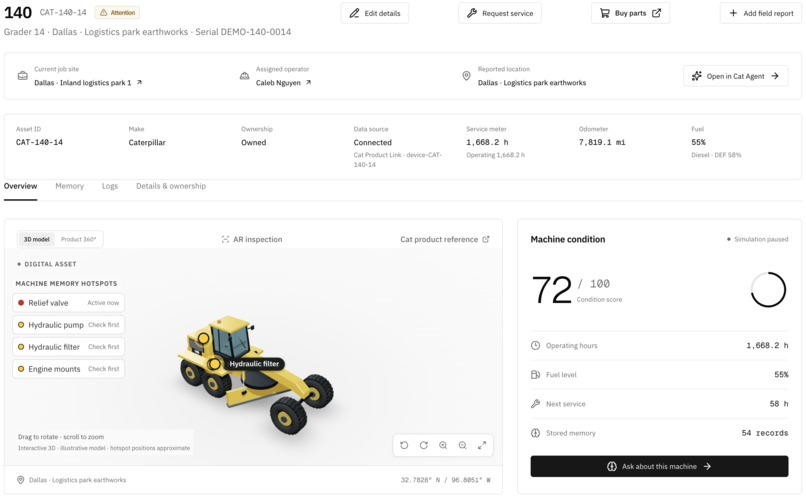
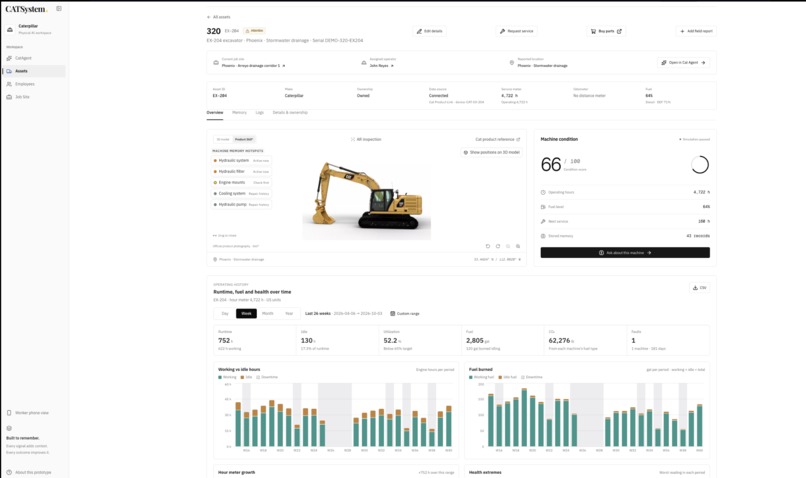
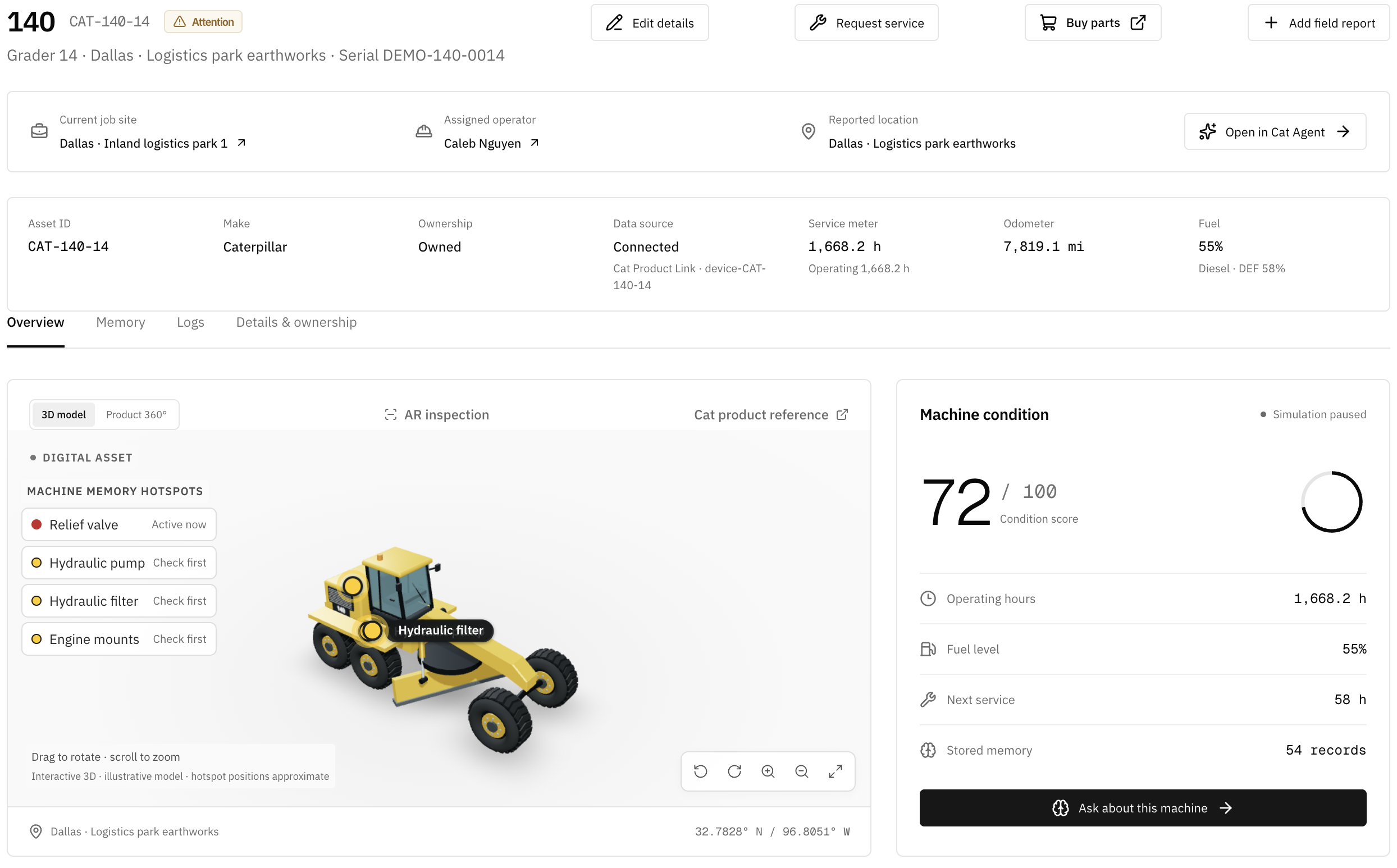
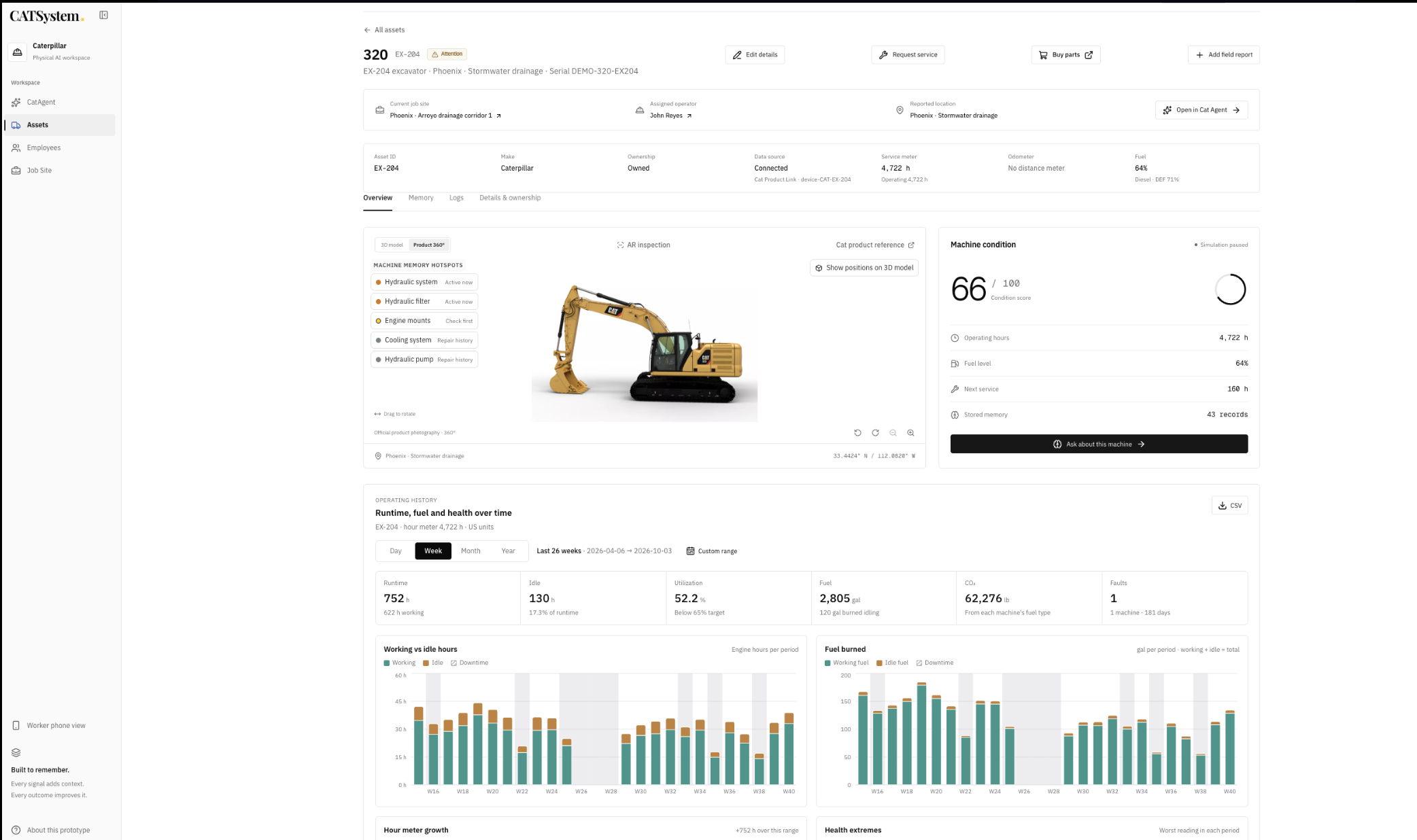
3D Models of Equipment with Maitenance status
-
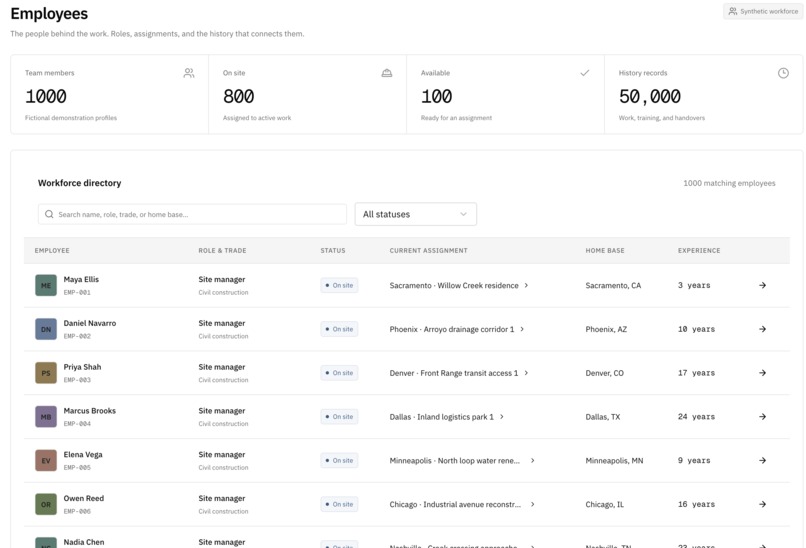
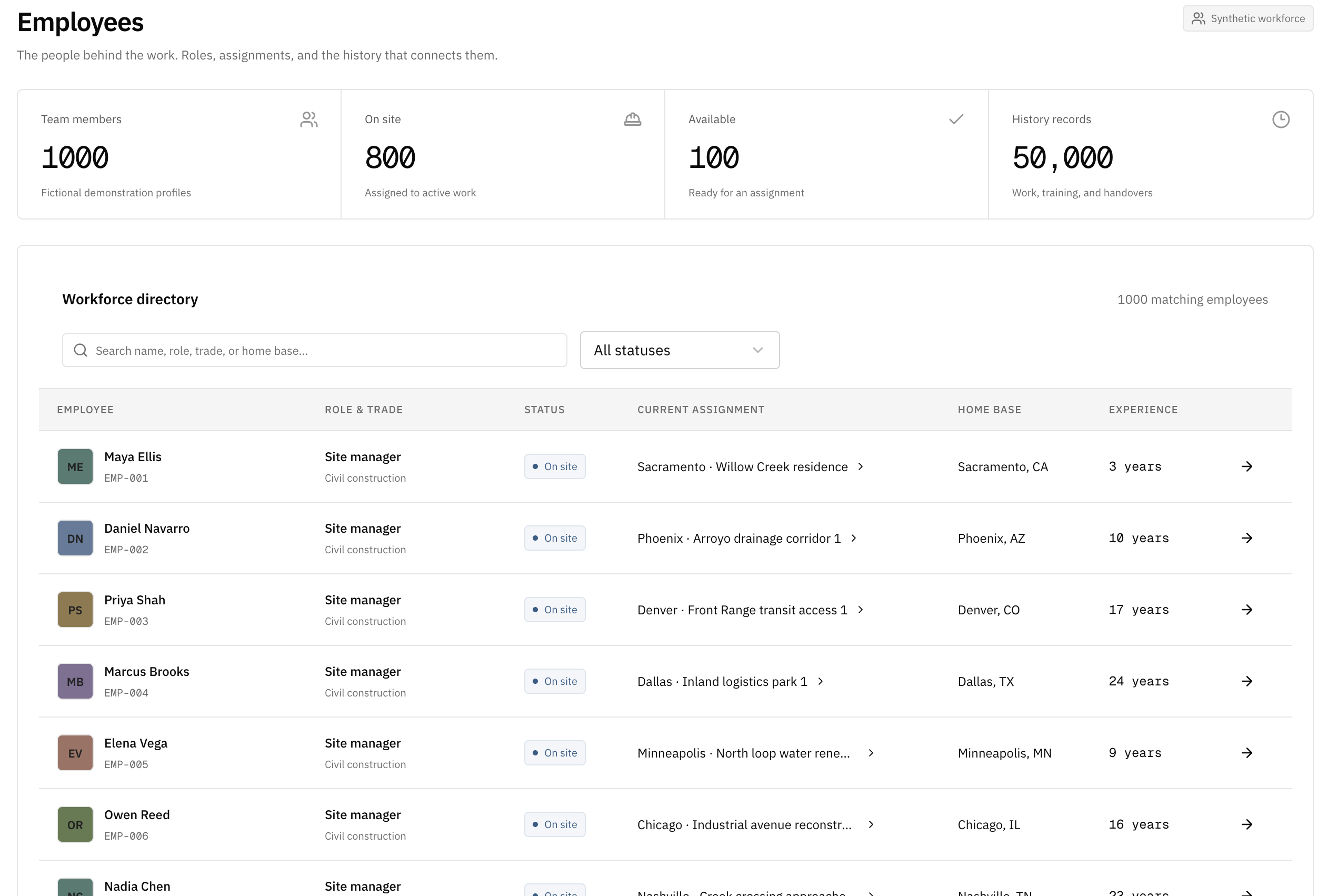
Employee Database
-
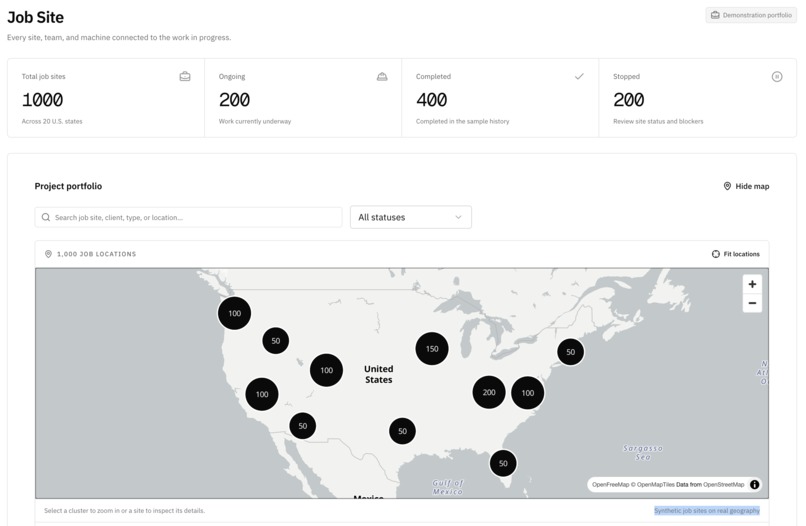
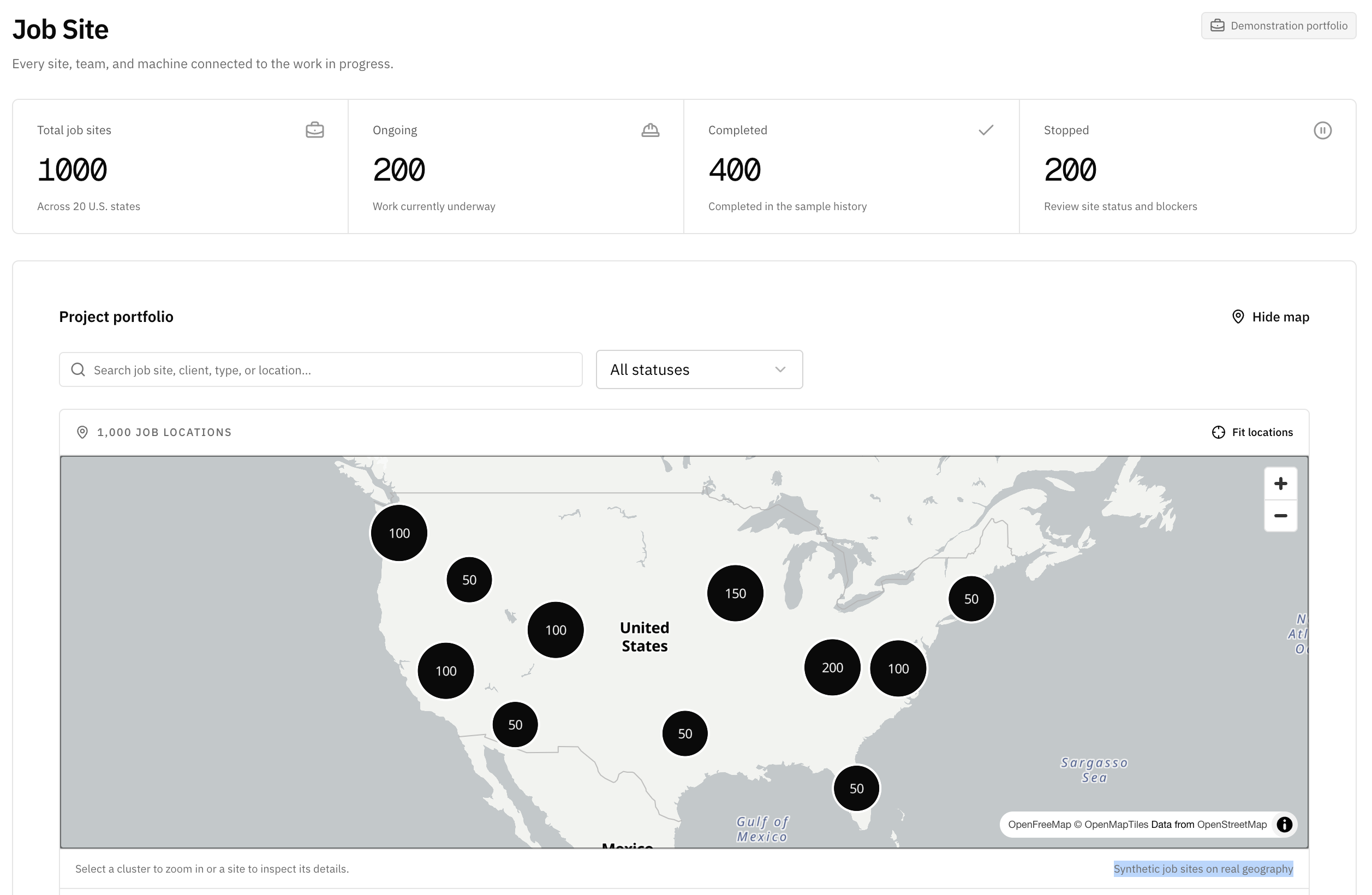
Map Integration
-
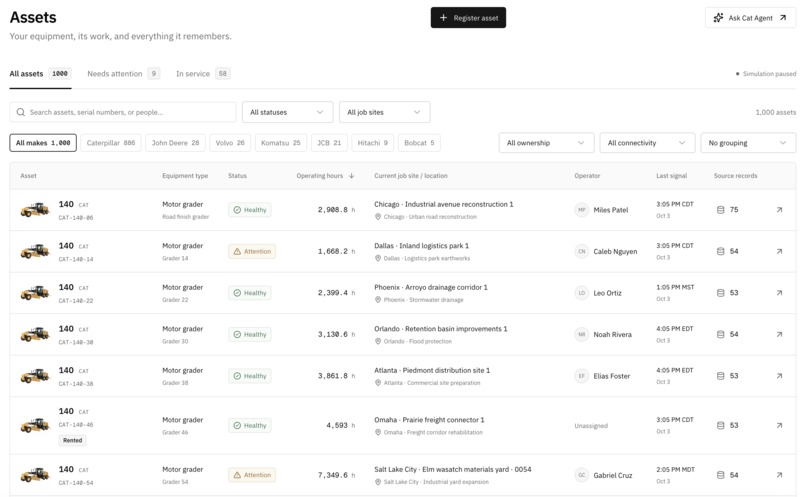
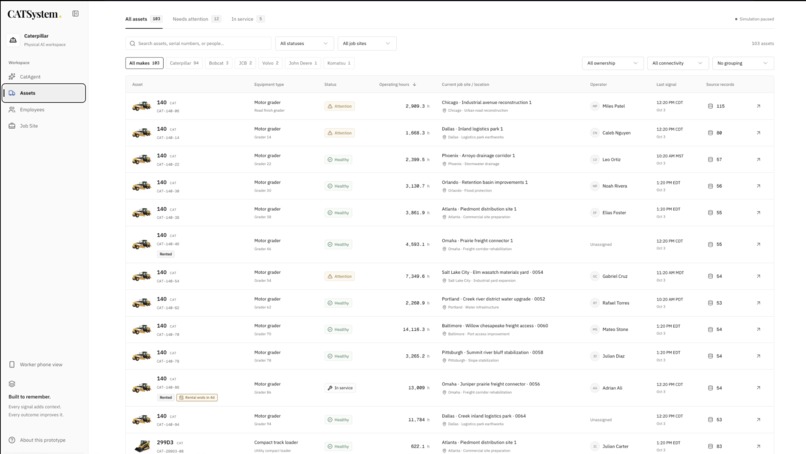
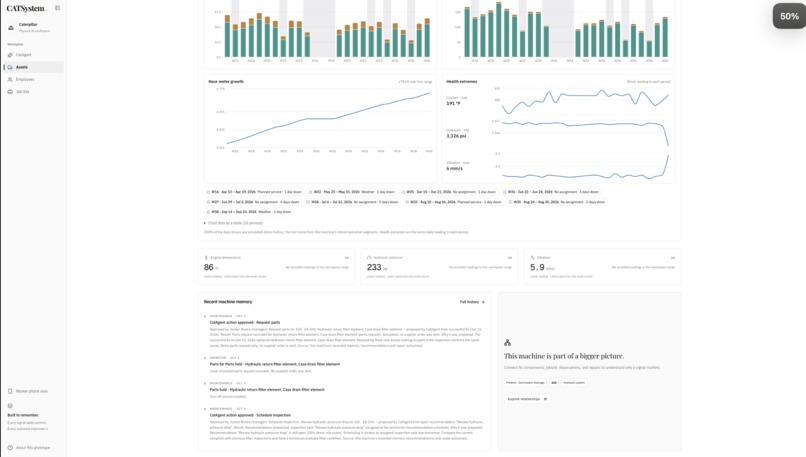
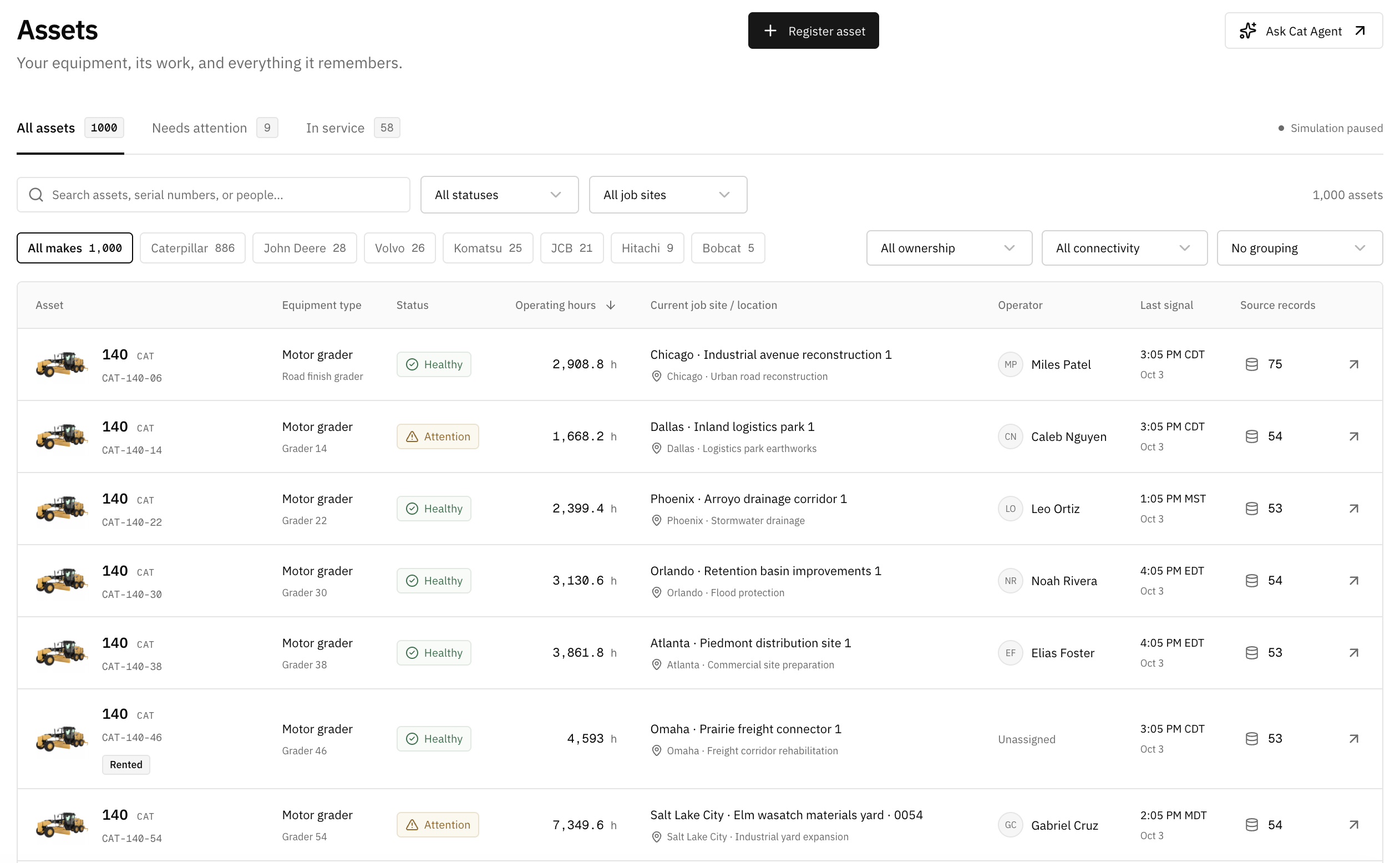
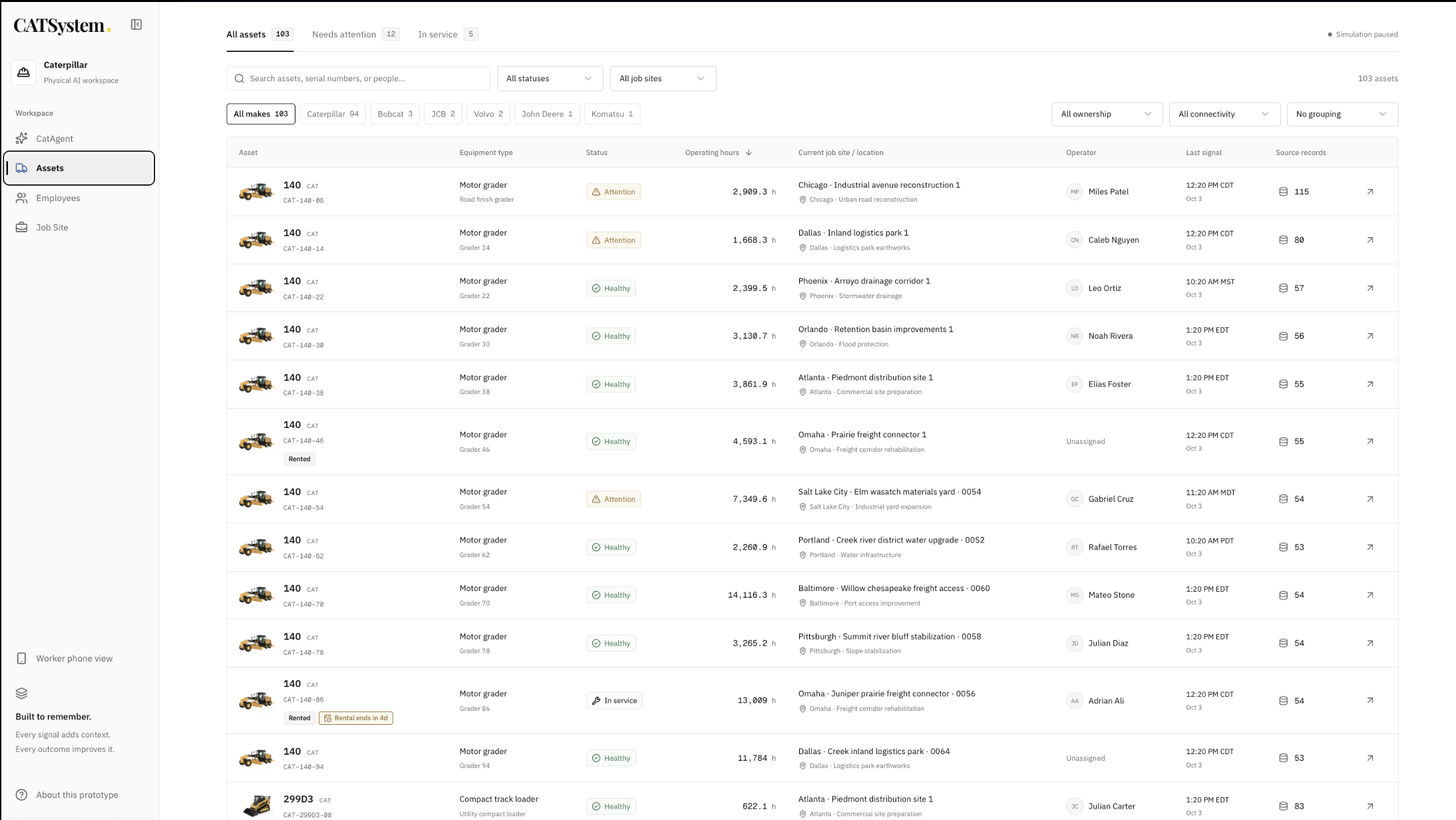
Database of Equipment with Maitenance status
-
-
-
-
-
Inspiration
Heavy equipment generates millions of data points across sensors, service reports, images, and voice logs. For non-technicians, and even for mechanics taking over a new shift, this wall of raw data is overwhelming and difficult to parse. We realized that reading millions of raw logs simply isn't an effective way to track machine health. We were inspired to bridge this gap by creating a system that translates complex, multi-modal telemetry into an accessible, human-readable format, ensuring that critical context is never lost in translation.
What it does
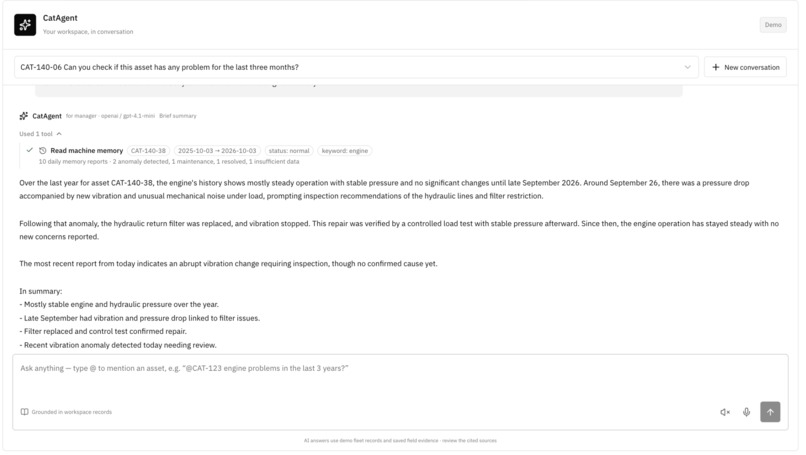
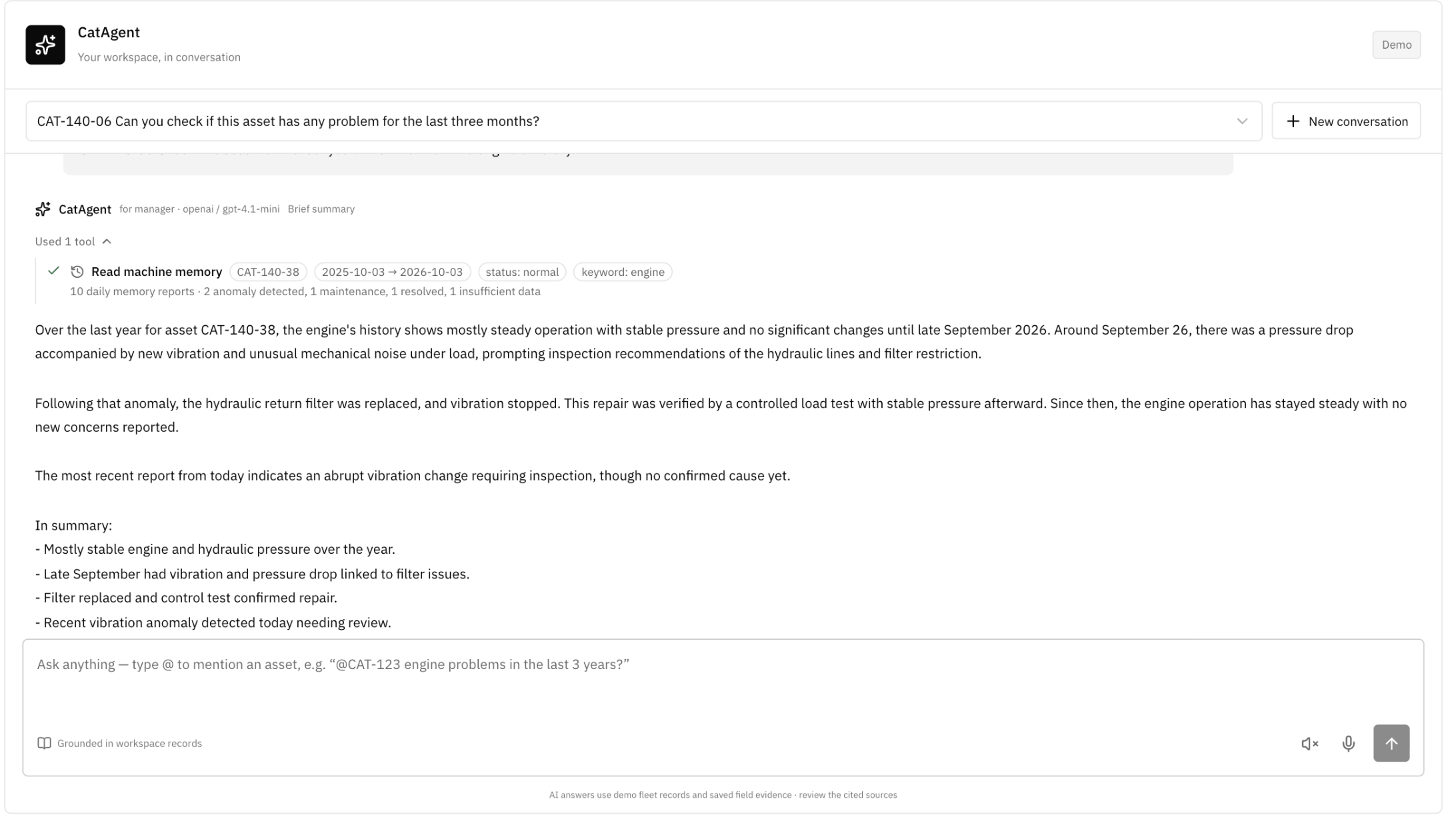
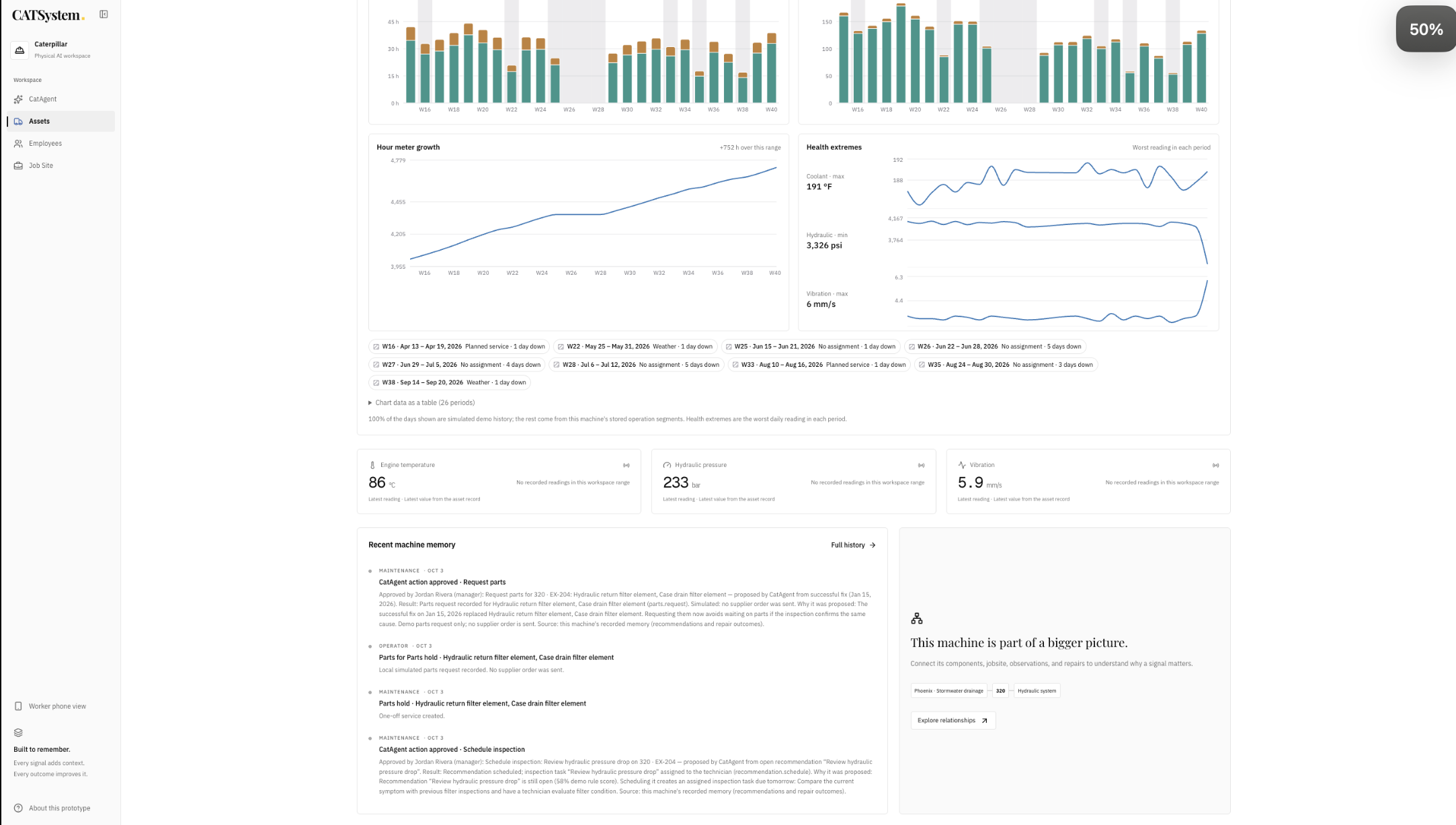
CATSystem is an investigation and shift-handover platform that transforms complex sensor, image, and voice data into clear, natural-language daily, weekly, and monthly "memories." By acting as an intelligent bridge between hard fleet telemetry and human context, CATSystem synthesizes fragmented data into a continuous, searchable storyline. This empowers everyone from field technicians to product managers to easily understand a machine's status, track its historical health, and make evidence-backed decisions without ever needing to look at a raw log.
How we built it
We looked deeply into Caterpillar's robust infrastructure and were heavily inspired by their recent integration of AI into their technologies. Building on that inspiration, we designed CATSystem around an intelligent agent pipeline that acts on top of traditional telemetry. We built a continuous memory engine that ingests diverse data sources and synthesizes them into temporal snapshots. The frontend was designed as a diagnostic explorer with a deterministic evidence planner, ensuring that the natural language summaries our agent generates are strictly bounded by frozen, verifiable machine metrics.
Challenges we ran into
As a collaborative team, we faced several major hurdles during development:
- Merge Conflicts: With multiple team members working across the frontend and backend simultaneously, version control became a headache. We spent hours resolving complex merge conflicts when trying to integrate our data pipelines with the user interface.
- Feature Selection: Coming up with good features was surprisingly difficult. We had to ruthlessly prioritize and constantly ask ourselves if a feature actually made the data easier to understand for a non-technician, or if it just added unnecessary clutter.
- Database Implementation: Implementing the database architecture to efficiently store, link, and retrieve both the raw telemetry metrics and the generated natural-language "memories" at scale proved to be our biggest architectural challenge.
Accomplishments that we're proud of
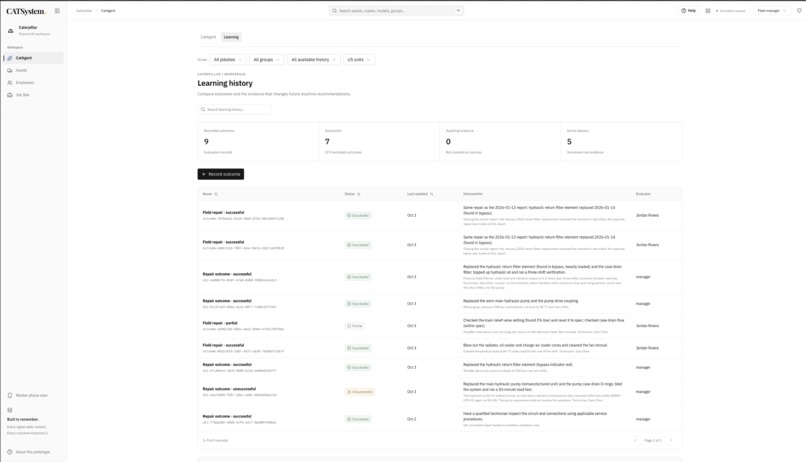
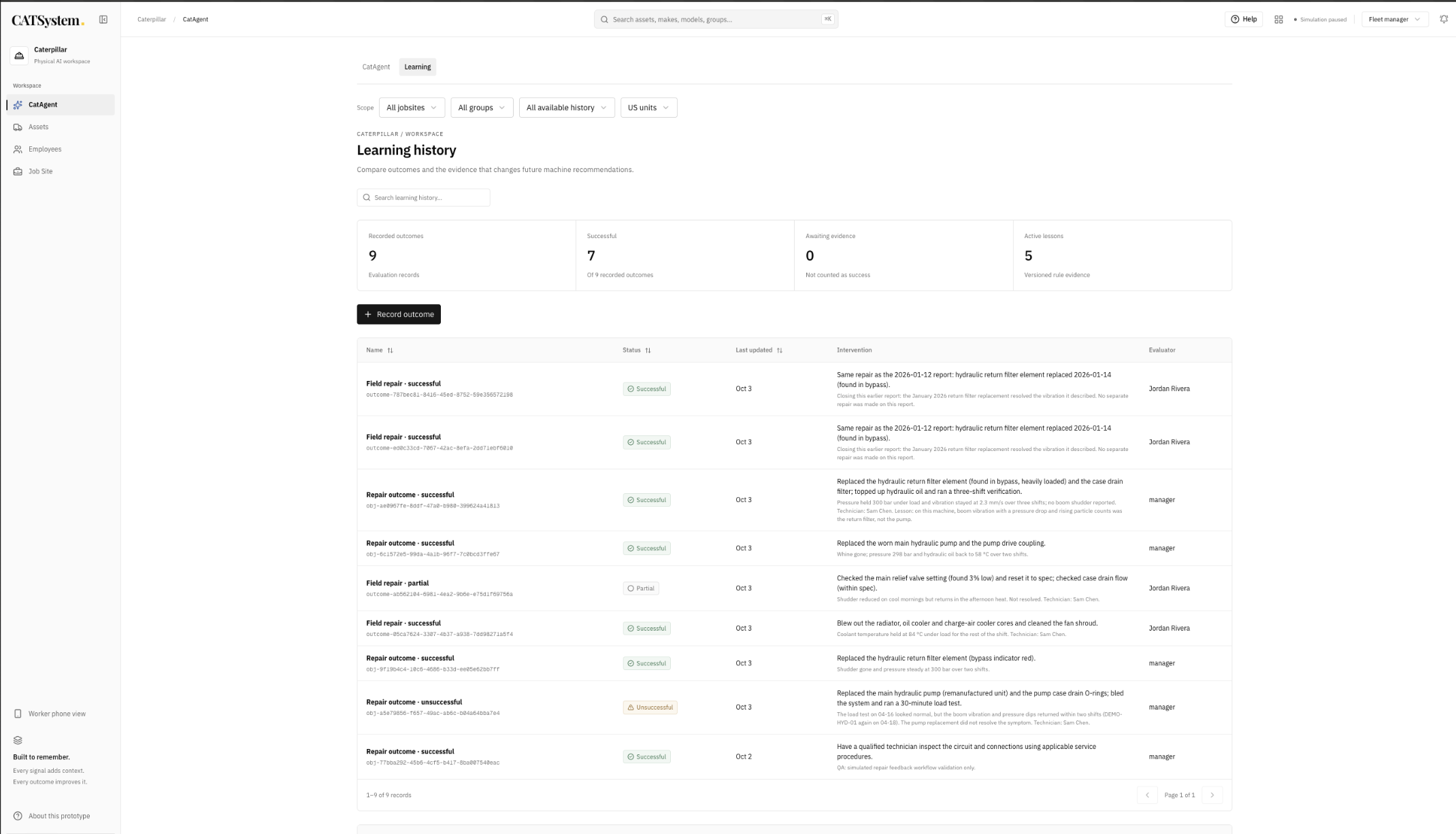
We are incredibly proud of building a functional pipeline that abstracts away the complexity of machine logs without losing the strict evidence boundaries necessary for actual mechanical diagnostics. Successfully implementing the "append-only reasoning records"—which preserve a technician's hypotheses and missing evidence across shift handovers—feels like a massive step forward for industrial workflows.
What we learned
We learned that implementing AI in industrial contexts isn't just about generating text; it's about traceability and trust. We learned how to design a system where AI outputs are directly tethered to hard evidence. On a technical level, we also gained a lot of practical experience in database schema design and team communication to mitigate Git conflicts.
What's next for CATSystem
We plan to expand CATSystem by introducing real-time evidence alerts, pinging technicians the moment missing telemetry hits the system. We also want to implement automated worksheet pre-filling by parsing unstructured chat logs from the field, and explore deeper integrations with existing manufacturer bulletins to dynamically establish baseline controls for machine diagnostics.
Built With
- antigravity
- chatgpt
- claude
- codex
- css
- gemini
- html
- javascript
- perplexity
- python
- react
- sql
- typescript


Log in or sign up for Devpost to join the conversation.