-
-
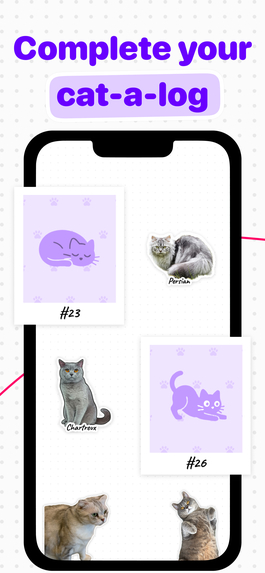
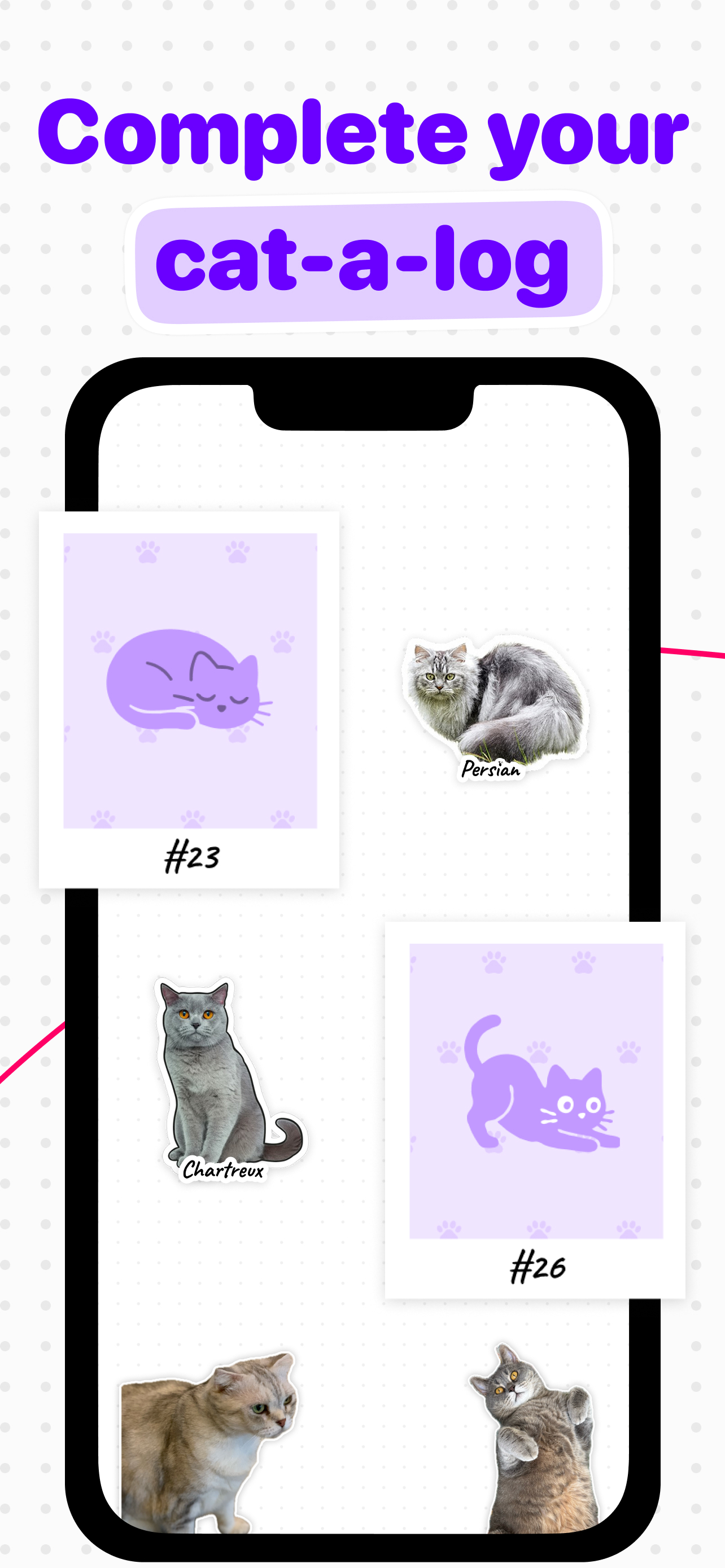
Complete your cat-a-log
-
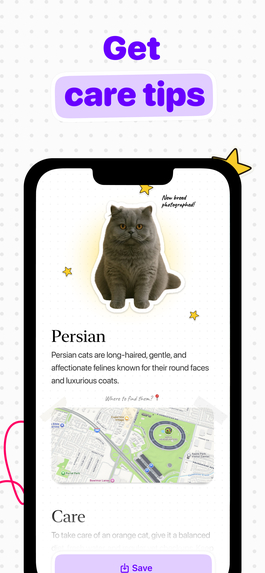
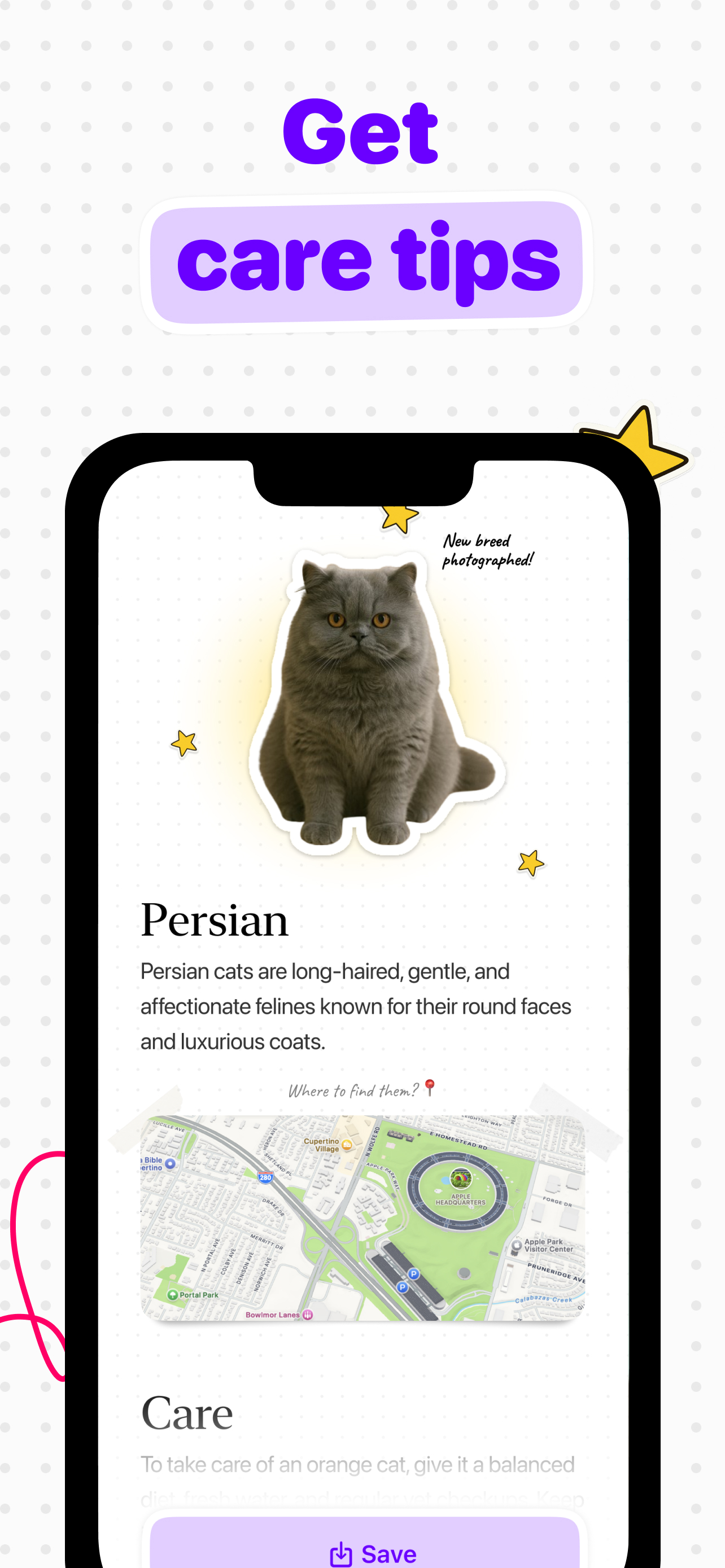
Get care tips
-
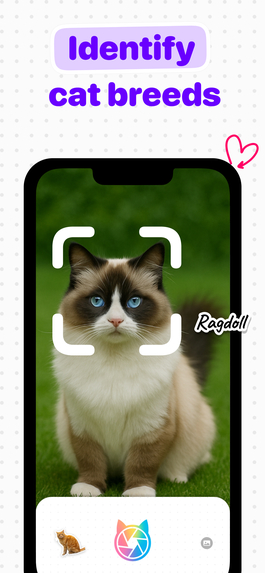
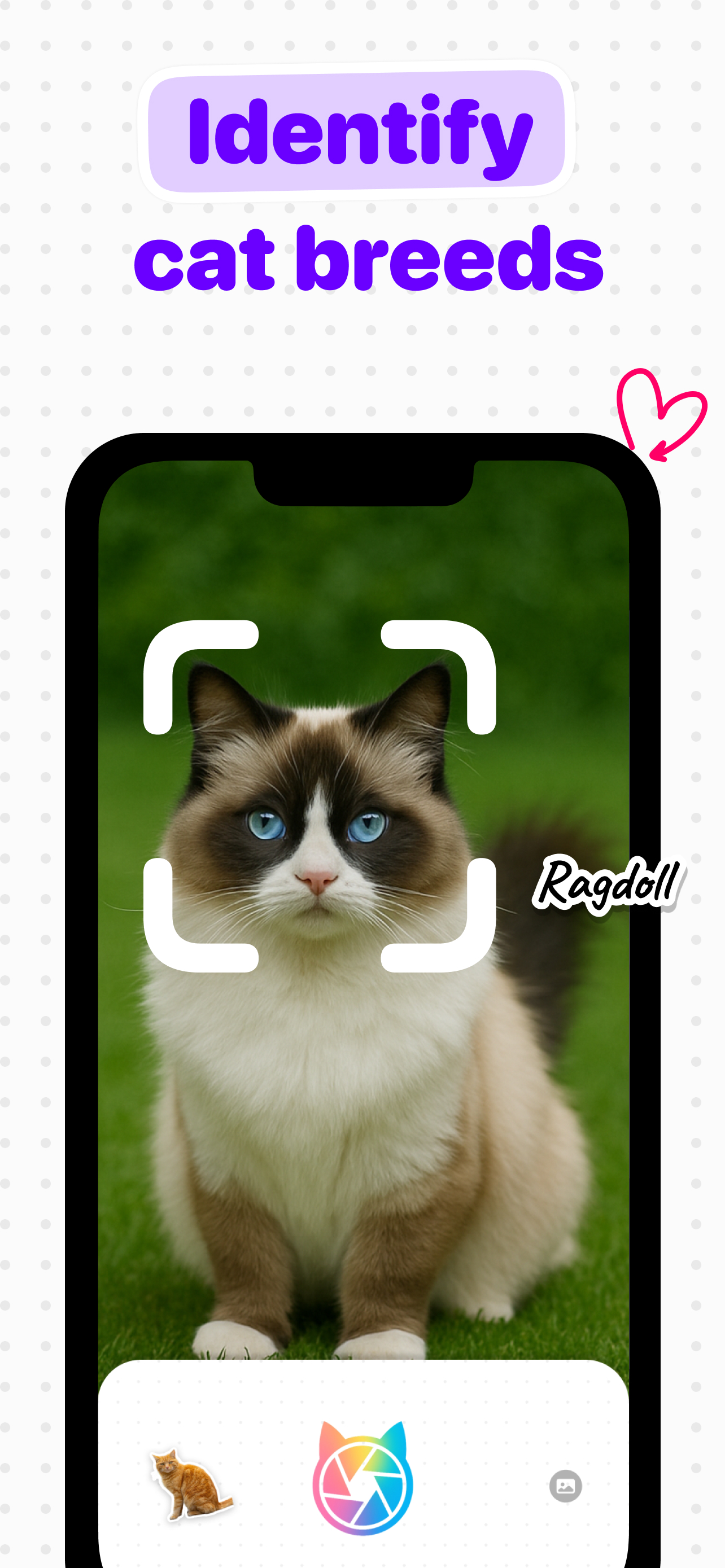
Identify cat breeds
-
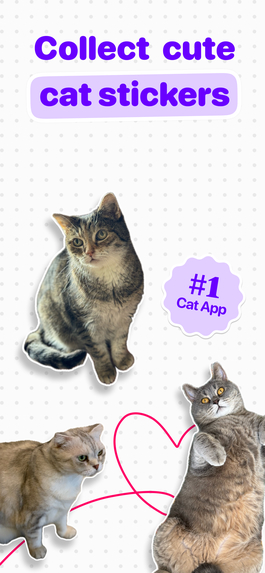
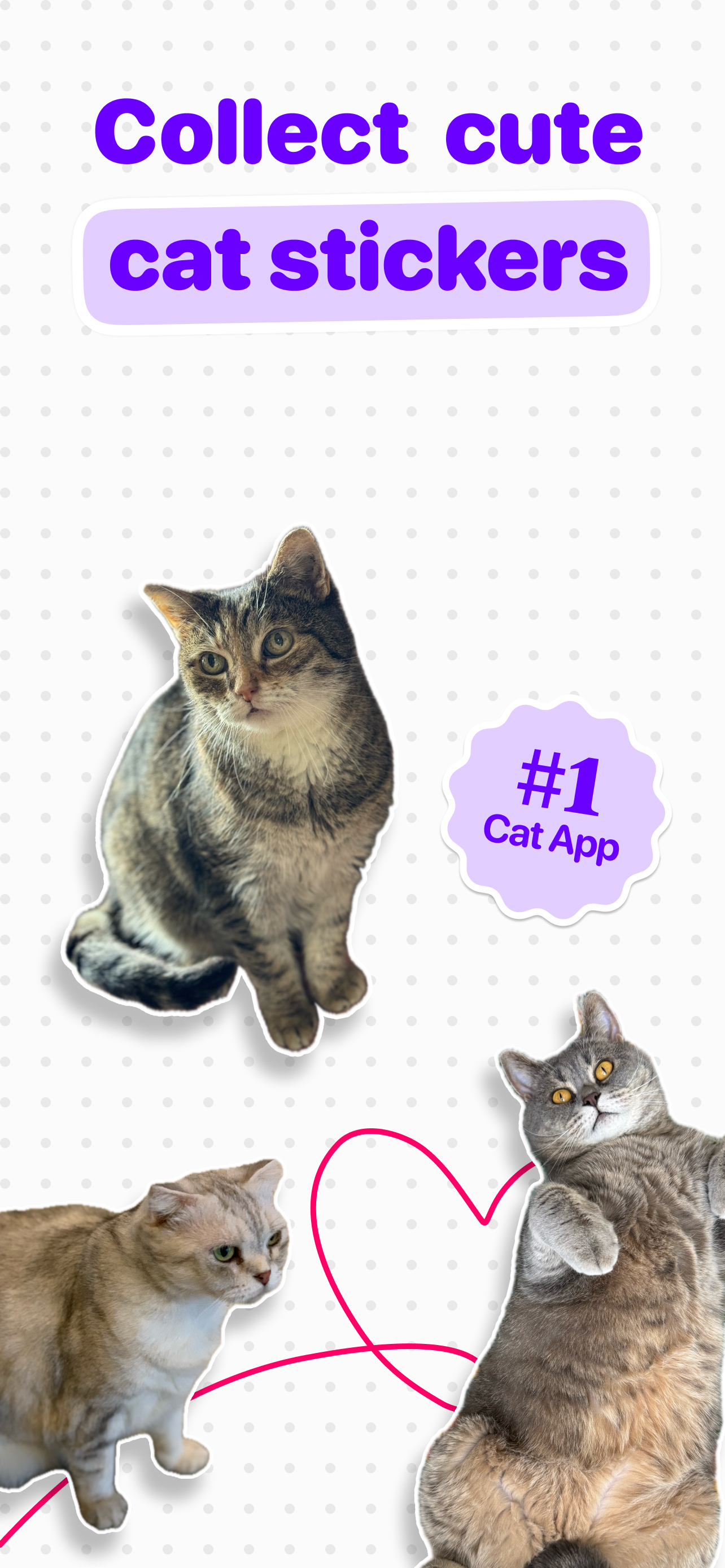
Collect cute cat stickers
Inspiration
As a kid, I loved collecting sticker albums: the thrill of finding a new one, the satisfaction of completing a page, the joy of sharing them with friends. Years later, I noticed cats had their own special corner of the internet, from memes to entire communities dedicated to them. I wanted to capture that same sense of playful discovery and delight: spotting a cat in the wild, collecting it like a sticker, and making the experience both educational and shareable.
What I Learned
Building Catsnap taught me a lot, both technically and creatively:
- How to integrate computer vision + AI for breed identification.
- Designing interfaces that feel delightful and gamified, rather than purely functional.
- The importance of community and shareability: people love sending their cat stickers to friends.
- Balancing fun (stickers, collection mechanics) with usefulness (cat breed encyclopedia + care tips).
Challenges
Every project has hurdles. Here were the main ones I faced:
- Accuracy vs. delight: I didn’t want Catsnap to feel like a dry “identifier app,” so I leaned into playful sticker visuals to balance the AI’s limitations.
- Sticker design: Making stickers feel as fun as the childhood albums that inspired me took more iteration than expected.
- Scoping features: It was tempting to add everything (social feeds, achievements, etc.), but I had to stay focused on a minimum delightful product.
How I Built It
Catsnap was built with a stack designed for fast iteration:
- 📱 Frontend: SwiftUI for a smooth, native iOS experience
- 🧠 AI/ML: VisionKit + OpenAI
- ☁️ Backend: AIProxy for key protection
- 💸 Monetization: RevenueCat, of course
Built With
- aiproxy
- openai
- swiftdata
- swiftui


Log in or sign up for Devpost to join the conversation.