-
-

Initial Interface
-
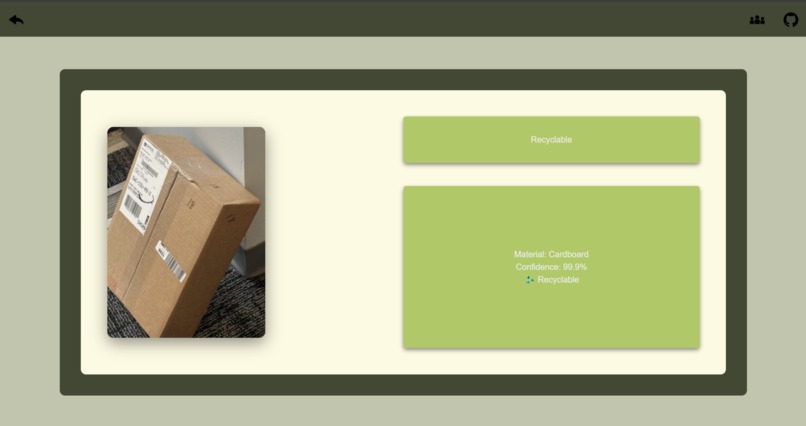
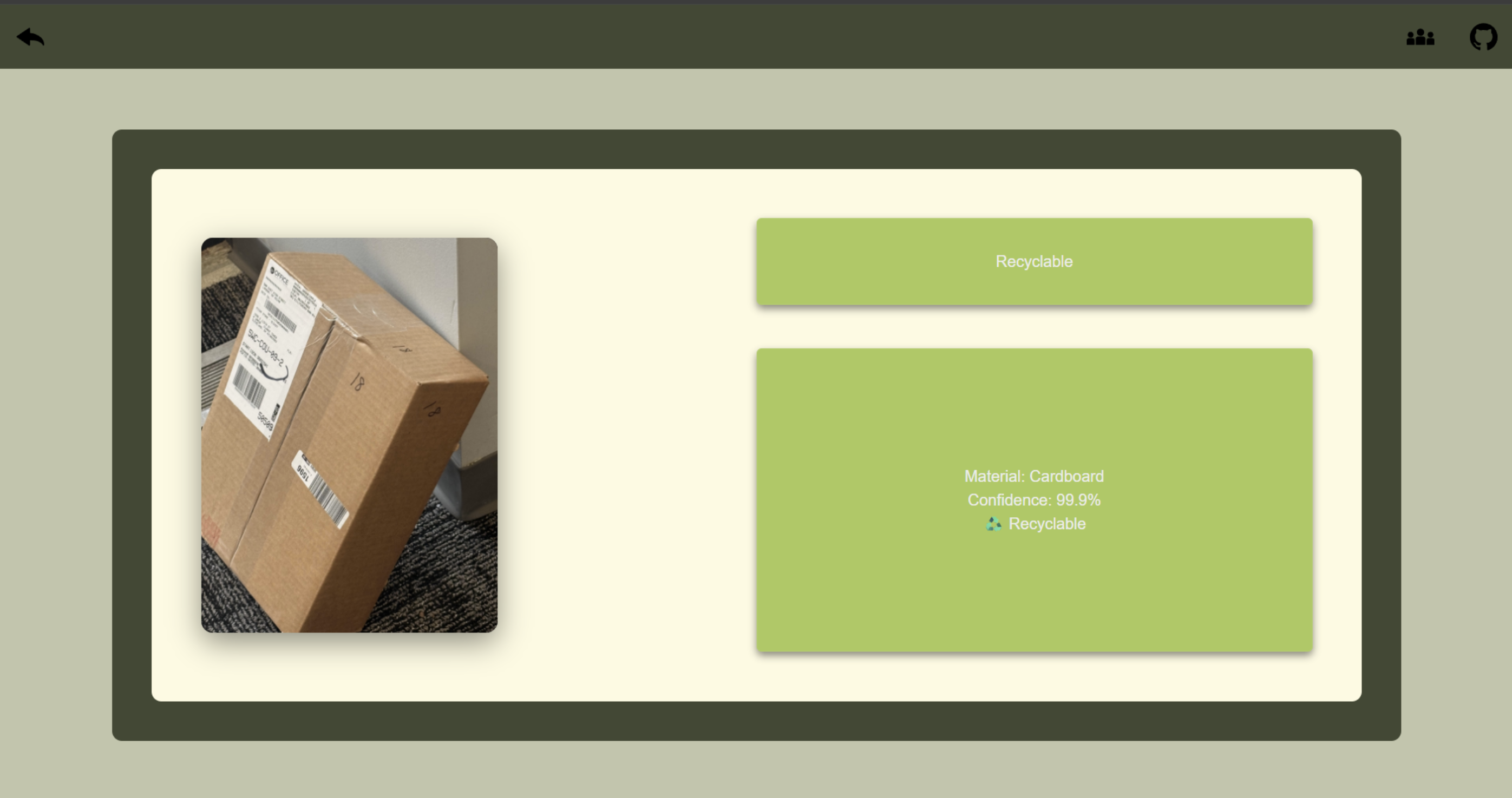
Testing Carboard
-
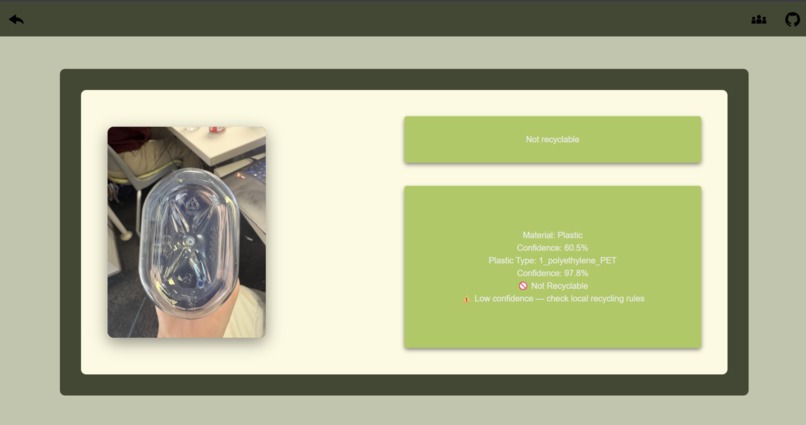
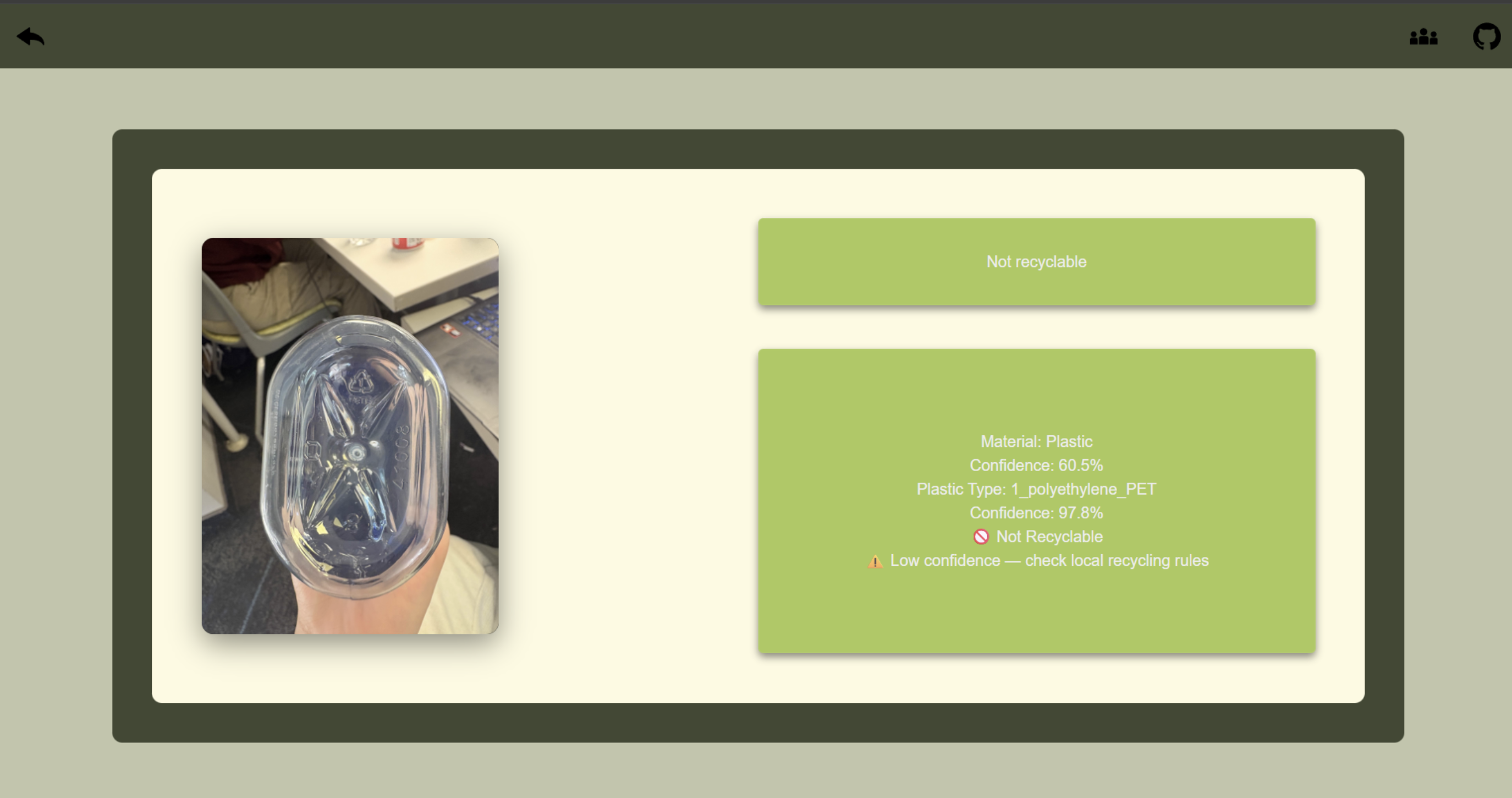
If the material is plastic, it will give you what type of plastic it is.
-
Our Team Logo

Inspiration
In 2021, 85 percent of all discarded plastic in the U.S. ended up in landfills. Every day, people throw away plastic bottles, glass bottles, cans, etc, not because they don’t care about the environment, but because identifying recyclable materials and understanding local recycling rules is confusing and inconsistent. When plastics are misidentified or recycled incorrectly, good intentions often end in contamination and waste. To meaningfully reduce plastic pollution, people need clear, accurate guidance at the exact moment a decision is made. IsItRecyclable aims to do exactly that through the use of computer vision and our own AI model to identify plastic and other recyclable types from a single photo. By combining material detection with location specific recycled laws, we provide clear, actionable guidance on whether an item can be recycled.
What it does
IsItRecyclable uses AI to tell you if your item is recyclable, and it tells you if the item you uploaded is able to be recycled in your zip code.
Key Features:
- Image recognition that identifies the material of the uploaded items.
- Sorting capability for all seven types of plastic bottle identification codes (PET, HDPE, PVC, LDPE, PP, PS, Other).
- Zip code based recycling that tells you exactly what's accepted in your area.
- Instant yes/no recyclability determination!
- User friendly interface for quick photo uploads and results.
How we built it
Frontend: We built our frontend using the react framework next.js. Backend: The backend was built using the python library flask. Database: Searched through Kaggle for images and data sets of identification labels and everyday items. We also have a large sum of data on zip codes and what is recyclable in which zip code. Machine Learning: Used TensorFlow and colab to train MLs item classification, separating each of the seven labels and different materials.
Challenges we ran into
We had trouble incorporating both of our machine learning models to our website and connecting it to the front end. One model is meant only for identifying plastic recycling labels, while the other handles all other materials. This means, if a plastic label is accidentally processed by the material model, it will only recognize the material itself and not the specific label. This can cause problems, since recycling rules vary by location and not all types of plastic are accepted everywhere. We also had overlooked that image uploads should be separated by sessions in Flask, so only one person can accurately use the app at a time.
Accomplishments that we're proud of
We are proud of the computer vision models that we created that are able to sort through plastic identification symbols and materials. The instant scanning and comparing happens in just seconds. Our large database of what's recyclable in each zipcode is also extremely impressive! We span across the US, educating people on what materials to collect in their area or even start a new recycling system for waste that can’t be recycled in their area! It’s also easily accessible from all different devices, allowing more people to be exposed to the app.
What we learned
We learned how to train two CNN based machine learning models that can differentiate through different materials. By using tensorflow and feeding it several images similar to ones that people may import, our model is pretty accurate. Additionally, we learned how to include SQL in our coding to sort through large amounts of data and tie everything together. We also learned how to use the react framework next.js and how to connect it to a flask backend in order to connect the database, ML models, and overall app together.
What's next for IsItRecyclable
We would like to include more categories to the app such as food scraps, clothing items, e-waste and many more. In order to make the app more interactive, we are looking to create a virtual cat shop that converts your images and your recycling streaks into points to raise your cats. This will encourage many more people to join, those who aren’t interested in recycling but are into simulations and building.


Log in or sign up for Devpost to join the conversation.