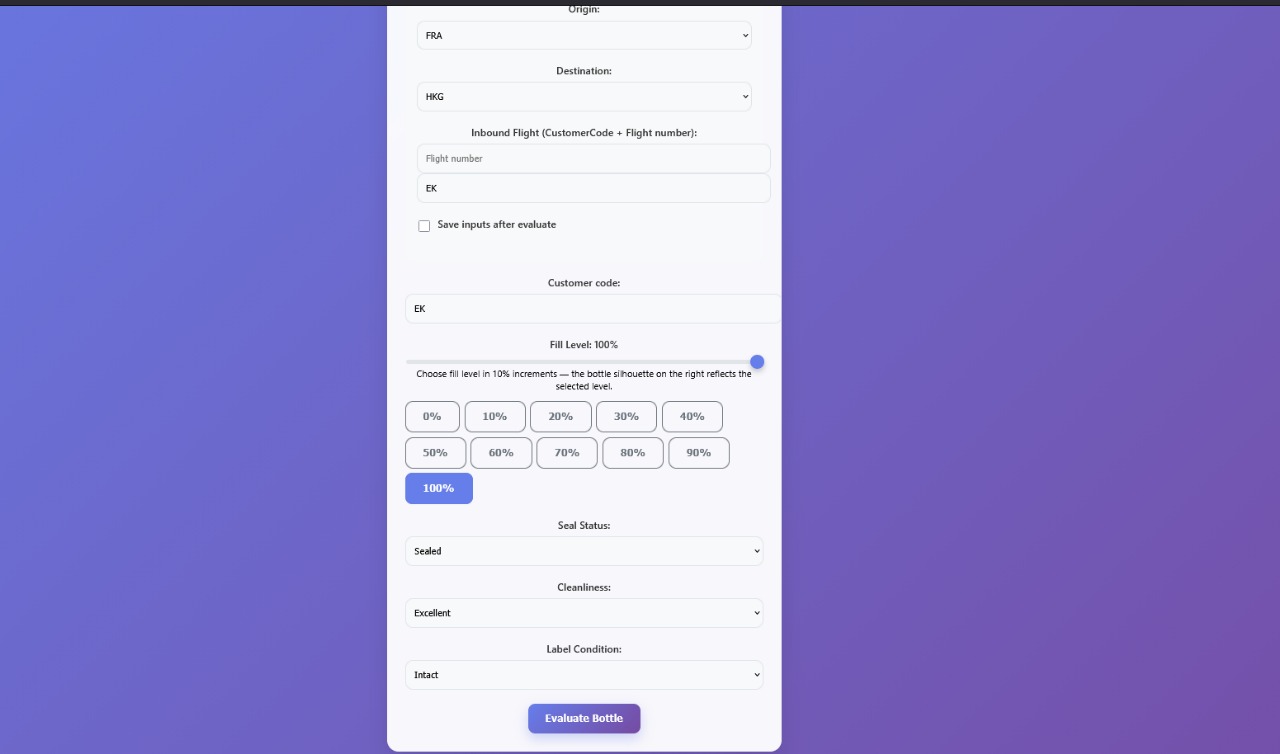
Inspiration We were inspired by the pursuit of continuous process improvement and the practical impact automation can bring to operational workflows. Bringing software-driven decision support to packaging lines is a natural fit for working on measurable efficiency and quality gains.
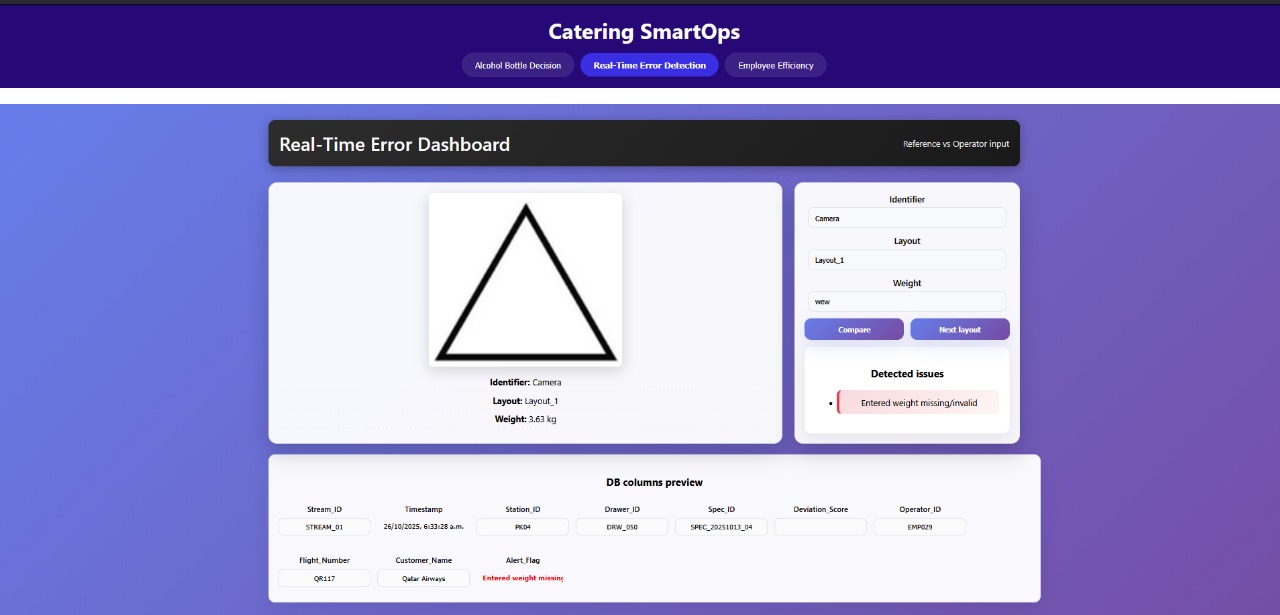
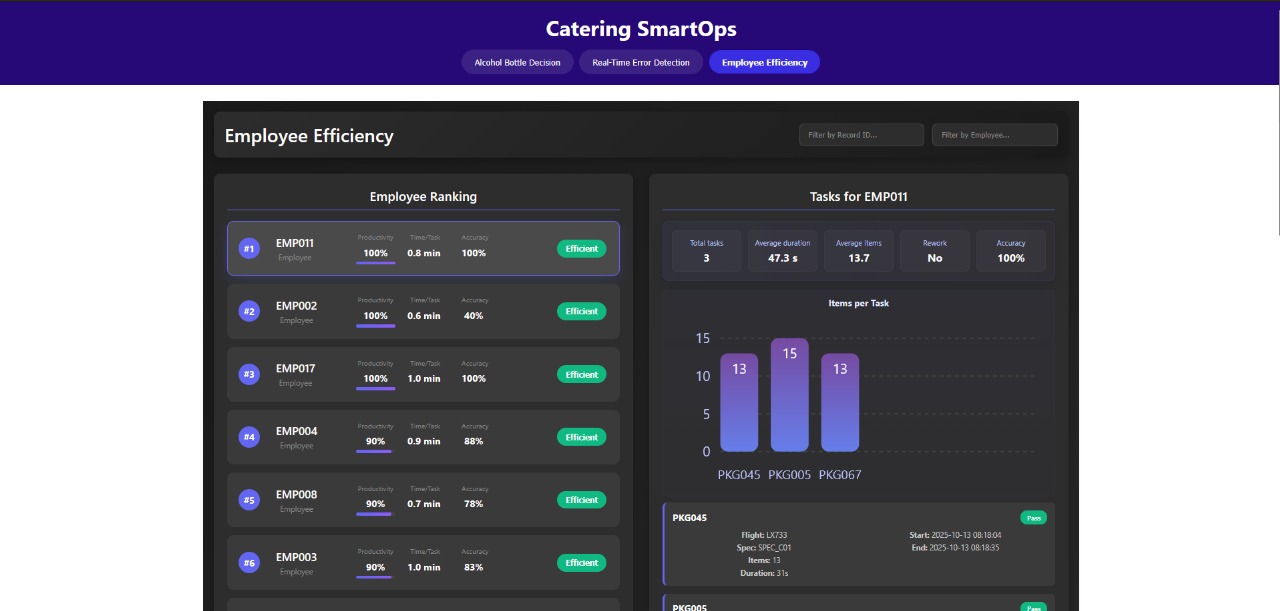
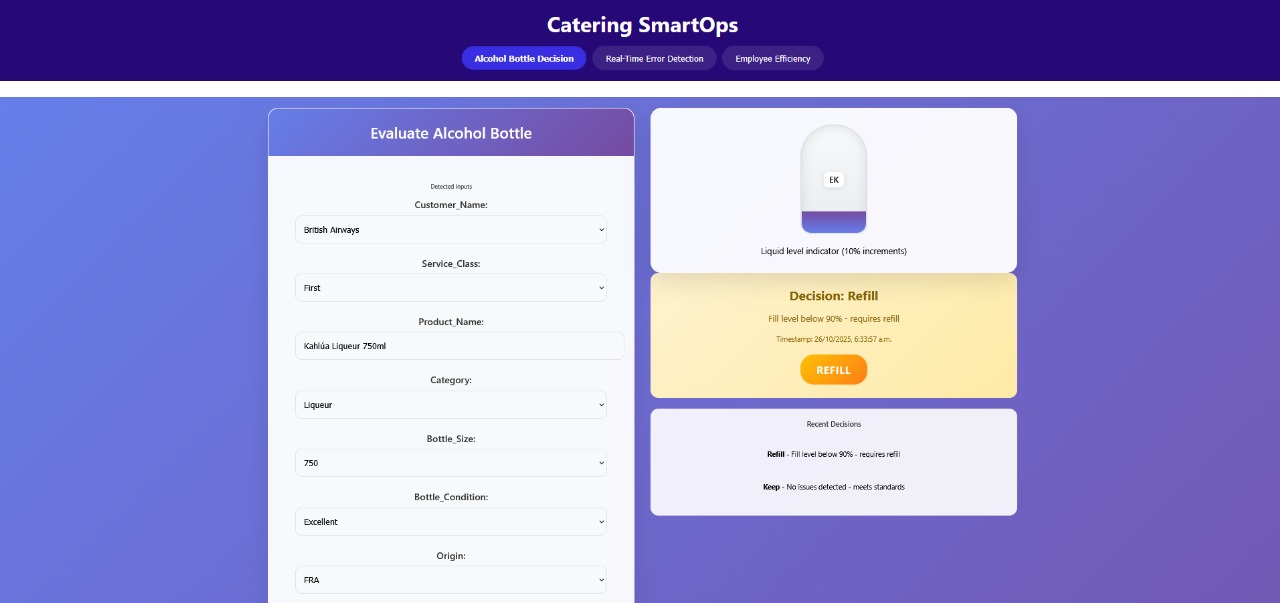
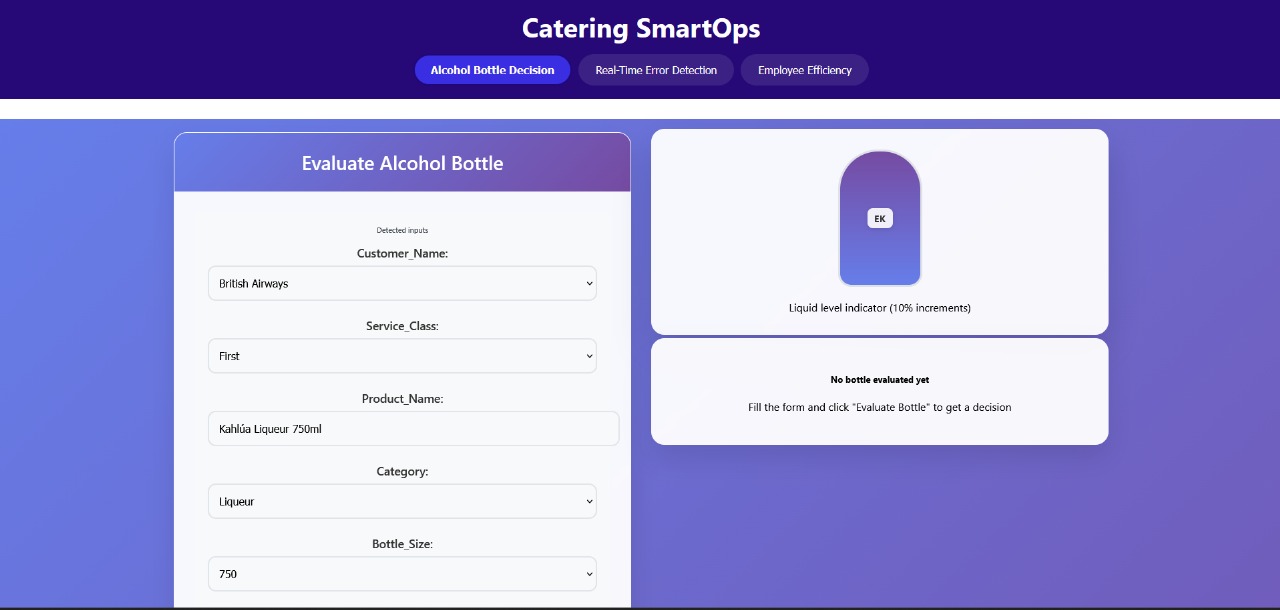
What it does Catering SmartOps collects realtime sensor readings and uses a small rules engine to detect errors, make automated bottle decisions, and surface employee efficiency metrics. The web UI provides dashboards for error review, operator vs. reference comparisons, and per-employee performance summaries — helping teams find and fix process issues faster.
How we built it We built a Node/Express backend that exposes REST endpoints for bottle evaluation, sensor ingestion, and efficiency metrics. The frontend is a React + TypeScript single-page app that consumes those APIs and renders dashboards, comparisons, and a lightweight SVG-based visualization. The project prioritizes simplicity and a focused prototype architecture so we could iterate quickly.
Challenges we ran into Deploying to an environment outside local development was the main challenge. Although everything worked locally, some deployments failed intermittently due to version mismatches between environments and dependencies. Troubleshooting those differences took time and careful configuration.
Accomplishments we’re proud of We completed the entire prototype in under 36 hours, and we successfully produced a production build without errors — despite none of us having previously deployed a full stack application in a real environment. That rapid delivery and the clean build are achievements we’re proud of.
What we learned Most of our learning centered on deployment: packaging the frontend and backend correctly, managing dependency versions, and configuring runtime environments. We also improved our teamwork and gained hands-on insight into operational processes that a real company uses in production.
What’s next for Catering SmartOps We plan to keep iterating on the prototype. Short-term improvements include adding a voice assistant to guide operators hands-free and a barcode-based search to speed up record lookup and improve efficiency. Over the medium term we’d like to add persistent storage, richer analytics, and small ML models to surface predictive insights.


Log in or sign up for Devpost to join the conversation.