-
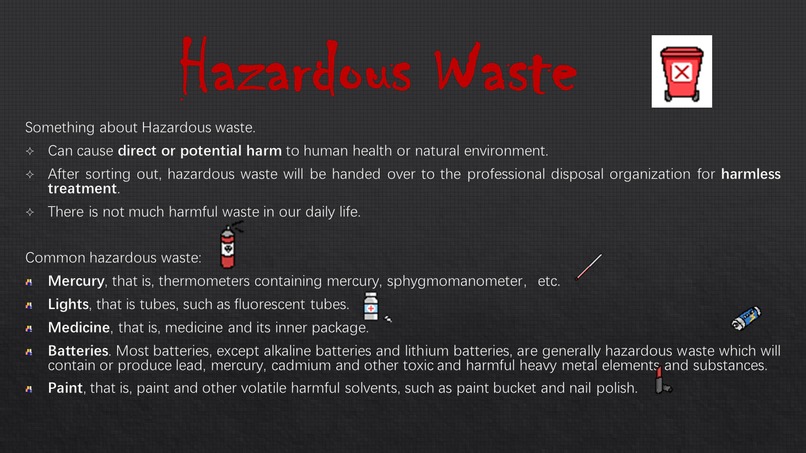
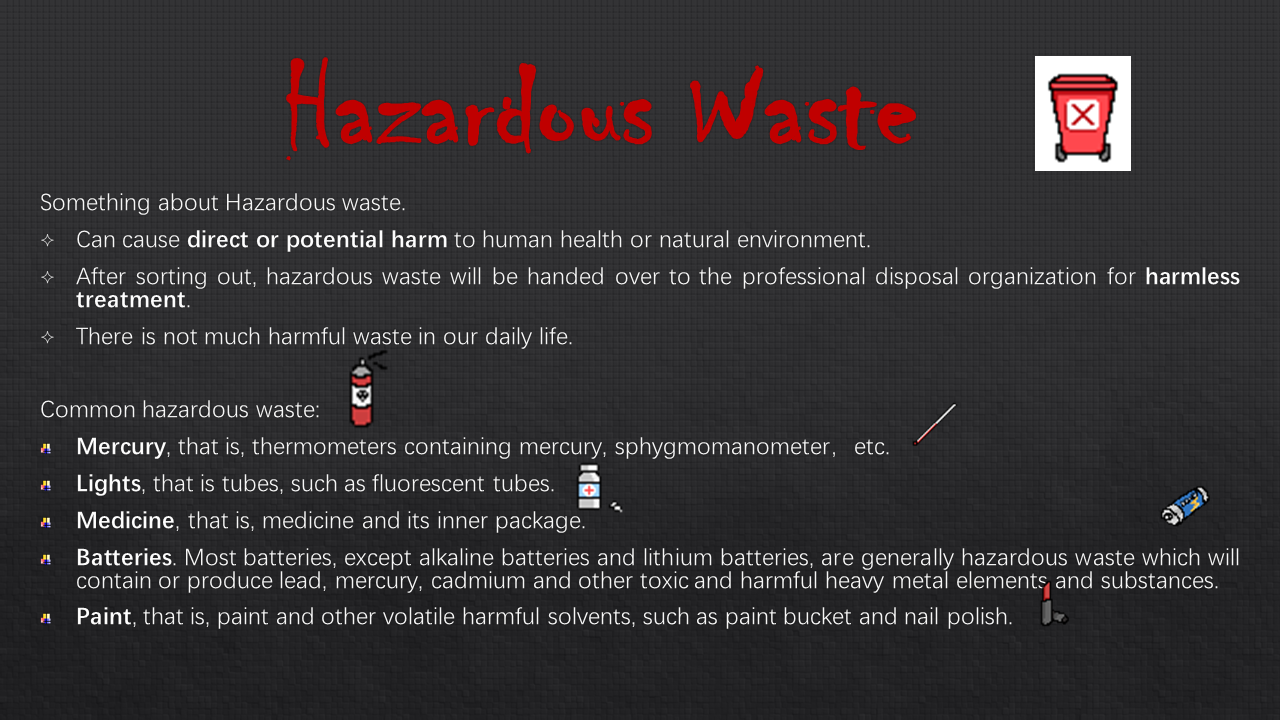
Info page on hazardous page!
-
Your rubbish is Househould Food waste!
-
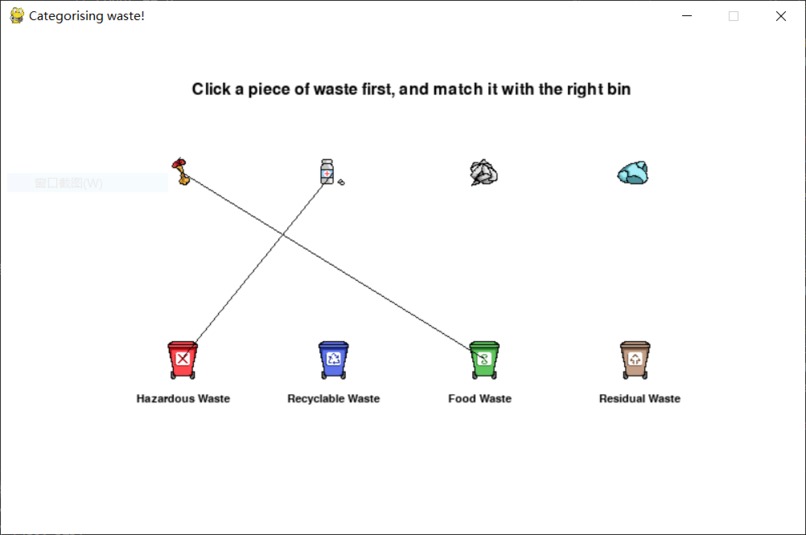
Matching game! What kind of waste is the diaper?
Inspiration
Waste sorting is a new and long-term policy in China, but in the early stage, many people still confuse the types of waste. Waste sorting can reduce environmental pollution, improve the utilization rate of renewable resources, and has benefits in social, economic and ecological. Therefore, we decided to start with children and design a game that can help them learn waste sorting. Through the game, children can develop the habit of waste sorting and improve their awareness of environmental protection.
What it does
The game has two parts which can help children to learn waste sorting. The first part is an identifying game. User are asked to think of a particular waste they would like to know about, and go through the identifying steps to get to what category their waste belongs to by simply pressing yes/no button. There is a lot of useful info on each page, and through reading and choosing, players are able to gain basic knowledge of waste sorting.
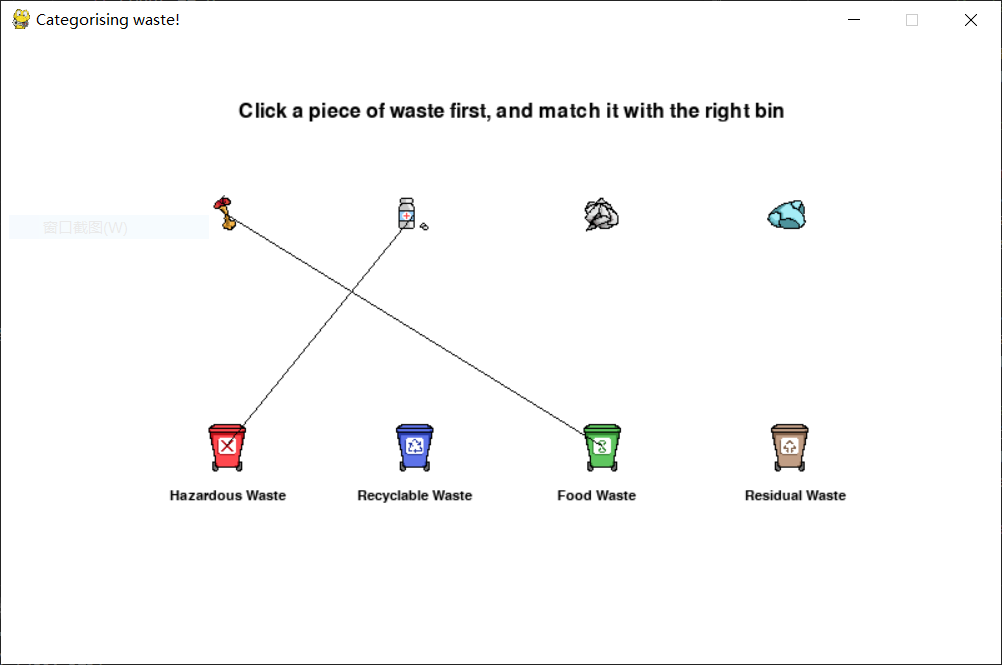
The second part is a pairing game - four random wastes are generated from a pool, and the user is asked to match each waste to the bin that it should be thrown into. This allows users to consolidate their knowledge from the last identifying game, and gain more insight into it while playing.
How we built it
On the technical side, we build the game using the pygame module from python. Started by learning the basic features of pygame, we designed the game to be operated by clicking the mouse. Moreover, the background picture, icons of buttons and aesthetics are all created by us originally. Since we understand that UI design plays an important role in the user's experience. It is noticeable that we also created two simple games that run inside python without pygame with similar algorithms just for us to have a better understanding of the structure of our project. Although these are not presented in the final presentation, the process is rather beneficial.
Challenges we ran into
All of our group members are beginners of python, so it is quite a challenge for us to learn pygame from scratch. Since we are unfamiliar with this module, we took sinuated paths in the process of developing - like trying to define a Button class completely from scratch when we were making a menu for the game, but there is already a module written for us to use. There was a lot of time wasted on that - but it's still a nice exercise of python for us and we appreciated the experience!
Accomplishments that we're proud of
- We managed to plan our project well and have a working finished version on time.
- We managed to build a playable, educational (and actually quite addictive) game from scratch using python even though all of our team members are beginners!
- As developers we learned a lot about waste sorting ourselves, and each of us probably have played our matching game a hundred times!
What we learned
Besides the solid knowledge of the pygame module which we've never encountered before, we've also gained the ability to work under pressure, collaborate with teammates and learn highly technical materials rapidly. The workshops like the Heroku tutorial are extremely helpful. Even we did not apply all of the knowledge we've practised into the hacking process, this experience gave us insight into what's it like to be a developer and motivated us to engage even more in the relative fields.
What's next for The Rubbish Game!!
We will improve on the user interface to make it smoother, and add some animation and sound to maximise the fun. We would also like to develop a Chinese version and make it available for more Chinese people.


Log in or sign up for Devpost to join the conversation.