-
-
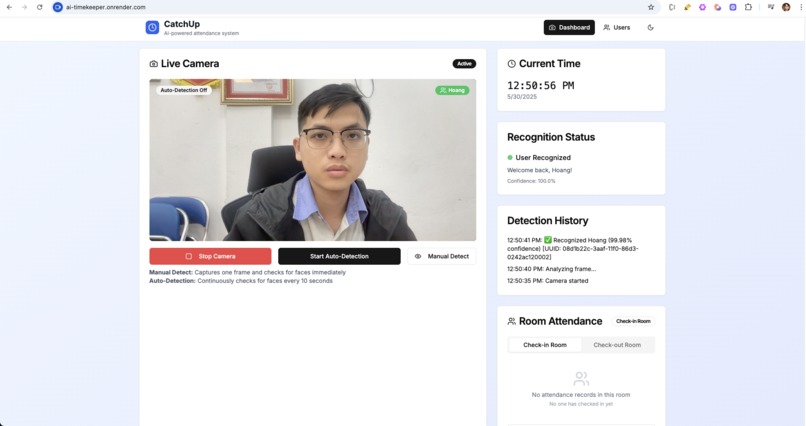
Dashboard
-
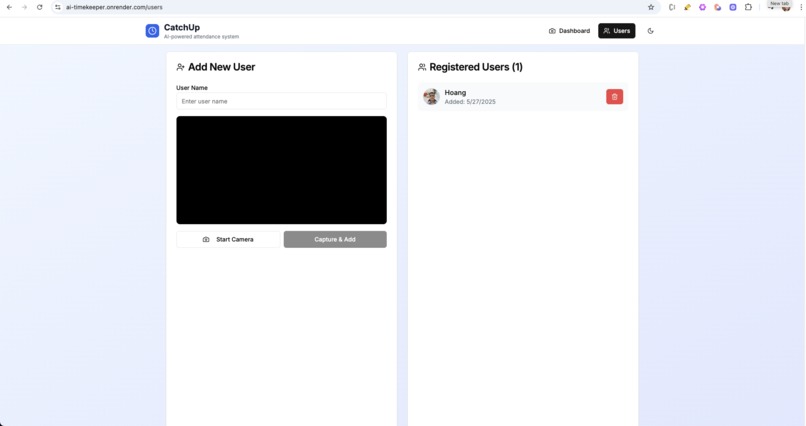
Add new user
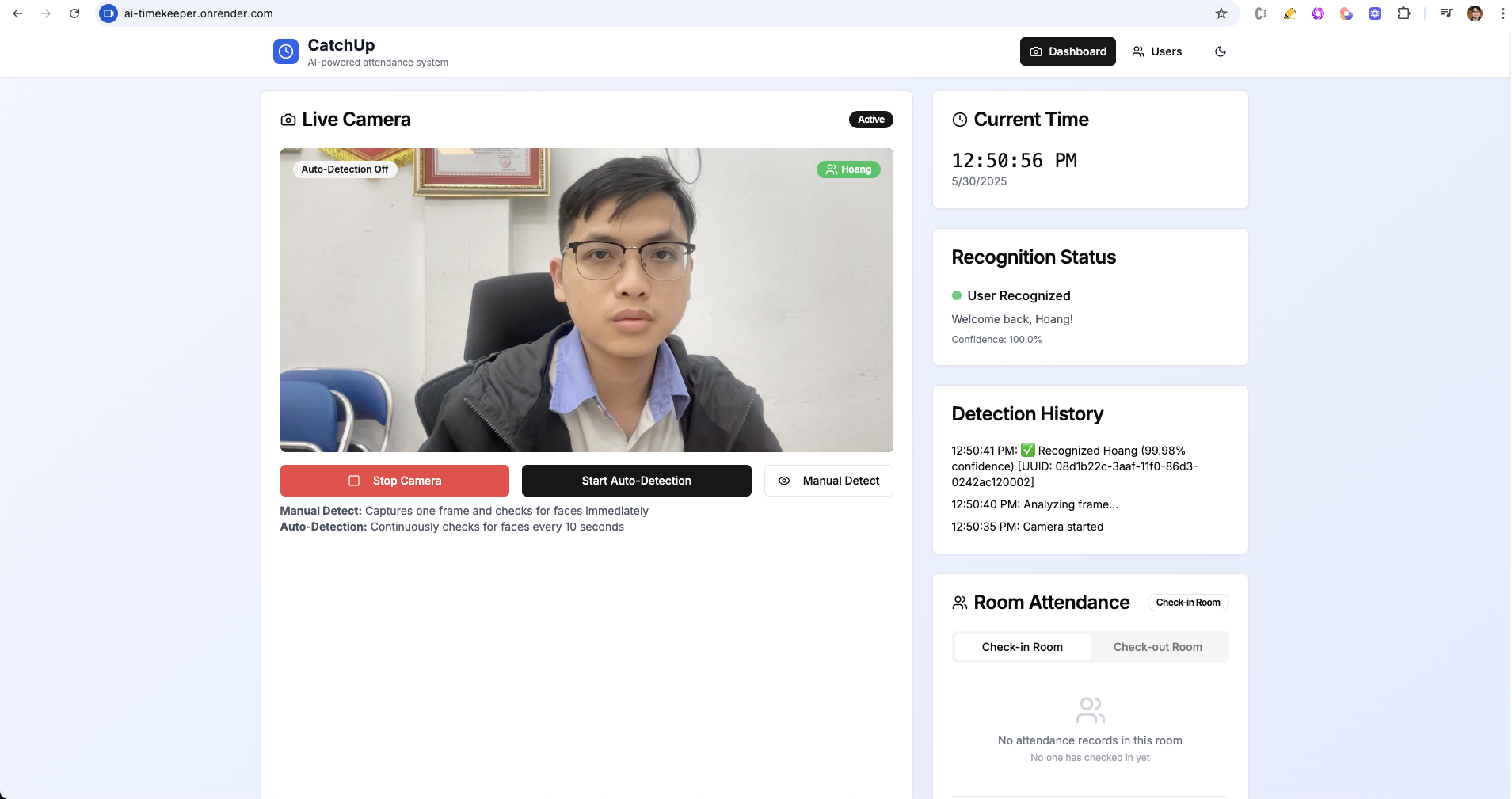
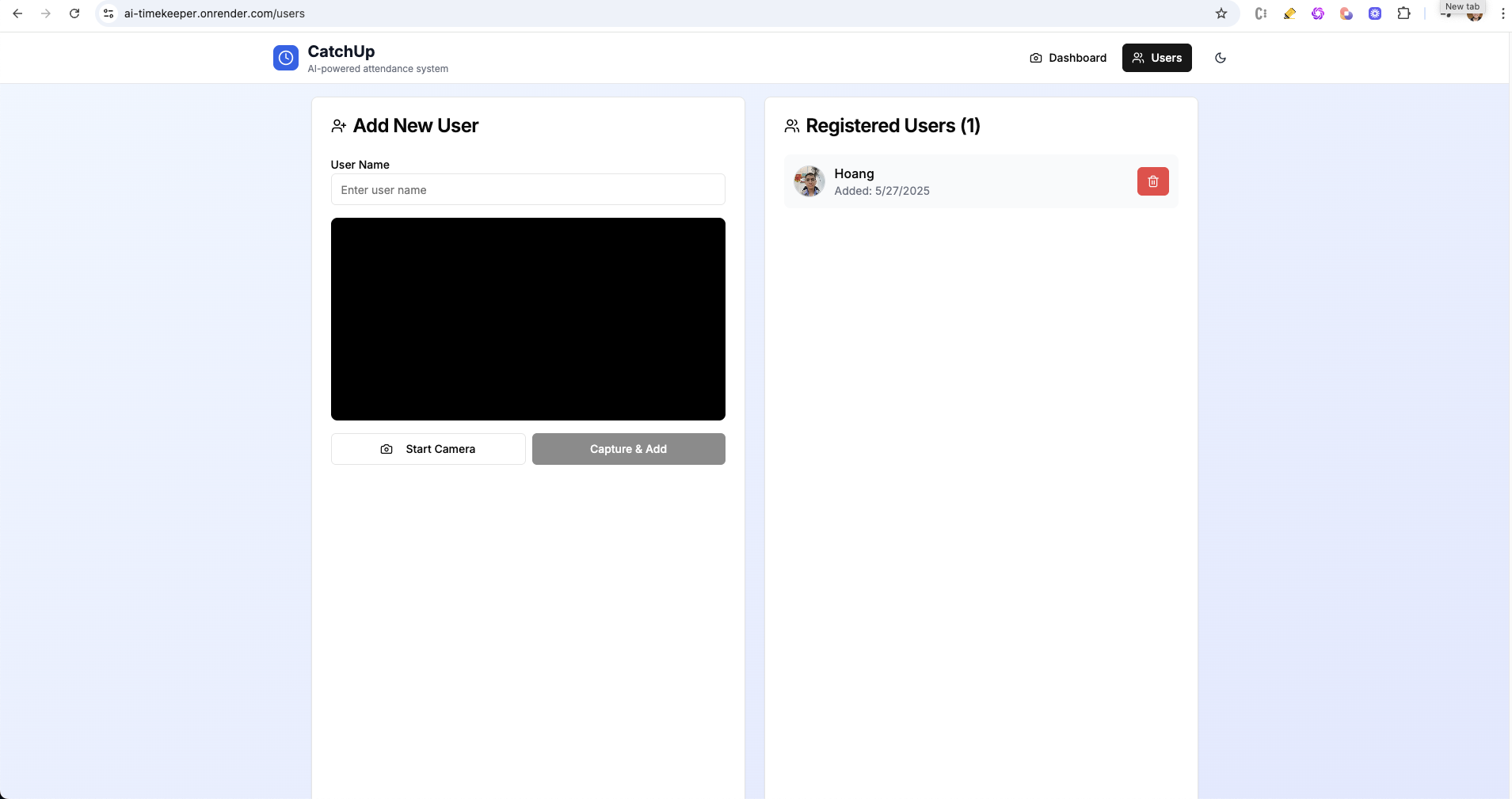
AI Timekeeper: A Journey into Facial Recognition
💡 Inspiration
The inspiration for AI Timekeeper came from a real-world problem I observed in educational and corporate environments: the inefficiency and inaccuracy of traditional attendance systems. Manual attendance tracking is time-consuming, prone to errors, and susceptible to "buddy punching" (where one person signs in for another).
I was particularly fascinated by the potential of facial recognition technology to create a seamless, contactless attendance solution that could work in various settings. The COVID-19 pandemic further highlighted the need for touchless systems in shared spaces, which added urgency to this project.
🧠 What I Learned
This project was an incredible learning journey that expanded my skills across multiple domains:
AI Integration: I gained hands-on experience with facial recognition APIs, learning how to process and analyze image data for identification purposes. Working with Luxand's API taught me about confidence thresholds, face detection algorithms, and the importance of proper lighting and image quality.
Real-time Processing: Implementing a system that captures, processes, and responds to facial data in real-time presented unique challenges around performance optimization and user experience design.
Privacy Considerations: I learned about the ethical implications of facial recognition technology and implemented features to ensure user consent and data protection.
Full-Stack Development: This project reinforced my understanding of the full development stack, from frontend UI components to backend API routes and database management.
Error Handling: Working with external APIs taught me the importance of robust error handling and graceful degradation when services are unavailable.
🔨 How I Built It
Planning and Architecture
I started by mapping out the core features and user flow, focusing on creating a system that would be both accurate and user-friendly. I chose Next.js for its server-side rendering capabilities and API routes, which would allow me to build both the frontend and backend within a single framework.
Technology Selection
For facial recognition, I evaluated several APIs before selecting Luxand for its accuracy and reasonable pricing model. MongoDB was chosen for its flexibility with document-based data, which worked well for storing user profiles and attendance records.
Development Process
Core Infrastructure: I began by setting up the Next.js project with TypeScript for type safety and Tailwind CSS for styling.
Camera Integration: Implementing browser-based camera access was the first technical hurdle, requiring careful handling of permissions and browser compatibility.
Facial Recognition: I integrated the Luxand API, starting with basic detection before moving to more complex recognition and registration features.
Attendance Logic: I developed time-based logic to determine whether a recognized face should trigger a check-in or check-out based on the time of day.
User Interface: I designed a clean, intuitive interface using shadcn/ui components, focusing on providing clear feedback about the recognition process.
Voice Feedback: To enhance the user experience, I added personalized voice greetings using text-to-speech technology.
Room-based Tracking: I implemented the concept of virtual "rooms" to organize attendance data and allow for different check-in/check-out locations.
Testing and Refinement
Throughout development, I tested the system with various users, lighting conditions, and scenarios to ensure reliability. This iterative testing led to numerous refinements in both the recognition algorithms and the user interface.
🧩 Challenges and Solutions
Challenge 1: API Response Inconsistencies
The Luxand API occasionally returned malformed JSON responses, causing the application to crash. I implemented robust error handling with multiple fallback methods for parsing responses and added warning displays in the UI to maintain a good user experience even when the API behaved unexpectedly.
Challenge 2: Recognition Accuracy
Early testing revealed issues with recognition accuracy, particularly in poor lighting conditions or when users wore masks. I addressed this by:
- Implementing a higher confidence threshold (95%)
- Adding pre-processing steps to improve image quality
- Creating a more comprehensive registration process with multiple angles
Challenge 3: Performance Optimization
Processing video frames in real-time created performance issues on some devices. I solved this by:
- Implementing throttling to reduce the frequency of API calls
- Adding an option for manual detection alongside automatic detection
- Optimizing image compression before sending to the API
Challenge 4: User Privacy
Balancing the functionality of facial recognition with privacy concerns was challenging. My solution included:
- Clear consent processes during registration
- Local processing where possible to minimize data transmission
- Automatic data purging options
- Transparent feedback about when and how facial data is being used
🔮 Future Directions
While AI Timekeeper has already achieved its core functionality, I see several exciting directions for future development:
- Mask Detection: Enhancing the system to work reliably with users wearing masks
- Emotion Analysis: Adding the ability to detect user emotions for engagement metrics
- Mobile App: Developing a companion mobile application for on-the-go attendance
- Integration Capabilities: Building connectors for popular HR and education management systems
- Offline Mode: Implementing local facial recognition for situations without internet connectivity
🌟 Conclusion
Building AI Timekeeper has been a fascinating journey into the intersection of artificial intelligence, web development, and real-world problem-solving. The project demonstrates how modern technologies can transform traditional processes, making them more efficient, accurate, and user-friendly.
The challenges I faced pushed me to deepen my understanding of both technical implementation and ethical considerations in AI applications. I'm excited to continue refining this system and exploring new ways to apply these technologies to solve meaningful problems.
Built With
- elevenlab
- luxand
- mongodb
- nextjs
- openai


Log in or sign up for Devpost to join the conversation.